分类: politics

  • US border enforcer set to leave Minneapolis as Trump tries to calm crisis

    US border enforcer set to leave Minneapolis as Trump tries to calm crisis

    Minneapolis is witnessing the withdrawal of certain federal border enforcement personnel following two fatal protester shootings that have ignited nationwide condemnation and placed President Trump’s immigration policies under unprecedented scrutiny. The anticipated departure of Border Patrol Commander Gregory Bovino, recognized for his militarized approach to immigration enforcement, coincides with the arrival of new White House envoy Tom Homan, who is tasked with deescalating tensions through improved communication with local officials.

    The crisis reached a critical point when 37-year-old ICU nurse Alex Pretti was fatally shot multiple times at point-blank range during an altercation with federal agents on an icy road this past Saturday. This incident occurred less than three weeks after another U.S. citizen, Renee Good—a mother of three—was similarly killed inside her vehicle on January 7th. Both shootings involved masked, heavily armed Immigration and Customs Enforcement (ICE) and Border Patrol agents operating under Trump’s aggressive deportation initiative.

    Initially, administration officials falsely characterized Pretti as a ‘domestic terrorist’ intending to harm federal agents, claims that were visibly contradicted by multiple video recordings. Although President Trump initially amplified these allegations on social media, he subsequently adopted a more conciliatory stance as political backlash intensified.

    The repercussions have extended to Washington, where rare bipartisan criticism has emerged. Republican Senator Rand Paul called for the immediate administrative leave of agents involved in Pretti’s shooting, while centrist Democratic Senator John Fetterman demanded the dismissal of Homeland Security Secretary Kristi Noem, citing gross incompetence.

    Meanwhile, Minneapolis protesters braving sub-zero temperatures expressed cautious relief at the partial withdrawal of federal forces. Local demonstrators described months of community trauma and brutality, viewing the reduced presence as both a vindication of their protests and a welcome relief from sustained violence.

    Simultaneously, legal challenges are progressing through Minnesota courts. A federal judge is considering whether the deployment of federal officers violates state sovereignty, and ICE’s acting director has been ordered to appear in court regarding a detention challenge.

  • Trump’s shadow looms over India-EU trade deal

    Trump’s shadow looms over India-EU trade deal

    In a landmark development with profound geopolitical implications, India and the European Union have concluded negotiations on a comprehensive free trade agreement, signaling a strategic realignment in response to global economic uncertainties. The deal, hailed as “the mother of all deals” by both Indian Prime Minister Narendra Modi and European Commission President Ursula von der Leyen, represents a significant breakthrough after two decades of stalled negotiations.

    The agreement emerges against a backdrop of escalating trade tensions and unpredictable US policy under the Trump administration. With the US imposing 50% tariffs on Indian goods—including a 25% penalty for India’s continued purchase of Russian oil—and threatening similar measures against EU countries, both powers have sought to diversify their economic partnerships and reduce strategic dependencies.

    Von der Leyen emphasized the partnership’s significance, stating: “This is the tale of two giants – the world’s second and fourth largest economies – choosing partnership in a true win-win fashion. By combining our strengths, we reduce strategic dependencies at a time when trade is increasingly weaponized.”

    Prime Minister Modi highlighted the agreement’s broader implications, noting that the global order is in “great turmoil” and that the pact would strengthen global supply chains while serving as “a new blueprint for shared prosperity.”

    The deal forms part of a broader pattern of nations seeking alternative alliances amid Washington’s aggressive trade stance. Recent weeks have seen Canada resetting ties with China, the UK pursuing strengthened trade relations with Beijing, and the EU finally concluding a trade accord with Mercosur after 25 years of negotiation—all developments experts attribute partly to the “Trump factor.”

    Michael Kugelman, senior fellow for South Asia at the Atlantic Council, observed: “The Trump factor provided a very strong impetus to the deal because both India and the EU are facing shock US tariffs that they never expected. Trump is a big reason why the EU and India have been able to overcome most of their differences.”

    While the agreement promises enhanced market access for both parties and helps the EU reduce its reliance on China, implementation challenges remain. The deal must undergo months of legal scrutiny before ratification by EU member states and the European Parliament—a process experts warn will be complex given contentious issues around intellectual property, agriculture, and carbon emissions.

    Despite these hurdles, business groups on both sides have welcomed the agreement as a crucial step toward stabilizing trade relations in an increasingly volatile global landscape.

  • Fujian accelerates cross-Strait integration efforts

    Fujian accelerates cross-Strait integration efforts

    Fujian Province has launched an accelerated initiative to establish itself as a premier demonstration zone for cross-Strait integration, marking a significant advancement in China’s national reunification strategy. Governor Zhao Long formally announced this strategic pivot during his government work report at the fourth session of the 14th Fujian Provincial People’s Congress.

    The coastal province, positioned directly opposite Taiwan, will implement comprehensive measures spanning economic, social, and cultural dimensions. Central to this initiative is the creation of a pioneering cross-Strait common market designed to streamline market access for Taiwan-funded enterprises while fostering innovative small-scale trade mechanisms between Fujian and Taiwan.

    Industrial collaboration will prioritize four key sectors: electronic information, mechanical equipment, petrochemicals, and biomedicine. The provincial government plans to establish specialized Taiwan-related industrial parks to facilitate these cooperative ventures, building on the impressive 2025 figures that saw 2,612 new Taiwan-funded enterprises established with actual utilized Taiwan capital reaching $724 million.

    Beyond economic integration, Fujian is developing extensive institutional frameworks to attract Taiwanese compatriots through enhanced education opportunities, internship programs, and employment pathways. The province will expand professional qualification recognition and initiate over thirty joint rural development projects.

    Cultural connectivity forms another critical component of the integration strategy. Fujian will promote the ‘Taiwan Compatriots Root-seeking Platform’ and advance legislative measures concerning cross-Strait family genealogies. Grassroots exchanges will be encouraged through shared sporting activities including baseball, softball, and dragon boat racing, complementing recent cultural successes like the television drama ‘The Silent Glory’ filmed in Fujian that has resonated across the Strait.

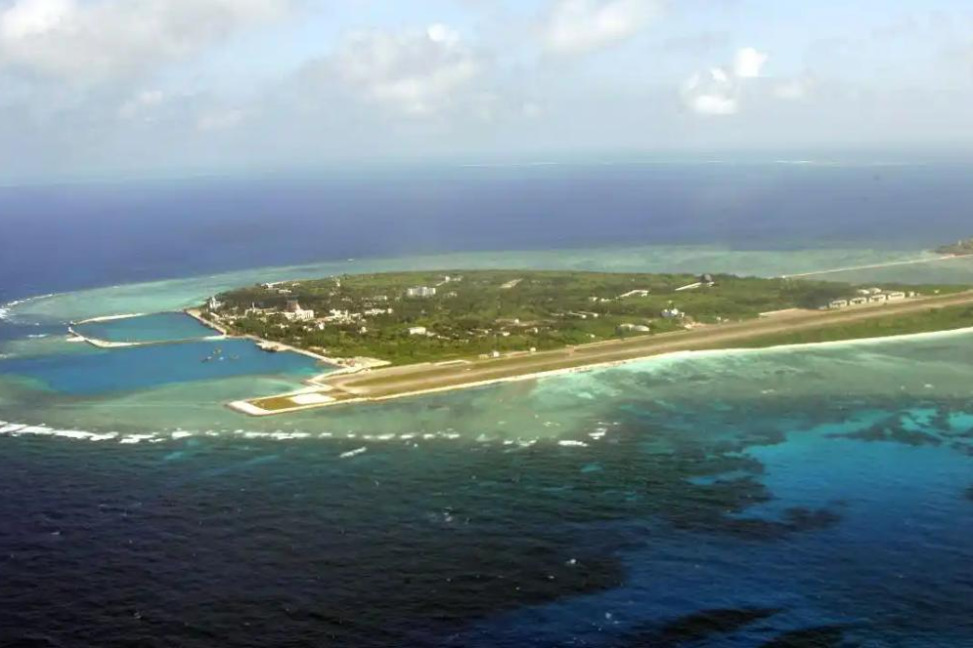
    Infrastructure development features prominently in the integration roadmap, with plans to deepen ‘living circles’ between Xiamen-Jinmen and Fuzhou-Matsu. Critical utility projects delivering water, electricity, and gas to Jinmen and Matsu will be expedited, while Xiamen is scheduled to complete its section of the Xiamen-Jinmen Bridge within the year.

    The initiative aligns with the commencement of China’s 15th Five-Year Plan (2026-30), positioning Fujian at the forefront of cross-Strait relations development.

  • Rwanda takes legal action against UK over axed migrant deal

    Rwanda takes legal action against UK over axed migrant deal

    The Rwandan government has formally commenced international legal proceedings against the United Kingdom through the Permanent Court of Arbitration in The Hague, seeking financial compensation for what it claims are unfulfilled commitments under a terminated migration agreement. This development marks a significant escalation in the diplomatic dispute between the two nations following the collapse of the controversial asylum partnership.

    According to documents filed with the Netherlands-based arbitration body, Rwanda contends that the UK failed to honor its financial obligations under the treaty signed by the previous Conservative administration. The agreement, which envisioned relocating certain asylum seekers from Britain to Rwanda, included substantial economic support packages for the African nation.

    The legal challenge emerged after Prime Minister Sir Keir Starmer’s government terminated the arrangement in 2024, declaring the scheme ‘dead and buried’ shortly after Labour’s electoral victory. The Home Office subsequently announced that £220 million in scheduled future payments would not be disbursed to Rwanda.

    A spokesperson for the Prime Minister’s office stated: ‘We will robustly defend our position to protect British taxpayers. The Rwanda scheme was a complete disaster that wasted £700 million of taxpayer money while resulting in the transfer of merely four volunteers.’

    The original agreement, negotiated under Conservative leadership, involved total expenditures of approximately £700 million, including £290 million in direct payments to Rwanda. Additional provisions included £100 million scheduled for fiscal years 2025-26 and 2026-27, plus £120 million contingent upon the transfer of 300 individuals to Rwandan soil.

    Michael Butera, Chief Technical Adviser to Rwanda’s Minister of Justice, explained the nation’s position: ‘Through arbitration, Rwanda seeks a legal determination of the parties’ respective rights and obligations under the treaty, in accordance with international law.’

    The Permanent Court of Arbitration, an established forum for resolving interstate disputes, has acknowledged receipt of the case with its status listed as pending. Arbitration procedures typically involve extended timelines, often spanning multiple years, as parties present detailed arguments according to established timetables.

    Conservative opposition figures have characterized the legal action as ‘yet another catastrophic consequence of Labour’s decision to scrap the Rwanda scheme,’ warning that British taxpayers now face substantial financial liability due to the government’s policy reversal.

    The UK government had previously indicated efforts to recover funds following the agreement’s termination, though Rwandan authorities maintain they are under ‘no obligation’ to refund any payments already received.

  • Israel preparing for talks with Trump administration on new 10-year security deal, FT reports

    Israel preparing for talks with Trump administration on new 10-year security deal, FT reports

    Israel is initiating preparatory discussions with the Trump administration to establish a new decade-long security arrangement, signaling a potential transformation in one of the world’s most enduring defense partnerships. According to exclusive reporting from the Financial Times, these negotiations will focus on transitioning from direct financial assistance to collaborative defense projects as the cornerstone of bilateral security cooperation.

    Gil Pinchas, former chief financial adviser to Israel’s military and defense ministry, revealed that forthcoming talks would prioritize joint military initiatives over traditional cash grants. This strategic pivot emerges despite the current Memorandum of Understanding (2016-2028) that provides Israel with $38 billion in military aid, including $33 billion for weapons procurement and $5 billion for missile defense systems.

    The proposed restructuring aligns with Israeli Prime Minister Benjamin Netanyahu’s recently stated objective of gradually reducing dependence on American military assistance over the next decade. Pinchas characterized the $3.3 billion annual ‘free money’ component as one element that could ‘decrease gradually’ within the new framework.

    Emphasizing the broader strategic significance beyond financial considerations, Pinchas noted that ‘the partnership is more important than just the net financial issue… there are a lot of things that are equal to money.’ The U.S. State Department has not yet responded to inquiries regarding the anticipated negotiations, which are expected to commence in the coming weeks.

  • France invites Chad president in bid to ease troubled relations

    France invites Chad president in bid to ease troubled relations

    In a significant diplomatic overture, French President Emmanuel Macron has formally invited Chadian President Mahamat Déby to Paris, signaling a potential reset of bilateral relations following recent military estrangement. The verbal invitation was conveyed by France’s Ambassador to Chad, Éric Gérard, during a Monday meeting at the presidential palace in N’Djamena.

    This development comes against the backdrop of substantial geopolitical shifts. In November 2024, Chad abruptly terminated its longstanding defense agreement with France, declaring the colonial-era pact ‘obsolete’ for addressing contemporary security challenges. This decision triggered the withdrawal of approximately 1,000 French troops who had been providing intelligence and logistical support from bases across the central African nation.

    The Chadian presidency confirmed Déby’s acceptance of the invitation while withholding specific timing details. Officials characterized the discussion as focusing on ‘renewal of bilateral cooperation’ through ‘dialogue and openness in a spirit of consultation and consideration of the interests of each party.’

    Chad’s recent foreign policy reorientation represents broader regional realignments. Prior to severing military ties with France, N’Djamena had also ordered the departure of US forces, fueling speculation about shifting alliances. While Déby has publicly denied intentions to replace Western partners with alternative foreign powers, Chad recently signed a military cooperation memorandum with Belarus, a close Russian ally.

    This diplomatic maneuvering occurs as France’s influence in the Sahel region continues to diminish following forced withdrawals from Mali, Niger, and Burkina Faso after successive military coups. Chad remains challenged by significant security threats while asserting what it terms ‘sovereign independence’ in defense matters after six decades of nationhood.

  • Trump says hiking tariffs on South Korean goods to 25%

    Trump says hiking tariffs on South Korean goods to 25%

    In a significant escalation of trade tensions, former US President Donald Trump has declared his intention to increase tariffs on South Korean imports from 15% to 25%, targeting key sectors including automobiles, lumber, and pharmaceuticals. The announcement was made via Trump’s Truth Social platform on Monday, where he accused South Korea’s legislature of failing to ratify what he termed a “Historic Trade Agreement” previously negotiated with Washington.

    This potential policy reversal threatens to undermine a comprehensive trade and security agreement finalized just months earlier in October 2025, following personal negotiations between Trump and South Korean President Lee Jae Myung. The original pact had secured reduced tariff rates for South Korean exports in exchange for substantial investment commitments from Seoul.

    The South Korean government responded with measured concern, indicating it had received no prior official notification regarding the tariff increase. An emergency meeting was convened by Seoul’s presidential office, with Trade and Industry Minister Kim Jung-kwan participating remotely from Canada. In an official statement, South Korean officials emphasized their “commitment to implementing the tariff agreement” while pledging to respond “in a calm and measured manner.”

    The automotive sector represents particularly high stakes in this dispute, accounting for approximately 27% of South Korea’s exports to the United States. A reversion to higher tariff levels would place South Korean manufacturers at a competitive disadvantage compared to trading partners like Japan and the European Union, which maintain 15% tariff rates under separate agreements.

    This development marks the latest in a series of trade threats from Trump, who recently warned Canada with potential 100% tariffs should it pursue a trade deal with China, and similarly threatened European nations regarding his aspirations to purchase Greenland.

  • Xi says China ready to uphold UN-centered intl system with Finland

    Xi says China ready to uphold UN-centered intl system with Finland

    In a significant diplomatic engagement, Chinese President Xi Jinping articulated China’s commitment to strengthening its partnership with Finland during a high-level meeting with Finnish Prime Minister Petteri Orpo in Beijing on Tuesday. The discussions centered on reinforcing the international framework with the United Nations at its core and upholding a legal-based global order.

    President Xi emphasized the necessity of Sino-Finnish collaboration in addressing pressing global challenges, highlighting shared responsibilities in maintaining international stability. ‘China stands ready to work with Finland to defend the multilateral system that has served as the foundation of international cooperation since the post-World War II era,’ Xi stated during the bilateral talks.

    The Chinese leader further elaborated on the vision for a ‘more equitable and orderly multipolar world,’ advocating for economic globalization that delivers widespread benefits rather than exacerbating existing inequalities. This approach, Xi noted, aligns with both nations’ interests in sustainable development and inclusive growth.

    Significantly, Xi characterized the relationship between China and Europe as fundamentally cooperative rather than adversarial, dismissing notions of inherent conflict between the Eastern and Western powers. ‘We are natural partners in building a more stable international environment,’ Xi affirmed, pointing to historical ties and contemporary economic complementarities.

    The meeting also explored avenues for deepening cooperation across multiple sectors including trade, technology, environmental protection, and innovation. Both leaders expressed optimism about the potential for enhanced bilateral relations to contribute positively to Eurasian stability and global governance reform.

    Prime Minister Orpo’s official visit to China marks an important step in strengthening Nordic-China relations at a time of evolving geopolitical dynamics across the European continent. The discussions are expected to pave the way for increased high-level exchanges and concrete agreements in the coming months.

  • US to send ICE agents to Winter Olympics, prompting Italian anger

    US to send ICE agents to Winter Olympics, prompting Italian anger

    Italy has expressed strong opposition to the planned deployment of US Immigration and Customs Enforcement (ICE) agents for security operations during the upcoming Milan-Cortina Winter Olympics, creating diplomatic friction between the two NATO allies. The controversy stems from recent incidents in Minneapolis where ICE officers were involved in fatal shootings, generating widespread alarm in Italy after images of the events circulated nationally.

    ICE confirmed through an official statement that its Homeland Security Investigations unit would support the US Department of State’s Diplomatic Security Service in vetting and mitigating risks from transnational criminal organizations during the Games, which run from February 6-22. The agency emphasized that its personnel would ‘obviously not conduct immigration enforcement operations outside the US’ and that all security operations would remain under Italian authority.

    The announcement triggered immediate backlash from Italian officials. Milan Mayor Beppe Sala denounced the decision on Italian radio, stating, ‘This is a militia that kills… of course they’re not welcome in Milan.’ He further asserted that ICE agents ‘don’t guarantee they conform to our democratic way of ensuring security.’

    Italian Interior Minister Matteo Pantedosi initially appeared unaware of the deployment plans but later took a firm stance, maintaining that ‘ICE will certainly not operate on Italian national territory.’ He emphasized that security remained exclusively under Italian jurisdiction and that the US had not formally communicated a list of security personnel.

    The tension escalated following reports that ICE officials in Minneapolis had threatened journalists from Italy’s public broadcaster RAI, warning them that their car window would be smashed if they continued filming federal agents. This incident, coupled with the fatal shootings in Minneapolis, intensified Italian concerns about the potential presence of these agents on their streets.

    Regional officials attempted to defuse the situation, with Lombardy Governor Attilio Fontana suggesting ICE agents would primarily protect US Vice President JD Vance and Secretary of State Marco Rubio. However, opposition politicians criticized Prime Minister Giorgia Meloni’s government for what they characterized as subservience to the Trump administration, highlighting the complex political dimensions of this international security dispute.

  • Spain to regularise 500,000 undocumented migrants

    Spain to regularise 500,000 undocumented migrants

    In a bold policy shift that breaks with hardening European Union migration norms, Spain’s left-wing government has enacted a sweeping decree to grant legal status to approximately half a million undocumented migrants. Approved during Tuesday’s cabinet meeting, the measure establishes one of Europe’s most extensive regularization programs in recent years.

    Migration Minister Elma Saiz championed the initiative as a reinforcement of a rights-based migration model, emphasizing its compatibility with economic growth and social cohesion. Beneficiaries, who must have resided in Spain for a minimum of five months and applied for international protection before December 31, 2025, will gain full access to the labor market across all sectors and regions. A clean criminal record is mandatory, and the regularization extends to applicants’ children already living in the country.

    The application window is scheduled to open in April and run through June 2025. Notably, the government is implementing this via decree, bypassing parliamentary approval—a tactical move given the ruling Socialist coalition’s lack of a majority.

    The policy has ignited fierce opposition from conservative and far-right parties. Alberto Nunez Feijoo, leader of the Popular Party, condemned the move as ‘ludicrous’ on social media platform X, warning it would overwhelm public services and reward illegality. He pledged a comprehensive overhaul of migration policy if elected.

    Conversely, the Spanish Catholic Church lauded the decree as ‘an act of social justice and recognition.’ Prime Minister Pedro Sanchez’s administration justifies the policy on demographic and economic grounds, citing migration as critical for filling workforce gaps and counteracting an aging population that threatens pension sustainability. Official data released Tuesday underscored this contribution: foreigners accounted for 52,500 of the 76,200 new jobs in Q4 2024, helping drive unemployment to its lowest level since 2008.

    This humanitarian approach starkly contrasts with the broader EU trend toward stricter border controls and deterrence policies, often influenced by rising far-right influence. Spain remains a primary entry point for migrants fleeing poverty and conflict, with tens of thousands arriving annually via the Canary Islands. Recent estimates from the Funcas think-tank indicate approximately 840,000 undocumented migrants resided in Spain at the start of 2025, predominantly from Latin America. Foreigners now constitute over seven million of Spain’s 49.4 million population, highlighting the profound demographic impact of migration.