分类: politics

  • ‘Betrays our most basic values’: Ex US President Joe Biden slams Minneapolis shootings

    ‘Betrays our most basic values’: Ex US President Joe Biden slams Minneapolis shootings

    Former U.S. President Joe Biden has issued a forceful condemnation of recent federal agent-involved shootings in Minneapolis, describing the incidents as fundamental violations of American principles. In an official statement disseminated via social media platform X, Biden expressed profound outrage over the separate fatal shootings of two citizens—Alex Pretti on January 24 and Renee Good on January 7—by federal immigration authorities.

    Biden’s declaration characterized the events as unacceptable government overreach, stating: ‘We are not a nation that guns down our citizens in the street. We are not a nation that allows our citizens to be brutalized for exercising their constitutional rights.’ He specifically highlighted concerns about Fourth Amendment violations and the terrorization of communities by government actions.

    The former president commended Minnesota residents for their resilience and civic engagement amid tragedy, praising their efforts to support community members, speak against perceived injustices, and demand governmental accountability. Biden emphasized that such violence, particularly when perpetrated by government entities against citizens, contradicts core American values.

    Biden called for comprehensive, transparent investigations into both incidents, stressing the necessity of accountability regardless of authority. He extended heartfelt condolences to the families of Pretti and Good, urging pursuit of justice through proper channels. The statement concluded with a rallying cry for national self-reflection and reaffirmation of democratic principles, asserting that collective action can preserve American ideals against institutional overreach.

  • Trump says government will ‘de-escalate’ in Minnesota following Pretti shooting

    Trump says government will ‘de-escalate’ in Minnesota following Pretti shooting

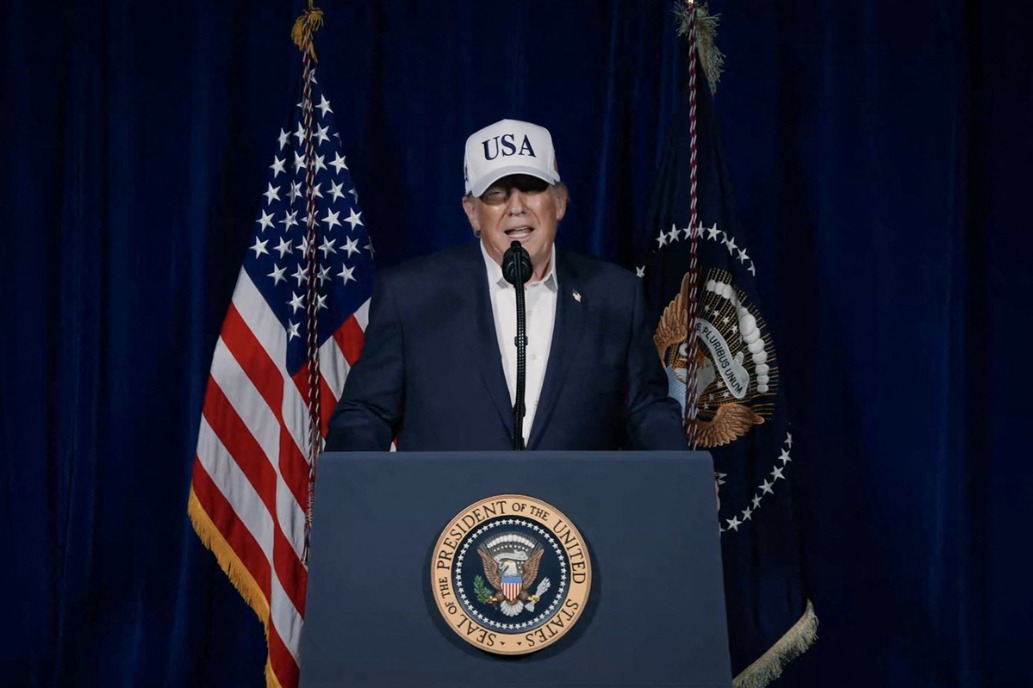
    Following two fatal shootings by federal immigration officers that have ignited national outrage, President Donald Trump announced his administration would scale back operations in Minnesota. The President characterized both incidents as “terrible” during a Fox News interview, marking a significant shift in tone regarding immigration enforcement.

    The controversy centers on the deaths of Alex Pretti, an intensive care nurse at a veterans’ hospital, and Renee Good, 37, who were fatally shot during separate encounters with immigration authorities in early January. Pretti’s death during a traffic stop this past weekend triggered renewed protests and drew bipartisan criticism from lawmakers, creating mounting pressure on federal authorities.

    In response to the escalating crisis, the Department of Homeland Security (DHS) has reassigned Minnesota mission leader Gregory Bovino and deployed border tsar Tom Homan to assume control. Homan is scheduled to meet with local officials this week as the administration seeks to calm tensions.

    Contradictory narratives have emerged regarding Pretti’s shooting. Homeland Security Secretary Kristi Noem asserted that Pretti was “brandishing” a firearm and accused him of “domestic terrorism,” claiming he intended to “perpetuate violence” rather than protest peacefully. However, local authorities confirmed Pretti’s gun was legally registered, and eyewitnesses challenged the official account, stating he was holding a phone, not a weapon, when shot.

    Despite announcing de-escalation, President Trump defended the overall Minnesota operation, citing the removal of “thousands of hardened criminals” and referencing a Harvard Harris poll suggesting 80% public support for deporting illegal immigrants who commit crimes.

    The shootings have prompted calls for investigation from Republican officials including Vermont Governor Phil Scott and Nebraska Senator Pete Ricketts, who described the situation as “horrifying” while maintaining his support for ICE funding. A federal judge has issued an order blocking DHS from destroying or altering evidence related to the incidents.

  • Times of Israel publishes 18 near-identical blogs calling for Somaliland recognition

    Times of Israel publishes 18 near-identical blogs calling for Somaliland recognition

    A coordinated online campaign has emerged on The Times of Israel’s blog platform, featuring an author presenting himself as Mohamed Osman, a retired Canadian physician of Somaliland origin. Throughout January, this individual published 18 nearly identical articles advocating for international recognition of Somaliland’s sovereignty.

    The campaign commenced on January 7th with a post titled ‘Recognizing Somaliland Would Be in Canada’s Interest’ and continued with daily publications targeting specific nations and international bodies. The identical format appealed to India, the UK, Ethiopia, European Union, Kenya, Somalia, Arab League, African Union, Turkey, Saudi Arabia, Argentina, Japan, Australia, South Korea, Sweden, and Germany, with Canada receiving a second appeal.

    Each article contained identical historical context portraying Somaliland as a former British colony with an autonomous government that has maintained stability separate from Somalia. The posts highlighted strategic economic interests, particularly emphasizing the UAE’s DP World investment in Berbera port—recently revealed to be partially British government-owned through foreign investment channels.

    Notably, the author emphasized Somaliland’s geopolitical significance along the Bab al-Mandab strait, a critical maritime corridor handling approximately 10% of global trade and substantial European energy supplies. This strategic positioning has attracted international attention, with the UAE maintaining a naval base at Berbera and Israel seeking military presence in the region.

    The Times of Israel’s blog disclaimer states that contributed posts represent third-party opinions without editorial endorsement. However, the publication maintains an application process requiring author verification and professional headshots, raising questions about how this coordinated campaign passed editorial vetting.

    This publicity surge follows Somaliland’s groundbreaking recognition by Taiwan in late December, which has intensified diplomatic activity including visits by Israeli Foreign Minister Gideon Saar and Somaliland President Abdirahman Mohamed Abdullahi’s meetings with Israeli and US officials at Davos.

  • Trump ally Nasry Asfura sworn in as Honduras president

    Trump ally Nasry Asfura sworn in as Honduras president

    In a significant political transition for Central America, conservative business magnate Nasry Asfura formally assumed the presidency of Honduras on Tuesday, culminating an electoral process marked by unprecedented international influence. The 67-year-old construction tycoon, known locally as ‘Tito,’ secured victory in November’s presidential race by an exceptionally narrow margin following controversial interventions from former U.S. President Donald Trump.

    The inauguration ceremony witnessed Asfura taking the oath of office exactly two months after the contentious election that drew global attention. The political landscape had been notably shaped by Trump’s explicit threat to terminate crucial aid packages to Honduras—already recognized as Central America’s most impoverished nation—should his personally endorsed candidate face defeat. This extraordinary diplomatic pressure from the United States created international reverberations throughout the electoral process.

    Asfura’s ascendancy represents a continuation of conservative leadership in the strategically important Central American nation, though his administration inherits profound challenges including economic instability, migration pressures, and systemic corruption. The new president, who previously served as mayor of the capital city Tegucigalpa, now faces the formidable task of governing a nation deeply divided by the razor-thin electoral outcome and international scrutiny.

    The political transition occurs against the backdrop of ongoing regional tensions and shifting international alliances, positioning Honduras at a critical juncture in its democratic development and foreign relations. Observers note that the circumstances surrounding Asfura’s victory may have lasting implications for hemispheric relations and the perception of electoral integrity in the region.

  • Watch: Why Trump is hitting the road to rally Americans

    Watch: Why Trump is hitting the road to rally Americans

    Former President Donald Trump has launched a strategic series of public rallies across the United States, marking a significant shift in his political approach. According to analysis by BBC White House correspondent Bernd Debusmann, this nationwide tour represents a calculated effort to redirect public attention toward economic issues where Trump believes he holds strong political advantages.

    The campaign strategy focuses heavily on highlighting economic policies from Trump’s previous administration while presenting contrasting perspectives on current economic conditions. These rallies serve as platforms for addressing key voter concerns about inflation, job creation, and national economic competitiveness.

    Political observers note this approach targets crucial swing states and demographic groups where economic messaging could prove most effective. The tour’s timing coincides with ongoing policy debates in Washington, allowing Trump to position himself as an alternative voice on economic matters.

    Debusmann’s analysis suggests these public appearances are designed to energize core supporters while simultaneously appealing to independent voters who prioritize economic issues. The events typically feature Trump’s characteristic rhetorical style combined with specific policy references aimed at creating contrast with current administration approaches.

    The economic-focused rallies represent an evolution in Trump’s post-presidency political strategy, potentially signaling his priorities for upcoming electoral cycles. This approach acknowledges the continuing significance of economic issues in American political discourse while attempting to frame Trump’s perspective as the solution to current economic challenges.

  • A string of scandals and luxury handbags: Who is South Korea’s former first lady?

    A string of scandals and luxury handbags: Who is South Korea’s former first lady?

    South Korea’s judicial system prepares to deliver a landmark verdict this week in the trial of Kim Keon Hee, the nation’s former first lady, marking an unprecedented moment in the country’s political history. The spouse of imprisoned ex-president Yoon Suk Yeol faces multiple felony charges including bribery, stock manipulation, and election interference—all of which she maintains are false allegations.

    Prosecutors allege that between 2010 and 2012, Kim illicitly gained approximately 800 million won ($552,570) through participation in a stock price manipulation scheme involving Deutsch Motors, South Korea’s prominent BMW dealership. Additionally, she stands accused of accepting luxury items including Chanel handbags and diamond jewelry valued at 80 million won from the controversial Unification Church in exchange for political favors. The prosecution further contends she received unauthorized campaign assistance worth 270 million won during her husband’s 2022 presidential bid.

    This Wednesday’s proceedings, broadcast live from the courtroom, represent the first instance in South Korean history where a detained presidential spouse faces criminal indictment. The trial focuses specifically on the Unification Church bribery allegations, stock manipulation charges, and election law violations.

    Kim’s legal troubles predate her tenure as first lady. Prior to her husband’s presidency, she faced allegations of academic misconduct that ultimately led Sookmyung Women’s University to revoke her degree in 2025 after determining her thesis contained plagiarized content. Additionally, her management of Covana Contents, an art exhibition company she founded in 2009, has been scrutinized for alleged tax evasion and kickback schemes—charges initially dismissed in 2023 but now under renewed investigation.

    The most damaging evidence emerged in late-2023 through covert footage showing Kim accepting a luxury handbag from a church pastor, potentially violating South Korea’s Anti-Graft Act that prohibits public officials and their spouses from receiving gifts exceeding 1 million won. Although Kim claims she returned the items unused, the incident triggered widespread public outrage and intensified scrutiny of the presidential couple.

    This case intersects with the downfall of her husband, former President Yoon Suk Yeol, who recently received a five-year prison sentence for abuse of power and attempting to impose martial law in 2024. The simultaneous imprisonment of both a former president and first lady establishes a historic precedent in South Korea’s democratic history, underscoring the nation’s intensified anti-corruption efforts and judicial accountability for highest-ranking officials.

  • Scottish court approves legal challenge to UK’s Palestine Action ban

    Scottish court approves legal challenge to UK’s Palestine Action ban

    Scotland’s highest civil court has authorized a judicial review challenging the UK government’s controversial ban on direct action group Palestine Action, setting the stage for potential constitutional implications. The Court of Session in Edinburgh granted permission for the legal proceeding during hearings scheduled for March 17-18, following a procedural session on February 23.

    The legal challenge emerged after former British diplomat Craig Murray petitioned the court to declare Home Secretary Yvette Cooper’s July 2023 order—which outlawed Palestine Action under anti-terrorism legislation—as ‘ultra vires,’ meaning beyond her legal authority. This development occurs alongside a separate judicial review already underway in England and Wales.

    UK government lawyers attempted to block the Scottish case by raising two preliminary objections: questioning Murray’s legal standing as a non-member of Palestine Action, and arguing that the Scottish proceedings should not advance while the English review remains pending. However, court documents reveal the judge determined it appropriate to allow the Scottish case to proceed despite the more advanced stage of the English litigation.

    Campaign group Defend Our Juries warned that a successful challenge in Scotland could create a constitutional crisis, with the ban potentially overturned in Scotland while remaining enforced elsewhere in the UK. The organization cited Freedom of Information disclosures revealing that Scotland’s counter-terrorism board had concluded in May that Palestine Action’s activities did not meet the statutory definition of terrorism.

    The case has sparked allegations of governmental overreach, with critics accusing the former Home Secretary of misrepresenting a 2022 occupation of a Thales arms factory in Glasgow as terrorism. Defend Our Juries claims the ban has created enforcement chaos in Scotland, with inconsistent arrests of peaceful protesters and offers of £100 fines to avoid prosecution, arguing the legislation primarily serves to protect Israeli weapons trade interests.

  • Possible return of Iraq’s Maliki stirs spectres of past chaos and Trump threats

    Possible return of Iraq’s Maliki stirs spectres of past chaos and Trump threats

    The political landscape in Iraq faces renewed uncertainty as Nouri al-Maliki emerges as a potential prime ministerial candidate, stirring concerns about regional stability and international relations. The Shiite Coalition Framework alliance selected Maliki—former prime minister from 2006 to 2014—after the incumbent Mohammed Shia al-Sudani failed to form a government following November’s elections. This development has triggered alarm in Washington and among Iraqi citizens who recall Maliki’s previous tenure, which culminated in the Islamic State group capturing vast territories and widespread accusations of sectarianism and corruption.

    Donald Trump escalated tensions through a TruthSocial post, characterizing Maliki’s earlier rule as an era of ‘poverty and total chaos’ and threatening to withdraw U.S. support if Maliki returns to power. Maliki retaliated on social media platform X, condemning Trump’s remarks as a violation of Iraq’s democratic processes and advocating for diplomatic dialogue over threats.

    Analysts and journalists highlight the high stakes of this political maneuvering. Muntazar al-Zaidi—the journalist internationally known for throwing his shoes at Maliki and George W. Bush in 2008—described Maliki’s previous rule as a ‘dark period’ marked by corruption, repression, and economic mismanagement. Reports indicate that approximately $500 billion vanished from state coffers during Maliki’s eight-year administration.

    The U.S. administration has implied potential sanctions should a government backed by Iran-aligned paramilitaries take office, reflecting Washington’s view of Maliki as an Iranian ally. Internally, Maliki’s nomination has exposed divisions within Iraq’s political blocs. While the Sunni-led Taqadum party opposes his candidacy, citing risks of renewed sectarian conflict, the Azm Alliance has expressed support.

    Experts note that Maliki’s path to power remains uncertain. Hayder al-Shakeri of Chatham House observed that although Maliki holds a numerical majority within the Shiite Coordination Framework, he lacks full consensus, complicating his ability to present himself as a unifying leader. The ongoing government-formation process—delayed as Kurdish parties select a presidential candidate—will ultimately determine whether Maliki can secure a third term amid domestic and international apprehensions.

  • Trump warns US to end support for Iraq if Maliki returns

    Trump warns US to end support for Iraq if Maliki returns

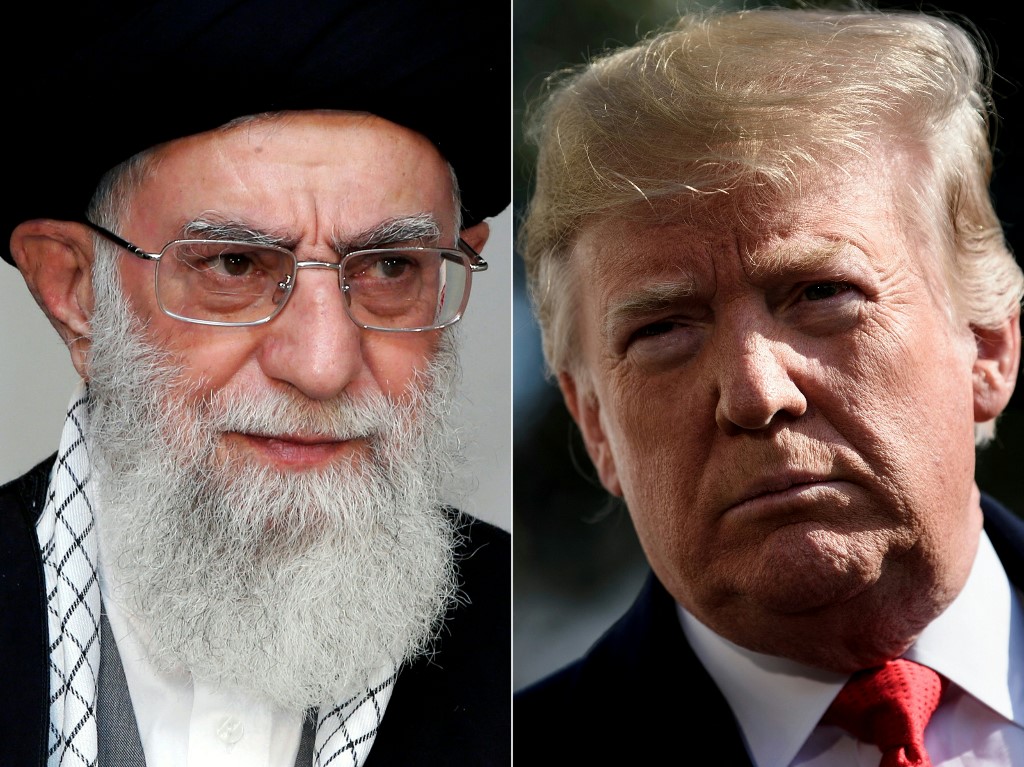
    Former U.S. President Donald Trump has issued a stark warning to Iraq regarding its political future, threatening to terminate all American support if former Prime Minister Nouri al-Maliki reassumes power. Through his Truth Social platform on Tuesday, Trump characterized Maliki’s potential return as a “very bad choice” for the nation, referencing the former leader’s previous tenure which he claimed plunged Iraq into “poverty and total chaos.”

    The political context revolves around the Coordination Framework, a Shiite parliamentary alliance with varying Iranian affiliations, which recently endorsed Maliki as their prime ministerial candidate. This development follows Iraq’s parliamentary elections and occurs amid delicate U.S.-Iraq relations. Trump explicitly stated that Maliki’s “insane policies and ideologies” would result in complete withdrawal of American assistance, dramatically concluding with his trademark slogan adapted for Iraq: “MAKE IRAQ GREAT AGAIN!”

    Historical tensions underscore this diplomatic confrontation. Maliki previously left power in 2014 following U.S. pressure, with American officials blaming his sectarian policies for creating conditions that enabled the Islamic State’s rise. The United States maintains significant economic leverage over Iraq through an arrangement established after the 2003 invasion, whereby most Iraqi oil revenue—accounting for approximately 90% of government income—is held at the Federal Reserve Bank in New York.

    The Trump statement aligns with recent diplomatic communications. Secretary of State Marco Rubio reportedly expressed similar concerns to current Prime Minister Mohammed Shia al-Sudani, and political sources indicate Washington formally communicated its negative view of Maliki to Iraqi politicians.

    Iraq’s political process has encountered obstacles, with parliament abruptly delaying Tuesday’s presidential election after Kurdish parties requested additional time to reach consensus. Traditionally, Iraq’s presidency goes to a Kurd while the prime minister comes from the Shiite majority, a convention established after Saddam Hussein’s fall.

    Regional implications are substantial. A Maliki-led government would significantly benefit Tehran amid Iran’s recent setbacks, including domestic protests and reduced influence in Syria. The current Sudani administration has maintained smoother relations with Washington, cooperating on security matters including Islamic State prisoner transfers and restraining Iran-aligned armed groups.

    Trump’s intervention marks a notable departure from conventional diplomatic practice, continuing his pattern of open political meddling in foreign nations. This approach has recently included endorsing right-wing candidates in European and Latin American elections, plus authorizing military action in Venezuela.

  • Who is Tom Homan, Trump’s ‘border tsar’ deployed to Minneapolis?

    Who is Tom Homan, Trump’s ‘border tsar’ deployed to Minneapolis?

    In a significant operational shift, the Trump administration has dispatched veteran immigration official Tom Homan to assume command of enforcement operations in Minneapolis following the fatal shooting of two U.S. citizens by federal agents within a month. Homan, who arrived in the city on Tuesday, will serve as the primary federal liaison with local officials according to White House statements.

    This personnel change coincides with the anticipated departure of Gregory Bovino, the controversial Border Patrol chief who has spearheaded the administration’s mass deportation initiatives across multiple American cities. The transition signals a strategic recalibration of enforcement tactics in a region experiencing heightened immigration-related tensions.

    Homan brings four decades of immigration enforcement experience spanning both Democratic and Republican administrations. Beginning his career as a police officer before joining Border Patrol in 1984, he ascended through the ranks of immigration enforcement, eventually leading the Enforcement and Removal Operations division under ICE during the Obama administration.

    Twice drawn from retirement by Trump administration officials—first in 2017 by then-Chief of Staff John Kelly and again in 2024 by current Chief of Staff Susie Wiles—Homan serves as the administration’s informal “border tsar,” coordinating immigration policy across agencies without requiring Senate confirmation.

    The veteran enforcer has consistently defended the administration’s broad deportation objectives, emphasizing targeting “the worst of the worst” while challenging narratives that portray law enforcement personnel negatively. However, operational realities have frequently resulted in the apprehension of non-criminal undocumented immigrants, a phenomenon Homan attributes to uncooperative “sanctuary cities.”

    While some political observers interpret Homan’s deployment as acknowledgment that Bovino’s aggressive tactics required modification, immigration advocates note both officials share similar enforcement philosophies. Homan previously defended the administration’s family separation policy that divided undocumented parents from their children.

    Michael Lukens of the Amica Center noted: “Homan represents a more polished communicator than Bovino, better equipped to frame enforcement actions favorably to media and stakeholders. This transition reflects the administration’s political calculations rather than substantive policy changes.”