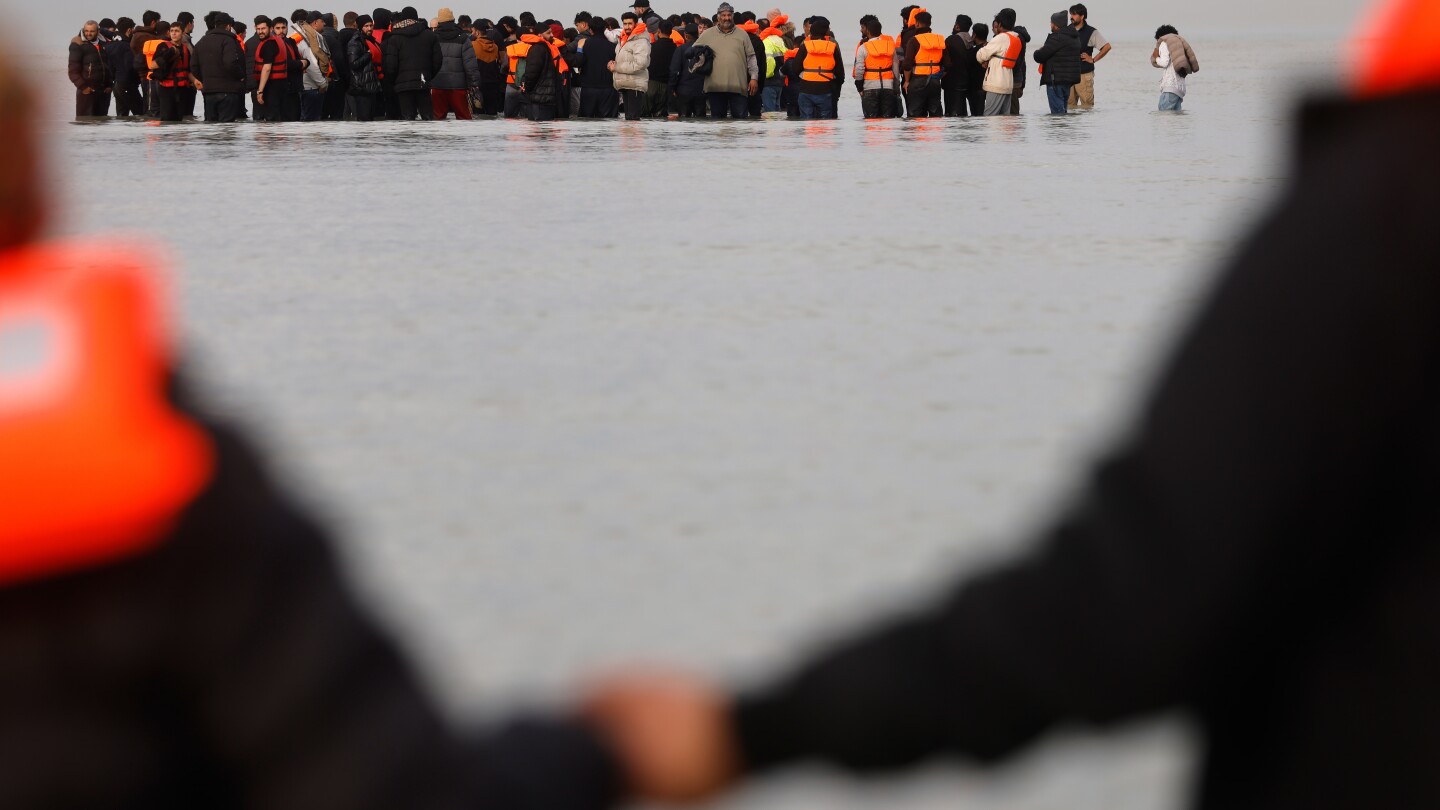
The British government is set to introduce a series of stringent asylum reforms, inspired by Denmark’s model, aimed at reducing illegal immigration and addressing the political controversy surrounding unauthorized Channel crossings. Home Secretary Shabana Mahmood will unveil the policy changes in the House of Commons on Monday, marking the latest effort to deter asylum seekers and streamline the removal of those deemed ineligible for refuge. Mahmood described the initiative as a moral imperative to secure borders and heal a nation divided over immigration, a contentious issue that has bolstered the hard-right Reform UK Party. Despite her migrant heritage, Mahmood denied that the Labour Party is adopting far-right rhetoric, emphasizing the need to address systemic flaws and prevent abuse of the asylum system. The reforms include revoking the UK’s legal obligation, established under EU law in 2005, to support asylum seekers, potentially stripping them of housing and financial allowances. Benefits may also be withheld from individuals who fail to work legally or violate laws. Additionally, refugee status will undergo regular reviews to assess the possibility of safe repatriation. The government plans to establish safer pathways for asylum claims, reducing the reliance on perilous Channel crossings. Critics, including Conservative MP Chris Philp, argue that the reforms are insufficient and lack the impact of the previously abandoned Rwanda policy. Philp dismissed the measures as superficial, likening them to ‘rearranging deck chairs on the Titanic.’ The Home Office, however, highlighted Denmark’s success in reducing asylum applications and removing 95% of ineligible applicants as a model for the UK’s new approach. Denmark, once a refuge for migrants, has faced international criticism for its restrictive policies amid Europe’s broader struggle with mass migration driven by conflict, famine, and poverty.
分类: politics
-
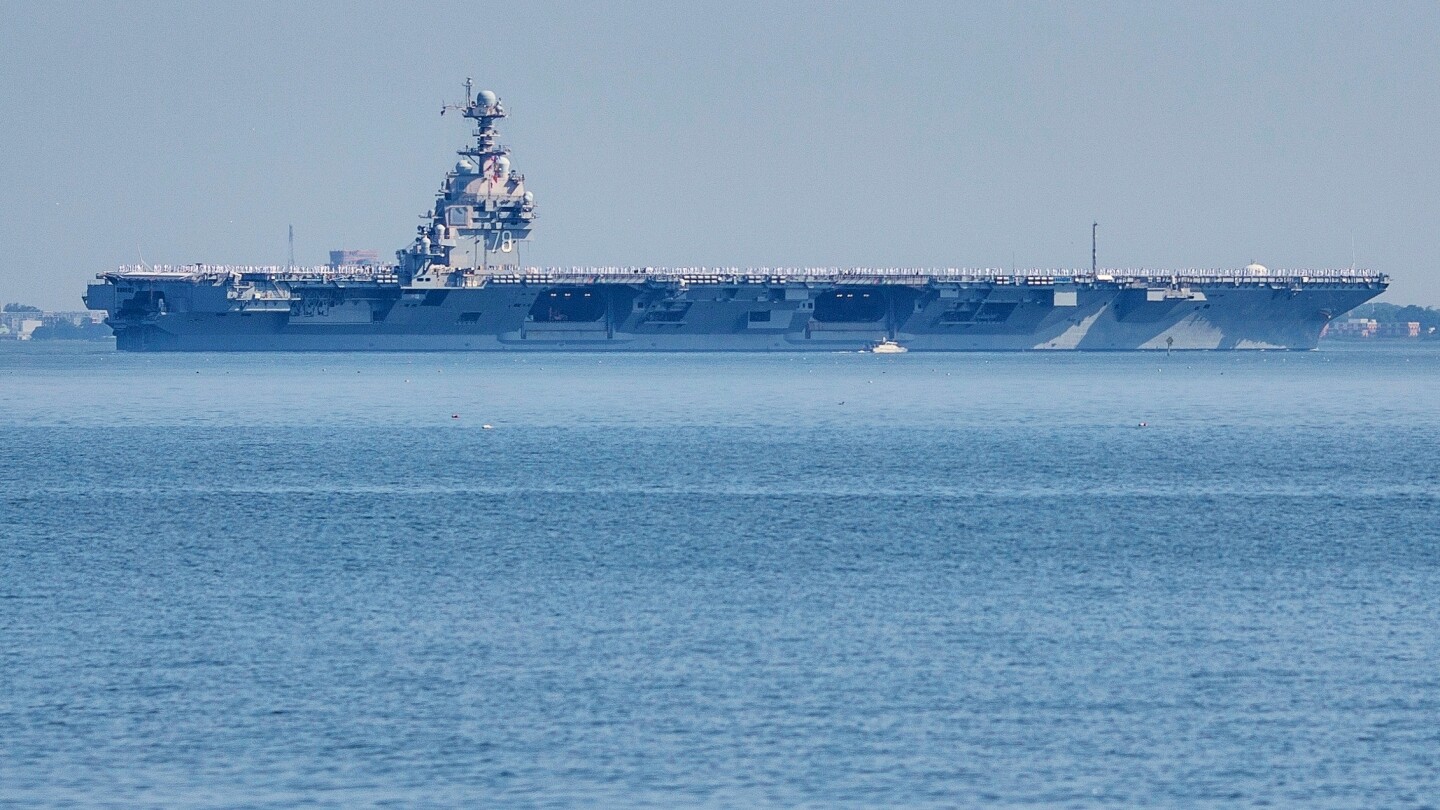
Aircraft carrier arrives in the Caribbean in major buildup near Venezuela
The USS Gerald R. Ford, the U.S. Navy’s most advanced aircraft carrier, arrived in the Caribbean Sea on Sunday, marking a significant escalation in the Trump administration’s counterdrug operations in South America. The deployment, part of “Operation Southern Spear,” brings the total number of U.S. troops in the region to approximately 12,000, supported by nearly a dozen Navy ships. The carrier strike group, which includes fighter jets and guided-missile destroyers, transited the Anegada Passage near the British Virgin Islands, according to a Navy statement. While the administration frames the buildup as a mission to combat drug trafficking, critics view it as a pressure tactic against Venezuelan President Nicolás Maduro. Since September, U.S. strikes have killed at least 80 people in 20 attacks on boats allegedly involved in drug transport. Rear Adm. Paul Lanzilotta, commander of the Ford’s strike group, emphasized the mission’s focus on protecting U.S. security against “narco-terrorism” in the Western Hemisphere. However, the administration has yet to provide evidence linking those killed to drug cartels or terrorist organizations. President Trump has hinted at expanding military action beyond maritime strikes, including potential land operations. The deployment has drawn criticism from regional leaders, the U.N. human rights chief, and U.S. lawmakers, who question the legal basis and transparency of the strikes. Meanwhile, Venezuela has mobilized troops and civilians in anticipation of possible U.S. aggression. Experts debate whether the Ford’s presence is a strategic deterrent or a provocative move, with some arguing it is ill-suited for counterdrug efforts but effective as a tool of intimidation. Elizabeth Dickinson of the International Crisis Group noted that the deployment has heightened anxieties across Latin America, with many watching closely to gauge the U.S. willingness to use military force.
-
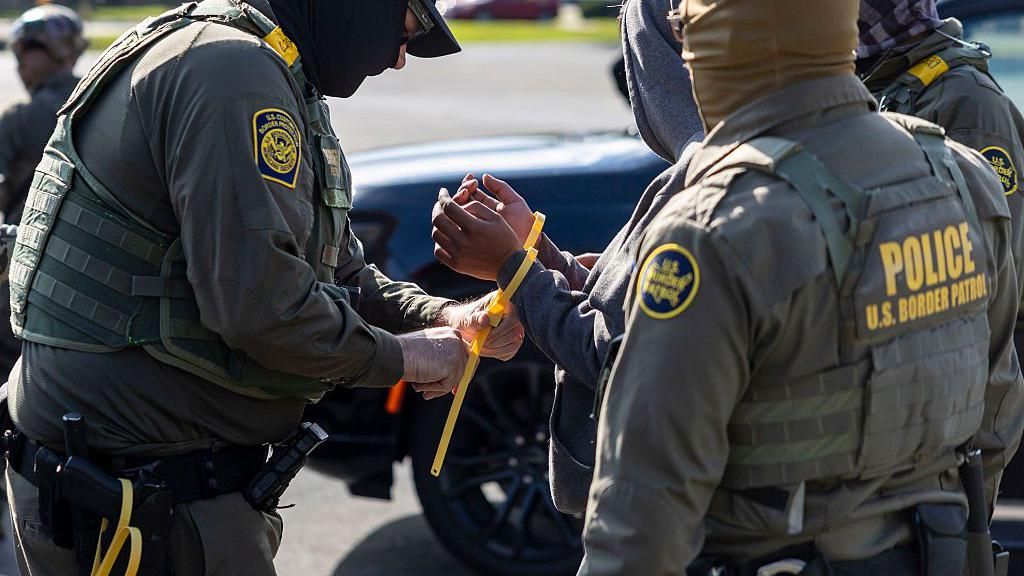
Federal agents launch immigration crackdown in city of Charlotte
The Department of Homeland Security (DHS) has launched ‘Operation Charlotte’s Web,’ a targeted immigration enforcement initiative in Charlotte, North Carolina, as part of President Donald Trump’s broader crackdown on illegal immigration. The operation, announced on Saturday, aims to apprehend ‘criminal illegal aliens’ in the Democratic-led city. However, local officials, including Mayor Li Vyles, have condemned the operation, stating it has instilled ‘unnecessary fear and uncertainty’ among residents. Since Trump’s return to office, his administration has deployed federal agents to major cities like Washington DC, Los Angeles, and Chicago, fulfilling his pledge to implement ‘the largest deportation programme’ in U.S. history. Tricia McLaughlin, DHS Assistant Secretary, emphasized the deployment of law enforcement to Charlotte to ‘ensure Americans are safe and public safety threats are removed.’ Internal government documents obtained by CBS News suggest that armored vehicles and special operations teams may be involved in the operation. Reports from The Charlotte Observer detail harrowing scenes, including church members fleeing into the woods as Border Patrol agents conducted arrests without proper identification or questioning. Inside the church, women and children wept, fearing their loved ones had been taken. A 15-year-old witness expressed disbelief, stating, ‘We thought church was safe and nothing gonna happen.’ Local bakery owner Manolo Betancur told NBC News that ‘a lot of children have lost their parents’ since the raids began. The DHS justified the operation by citing North Carolina’s failure to honor nearly 1,400 Immigration and Customs Enforcement (ICE) detainees, attributing their release to ‘sanctuary policies.’ While Charlotte is not a sanctuary city, it holds a ‘certified welcoming city’ designation, reflecting its commitment to immigration inclusion. The DHS defended the operation, asserting that ‘President Trump and Secretary [Kristi] Noem will step up to protect Americans when sanctuary politicians won’t.’ Charlotte, an ethnically diverse city with approximately 17% of its population born outside the U.S., faces ongoing uncertainty as the DHS has not disclosed the duration of the raids. Similar operations in Chicago and Los Angeles have drawn criticism for alleged excessive use of force. According to CBS, New Orleans is next on Trump’s list, with up to 200 agents potentially deployed to the city.
-
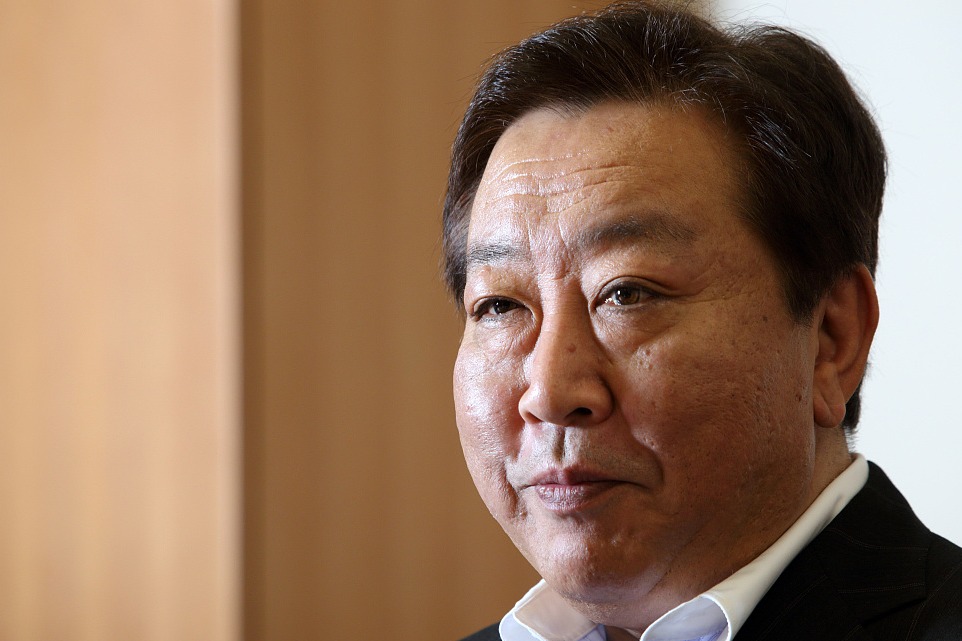
Japan’s main opposition party head urges gov’t to uphold non-nuclear principles
Yoshihiko Noda, leader of Japan’s main opposition party, the Constitutional Democratic Party of Japan (CDPJ), has called on the government to uphold the nation’s long-standing non-nuclear principles. This appeal comes amid reports that Prime Minister Sanae Takaichi is considering revising one of the Three Non-Nuclear Principles, specifically the prohibition on introducing nuclear weapons into Japanese territory. Noda, a former prime minister, emphasized Japan’s role in advocating for global nuclear abolition during a press conference in Kumamoto Prefecture. His comments followed Takaichi’s ambiguous stance on whether her defense policies would align with these principles during a recent Lower House Budget Committee hearing. The Three Non-Nuclear Principles, established in 1967 by then-Prime Minister Eisaku Sato, have been a cornerstone of Japan’s security policy. Any potential revision could mark a significant shift in the country’s defense strategy, likely sparking both domestic and international criticism. Noda has vowed to challenge Takaichi on this issue in upcoming Diet sessions.
-

Japanese protesters demand PM Takaichi’s resignation
In a significant display of public dissent, approximately 100 Japanese citizens gathered outside the Prime Minister’s official residence in Tokyo on Saturday evening, calling for the resignation of Prime Minister Sanae Takaichi. The protestors, armed with banners and chanting slogans such as ‘Takaichi step down’ and ‘Those who cannot conduct diplomacy are unfit to be prime minister,’ voiced their strong disapproval of Takaichi’s recent controversial statements regarding Taiwan. During a Diet meeting on November 7, Takaichi suggested that a potential military conflict involving Taiwan and the Chinese mainland could pose a ‘survival-threatening situation’ for Japan, potentially justifying the use of Japan’s Self-Defense Forces under the right of collective self-defense. Despite widespread criticism, Takaichi has refused to retract her comments, asserting that they align with the government’s longstanding position. In response, Chinese Ambassador to Japan Wu Jianghao met with Japan’s Vice-Minister for Foreign Affairs Takehiro Funakoshi to formally protest Takaichi’s remarks, underscoring the diplomatic tensions they have ignited.
-
Japanese anti-war groups fear Okinawa will once again become battlefield
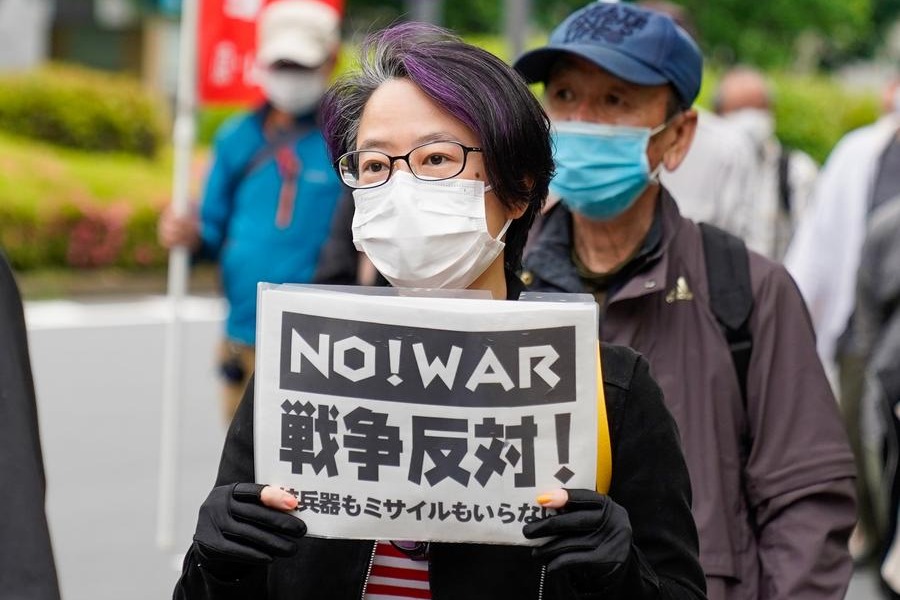
In a significant gathering in Tokyo, anti-war and anti-base organizations from Okinawa Prefecture voiced their apprehensions about Japan’s escalating military expansion in the region. The seminar, held on Friday, drew over 230 attendees, including members of the Japanese parliament, Okinawa Prefectural Assembly representatives, and local citizens. They collectively expressed profound dissatisfaction and concern over the deteriorating security environment in Okinawa and the broader Ryukyu Islands. Mizuho Fukushima, leader of Japan’s Social Democratic Party, criticized Prime Minister Sanae Takaichi’s characterization of a ‘Taiwan contingency’ as a ‘survival-threatening situation,’ labeling it as illogical. Fukushima emphasized that Japan, including Okinawa and Kyushu, is increasingly being militarized, a trend that must be halted to prevent the nation from becoming a battlefield. Yoichi Iha, former mayor of Ginowan City and a member of the House of Councillors, accused the government of exacerbating tensions by increasing reliance on U.S. military bases and accelerating military buildup. Yukako Sonan, a representative from Miyako Island, highlighted the close proximity of civilian and military facilities on small islands, warning that ordinary citizens would inevitably suffer in the event of conflict. Participants stressed the urgent need to prevent the southwestern islands from becoming war zones and to avert further deterioration of the regional security situation.
-
Outrage, rebuke from across China as Japanese PM’s erroneous remarks boil over
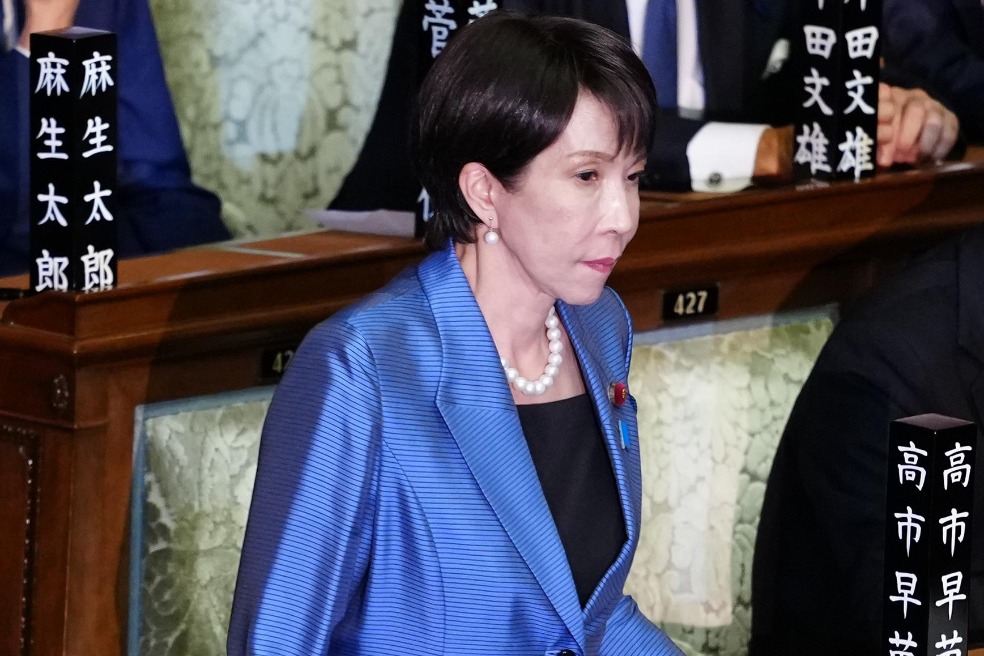
China has expressed widespread outrage and condemnation in response to recent remarks made by Japanese Prime Minister Sanae Takaichi regarding Taiwan. At a Diet meeting last week, Takaichi suggested that China’s potential use of force against Taiwan could pose a ‘survival-threatening situation’ for Japan, hinting at the possibility of military intervention in the Taiwan Strait. Her refusal to retract these comments has further escalated tensions. The People’s Liberation Army Daily, in a front-page commentary, denounced Takaichi’s remarks as historically ignorant and reflective of Japan’s right-wing ambitions to interfere militarily in Taiwan. The article emphasized that Japan’s alleged ‘survival-threatening situation’ is a pretext rooted in its militaristic past, which has caused immense suffering across Asia. Defense Ministry spokesman Jiang Bin warned that any Japanese intervention in Taiwan would result in a ‘crushing defeat’ by the People’s Liberation Army. The People’s Daily highlighted that Takaichi’s comments mark the first time since 1945 that a Japanese leader has officially linked Taiwan’s security to Japan’s collective self-defense, signaling a dangerous resurgence of militarism. Cai Liang, head of the Center for Northeast Asian Studies, criticized Takaichi’s remarks as a regression in Japan’s stance on Taiwan, violating China’s sovereignty and alarming the international community. Former Kuomintang chairperson Hung Hsiu-chu condemned Japan’s historical arrogance and interference, emphasizing that Taiwan is no longer a Japanese colony. Chinese netizens and officials have also voiced strong opposition, with the Ministry of Foreign Affairs advising Chinese citizens against traveling to Japan due to heightened risks. Vice-Foreign Minister Sun Weidong summoned the Japanese ambassador to demand an immediate retraction of the remarks, while State Council Taiwan Affairs Office spokesman Chen Binhua reiterated China’s unwavering stance against foreign interference in cross-Strait affairs.
-
Taiwan youths discuss paths to peaceful reunification
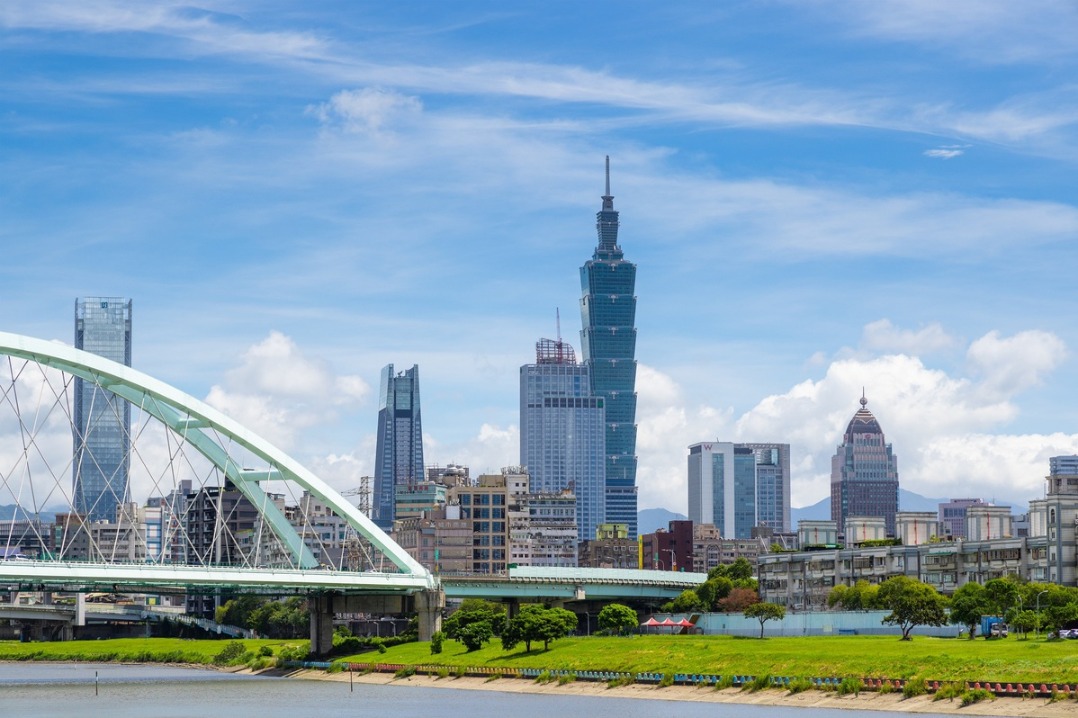
In a significant gathering hosted by the Sanhe Practice Institute, a prominent Taiwanese think tank, young scholars and representatives from various sectors convened on Saturday to deliberate on the future of cross-Strait relations. The forum, held in Taipei, centered on the pressing question: ‘In this pivotal era of the Chinese nation’s rejuvenation, what path should Taiwan take?’
Mao Zhi-yuan, a young participant, emphasized that reunification is an inevitable historical process. ‘The people of Taiwan must actively engage in advancing negotiations and propose solutions for peaceful reunification that align with Taiwan’s best interests,’ he stated.
Tan Chuan-shao, a member of Taiwan’s New Party, outlined a three-step strategy for achieving peaceful reunification. He urged Taiwanese citizens to recognize the urgency of addressing cross-Strait relations, foster open dialogue to enhance public understanding, and present Taiwan’s unique proposals for reunification. ‘It is imperative for the current generation to take the lead in pursuing peaceful reunification, rather than burdening future generations,’ Tan asserted.
Lin Wun-hau, a Taiwanese youth with experience living in both Xiamen and Jinmen, highlighted Jinmen’s transformation from a conflict zone to a hub of cross-Strait exchange as a model for future relations. ‘Jinmen’s journey demonstrates that integration with the mainland does not erode identity but offers a path to harmonious coexistence,’ Lin explained.
Su Heng, another participant, echoed this sentiment, stating, ‘Reunification is not an endpoint but a new beginning. It will not diminish Taiwan but strengthen it.’
The forum underscored the growing momentum among Taiwan’s younger generation to actively shape the future of cross-Strait relations, emphasizing dialogue, cooperation, and mutual benefit as the foundation for peaceful reunification.
-

Finland’s president urges Europe to hold its nerve as he warns no ceasefire likely soon in Ukraine
In a recent interview with The Associated Press, Finnish President Alexander Stubb emphasized that a ceasefire in Ukraine is unlikely before spring, urging European allies to maintain their support despite a corruption scandal in Kyiv. Stubb highlighted the need for ‘sisu’—a Finnish term embodying endurance, resilience, and grit—to navigate the winter months as Russia continues its hybrid attacks and information warfare across Europe. As a key mediator between U.S. President Donald Trump and Ukrainian President Volodymyr Zelenskyy, Stubb leverages his unique position to advocate for Ukraine. Finland, which shares a 1,340-kilometer border with Russia, reversed its long-standing military neutrality after Russia’s full-scale invasion of Ukraine, joining NATO in response. Stubb stressed the importance of addressing Ukraine’s security guarantees, economic recovery, and territorial claims to achieve peace. He also praised Trump’s sanctions on Russian energy companies but called for further military support to Ukraine. Stubb warned that Russia’s destabilizing tactics in Europe, including drone incursions and sabotage campaigns, require a calm and resilient response. He underscored the necessity of international pressure on Russian President Vladimir Putin to alter his strategic objectives, which continue to threaten Ukraine’s sovereignty.
-
Tens of thousands rally in Manila over corruption scandal that implicates top Philippine officials
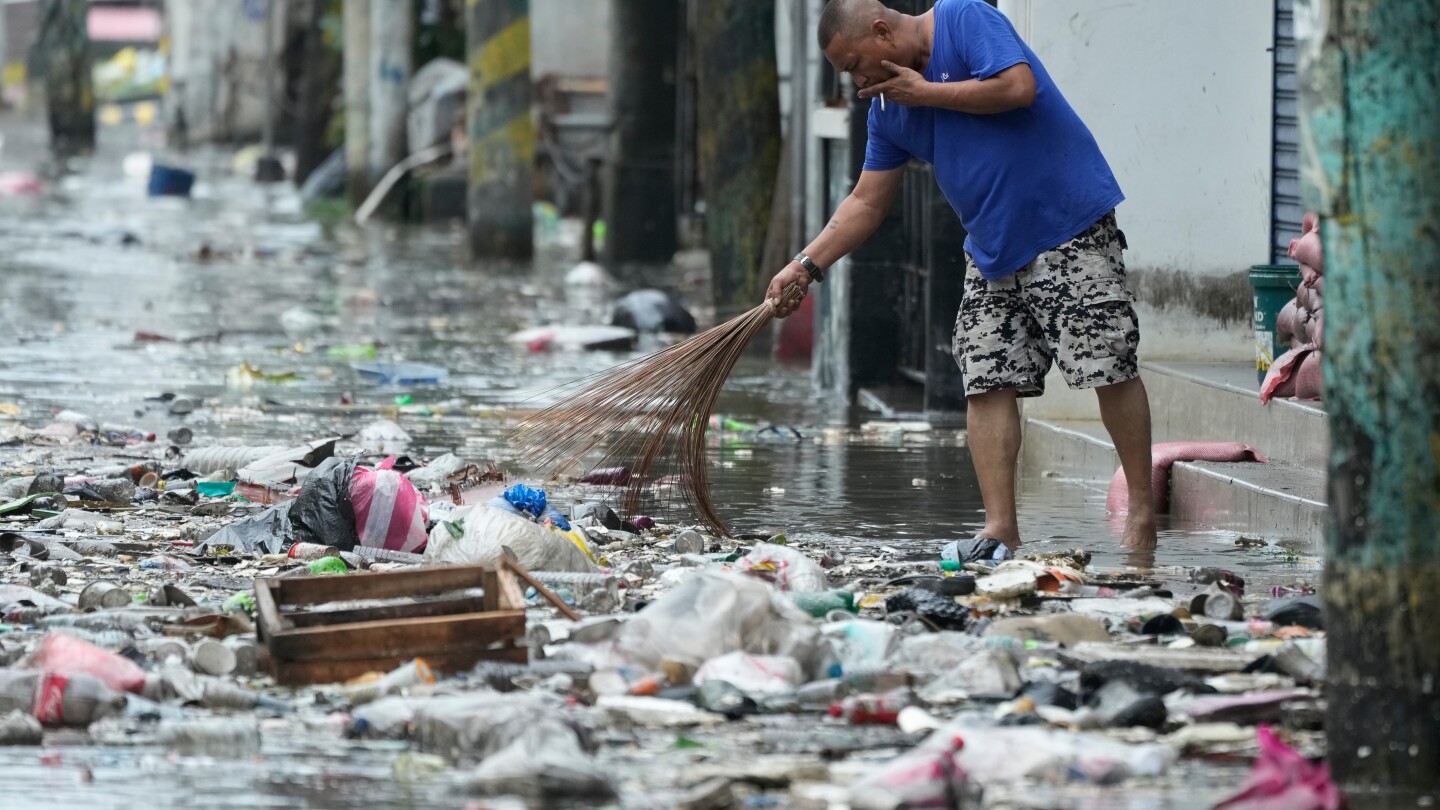
Thousands of protesters gathered in Manila, Philippines, on Sunday for a three-day rally organized by the influential religious group Iglesia Ni Cristo (Church of Christ). The demonstration aimed to demand accountability in a widespread corruption scandal involving flood-control projects, which has implicated high-ranking government officials and members of Congress. The scandal, which erupted in recent months, revealed that numerous flood defense projects were either constructed with substandard materials or never existed, despite billions of pesos allocated for their completion. Construction companies allegedly paid hefty kickbacks to politicians and officials to secure lucrative contracts and evade scrutiny. Police estimated that 27,000 participants, many dressed in white and carrying anti-corruption placards, assembled at Rizal Park. Additional protests were scheduled later in Quezon City. The rally follows President Ferdinand Marcos Jr.’s pledge to jail those implicated in the scandal by Christmas. Marcos has established an independent commission that has already filed criminal complaints against 37 suspects, including lawmakers and business executives. The scandal has sparked public outrage in a country frequently devastated by typhoons and flooding, with two recent storms claiming over 259 lives. The military and police, on high alert, ensured the rally remained peaceful, contrasting with a violent September protest near the presidential palace that injured over 100 officers. The Iglesia Ni Cristo, known for its bloc voting power, has become a significant force in Philippine politics, often courted by candidates during elections.