分类: politics

  • The Iran off-ramp is still open. Trump should take it

    The Iran off-ramp is still open. Trump should take it

    The Arabian Sea serves as the latest stage for escalating US-Iran tensions, with the USS Abraham Lincoln carrier strike group’s deployment coinciding with Supreme Leader Ali Khamenei’s warning that American aggression would ignite regional conflict. This dangerous escalation follows historical patterns of military brinkmanship that have previously led to catastrophic outcomes.

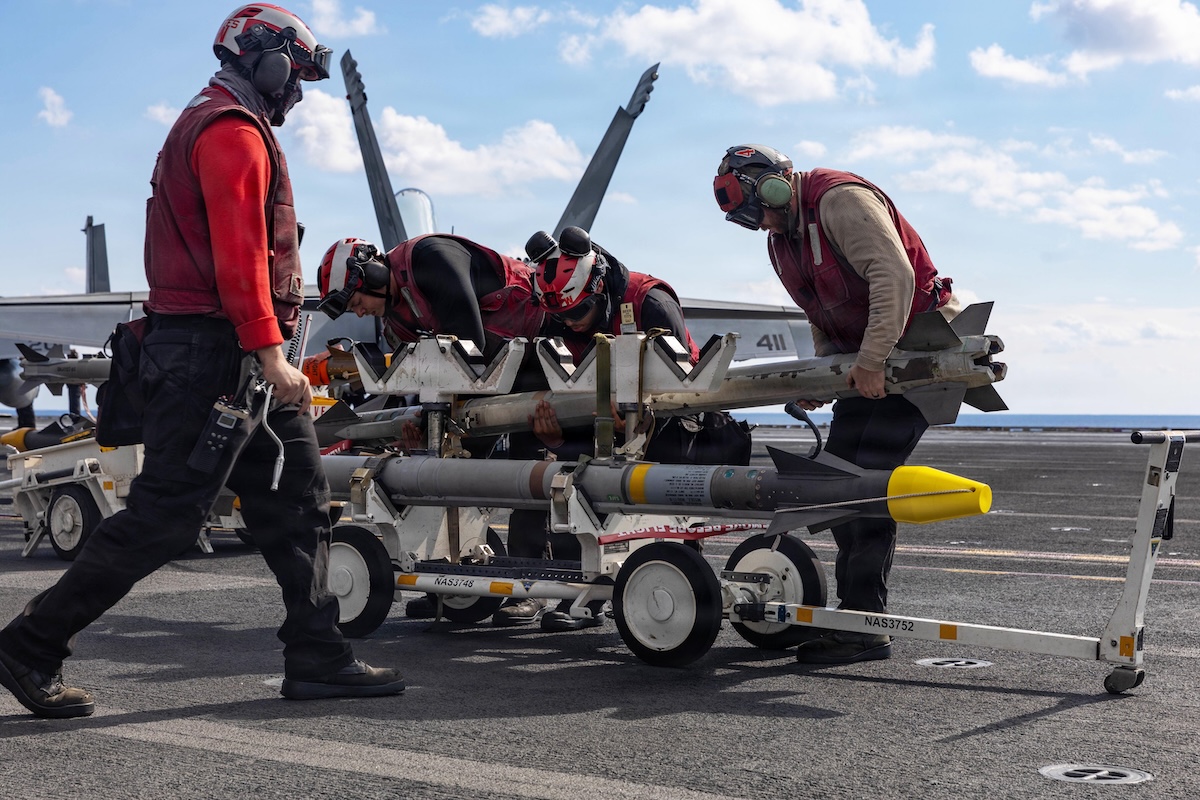
    President Trump has assembled a formidable naval presence—six destroyers, an aircraft carrier, and three littoral combat ships—exceeding the force used in recent Venezuelan operations. His rhetoric promising ‘speed and violence’ mirrors preludes to American military interventions in Iraq and Libya. Tehran responds with equal bravado, as Foreign Minister Abbas Araghchi declares Iranian forces have ‘their fingers on the trigger.’

    Beyond the theatrical posturing lies a perilous dynamic potentially spiraling beyond control. The European Union’s designation of Iran’s Revolutionary Guard Corps as a terrorist organization—met with Tehran’s reciprocal labeling of EU armies—adds accelerant to an already volatile situation. While Iranian lawmakers chanting ‘Death to America’ in parliament may perform political theater, it reflects genuine nationalist sentiment that limits Tehran’s capacity for retreat under military pressure.

    Historical precedent demonstrates that overwhelming force rarely achieves intended capitulation. Instead, it typically triggers nationalist reactions and creates domestic political imperatives that make compromise untenable. Khamenei’s characterization of recent protests as ‘a coup’ similar to 2009’s Green Movement reveals a regime perceiving existential threat, viewing concessions as potentially fatal weaknesses.

    Washington’s fundamental strategic ambiguity persists: What would military strikes actually accomplish? The stated objectives—halting Iran’s nuclear program, ending support for regional proxies, stopping protest crackdowns—are neither achievable through airstrikes nor sustainable without ground invasion, which remains off the table.

    Last year’s US strikes on Iranian nuclear facilities during the 12-day Israel-Iran conflict provide sobering precedent. Rather than intimidation, the attacks prompted Iranian retaliation against Al Udeid Air Base in Qatar and missile strikes on Israeli cities. While temporarily disrupting nuclear activities, the program remained fundamentally intact, and UN sanctions failed to eliminate enrichment capabilities. Military action produced tactical effects while exacerbating strategic deterioration.

    The broader goal of diminishing Iranian influence appears equally illusory. Despite Tehran’s regional setbacks—including Syria’s instability, Hezbollah’s leadership decimation, and pressure on Hamas and Iraqi militias—weakness often breeds desperation rather than compliance. A regime facing perceived existential threat has every incentive to escalate rather than capitulate.

    The notion that bombing Iran would catalyze democratic transition reflects historical amnesia. American interventions in Iraq and Libya consistently produced chaos rather than liberal democracy. Iranian protesters seeking economic reform and personal freedoms are unlikely to welcome foreign bombs as liberation instruments.

    Khamenei’s regional war warning should not be dismissed as mere bluster. Iran maintains demonstrated capability and willingness to strike US bases throughout the Middle East. Yemen’s Houthis, despite years of allied strikes, continue threatening Red Sea shipping—a capability that would intensify in broader conflict. The Strait of Hormuz, conduit for 20% of global oil exports, presents a likely target for Iranian mining or missile attacks, potentially spiking energy prices amid ongoing inflation concerns.

    Most alarming is the risk of direct Israeli-Iranian escalation. Israel’s government possesses its own incentives to strike Iran’s nuclear facilities before further advancement, with US-Iran conflict providing political cover. This could trigger multi-front conflagration involving multiple actors—directly contradicting stated US goals of reducing Middle Eastern entanglements.

    Despite inflammatory rhetoric, both sides have signaled negotiation willingness. Trump acknowledges Iran is ‘seriously talking’ with Washington, while Turkish President Erdogan mediates with Iranian Foreign Minister Araghchi’s Ankara visit. This diplomatic channel represents the most realistic path toward American objectives—a negotiated agreement capping enrichment levels below weapons-grade, establishing enhanced monitoring, and providing sanctions relief that might reduce economic pressures driving protests.

    Such a deal would imperfectly but effectively serve interests better than military confrontation with unpredictable outcomes and certain costs. The 2015 JCPOA demonstrated Iran’s willingness to accept significant nuclear constraints for economic integration. That agreement collapsed not due to Iranian violation but US withdrawal. Rebuilding trust remains difficult but feasible with demonstrated seriousness from both sides.

    Critics arguing that diplomacy rewards bad behavior misunderstand international relations fundamentals. States routinely engage unsavory regimes when strategic interests demand—America maintains relationships with Saudi Arabia, Egypt, and other authoritarian states. The relevant question isn’t whether Iran’s government is virtuous, but whether engagement serves American interests better than confrontation.

    This crisis tests whether Washington has learned from two decades of Middle Eastern misadventures. The consistent pattern sees hawks promising military force producing quick results, skeptics warning of quagmires, followed by unexpected costs accumulating without promised benefits.

    America faces genuine strategic challenges demanding attention and resources—China competition, technological leadership maintenance, domestic infrastructure needs, and alliance management. Protracted conflict with Iran would consume enormous resources while distracting from these priorities.

    Iran’s weakened regional position, economic distress, and domestic unrest provide diplomatic leverage. Rather than repeating failed bombing strategies, Washington should negotiate concrete limits on Iranian capabilities while accepting Iran’s enduring regional influence.

    The current tensions could indeed degenerate into regional war given ominous precedents, escalating rhetoric, and military positioning. But this outcome remains a choice, not inevitability. The realist approach acknowledges Iran’s repressive government and objectionable activities while recognizing military action’s unlikely improvement of either situation. Diplomacy with adversaries proves difficult and frustrating but remains the least bad option available.

    Washington unquestionably possesses military capability to strike Iran. The pertinent question is whether it possesses strategic wisdom to recognize that capability alone doesn’t equal effectiveness, and that the hardest but smartest choice often avoids war rather than wages it. The diplomatic off-ramp remains open—taking it requires swallowing pride and accepting imperfect victory. The alternative—another Middle Eastern war with unpredictable consequences—follows a road traveled before, leading nowhere beneficial.

  • Bill, Hillary Clinton to testify in US House Epstein probe

    Bill, Hillary Clinton to testify in US House Epstein probe

    Former President Bill Clinton and former Secretary of State Hillary Clinton have consented to provide testimony before a congressional investigation examining the handling of Jeffrey Epstein cases, effectively avoiding potential contempt proceedings. The announcement came through Clinton spokesman Angel Urena via social media platform X, stating the former first couple would participate while emphasizing their desire to “set a precedent that applies to everyone.”

    The House Rules Committee had previously advanced resolutions accusing the Clintons of defying subpoenas requiring their in-person appearance to discuss connections with Epstein, the convicted sex offender who died in custody in 2019. The investigation focuses on how authorities managed earlier probes into Epstein’s activities and his extensive network among global business and political elites.

    This development occurs amid intense partisan tensions, with Democrats characterizing the probe as a weaponized effort targeting political opponents of former President Donald Trump—who himself maintained longstanding associations with Epstein but has not been summoned to testify. Republicans justify the scrutiny based on Bill Clinton’s documented use of Epstein’s private aircraft during the early 2000s for Clinton Foundation-related humanitarian missions.

    Both Clintons had initially challenged the subpoenas’ validity, arguing they lacked clear legislative purpose, and instead submitted sworn written statements detailing their knowledge of Epstein and his convicted associate Ghislaine Maxwell. In these statements, Bill Clinton acknowledged flights on Epstein’s plane while denying visits to his private island, with Hillary Clinton asserting no meaningful interactions with Epstein whatsoever.

    Following the Clintons’ agreement to testify, the Rules Committee suspended its scheduled vote on contempt proceedings, which had threatened to expose divisions within Democratic ranks regarding accountability versus partisan manipulation of the Epstein scandal.

  • Seeking shelter from Trump’s fury, U.S. trade partners reach deals with each other

    Seeking shelter from Trump’s fury, U.S. trade partners reach deals with each other

    WASHINGTON — America’s traditional allies are implementing unprecedented economic countermeasures against President Donald Trump’s volatile trade policies, accelerating efforts to reduce dependence on the United States after experiencing what they characterize as unreliable negotiations.

    Multiple nations and economic blocs are forging new alliances and trade agreements that deliberately exclude the United States, creating alternative economic ecosystems in response to what they perceive as Trump’s weaponization of trade relationships. The European Union recently finalized a landmark trade agreement with India following nearly two decades of negotiations, while simultaneously securing a quarter-century-in-the-making pact with Mercosur nations in South America.

    Financial institutions worldwide are responding with concrete actions rather than mere rhetoric. Central banks are systematically diversating their reserves away from U.S. Treasury notes and increasing gold acquisitions, a movement that economists warn could elevate interest rates and consumer prices for American citizens already grappling with inflation.

    Trade experts note that previously concluded agreements with the Trump administration have proven inadequate protection against subsequent tariff threats. “Our trading partners are discovering that the largely one-sided deals they concluded with the U.S. provide little protection,” stated Wendy Cutler, former U.S. trade negotiator and current senior vice president at the Asia Society Policy Institute.

    The administration maintains a contradictory stance regarding these developments. White House spokesman Kush Desai insists that “President Trump remains committed to the strength and power of the U.S. Dollar as the world’s reserve currency,” even as the currency’s value recently hit its lowest point since 2022 against several major currencies.

    Analysts observe that nations with deep security and economic ties to the United States—including South Korea and Canada—face particularly complex dilemmas. These countries must balance their dependency on American markets and protection with the need to respond to Trump’s unpredictable tariff announcements, which frequently target even longstanding allies.

    According to Daniel McDowell, political scientist and author of “Bucking the Buck,” the fundamental shift stems from America’s transformation under Trump from a source of global economic stability to a driver of unpredictability. “As global perceptions of the U.S. are changing,” McDowell noted, “it is only natural that investors—public and private alike—are reconsidering their relationship with the dollar.”

  • UK politician Peter Mandelson under scrutiny over alleged leaks to Jeffrey Epstein

    UK politician Peter Mandelson under scrutiny over alleged leaks to Jeffrey Epstein

    British authorities have launched a comprehensive assessment into whether former Labour Party heavyweight Peter Mandelson should face criminal prosecution for allegedly sharing sensitive government intelligence with convicted financier Jeffrey Epstein. The investigation follows the release of over 3 million documents by the U.S. Justice Department that reveal extensive connections between the prominent politician and the disgraced billionaire.

    The 72-year-old politician, who previously held senior government positions including UK ambassador to Washington, resigned from the Labour Party on Sunday amid mounting pressure. The newly uncovered evidence suggests Mandelson maintained communications with Epstein even after the financier’s 2008 conviction for soliciting minors.

    Financial records indicate Epstein transferred approximately $75,000 across three payments during 2003-2004 to accounts associated with Mandelson or his partner, Reinaldo Avila da Silva. While Mandelson claims no recollection of these transactions and questions their authenticity, he acknowledged accepting £10,000 from Epstein in 2009 for his partner’s osteopathy course, calling it ‘a lapse in our collective judgment.’

    More seriously, documents reveal Mandelson—while serving as Business Secretary—shared internal government reports with Epstein regarding post-financial crisis economic strategies, including asset sales and banker bonus tax reductions. In one particularly concerning instance, he allegedly informed Epstein about a 500 billion euro bailout package on the same day European governments announced the currency stabilization measure.

    Prime Minister Keir Starmer has ordered an urgent civil service review of all Mandelson-Epstein communications during his government tenure. Concurrently, authorities are exploring parliamentary procedures to revoke Mandelson’s lifetime peerage and remove him from the House of Lords.

    Epstein died in federal custody in 2019 while awaiting trial on multiple sexual abuse charges. The ongoing investigation represents one of the most significant political scandals in recent UK history, touching upon national security breaches and ethical violations at the highest levels of government.

  • China’s top legislature schedules session for Wednesday

    China’s top legislature schedules session for Wednesday

    BEIJING – The Standing Committee of China’s 14th National People’s Congress (NPC), the country’s supreme legislative body, will conduct its twentieth plenary session in the capital on Wednesday. This scheduling decision was formally ratified during a Monday assembly of the NPC Standing Committee’s Council of Chairpersons, overseen by Committee Chairman Zhao Leji.

    The upcoming session’s provisional agenda highlights several critical parliamentary functions, with particular emphasis on the examination of official documentation concerning the qualifications of NPC delegates. This procedural review represents a routine yet essential component of the legislature’s oversight responsibilities, ensuring the proper credentialing and compliance of its members.

    The convening of this session continues the scheduled work of China’s primary lawmaking institution during its current term. These regular meetings facilitate the ongoing legislative processes and governmental supervision duties mandated by China’s constitutional framework. The NPC Standing Committee operates as the permanent working body of the full National People’s Congress, exercising legislative authority and making key decisions between the annual full congressional sessions.

    This gathering marks another institutional step in the governance mechanisms through which China’s legislative branch addresses national policy development and parliamentary affairs. The session’s outcomes will contribute to the continuous operation of China’s political system and its legal administration structures.

  • Chinese premier urges efforts to boost development, improve people’s well-being

    Chinese premier urges efforts to boost development, improve people’s well-being

    During an official inspection visit to Shandong province on February 2, 2026, Chinese Premier Li Qiang emphasized the critical importance of advancing regional development while simultaneously enhancing public welfare and strengthening economic momentum through more substantial and effective measures.

    As a senior member of the Standing Committee of the Political Bureau of the Communist Party of China Central Committee, Premier Li identified smart manufacturing as the cornerstone for driving technological transformation and industrial modernization. He specifically highlighted the necessity of actively deploying artificial intelligence technologies to comprehensively restructure the entire production and manufacturing chain throughout its complete lifecycle.

    The Premier’s agenda included detailed briefings on Shandong’s energy infrastructure development and nuclear power initiatives. He stressed the vital need for coordinated efforts in constructing and safely operating clean energy projects, while simultaneously enhancing technological capabilities and regulatory supervision to bolster support for establishing a contemporary energy system.

    In a significant policy development, Premier Li presided over a symposium to gather expert opinions and recommendations concerning the draft government work report and the preliminary outline of the 15th Five-Year Plan for Economic and Social Development. During these discussions, he urged governmental authorities at all levels to capitalize on their regional comparative advantages and actively cultivate new growth drivers.

    Premier Li outlined several priority areas for concentrated development efforts, including the establishment of new quality productive forces adapted to local conditions, the improvement of domestic economic circulation mechanisms, and the promotion of employment opportunities alongside resident income growth. These initiatives are expected to form the foundation of China’s development strategy through the latter half of the 2020s.

  • Potential US-Iran nuclear talks face mixed signals amid rising tensions

    Potential US-Iran nuclear talks face mixed signals amid rising tensions

    The prospect of renewed nuclear negotiations between the United States and Iran remains shrouded in uncertainty as conflicting signals emerge from both capitals. While initial reports suggested an impending meeting between US Special Envoy Steve Witkoff and Iranian Foreign Minister Seyyed Abbas Araghchi in Istanbul, Iranian officials have since cast doubt on these arrangements, indicating that talks remain in a preliminary phase.

    The diplomatic maneuvering unfolds against a backdrop of escalating military deployments and heated rhetoric. The Trump administration has recently positioned an aircraft carrier strike group and additional warships to the Middle East, while President Trump himself issued warnings regarding Iran’s nuclear ambitions. Simultaneously, Iran’s Armed Forces’ Chief of Staff Abdolrahim Mousavi cautioned that any US military action could trigger regional conflict.

    At the heart of the potential negotiations lies a fundamental divergence in priorities. Iranian officials consistently emphasize sanctions relief as their primary objective, with Foreign Ministry spokesperson Esmaeil Baghaei stating that removing ‘unjust sanctions’ remains Tehran’s core demand. Conversely, Washington insists any agreement must include stringent limitations on uranium enrichment, removal of already enriched materials, restrictions on long-range missiles, and curtailment of Iranian support for regional proxies—conditions analysts describe as particularly challenging for Iran to accept.

    Regional dynamics further complicate the diplomatic landscape. Joint US-Israeli naval exercises in the Red Sea demonstrate strengthened military coordination, while several Middle Eastern nations, including Jordan, the UAE, and Saudi Arabia, have provided assurances that their territories will not be used for attacks against Iran. Meanwhile, Tehran continues to attribute domestic unrest to foreign interference, recently announcing the arrest of four foreigners allegedly involved in riots and releasing detailed casualty figures from recent protests.

    The path to negotiation appears fraught with obstacles, as both nations navigate complex domestic and regional considerations while maintaining military preparedness. The coming days will prove crucial in determining whether diplomatic channels can overcome escalating tensions and establish a framework for substantive dialogue.

  • Iran president orders talks as Washington hopeful of deal

    Iran president orders talks as Washington hopeful of deal

    In a significant diplomatic development, Iranian President Masoud Pezeshkian has authorized the commencement of nuclear negotiations with the United States, according to reports from Iranian state media on Monday. This move follows statements from US President Donald Trump expressing optimism about reaching a diplomatic agreement to prevent military confrontation with the Islamic Republic.

    The announcement comes amid escalating regional tensions, with Trump having previously threatened military action and deployed an aircraft carrier group to the Middle East. While maintaining this military pressure, the US administration has simultaneously expressed willingness to pursue diplomatic channels, creating a complex dual-track approach to Iran policy.

    Fars News Agency, citing unnamed government sources, confirmed that “President Pezeshkian has ordered the opening of talks with the United States” specifically addressing nuclear matters, though precise timing details remain unspecified. Iranian officials indicated they are developing a negotiation framework expected to be finalized within days, with communication between the two nations being facilitated through regional intermediaries.

    The diplomatic maneuvering occurs against a backdrop of mutual warnings. Supreme Leader Ali Khamenei cautioned that any US military action could trigger broader regional conflict, stating that while Iran would not initiate hostilities, it would deliver a “hard punch” to any aggressors. Trump responded dismissively to these warnings, emphasizing US military capabilities while maintaining his preference for a negotiated settlement.

    Regional diplomacy appears to be intensifying, with reports indicating that Turkey, Egypt, and Qatar are mediating arrangements for a meeting between Trump’s special envoy and senior Iranian officials in Ankara later this week. Meanwhile, Iran’s parliament escalated tensions with the European Union by declaring all EU militaries “terrorist groups” in retaliation for the bloc’s similar designation of Iran’s Revolutionary Guard.

  • Vatican’s ‘trial of the century’ resumes after prosecutors suffer embarrassing setbacks on appeal

    Vatican’s ‘trial of the century’ resumes after prosecutors suffer embarrassing setbacks on appeal

    The Vatican’s landmark financial misconduct trial entered a pivotal appeals phase this week following significant setbacks for papal prosecutors that could fundamentally alter the outcome of the high-profile case. The proceedings, involving former Cardinal Angelo Becciu and eight co-defendants convicted of financial crimes in December 2023, face unprecedented challenges after the Vatican’s Supreme Court upheld a lower court’s decision to dismiss the prosecution’s appeal.

    The case suffered another major blow when chief prosecutor Alessandro Diddi abruptly resigned from the proceedings rather than face potential removal by the Cassation court. This development follows the emergence of controversial WhatsApp conversations that have raised serious questions about the trial’s integrity. These communications document extensive behind-the-scenes efforts to target Cardinal Becciu and suggest questionable conduct involving Vatican police, prosecutors, and even Pope Francis himself.

    Defense attorneys successfully argued that the chats demonstrated Diddi’s partiality in handling evidence and witnesses, rendering him unfit to continue his prosecutorial role. Although Diddi maintained the allegations were “unfounded,” he ultimately recused himself to prevent further damage to the judicial process.

    The original trial, initiated in 2021, centered on the Vatican’s controversial €350 million investment in London real estate. Prosecutors alleged that brokers and church officials defrauded the Holy See of millions through excessive fees and commissions, subsequently extorting additional funds to relinquish property control. While the tribunal convicted defendants on several charges including embezzlement and fraud, it rejected the prosecution’s broader conspiracy theory.

    The appeals process now focuses on defense arguments regarding Pope Francis’s direct involvement in the investigation. Defense teams contend their clients cannot receive a fair trial within an absolute monarchy where the pope wields supreme judicial power. Critical to this argument are four secret executive decrees signed by Francis in 2019-2020 that granted prosecutors extraordinary surveillance powers without judicial oversight or official publication.

    Legal experts have criticized these decrees for violating fundamental fair trial principles, particularly the “equality of arms” between defense and prosecution. The Vatican maintains that all defendants received fair proceedings, despite internal acknowledgments that the secrecy surrounding the papal decrees created significant legal problems. The appeals court must now navigate the complex theological and legal dilemma that the pope, while theoretically subject only to divine judgment, cannot promulgate laws violating fundamental rights.

  • Forum pins hope on younger generation to grow US-China relations

    Forum pins hope on younger generation to grow US-China relations

    ATLANTA – A specialized forum dedicated to examining the trajectory of Sino-American relations has concluded that engaging younger generations represents the most promising pathway toward stabilizing the increasingly complex bilateral relationship. The 2026 Jimmy Carter Forum on US-China Relations, held January 30 in Atlanta, brought together veteran diplomats, academics, and professionals who have built careers navigating the evolving dynamics between the world’s two largest economies.

    The conference, exclusively featuring female speakers to highlight women’s contributions to bilateral relations, opened with a keynote address from Sarah Beran, former deputy chief of mission at the US embassy in Beijing and senior director for China and Taiwan affairs on the White House National Security Council. Beran characterized the relationship as demonstrating ‘notable resilience’ despite nearly a decade of strategic competition, while acknowledging a concerning ‘structural decline with no clear endpoint.’

    Veteran participants like Jan Berris, vice-president of the National Committee on US-China Relations and a ping pong diplomacy participant since 1971, described current conditions as ‘the worst time in the relationship.’ This assessment stood in stark contrast to the ‘golden age’ experienced by younger panelists including Elizabeth Knup of The Asia Society, Caroline Pan of the 1990 Institute, and Rosie Levine of the US-China Education Trust, all of whom had formative professional experiences in China during more cooperative eras.

    Despite acknowledging significant challenges in people-to-people exchanges – from policy restrictions to funding limitations – participants identified digital platforms as unexpected bridges between American and Chinese youth. Levine highlighted how social media content on Instagram and TikTok has generated genuine curiosity about contemporary Chinese life among American youth, often contradicting mainstream media narratives.

    Practical examples of continued engagement emerged from younger attendees. Mackenzie Miller, program manager of The Penn Project on the Future of US-China Relations, reported observing ‘very engaged and very interested’ American students currently studying in China. Emily Conrad, a PhD candidate at Fudan University building a literal US-China family with her Chinese husband, noted the democratizing effect of Chinese social platforms like Xiaohongshu (Little Red Book) in making Chinese culture accessible to Americans.

    The consensus emerged that while returning to previous eras of cooperation remains unlikely, cultivating mutual understanding through digital exchanges, educational programs, and cultural curiosity represents the most viable strategy for managing strategic competition and preventing escalation.