分类: politics

  • Trump-appointed panel approves White House ballroom project

    Trump-appointed panel approves White House ballroom project

    The Commission of Fine Arts has granted overwhelming approval for former President Donald Trump’s controversial ballroom project at the White House, despite significant opposition from preservation groups and the public. The presidential-appointed panel endorsed the design following architectural modifications addressing initial commission concerns.

    The project, which necessitated the demolition of the White House’s East Wing in October 2025, has been championed by Trump as essential for national security and diplomatic hospitality. “We must protect the country and its guests,” stated Commission Chairman Rodney Mims Cook Jr., emphasizing the facility’s purported century-and-a-half necessity.

    Opposition has been substantial, with the National Trust for Historic Preservation filing litigation to halt construction, citing non-compliance with mandated review processes. Public sentiment appears largely against the project, with Commission Secretary Thomas Luebke revealing over 2,000 public comments received, with more than 99% expressing opposition.

    Trump maintains that current White House facilities are inadequate for hosting significant national events and foreign dignitaries. The former president has promised a privately-funded structure that will become “the most beautiful ballroom anywhere in the world,” though specific donor details remain undisclosed.

    The development continues to generate intense debate regarding historical preservation versus executive modernization ambitions at America’s most iconic residence.

  • Venezuela’s National Assembly set to resume tense debate on a sweeping amnesty bill

    Venezuela’s National Assembly set to resume tense debate on a sweeping amnesty bill

    CARACAS, Venezuela — Venezuela’s National Assembly reconvened Thursday to deliberate a landmark amnesty bill that could liberate hundreds detained for political activities, marking a significant policy shift in the wake of former President Nicolás Maduro’s dramatic capture by U.S. forces. The proposed legislation offers potential relief to opposition figures, activists, human rights defenders, and journalists targeted during the ruling party’s 27-year tenure. Last week’s debate stalled over contentious eligibility criteria, particularly regarding exiled individuals who fled to evade detention, revealing substantial resistance from government loyalists toward granting opposition members reprieve. Acting President Delcy Rodríguez introduced the measure weeks after U.S. military operatives apprehended Maduro in a January 3 raid in Caracas, extraditing him to New York to confront drug trafficking allegations. This amnesty initiative represents Venezuela’s most substantial policy reversal since commencing compliance with Trump administration directives, including last month’s comprehensive overhaul of national oil industry regulations. The bill explicitly acknowledges Venezuela’s political prisoner crisis—a reality long denied by authorities—by proposing “general and full amnesty for crimes or offenses” during politically turbulent periods since 1999, including events surrounding the 2024 presidential election that triggered widespread protests and over 2,000 arrests. While lawmakers approved the measure’s foundational purpose, they suspended proceedings over coverage disputes, including whether government-accused individuals living in exile or hiding domestically should qualify. Ruling party legislators, including Maduro’s son, argued during debates that beneficiaries must first submit to Venezuela’s justice system, citing legal prohibitions against trials in absentia. This position disregards documented judicial irregularities where defendants frequently face fabricated charges, lack legal representation, and are denied access to incriminating evidence within a system dominated by ruling-party-aligned judges. Prisoners’ rights organization Foro Penal estimates over 600 individuals remain incarcerated for political reasons. Although Rodríguez’s administration pledged significant prisoner releases following Maduro’s capture, human rights monitors and families have criticized the slow implementation pace, with only 448 documented releases. Relatives awaiting loved ones’ freedom have maintained vigils outside detention facilities, with some initiating hunger strikes last Saturday.

  • Philippine VP Sara Duterte faces fourth impeachment amid 2028 presidential bid

    Philippine VP Sara Duterte faces fourth impeachment amid 2028 presidential bid

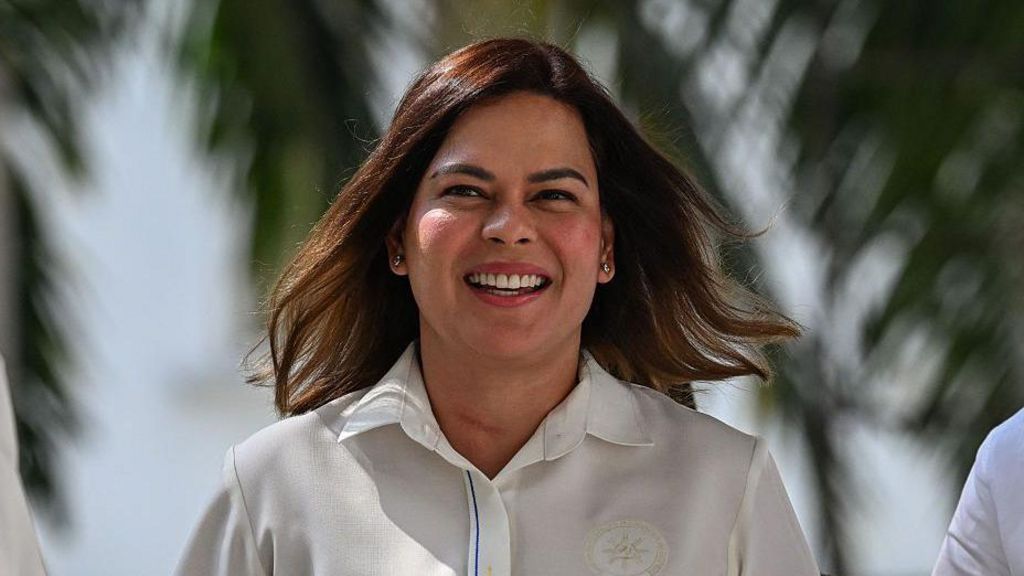
    Philippine Vice President Sara Duterte confronts her fourth impeachment complaint this year, marking a significant escalation in political challenges following her announcement to pursue the presidency in 2028. The allegations center on the purported mishandling of 612.5 million Philippine pesos (approximately $39 million USD) in confidential funds during her initial 18 months in office commencing July 2022.

    Documentation reveals an extraordinary expenditure pattern, with 500 million pesos allegedly depleted within merely 11 days in December 2022. Official reports indicate these funds were primarily allocated for rental properties designated as ‘safety houses.’ Additionally, the Department of Education’s confidential allocation of 112.5 million pesos was reportedly transferred to Duterte’s security personnel by special disbursing officer Edward Fajarda.

    The Commission on Audit has formally disallowed at least 73 million pesos from these expenditures, citing insufficient accountability measures. Investigators have identified numerous acknowledgment receipts issued to non-existent recipients, including one ‘Mary Grace Piattos’ who appears in no official government records.

    Beyond financial irregularities, the impeachment articles reference Duterte’s alleged disrespect for congressional oversight authority and connection to extrajudicial killings during her tenure as Davao City mayor under her father’s presidency. Most explosively, the complaints cite documented claims that Duterte maintained readiness to assassinate President Ferdinand Marcos Jr., First Lady Liza Araneta-Marcos, and former House Speaker Ferdinand Martin Romualdez.

    The latest complaint, formally submitted by lawyer Nathaniel Cabrera with legislative endorsement, now awaits procedural inclusion in the plenary agenda by March 2nd. Philippines’ impeachment mechanisms require substantial political support to advance, often allowing officials with strong parliamentary alliances to avoid full trials despite serious allegations.

  • Ex-South Korean president Yoon Suk Yeol sentenced to life in insurrection trial

    Ex-South Korean president Yoon Suk Yeol sentenced to life in insurrection trial

    In a landmark ruling that has captured national attention, Seoul Central District Court sentenced former President Yoon Suk Yeol to life imprisonment on Thursday for orchestrating an insurrection and abusing presidential authority. The verdict concludes a highly watched trial in a nation grappling with deep political divisions.

    The court found Yoon guilty of attempting to impose martial law in December 2024, an action prosecutors characterized as “destroying the liberal democratic constitutional order” by undermining the National Assembly and Election Commission. While prosecutors had sought capital punishment, the court delivered a life sentence—the most severe judicial consequence yet for the ousted leader.

    The attempted martial law declaration, which lasted approximately six hours before being defeated by parliamentary vote and mass public protests, triggered a national political crisis that tested South Korea’s democratic institutions. The court additionally ruled on charges that Yoon ordered military forces to storm parliament, detain political opponents, and blockade opposition party facilities.

    Yoon, 65, maintained his innocence throughout proceedings, arguing that his actions fell within presidential authority and were necessary to address opposition parties’ obstruction of government functions. The conservative former prosecutor faces multiple legal battles, having already received a five-year sentence in January for obstructing authorities attempting to arrest him following the martial law attempt.

    Security was heightened around the courthouse with police buses forming protective cordons, reflecting the trial’s significance in a country that hasn’t executed anyone since 1997. Current President Lee Jae Myung commended the public’s resistance to martial law, suggesting the Korean people should be considered for a Nobel Peace Prize for their nonviolent opposition.

    Legal experts anticipate appeals that could extend the judicial process beyond the typical two-year timeframe for such cases, regardless of Thursday’s verdict.

  • S. Korea’s ex-president Yoon sentenced to life in prison on insurrection

    S. Korea’s ex-president Yoon sentenced to life in prison on insurrection

    In a landmark ruling that marks a dramatic fall from power, former South Korean President Yoon Suk-yeol has been sentenced to life imprisonment for insurrection charges related to his declaration of emergency martial law. The Seoul Central District Court delivered its verdict Thursday in a proceeding broadcast live nationwide, creating a historic moment in South Korea’s democratic journey.

    The court determined that Yoon’s deployment of military forces to the National Assembly in December 2024 constituted a direct assault on constitutional order. Presiding judges emphasized that declaring martial law without legitimate cause—specifically absent war, incident, or equivalent national emergency—represented an unconstitutional power grab designed to subvert parliamentary authority.

    Prosecutors from the independent counsel team led by Cho Eun-suk had sought capital punishment for the ousted leader, arguing he orchestrated a systematic attempt to undermine South Korea’s democratic foundations. The court instead imposed life imprisonment, the maximum penalty short of execution for insurrection ringleaders under South Korean law.

    This case represents the third instance in South Korean history where a former president faced insurrection charges, following predecessors Chun Doo-hwan and Roh Tae-woo who were convicted for their roles in military coups and martial law crackdowns.

    The judicial proceedings revealed coordinated efforts between Yoon and senior security officials to obstruct parliamentary functions. Former Defense Minister Kim Yong-hyun received a 30-year sentence for his central role in mobilizing military resources, while former Defense Intelligence Commander Noh Sang-won and former National Police Agency Commissioner Cho Ji-ho received 18 and 12-year terms respectively.

    The controversial martial law declaration occurred on December 3, 2024, but was revoked hours later through legislative action. This triggered a constitutional crisis that ultimately led to Yoon’s impeachment in April 2025 and subsequent indictment while in detention this past January.

    The court’s comprehensive ruling addressed eight defendants total, with all receiving significant sentences for their participation in what judges characterized as a deliberate attack on South Korea’s democratic institutions.

  • What to know about the arrest of Andrew Mountbatten-Windsor

    What to know about the arrest of Andrew Mountbatten-Windsor

    In an unprecedented development for the British monarchy, Andrew Mountbatten-Windsor, formerly known as Prince Andrew, was taken into custody by Thames Valley Police on Thursday morning. The arrest occurred at King Charles III’s Sandringham estate, where the disgraced royal currently resides, on suspicion of misconduct in public office related to his association with the late convicted sex offender Jeffrey Epstein.

    The investigation centers on allegations that Mountbatten-Windsor, during his tenure as Britain’s special envoy for international trade, shared confidential government information with Epstein. Evidence emerging from millions of pages of documents recently released by the U.S. Justice Department appears to show the Duke of York forwarding sensitive trade reports to Epstein in 2010, including details about official visits to Hong Kong, Vietnam, and Singapore, as well as confidential briefs on investment opportunities in Afghanistan’s Helmand Province.

    This constitutional crisis represents one of the most severe challenges to the House of Windsor in over a century, comparable in magnitude only to King Edward VIII’s abdication in 1936 and the death of Princess Diana in 1997. The offense of misconduct in public office carries a maximum sentence of life imprisonment, though legal experts note the difficulty in securing convictions for this particular charge.

    King Charles III has formally distanced the monarchy from his brother, stating in an official communiqué that ‘the law must take its course’ while emphasizing his family’s continued commitment to public service. The monarch declined further commentary on the ongoing investigation.

    Police authorities are conducting simultaneous searches at properties in Berkshire and Norfolk, including Windsor Castle where Mountbatten-Windsor resided until recently. Under UK law, suspects can be held for up to 24 hours without charge, extendable to 96 hours, during which time formal questioning occurs and legal representation is provided.

    The Crown Prosecution Service must now apply the two-stage ‘Code for Crown Prosecutors’ test—evaluating both the realistic prospect of conviction and whether prosecution serves the public interest—before determining whether to bring formal charges.

  • Tucker Carlson interrogated in Israel, passport seized after US ambassador interview

    Tucker Carlson interrogated in Israel, passport seized after US ambassador interview

    Prominent US conservative commentator Tucker Carlson reported being detained and questioned by Israeli security personnel shortly after conducting an interview with US Ambassador to Israel Mike Huckabee. The incident occurred as Carlson and his production team attempted to depart from Israel on Wednesday.

    According to Carlson’s account to the Daily Mail, individuals identifying as airport security officials confiscated the team’s passports and separated his executive producer for interrogation regarding the nature of their conversation with Ambassador Huckabee. Carlson characterized the encounter as ‘bizarre’ but confirmed his team subsequently left the country without further incident.

    The detention followed a publicly contentious exchange between Carlson and Huckabee regarding Israel’s treatment of Christian communities. Carlson had previously criticized what he described as ‘shocking’ harassment of Christians by Orthodox Jews, including physical intimidation, property damage, cemetery desecration, and disruption of religious services.

    This diplomatic friction occurs against the backdrop of Carlson’s increasingly vocal criticism of Israel’s military operations in Gaza, which he has repeatedly characterized as genocidal. His commentary has positioned him as a significant conservative voice challenging Israel’s influence on US politics, particularly since the October 2023 conflict escalation.

    The US Embassy in Israel issued a statement defending the security procedures as standard protocol for all visitors, emphasizing that Carlson ‘received the same passport control questions that countless visitors to Israel receive.’ Embassy representatives denied allegations of selective treatment, stating Carlson received ‘the same positive treatment of any visitors to Israel.’

    Israeli media outlet Channel 13 reported that authorities had initially considered denying Carlson entry to avoid potential controversy, but ultimately permitted his visit to prevent a ‘diplomatic incident.’ The episode highlights growing tensions within Republican circles regarding US-Israel relations, Washington’s financial support for Israeli military operations, and concerns about escalating regional conflicts.

  • Intelligence report says 1,000 Kenyans were recruited to fight for Russia in Ukraine

    Intelligence report says 1,000 Kenyans were recruited to fight for Russia in Ukraine

    NAIROBI, Kenya — A startling intelligence report presented to Kenya’s parliament has revealed an extensive deception operation targeting Kenyan citizens, with approximately 1,000 individuals allegedly recruited under false pretenses to fight for Russian forces in Ukraine.

    Parliamentary leader Kimani Ichung’wah delivered the damning report on Wednesday, detailing how Russian embassy officials in Nairobi allegedly collaborated with employment agencies to mislead Kenyans with promises of skilled positions in Russia. Instead of legitimate work visas, recruits reportedly received tourist documentation before being transported to conflict zones.

    The intelligence assessment provides grim statistics: 89 Kenyans currently deployed on frontlines, 39 hospitalized with combat injuries, 28 classified as missing in action, and at least one confirmed fatality. Some recruits have managed to return home, sharing harrowing accounts of being coerced into military service.

    The Russian Embassy in Nairobi issued a firm denial Thursday, stating they “never issued visas to anyone intending to travel to Russia to fight in Ukraine.” The diplomatic mission maintained that any foreign nationals joining Russian armed forces did so through voluntary enlistment programs.

    Returned recruits describe being offered positions as electricians, plumbers, and other skilled trades before signing Russian-language contracts they couldn’t comprehend. Many received minimal or no combat training before being deployed to active battle zones.

    Ichung’wah issued a stern warning that any Kenyan officials stationed at the Moscow embassy found complicit in the scheme would face severe consequences. The revelation comes as dozens of Kenyan families plead with their government to repatriate loved ones allegedly stranded in Russia or held as prisoners of war in Ukraine.

    Kenyan authorities previously acknowledged the recruitment crisis, with two alleged recruiters currently awaiting trial after being arrested and released on bail last year. The foreign ministry continues to caution citizens about overseas employment opportunities that appear suspiciously favorable.

  • A nationwide union strike in Argentina tests its leader Milei’s flagship labor overhaul

    A nationwide union strike in Argentina tests its leader Milei’s flagship labor overhaul

    BUENOS AIRES, Argentina — Argentina’s most influential labor unions orchestrated a comprehensive nationwide strike on Thursday, creating widespread disruptions in protest against President Javier Milei’s proposed overhaul of the country’s labor legislation. This massive demonstration has escalated the confrontation between the libertarian administration and traditionally powerful worker organizations as the contentious bill approaches a pivotal legislative vote.

    The strike precipitated significant operational halts across multiple sectors: financial institutions shuttered, public education facilities closed, transportation networks suspended services, airlines canceled hundreds of flights, and medical centers deferred all non-urgent surgical procedures. This coordinated action coincides with the lower house of Argentina’s Congress preparing to deliberate on the labor reform legislation, following the Senate’s preliminary approval granted one week earlier.

    This formidable display of union solidarity—encompassing transportation, construction, food services, and other essential industries—emerges amid growing public dissatisfaction with the inconsistent economic recovery under Milei’s governance. While the administration has successfully stabilized government finances and curbed the nation’s previously rampant inflation, it continues to grapple with persistent unemployment, wage stagnation, and sluggish economic expansion.

    President Milei maintains that modernizing Argentina’s five-decade-old labor regulations constitutes a fundamental component of his strategy to attract foreign investment, enhance productivity, and stimulate employment growth in a nation where approximately 40% of workers operate in the informal economy without legal protections.

    Union representatives contend that the proposed legislation would substantially undermine longstanding worker safeguards, including reductions in traditionally generous severance packages, restrictions on strike authorization, simplified employee termination procedures, and the legalization of 12-hour workdays.

    Cristian Jerónimo, a prominent leader within the General Confederation of Labor (Argentina’s largest trade union coalition), characterized the proposal as “entirely regressive” during a press conference announcing the strike, asserting that “the only priority it establishes is the restriction of workers’ rights.”

    This robust union opposition has historically thwarted previous governmental attempts to reform Argentina’s antiquated labor code, which remains widely regarded as one of the most financially burdensome regulatory frameworks for corporations operating in Latin America.

    The labor reform’s legislative outcome represents the first significant assessment of Milei’s political influence since his libertarian party, La Libertad Avanza, secured victory in last year’s midterm elections with support from key ally former U.S. President Donald Trump. The timing of the strike proved particularly inconvenient for the Argentine leader, who was attending the inaugural meeting of Trump’s Board of Peace initiative in Washington during the protests.

    Even if the legislation passes the lower house, it must return to the Senate for final ratification due to a controversial last-minute amendment that would reduce salaries by half for workers taking leave due to non-occupational injuries or illnesses. This provision generated substantial opposition criticism and compelled the government to modify the version previously approved by the Senate.

    Approximately 40% of Argentina’s 13 million formally registered workers maintain union membership according to labor estimates, with many maintaining strong affiliations with the Peronist movement that governed the country previously and dominated national politics for decades.

  • Trump hints at striking Iran as White House tells Tehran to make a deal

    Trump hints at striking Iran as White House tells Tehran to make a deal

    The White House has issued a stark warning to Tehran, suggesting Iran would be “wise” to reach an agreement with the United States amid escalating military posturing and renewed diplomatic efforts. President Donald Trump has repeatedly hinted at potential military action against Iran, with satellite imagery confirming the USS Abraham Lincoln aircraft carrier and its air wing positioned approximately 700 kilometers from the Iranian coastline as of February 15th.

    The two nations recently resumed indirect negotiations mediated by Oman, marking the first serious diplomatic engagement since previous talks collapsed following Israeli surprise strikes on Iranian nuclear sites last June. That military confrontation escalated into a 12-day war that briefly saw American participation in bombing campaigns against Iranian facilities.

    White House Press Secretary Karoline Leavitt emphasized the administration’s position, stating, “Iran would be very wise to make a deal with President Trump and with his administration.” Meanwhile, Trump himself suggested on his Truth Social platform that the United States might initiate strikes, with reports indicating military preparations could be finalized as early as this weekend, though no final decision has been confirmed.

    According to intelligence sources cited by major news organizations, Trump has received comprehensive military briefings outlining options “designed to maximize damage,” including potential campaigns targeting Iranian political and military leadership with regime change objectives.

    Iranian officials have responded with measured defiance. Foreign Minister Abbas Araghchi confirmed Tehran is “drafting” a framework for future talks, while President Masoud Pezeshkian insisted “We do not want war” but warned Iran would not accept humiliating demands. “If they are going to try to impose their will on us, humiliate us and demand that we bow our heads at any cost, should we accept that?” Pezeshkian questioned.

    The diplomatic stalemate continues as both sides demonstrate military capabilities. Washington has deployed a second aircraft carrier to the region, while Iran’s Islamic Revolutionary Guard Corps has initiated war games in the strategically vital Strait of Hormuz, through which significant global energy supplies transit. Iranian state media has confirmed temporary closures of portions of the waterway during these exercises.

    Meanwhile, International Atomic Energy Agency head Rafael Grossi has engaged with Iranian officials regarding Tehran’s nuclear program, which has seen reduced cooperation with UN inspectors following previous attacks on facilities. US Energy Secretary Chris Wright reinforced Washington’s position, vowing to prevent Iranian nuclear weapons acquisition “one way or the other,” citing Tehran’s stated intentions as “entirely unacceptable.”