分类: politics

  • Trump’s ‘Board of Peace’ for Gaza to hold first meeting in Washington

    Trump’s ‘Board of Peace’ for Gaza to hold first meeting in Washington

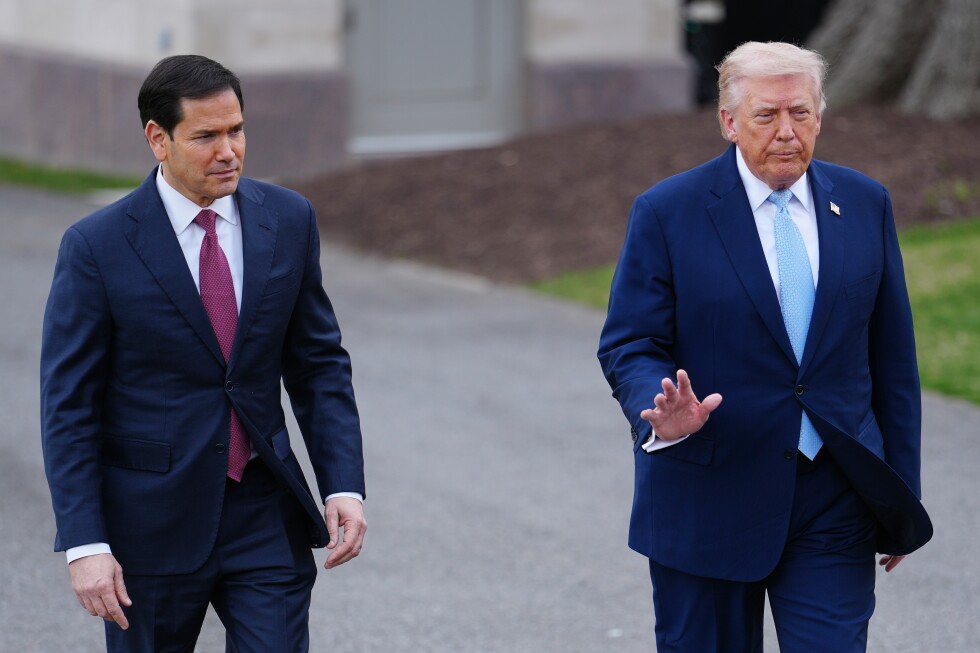
    Washington, DC witnessed the inaugural gathering of the Trump administration’s “Board of Peace” for Gaza on Thursday, an initiative established under the 20-point ceasefire agreement enacted on October 10th and subsequently ratified in Davos, Switzerland on January 22nd. President Donald Trump serves as the board’s permanent chairman, presiding over a diverse assembly of international representatives.

    White House Press Secretary Karoline Leavitt confirmed participation from more than twenty nations during Wednesday’s press briefing, though specific attendee details remained initially undisclosed. The administration extended invitations to approximately sixty countries, with at least twenty-five having originally committed to membership. Notably, the board’s founding members include Russian President Vladimir Putin and Israeli Prime Minister Benjamin Netanyahu, both subject to International Criminal Court arrest warrants.

    The board’s official X account has been actively recognizing participating nations through digital commemorative plaques. Several governments independently announced their attendance at the event, hosted at the recently renamed Donald J Trump Institute for Peace. Confirmed participants include Pakistan’s Prime Minister Shehbaz Sharif, Vietnam’s Communist Party leader To Lam, and Indonesian President Prabowo Subianto. Israel’s Foreign Minister Gideon Sa’ar and Turkey’s Foreign Minister Hakan Fidan have also verified their presence. Italy’s Foreign Minister Antonio Tajani will attend in an observational capacity, a position shared by several European Union members.

    Attendance does not necessarily indicate full alignment with U.S. positions on Gaza. Prime Minister Sharif, for instance, has reportedly declined to discuss Hamas disarmament while simultaneously demonstrating support for Trump through a Nobel Peace Prize nomination. Vietnamese leader Lam seeks aviation agreements with the United States, while Gulf nations aim to strengthen existing military, energy, and real estate partnerships with the Trump administration, particularly through presidential son-in-law Jared Kushner.

    Kushner, despite holding no formal government position, has taken a leadership role in conceptualizing Gaza’s redevelopment, described by Leavitt as voluntary contribution. His detailed PowerPoint presentation from the Davos meeting outlined reconstruction and humanitarian vision, including local security provisions—a topic scheduled for discussion during Thursday’s meeting.

    Leavitt confirmed over $5 billion in pledged reconstruction funds, with distribution mechanisms to be determined by the board. The executive body consists of U.S. officials, real estate magnates, and billionaires, generating concern among critics regarding potential conflicts of interest.

    President Trump announced anticipated troop commitments to the International Stabilisation Force for Gaza, with Indonesia considering substantial arms purchases while offering up to 1,000 peacekeeping personnel. The president emphasized Hamas’s requirement for “Full and Immediate Demilitarization,” though the organization has offered weapon burial for long-term truce while resisting complete demilitarization without security guarantees against U.S.-armed Israel. Israel has conversely refused mutual security agreements providing Hamas with attack assurances.

    Notably, Hamas maintains no direct representation on the board, continuing negotiations through Egyptian and Qatari mediators. The board’s charter contains no specific references to “Gaza” or “Palestinian,” and Trump has expressed intentions to expand the initiative’s scope to address other international crises, citing United Nations inadequacies.

    The initiative faces substantial international criticism. EU High Representative for Foreign Affairs Kaja Kallas noted the board’s failure to reference Gaza or the UN, contrasting with original resolution provisions for temporal limitations and Palestinian inclusion. Spanish Foreign Minister Jose Manuel Albares and U.S. Senator Chris Murphy similarly criticized the endeavor. Spain and most European nations have refused participation, with the Vatican declining its invitation and Canada’s invitation being rescinded.

    Michael Hanna, US Program Director at the International Crisis Group, noted that many participating nations hope to focus U.S. attention and leverage Israeli influence. He cautioned that success depends heavily on Trump’s sustained engagement and impartial mediation, suggesting the president’s personal legacy investment might provide the initiative’s best chance for progress.

    The humanitarian situation remains dire, with over 600 Palestinian fatalities reported since the ceasefire implementation. Palestinians attempting return through reopened Rafah crossing report delays, interrogations, and soldier abuse. UN humanitarian mission coordination faces Israeli restrictions, with three of eight recent missions denied access, including critical water treatment plant assistance in Khan Younis.

    Craig Mokhiber, former UN human rights adviser who resigned over the organization’s Gaza response, characterized the meeting as “a criminal conspiracy” involving genocide, apartheid, and war crimes. This perspective aligns with other critics of Israel’s ongoing assault, which has claimed over 72,000 Palestinian lives. Greek economist Yanis Varoufakis suggested the board serves to rehabilitate Netanyahu’s propaganda position while continuing genocide through starvation and medical deprivation.

    Meanwhile, Israeli restrictions in the occupied West Bank have intensified post-ceasefire, with settler attacks on Palestinian properties and Knesset-approved land annexation advancing despite Trump’s previous assurances to Arab and Muslim leaders against West Bank annexation.

  • Abu Dhabi Crown Prince visits India to take part in AI Impact Summit

    Abu Dhabi Crown Prince visits India to take part in AI Impact Summit

    In a significant demonstration of bilateral technological cooperation, Sheikh Khaled bin Mohamed bin Zayed Al Nahyan, Crown Prince of Abu Dhabi, arrived in New Delhi on February 18, 2026, to participate in the AI Impact Summit. Representing UAE President Sheikh Mohamed bin Zayed Al Nahyan, the Crown Prince’s visit underscores the deepening strategic partnership between the two nations in the realm of artificial intelligence and digital transformation.

    The distinguished guest received an elaborate ceremonial welcome upon arrival, featuring traditional red-carpet honors and vibrant cultural performances. India’s Minister of Communications, Jyotiraditya M Scindia, personally greeted the Crown Prince at the airport, followed by meetings with several senior government officials, highlighting the importance both nations place on this diplomatic engagement.

    The UAE’s substantial delegation reflects the summit’s strategic significance, comprising numerous high-ranking officials including Omar Sultan Al Olama (Minister of State for Artificial Intelligence), Saeed bin Mubarak Al Hajeri (Minister of State at the Ministry of Foreign Affairs), and Faisal Al Bannai (Adviser to the UAE President for Strategic Research and Advanced Technology Affairs). The delegation also includes prominent figures from Abu Dhabi’s government entities and Khaldoon Khalifa Al Mubarak, Chairman of the Executive Affairs Authority.

    This collaborative participation aims to advance international cooperation in harnessing AI technologies to support sustainable development objectives. Both nations seek to strengthen strategic partnerships with leading technology corporations to develop innovative solutions for future global challenges. The summit provides a platform for shaping the future digital economy architecture and accelerating digital transformation initiatives to enhance competitiveness across vital sectors.

    The AI Impact Summit, continuing through February 20, represents a crucial junction in UAE-India relations, building upon previous high-level visits including UAE President’s recent engagement with Indian Prime Minister Narendra Modi. This ongoing dialogue establishes a framework for mutual technological advancement and economic cooperation in emerging digital fields.

  • US to withdraw troops from Syria as tensions mount with Iran

    US to withdraw troops from Syria as tensions mount with Iran

    In a significant shift in Middle Eastern military strategy, the United States is preparing to withdraw the majority of its remaining forces from Syria within coming months, according to a senior White House official. This decision follows assessments that the Syrian government has demonstrated sufficient capability to assume primary responsibility for counterterrorism operations within its borders.

    The official emphasized that the planned drawdown of approximately 1,000 troops constitutes a conditions-based transition rather than an abrupt exit, with American forces maintaining readiness to address emerging threats in the region. This strategic repositioning occurs alongside substantial US military reinforcements elsewhere in the Middle East, particularly in proximity to Iran.

    BBC Verify has confirmed the deployment of the USS Abraham Lincoln carrier strike group—comprising guided missile destroyers and numerous fighter aircraft—to waters near Iran. Additionally, the USS Gerald R Ford, the world’s largest warship, is reportedly en route to the region and expected within three weeks.

    This reconfiguration follows substantial security improvements in Syria after the collapse of the Assad government in 2024 and the subsequent weakening of Islamic State capabilities. The Trump administration has concurrently pursued enhanced diplomatic relations with Damascus, highlighted by President Ahmed al-Sharaa’s historic November visit to the White House—the first such meeting by a Syrian leader.

    The Syrian government recently brokered an agreement integrating the Kurdish-led Syrian Democratic Forces with national armed forces, though Secretary of State Marco Rubio reiterated concerns about sustained counterterrorism efforts during meetings with Syrian Foreign Minister Asaad al-Shaibani last week.

    The security situation remains complex, as evidenced by December’s tragic ambush in Palmyra where a translator and two Iowa National Guard members were killed by an IS gunman, prompting retaliatory strikes under Operation Hawkeye Strike.

    National security officials indicate that President Trump has requested military options for potential strikes against Iran, though no final decisions have been made regarding such operations.

  • US Southern Command chief meets Venezuela’s president weeks after Maduro’s capture

    US Southern Command chief meets Venezuela’s president weeks after Maduro’s capture

    In a significant diplomatic development, the head of U.S. military operations in Latin America conducted an extended meeting with Venezuelan leadership in Caracas on Wednesday. Marine General Francis Donovan, commander of U.S. Southern Command, engaged in hours of discussions with Venezuela’s acting President Delcy Rodríguez alongside key cabinet members including Defense Minister Vladimir Padrino López and Interior Minister Diosdado Cabello.

    The high-level engagement represents the latest in a series of diplomatic contacts between the two nations following the dramatic capture of former President Nicolás Maduro by U.S. forces weeks earlier. Maduro currently faces drug trafficking charges in the United States after being apprehended in a surprise operation within the Venezuelan capital.

    According to official statements from Rodríguez’s administration published on social media platform X, both nations agreed to establish a bilateral cooperation framework targeting regional security challenges. The proposed agenda specifically addresses combating illicit drug trafficking, terrorism prevention, and migration management throughout the region. The Venezuelan government emphasized that diplomacy remains the preferred mechanism for resolving differences and addressing mutual concerns.

    General Donovan was accompanied by Laura Dogu, the highest-ranking U.S. diplomat currently stationed in Venezuela, alongside Joseph Humire, acting assistant secretary of defense for homeland defense and the Americas. U.S. Southern Command confirmed that discussions centered on hemispheric security considerations and implementation strategies for President Donald Trump’s phased approach toward Venezuela.

    This meeting continues a pattern of elevated diplomatic engagement, following previous visits by CIA Director John Ratcliffe shortly after Maduro’s removal and U.S. Energy Secretary Chris Wright’s recent assessment of Venezuela’s oil infrastructure.

  • Martial law, protests and a president tried for insurrection: How did South Korea get here?

    Martial law, protests and a president tried for insurrection: How did South Korea get here?

    South Korea’s political sphere stands at a pivotal moment as the nation’s judicial system prepares to issue a landmark ruling in the unprecedented insurrection trial of President Yoon Suk Yeol. This extraordinary legal proceeding represents the culmination of months of political turmoil that has gripped the Asian democracy.

    The current constitutional crisis finds its origins in escalating tensions between the executive and legislative branches, exacerbated by controversial policy initiatives and governance approaches that sparked widespread public dissent. The situation deteriorated significantly when opposition parties and civil society groups accused the administration of overstepping constitutional boundaries, leading to massive organized demonstrations across major urban centers.

    These protests, unprecedented in scale since the country’s democratic reforms, created a political impasse that ultimately prompted judicial intervention. The insurrection charges represent one of the most serious legal challenges ever brought against a sitting South Korean president, testing the resilience of the nation’s democratic institutions and separation of powers.

    Legal experts highlight that this case establishes critical precedents for presidential accountability and the limits of executive authority within South Korea’s constitutional framework. The verdict’s implications extend beyond the current administration, potentially reshaping the balance of power between government branches for future generations.

    International observers and diplomatic corps are closely monitoring developments, recognizing that the outcome could significantly influence South Korea’s geopolitical standing and democratic stability in a region marked by complex security dynamics. The court’s decision is expected to trigger varied responses across the political spectrum, with potential implications for both domestic governance and international relations.

  • Argentina’s Milei heads to the US again, balancing Trump ties with growing China trade

    Argentina’s Milei heads to the US again, balancing Trump ties with growing China trade

    Argentine President Javier Milei embarked on his fourteenth official visit to the United States this Wednesday to participate in the inaugural session of former President Donald Trump’s Board of Peace initiative. The diplomatic mission continues with his scheduled attendance at Trump’s regional summit in Miami on March 7, gathering Latin American leaders aligned with Washington’s political objectives.

    This diplomatic engagement occurs against a complex backdrop of competing geopolitical interests. While the Trump administration seeks to strengthen alliances countering Chinese influence across Latin America, President Milei faces the pragmatic reality of China’s entrenched economic position in Argentina. Despite his previous campaign rhetoric labeling Beijing’s Communist government as ‘assassins,’ Milei’s administration maintains crucial economic ties with China, which surpassed Brazil as Argentina’s primary trading partner last December.

    According to recent data from Argentina’s official statistics agency, exports to China skyrocketed by 125% year-on-year, while imports increased by 26% during the same period. This economic interdependence creates a paradoxical situation where Milei’s rhetorically anti-communist government has actually facilitated China’s expanding market presence.

    Benjamin Gedan, director of the Latin American Program at the Wilson Center, emphasizes the irreplaceable nature of this relationship: ‘Argentina relies on China’s insatiable demand for South America’s energy, food and minerals, and the United States will never replace that market.’

    This diplomatic balancing act manifests in policy contradictions. While Milei’s economic reforms have eased capital controls and curbed inflation, the removal of tariff barriers has exposed local manufacturers to intensified Chinese competition. Recent developments include the first-ever delivery of Chinese electric vehicles at Argentine ports, coinciding with factory closures and the shutdown of Fate tire manufacturing operations affecting 900 employees.

    Meanwhile, China continues significant investments in Argentina’s infrastructure, financing hydroelectric dams, solar energy parks, and lithium mining operations through companies like Ganfeng Lithium. A Chinese space facility in Neuquén province, which the U.S. claims could serve military purposes, continues operations without disruption.

    The Trump administration has attempted to bolster Milei’s position through substantial financial support, offering $20 billion in relief to stabilize Argentina’s economy ahead of critical 2025 midterm elections. This intervention aligns with Washington’s modern interpretation of the Monroe Doctrine, asserting American dominance in the Western Hemisphere.

    Despite U.S. Treasury Secretary Scott Bessent’s claims that Milei was ‘committed to getting China out’ of Argentina, evidence suggests otherwise. Argentine officials consistently maintain that strengthened U.S. relations don’t compromise China ties, with Foreign Minister Pablo Quirno recently affirming that recent trade agreements ‘do not imply that China cannot participate or will not participate in investments in Argentina.’

    As Gedan concludes, Argentina exemplifies ‘the limitations of the Monroe Doctrine’—demonstrating how economic necessities ultimately transcend ideological alignments in international relations.

  • Iranians dance through tears as they mourn slain protesters

    Iranians dance through tears as they mourn slain protesters

    Across Iran on Tuesday, traditional memorial ceremonies for victims of the state’s violent crackdown on anti-government protests evolved into powerful displays of civil disobedience, blending grief with unprecedented acts of defiance.

    The Chehellom ceremonies, marking forty days since death in accordance with Iranian tradition, became platforms for confrontation as mourners clashed with riot police and Islamic Revolutionary Guard Corps forces in multiple cities. In a striking departure from conventional mourning practices, families and supporters of the deceased engaged in dancing, clapping, and playing music beside fresh graves—actions that directly challenge the establishment’s prescribed forms of religious observance.

    This transformation of ritual carries profound historical resonance. During the 1979 Islamic Revolution, similar commemorations for those killed by the Shah’s forces helped galvanize opposition. Now, four decades later, the tradition has been repurposed as a strategic protest mechanism against current rulers.

    The scale of loss remains contested. While official figures acknowledge 3,117 deaths, the US-based Hrana news agency reported Monday that 6,508 protesters had been killed during weeks of demonstrations. Despite state attempts to co-opt the narrative by announcing official commemorations, security forces maintained overwhelming presence at cemeteries, establishing widespread checkpoints and engaging in clashes with mourners in Abdanan and Mashhad.

    At Tehran’s Behesht-e Zahra cemetery, witnesses described crowded scenes where sections 322 and 323 were packed with both grieving families and supporters wearing black. The atmosphere shifted between conventional mourning and radical expression: young people played celebratory music from phones while dancing beside graves, wedding cars decorated with black ribbons processed slowly through burial grounds, and mourners chanted revolutionary verses.

    This practice of dancing at graves, while rooted in old tribal customs for those who died before marriage, has gained new symbolic meaning. Viral videos from recent weeks show grieving families transforming funerals into acts of resistance. One father, mourning his son Reza Asadi, stood by the grave and declared to the crowd: ‘People! This is my Reza for the homeland!’ before performing traditional dance steps.

    As these unofficial mourning practices continue, human rights organizations report escalating executions across Iranian prisons. At least nine individuals were executed on Tuesday in multiple cities, with authorities attributing the deaths to drug crimes and murder. However, lawyers maintain that defendants were systematically denied legal representation and forced to confess under torture.

    Additional concerns focus on the detention and killing of children during protests, with the Iranian Teachers’ Union reporting at least 200 minors killed. While officials claim all detained schoolchildren have been released, independent verification remains impossible.

    Amid collective grief, attention has partially shifted to renewed nuclear negotiations between Tehran and Washington, which Iran’s foreign minister has characterized as ‘constructive’—creating a complex backdrop of domestic repression and diplomatic engagement.

  • Canada Conservative leader dismisses MP’s ‘hissy fit’ remark over US relations

    Canada Conservative leader dismisses MP’s ‘hissy fit’ remark over US relations

    Conservative Party Leader Pierre Poilievre has publicly distanced himself from comments made by one of his own MPs, Jamil Jivani, who characterized Canada’s stance toward the United States as an “anti-American hissy fit.” The remarks were made during an unsanctioned trip to Washington where Jivani met with US Vice-President JD Vance, a longtime friend and former Yale University roommate.

    Jivani, representing the Ontario riding of Bowmanville-Oshawa North, traveled to Washington earlier this month without official government authorization. In a subsequent interview with right-wing outlet Breitbart, he asserted that Canadians were “shooting ourselves in the foot” with their anti-US sentiments. These comments reference growing tensions following President Donald Trump’s imposition of tariffs on key Canadian sectors and his characterization of Canada as the “51st state.”

    Prime Minister Mark Carney, whose Liberal government has adopted a defiant trade diversification strategy in response to Trump’s policies, clarified that Jivani had received briefings from Canada-US Trade Minister Dominic LeBlanc but traveled in an unofficial capacity. Jivani claimed he visited to assist Carney in trade negotiations and reported “productive meetings” with White House and State Department officials, including a personal message from Trump to Canadians.

    Poilievre acknowledged the value of MPs using personal connections to advance trade talks but explicitly rejected Jivani’s terminology. “Canadians are legitimately upset by the unjustifiable tariffs and the comments that the president has made,” Poilievre stated, adding that Jivani “speaks for himself, and I speak for the party.”

    The controversy emerges as Canada faces ongoing sector-specific tariffs from the Trump administration, plus a blanket 35% tariff on goods not covered by the trilateral free trade agreement with the US and Mexico, which is currently undergoing scheduled review set to conclude later this year.

    Ontario Premier Doug Ford, who has vehemently opposed Trump’s tariffs affecting his province’s auto sector, also criticized Jivani’s wording while acknowledging the importance of US engagement. “I’m happy when I see other premiers go down to the US and lobby,” Ford noted, “But no, I don’t call it a hissy fit.”

  • Explained: The Israeli measures imposing de facto annexation in the West Bank

    Explained: The Israeli measures imposing de facto annexation in the West Bank

    In a dramatic shift of policy, Israel has enacted comprehensive measures that fundamentally alter the administrative reality for Palestinians in the occupied West Bank. These unprecedented changes, the first of their magnitude since Israel’s 1967 occupation, significantly expand civilian authority over territories previously governed under military law for nearly six decades.

    The reforms effectively extend Israeli administrative control throughout the West Bank, realizing a long-standing objective of right-wing and ultra-nationalist settler movements. Critics characterize these moves as de facto annexation despite the absence of formal declaration, substantially weakening the Palestinian Authority’s limited self-rule and dismantling the foundational structure established by the Oslo Accords.

    Key changes announced on February 8th include Israel’s newfound authority to enforce civilian decisions in Areas A and B—regions comprising approximately 40% of the West Bank containing major Palestinian population centers. Previously restricted to security operations in these zones, Israeli forces may now demolish homes, wells, and structures under expanded environmental and heritage protection pretexts.

    Parallel land regulation reforms facilitate mass land seizures and simplify property transfers to settlers by abolishing Jordanian-era restrictions and declassifying previously protected land registries. Subsequent measures authorize the reclassification of unregistered or abandoned territories as “state property,” effectively legalizing widespread land confiscation despite international law prohibitions against such actions by occupying powers.

    Hebron emerges as a particularly sensitive focus, with building permit authority transferred from Palestinian to Israeli military control. This shift enables settlement expansion within urban centers and potential alterations to the Ibrahimi Mosque complex, a site sacred to Muslims since the 1994 massacre by an Israeli settler.

    The transformation deepened with Israel’s approval of a new settlement effectively expanding Jerusalem’s municipal boundaries into the West Bank—the first formal boundary extension since the 1967 occupation. This planned expansion at Adam settlement, presented as a new neighborhood despite lacking physical connection to existing structures, further blurs the Green Line demarcation established by the 1949 armistice agreements.

  • US senators visit key Ukrainian port city as they push for fresh sanctions on Russia

    US senators visit key Ukrainian port city as they push for fresh sanctions on Russia

    A bipartisan delegation of U.S. senators concluded a significant visit to Odessa on Wednesday, marking the first congressional trip to Ukraine’s strategic Black Sea port since Russia’s invasion nearly four years ago. The delegation, comprising Democratic Senators Jeanne Shaheen, Chris Coons, Richard Blumenthal, and Sheldon Whitehouse, aimed to galvanize congressional action on comprehensive sanctions designed to economically pressure Moscow into meaningful peace negotiations.

    The timing of this diplomatic mission coincides with critical U.S.-brokered talks in Switzerland, where both Ukrainian and Russian delegations remain deadlocked on fundamental issues including territorial sovereignty and security arrangements. Senator Shaheen emphasized that Ukrainian officials consistently expressed desire for a peace agreement that preserves their nation’s sovereignty and territorial integrity.

    Legislative efforts to impose robust sanctions have stalled in Congress for months, despite multiple proposals gaining traction. The most comprehensive bill would authorize the Trump administration to implement tariffs and secondary sanctions against nations purchasing Russian energy exports, targeting the financial infrastructure supporting Moscow’s military operations. Additional targeted measures would address China’s military support for Russia, seize frozen Russian assets, and disrupt Moscow’s ‘shadow fleet’ of oil tankers circumventing existing sanctions.

    Senator Lindsey Graham confirmed during the Munich Security Conference that Senate Majority Leader John Thune committed to bringing the sanctions package to vote once it secures the necessary 60-vote threshold. Graham characterized the legislation as a ‘game changer’ that has received President Trump’s endorsement.

    The House of Representatives is considering parallel measures, including bipartisan legislation targeting Russia’s defense industry and financial systems, alongside an $8 billion military aid package for Ukraine proposed by House Foreign Affairs Committee’s top Democrat Gregory Meeks.

    Upon returning to Washington, the senators plan to document attacks on U.S. businesses in Ukraine and increase pressure for enhanced military support. As Senator Blumenthal noted, ‘Putin understands weapons, not words.’ However, the administration’s ambiguous long-term commitment to Ukrainian security presents ongoing challenges, despite bipartisan consensus on the necessity of sustained pressure against Russian aggression.