分类: politics

  • ‘Board of Peace’ members commit $7bn to Gaza relief, US pledges further $10bn

    ‘Board of Peace’ members commit $7bn to Gaza relief, US pledges further $10bn

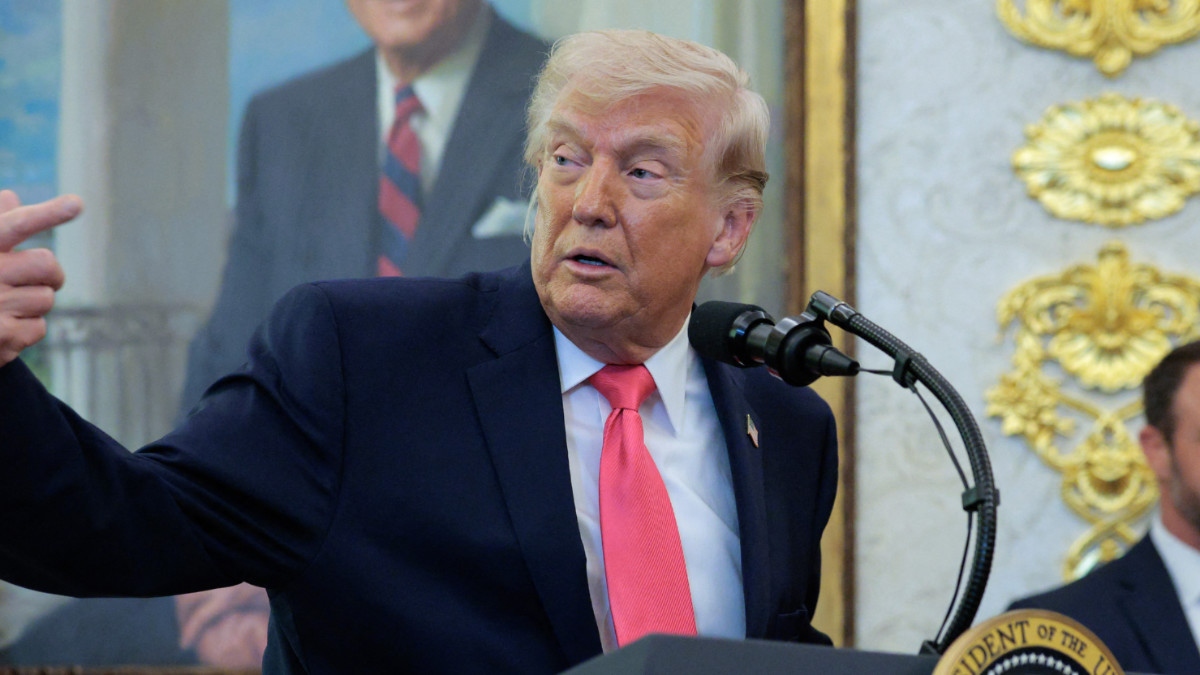
    WASHINGTON, DC – In a significant development for Middle Eastern diplomacy, nine member nations of former President Donald Trump’s newly established “Board of Peace” have collectively pledged $7 billion toward humanitarian relief and reconstruction efforts in Gaza. President Trump announced the commitments during the board’s inaugural meeting held at the Donald J Trump Institute for Peace on Thursday.

    The contributing nations include Kazakhstan, Azerbaijan, the United Arab Emirates, Morocco, Bahrain, Qatar, Saudi Arabia, Uzbekistan, and Kuwait. While a detailed breakdown of individual contributions was not immediately disclosed, Trump indicated that “many more are contributing to the numbers.” The United States is separately investing an additional $10 billion, though this allocation is understood to support the board’s overall operations rather than being exclusively designated for Gaza.

    Beyond member contributions, the international community is mobilizing substantial support. The United Nations Office for the Coordination of Humanitarian Affairs will raise $2 billion, while FIFA, the global football governing body, has committed $75 million for sports-related projects in the enclave. FIFA President Gianni Infantino, a recipient of the first-ever FIFA Peace Prize from Trump last year, attended the meeting and sits on the board. Furthermore, Japan has committed to hosting an aid fundraiser with participation expected from regional nations including South Korea, the Philippines, and Singapore, with potential involvement from China and Russia.

    World Bank President Ajay Banga, serving on the board’s executive committee, outlined the institution’s role as a “limited trustee.” The Bank will manage and disperse the pledged funds for reconstruction and development projects in Gaza, leveraging its AAA rating to attract private investment and de-risk the funding process.

    However, the initiative faces significant challenges. The security situation remains precarious. U.S. Major General Jasper Jeffers, appointed to oversee the accompanying International Stabilization Force (ISF), revealed that Indonesia, Morocco, Kazakhstan, Kosovo, and Albania will contribute troops to the force, which will be trained by Egypt and Jordan. The ISF’s mandate includes protecting civilians, training local forces, and assisting in the disarmament of factions—a point that has caused hesitation among some potential contributors. Indonesia will assume deputy command of the ISF, and deployment will begin in the Rafah sector, though no precise timeline was provided. The Trump administration confirmed no U.S. troops would be deployed on the ground.

    On the ground governance falls to the National Committee for the Administration of Gaza (NCAG), led by Palestinian technocrat Ali Shaath. He described operating in “extremely difficult conditions” with large areas “destroyed” and humanitarian needs “acute.” Bulgarian diplomat Nickolay Mladenov, appointed to oversee Gaza’s demilitarization, announced the creation of the Office of the High Representative for Gaza to guide the NCAG. A key priority is establishing security through a new 5,000-strong professional civilian police force, for which recruitment is already underway with 2,000 applicants so far. These officers will be trained in Egypt as part of a broader 20-point plan to consolidate all weapons under a single civilian authority.

    Despite the focus on Gaza, the board’s official charter notably makes no mention of either “Gaza” or “Palestinian,” reflecting the Trump administration’s break from the long-standing U.S. policy goal of a two-state solution. The board has also faced international skepticism. Spain and most European nations have refused to join, with some EU representatives attending only as “observers.” The Vatican declined its invitation, and Canada’s was rescinded. At a recent security conference, EU foreign affairs chief Kaja Kallas criticized the board for its omissions. Trump, however, positioned the board as a supplement to the UN, stating it would be “looking over the United Nations and making sure it runs properly,” while pledging to work closely with the international body.

  • North Korea opens major party congress with Kim emphasizing economy

    North Korea opens major party congress with Kim emphasizing economy

    SEOUL, South Korea — North Korea has commenced its most significant political gathering, the Workers’ Party Congress, where Supreme Leader Kim Jong Un is anticipated to outline his strategic vision for the nation’s next five-year development cycle. The event, which began Thursday in Pyongyang, marks a pivotal moment for cementing the Kim dynasty’s authoritarian governance while addressing critical domestic and international challenges.

    In his opening address, Kim emphasized economic achievements and national resilience since the previous congress in 2021, which coincided with the COVID-19 pandemic’s peak. He proclaimed substantial progress in economic development and regional positioning, characterizing these advances as an ‘irreversible’ enhancement of North Korea’s global standing. ‘This created favorable conditions and circumstances for giving a greater spur to our socialist construction,’ Kim stated, acknowledging the ‘heavy and urgent historic tasks’ of boosting economic construction and improving living standards.

    Notably absent from initial state media coverage were direct references to Kim’s nuclear weapons program or ongoing standoffs with the United States and South Korea. However, geopolitical analysts anticipate the congress will address these issues as Kim continues to leverage global tensions to advance his strategic objectives.

    Recent geopolitical maneuvers have seen North Korea deepen alliances with Russia and China. Kim has capitalized on Russia’s war in Ukraine to accelerate his nuclear and missile capabilities while providing substantial military support to Moscow—potentially in exchange for economic assistance and technological transfers. Simultaneously, he has strengthened ties with China, North Korea’s traditional ally and economic lifeline, through diplomatic visits and summits.

    While North Korea’s information blockade obscures accurate economic assessment, external experts suggest a gradual recovery fueled by post-pandemic trade resumption with China and weapons exports to Russia. The congress follows weeks of military demonstrations and inspections of industrial and housing projects, showcasing alleged achievements under Kim’s leadership.

    Approximately 5,000 delegates, including 224 central leadership members, are participating in the event expected to span several days. Experts predict Kim will outline ambitious economic targets and plans to expand his nuclear-armed military, which already possesses systems targeting U.S. allies in Asia and long-range missile capabilities potentially reaching the U.S. mainland.

    South Korea’s intelligence agency is monitoring potential signals regarding Kim’s teenage daughter, Kim Ju Ae (approximately 13), being positioned as a potential successor—a move that would formalize the regime’s fourth-generation dynastic succession.

    Diplomatic relations remain frozen since the 2019 collapse of talks between Kim and former U.S. President Donald Trump. North Korea has consistently rejected dialogue offers, demanding the U.S. abandon its denuclearization requirements as a precondition for negotiations. Relations with South Korea have similarly deteriorated, with Kim abandoning peaceful reunification rhetoric in favor of a hostile ‘two-state’ doctrine for the Korean Peninsula—a stance potentially to be institutionalized in the Workers’ Party constitution during this congress.

  • Trump says Obama shared ‘classified information’ when he said aliens were real

    Trump says Obama shared ‘classified information’ when he said aliens were real

    In a striking political confrontation, former President Donald Trump has leveled accusations against his predecessor Barack Obama for allegedly disclosing sensitive information during a recent podcast appearance. The controversy emerged when Obama stated his belief in extraterrestrial life during an interview with Brian Tyler Cohen.

    Aboard Air Force One, Trump informed journalists that Obama had committed ‘a major error’ by making such declarations, emphasizing that ‘he’s not supposed to be doing that.’ When pressed about his own perspective on alien existence, Trump maintained an ambiguous stance, remarking, ‘Well, I don’t know if they’re real or not.’

    Obama’s initial comments sparked widespread media attention, prompting the former president to issue subsequent clarifications via Instagram. He elaborated that while he considers extraterrestrial life statistically probable given the universe’s immense scale, he witnessed ‘no evidence during my presidency that extraterrestrials have made contact with us.’ Obama specifically dismissed conspiracy theories about alien concealment at Area 51, noting no such facility could be hidden from presidential oversight.

    The exchange occurred during a rapid-fire question segment of the podcast, with no indication that Obama relied upon classified intelligence. The BBC’s attempts to obtain additional commentary from Obama’s representatives remain unanswered.

    This incident highlights the enduring political rivalry between the Democratic former president and his Republican successor. Trump noted that while many Americans believe in alien life, he deliberately avoids the topic and maintains no firm position.

    The Pentagon’s 2024 report aligns with Obama’s clarified position, finding ‘no evidence’ of governmental encounters with alien lifeforms and attributing most UFO sightings to ordinary objects. This followed a 2023 House of Representatives panel on Unidentified Anomalous Phenomena (UAPs) that yielded no groundbreaking revelations about extraterrestrial existence.

  • Indonesian leader signs trade deal with Trump while in Washington for the Board of Peace

    Indonesian leader signs trade deal with Trump while in Washington for the Board of Peace

    In a significant diplomatic convergence in Washington, Indonesian President Prabowo Subianto and U.S. President Donald Trump solidified a comprehensive trade agreement while attending the inaugural session of the Trump-led Board of Peace. The pact, characterized by the White House as a “great deal,” represents a major advancement in bilateral economic relations.

    The arrangement establishes a reciprocal tariff structure wherein Southeast Asia’s largest economy will eliminate duties on most American products, while the United States will implement a fixed 19% tariff on Indonesian imports—mirroring rates applied to Cambodia and Malaysia. This framework, initially conceptualized last summer, achieved formalization during the Washington summit.

    Complementing the government-level agreement, Indonesian and American corporations finalized eleven commercial deals valued at $38.4 billion. These encompass substantial purchases of U.S. agricultural commodities including soybeans, corn, cotton, and wheat, alongside cooperative ventures in critical mineral extraction, petroleum field rehabilitation, and semiconductor manufacturing joint ventures.

    Concurrently, President Prabowo, leading the world’s most populous Muslim nation, reaffirmed Indonesia’s commitment to international stabilization efforts in Gaza by pledging 8,000 troops—or “more if necessary”—to a prospective peacekeeping force. This commitment constitutes a foundational element of Trump’s postwar reconstruction strategy for the region.

    The trade negotiations incorporated strategic dimensions regarding critical minerals, with Washington seeking Indonesia’s commitment to relax export restrictions on these vital resources. This initiative aims to fortify U.S. manufacturing supply chains against disruptions and counter China’s dominant position in supplying minerals essential for defense systems and consumer electronics.

    President Prabowo positioned Indonesia as a potential “bridge” and “honest broker” between competing global powers, alluding to the ongoing U.S.-China rivalry. The Board of Peace meeting also featured participation from Cambodia and Vietnam, with the latter engaged in ongoing trade discussions following U.S. imposition of 20% tariffs on Vietnamese exports.

  • Gorton and Denton by-election: Inside the Reform-Green battle for crucial Labour seat

    Gorton and Denton by-election: Inside the Reform-Green battle for crucial Labour seat

    The industrial estate in Denton, Greater Manchester, houses one of Britain’s most elusive political headquarters. Reform UK’s campaign base for the Gorton and Denton by-election remained shrouded in secrecy until our correspondent tracked it down to a warehouse adorned with turquoise posters featuring leader Nigel Farage and local candidate Matt Goodwin.

    The February 26th contest has emerged as a crucial political battleground, testing Prime Minister Keir Starmer’s leadership amid internal Labour turmoil. The by-election, triggered by the previous Labour MP’s health-related resignation, has become a three-way struggle between Labour, Reform, and the Greens in a constituency historically loyal to Labour since 1935.

    Inside Reform’s headquarters, the atmosphere contrasted sharply with the quiet industrial estate outside. A massive Union Jack dominated one wall, emphasizing the party’s nationalist stance. Sarah Pochin, Reform’s MP for Runcorn, described the constituency as “desperate for a strong voice” against what she called the “Westminster bubble.”

    The demographic divide defines this political struggle: Gorton’s ethnic diversity versus Denton’s white working-class communities. Reform has made significant inroads among the latter, while the Greens have surged with support from young and Muslim voters.

    Matt Goodwin, the Reform candidate and former academic turned GB News presenter, has courted controversy with statements about British Muslims and integration. His comments about British values and immigrant communities have drawn criticism from opponents.

    The Green campaign presents a stark contrast—a small, vibrant storefront on a busy high street with diverse volunteers including pensioners and students. Their candidate, Hannah Spencer, a 34-year-old plumber and plasterer, represents the party’s working-class appeal. She criticized Goodwin’s “deeply offensive and racist” statements while emphasizing shared British values across communities.

    The Gaza conflict has emerged as a significant issue, with Green MP Sian Berry criticizing Labour’s continued cooperation with Israel. This position has resonated with Muslim voters and others concerned about foreign policy.

    Despite the challenges, Labour maintains substantial support, particularly among less politically engaged voters and some ethnic minority communities. Campaign billboards warn that only Labour can prevent a Reform victory.

    The Conservative Party, once dominant nationally, appears irrelevant in this contest, with no visible campaign presence.

    This by-election symbolizes Britain’s transformed political landscape, where traditional party loyalties have fractured and new ideological battles define the future of British politics.

  • Philippine senator, ex-minister get travel ban due to allegations of corruption

    Philippine senator, ex-minister get travel ban due to allegations of corruption

    In a significant escalation of anti-corruption measures, Philippine immigration authorities have imposed travel restrictions on Senator Jinggoy Estrada, former Public Works Secretary Manuel Bonoan, and three other government officials. The Bureau of Immigration confirmed these prominent figures have been placed on its watchlist as they face serious allegations of graft involving flood control infrastructure projects.

    Immigration spokesperson Dana Sandoval stated the travel ban implements a precautionary measure ordered by a Manila court, with border personnel nationwide instructed to prevent the officials from leaving the country. The individuals are classified as ‘flight risks’ during ongoing investigations into corruption practices that have rocked the administration.

    The barred officials must now obtain judicial authorization for any international travel. Bonoan has already sought permission to visit his wife receiving medical treatment in the United States. The group faces multiple charges including plunder, violations of anti-graft legislation, direct bribery, and corruption involving hundreds of billions of pesos.

    This development marks another chapter in Senator Estrada’s lengthy history with corruption allegations. The veteran politician previously faced embezzlement charges in 2014 involving 183 million pesos from his legislative funds. He was also arrested alongside his father, former President Joseph Estrada, in 2001 for plunder amounting to 4.1 billion pesos, though those charges were eventually dismissed. Estrada maintains his innocence regarding all corruption allegations.

  • ‘Who’s next?’ – American lawmakers call for ‘justice’ in the US after Andrew arrest

    ‘Who’s next?’ – American lawmakers call for ‘justice’ in the US after Andrew arrest

    American legislators are intensifying pressure for comprehensive investigations into individuals associated with Jeffrey Epstein, inspired by the recent detention of Andrew Mountbatten-Windsor on allegations of misconduct in public office. The arrest has triggered bipartisan calls for parallel accountability measures within the United States justice system.

    Congressman Thomas Massie, instrumental in legislation compelling the Department of Justice to disclose Epstein-related documents, declared on social media: ‘Prince Andrew was just arrested. Now we need JUSTICE in the United States.’ This sentiment echoes across party lines, with Representative Suhas Subramanyam, chairing the House Oversight Committee, characterizing the development as a ‘huge breakthrough’ in pursuing powerful figures connected to Epstein’s network.

    Subramanyam extended an invitation for the former royal to provide testimony voluntarily, emphasizing: ‘If he did nothing wrong, then he should clear his name. Our door is open and we will talk to him on his terms—I will fly out to the UK if necessary.’ The Virginia Democrat noted that victims had found symbolic justice in Mountbatten-Windsor’s prior removal of titles, viewing it as initial progress toward addressing systemic impunity among elites.

    California Democrat Ro Khanna and Republican Nancy Mace both highlighted their legislative roles in advancing accountability, with Mace noting her singular congressional demand for the royal’s arrest. ‘Today, on his 66th birthday, that call was answered,’ she stated. ‘We will not stop until every co-conspirator and enabler is held fully accountable.’

    The released Epstein documents enumerate numerous high-profile names including technology billionaires, political leaders, and business magnates, though inclusion doesn’t imply criminal culpability. UK authorities confirmed they are evaluating complaints regarding alleged transmission of confidential materials to Epstein, clarifying that current allegations do not involve sexual offenses.

    Congressional investigators reaffirmed their commitment to exhaustive inquiry, vowing: ‘No one connected to Jeffrey Epstein will escape accountability. Our work is just beginning, and we will pursue justice for every individual who participated in the abuse of women and girls.’

  • Veteran dissident who refused exile released

    Veteran dissident who refused exile released

    Belarusian authorities have freed veteran opposition figure Mikola Statkevich from imprisonment, marking a significant development in the country’s political landscape. The 69-year-old dissident, who spent over five years incarcerated on charges of organizing “mass riots” during the 2020-21 protests, is now recovering at home from a stroke that has severely impacted his speech capabilities.

    Statkevich’s release represents an unusual case among Belarus’s political prisoners. Unlike 51 other detainees freed in a U.S.-brokered prisoner exchange last year, Statkevich defiantly refused to leave his homeland despite the opportunity to go into exile. His wife, Marina Adamovich, confirmed his current status, expressing hope for his recovery while noting the significant challenges with his speech following the stroke.

    The politician’s imprisonment stemmed from his opposition activities against the regime of Alexander Lukashenko, who has maintained an iron grip on power since 1994. Statkevich had previously challenged Lukashenko in the 2010 presidential election, which international observers widely criticized as neither free nor fair.

    Exiled opposition leader Svetlana Tikhanovskaya welcomed the news, expressing relief that Statkevich could finally reunite with his wife after years of separation. However, she emphasized that more than 1,000 political prisoners remain detained in Belarus, urging continued international pressure for their release.

    The prisoner exchange that facilitated Statkevich’s freedom involved diplomatic negotiations between Washington and Minsk, resulting in the United States pledging to ease certain sanctions on Belarusian airline Belavia. This development occurs against the backdrop of Belarus’s strategic alliance with Russia, which launched its full-scale invasion of Ukraine in February 2022, further complicating regional geopolitical dynamics.

  • Countries that attended Trump’s first Board of Peace meeting in Washington

    Countries that attended Trump’s first Board of Peace meeting in Washington

    WASHINGTON — A landmark diplomatic gathering convened in the U.S. capital on Thursday as the newly established Board of Peace held its inaugural assembly. The high-profile meeting brought together diplomatic representatives from nearly fifty nations, with twenty-seven countries formally joining the coalition framework while additional participants attended in an observer capacity, including the European Union as a collective entity.

    President Donald Trump inaugurated the proceedings with a significant financial announcement, revealing that nine founding member states had collectively committed approximately $7 billion in humanitarian assistance targeted at the Gaza Strip. This substantial funding initiative aims to address critical infrastructure damage and provide essential services in the conflict-affected territory.

    The participating nations represent a geographically diverse coalition spanning multiple continents. Formal membership includes Albania, Argentina, Armenia, Azerbaijan, Bahrain, Bulgaria, Cambodia, Egypt, El Salvador, Hungary, Indonesia, Israel, Jordan, Kazakhstan, Kosovo, Kuwait, Mongolia, Morocco, Pakistan, Paraguay, Qatar, Saudi Arabia, Turkey, the United Arab Emirates, Uzbekistan, and Vietnam.

    The observer delegation comprised an equally impressive roster of nations including Austria, Croatia, Cyprus, Czech Republic, Finland, Germany, Greece, India, Italy, Japan, Mexico, Netherlands, Norway, Oman, Poland, South Korea, Romania, Slovakia, Switzerland, Thailand, and the United Kingdom. This broad international participation demonstrates widespread global engagement with the newly formed diplomatic initiative.

    The Board of Peace’s establishment marks a significant development in international diplomatic coordination, particularly regarding conflict resolution and humanitarian response mechanisms. The substantial financial commitment announced during this inaugural session indicates concrete action beyond symbolic diplomacy, potentially setting a precedent for future multilateral cooperation frameworks.

  • Trump says world has 10 days to see if Iran deal reached

    Trump says world has 10 days to see if Iran deal reached

    President Donald Trump has declared that the world will learn within approximately ten days whether the United States will secure a nuclear agreement with Iran or resort to military escalation. Speaking at the inaugural session of his newly established Board of Peace in Washington D.C., Trump characterized recent negotiations as “very good” while simultaneously acknowledging the historical complexity of reaching meaningful accords with Tehran.

    The administration appears to be pursuing parallel tracks of diplomacy and military pressure. Recent days have witnessed both reported progress in U.S.-Iran talks held in Switzerland and a significant surge of American military assets to the Middle East, including the deployment of the USS Abraham Lincoln aircraft carrier. This dual approach has created an atmosphere of heightened tension, with satellite imagery confirming Iran’s reinforcement of military facilities and Supreme Leader Ayatollah Ali Khamenei issuing social media threats against U.S. forces.

    Special Envoys Steve Witkoff and Jared Kushner, who also serves as Trump’s son-in-law, have conducted what the president described as productive meetings with Iranian representatives. However, Trump emphasized that additional work remains and warned that Washington “may have to take it a step further” if diplomatic efforts fail.

    The Board of Peace, initially conceived to address the Israel-Hamas conflict, appears to have expanded its mandate beyond Gaza reconstruction. Its composition of approximately two dozen nations has raised questions about whether the Trump administration intends to create an alternative forum that might marginalize United Nations diplomacy.

    Congressional opposition to potential military action is mounting across party lines. Representatives Ro Khanna (D-CA) and Thomas Massie (R-KY) are preparing to force a vote under the 1973 War Powers Act, which grants Congress authority to constrain presidential war powers. Khanna emphasized that conflict with Iran “would be catastrophic,” noting the nation’s significant military capabilities and the vulnerability of thousands of U.S. troops stationed in the region. Despite this legislative effort, prospects for passage remain uncertain, particularly after Senate Republicans blocked a similar resolution regarding Venezuela in January.

    White House Press Secretary Karoline Leavitt previously stated that Iran would be “very wise” to negotiate a deal, indicating the administration’s preference for diplomatic resolution while maintaining military options. The situation remains fluid with last year’s strikes on Iranian nuclear facilities and reported discussions of new attack options underscoring the volatility of the current standoff.