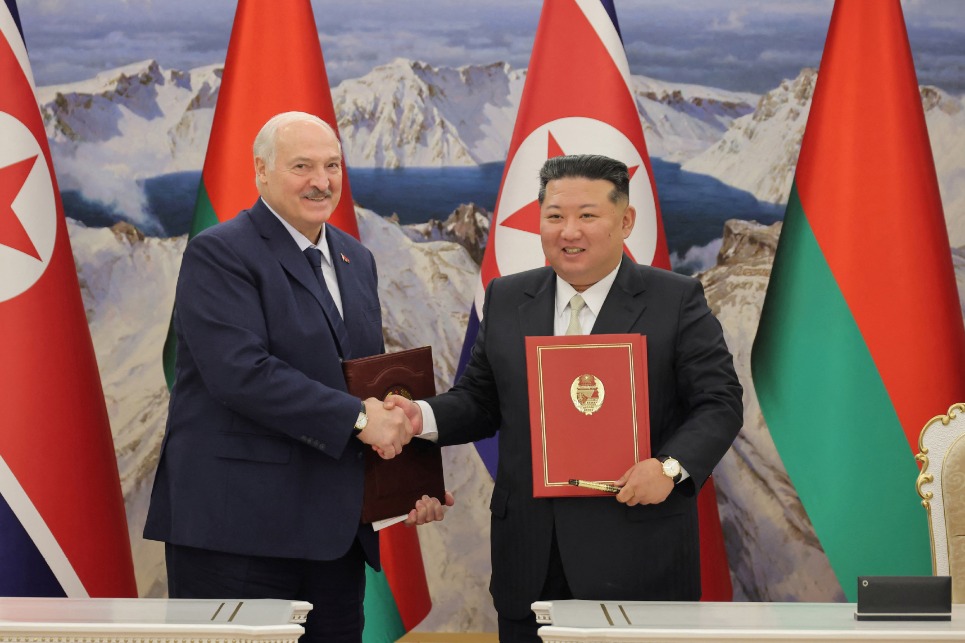
In a significant diplomatic development, North Korean leader Kim Jong-un and Belarusian President Alexander Lukashenko concluded high-level talks in Pyongyang on Thursday, resulting in the signing of multiple bilateral cooperation agreements. The meeting, which marked Lukashenko’s first official visit to the Democratic People’s Republic of Korea, spanned two days and focused on strengthening ties between the two nations.
The discussions between Kim Jong-un, who serves as both General Secretary of the Workers’ Party of Korea and President of the State Affairs of the DPRK, and his Belarusian counterpart addressed comprehensive plans for enhanced bilateral engagement. The leaders explored arrangements for future high-level exchanges between their governments and conducted detailed deliberations on international and regional matters of mutual interest.
Following their extensive negotiations, the two parties formalized their cooperation through the signing of agreements covering multiple sectors. The comprehensive package includes frameworks for collaboration in diplomatic affairs, information sharing, agricultural development, educational exchanges, and public health initiatives. These accords represent a substantial expansion of the bilateral relationship beyond previous levels of engagement.
The timing and scope of these agreements suggest a strategic calculation by both nations to strengthen international partnerships amid ongoing global geopolitical tensions. The inclusion of information and diplomatic cooperation components indicates potential alignment on international policy positions, while the agricultural and health agreements point to practical economic and developmental cooperation.
This diplomatic engagement represents one of the most significant international visits received by North Korea in recent years and underscores Belarus’s continued outreach to nations outside traditional Western diplomatic circles. The outcomes of this meeting likely signal both countries’ intentions to develop alternative international partnerships and economic cooperation channels.