As Hungarians prepare to head to the polls for national elections on April 12, the outcome carries far-reaching consequences that extend well beyond Budapest’s borders, with much of the European Union holding its breath for a shift away from the nationalist agenda of long-serving Prime Minister Viktor Orbán. Widely framed as a test of the bloc’s institutional resilience, the vote comes as Orbán — the EU’s longest-tenured national leader — has consistently trailed his challenger Péter Magyar in pre-election opinion polling, ending what has been a 16-year unbroken grip on power that has repeatedly strained the EU’s post-WWII governance framework.
Magyar, Orbán’s main opposition candidate, has already told the Associated Press that a victory for his campaign would immediately prioritize repairing the fractured relationship between Hungary and the 27-nation bloc, a stark departure from the current administration’s approach that has gridlocked EU decision-making for years.
The bloc currently faces a cascade of unprecedented threats: the growing momentum of right-wing populism across member states, ongoing conflicts in Ukraine and the Middle East, covert Russian sabotage operations, expanding Chinese economic influence, and a shifting U.S. administration that has upended decades of established transatlantic cooperation. Against this volatile backdrop, Orbán’s repeated use of national veto power has emerged as one of the most significant barriers to collective EU action.
Political analysts and lawmakers argue that Orbán has leveraged his veto authority and deep institutional knowledge of the EU’s funding distribution system to entrench his domestic power, extract major concessions from the bloc, and wield outsize influence disproportionate to Hungary’s size. “He entered a club, read the rules, figured out how he can rig the rules, and then started to be a free rider and blackmail all of the other club members,” explained Dániel Hegedűs, deputy director of the Berlin-based Institute for European Politics. “The question is, how long will the club members tolerate it?”
The current tension between Budapest and Brussels was not inevitable. When Hungary joined the EU in 2004 as part of the bloc’s largest single expansion in history, alongside nine other post-Cold War Central and Eastern European nations, widespread optimism surrounded its integration into the European project. “It didn’t start that way,” noted Jim Townsend, a fellow at the Center for a New American Security.
But following a series of economic crises, Orbán rose to power by promising broad-based prosperity for all Hungarians, while building strategic alliances with conservative political forces across the bloc. Gábor Scheiring, a former Hungarian lawmaker now teaching at Georgetown University in Qatar, explained that for years Orbán maintained a contradictory position: he regularly vilified EU leadership in Brussels, often drawing unflattering comparisons to the former Soviet Union, while simultaneously collecting billions in EU development funding and resisting widespread international pressure to reverse democratic backsliding within Hungary’s borders.
From 2014 to 2022, “Hungary was one of the biggest beneficiaries of EU funds,” Scheiring said. “Orbán could navigate the EU system really well: get all the money and get away with his political shenanigans.”
By 2022, growing frustration over Orbán’s failure to uphold EU standards of judicial independence, press freedom, and anti-corruption safeguards prompted Brussels to freeze nearly €10 billion in allocated funding to Budapest. The rift deepened dramatically after Russia’s full-scale invasion of Ukraine in 2022: Orbán, who has long maintained close personal ties to Russian President Vladimir Putin, has repeatedly used his veto to block EU-wide efforts to provide military and financial support to Kyiv and impose harsh economic sanctions on Moscow.
The most high-profile standoff came in early 2024, when Orbán backed out of a December 2023 agreement to approve a €90 billion ($104 billion) support package for Ukraine, prompting a rare public rebuke from European Council President Antonio Costa, who told reporters: “Nobody can blackmail the European Union institutions.”
Beyond the immediate standoff over Ukraine, Orbán’s persistent use of the veto has laid bare a fundamental structural flaw in the EU’s governing framework: the requirement of unanimous member state approval for all major policy decisions. Critics note that this rule has already blocked stronger collective action on other critical global issues, including the ongoing conflict in Gaza.
German MEP Daniel Freund pointed to an internal European Parliament analysis showing that Orbán has issued more vetoes than any other national leader in the EU’s history. “It’s staggering. No one else even comes close,” Freund said. “This is the biggest design flaw in the EU that he has exposed.”
The crisis sparked by Orbán’s governance has reignited calls for sweeping reform of the EU’s foundational treaties to build greater protections against authoritarian member states, regardless of whether Orbán wins or loses the April election. Multiple reform pathways have been proposed, but each carries significant limitations.
The most widely discussed change would reduce the number of policy areas that require unanimous voting, allowing major measures to pass with a qualified majority of the 27 member states representing at least two-thirds of the bloc’s total population. Other proposals include tougher targeted sanctions from the European Commission against member states that violate core EU rules, and even invoking Article 7 of the Treaty on European Union — a rarely used legal mechanism that would revoke Hungary’s voting rights within bloc institutions. Invoking Article 7 requires unanimous approval from all other EU leaders, however, and Slovak Prime Minister Robert Fico has already publicly stated he would veto such a move.
Brussels also holds an existing bargaining chip in the form of €16 billion ($18.4 billion) in allocated defense capability funding, part of a bloc-wide program to boost national defense infrastructure. Every other member state that has submitted a funding request has received approval, but Hungary’s bid remains stalled in Brussels. If Orbán secures a new term, Hegedűs argues that the EU could use this funding to extract concessions, such as lifting his veto on the Ukrainian support package. But he also warns that the strategy carries risks: “What will the EU offer in two to three or four months when the next strategic decision will come and Orbán will block again?” Hegedűs asked.
Beyond institutional reform, Orbán’s confrontational approach has prompted a full re-evaluation of the EU’s processes for accepting new member states and monitoring compliance from existing members. Ongoing accession negotiations with Moldova, Montenegro, and Ukraine are already being reshaped by the bloc’s turbulent experience with Hungary.
In February, European Enlargement Commissioner Marta Kos noted that the 2004-2007 expansion that brought Hungary and 11 other nations into the bloc “led to a new era of stability for our continent and an impressive level of economic convergence.” But without naming Hungary specifically, she acknowledged that the experience has revealed critical gaps in oversight. “A lesson learned from 2004 is that we need to have safeguards that ensure new members stick to the rules,” Kos said. “If countries go backwards on our fundamentals, such as democracy and rule of law, the safeguards must bite. No Trojan horses.”
分类: politics
-
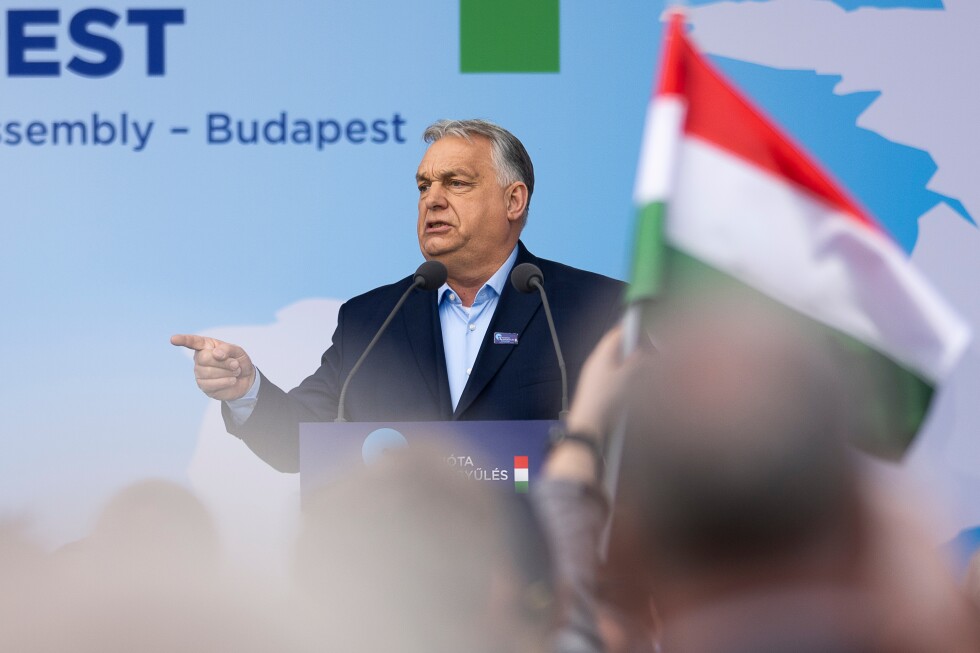
Hungary’s Orbán has long annoyed the European Union. Now some hope he faces defeat
-
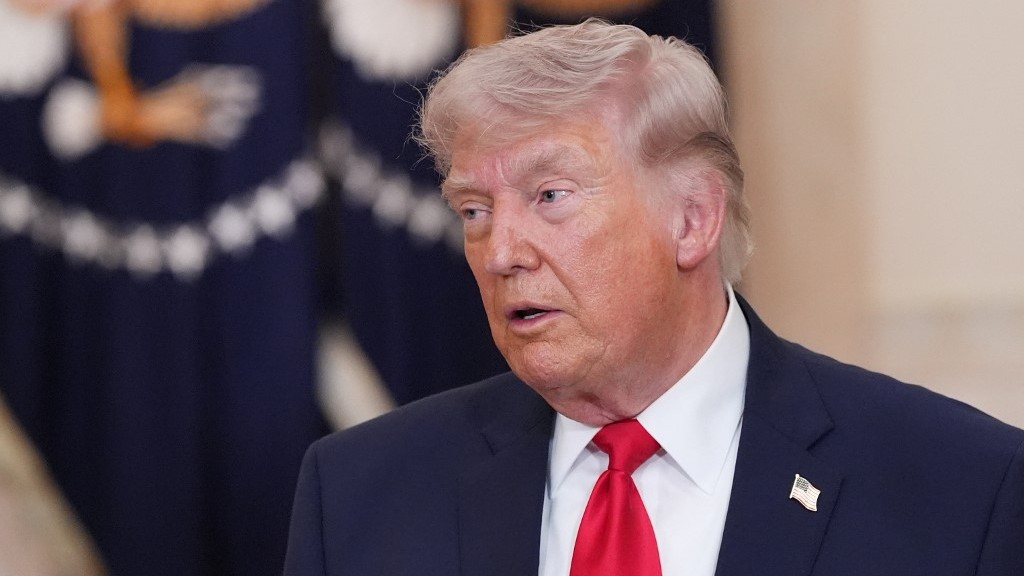
US was arming Iranian dissidents through Kurds while negotiating with Tehran, Trump reveals
On Easter Sunday, former U.S. President Donald Trump made a series of stunning, unplanned disclosures about U.S. operations targeting Iran, confirming that Washington secretly armed anti-government protesters inside the country just weeks before launching military strikes—even as American diplomatic envoys held face-to-face negotiations with senior Iranian leaders on European soil.
In a phone interview with Fox News correspondent Trey Yingst, Trump laid out details of the covert operation: the U.S. arranged weapons shipments to Iranian demonstrators who flooded city streets in late 2024, sparked by crippling economic hardship brought on by sweeping U.S. sanctions on Tehran. However, the secret mission ultimately went completely off plan.
The weapons, which were routed to intended recipients through Kurdish intermediaries based in the region, never ended up in the hands of the protesters the U.S. intended to arm. Paraphrasing Trump’s account during the on-air segment, Yingst relayed the former president’s blunt assessment: “We sent them a lot of guns. We sent them through the Kurds, and the president says he thinks the Kurds kept them.”
This on-the-record confirmation aligns with earlier unconfirmed intelligence reports that the Central Intelligence Agency had been working for months to arm Iranian Kurdish opposition groups. Trump’s remarks also line up with public comments he made in early March, when he stated it would be “wonderful” if Iranian Kurdish forces based in Iraq crossed the border to launch attacks on the Iranian government. Just days after that provocative comment, however, Trump walked back his position, adopting a far more cautious tone. “We’re very friendly with the Kurds, as you know, but we don’t want to make the war any more complex than it already is. I have ruled that out. I don’t want the Kurds going in,” he said at the time.
Experts say the newly revealed admission makes clear that the U.S. was far more deeply involved in efforts to destabilize the sitting Iranian government than previously acknowledged—at the exact same time that U.S. diplomats were holding unofficial back-channel negotiations with Iranian representatives. The mass protests that the U.S. sought to support were ultimately crushed by Iranian security forces, with conflicting reports over casualties. Trump claimed in the interview that Iranian authorities killed more than “40,000 civilians” during the government crackdown, but no independent verification or credible evidence has emerged to back up that staggering death toll claim.
In separate comments to Axios, Trump shared additional details about another high-stakes recent event: the successful rescue of an American F-15 aircrew member whose plane was shot down over Iranian territory the previous Friday. The downed pilot was safely recovered in the late hours of Saturday, capping off a multi-day search and extraction operation that put U.S. forces on high alert. During the mission, U.S. intelligence officials had raised concerns that the pilot’s emergency locator beacon was being used by Iranian forces as bait to lure American rescue teams into a trap.
Trump’s inflammatory language describing Iranians during his discussion of the pilot rescue drew swift backlash from political observers and advocacy groups across the globe. Referring to ordinary Iranian citizens in his remarks to Axios, Trump claimed: “Thousands of these savages were hunting him down. Even the population was looking for him. They offered people a bonus if they captured him.” The dehumanizing language was immediately condemned as bigoted and inflammatory by critics.
-
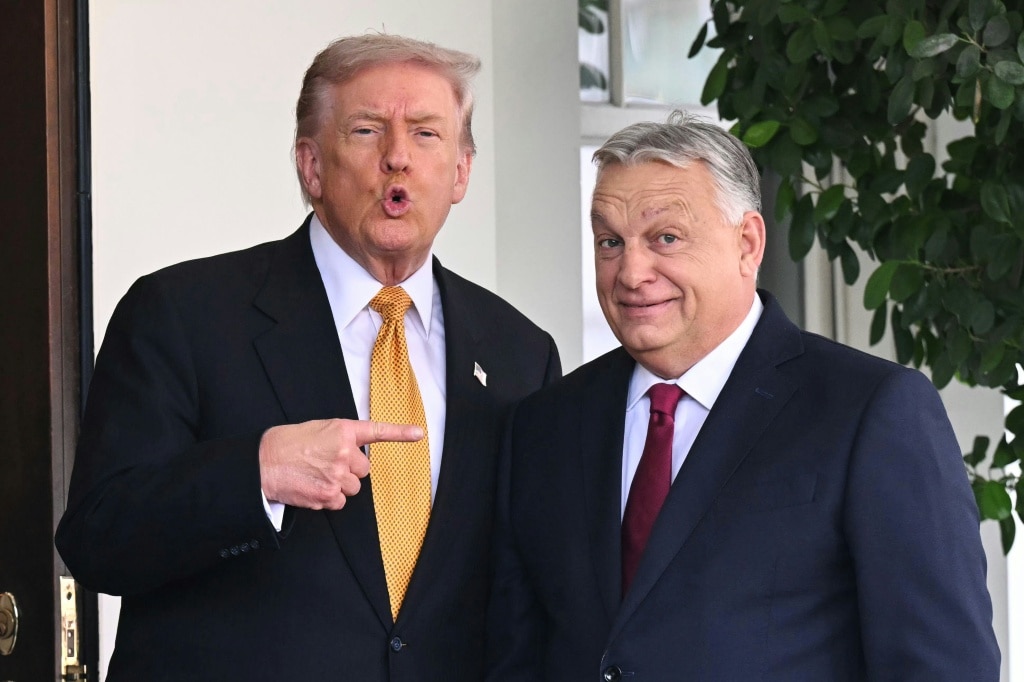
Hungarians’ growing anger at living in EU’s ‘most corrupt state’
As Hungary prepares for its pivotal April 12 general election, widespread public anger over systemic corruption and mounting economic hardship has put an end to 16 years of Prime Minister Viktor Orban’s rule within reach, with voters increasingly rejecting the elite wealth accumulation that has defined his administration. On paper, Orban’s publicly declared assets are remarkably modest: a small cache of personal savings and a shared villa in the Hungarian capital Budapest. But a growing share of the electorate in the European Union’s most corrupt member state, per Transparency International’s latest Corruption Perceptions Index, is convinced that the prime minister and his inner circle have built an opaque network of illicit wealth siphoned from public coffers.
While Orban himself maintains a facade of humble living, multiple members of his inner circle and close family have amassed extraordinary fortunes since he returned to power in 2010. His 85-year-old father, Gyozo Orban, owns multiple construction material businesses and the historic Hatvanpuszta estate, which he has renovated into a sprawling luxury manor estimated to be worth hundreds of millions of dollars. Drone footage from independent Hungarian media reveals the walled compound, located near Orban’s childhood home, boasts two swimming pools, a private wildlife park, and dozens of outbuildings. Leading Hungarian anti-corruption advocate and independent lawmaker Akos Hadhazy argues that Gyozo Orban acts merely as a front for his son’s hidden interests.
Other close associates have also skyrocketed to wealth through public contracts, many of which receive partial funding from the EU. Orban’s son-in-law, Istvan Tiborcz, rose to prominence as one of Hungary’s most powerful entrepreneurs through his former company Elios, which secured billions in public lighting contracts across the country. The EU’s anti-fraud office OLAF eventually uncovered serious procedural irregularities in the deals, prompting Tiborcz to pivot his investments to the real estate and tourism sectors. Even more striking is the rise of Lorinc Meszaros, Orban’s childhood friend and a former plumber, who is now Hungary’s wealthiest individual with a net worth of $4.8 billion, per Forbes. Meszaros now controls a vast cross-sector empire spanning construction, energy, banking, and media, all built on a steady stream of government public contracts.
Systemic corruption has drained an estimated 2.84 billion euros ($3.27 billion) from Hungarian public finances every year since 2016, Hadhazy told AFP, adding that graft is not a collection of isolated incidents but the core operating model of Orban’s administration. This graft has come at a steep cost for ordinary Hungarians, who have struggled for years with stagnant economic growth, sky-high inflation, and rapidly declining quality of public services. Gabor Szebenyi, an 81-year-old retired history teacher who attended a recent opposition rally, compared the current system to feudalism, saying: “It’s our money, not theirs. But they are spending it as if they were the sole owners.”
A veteran construction contractor with 30 years of experience in the industry, who spoke to AFP on condition of anonymity, confirmed that public procurement contracts are predetermined before bids are even submitted, despite nominal competition on paper. “Those at the bottom of the chain do the work and get paid last — sometimes months later,” he explained, adding that he is now preparing to exit the industry and sell his equipment out of frustration. “I’m so angry. While those in power lead luxurious lives and travel by private jets, small businesses are struggling to survive.”
The corruption crisis has already had tangible diplomatic and financial consequences for Hungary. Transparency International ranks the country as the EU’s most corrupt, tied with Bulgaria, highlighting systemic risks in public procurement and limited competition for large contracts that account for 5% of Hungary’s total GDP. The Hungarian government has rejected the ranking and insists its procurement rules fully comply with EU standards, but the EU has frozen 19 billion euros ($22 billion) in allocated development funds over persistent concerns about corruption and erosion of the rule of law.
Orban’s main challenger in the upcoming election, opposition leader Peter Magyar, has centered his campaign on tackling graft, vowing to unblock the frozen EU funds and launch full investigations into the wealth accumulation by Orban and his inner circle if he wins office. Political analyst Zoltan Ranschburg, from the Budapest-based Republikon think tank, noted that Orban’s powerful state propaganda machine has been able to deflect criticism for years, but it has lost credibility as economic conditions have worsened. For millions of Hungarians fed up with systemic graft and elite impunity, the upcoming election represents a rare chance to end more than a decade and a half of Orban’s rule.
-
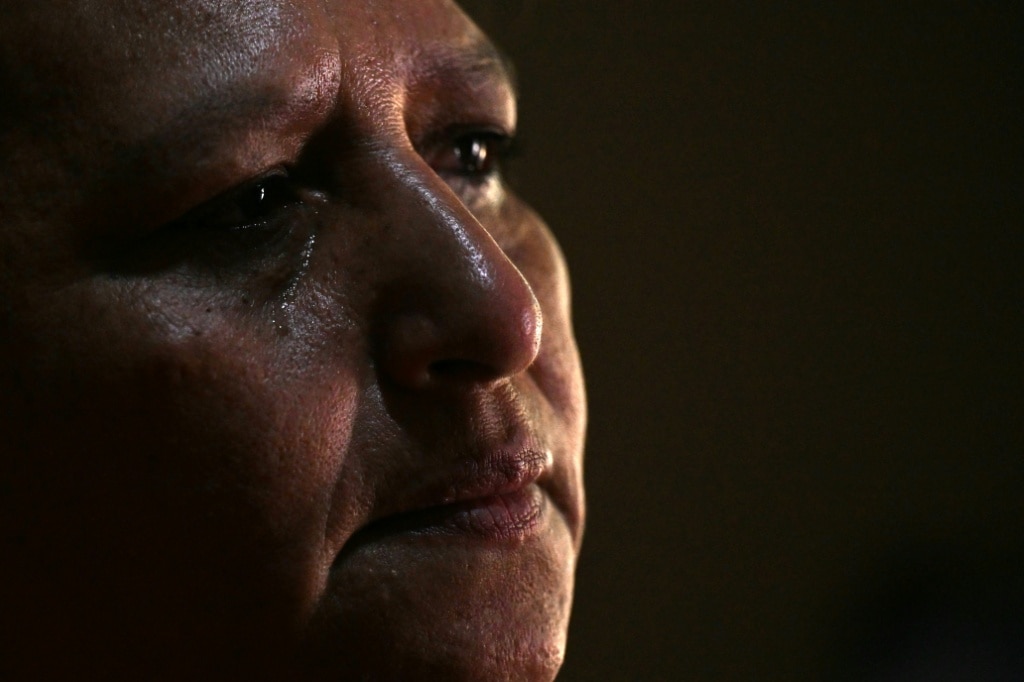
In El Salvador’s mass trials, ‘the innocent pay for the guilty’
Four years after Salvadoran President Nayib Bukele launched his high-stakes war on street gangs, the Central American nation is moving forward with a sweeping, secretive mass trial process that has drawn fierce condemnation from human rights defenders over its disregard for basic due process protections. Under a nationwide state of emergency that has been in continuous effect since 2022, more than 91,000 people have been detained on alleged gang ties, and thousands of these detainees are now being judged in collective proceedings before anonymous judges in closed courts, their fates sealed in a single ruling that groups dozens of defendants together.
For many working-class Salvadoran families, the process has already become a nightmare of arbitrary justice, where innocent people face being punished alongside actual criminals. Take 35-year-old Williams Diaz, an air conditioning technician arrested by soldiers three years ago as he traveled to his job. Diaz was immediately transferred to the Terrorism Confinement Center (CECOT), Bukele’s flagship maximum-security prison built to hold suspected gang members, where more than 10,000 detainees are packed into severely overcrowded cells. Today, he waits to be tried alongside dozens of other men accused of belonging to the Barrio 18 gang, with no prior criminal conviction on his record.
His mother, Gladis Villatoro, a tortilla vendor who lives in a modest home 12 miles east of the capital San Salvador, fears the worst. Under the collective trial system, a conviction for one defendant in the group often means convictions for all. “If they convict one, they convict the whole lot…the innocent will pay for the guilty,” she said, speaking softly to avoid distressing her 6-year-old grandson, Diaz’s son. Her anxiety has deepened in recent months after learning her son is suffering from kidney failure; she has had no update on his condition in a year, clinging only to prayers for a miracle that contradicts Bukele’s own public promise that no suspect who enters CECOT will ever leave.
A short drive from Villatoro’s home, 58-year-old baker Reynaldo Santos shares the same fear for his 24-year-old son Jonathan, a factory worker with no prior criminal record. Jonathan was arrested at home while playing the popular video game Fortnite, which law enforcement cited as evidence of gang affiliation. Though he was released pending trial, he faces arbitrary re-arrest at any moment. “It’s like Russian roulette, it’s a nightmare,” Reynaldo says of the family’s ongoing uncertainty. Jonathan, who lives with anxiety and depression, only asks for a fair chance to prove his innocence, his father adds.
Bukele’s mass incarceration policy has put roughly 1.4 percent of El Salvador’s total population behind bars without full due process, creating an unprecedented backlog that the country’s court system has struggled to clear. To address the logjam, the Attorney General’s Office launched the collective mass trial process in 2024, and pledged to finalize 3,000 indictments in the first three months of 2026. In a recent move that increased the stakes for all defendants, the Salvadoran Legislative Assembly voted to raise the maximum sentence for alleged gang members, labeled “terrorists” under government law, from 60 years to life imprisonment — a change that applies even to minors. Vice President Felix Ulloa has defended the collective trial model as an “innovative” approach to tackling El Salvador’s historic gang violence crisis, and says sentences will be adjusted to reflect a defendant’s alleged rank within a gang structure.
But human rights groups and independent legal experts warn the process is fundamentally broken, built on legal reforms that have stripped away core protections for the accused. Reforms to El Salvador’s organized crime law eliminated the requirement to assign individual criminal responsibility and scrapped preliminary hearings that are designed to weed out weak cases with insufficient evidence before they go to trial. Multiple defense attorneys, who spoke to AFP on condition of anonymity out of fear of retaliation, describe the proceedings as nothing more than a conviction factory. Before each mass trial, a co-operating imprisoned gang member with a hidden face testifies against every defendant in the group in exchange for a reduced sentence, but rarely provides any concrete evidence to back up their claims — yet their testimony is almost always enough to secure a conviction, the lawyers say. In many cases, defense attorneys are not even notified of the mass hearings or informed of the specific charges against their clients; one attorney who represented a produce vendor sentenced to 30 years in prison alongside 163 other defendants in February only got to speak to his client for one minute before the proceeding began.
Public defender offices are completely overwhelmed by the surge in cases, so many families like Villatoro and Santos have gone into deep debt to hire private attorneys rather than rely on overworked court-appointed counsel. New York-based watchdog Human Rights Watch has documented widespread patterns of arbitrary arrest, with detainees taken into custody based on nothing more than anonymous tip-offs, personal neighborhood disputes, or police officers meeting arrest quotas to earn performance bonuses. For Juan Pappier, HRW’s deputy director for the Americas, the mass trials “lack the basic guarantees of due process, which increases the risk of convicting innocent people.” Prominent Salvadoran criminal lawyer Roxana Cardona has warned that the process will turn the country’s already overcrowded prisons into “human pits.”
Bukele, who has won broad popular support at home and across Latin America for cutting El Salvador’s once sky-high gang violence rates, has repeatedly dismissed criticism from legal experts who warn his crackdown amounts to crimes against humanity, arguing that the dramatic reduction in violence justifies the extraordinary measures he has taken. AFP has reached out to the Salvadoran prosecutor’s office and national government for comment on the allegations of due process violations, but has not yet received a response. With trial proceedings sealed from public view and little information available about how the process is being carried out, families of the accused are left only with uncertainty and fear that their loved ones will pay the price for a government crackdown that targets the guilty alongside the innocent.
-
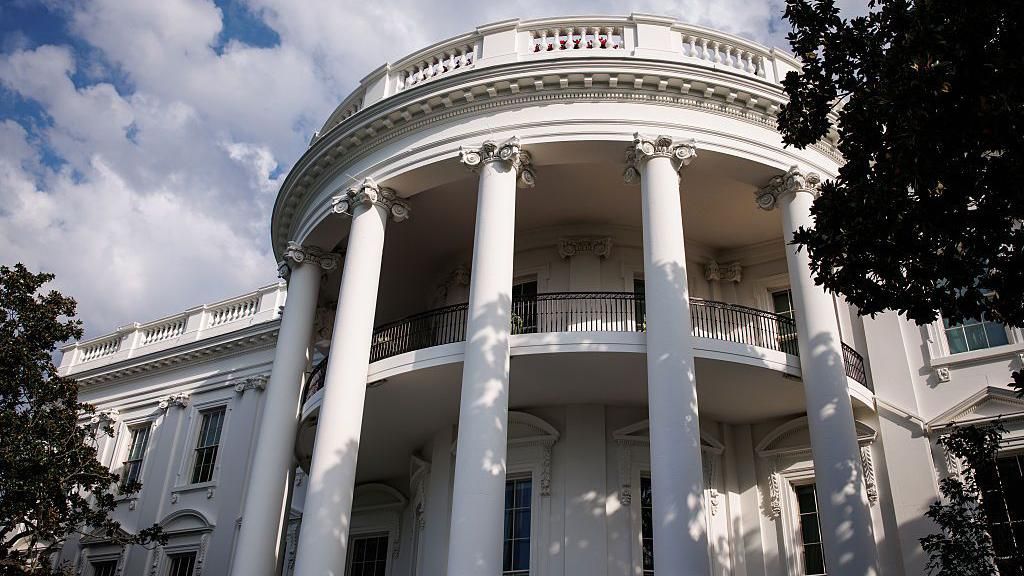
US Secret Service investigates reports of gunfire near White House
In the early hours of Sunday local time, a report of gunfire near the White House triggered a sweeping investigation by the US Secret Service, putting the nation’s capital on heightened security alert while President Donald Trump remained in residence for the Easter weekend.
According to official statements from the agency, Secret Service officers were dispatched to Lafayette Park, a green space located directly north of the presidential residence, just minutes after midnight local time, which corresponds to 04:00 GMT, following multiple calls reporting shots fired in the area. Responding teams immediately locked down the zone and carried out a systematic search of the park and all adjacent neighborhoods to locate the source of the gunfire and any potential person of interest.
As of Sunday evening, investigators have not located any suspect connected to the incident, and no reports of civilian or law enforcement injuries have emerged. The Secret Service and its collaborating law enforcement partners are now actively tracing a potential vehicle linked to the case as they continue to piece together what happened.
Unlike most weekends, when Trump travels to his private Mar-a-Lago estate in Florida for downtime, the president opted to stay in Washington DC this Easter holiday. White House Communications Director Steven Cheung noted in a Saturday post on X that Trump had been working continuously from the Oval Office and the White House complex throughout the weekend. Per CBS News, the BBC’s US media partner, Trump was scheduled to host a private family Easter dinner at the White House on Sunday.
Secret Service spokesman Anthony Guglielmi confirmed in an update on X that the investigation forced temporary closure of multiple public roads in the affected area, but all thoroughfares have since been reopened to traffic. While routine operations across the White House complex have remained uninterrupted, Guglielmi added that a heightened security posture has been implemented across the perimeter as a precaution.
A Secret Service representative reaffirmed to the BBC on Sunday evening that the active investigation is still ongoing, with investigators working to trace all potential leads. The White House has not yet issued a formal response to the BBC’s request for additional comment on the incident.
-
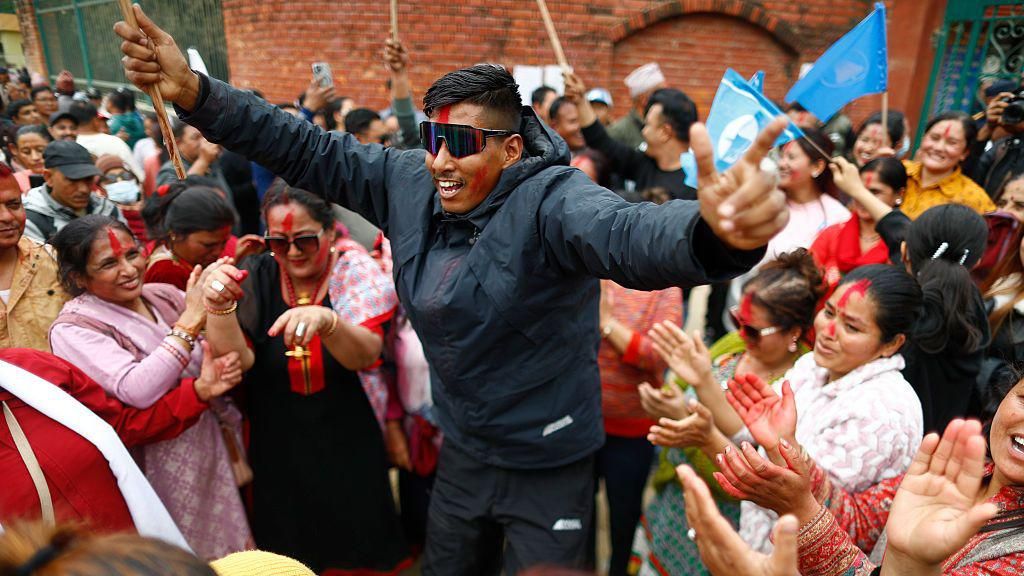
Two protests, two elections: How Nepal’s Gen Z succeeded where Bangladesh’s stumbled
Across South Asia, a new wave of Gen Z political activism has reshaped national politics in recent years, but two neighboring countries have seen starkly different outcomes for youth movements that both ousted sitting governments through mass public protest. Last month, as Nepal swore in former rapper Balendra Shah as prime minister — with dozens of Gen Z lawmakers filling seats in the newly elected parliament for the four-year-old Rastriya Swatantra Party (RSP) — Bangladeshi youth activist Umama Fatema watched from afar with a heavy heart.
Fatema was one of thousands of Gen Z protesters who led 2024 mass demonstrations that brought down Bangladesh’s long-ruling authoritarian Awami League government, matching the grassroots energy that upended Nepal’s political establishment. But nearly two years after Bangladesh’s revolution, the nation’s youth movement has yet to claim meaningful formal political power. In the country’s first post-protest national election held in February, the long-established opposition Bangladesh Nationalist Party (BNP) secured a historic parliamentary majority, while the youth-led National Citizens’ Party (NCP) — which grew directly out of the student protest movement — suffered a dismal defeat, winning only six of the 30 seats it contested.
This outcome stands in sharp contrast to Nepal’s historic election results, delivered just one month after Bangladesh’s vote. The RSP, a youth-focused upstart party, won a landslide victory, earned dozens of Gen Z seats in parliament, and paved the way for Shah’s ascension to the prime ministership via an electoral alliance. Nepal’s win marks a rare breakthrough for youth political movements across Asia, where dozens of Gen Z-led protest movements have erupted in recent years, but none have managed to convert street protest into formal governing power the way Nepal’s young activists have.
“Personally, I felt disheartened. When I saw how effectively [the Nepalese youth] were able to organise themselves, I could not help but feel disappointed about the situation in our own country,” Fatema explained. “Bangladesh has not been able to deliver such a change… it is naturally disheartening to realise that we have not been able to organise and rebuild our country in the same way.”
Political analysts and youth leaders on both sides have dissected the stark divergence in outcomes, pointing to a combination of structural political context, strategic decision-making, and timing that separated the two movements.
For Nepal, RSP leaders frame their victory as a product of deep resonance with widespread public frustration. “The Gen Z protests tapped into a deep, long-standing frustration with the way things have been run,” explained KP Khanal, an RSP candidate who won a parliamentary seat in Kailali district. “At the same time, the sacrifices and voices of Gen Z stayed with the public — they haven’t been forgotten. Consistency was also a key factor. We kept raising our voices around accountability and justice, over and over, and gradually that message reached far and wide. It stopped being just a reaction to the status quo and started to feel like a genuine, credible movement that people believed in and wanted to be part of.”
Analysts add that Nepal’s unique political landscape created a unique opening for an upstart youth party. For years, the nation’s electoral system has encouraged coalition governance, and no single party has held a parliamentary majority. Over 17 years, Nepal cycled through 14 separate governments, with a small group of established parties rotating power in a pattern critics called political musical chairs. Widespread public anger over systemic corruption left all major established parties discredited, clearing the way for the RSP’s outsider brand to win over voters.
“In Nepal’s case, since all three established parties, none dominant, were discredited, the main beneficiary has been the youthful RSP and its leader,” noted Nitasha Kaul, director of the Centre for the Study of Democracy at the University of Westminster.
Another strategic decision that cemented the RSP’s success was its electoral alliance with Shah, a charismatic former protest leader who lacked a formal party structure of his own. The alliance benefited both sides: the RSP provided Shah with access to its existing national organizational network and campaign resources, while Shah helped the RSP overcome a damaging embezzlement scandal surrounding party leader Rabi Lamichhane, giving voters a unifying, trusted figure to rally around.
Nepalese political analyst Amish Mulmi explained that in South Asian politics, robust party organization is non-negotiable for electoral success, especially for first-time contenders. That lesson was not lost on 27-year-old youth activist Purushottam Suprabhat Yadav, who turned down an invitation from friends to launch a new independent youth party after Nepal’s Gen Z protests. “Winning an election is not a joke. Organising a movement and emerging victorious in an election are two different things,” Yadav told reporters. “A political party cannot be formed out of nowhere… you require a very big machinery. There were also problems of finance and organisation-building, which was not easily available to us at that time.”
Yadav instead joined the RSP in December, drawn to the party’s existing national organizational network and slate of new, young candidates. The decision paid off: last week, Yadav was sworn into parliament as an RSP lawmaker via the party’s proportional representation list. Echoing the movement’s core promises, Yadav emphasized that the transition from street protest to parliamentary office has not changed the movement’s core goals. “We are now entering parliament from the streets — our place in society has changed, but not our agenda. Anti-corruption and an end to appointments on the basis of political affiliation and nepotism are our key demands. If we have to fight against our own party regarding this, we will do so.”
Kaul noted that converting street protest power to electoral power requires long-term, intentional organizing work that many passion-driven youth movements lack. “A movement that is driven primarily by passion, frustration, anger, or the politics of purity may be better at challenging the status quo — but not necessarily at winning elections,” she said. Nepal’s success, she added, stemmed from minimal internal division, ideological flexibility without open hostility, and a lack of dominant established parties capable of co-opting the movement’s momentum — all factors that were missing in Bangladesh’s case.
In Bangladesh, the long-ruling Awami League had suppressed all opposition for decades before it was ousted, leaving only established opposition parties well positioned to capitalize on anti-government anger after the revolution. “This meant that the second and third parties were seen as ‘victims’,” Kaul explained, noting that the BNP and Islamist party Jamaat-e-Islami ended up reaping the benefits of widespread anti-establishment sentiment in the election. These established parties framed themselves as reform-minded, aligned closely with the youth movement, and ultimately were better able to absorb and channel protest energy than the new, under-resourced youth-led NCP, according to Imran Ahmed, a research fellow at the Institute of South Asian Studies at the National University of Singapore.
The NCP’s fatal strategic misstep was its decision to enter a coalition led by the conservative, controversial Jamaat-e-Islami, which alienated its core base of young progressive supporters, particularly women. “By aligning with a regressive force in Bangladesh, the NCP became more about political power than about the Gen Z cause, squandering their golden chance to appeal to more voters,” said Rishi Gupta, assistant director of the Asia Society Policy Institute in Delhi.
Timing also worked against Bangladesh’s youth movement. Gupta points out that a year and a half passed between the 2024 protests and the 2026 election, allowing the movement’s grassroots momentum to fade. Nepal, by contrast, held its election just six months after its mass protests, capitalizing on sustained public anger at the old establishment.
While Bangladesh’s youth failed to win formal power, their movement did succeed in shifting the national conversation around reform. The protests forced a constitutional referendum held alongside February’s election, where a majority of voters backed sweeping changes to the constitution, parliament, and national legal system. The new BNP-led government has also released a 31-point plan for structural reform, but many young activists remain skeptical.
“In many ways, they have followed the same conventional pattern of programmes that the Awami League used to undertake,” Fatema said, adding that the new government has failed to prioritize expanded economic and job opportunities for Bangladesh’s large youth population. A growing sense of disillusionment has spread among young Bangladeshis, she added, with more and more young people seeking work opportunities abroad and turning away from domestic politics entirely.
“The tendency among young people to look abroad has grown to an alarming level… even those who once intended to remain in the country are no longer thinking that way,” Fatema said. “With young people no longer seeing their future within this country, how will they find a place for themselves within the political landscape? It has become a major problem.”
Still, some young Bangladeshi activists hold out hope for the future. The NCP, which now holds a small foothold in parliament, will contest upcoming local city elections independently, without any coalition alliances. Local NCP leader and Gen Z protester Rahat Hossain argues that running alone will help the party rebuild trust with its core base. “I think the people will accept the party more than they did in the national elections,” Hossain said. “If the NCP continues to stand with the people on the streets, fighting alongside them and upholding its promises, then it can achieve better outcomes in the future.”
For youth activists across both nations, the fight for systemic reform remains ongoing. Nepal’s new Gen Z lawmakers have pledged to hold their own government accountable to the high expectations of a public hungry for change, while Bangladeshi youth warn they will return to the streets if the new government fails to deliver on the promised constitutional reforms. Fatema says even if current activists remain sidelined, the next generation will carry the movement forward. “Those who are 10 years younger than us will eventually organise movements of their own,” she said. “The next phase of protests in Bangladesh will likely be led by Generation Alpha.”
-
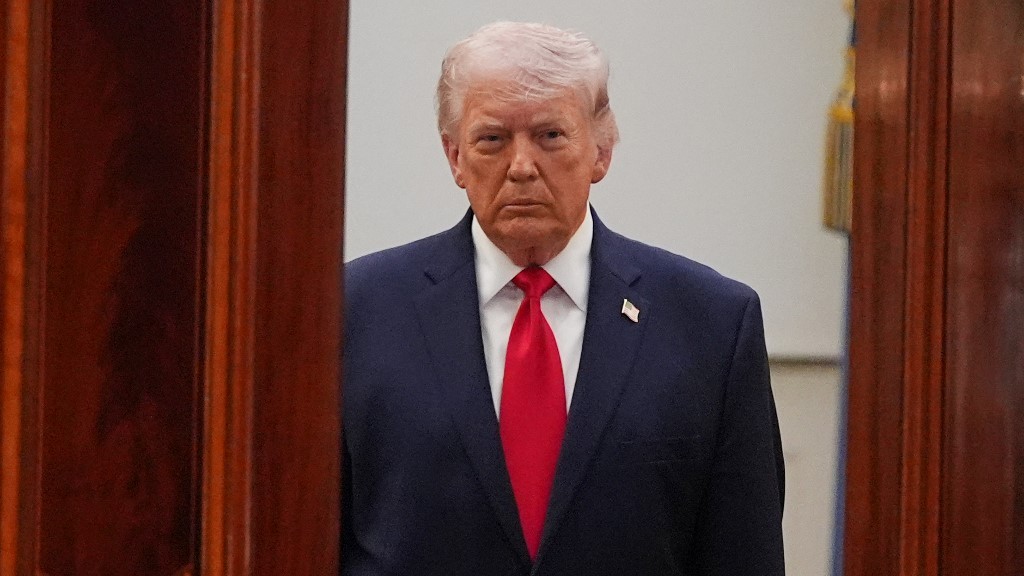
Trump warns ‘crazy bastards’ in Iran to open ‘fuckin’ strait’ in Truth Social rant
In a profanity-laced outburst posted to his Truth Social platform dated April 5, 2026, U.S. President Donald Trump launched a virulent verbal attack against Iranian leadership, threatening catastrophic consequences if Tehran does not immediately reopen the strategically vital Strait of Hormuz. The Strait, which carries roughly a fifth of the world’s daily oil supply and is a critical chokepoint for global energy trade, has been closed to commercial traffic since the joint U.S.-Israeli military assault on Iran launched in late February, sending shockwaves through global energy markets and straining international economies already grappling with persistent volatility.
Trump’s inflammatory post targeted Iranian leaders as “crazy bastards,” demanding they open the “fuckin’ Strait” or face what he called “hell,” adding a threat to destroy Iran’s key energy and transportation infrastructure. In a striking and unusual closing to the aggressive message, the president ended the post with the phrase “Praise be to Allah.”
As of Sunday, April 6, Iranian officials had not issued an immediate public response to Trump’s latest ultimatum. However, speaking to Fox News later that same day, Trump walked back some of the overt belligerence slightly, noting that ongoing negotiations are already underway and claiming he sees a “good chance” a formal agreement to reopen the waterway could be reached as early as Monday. The president reiterated his threat in the interview, stating: “If they don’t make a deal and fast, I’m considering blowing everything up and taking over the oil.”
Reopening the Strait of Hormuz has been framed as a top policy priority for the Trump administration and the broader international community, which has faced steep economic fallout from the weeks-long closure of the critical trade route. Diplomatic efforts to de-escalate tensions and broker a deal have been led primarily by Oman, which announced Sunday that Omani and Iranian foreign ministry representatives had met to discuss a path toward reopening the strait.
In a post on the social platform X, Oman’s state news agency confirmed the meeting, which brought together deputy foreign ministry officials and technical specialists from both sides to review potential “options” for restoring navigation through the waterway. This follows an announcement from Tehran earlier last week that Iran was drafting a peacetime maritime protocol with Oman to oversee commercial traffic through the strait, a document Iranian Deputy Foreign Minister Kazem Gharibabadi told Russian state media would go into effect once hostilities between Iran, the U.S. and Israel conclude.
Diplomatic contacts between the U.S. and Iran have so far been indirect, mediated through Pakistani intermediaries, but Trump has ramped up his aggressive rhetoric in recent days. Just one day before his April 5 Truth Social rant, on Saturday, the president gave Tehran a 48-hour deadline to reach an agreement or face “all Hell.”
In separate developments last week, an Iranian parliamentary committee voted to implement new shipping tolls for all vessels transiting the strait and implement a total ban on any ships flagged to or owned by the U.S. and Israel from entering the waterway.
-

Analysis: Trump declares victory in Iran war after rescue, but threats to US operation still loom
The successful recovery of the second downed F-15 crew member from Iranian territory drew an immediate victory declaration from U.S. President Donald Trump on Sunday. In his statement, Trump framed the high-stakes rescue operation as fresh proof that the United States holds unchallenged air dominance over the region, a boast that comes against a far more nuanced strategic backdrop, according to independent observers.
While the rescue mission itself met its core goal of extracting the missing airman, the sequence of events that unfolded over recent days lays bare that persistent threats to U.S. aircraft and personnel remain intact – even after weeks of intensive joint strikes by U.S. and Israeli forces targeting Iranian military infrastructure, and Trump’s own repeated claims that Tehran had been left with no functional anti-aircraft capabilities. In addition to the two downed fixed-wing aircraft, at least one U.S. helicopter suffered damage from ground fire during the operation, a detail that undermines narratives of total Iranian defensive disablement.
Multiple anonymous Washington sources familiar with internal administration deliberations confirmed to reporters that the loss of aircraft and the unexpected complexity of the pilot recovery mission may make Trump more hesitant to approve proposed ground operations. These potential actions, which have been drafted by military planners and presented as viable options to the president, include seizing Iran’s strategic Kharg Island oil export terminal and other key Persian Gulf sites, as well as targeting stockpiles of highly enriched uranium stored in deep underground facilities. Any large-scale ground or amphibious incursion would carry significant risk, as it would expose U.S. troops to Iran’s surviving, widely dispersed air defense capabilities – particularly man-portable air defense systems (Manpads), shoulder-launched weapons that remain highly effective against low-flying helicopters and transport aircraft.
Yet the operation also carries a contrasting strategic lesson that could embolden the Trump administration, analysts note. The fact that U.S. special operations forces were able to insert into heavily contested Iranian territory, establish a temporary forward airfield and refueling position directly in range of Iranian defensive positions, hold the site for multiple hours while destroying the two downed aircraft, and extract all personnel without additional casualties could convince Trump that larger airborne or amphibious operations against high-value Iranian targets have a strong chance of success.
Trump has sent conflicting signals about his administration’s next steps in the standoff with Iran. During a series of phone calls with reporters on Sunday, he suggested that a negotiated settlement with Tehran could be imminent. But if diplomacy fails, the president has repeatedly warned on his social media platform Truth Social that his self-imposed deadline for launching strikes on Iranian power plants and critical transportation infrastructure is rapidly approaching. In a profanity-laced post directed at the Iranian regime Sunday, Trump threatened that if Tehran did not reopen the Strait of Hormuz to unimpeded commercial shipping, Iranian leadership would “be living in Hell.” During a brief telephone interview with Fox News, he also raised the possibility of moving to “take” control of Iran’s vast oil reserves, though he offered no additional details on how such an operation would be carried out.
Iranian state media has published photos of wreckage it identifies as a U.S. military helicopter downed during the pilot rescue mission, offering visual confirmation of the risks U.S. forces encountered during the operation.
Any expansion of U.S. targeting to include Iranian civilian infrastructure and energy facilities would mark a major escalation of the ongoing conflict, drawing immediate pushback from global human rights groups, which warn that such strikes would put civilian lives at severe risk and potentially violate international humanitarian law. Critics of the president argue that the shift toward more aggressive threats reflects Trump’s growing frustration over the failure of previous strikes to secure unimpeded freedom of navigation through the Strait of Hormuz, the critical global chokepoint through which roughly a fifth of the world’s oil supplies and key commodities transit daily.
Trump’s latest hardening of rhetoric marks a clear shift from comments he made just one week ago, including an April 1 televised address in which he claimed the U.S. had already cleared the way for U.S. allies to secure and use the strait independently, telling partners “Take it, protect it, use it for yourselves.” Just days ago, the president also suggested he was willing to stand down from further escalation even if no negotiated deal was reached with Iran. Analysts say the new approach appears designed to increase pressure on Tehran’s leadership, doubling down on threats of devastating attacks on Iran’s core infrastructure to force Iranian negotiators back to the bargaining table.
-
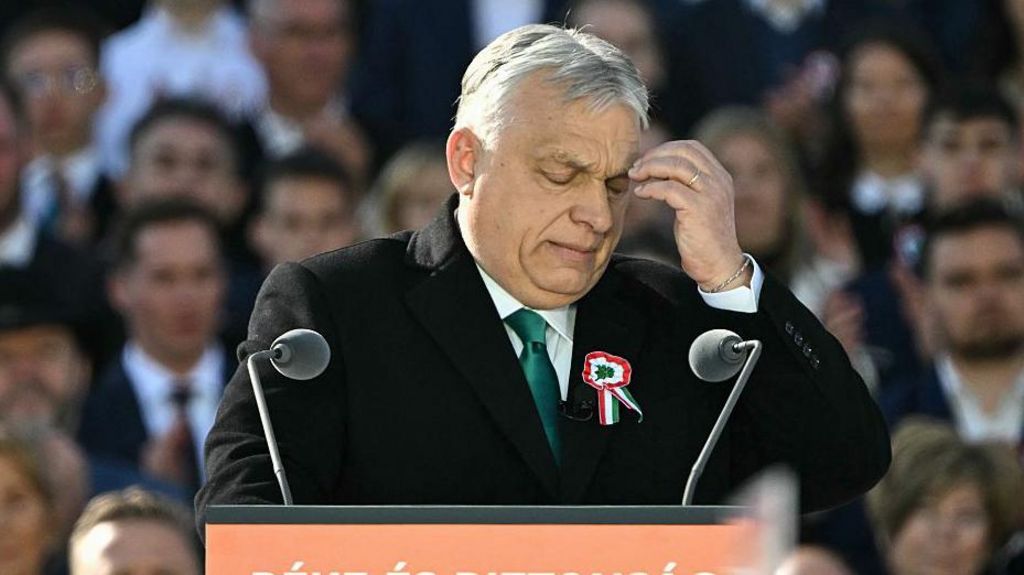
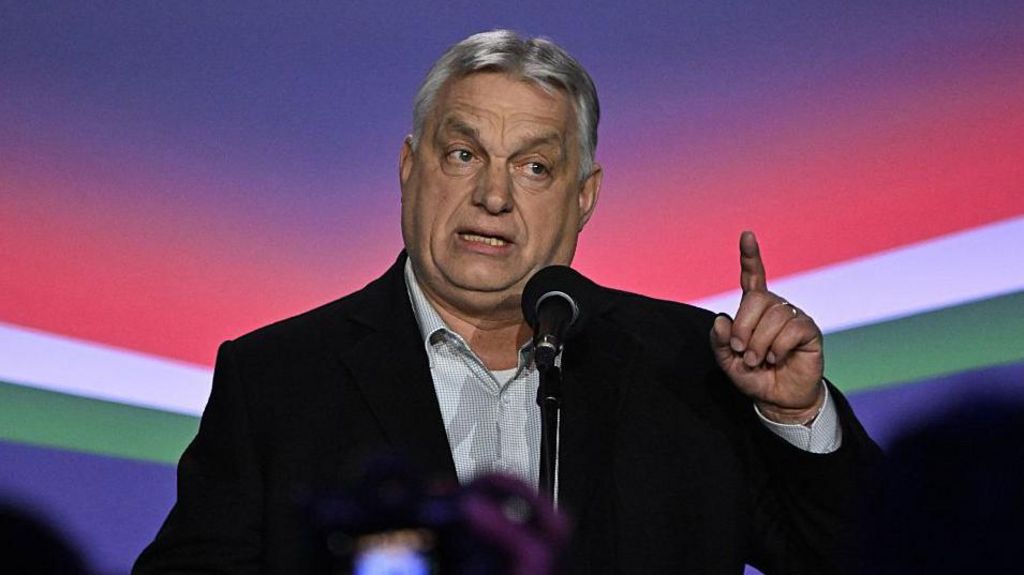
Who is Viktor Orban, Hungarian PM fighting to stay in power after 16 years?
As the longest-serving incumbent head of government in the European Union, 62-year-old Viktor Orbán is bracing for the greatest political challenge of his decades-long career, with Hungary’s general election set to take place on April 12. After holding power for 16 consecutive years, most pre-election opinion polls point to a potential defeat at the hands of Péter Magyar, a former insider from Orbán’s own ruling Fidesz party, marking a potential turning point for both Hungary and its relationship with the EU.
Orbán’s political journey stretches back to the final days of Soviet-backed communist rule in Central Europe. Born in 1963 in the small village of Felcsút an hour west of Budapest, he grew up in a working-class household with no running water, the eldest of three sons. As a young law student in Budapest in the late 1980s, he first rose to national prominence as a pro-democracy activist, founding the Fidesz party (the Alliance of Young Democrats) and delivering an explosive 1989 speech to a quarter of a million Hungarians gathered at Budapest’s Heroes’ Square, calling for an end to communist dictatorship and the establishment of a free, independent democratic Hungary. In that moment, he was hailed as one of the brightest young hopes for post-authoritarian democracy in the region.
What followed has been a dramatic ideological and political transformation that has reshaped Hungary and put it at odds with much of the European Union. After early stints as a liberal pro-democracy leader and a short period of study at the University of Oxford funded by Hungarian-born philanthropist George Soros, Orbán gradually shifted his ideology to the nationalist hard right through the 1990s. He won his first term as prime minister in 1998, led Hungary into NATO, and after two election defeats in 2002 and 2006, he swept back into power amid the 2010 global economic crisis. He has won four consecutive elections since, securing a two-thirds parliamentary supermajority each time, allowing him to rewrite Hungary’s constitution and pass more than 40 sweeping “cardinal laws” that restructured state institutions, election rules, the media landscape and the national economy.
Since 2010, Orbán has rebranded his governing model with terms including “illiberal democracy” and “Christian liberty”, while allies in the U.S. MAGA movement frame it as “national conservatism”. The European Parliament has formally condemned the system as a “hybrid regime of electoral autocracy”, and political analysts widely note it as the only case of a former consolidated liberal democracy within the EU backsliding into non-democratic rule. Transparency International has repeatedly ranked Hungary as the most corrupt country in the EU, with critics alleging that billions in state contracts and infrastructure projects have been awarded to Orbán’s close family and inner circle, while independent media has been almost entirely pushed out of the market, replaced by Fidesz-aligned outlets. Billions of euros in EU development funding have been frozen over persistent rule of law concerns.
On the international stage, Orbán has emerged as Vladimir Putin’s closest ally within the EU, and has repeatedly clashed with Brussels over the war in Ukraine. He has repeatedly vetoed vital EU funding packages for Kyiv, claiming that supporting Ukraine risks dragging Hungary into direct conflict with Russia. Most recently, his foreign minister Péter Szijjártó admitted sharing confidential details of closed-door EU meetings with his Russian counterpart Sergei Lavrov, dismissing the disclosure as standard “everyday diplomacy” – a comment that drew sharp condemnation from other EU leaders, with Polish Prime Minister Donald Tusk noting that “Orbán and his foreign minister left Europe long ago”. Orbán has also positioned Ukraine as a core campaign enemy this election cycle, falsely claiming Ukrainian President Volodymyr Zelenskyy has blocked Hungary’s oil supplies and accusing opposition parties of planning to send Hungarian public funds to Kyiv. For years, he centered his political messaging on opposition to billionaire philanthropist George Soros and irregular migration, running a widely criticized anti-Soros poster campaign that opponents condemned as antisemitic, forcing the Soros-founded Central European University to relocate most of its operations to Vienna in 2019. In 2015, he built a border fence on Hungary’s Serbian frontier to block migrant arrivals and criminalized aid to irregular migrants, a policy that the EU’s top court ruled violated EU obligations.
Despite his long grip on power, Orbán now faces an uphill battle to secure a fifth consecutive term. His populist anti-Brussels rhetoric still resonates with many conservative Hungarian voters, but polling shows widespread fatigue after 16 years of rule, with growing public anger over persistent corruption allegations linked to his party and inner circle. Even his signature personal charisma, a key driver of his past political success, appears to be faltering: he was visibly rattled by boos from the crowd during a recent campaign rally in the northwestern town of Győr, a far cry from the quick-thinking, confident leader that longtime observers have described.
Orbán has not lost an election since 2006, and he has powerful international backings: former U.S. President Donald Trump has publicly endorsed his re-election bid, and he retains close political and economic ties to the Kremlin. But going into the April 12 vote, he faces the most serious electoral challenge of his decades in power, with the future of Hungarian democracy and Hungary’s place in the European Union hanging in the balance.
-
Hungary alleges plot to blow up gas pipeline ahead of election
Weeks before a make-or-break general election that could end Viktor Orban’s 16-year hold on power in Hungary, the discovery of a cache of explosives near a critical Russian gas transit pipeline has plunged central Europe into a swirling political controversy, with opposition figures and security analysts accusing Orban’s government of orchestrating a staged provocation to sway voters.
The cache, consisting of two rucksacks packed with high-yield explosives and functional detonators, was located by Serbian military personnel near the village of Tresnjevac in Serbia’s northern Kanjiza district, roughly 12 miles from the point where the TurkStream natural gas pipeline crosses the border into Hungary. The pipeline is the primary artery for 5 to 8 billion cubic meters of Russian gas delivered to Hungary each year, a supply that both Orban’s administration and Slovakia have refused to cut off despite widespread European sanctions following Russia’s full-scale invasion of Ukraine. Serbian President Aleksandar Vučić, a long-time political ally of Orban, confirmed the find in an Instagram statement Sunday morning, noting he had immediately alerted Orban to the discovery and would share real-time updates on the ongoing investigation.
The timing of the discovery could not be more politically charged: Orban’s long-ruling Fidesz party is currently trailing badly in pre-election opinion polls ahead of the April 14 vote, and the incident has played directly into the hardline narrative Fidesz has built its entire campaign around. Orban, a staunch Putin ally who has repeatedly defied EU pressure to phase out Russian energy imports, has centered his re-election bid on framing a supposed “Kyiv-Brussels-Berlin” axis that he claims is conspiring to cut Hungary off from cheap Russian energy to install opposition leader Peter Magyar as a Western puppet. He has already warned that a Magyar-led government would drag Hungary into direct conflict with Russia, and has blamed Ukraine for a months-long halt to Russian oil deliveries through the Druzhba pipeline that crosses Ukrainian territory – a claim Kyiv refutes, noting the pipeline was damaged in a Russian missile strike and is set to resume operations by mid-April.
Even before the explosive cache was discovered, Hungarian security analysts had publicly warned that a staged false flag incident targeting the TurkStream pipeline was a likely pre-election tactic from Fidesz. On April 2, prominent Hungarian security expert Andras Racz took to Facebook to predict that a fake attack would be staged on the pipeline inside Serbian territory, and that the explosives would later be linked to Ukraine to allow Orban to stoke anti-Kyiv sentiment ahead of the vote. Peter Buda, a former senior Hungarian counterintelligence official, told the BBC that investigators had credible advance intelligence matching the details of the incident, adding that “It’s clear that Ukraine’s interests aren’t at stake here. An operation like this would help Orban before the election by influencing public opinion in his favour.”
Balint Pasztor, leader of the Vojvodina Hungarian Association and a close Orban ally, has already framed the incident as a deliberate attack on Hungary’s energy security designed to undermine Orban, writing on Facebook that “If the investigation proves that we were not the primary target after all, but rather Hungary’s supply lines, then this makes it even clearer: the terrorist attack was planned with the aim of bringing down Viktor Orban.” Hungarian Foreign Minister Peter Szijjarto doubled down on the government’s framing, claiming the incident fits a pattern of Ukrainian aggression against Hungarian energy supplies: “The Ukrainians organised an oil blockade against us. Then they tried to impose a total energy blockade on us by firing dozens of drones at the TurkStream pipeline while it was still on Russian territory. And now we have today’s incident, in which Serbian colleagues found explosives capable of blowing up the pipeline.”
Opposition figures have rejected the government’s narrative outright, accusing Orban and Vučić of colluding to stage the incident to boost Fidesz’s election prospects. Opposition leader Peter Magyar went a step further, claiming the incident is a panic-fueled gambit orchestrated by Russian advisers that will not change the outcome of next week’s vote. “He will not be able to prevent next Sunday’s election. He will not be able to prevent millions of Hungarians from ending the most corrupt two decades in our country’s history,” Magyar said. While no official accusations of Ukrainian involvement have been formalized to date, a well-placed Serbian source told the BBC that preliminary investigation results, expected to be released as early as Monday, could see Kyiv publicly named as a party to the planned attack. Orban has defended his long-standing relationship with Moscow and reliance on Russian energy throughout the campaign, arguing that cheap fuel and gas keeps household costs low for Hungarian families – a message that has resonated with a significant slice of the electorate even as Fidesz trails in current polling.