分类: politics

  • The Green Party has been accused of sectarianism. This is why that’s wrong

    The Green Party has been accused of sectarianism. This is why that’s wrong

    A contentious political dispute has erupted in British politics following the Gorton and Denton by-election, where Green Party candidate Hannah Spencer secured a surprising victory. The outcome has triggered allegations of ‘sectarian politics’ from both the governing Labour Party and Reform UK, creating a fierce debate about Muslim voting patterns and democratic integrity.

    Prime Minister Keir Starmer, whose Labour candidate finished third, accused the Greens of embracing ‘divisive, sectarian politics’ associated with veteran firebrand George Galloway. Meanwhile, Reform’s defeated candidate Matt Goodwin declared Britain facing existential threat from ‘dangerous Muslim sectarianism,’ claiming the country has ‘only one general election left to save Britain.’

    The controversy centers on allegations of ‘family voting’ – the illegal practice of voters colluding or directing others at polling stations. Reform leader Nigel Farage specifically linked these claims to Muslim communities, calling the situation ‘deeply concerning’ for democratic integrity in predominantly Muslim areas. The party subsequently reported numerous alleged cases to the Electoral Commission and Greater Manchester Police.

    However, these allegations face substantial challenges. Manchester City Council’s acting returning officer stated that polling station staff were trained to detect undue influence and reported ‘no such issues’ during voting hours. The official expressed disappointment that election observer group Democracy Volunteers, which is funded by a Conservative peer, waited until after polls closed to raise their concerns despite having opportunity to report them in real time.

    The Green Party’s victory emerges against a complex backdrop of shifting political allegiances. Labour insiders acknowledge the party’s struggle with Muslim voters, particularly regarding the Gaza conflict. Meanwhile, Green MP Hannah Spencer emphasized her diverse constituency’s concerns about local issues like rent controls and bill reductions rather than sectarian interests.

    Political analysts note the term ‘sectarianism’ has evolved from its historical association with Northern Irish conflicts to become a weaponized term in discussions about British Muslim political participation. The controversy reflects deeper tensions within Britain’s multicultural democracy and raises questions about how political establishments respond to changing voter patterns.

    Evidence from the constituency suggests Muslim voters are not voting as a monolithic bloc, with support divided between Labour and Green candidates based on various factors including local issues and international concerns. The Greens have consistently opposed British cooperation with Israel during the Gaza conflict, a position that resonates across multiple communities rather than exclusively among Muslim voters.

    The discourse surrounding this by-election outcome highlights ongoing challenges in British political discourse regarding representation, democratic participation, and the characterization of minority voting patterns.

  • Internal Fatah rifts surface after senior leader backs Hamas

    Internal Fatah rifts surface after senior leader backs Hamas

    A political storm has erupted within Fatah following surprising statements by senior official Azzam al-Ahmad that appear to endorse Hamas, revealing profound internal divisions within the Palestinian movement. The veteran leader, who serves as secretary-general of the Palestine Liberation Organization’s executive committee, broke from his historically critical stance toward Hamas during an interview with Egyptian outlet Shorouk News.

    In his controversial remarks, al-Ahmad explicitly refused to characterize Hamas as a terrorist organization, stating, ‘Everything being said about disarming Hamas and labelling it a terrorist organisation is unacceptable to us. Hamas is not a terrorist organisation.’ He further emphasized that ‘Hamas is part of the Palestinian national movement’ and revealed ongoing dialogue to facilitate the group’s formal entry into the PLO framework.

    The comments triggered immediate backlash within Fatah ranks, with social media platforms flooded with demands for al-Ahmad’s dismissal. However, some members defended the statements as personal views rather than official party position. This controversy emerges amid mounting international pressure for Hamas to disarm following Israel’s devastating military campaign in Gaza.

    Political analysts interpret al-Ahmad’s shift as indicative of deeper strategic recalculations within Fatah. Researcher Mohammed al-Qeeq identifies two competing factions: one advocating Palestinian unity despite limited regional support, and another resisting reconciliation to protect entrenched interests. Analyst Adel Shadeed suggests a significant segment of Fatah now believes that continued opposition to Hamas ultimately weakens their own movement more than their rivals.

    The timing appears significant, coinciding with President Mahmoud Abbas’s call to prepare for Palestinian National Council elections in November. According to analyst Suleiman Bisharat, these statements represent Fatah’s attempt to counter its political marginalization both internationally and regionally. The movement appears to be adopting a unifying discourse to rehabilitate its political trajectory, though Bisharat characterizes this approach as reactive rather than strategically systematic.

    Hamas official Bassem Naim welcomed the ‘positive and constructive’ remarks but emphasized the need for actionable programs to address Palestinian divisions. Historically, Fatah has never formally designated Hamas as a terrorist organization, though the relationship has been framed within contexts of rivalry and accusations of pursuing foreign agendas.

    The controversy highlights Fatah’s delicate balancing act—attempting to demonstrate its continued relevance in shaping Palestinian politics while maintaining plausible deniability through individual statements that can be disavowed if necessary, a pattern established through previous episodes with other Fatah leaders.

  • Canada’s Alberta projects deficit of nearly C$9.4bn, citing low oil prices

    Canada’s Alberta projects deficit of nearly C$9.4bn, citing low oil prices

    The Canadian province of Alberta, renowned for its vast oil reserves, has announced a staggering C$9.4 billion budget deficit, attributing the shortfall to a dual crisis of plummeting oil revenues and unprecedented population growth. Finance Minister Nate Horner presented the grim economic outlook, describing the fiscal reality as “a tough pill to swallow” that will compel the province to violate its own fiscal restraint legislation.

    Alberta’s economic framework remains intrinsically linked to the volatile oil market, with the province housing the world’s third-largest oil reserves. The government projects West Texas Intermediate crude will average just $60.50 per barrel in the coming year, significantly below the $74-$77 per barrel required for budgetary equilibrium. This marks a substantial decline from the $74.34 average recorded two years prior.

    Simultaneously, Alberta has experienced record population expansion, growing faster than any other Canadian province despite recent immigration tightening at the federal level. While Minister Horner declined to quantify the exact impact of demographic changes on the deficit, he acknowledged the influx has created substantial pressure on public services and housing infrastructure.

    The fiscal crisis has triggered significant political developments. Premier Danielle Smith announced plans for multiple referendum questions, including controversial measures that would restrict access to healthcare and education services for certain newcomers through fee structures. These proposals have faced sharp criticism from opposition leaders who accuse the government of immigrant scapegoating to divert attention from fiscal mismanagement.

    Adding to the political complexity, separatist movements are gathering signatures to force a referendum on Alberta’s potential secession from Canada. While support for independence remains limited, proponents aim to place the question before voters alongside the immigration measures on October 19th. The provincial government maintains its immigration proposals aim to assert greater autonomy over demographic policy, currently controlled by federal authorities in Ottawa.

    Notably, Alberta remains Canada’s only province without a sales tax, though Minister Horner suggested this longstanding tax advantage might require reconsideration given the current fiscal challenges, signaling potential fundamental shifts in the province’s economic policy approach.

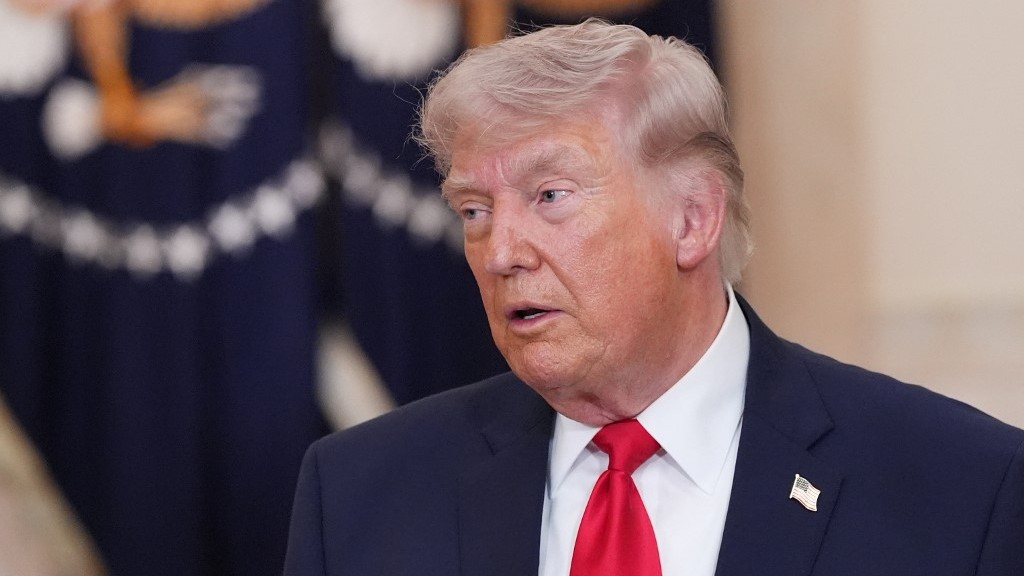
  • Trump ‘not thrilled’ with Iran after latest talks on nuclear programme

    Trump ‘not thrilled’ with Iran after latest talks on nuclear programme

    International diplomatic efforts face heightened uncertainty as U.S. President Donald Trump expressed profound dissatisfaction with Iran’s position in nuclear negotiations. In his first public comments following inconclusive talks in Geneva, Trump stated he was “not happy” with Tehran’s unwillingness to meet American demands, though he emphasized his preference to avoid military confrontation.

    The diplomatic stalemate has triggered global security concerns, with multiple nations issuing urgent travel advisories for the region. The United Kingdom has temporarily withdrawn staff from its Tehran embassy and updated travel guidance against non-essential travel to Israel. China, India, and Canada have advised their citizens to depart Iran immediately, while Germany and France reinforced existing travel warnings.

    The U.S. Embassy in Israel has authorized voluntary departure for non-emergency personnel and families, recommending they “consider leaving while commercial flights are available.” This precaution follows similar security measures implemented at the U.S. embassy in Beirut.

    Despite the tensions, Omani Foreign Minister Badr Albusaidi, who mediated the indirect talks, reported “significant progress” had been achieved. Iranian Foreign Minister Abbas Araghchi acknowledged “good progress” while noting persistent disagreements on certain issues. Technical discussions are scheduled to resume in Vienna next week.

    The military backdrop remains ominous. Trump has ordered the largest U.S. military buildup in the Middle East since the 2003 Iraq invasion, deploying two aircraft carriers, additional warships, and advanced aircraft. The President previously established a ten-day deadline for determining whether diplomacy or military action would prevail.

    International Atomic Energy Agency concerns compound the situation, with inspectors reportedly denied access to Iranian uranium enrichment sites since U.S. airstrikes destroyed three nuclear facilities in June. Iran maintains its nuclear program serves peaceful purposes, though it has enriched uranium to near-weapons-grade levels.

    U.S. Secretary of State Marco Rubio is scheduled to visit Israel Monday to discuss regional priorities, including the Iran situation, as the international community watches for signs of resolution or escalation.

  • US allows non-essential staff to evacuate from Jerusalem embassy

    US allows non-essential staff to evacuate from Jerusalem embassy

    The United States Department of State has authorized the voluntary departure of non-emergency personnel and family members from its diplomatic mission in Israel, citing heightened security concerns. This decision, announced on the embassy’s official website on February 27, 2026, advises individuals to consider leaving while commercial flight options remain available.

    The authorization coincides with a significant regional military buildup ordered by President Donald Trump, fueling anticipation of potential retaliatory strikes against Israel following recent attacks targeting Iranian interests. The security precaution has already impacted air travel, with Netherlands-based carrier KLM announcing cancellation of all flights to Tel Aviv beginning March 1, attributing the decision to operational and commercial challenges.

    Amid these rising tensions, diplomatic efforts continue behind the scenes. Iranian Foreign Minister Abbas Araghchi met with U.S. envoys Steve Witkoff and Jared Kushner in Geneva for a third round of negotiations concerning Iran’s nuclear program. According to Financial Times reports, Tehran has presented potential investment opportunities in its oil, gas, and critical minerals sectors specifically designed to appeal to President Trump’s deal-making preferences. A source familiar with the discussions described these proposals as ‘a major economic bonanza’ directly targeted at the American administration.

    Both nations have agreed to resume high-level negotiations following consultations within their respective capitals, with technical discussions scheduled to occur in Vienna next week.

  • The crown prince waiting for Iran’s Islamic Republic to fall

    The crown prince waiting for Iran’s Islamic Republic to fall

    As U.S. and Iranian diplomats engage in critical negotiations in Geneva to de-escalate mounting military tensions, exiled opposition groups are positioning themselves for potential political opportunities. The Islamic Republic confronts its most severe governance crisis since the 1979 revolution, compounded by President Trump’s threats of military action should Iran refuse concessions on its nuclear program. Simultaneously, anti-regime protests persist despite government crackdowns that have reportedly claimed over 20,000 lives.

    Amid this turbulence, discussions about Iran’s political future have intensified. The emergence of monarchist sentiments, particularly surrounding exiled Crown Prince Reza Pahlavi, has gained visibility through well-organized diaspora groups. Organizations like the U.S.-based National Union for Democracy in Iran (NUFDI) have launched detailed proposals including the ‘Iran Prosperity Project’ and an ‘Emergency Phase Booklet’ outlining transitional governance frameworks.

    These documents propose granting Pahlavi substantial authority as ‘leader of the national uprising’ during a transition period, with veto power over transitional government institutions. However, the plans notably omit addressing federalist demands from ethnic minorities and maintain a centralized power structure pending a future referendum on constitutional monarchy versus democratic republic.

    Critics highlight concerning parallels with the 1979 revolution, where democratic promises gave way to authoritarian control. Pahlavi’s avoidance of addressing his father’s autocratic legacy, combined with his supporters’ aggressive responses to critics—exemplified by the harassment of journalist Christiane Amanpour after her pointed interview—raise questions about the movement’s commitment to pluralism.

    While some protests have featured pro-monarchy chants, other demonstrators explicitly reject both clerical rule and monarchy in favor of egalitarian democracy. The actual support for monarchical restoration within Iran remains uncertain due to polling challenges, though one 2024 survey suggested approximately 30% might consider Pahlavi as their first choice in free elections.

    The path forward remains profoundly uncertain, with any potential regime change likely to involve violent turmoil. The monarchist movement’s behavior increasingly prompts scrutiny regarding its capacity to deliver the tolerant, liberal Iran it promises.

  • Bill Clinton denies wrongdoing at grilling on Epstein ties

    Bill Clinton denies wrongdoing at grilling on Epstein ties

    Former President Bill Clinton faced intensive questioning before a Congressional committee on Friday, vehemently denying any misconduct regarding his associations with the late financier Jeffrey Epstein. The high-stakes deposition, conducted behind closed doors in Chappaqua, New York, saw Clinton asserting his innocence while drawing parallels to what he characterized as a ‘kangaroo court’ proceeding.

    In his opening statement, Clinton emphasized: ‘I saw nothing, and I did nothing wrong,’ while simultaneously advocating that ‘no person is above the law, especially presidents.’ The former president acknowledged multiple flights aboard Epstein’s private aircraft during the early 2000s but maintained these were exclusively for humanitarian initiatives connected to the Clinton Foundation. He stated unequivocally that had he possessed any awareness of Epstein’s criminal activities, he would have severed ties immediately and reported him to authorities.

    The Republican-led House Oversight Committee, chaired by Representative James Comer, is investigating connections between powerful figures and Epstein following the Justice Department’s release of millions of documents related to the sex offender. Comer indicated particular interest in Clinton’s 27 documented flights on Epstein’s plane and Epstein’s 17 visits to the White House during Clinton’s presidency.

    Democrats on the committee attempted to redirect scrutiny toward former President Donald Trump, with Representative Suhas Subramanyam asserting ‘we are talking to the wrong president.’ This sentiment was echoed by Hillary Clinton, who testified before the committee on Thursday and challenged lawmakers to question Trump ‘directly under oath about the tens of thousands of times he shows up in the Epstein files.’

    The proceedings occurred amid heightened security measures, with Secret Service erecting metal barricades around the arts center venue as dozens of journalists descended upon the affluent community. The Clintons initially resisted subpoenas but complied after Republicans threatened contempt of Congress charges.

    Newly disclosed photographs from Epstein’s files include images showing Clinton relaxing in a hot tub and swimming alongside Ghislaine Maxwell, Epstein’s convicted accomplice. Clinton’s representatives have emphasized that mere appearance in the released documents does not imply wrongdoing, noting the former president has never been formally investigated or accused of any crime related to Epstein.

    Epstein, convicted in 2008 for soliciting sex from minors and facing sex trafficking charges, died in a New York jail cell in 2019 in what was officially ruled a suicide.

  • Argentina’s Senate convenes for final labor reform vote, as unions and opposition march in protest

    Argentina’s Senate convenes for final labor reform vote, as unions and opposition march in protest

    BUENOS AIRES — Argentina’s capital witnessed massive demonstrations on Friday as a broad coalition comprising labor unions, opposition factions, and leftist organizations flooded the streets of downtown Buenos Aires. The protests targeted President Javier Milei’s comprehensive labor reform package, which is poised for a decisive Senate vote imminently.

    The proposed legislation, championed by Milei’s La Libertad Avanza party, seeks to fundamentally transform Argentina’s labor landscape by granting employers enhanced flexibility regarding hiring practices, termination procedures, severance arrangements, and collective bargaining protocols. This initiative has encountered vehement resistance from labor unions and their Peronist allies, who contend that these measures would dismantle crucial worker protections and exacerbate vulnerabilities amid Argentina’s recurrent economic instability.

    Despite last week’s preliminary Senate endorsement, the government was compelled to modify a contentious provision that proposed halving salaries for workers on leave due to non-work-related injuries or illnesses. This amendment followed vigorous opposition from lawmakers, necessitating a final Senate vote to determine whether to accept the revised text or reinstate the original clause.

    The legislative process has been marked by significant tension, culminating last week in a 24-hour nationwide strike organized by Argentina’s largest trade union group, the General Confederation of Labor. Simultaneously, clashes erupted between police and demonstrators from various leftist factions outside Congress, highlighting the deeply polarized nature of the debate.

    President Milei maintains that modernizing Argentina’s half-century-old labor code is essential to attract foreign investment, enhance productivity, and stimulate job creation in a nation where approximately 40% of workers operate in the informal economy. Union leaders, however, argue these reforms would undermine the worker protections that have characterized Argentina since the emergence of Peronism in the 1940s—a movement that continues to wield substantial influence, particularly among the country’s 13 million registered workers, roughly 40% of whom maintain union affiliations.

    A successful Senate vote would deliver Milei a significant legislative achievement, potentially enabling him to highlight these substantial economic reforms during his upcoming Sunday address at the opening of Congress’s ordinary sessions.

  • Reform’s Zia Yusuf deletes post as ‘family voting’ claims surface

    Reform’s Zia Yusuf deletes post as ‘family voting’ claims surface

    Reform UK’s home affairs spokesperson Zia Yusuf has become embroiled in controversy after deleting a social media post that appeared to celebrate the illegal practice known as “family voting.” The incident occurred during the Gorton and Denton by-election in Greater Manchester, where Reform officials alleged high rates of voter collusion in predominantly Muslim areas.

    The controversy deepened when Yusuf shared and enthusiastically endorsed a post from student James Bennett, who claimed his 93-year-old blind mother had loudly asked for Reform’s ballot box to cheers from waiting voters. Bennett later revealed his post was satirical, clarifying his mother is actually 41, not blind, lives three hours from Manchester, and holds left-wing political views.

    As election results emerged showing Green Party candidate Hannah Spencer’s victory with 40.7% of votes, followed by Reform’s Matt Goodwin at 28.7% and Labour’s Angeliki Stogia at 25.4%, Reform leadership escalated allegations of electoral misconduct. Party leader Nigel Farage described the situation as “deeply concerning” for democratic integrity, while election observer group Democracy Volunteers claimed to have witnessed 32 cases of family voting across the constituencies.

    Independent MP Adnan Hussain highlighted the contradiction by sharing a screenshot of Yusuf’s deleted post, questioning why Reform initially appeared to encourage family voting behavior before scapegoating Muslim communities after their electoral defeat. The acting returning officer for the by-election stated that polling station staff were trained to detect undue influence and reported no such issues during voting hours.

    Following the loss, Goodwin made inflammatory remarks about “losing our country” to “dangerous Muslim sectarianism,” while Farage characterized the election as “a victory for sectarian voting and cheating.” Labour officials have called for investigation into the family voting allegations while criticizing what they describe as dog-whistle politics against Muslim voters.

  • Greens win thumping victory in by-election as Labour comes in third

    Greens win thumping victory in by-election as Labour comes in third

    In a seismic shift for British politics, the Green Party has delivered a humiliating blow to Prime Minister Keir Starmer’s Labour Party by securing victory in the Gorton and Denton by-election. Labour was pushed into an unprecedented third place, trailing behind both the Greens and the surging Reform UK party.

    Green candidate Hannah Spencer, a professional plumber and plasterer, triumphed with 14,980 votes (40.7% of the total), while Reform UK’s Matt Goodwin finished second with 10,578 votes (28.7%). Labour’s Angeliki Stogia managed only 9,364 votes (25.4%), marking a dramatic collapse in traditional Labour support. The Conservative Party, which governed until July 2024, suffered a catastrophic result with merely 1.9% of the vote.

    In her victory speech, Spencer declared she would “work hard for everyone in Gorton and Denton,” emphasizing community solidarity. “Our struggles might not be the same… but we stick up for each other,” she stated, criticizing an economic system where people “work to line the pockets of billionaires” instead of building a “nice life” for all.

    The campaign was notably fierce, with allegations of racism and manipulation dominating the discourse. The Greens accused Goodwin of making racist statements, citing his history of controversial remarks about ethnicities and Muslims. Labour meanwhile accused the Greens of “manipulating Muslim voters,” which Spencer characterized as “racist dogwhistles” from the governing party.

    The outcome has triggered a political crisis for Starmer’s leadership, compounded by revelations that Labour had blocked popular Manchester Mayor Andy Burnham—seen as a potential leadership contender—from standing in the constituency.

    Reform UK’s response to defeat was inflammatory, with Goodwin claiming Britain faces “one general election left to save the country” from “dangerous Muslim sectarianism.” Leader Nigel Farage alleged the election represented “a victory for sectarian voting and cheating,” though election officials reported no irregularities during polling hours.

    The controversy extended to allegations of “family voting,” which Labour requested authorities investigate. However, the acting returning officer confirmed polling staff were trained to prevent voter influence and reported “no such issues.

    A Labour insider revealed the party “didn’t shortlist a single local Muslim candidate,” then blamed Muslim voters for abandoning Labour. The Muslim Vote campaign group called this narrative “irresponsible and insulting,” noting that bloc voting had been “welcomed when it benefited Labour.”

    The campaign group framed the result positively as evidence that “young Muslims and wider voters are breaking from transactional politics and embracing democratic accountability.”

    Adding to the post-election drama, Reform UK’s home affairs spokesperson Zia Yusuf deleted a social media post celebrating an anecdote about an elderly blind voter asking for Reform in a loud voice, which he had enthusiastically endorsed with “Love this!” before the post was revealed as likely satirical.