分类: politics

  • Xi calls for cooperation with Uruguay in multiple areas

    Xi calls for cooperation with Uruguay in multiple areas

    In a significant diplomatic engagement at Beijing’s Great Hall of the People, Chinese President Xi Jinping and Uruguayan President Yamandú Orsi convened on February 3, 2026, to chart a comprehensive roadmap for bilateral cooperation. The meeting marked a pivotal moment in Sino-Uruguayan relations, occurring exactly 38 years after the establishment of diplomatic ties between the two nations.

    President Xi articulated a vision for strengthened alignment of development strategies across multiple sectors, emphasizing traditional areas like trade, finance, agriculture, and infrastructure while championing expansion into emerging fields including green technology, digital economy, artificial intelligence, and clean energy. This diversified approach aims to drive substantial economic transformation and growth for both countries.

    The Chinese leader highlighted the timing significance of President Orsi’s visit—the first by a Latin American leader in 2026—noting that Uruguay’s upcoming leadership roles in international organizations presents unique opportunities for collaboration. China expressed support for Uruguay’s 2026 chairmanship of the Group of 77 and China, as well as its rotating presidencies of CELAC and Mercosur.

    The summit produced concrete outcomes with the signing of over ten cooperation documents covering investment and trade, signaling a tangible deepening of the comprehensive strategic partnership. Both leaders committed to enhancing people-to-people exchanges through cultural, educational, sports, and subnational engagement programs to strengthen the natural affinity between their citizens.

    Against the backdrop of what President Xi described as ‘major changes unseen in a century’ within the international landscape, the two nations pledged to strengthen Global South solidarity and jointly promote a multipolar world order characterized by equality and inclusive economic globalization.

  • Israel rejects Gaza governing committee logo over similarity to PA emblem

    Israel rejects Gaza governing committee logo over similarity to PA emblem

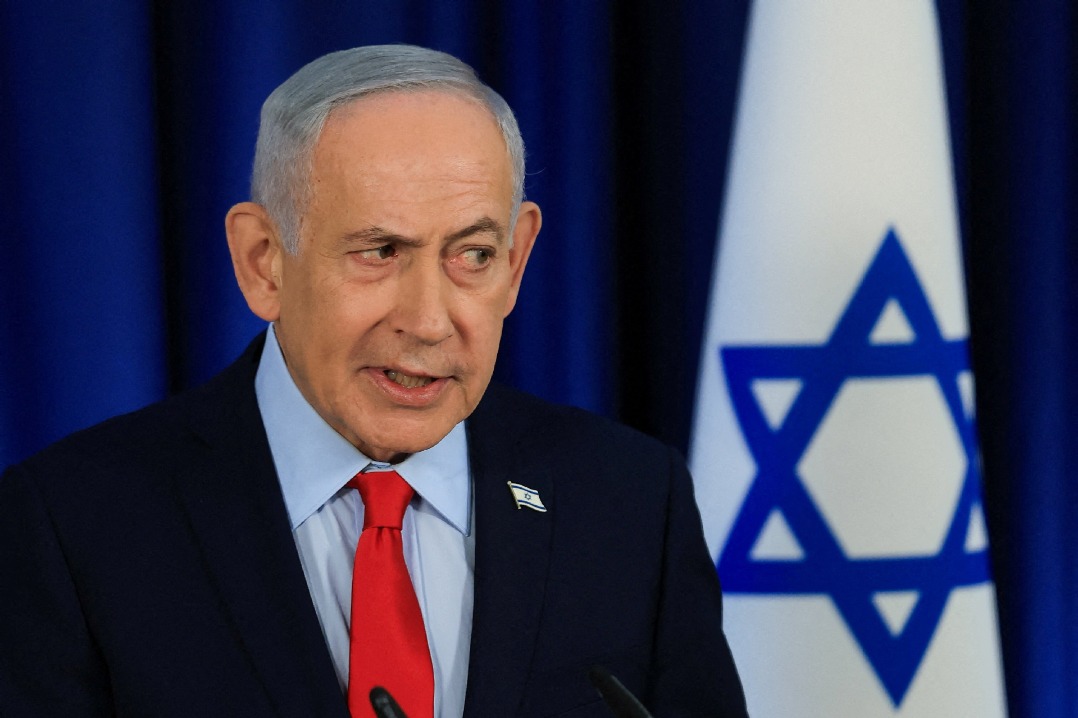
    The Israeli government has formally rejected the official emblem adopted by the newly-formed Palestinian technocratic committee designated to administer Gaza’s affairs, citing its striking resemblance to the Palestinian Authority’s insignia. Prime Minister Benjamin Netanyahu’s office issued a statement on Monday declaring Israel’s refusal to accept the symbol, emphasizing that the Palestinian Authority would not participate in Gaza’s administration.

    The National Committee for the Administration of Gaza (NCAG), a 15-member body composed of Palestinian technocrats, recently altered its social media logo to display a golden eagle centered on the Palestinian flag—a design nearly identical to the PA’s official emblem. The sole distinction lies in the Arabic text at the base, where the NCAG’s acronym replaces the word ‘Palestine.’ Previously, the committee’s logo featured a bird constructed from the colors of the Palestinian flag.

    Established last month through the US-led ‘Board of Peace’ initiative, the NCAG aims to assume governance responsibilities in the conflict-devastated territory, effectively replacing Hamas’s administrative control. The committee is chaired by former PA deputy minister Ali Shaath and incorporates Gaza representatives with no political faction affiliations.

    Hamas, which has governed Gaza since 2006, announced on Monday its completion of all preparatory measures to transfer authority to the NCAG. Committee members, having conducted recent meetings in Egypt, are anticipated to enter Gaza through the Rafah crossing imminently to commence their administrative duties.

    Supervision of the NCAG falls to Bulgarian diplomat Nickolay Mladenov, former UN Middle East peace coordinator, who serves as high representative of the Board of Peace. Mladenov’s mandate includes overseeing implementation of the second phase of the Gaza ceasefire agreement.

    The committee’s composition features Omar Shamali (communications), Abdul Karim Ashour (agriculture), Aed Yaghi (health), and Aed Abu Ramadan (industry and economy). Additional appointments include Jabr al-Daour (education), Bashir al-Rayes (finance), Ali Barhoum (water and municipalities), Hanaa Tarzi (relief and solidarity), and Adnan Salem Abu Warda (judiciary).

    Further positions are allocated to Rami Tawfiq Helles (endowments and religious affairs), Osama Hassan al-Saadawi (housing and public works), and Samira Helles (energy and transportation). Notably, Sami Nasman—a retired senior PA security official and longstanding Hamas critic—assumes the security portfolio, despite receiving a 15-year prison sentence in absentia from a Gaza court in 2015 for alleged assassination plots against Hamas leaders.

  • Philippine Congress suspends vote on Marcos impeachment complaints

    Philippine Congress suspends vote on Marcos impeachment complaints

    In a significant development within Philippine politics, the House of Representatives’ Committee on Justice has postponed a decisive vote regarding the substantive merits of impeachment complaints against President Ferdinand Marcos Jr. The committee, following extensive deliberations on Tuesday, opted to suspend proceedings without reaching a determination on whether sufficient grounds exist to advance the first impeachment petition.

    Committee Chairperson Jinky Luistro granted requests from multiple members to defer the crucial substance vote until Wednesday. This delay comes after the 47-member panel previously validated both complaints as formally sufficient on Monday, February 1st, establishing the procedural foundation for substantive evaluation.

    The initial complaint, filed by lawyer Andre de Jesus on January 19th, alleges multiple constitutional violations including treason, bribery, graft, corruption, and betrayal of public trust. Meanwhile, activist organizations submitted a separate impeachment petition two weeks ago containing similar accusations against the president.

    During Tuesday’s proceedings, the first complaint encountered substantial opposition from the predominantly pro-Marcos committee. Members introduced an unprecedented requirement demanding the inclusion of annexes beyond traditional impeachment documentation, potentially complicating its passage. Representative Jett Nisay, who endorsed the initial complaint, faced intense questioning from committee members aligned with the administration.

    The second complaint, endorsed by activist legislators, focuses specifically on allegations of institutionalized corruption through unprogrammed appropriations within the national budget. These budgetary mechanisms allegedly facilitate kickbacks through anomalous flood control projects, with whistleblowers claiming Marcos personally ordered such arrangements to receive billions in illicit payments.

    Lawmakers from the Makabayan bloc emphasized that Marcos Jr., as the son and namesake of former dictator Ferdinand Marcos Sr., remains particularly vulnerable to fraud allegations given the family’s historical legacy. The postponed vote represents a critical juncture in determining whether impeachment proceedings will advance against the Philippine leader.

  • US House expected to vote on ending partial government shutdown

    US House expected to vote on ending partial government shutdown

    The United States House of Representatives is moving toward resolving a partial government shutdown following President Donald Trump’s direct intervention, urging Republican legislators to advance a critical spending bill despite internal party reservations. The political standoff, now in its third day, primarily stemmed from contentious debates surrounding Department of Homeland Security (DHS) funding protocols and operational reforms.

    Central to the congressional impasse were fundamental disagreements between Democrats and Republicans regarding DHS funding allocations and enforcement procedures. These tensions intensified significantly following last month’s fatal shooting of two American citizens, Alex Pretti and Renee Good, by federal immigration agents in Minneapolis, which prompted calls for substantial agency reforms.

    The breakthrough emerged from a Senate-brokered compromise, subsequently presented to the House for ratification. This interim solution provides full government funding while establishing a two-week negotiation window for lawmakers to resolve persistent disagreements regarding DHS’s long-term budgetary requirements and operational oversight mechanisms.

    Democratic legislators have advocated for specific DHS reform measures, including mandatory body camera implementation for field agents and prohibitions against facial concealment during operations. These proposed changes reflect broader concerns about accountability and transparency within DHS subsidiary agencies, including Immigration and Customs Enforcement (ICE), Customs and Border Protection (CBP), the Coast Guard, and the Secret Service.

    Following the House Rules Committee’s successful procedural clearance on Monday, the legislation advanced to the full chamber for ultimate determination. President Trump amplified pressure on lawmakers through his Truth Social platform, demanding prompt legislative action while cautioning against prolonged governmental paralysis.

    However, the compromise faces potential challenges from conservative Republican representatives who threaten to oppose the spending package during Tuesday’s scheduled vote. With Republicans maintaining merely a single-vote House majority, dissenting members wield considerable influence over the bill’s fate.

    The partial shutdown has already produced tangible consequences across federal operations, including furloughs and unpaid labor for thousands of Federal Aviation Administration and air traffic control personnel. Additionally, the disruption will delay the Bureau of Labor Statistics’ pivotal monthly employment report, a crucial economic indicator relied upon by policymakers, investors, and citizens nationwide.

  • Trump says Republicans ‘should take over the voting’ and ‘nationalise’ US elections

    Trump says Republicans ‘should take over the voting’ and ‘nationalise’ US elections

    In a recent podcast appearance that has stirred significant political controversy, former US President Donald Trump called for Republicans to “nationalize” American elections while reiterating his unsubstantiated claims of widespread fraud in the 2020 presidential race. Speaking on the show hosted by former deputy FBI director Dan Bongino, Trump advocated for Republican control over voting processes in at least fifteen unspecified jurisdictions.

    The controversial remarks arrive shortly after Federal Bureau of Investigation agents conducted a court-authorized operation at the Fulton County Election Hub in Georgia, examining records from the previous presidential election. Trump referenced this development during the interview, suggesting that “interesting things” would emerge from the investigation.

    Trump connected his proposal for federalizing election mechanisms to his immigration agenda, asserting that Republicans must deport undocumented immigrants to secure future electoral victories. “If Republicans don’t get them out, you will never win another election as a Republican,” he stated.

    Despite losing Georgia to President Joe Biden by a narrow margin in 2020, Trump maintained during the interview that he had actually won “in a landslide,” repeating baseless allegations of illegal voting. These claims persist despite two failed criminal cases in Georgia related to alleged election interference, both of which Trump denied any wrongdoing in.

    The FBI raid prompted strong reactions from local officials, with Fulton County Commissioner Mo Ivory characterizing it as “an assault on your vote.” Adding to the unusual nature of the event, Director of National Intelligence Tulsi Gabbard confirmed her presence during the operation, stating that Trump had personally requested her attendance. In a letter to senators, Gabbard explained her involvement fell under her authority to coordinate intelligence related to election security.

    The intelligence director also acknowledged facilitating a brief phone conversation between Trump and FBI agents conducting the raid, noting that the former president merely thanked them for their work without asking questions or issuing directives—an unusual occurrence given typical separation between law enforcement operations and presidential communication.

  • Ethiopia PM hits out at Eritrea over atrocities in Tigray

    Ethiopia PM hits out at Eritrea over atrocities in Tigray

    In a dramatic parliamentary address, Ethiopian Prime Minister Abiy Ahmed has publicly condemned Eritrean military forces for committing widespread atrocities during the devastating Tigray conflict that ravaged northern Ethiopia from 2020-2022. This marks the first official admission from Addis Ababa regarding Eritrea’s involvement in mass killings, specifically referencing the November 2020 Aksum massacre that Asmara had consistently denied.

    The Prime Minister detailed how Eritrean troops, who fought alongside Ethiopian government forces against Tigrayan rebels, engaged in systematic destruction across multiple cities including Adwa, Aksum, Adigrat and Shire. According to Abiy’s testimony, these operations included wholesale demolition of residential properties, looting of civilian possessions, destruction of industrial infrastructure, and seizure of manufacturing machinery.

    This condemnation represents the latest deterioration in the volatile relationship between these Horn of Africa neighbors, whose alliance has historically oscillated between cooperation and hostility. The current tensions stem partly from Ethiopia’s persistent quest for Red Sea access through Eritrean territory and recent allegations of shifting allegiances in Tigray.

    The 2022 Pretoria Agreement that formally ended the Tigray conflict excluded Eritrea as a signatory, with Asmara having opposed the peace deal for not achieving the complete military defeat of the Tigray People’s Liberation Front (TPLF). Independent investigations by organizations including Amnesty International had previously documented extensive human rights violations during the conflict, with Eritrean forces accused of some of the most severe atrocities.

    The timing of Abiy’s statement coincides with renewed regional tensions, including a five-day suspension of passenger flights between Addis Ababa and Tigrayan cities following recent clashes in western Tigray. These developments have raised concerns among international observers about potential renewed hostilities in the region where the African Union estimates approximately 600,000 lives were lost during the two-year war.

  • World Governments Summit 2026 begins in Dubai: UAE Rulers welcome foreign delegates

    World Governments Summit 2026 begins in Dubai: UAE Rulers welcome foreign delegates

    Dubai has become the epicenter of global governance dialogue as the World Governments Summit 2026 commenced on February 3rd, bringing together an unprecedented gathering of international leaders and experts. Under the theme ‘Shaping Future Governments,’ the three-day summit features record participation from over 60 heads of state, 500 ministers, and representatives from more than 150 governments.

    The event opened with warm welcomes from UAE President Sheikh Mohamed bin Zayed Al Nahyan and Dubai Ruler Sheikh Mohammed bin Rashid Al Maktoum, who emphasized the summit’s critical role in fostering international cooperation. Sheikh Mohamed highlighted the UAE’s commitment to building partnership bridges and facilitating diplomatic dialogue, stating that the event has evolved into a vital global forum for translating discussions into tangible actions benefiting all nations.

    This year’s expanded agenda comprises 445 sessions addressing five pivotal themes: Global Governance and Effective Leadership, Societal Wellbeing and Building Capacities, Economic Prosperity and Strategic Investments, Urban Future and Evolving Demographics, and Future Realities and Emerging Frontiers. The summit features 25 specialized global forums and over 45 ministerial meetings, including the Arab Finance Ministers Meeting, World Councils Meeting for Sustainable Development Goals, and multiple future-focused discussions on retail, sports, and tourism.

    Sheikh Mohammed bin Rashid articulated the summit’s ambitious vision, noting that governments currently bear ‘unprecedented responsibility’ to design innovative systems capable of guiding societies through rapid global transformations. He expressed confidence that the collective wisdom of decision-makers and scientists could chart a roadmap toward a more equitable future, emphasizing that true leadership involves anticipating and actively steering change rather than merely reacting to it.

    The summit will produce 36 strategic reports in collaboration with international knowledge partners and will recognize excellence through several prestigious awards, including the Best Minister Award presented with PwC and the Global Teacher Prize in partnership with the Varkey Foundation.

  • Clintons agree to testify before House committee over Epstein probe

    Clintons agree to testify before House committee over Epstein probe

    In a significant reversal, former U.S. President Bill Clinton and former Secretary of State Hillary Clinton have consented to provide testimony before the House Oversight and Government Reform Committee regarding the ongoing investigation into deceased financier Jeffrey Epstein. The announcement came Monday through spokesperson Angel Urena, who confirmed the Clintons’ willingness to appear before the Republican-controlled committee.

    The development follows escalating tensions between the Clintons and congressional investigators, who had accused the former first couple of “defying lawful subpoenas” and seeking “special treatment.” The committee had scheduled a contempt vote for Wednesday, which now appears likely to be postponed following the Clintons’ unexpected cooperation.

    According to communications reviewed by The New York Times, attorneys representing the Clintons sent correspondence to Committee Chair James Comer indicating their clients would “appear for depositions on mutually agreeable dates.” This marks a dramatic shift from their previous position, expressed in a January 13 letter, where they declared the subpoena “legally invalid” and asserted they had already provided all relevant information concerning the Epstein case.

    The backdrop to this political confrontation involves the Justice Department’s December 2025 release of documents related to Epstein, which contained multiple references to the former Democratic president. Some media analysts have suggested the document release appeared strategically timed to protect figures associated with former President Donald Trump’s Republican circle while exposing Democratic connections.

    Epstein, who maintained extensive relationships with powerful figures across American political and business spheres, died in prison in 2019 while awaiting trial on federal sex-trafficking charges. His death was officially ruled a suicide, though conspiracy theories have persisted regarding the circumstances.

    The Clintons’ decision to testify establishes a notable precedent for congressional investigations involving high-profile former officials and sets the stage for what promises to be a closely watched examination of political connections to one of America’s most notorious criminal cases.

  • French prosecutors seek to ban Marine Le Pen from office, jeopardizing her 2027 presidential bid

    French prosecutors seek to ban Marine Le Pen from office, jeopardizing her 2027 presidential bid

    PARIS — French judicial authorities have initiated proceedings to disqualify far-right leader Marine Le Pen and key members of her National Rally party from holding public office, potentially derailing her anticipated 2027 presidential campaign. The move comes during a critical appeals trial examining allegations of systematic misuse of European Parliament funds spanning over a decade.

    Prosecutors Thierry Ramonatxo and Stéphane Madoz-Blanchet presented their case before Paris’s appeals court, characterizing the financial arrangements as “a very serious breach of probity” that provided the party with “substantial savings made at the expense of the European Parliament.” Madoz-Blanchet further detailed what he described as “a system” established by party leadership, alleging that “acts of misappropriation were deliberately and carefully concealed.”

    Le Pen, 57, acknowledged during proceedings that some individuals performed work for her party—formerly known as the National Front—while receiving compensation as EU parliamentary aides, terming the arrangement “a mistake.” The appeal seeks to overturn a March 2025 conviction that found her guilty of financial misconduct between 2004 and 2016.

    The trial involves Le Pen, ten additional defendants, and the National Rally as a legal entity, with proceedings expected to continue through next week. A verdict is anticipated before summer, with potential outcomes ranging from acquittal to a conviction carrying penalties of up to ten years imprisonment and a €1 million fine.

    Speaking outside the courtroom, Le Pen expressed skepticism about judicial outcomes, stating: “I never expect a pleasant surprise when I set foot in a courtroom. I’m not the one who decides—I don’t hold the cards.”

    Prior to the initial ruling, Le Pen was considered the front-runner to succeed President Emmanuel Macron. Should she be rendered ineligible, she has designated 30-year-old protégé Jordan Bardella as her political successor.

  • India’s Modi praised for US trade deal as opposition questions impact on agriculture

    India’s Modi praised for US trade deal as opposition questions impact on agriculture

    In a significant diplomatic development, former President Donald Trump announced a major trade agreement with India that would reduce U.S. import tariffs on Indian goods from 25% to 18%. The arrangement comes as part of a broader understanding that India will cease purchasing Russian crude oil, a move Trump claims will help end the conflict in Ukraine.

    The announcement, made through Trump’s Truth Social platform on Monday, represents a reversal of previously imposed punitive tariffs that had targeted India for its continued acquisition of Russian energy resources. According to Trump, the agreement also stipulates that India will gradually eliminate import duties on American products and commit to purchasing $500 billion worth of U.S. goods, though specific timelines remain unspecified.

    Indian Prime Minister Narendra Modi expressed enthusiasm about the tariff reduction, describing Trump’s leadership as ‘vital for global peace, stability, and prosperity’ in a social media post. However, the Indian government has maintained notable silence regarding the precise details of the arrangement, particularly concerning the cessation of Russian oil imports.

    The political response in India has been mixed. Lawmakers from the ruling coalition celebrated the agreement as a diplomatic achievement, while opposition parties raised serious concerns about potential impacts on sensitive sectors, particularly agriculture. Parliamentary proceedings were disrupted as opposition members demanded clarity on how the deal might affect domestic agricultural markets and employment.

    U.S. Secretary of Agriculture Brooker Rollings welcomed the development, emphasizing the potential benefits for American farmers through expanded access to India’s substantial market. This perspective contrasts with Indian analysts who urge caution, noting that achieving $500 billion in American imports would require decades given current trade volumes of approximately $50 billion.

    Finance Ministry official Arvind Shrivastava characterized the agreement as an opportunity to deepen trade relations between two economic powerhouses, potentially creating new opportunities for India’s manufacturing and technology sectors. However, trade expert Ajay Srivastava highlighted the need for clarification on product coverage, implementation timelines, and protections for sensitive industries before celebrating the announcement.