分类: politics

  • Hungary detains seven Ukrainians as Kyiv, Budapest quarrel over Russian oil

    Hungary detains seven Ukrainians as Kyiv, Budapest quarrel over Russian oil

    A severe diplomatic confrontation has erupted between Hungary and Ukraine, marked by hostage accusations and economic coercion tactics. The conflict centers on two major developments: Hungary’s detention of seven Ukrainian citizens, including bank employees transporting substantial assets, and an escalating dispute over Russian oil deliveries through the damaged Druzhba pipeline.

    Hungarian authorities confirmed the detention of the Ukrainian nationals, among them a former intelligence general, alongside two armored cash transport vehicles. The National Tax and Customs Administration (NAV) stated the operation was part of criminal proceedings investigating potential money laundering activities, conducted in collaboration with the Counter-Terrorism Centre.

    Ukraine’s Foreign Minister Andriy Sybiga vehemently condemned the action, characterizing it as hostage-taking and alleging the confiscation involved $40 million and nine kilograms of gold during an interbank transfer. The Ukrainian government subsequently issued travel warnings for its citizens visiting Hungary, citing safety concerns and arbitrary actions by Hungarian authorities.

    Simultaneously, Hungarian Prime Minister Viktor Orbán intensified economic pressure on Ukraine, declaring he would employ “every means at our disposal” until Kyiv resumes Russian oil shipments through the critical pipeline. Hungary and Slovakia both assert Ukraine is deliberately delaying repairs to the infrastructure damaged during Russian strikes in January.

    The confrontation represents the latest deterioration in relations between the neighboring nations, already strained by Orbán’s sustained ties with Moscow and his opposition to military assistance for Ukraine. The Hungarian leader has additionally stalled a crucial €90 billion EU loan package for Ukraine and new sanctions against Russia, explicitly linking these actions to the oil transit issue.

    Ukrainian President Volodymyr Zelensky previously indicated pipeline repairs would require four to six weeks, while suggesting he personally opposed restoring transit. He issued a thinly-veiled threat regarding Orbán’s obstruction of EU assistance, prompting condemnation from across Hungary’s political spectrum. Orbán responded defiantly, stating he would not yield to “blackmail” even under personal threat, emphasizing his actions served national interests.

  • China’s top legislature reviews draft law on national development planning

    China’s top legislature reviews draft law on national development planning

    China’s National People’s Congress (NPC) has initiated deliberations on a groundbreaking legislative framework that would formally codify the nation’s development planning processes into law. The draft legislation, presented during the NPC’s annual session, establishes comprehensive legal procedures for the creation, implementation, and oversight of China’s strategic development blueprints.

    The proposed law represents the institutionalization of China’s seven-decade experience with five-year planning cycles, transforming established practices into a structured legal format. The legislation outlines meticulous provisions spanning six distinct chapters, covering everything from initial formulation to final evaluation of national development plans.

    Significantly, the draft law formalizes the collaborative process between the Communist Party of China Central Committee, which provides policy recommendations; the State Council, responsible for drafting detailed plans; and the NPC, which holds ultimate approval authority. This tripartite mechanism ensures both political direction and legislative oversight in shaping China’s developmental trajectory.

    The legislation mandates that national development plans must articulate China’s strategic objectives, governmental priorities, and provide clear guidance for societal stakeholders. Required components include thorough environmental analyses, development guidelines, quantifiable targets, strategic missions, policy measures, and concrete implementation mechanisms.

    A notable aspect of the draft law emphasizes public participation in the planning process. This commitment was demonstrated through last year’s month-long digital consultation for the 15th Five-Year Plan, which gathered over 3.11 million public submissions that substantially influenced the final document.

    The legislative journey began in April 2025, with the draft undergoing three rigorous review sessions before reaching the current plenary meeting. Upon enactment, this law will establish permanent mechanisms for mid-term and final evaluations of plan implementation, creating a continuous improvement cycle for China’s development strategy.

  • People-oriented service for grassroots impact

    People-oriented service for grassroots impact

    In a revealing personal account, a journalist gains newfound appreciation for China’s grassroots political advisory system through her father’s decade-long service as a local CPPCC member. The discovery began when an old classmate, now working in municipal government, messaged her after observing a political consultation session where her father—a lawyer from Macheng, Hubei province—delivered what was described as ‘thoughtful and substantial’ remarks.

    Previously focused on covering high-level diplomacy and national events, the journalist had considered local governance matters distant from her professional interests. This unexpected message prompted her to investigate what exactly grassroots political advisers accomplish. Through conversations with her father, she learned how his legal practice directly informs his policy proposals, creating a vital bridge between judicial reality and legislative improvement.

    His decade of service has produced concrete proposals addressing electric vehicle management, stone industry development, protection rights for children and elderly residents, and promotion of local chrysanthemum tea—all rooted in direct community engagement and judicial observation. The tangible outcomes include renovated urban streets, upgraded rural roads, and improved village sanitation facilities.

    The narrative expands to the national level as CPPCC National Committee member Chen Zhonghong emphasizes that proposals most effectively addressed are those ‘smaller and more specific’ and ‘closely linked to people’s livelihoods.’ With expertise in vulnerable group protections, Chen describes her identical role as a bidirectional conduit—bringing policies to grassroots communities while channeling local concerns to decision-makers.

    The account concludes by framing democracy not as abstract theory but as a practical process of bottom-up opinion aggregation, where national priorities emerge from daily life experiences and top-level designs originate from grassroots realities, embodying China’s whole-process people’s democracy.

  • Kosovo president moves to dissolve Parliament for early election as country plunges into new crisis

    Kosovo president moves to dissolve Parliament for early election as country plunges into new crisis

    PRISTINA, Kosovo – Kosovo has been plunged into a fresh political crisis as President Vjosa Osmani formally dissolved the national Parliament on Friday, setting the stage for yet another early election. This decisive action comes after legislators failed to elect a new head of state before a constitutional deadline, exacerbating an already protracted period of political instability in the young Balkan nation.

    The immediate catalyst was the assembly’s inability to achieve a quorum during a critical session late Thursday, which was boycotted by opposition parties. This prevented a vote to select a successor to President Osmani, whose term began in 2021. The midnight Thursday deadline for the election process passed without a resolution.

    In a national address, President Osmani expressed profound disappointment, characterizing the political impasse as a ‘completely avoidable’ situation and a ‘great misfortune’ for the Republic of Kosovo. She asserted that lawmakers had been afforded ample time to fulfill their constitutional duty and prioritize national interests. By issuing the decree for dissolution, she stated she was acting in accordance with her clearly defined constitutional obligations.

    Prime Minister Albin Kurti, leader of the ruling Vetëvendosje (Self-Determination) party, attributed the parliamentary failure directly to the opposition’s boycott. His administration has subsequently petitioned the Constitutional Court to issue a temporary suspension of the election deadline, potentially allowing the process to resume. The court’s timeline for a ruling and its potential impact on the dissolution decree remain uncertain.

    This development marks the second snap election to be called in less than six months, following a December vote that was itself triggered by a nearly yearlong political stalemate. Although Vetëvendosje emerged victorious in that election and later formed a governing coalition with ethnic minority parties in February, the nation’s deep-seated political divisions have persisted.

    The ongoing turbulence occurs against a complex geopolitical backdrop. Kosovo, a former Serbian province, declared independence in 2008 following a brutal war that ended with NATO intervention. Serbia continues to refuse recognition of Kosovo’s sovereignty, ensuring that domestic political crises carry significant implications for regional stability and international relations.

  • China a linchpin in evolving world order

    China a linchpin in evolving world order

    In a significant demonstration of geopolitical realignment, multiple Western leaders have undertaken diplomatic pilgrimages to Beijing, signaling a growing international consensus toward multilateral cooperation. This diplomatic surge coincides with China’s preparation to host major international gatherings, including the 33rd APEC Economic Leaders’ Meeting in Shenzhen this November.

    Policy experts attending China’s annual political advisory sessions observe that these developments reflect a fundamental transformation in global power dynamics. Professor Yang Guangbin, Dean of the School of International Relations at Renmin University, notes that Western nations are increasingly looking to China for solutions to economic and security challenges emerging from within their own alliance networks. “China’s production and consumption capacities now profoundly influence global market trajectories,” Yang states, positioning the nation as “an independent variable shaping the evolution of the world order.”

    The diplomatic calendar for 2026 showcases China’s expanding global role. Beyond APEC, China will host approximately ten ministerial-level meetings covering critical areas including digital economy, trade services, energy security, and financial cooperation. Simultaneously, the country prepares to convene the second China-Arab States Summit, commemorating 70 years of diplomatic relations with Arab nations.

    Zhang Jun, Secretary-General of the Boao Forum for Asia, emphasizes that amid global turbulence, the international community’s common aspirations center on “upholding multilateralism, openness, development, and win-win cooperation.” He identifies digitalization, green transformation, and artificial intelligence applications as key variables reshaping both economic competition and daily life globally.

    Africa represents another cornerstone of China’s diplomatic outreach. Bilateral trade exceeded $300 billion in the first eleven months of 2025, registering a 17.8% year-on-year increase. Lin Songtian, former president of the Chinese People’s Association for Friendship with Foreign Countries, reports that African leaders widely praise President Xi Jinping’s vision for building a community with a shared future for humanity, seeing China’s development model as offering “new hope and options for achieving self-sustaining development.”

    The launch of China’s 15th Five-Year Plan (2026-2030) further underscores the country’s stabilizing role in global affairs. Zhao Mei of the Chinese Academy of Social Sciences notes that while major developed economies frequently shift policies, “China maintains strategic resolve through its five-year plans, providing long-term, stable expectations for global markets” and serving as “an anchor for the resilience of global industrial and supply chains.”

    Chinese Ambassador to the United States Xie Feng highlights that 2026 presents unique opportunities for Sino-American collaboration, with China hosting APEC and the US presiding over the G20 Summit. He advocates for enhanced cooperation not only in traditional areas like trade and energy but also in emerging fields including artificial intelligence, biomedicine, and combating transnational crime.

  • Bank employees detained and cash seized in Hungary, Ukraine says

    Bank employees detained and cash seized in Hungary, Ukraine says

    Hungarian authorities have detained seven Ukrainian banking employees and confiscated a substantial cash shipment, escalating already strained diplomatic relations between Budapest and Kyiv. The incident occurred as armored vehicles belonging to Ukraine’s state-owned Oschadbank were transiting through Hungarian territory between Austria and Ukraine.

    According to Ukrainian Foreign Minister Andrii Sybiha, the detained bank employees’ wellbeing remains unknown after Hungarian officials intercepted two armored cars carrying what Oschadbank later identified as $40 million in U.S. currency, 35 million euros, and 9 kilograms of gold. GPS tracking data placed the vehicles near a Hungarian law enforcement facility in central Budapest, though the precise location of the detained Ukrainian citizens could not be confirmed.

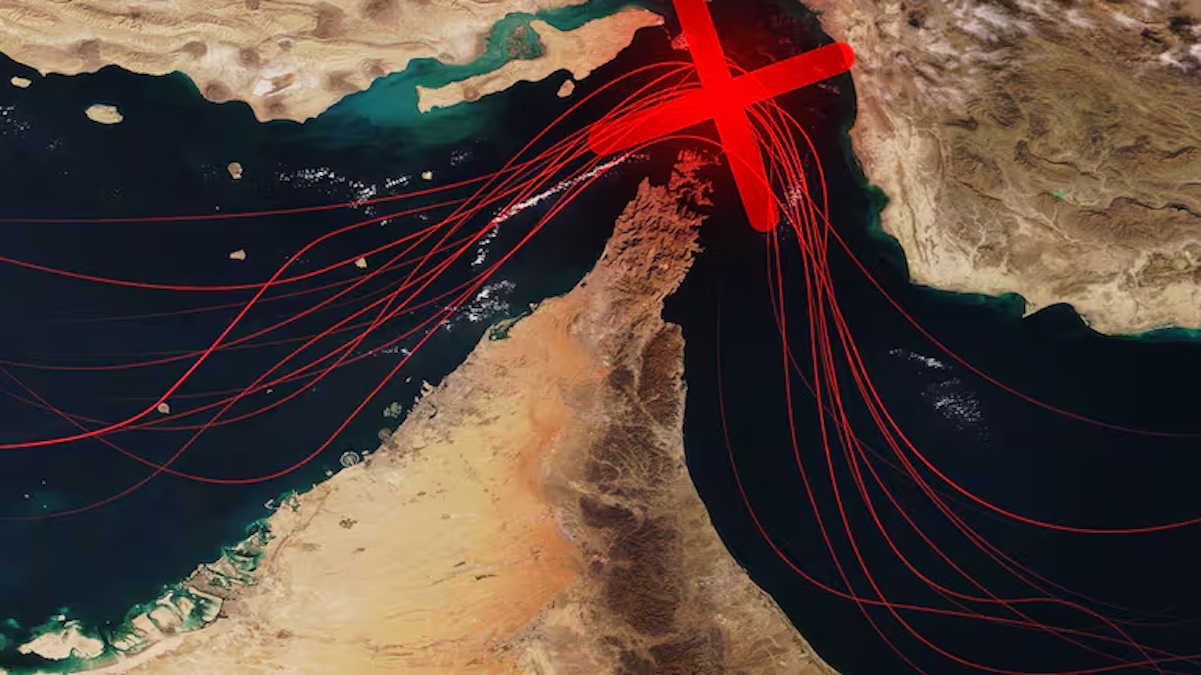
    The seizure occurs against the backdrop of a deepening energy conflict between the two nations. Since January 27th, oil shipments through the Druzhba pipeline—which crosses Ukrainian territory and supplies Hungarian refineries with Russian crude—have been suspended. Ukraine attributes the interruption to damage from Russian drone strikes, citing repair safety concerns and ongoing vulnerability to further attacks.

    Hungarian Prime Minister Viktor Orbán has explicitly linked the bank seizure to the energy dispute, stating in a radio address that Hungary would block “things that are important to Ukraine” until oil shipments resume. Orbán’s government has accused Ukraine of deliberately obstructing Russian oil deliveries and has previously retaliated by halting diesel shipments to Ukraine, vetoing EU sanctions against Russia, and blocking a substantial EU financial aid package for Kyiv.

    Ukrainian officials have characterized Hungary’s actions as criminal. Foreign Minister Sybiha denounced the seizure as “state terrorism and racketeering” by a “criminal gang,” pledging to bring the matter before European Union authorities for resolution. Hungary’s Interior Ministry has not responded to requests for comment regarding the detained employees or seized assets.

  • Luxury jets to ‘blanketgate’: Five times Kristi Noem made headlines

    Luxury jets to ‘blanketgate’: Five times Kristi Noem made headlines

    President Donald Trump has terminated Kristi Noem from her position as Homeland Security Secretary following a turbulent tenure marked by bipartisan criticism and multiple scandals. Her dismissal comes after just over a year in office, during which she spearheaded the administration’s aggressive immigration enforcement agenda.

    Noem’s department achieved 675,000 deportations in the president’s first year, falling significantly short of the administration’s publicly stated goal of one million annual removals. Her replacement will be Republican Senator Markwayne Mullin, according to the president’s announcement.

    The most damaging crisis emerged from immigration operations in Minnesota, where federal agents fatally shot two American citizens, Renee Good and Alex Pretti, during confrontations that sparked widespread protests in Minneapolis. Noem’s characterization of the deceased as domestic terrorists was contradicted by mobile phone and body camera footage, leading both Republicans and Democrats to demand her resignation.

    During congressional hearings this week, Noem offered condolences to the families but refused to apologize for her terrorism allegations. The hearings also revealed extensive questionable expenditures, including the acquisition of two Gulfstream G700 luxury jets at taxpayer expense, with plans for a third Boeing 737 aircraft costing approximately $70 million. Noem defended the purchases as necessary for ‘long-range command and control operations’ and deportation missions, though senators presented evidence of lavish accommodations including plush bedrooms aboard the government planes.

    Further controversy emerged regarding a $220 million advertising campaign featuring Noem wearing a cowboy hat while riding horseback through prairies with bison, urging immigrants to self-deport. The commercials reportedly angered President Trump, who told Reuters he ‘never knew anything about it’ despite Noem’s suggestions that he had approved the campaign.

    Additional scrutiny focused on Noem’s de-facto chief of staff, Corey Lewandowski, who will also depart the department. Lewandowski faced allegations of improperly firing a Coast Guard pilot over a misplaced blanket during a flight, an incident media dubbed ‘blanketgate.’ Noem also faced uncomfortable questioning about whether she had ‘sexual relations’ with Lewandowski, which she dismissed as ‘tabloid garbage.’

    Noem’s previous controversies included a visit to El Salvador’s notorious Cecot prison, where she posed for photographs wearing a $50,000 Rolex watch before incarcerated individuals, and inaccurate claims in her memoir about meeting North Korean leader Kim Jong Un. Her account of shooting a family dog named Cricket was confirmed as accurate.

    The departure marks the end of a contentious chapter at the Department of Homeland Security, raising questions about the future direction of the administration’s immigration policies.

  • Hong Kong pro-democracy tycoon Jimmy Lai will not appeal conviction

    Hong Kong pro-democracy tycoon Jimmy Lai will not appeal conviction

    Imprisoned Hong Kong media magnate and pro-democracy advocate Jimmy Lai has formally declined to appeal his conviction under the territory’s national security legislation. Legal representatives confirmed receiving unequivocal instructions from their client against pursuing further legal challenges, though no specific rationale was provided for this decision.

    The 78-year-old British citizen, detained since 2020, received a twenty-year prison term last month—the most severe punishment issued under the security law—for conspiring to publish seditious materials and colluding with external forces. Lai has consistently maintained his innocence regarding these charges.

    This development follows the successful overturning of a separate fraud conviction last month related to unlawful subletting of office premises. However, Lai’s international legal team emphasizes that this procedural victory remains inconsequential while the primary national security conviction stands.

    The case against Lai substantially relied on his 2019 meeting with senior US officials, including then-Vice President Mike Pence and Secretary of State Mike Pompeo, during widespread pro-democracy demonstrations. Lai contends these discussions merely addressed Hong Kong’s contemporary situation and never involved attempts to influence foreign policy.

    Hong Kong Chief Executive John Lee hailed the sentencing as justified, characterizing Lai’s actions through his Apple Daily newspaper as “evil deeds beyond measure” that misled youth into protest participation. Conversely, United Nations Human Rights Chief Volker Türk condemned the verdict as incompatible with international legal standards, joining widespread criticism from human rights organizations.

    Concerns regarding Lai’s deteriorating health in custody have been raised by family members, who report serious medical issues including dental deterioration and nail loss. Prison authorities vigorously deny these allegations and assert Lai receives appropriate medical care.

    The national security law, implemented by Beijing following the 2019 protests, remains deeply controversial. Critics argue it facilitates political repression and fosters fear, while Chinese and Hong Kong authorities maintain it is essential for preserving stability and does not undermine the region’s autonomy.

  • Xi underlines key role for economic powerhouses

    Xi underlines key role for economic powerhouses

    President Xi Jinping has called upon China’s foremost economic provinces to spearhead the nation’s advancement in developing new quality productive forces and achieving common prosperity. During a deliberation session with deputies from Jiangsu province at the National People’s Congress on Thursday, the president emphasized the critical role of major economic hubs in navigating complex challenges and driving sustainable growth.

    Addressing representatives from China’s second-largest provincial economy, Xi outlined the imperative for these economic powerhouses to pioneer innovative approaches to emerging circumstances and deeply-rooted issues. The president’s remarks came as China prepares to implement its 15th Five-Year Plan (2026-30), with Jiangsu demonstrating robust economic performance—recording 5.3 percent year-on-year growth in 2025 and maintaining the largest absolute economic increase among provincial-level regions.

    Xi highlighted the strategic importance of integrating scientific innovation with industrial development, urging enhanced efforts in core technological breakthroughs and efficient commercialization of research achievements. “The development of new quality productive forces is instrumental in advancing high-quality growth and enhancing economic competitiveness,” Xi stated, designating Jiangsu as a frontrunner in this transformative process.

    The president emphasized that economic resilience depends on strengthening internal capabilities and fully integrating into China’s unified national market. He also advocated for expanded high-standard opening-up policies and proactive engagement with global markets while maintaining vigilance against potential risks.

    Xi further connected economic development with social objectives, noting that Chinese modernization must prioritize common prosperity. He called for addressing key welfare issues including quality employment, increased household incomes, and improved public services. The president concluded by linking effective Party self-governance with guaranteed socioeconomic development, emphasizing the ongoing political education campaign’s role in strengthening governance performance.

  • NPC deputies to deliberate key draft bills

    NPC deputies to deliberate key draft bills

    China’s National People’s Congress (NPC) has commenced deliberations on three pivotal legislative proposals that will significantly shape the nation’s economic, social, and environmental trajectory. The fourth session of the 14th NPC received the draft bills addressing environmental protection, ethnic unity, and national development planning, marking a substantial step in China’s legislative agenda.

    Vice-Chairman Li Hongzhong of the NPC Standing Committee presented comprehensive explanatory remarks on the proposed legislation, emphasizing their critical importance in advancing the rule of law and supporting national development objectives. The environmental code, positioned as China’s second formal statutory code following the 2020 Civil Code, represents a monumental legislative undertaking with 1,242 articles organized across five substantive sections.

    The environmental legislation embodies Xi Jinping Thought on Ecological Civilization, establishing frameworks for pollution control, ecological conservation, and green development initiatives. The draft adopts a human-centered approach designed to promote sustainable development while enhancing public welfare and strengthening China’s distinctive socialist legal system.

    Simultaneously, the draft bill on ethnic unity and progress comprises 64 articles focused on reinforcing the sense of community among China’s diverse ethnic populations. The legislation outlines specific measures to encourage interaction and integration through educational programs, cultural exchanges, sports activities, tourism development, and digital platforms. It explicitly prohibits violent terrorist activities, ethnic separatism, and religious extremism, establishing criminal liability for violations.

    The national development planning legislation, containing 38 articles, arrives at a strategically significant moment as China initiates its 15th Five-Year Plan (2026-2030) period. This draft standardizes planning procedures while clarifying departmental responsibilities and providing institutional mechanisms for effective implementation within a legal framework. The legislation aims to enhance macroeconomic governance and expand democratic participation in the development process.

    All three drafts have undergone preliminary review by the NPC Standing Committee, following China’s standard legislative procedure requiring three readings before adoption. Measures of particular national significance typically undergo additional scrutiny during plenary sessions of the full NPC assembly.