分类: politics

  • US sends mixed signals on Iran

    US sends mixed signals on Iran

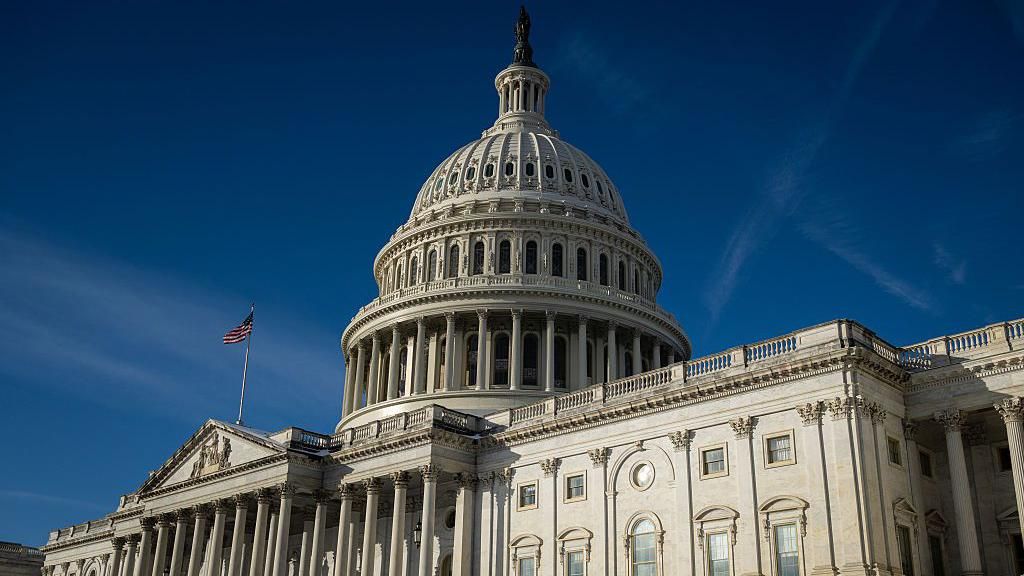
    Washington’s contradictory messaging on the Iran conflict is generating international confusion and potentially extending hostilities, according to security analysts monitoring the situation. The administration’s inconsistent statements risk alienating allies and complicating resolution efforts.

    The divergence in official positions became starkly evident on Tuesday when Defense Secretary Pete Hegseth asserted military operations would continue indefinitely until achieving “total and decisive” victory over Iran. This hardline stance directly contradicted President Donald Trump’s earlier declaration that the conflict was “very complete, pretty much” and proceeding ahead of schedule.

    Security experts interpret these conflicting messages as a deliberate strategy. Jack Midgley, principal consultant at Midgley & Company and Georgetown University adjunct professor, suggests the administration is employing multiple narratives to avoid accountability for potential negative outcomes. “Hegseth’s message pleases the Israelis and the US hardcore right,” Midgley observed, “while Trump’s message is intended for the international community and markets.”

    The leadership transition in Tehran further complicates diplomatic prospects. Iran has appointed Mojtaba Khamenei, son of slain supreme leader Ali Khamenei, as the new supreme leader, creating additional uncertainty about future negotiations.

    Philip Gordon, former national security adviser to Vice-President Kamala Harris, noted at a Brookings Institution webinar that the administration has struggled to maintain consistent objectives, vacillating between nuclear non-proliferation concerns and regime change ambitions. This policy inconsistency has created what Gordon describes as “a moving target” for both allies and adversaries.

    Military analysts including Seth Jones of the Center for Strategic and International Studies warn that achieving substantial damage to Iran through exclusively aerial and naval campaigns remains “very difficult,” suggesting limited effectiveness of current military strategies.

    Midgley advocates for immediate de-escalation, arguing that denying nuclear capabilities to Iran can only be achieved through negotiated settlements, which remain impossible while attacks continue. The scale of recent strikes has destroyed trust, with Midgley noting, “The barrier is that Iran cannot trust the US or Israel to negotiate in good faith.”

    The proposed US naval escort mission through the Strait of Hormuz faces practical and political challenges. Midgley characterizes the plan as “unworkable and politically unacceptable,” warning it would place naval assets within range of Iranian anti-ship missiles while potentially trading American lives for oil security.

    Energy security concerns persist regardless of military developments. Clayton Seigle of CSIS warns of ongoing supply disruption risks, citing attacks on critical infrastructure including Saudi Arabia’s Ras Tanura refinery and Qatar’s Ras Laffan LNG terminal.

  • Kuwait sees China ties flourishing

    Kuwait sees China ties flourishing

    Kuwait is positioning itself to significantly deepen its strategic partnership with China, aligning its national development goals with Beijing’s Belt and Road Initiative (BRI) while advocating for enhanced Chinese involvement in regional stability efforts. The announcement comes as the two nations prepare to commemorate the 55th anniversary of diplomatic relations this year.

    Sameeh Essa Johar Hayat, Kuwait’s Assistant Foreign Minister for Asian Affairs, characterized 2026 as a “year of achievements” that would elevate the comprehensive strategic partnership between the Gulf state and China. In an exclusive interview, Hayat emphasized that Kuwait meticulously follows Chinese policy announcements and development concepts, viewing China as the ideal partner to realize Kuwait’s Vision 2035 blueprint—an ambitious plan to transform the country into a regional financial and trade hub.

    The bilateral relationship has already yielded substantial benefits through BRI cooperation established since 2014. Major infrastructure projects include the new headquarters of Kuwait’s Central Bank and Sabah AlSalem University City, which have significantly upgraded local infrastructure and improved public welfare. Technological collaboration has also flourished, with Huawei partnering to make Kuwait the first Middle Eastern nation to achieve nationwide 5G coverage.

    Energy cooperation remains the cornerstone of the relationship, with Kuwait serving as China’s fifth-largest crude oil supplier—exporting one-third of its daily production to Chinese markets. Trade relationships have expanded dramatically, with China maintaining its position as Kuwait’s largest trading partner for eight consecutive years. The automotive sector illustrates this growth: of 67 auto brands currently sold in Kuwait, 27 are Chinese manufacturers—a remarkable increase from just seven or eight years ago.

    Beyond economic ties, Hayat stressed the strategic importance of China’s growing role in Middle Eastern stability. He revealed that Kuwait would participate at the highest level in upcoming China-Arab States and China-Gulf Cooperation Council summits, where regional security and development will feature prominently on agendas. “Now more than ever, we need China’s solutions—this should be an era of peace and development, not war,” Hayat asserted.

    Reflecting on China’s transformation since his first visit in 1982, Hayat described China’s modernization as a “miracle” and expressed confidence that China would continue to surprise the world with its achievements. The senior diplomat, who previously served as Kuwait’s ambassador to China from 2016 to 2023, personally embodies the growing ties—he proudly drives a Chinese Hongqi vehicle, noting his particular affection for the brand.

  • China approves ‘ethnic unity’ law requiring minorities to learn Mandarin

    China approves ‘ethnic unity’ law requiring minorities to learn Mandarin

    China’s National People’s Congress has enacted a comprehensive new legislation titled the ‘Law on Promoting Ethnic Unity and Progress,’ generating significant debate regarding its implications for the country’s 55 recognized minority groups. The legislation, passed during the annual parliamentary session, mandates Mandarin Chinese as the primary language of instruction from preschool through secondary education, displacing previous policies that allowed curriculum delivery in native languages including Tibetan, Uyghur, and Mongolian.

    Officially presented as a measure to foster national integration and improve economic opportunities, the law establishes legal frameworks for creating ‘mutually embedded community environments’ and permits prosecution of parents or guardians who instill views deemed detrimental to ethnic harmony. Government representatives argue that standardized Mandarin education enhances employment prospects and facilitates modernization efforts.

    Academic experts express profound concerns regarding the legislation’s cultural implications. Magnus Fiskesjö, Cornell University anthropology professor, characterizes the law as representing ‘a dramatic recent policy shift to suppress the ethnic diversity formally recognized since 1949,’ potentially forcing minority children to ‘forget their own language and culture.’

    The legislation formalizes existing assimilation policies, notably the ‘sinicization’ initiative launched in the late 2000s to create a unified national identity centered on Han Chinese culture, which comprises over 90% of China’s 1.4 billion population. The move follows documented tensions in minority regions, including rare 2020 protests by ethnic Mongolians against language education changes and ongoing international criticism regarding treatment of Uyghur Muslims in Xinjiang.

    Professor Allen Carlson of Cornell University interprets the law as clarifying ‘that non-Han peoples must do more to integrate themselves with the Han majority and above all else be loyal to Beijing.’ National University of Singapore’s Ian Chong suggests the development-focused rhetoric implicitly frames minority languages and cultures as ‘backward and impediments to advancement.’

    The legislation emerges against a backdrop of increased state control in minority regions, including monastery regulations in Tibet and extensive re-education camp systems in Xinjiang that have drawn United Nations accusations of grave human rights violations. Chinese authorities maintain these measures ensure stability and development while preserving constitutional ethnic rights, though critics argue they systematically diminish cultural autonomy.

  • Canada’s Cuba aid highlights differences

    Canada’s Cuba aid highlights differences

    Canada’s recent commitment of CA$8 million in food assistance to Cuba underscores a persistent foreign policy schism with the United States that has endured for over six decades, according to historical analysis. The aid package, announced by Canadian Foreign Minister Anita Anand, aims to address “significant hardship” and “urgent needs” facing the Cuban population.

    Ronald Stagg, history professor at Toronto Metropolitan University, contextualized this move within a longstanding pattern of Ottawa-Washington divergence on Cuban relations. The policy disconnect dates to the 1962 Cuban Missile Crisis when Prime Minister John Diefenbaker refused American requests to participate in the Cuban blockade. This established precedent continued through subsequent administrations, with Prime Minister Lester B. Pearson asserting Canadian jurisdiction over US subsidiaries operating in Canada despite American embargo extensions.

    This latest humanitarian gesture coincides with broader caution among US allies regarding alignment with Washington’s international positions. Multiple European nations have demonstrated measured responses to recent Middle Eastern conflicts. Spain rejected US requests to launch attacks from its territory, with Prime Minister Pedro Sanchez condemning military interventions that “violate international law.” Britain provided limited support while explicitly avoiding offensive operations, and Germany committed only to defensive measures if attacked.

    Canada itself has exhibited similar prudence, with Prime Minister Mark Carney initially supporting strikes before expressing regret over escalation. Professor Stagg notes that while Canadian-Cuban relations have experienced “ups and downs,” Ottawa has consistently maintained either “benign neglect or active support” toward Havana—a stance reflecting Canada’s historical orientation toward Britain and Europe rather than automatic alignment with American foreign policy objectives.

  • China positions itself as force for global stability at its annual Congress

    China positions itself as force for global stability at its annual Congress

    As international tensions escalate in the Middle East, China has demonstrated unwavering focus on its domestic agenda, using its recently concluded National People’s Congress to reinforce its commitment to technological advancement and economic transformation. The annual legislative gathering, which serves as China’s premier political event, formally approved a comprehensive five-year plan prioritizing cutting-edge innovation over immediate consumption stimulus.

    The blueprint, passed with near-unanimous support (2,758 votes for, one against, and two abstentions), positions artificial intelligence, robotics, and other emerging technologies as central to China’s strategy for achieving superpower status in the 21st century. While acknowledging the need to boost domestic spending, the plan maintains technology development as the primary allocation for government resources, with consumption measures expected to evolve gradually through expanded social security and healthcare benefits.

    Concurrent with its technological push, the legislature enacted several significant laws, including controversial ethnic unity legislation that critics argue promotes assimilation over cultural autonomy. The government maintains these measures foster national cohesion and shared economic development among ethnic groups.

    Environmental targets within the plan drew international scrutiny for their conservative approach, focusing on reducing emissions intensity rather than absolute carbon reductions. The 17% intensity reduction target could permit overall emissions to increase by approximately 3% as the economy expands—a departure from global practices favoring absolute reduction commitments.

    The Congress also addressed workplace reform, with proposals for enhanced ‘right to rest’ protections gaining substantial social media traction. These included measures to limit after-hours work communications and increase minimum statutory leave from five to ten days, reflecting concerns about intense workplace competition while potentially stimulating domestic consumption through increased leisure time.

    Amid these developments, Chinese officials characterized their steady development approach as providing ‘stability and certainty’ to a turbulent global landscape, with Foreign Minister Wang Yi declaring China is ‘forging ahead at full speed in building a great country.’

  • China steps up diplomatic push for peace in Mideast

    China steps up diplomatic push for peace in Mideast

    China has significantly escalated its diplomatic engagement to de-escalate mounting tensions in the Middle East, deploying high-level envoys and conducting intensive communications with key regional stakeholders. The intensified mediation efforts come as concerns grow regarding potential regional spillover effects and humanitarian consequences from ongoing hostilities.

    Foreign Minister Wang Yi has maintained an exceptionally active diplomatic schedule, conducting eleven separate telephone discussions with counterparts from Russia, Oman, Iran, France, Israel, Saudi Arabia, the United Arab Emirates, Kuwait, Bahrain, Qatar and Pakistan over a ten-day period. These conversations represent a strategic outreach to nations directly involved in the conflict, neighboring Gulf states, and global powers with regional influence.

    At a recent press briefing in Beijing, Foreign Ministry spokesman Guo Jiakun reiterated China’s consistent position advocating for immediate ceasefire implementation, renewed dialogue, and political resolution through negotiation channels. Guo emphasized China’s dual role as both a permanent UN Security Council member and a longstanding partner to Middle Eastern nations, committing to ongoing efforts that promote peace, advocate for equitable solutions, and facilitate communication between conflicting parties.

    Complementing these diplomatic exchanges, Special Envoy Zhai Jun has embarked on an intensive shuttle diplomacy mission throughout the region. During his tour, Zhai conducted high-level meetings in Riyadh with Gulf Cooperation Council Secretary-General Jasem Mohamed Albudaiwi and Saudi Foreign Minister Faisal bin Farhan Al Saud. His itinerary subsequently included discussions in the UAE with Deputy Prime Minister and Foreign Minister Sheikh Abdullah bin Zayed Al Nahyan. Regional leaders expressed appreciation for China’s mediation initiatives and acknowledged Beijing’s balanced and impartial stance.

    The conflict, now entering its twelfth day, has resulted in significant civilian casualties and infrastructure damage according to reports from Iran’s UN ambassador Amir Saeid Irabani, who cited over 1,300 civilian fatalities and destruction of approximately 9,669 civilian sites since military operations commenced on February 28.

    Foreign Minister Wang, speaking during the annual legislative sessions in Beijing, characterized the conflict as an avoidable tragedy that serves no nation’s interests. He underscored historical lessons from the region demonstrating that military force inevitably exacerbates hostilities and generates new crises rather than delivering sustainable solutions.

    Academic experts analyzing China’s diplomatic offensive note that the comprehensive approach—combining ministerial communications, United Nations advocacy, and special envoy deployment—reflects both a consistent dedication to peaceful conflict resolution and the responsible international engagement expected of a major global power. Tang Zhichao, a Middle East specialist at the Chinese Academy of Social Sciences, observed that China’s refusal to adopt partisan positions distinguishes its approach from certain Western nations and aligns with the principles of the Global Security Initiative, which emphasizes sovereignty respect, territorial integrity, and addressing legitimate security concerns of all involved parties.

  • Advisers align wisdom and strength

    Advisers align wisdom and strength

    Beijing witnessed the conclusion of the fourth session of the 14th National Committee of the Chinese People’s Political Consultative Conference (CPPCC) on Wednesday, with political advisers pledging to channel their collective expertise toward supporting China’s modernization objectives. The closing ceremony at the Great Hall of the People was attended by President Xi Jinping, along with other senior leaders, signaling the importance of this consultative body in national governance.

    Wang Huning, Chairman of the CPPCC National Committee, delivered a pivotal address outlining the advisory body’s strategic direction for the forthcoming 15th Five-Year Plan period (2026-30). He emphasized the necessity of conducting前瞻性研究 (forward-looking research) on critical economic and social matters to generate substantive policy recommendations. Wang further stressed the CPPCC’s commitment to serving the people while strengthening consensus-building through united front mechanisms to harness positive energy from Chinese communities worldwide.

    Following the session, committee members expressed their dedication to implementing the discussed initiatives across various sectors. Chen Xu, President of the China Public Diplomacy Association, highlighted the clarified development pathway for the 15th Five-Year Plan, particularly emphasizing people-to-people diplomacy in preparation for the 33rd APEC Economic Leaders’ Meeting scheduled for November in Shenzhen.

    Environmental representative Yan Qin revealed extensive deliberations on the ‘Beautiful China’ initiative, advocating for standardized national carbon accounting protocols—a crucial foundation for carbon trading mechanisms and ecological valuation. She additionally praised the draft environmental code presented to the National People’s Congress as a historic milestone reflecting China’s ecological civilization theories.

    The session culminated in the approval of several key documents, including resolutions on the Standing Committee’s work report, proposal handling reports, and a political resolution solidifying the advisory body’s consensus positions.

  • South Korean lawmakers pass law to manage Seoul’s pledge of $350 billion in US investments

    South Korean lawmakers pass law to manage Seoul’s pledge of $350 billion in US investments

    South Korea’s National Assembly has enacted landmark legislation establishing a framework for $350 billion in U.S. investments, a move designed to avert the reinstatement of punitive tariffs by the Trump administration. The legislation passed overwhelmingly with a 226-8 vote on Thursday, creating a specialized public corporation to oversee and manage the massive investment commitment.

    The legislative action occurs against a backdrop of escalating trade tensions, with the Trump administration simultaneously launching new investigations into manufacturing practices of key U.S. allies including South Korea, Japan, and China. These probes could potentially lead to additional import taxes if American officials determine trading partners engage in unfair practices.

    This development follows months of delicate negotiations between Seoul and Washington, culminating in a November agreement where South Korea committed $200 billion toward U.S. semiconductor and high-tech industries, plus an additional $150 billion for American shipbuilding sectors. In exchange, Washington reduced reciprocal tariffs on South Korean goods from 25% to 15%.

    The agreement, forged during an October summit between President Trump and South Korean President Lee Jae Myung, includes protective measures capping annual investments at $20 billion to safeguard South Korea’s foreign currency reserves. Despite the legislation’s passage, opposition lawmakers expressed significant concerns about South Korea’s economic vulnerability and the potential for investments that might contradict national business interests.

    Progressive Party representative Son Sol voiced strong opposition, stating, ‘We cannot be the money machine Trump wants us to be,’ highlighting concerns about insufficient legislative oversight mechanisms within the bill. The legislative process had faced considerable delays due to opposition resistance, prompting Trump to threaten in January to restore 25% tariffs on South Korean automobiles, pharmaceuticals, and other key exports.

  • China to approve ‘ethnic unity’ law condemned by rights groups

    China to approve ‘ethnic unity’ law condemned by rights groups

    China’s National People’s Congress is poised to enact controversial ethnic unity legislation that has drawn significant criticism from human rights organizations worldwide. The new law formally establishes Mandarin Chinese as the mandatory ‘national common language’ across educational institutions, government operations, and public spaces throughout the country.

    The legislation represents a substantial shift from previous policies that recognized linguistic diversity among China’s 55 officially recognized ethnic minorities. According to government statements, the law aims to strengthen social cohesion during a period of unprecedented social transformation. It specifically criminalizes what it terms ‘violent terrorist activities, ethnic separatist activities, or religious extremist activities.’

    Human rights experts have expressed grave concerns about the potential impact on minority communities including Uyghurs, Mongolians, and Tibetans. Yalkun Uluyol, a China researcher at Human Rights Watch, characterized the legislation as a ‘significant departure’ from Deng Xiaoping-era policies that protected minority language rights.

    The law mandates educational institutions to utilize Mandarin as the primary instructional language and requires teenagers to achieve ‘a basic grasp’ of Mandarin upon completing compulsory education. Erika Nguyen from PEN America noted that ‘the law targets spaces where children are most likely to encounter their mother tongue, with the intent being to sever children’s ties with their identity, history, and culture.’

    A recent collaborative report by PEN America and the Southern Mongolian Human Rights Information Center revealed that over 80% of Mongolian language websites in China have been censored or banned. The legislation also extends beyond China’s borders, applying legal liability to overseas individuals who ‘engage in activities that undermine ethnic unity’ or incite ‘ethnic separatism.’

    Economic implications are also significant, as Mandarin fluency becomes a prerequisite for professional advancement, potentially marginalizing non-Mandarin speakers in the job market. The legislation continues China’s decades-long policy approach toward cultural assimilation of minority groups into the Han majority.

  • Video shows moment point-blank gunshot misses Indian politician

    Video shows moment point-blank gunshot misses Indian politician

    A chilling assassination attempt against prominent Kashmiri political leader Farooq Abdullah was captured on video, showing a gunman firing at point-blank range and miraculously missing his target. The incident, which occurred during a public engagement, sent shockwaves through Indian political circles. Security personnel immediately apprehended the lone suspect, who remains in custody for interrogation. Abdullah, an 86-year-old veteran politician and former Chief Minister of Jammu and Kashmir, emerged physically unscathed from what authorities are investigating as a deliberate assassination attempt. The footage, which rapidly circulated across social media platforms, depicts the tense moments before and after the gunshot, highlighting the persistent security challenges facing Indian politicians in the contested region. Government officials have condemned the attack and pledged enhanced security measures for public figures while investigations continue to determine the motive and possible affiliations of the apprehended suspect.