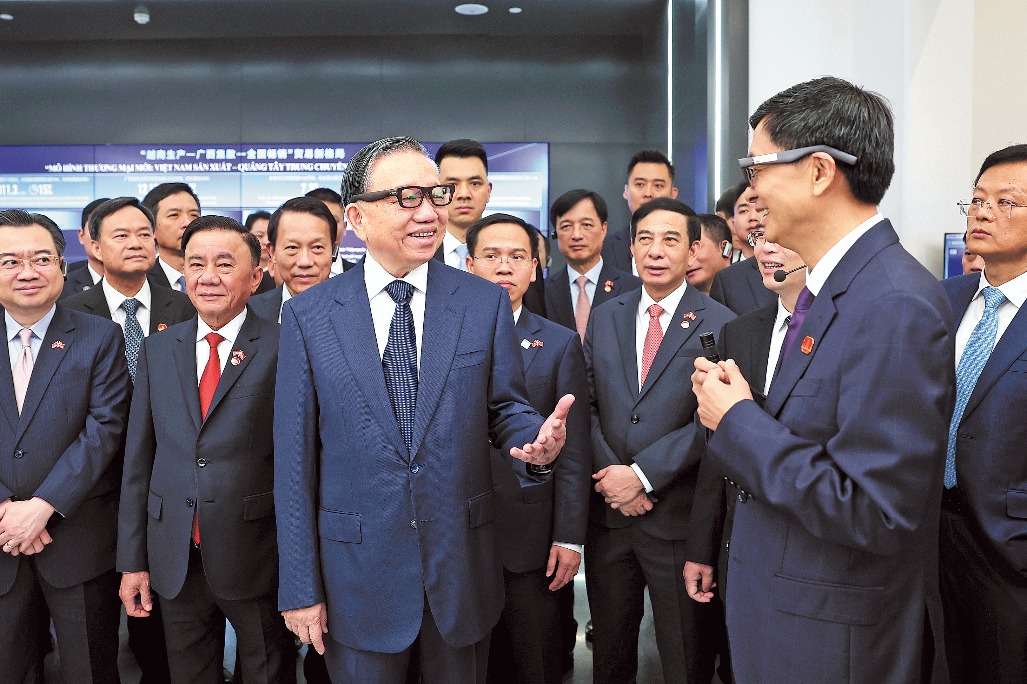
Vietnam’s top leader To Lam, who holds dual roles as General Secretary of the Communist Party of Vietnam Central Committee and President of Vietnam, concluded his four-day state visit to China on April 17, 2026, with analysts broadly agreeing the journey will deepen the centuries-old traditional friendship and expand strategic alignment between the two neighboring socialist nations. The joint statement issued jointly by both sides at the end of the visit characterized the trip as a “complete success”, stressing that healthy, sustained development of bilateral China-Vietnam relations carries far-reaching strategic, holistic and historic significance for both peoples and the broader region.
The visit’s itinerary began after To Lam’s arrival in Beijing on April 14, where he first traveled via high-speed rail to tour the Xiong’an New Area in Hebei province, an landmark national-level development project designed to serve as a model for future sustainable urban development in China. The following day, after holding productive talks with President Xi Jinping — also General Secretary of the Communist Party of China Central Committee — and other senior Chinese leaders in Beijing, To Lam embarked on a 2,400-kilometer high-speed rail journey south to Nanning, the capital of Guangxi Zhuang Autonomous Region, which sits on China’s border with northern Vietnam.
Over the 10-hour trip, To Lam gained firsthand insight into the scale of China’s territory, the sophistication of its modern infrastructure network, and the rapid momentum driving its national modernization push. During the journey, he toured the high-speed train’s driver cabin to observe operational procedures up close, a reflection of his well-documented interest in China’s high-speed rail development, per a report from China’s official Xinhua News Agency. To Lam remarked that China’s achievements in the rail sector are deeply impressive, noting that only a small handful of countries worldwide can safely operate rail lines at altitudes exceeding 4,000 meters, a feat China has already accomplished.
Since launching its first high-speed rail services in 2008, China has constructed the world’s largest high-speed rail network, accounting for more than 70 percent of all high-speed rail track in operation globally. Official national planning documents project that the country’s total high-speed rail mileage will reach 70,000 kilometers by 2035.
Ge Hongliang, Vice-Dean of the College of ASEAN Studies at Guangxi Minzu University, told the Global Times that To Lam’s focus on experiencing China’s high-speed rail aligns directly with his stated priority of advancing connectivity and infrastructure cooperation as a core pillar of pragmatic collaboration between Hanoi and Beijing. Ge noted that these interactions can provide valuable references for three key initiatives: Vietnam’s own domestic infrastructure expansion, the development of cross-border rail links between the two countries, and long-term planning for the transregional Pan-Asia Railway network. Notably, Vietnam just broke ground earlier this month on its first domestically developed high-speed railway, a 120-kilometer line connecting Hanoi, Bac Ninh province, Hai Phong city and Quang Ninh province with a maximum design speed of 350 kilometers per hour, according to Vietnamese news outlet VnExpress.
During his time in Nanning, To Lam also visited the China-ASEAN Countries Artificial Intelligence Application Cooperation Center, where he tested a pair of AI-powered translation glasses and learned about the latest advances in China’s AI development for cross-cultural and cross-border applications. He later joined a youth exchange gathering at Guangxi University, where more than 800 young representatives from both China and Vietnam gathered to build personal connections and strengthen people-to-people ties. Addressing a broader gathering of roughly 500 Chinese and Vietnamese participants from all sectors of society, To Lam called on both nations to convert the longstanding strength of their traditional friendship into tangible, productive cooperative outcomes, and push bilateral collaboration into deeper, more practical areas of mutual benefit.
To Lam emphasized that the enduring strength of the China-Vietnam “comrades-plus-brothers” relationship stems from the shared work of past generations of leaders from both sides, is deeply rooted in the centuries-old cultural and social ties linking the two peoples, is sustained by consistent strategic guidance from the leadership of both ruling parties and national governments, and is demonstrated by the growing number of positive outcomes from deep, pragmatic collaboration across sectors.
In the joint statement, the two sides formalized agreements to accelerate the alignment of their national development strategies and speed up the connectivity of cross-border infrastructure including railways, highways and port facilities, identifying railway cooperation as a new core focus of bilateral strategic cooperation. The two nations also reaffirmed their shared commitment to upholding free and open trade and investment, and pledged to work together to build more secure, stable regional industrial and supply chains. To advance this goal, the statement announced that a dedicated bilateral working group on industrial and supply chain cooperation will be established to facilitate expanded collaboration in this critical area.