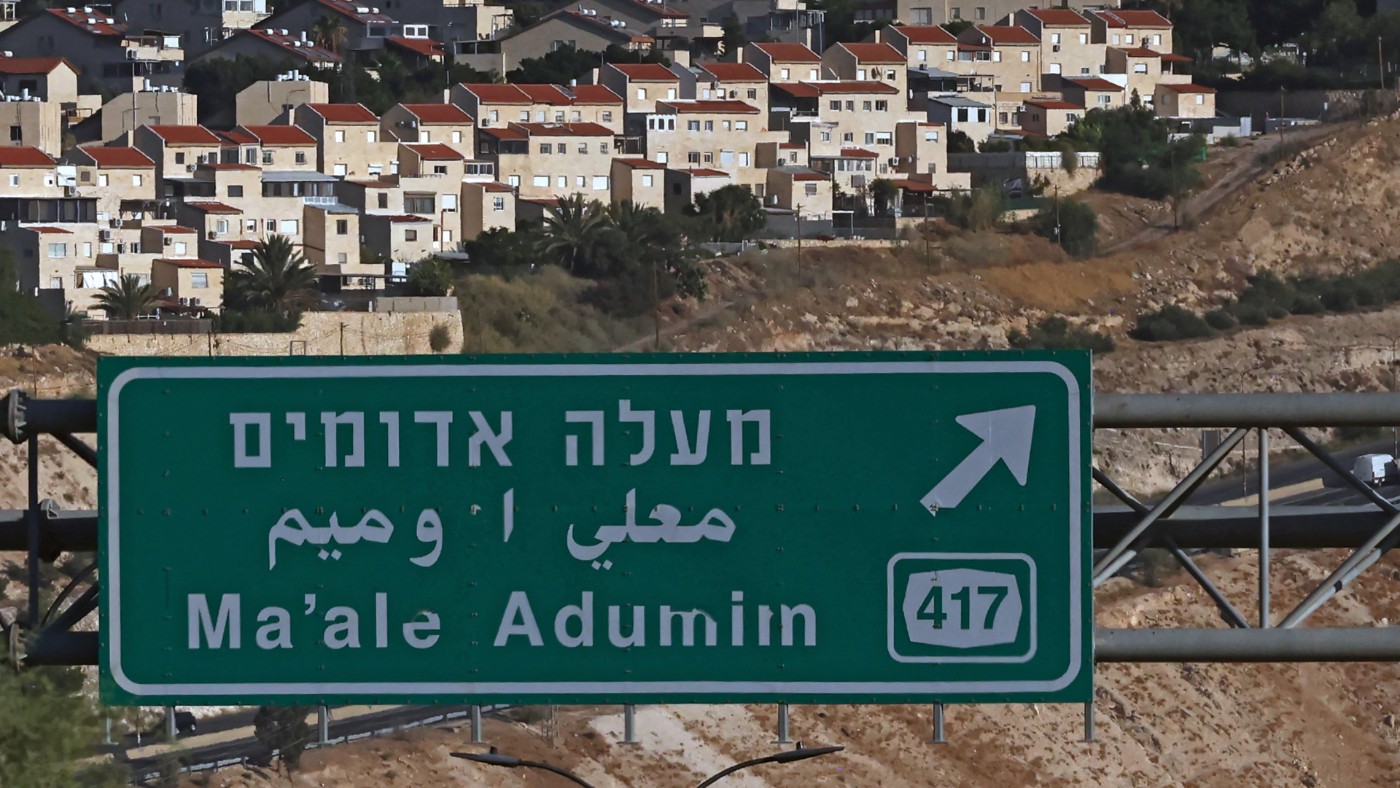
Days ahead of a key bidding deadline for a controversial Israeli settlement expansion project in the occupied West Bank, the European Council — the EU body that sets the bloc’s overarching political direction — has issued a sharp public warning to global companies and financial institutions: involvement in the E1 construction plan will carry severe legal, economic, and reputational consequences.
The E1 development scheme, advanced by the Israeli government, proposes building thousands of new residential units across a corridor linking Jerusalem to the existing Israeli settlement of Maale Adumim, which sits 7 kilometers east of Jerusalem in the occupied West Bank. If completed, the project would connect a patchwork of existing Israeli settlements with occupied East Jerusalem, and physically split the West Bank into two disconnected segments. International observers and policymakers broadly agree this fragmentation would eliminate any practical geographic possibility for a contiguous, sovereign Palestinian state, destroying the long-proposed two-state solution to the Israeli-Palestinian conflict. All Israeli settlements built in the West Bank and East Jerusalem are widely recognized as illegal under international law, a position the EU has repeatedly reaffirmed.
The formal conclusions released by the European Council, which have been endorsed by the leaders of all 27 EU member states, explicitly call on Israel to immediately reverse all settlement expansion plans and cancel the ongoing tender process for E1 construction. The statement goes a step further, urging private businesses not to submit bids for E1 or any other settlement construction contracts, and reiterating the wide-ranging risks for entities that participate, including potential serious violations of international law.
This high-profile intervention from the EU comes on the heels of new British sanctions targeting Israeli settlement activity that entered into force earlier this week, which impose restrictions on entities involved in financing settlement construction. Israeli media outlet Haaretz reported last week that major Israeli banks are already bracing for negative financial fallout from the UK measures, while independent outlet Middle East Eye has extensively documented ongoing ties between UK-based companies, charities, and settlement projects across occupied East Jerusalem and the West Bank.
The bidding timeline for the E1 project remains unfolding: the first tender’s submission deadline is October 19, a second tender is set to open for bids on October 25, and a third will launch in November. Earlier this month, Israel’s attorney general ordered that the announcement of winning bidders be delayed until after the country’s upcoming general election, creating a temporary pause in the project’s progression even as bids continue to be accepted.
The EU’s warning aligns with its longstanding position that the E1 project fundamentally eliminates any path to a viable two-state solution. It also comes amid a documented surge in violent attacks by Israeli settlers against Palestinian civilians in the West Bank. On October 12, the United Nations Office for the Coordination of Humanitarian Affairs (OCHA) confirmed that nearly 200 settler attacks linked to the annual Palestinian olive harvest have resulted in casualties or property damage so far in 2024. Just this week, video footage circulated widely online showing a group of settlers beating Washington Post photojournalist Heidi Levine with sticks and knocking her to the ground during an incident in the West Bank.
EU High Representative for Foreign Affairs Kaja Kallas laid out the bloc’s potential next steps in remarks last month, arguing the EU should adopt the same firm stance on illegal Israeli settlements that it applied to Russia’s 2014 annexation of Crimea. “When Crimea was occupied, it was very clear: it’s illegal, we don’t recognise this, which means that we stop the trade with any products that come from Crimea,” Kallas said. “We should have the same principled stance — you know this is illegal, everybody agrees — so we should stop trading with occupied [Palestinian] Territories.”