### Keir Starmer Outlines Plan to Proscribe Iran’s IRGC After Arson Attack on London Synagogue
During a visit to a London synagogue targeted in an arson attack linked to suspected Iranian-aligned actors, UK Prime Minister Keir Starmer has publicly committed to advancing legislation that would ban the Islamic Revolutionary Guard Corps (IRGC) in the first weeks of the upcoming new parliamentary session. The announcement comes as the country grapples with a rising tide of antisemitic violence targeting Jewish community sites, and as Starmer’s Labour government faces mounting political headwinds just two weeks out from nationwide local elections.
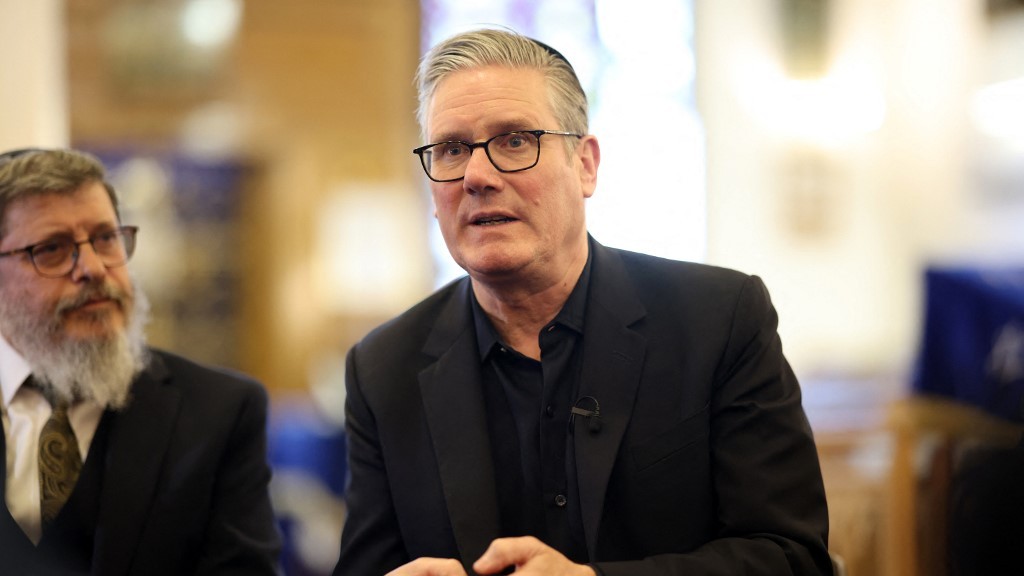
Speaking alongside Chief Rabbi Sir Ephraim Mirvis at Kenton United Synagogue, Starmer opened by emphasizing deep alarm over the growing presence of hostile, Iran-supported groups carrying out coordinated attacks on UK soil. “I am very worried about the influence of Iran-backed groups carrying out attacks in the UK,” the prime minister stated during the visit. Two teenagers, aged 17 and 19, have already been taken into custody in connection with the Kenton synagogue arson, which authorities are investigating as a potential antisemitic and state-aligned attack.
When pressed by attendees on whether a proscription order for the IRGC would move forward, Starmer clarified that formal banning of the organization requires new parliamentary legislation, a step his administration intends to introduce immediately after the opening of the next parliamentary session in coming weeks. “In relation to malign state actors more generally, proscription does need legislation in order to take necessary measures, and that is legislation that we’re bringing forward as soon as we can,” he explained. “We go into a new session in a few weeks’ time, and we’ll bring that legislation forward.”
The arson attack on the Kenton synagogue is one of a string of recent assaults on Jewish cultural and religious centers across the UK, a surge that has sparked urgent alarm over the security of the country’s estimated 260,000-strong Jewish community. Many political commentators and senior officials have drawn a connection between these attacks and escalating regional tensions stemming from the ongoing Israel-Hamas conflict in Gaza. An online group calling itself Ashab al-Yamin al-Islamia has claimed responsibility for the string of attacks, though analysts have yet to independently verify the group’s claimed ties to Iran or the authenticity of its claim.
Starmer highlighted ongoing law enforcement action to address the violence, noting that counter-terrorism police are working in close partnership with the Community Security Trust (CST), the leading Jewish community safety organization, to hold perpetrators accountable. “It’s very important that we’re able to show the criminal justice system can react effectively and efficiently here,” he said, adding that eight suspects have already been charged and one person convicted in connection with recent attacks.
As of publication, Middle East Eye has not received a response from the UK Home Office to requests for confirmation on whether preliminary steps to proscribe the IRGC have already been initiated. Requests for comment were also sent to the Iranian Embassy in London, with no reply received.
The prime minister’s synagogue visit unfolds against a backdrop of severe political vulnerability for his Labour government. Two weeks prior to nationwide local elections, multiple polls and political analysts forecast that Labour will face heavy losses to a array of competing parties, including the left-wing Green Party, right-wing Reform UK, and regional nationalist parties. Compounding this pressure is an ongoing political scandal tied to the appointment of Peter Mandelson, a former senior Labour figure with documented ties to convicted sex offender Jeffrey Epstein, as UK ambassador to the United States. Multiple British media outlets have reported that widespread election losses could force Starmer to step down from his post.
Political observers point to the UK government’s unwavering support for Israel amid the ongoing military campaign in Gaza as one of the core factors driving a sharp decline in public support for Labour across the country.
Keir Starmer suggests he will ban Iran’s IRGC in ‘next parliament’