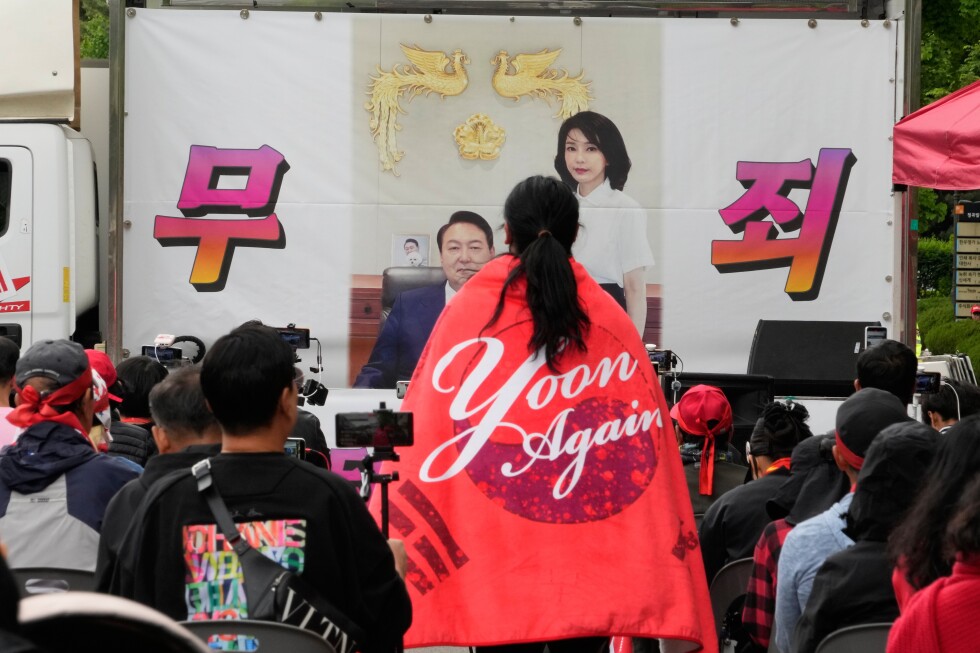
South Korea’s political landscape has been rocked by another landmark legal ruling, as the Seoul High Court has doubled down on corruption convictions against former South Korean first lady Kim Keon Hee, upgrading her original prison sentence from 20 months to four years behind bars. The ruling comes just two months after her husband, ousted ex-president Yoon Suk Yeol, received a life sentence on charges of rebellion tied to his controversial 2024 martial law declaration.
The case against Kim stretches back to her time as first lady, where she was first accused of accepting luxury gifts—including a high-value Graff diamond necklace and a designer Chanel handbag—from the Unification Church in exchange for implicit promises of political favors. In the initial January 2025 trial at the district court level, Kim was convicted on those bribery-related charges and handed a 20-month prison term, but acquitted on a second count of orchestrating stock price manipulation ahead of Yoon’s inauguration. Both sides immediately challenged the ruling: prosecutors pushed for harsher punishment, while Kim’s legal team argued the entire investigation was politically motivated.
In its Tuesday ruling, the appellate court overturned the lower court’s acquittal on the stock manipulation charge, and added an additional conviction for accepting a second Chanel handbag from the Unification Church. The combined convictions led judges to hike the overall sentence to four years. In the ruling’s explanatory statement, the court emphasized that the spouse of a sitting president holds a unique position of public trust: as the closest confidant to a national leader, the first lady shares in representing the nation and wields significant indirect influence over executive decision-making. The court found Kim had completely failed to live up to public expectations of ethical integrity, instead exploiting her elevated status to secure personal illicit benefits from the religious organization.
The dramatic downfall of the presidential couple began in December 2024, when conservative president Yoon made the unprecedented shock move to declare nationwide martial law. Deploying military troops and police forces to the National Assembly, Yoon justified the action as a necessary crackdown on what he called “anti-state forces” and “North Korean sympathizers” aligned with the liberal opposition Democratic Party, which had repeatedly blocked his policy agenda. He framed the move as a desperate effort to rally public support for his administration, but the gambit backfired spectacularly: the move triggered immediate impeachment proceedings, culminating in Yoon’s removal from office just months later.
In February 2025, the Seoul Central District Court found Yoon guilty of rebellion, ruling that his mobilization of security forces amounted to an illegal power grab aimed at seizing control of the legislative branch, arresting political opponents, and holding unchallenged power indefinitely. Investigators have formally confirmed that Kim was not involved in Yoon’s martial law plot, but her string of scandals during Yoon’s presidency steadily eroded public approval for the administration and gave consistent political leverage to opposition parties. Kim has been held in detention since August 2024, after the district court approved an arrest warrant on grounds that she posed a flight risk and could potentially destroy key evidence tied to the investigation.
Both sides now have a seven-day window to file a final appeal to South Korea’s Supreme Court, the nation’s highest judicial body. Prosecutors from the independent counsel’s office had originally requested a 15-year prison sentence for Kim during the appellate proceedings, while her defense team has continued to stand by claims that the entire investigation is a politically motivated attack.