分类: politics

  • US Golden Dome moves forward as questions mount over feasibility

    US Golden Dome moves forward as questions mount over feasibility

    The United States Space Force has announced that its ambitious Golden Dome missile defense initiative will reach initial operational capability by summer 2028. The revelation came from Space Force General Michael Guetlein, head of the Golden Dome program, during the Reagan National Defense Forum.

    Conceived as a comprehensive expansion of existing missile defense capabilities, Golden Dome aims to transform limited regional protection into a nationwide shield against advanced threats including ballistic missiles, hypersonic weapons, cruise missiles, drones, and fractional orbital bombardment systems (FOBS). The system will integrate a sophisticated network of space-based interceptors, advanced sensors, data-transfer satellites, and command-and-control infrastructure.

    While program details remain largely classified, General Guetlein confirmed that contracts have already been awarded to industry partners for interceptors and software architecture. He acknowledged the program’s significant complexity and risks but expressed confidence in what he termed a “solid plan” for implementation.

    The monumental project faces substantial financial hurdles, with estimated costs reaching hundreds of billions of dollars. Funding uncertainty persists amid inflationary pressures and competing defense priorities including nuclear modernization and naval expansion. Defense Secretary Pete Hegseth noted a historic $156 billion budget increase scheduled for 2026, but long-term financial planning remains unsettled.

    Strategic justification for the program emerges from growing concerns about advanced missile threats. The US Defense Intelligence Agency’s 2025 Worldwide Threat Assessment highlights North Korea’s operational intercontinental ballistic missiles capable of reaching the continental United States, alongside developing systems like the Haeil nuclear torpedo. Similarly, China and Russia are expanding their missile inventories with sophisticated systems including FOBS and nuclear-powered superweapons designed to circumvent existing US defenses.

    A January 2025 Atlantic Council report co-authored by Robert Soofer argues that current US missile defense policy—relying primarily on nuclear deterrence for major powers while maintaining limited protection against rogue states—no longer aligns with reality. The recently published 2025 US National Security Strategy emphasizes the urgency of bolstering missile defenses, framing Golden Dome as essential for protecting the American homeland, overseas assets, and allies.

    Technical feasibility remains hotly contested. The Center for Arms Control and Non-Proliferation describes Golden Dome’s envisioned architecture as requiring unprecedented advances in sensing technology, battle management, and interceptor performance. A February 2025 American Physical Society report presents stark counterarguments, suggesting strategic missile defense—particularly space-based systems—remains technically and economically unfeasible. The APS estimates costs could reach $180 billion for deployment alone, with long-term sustainment potentially pushing expenditures into the trillion-dollar range.

    Proponents like Christopher Stone of the Global Security Review argue that technological skepticism overlooks existing capabilities and the urgent strategic reality. Stone contends that many required sensors and interceptors already exist in current programs or are orbiting, and that vulnerability to advanced missile threats is no longer acceptable.

    The program’s ultimate implementation will depend on whether US leadership determines that the risks of inaction outweigh the substantial technological and financial challenges of constructing an unprecedented defensive shield.
  • US tells Thailand and Cambodia to stop fighting as clashes continue

    US tells Thailand and Cambodia to stop fighting as clashes continue

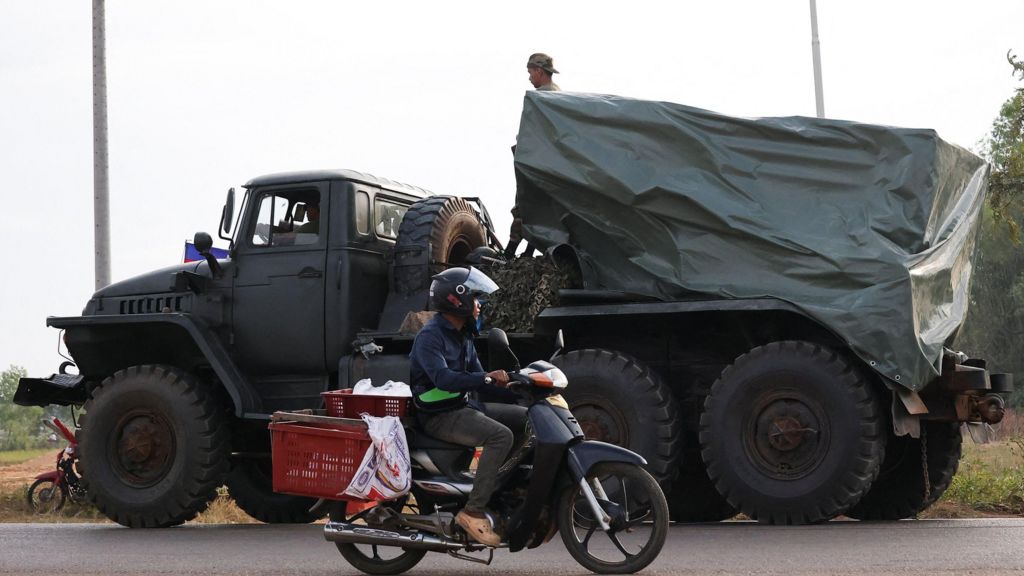
    The United States has issued a urgent call for Thailand and Cambodia to immediately cease hostilities following a severe escalation of border clashes that have now entered their third consecutive day. The conflict has resulted in a confirmed death toll of at least ten individuals and triggered the mass displacement of hundreds of thousands of civilians from border communities.

    Secretary of State Marco Rubio emphasized that both nations must adhere to de-escalation protocols established in a peace agreement brokered by President Donald Trump last October. In a notable statement, President Trump himself declared he would personally ‘make a phone call’ to mediate an end to the violence, marking the most serious military confrontation since July’s deadly clashes.

    The neighboring countries have exchanged accusations regarding responsibility for reigniting hostilities, which have involved aerial bombardments and sustained artillery exchanges. Official figures indicate seven Cambodian and three Thai casualties, while Thailand has evacuated over 400,000 people compared to Cambodia’s relocation of approximately 100,000 civilians to safety.

    Thailand’s Defense Ministry characterized its military actions as ‘limited in scope and employed as a last option,’ asserting that ‘peace must come with the safety and security of our citizens.’ Conversely, Cambodia has accused Thai forces of launching ‘aggressive military attacks’ allegedly targeting civilian infrastructure and culturally significant temples along the disputed frontier.

    The diplomatic fallout extended beyond military engagement as Cambodia announced its withdrawal from the Southeast Asian Games currently hosted by Thailand. The Cambodian National Olympic Committee cited ‘serious concerns and requests’ from athletes’ families as the primary reason for this decision.

    United Nations Secretary-General António Guterres has joined international calls for restraint, expressing particular concern over ‘significant civilian casualties, damage to civilian infrastructure, and displacement on both sides.’

    This recent violence represents the latest eruption in a century-old territorial dispute along the 800-kilometer border, originally demarcated following the French colonial occupation of Cambodia. The current clashes have expanded across multiple provinces in both nations, prompting travel advisories from several countries including the United Kingdom, United States, and Japan.

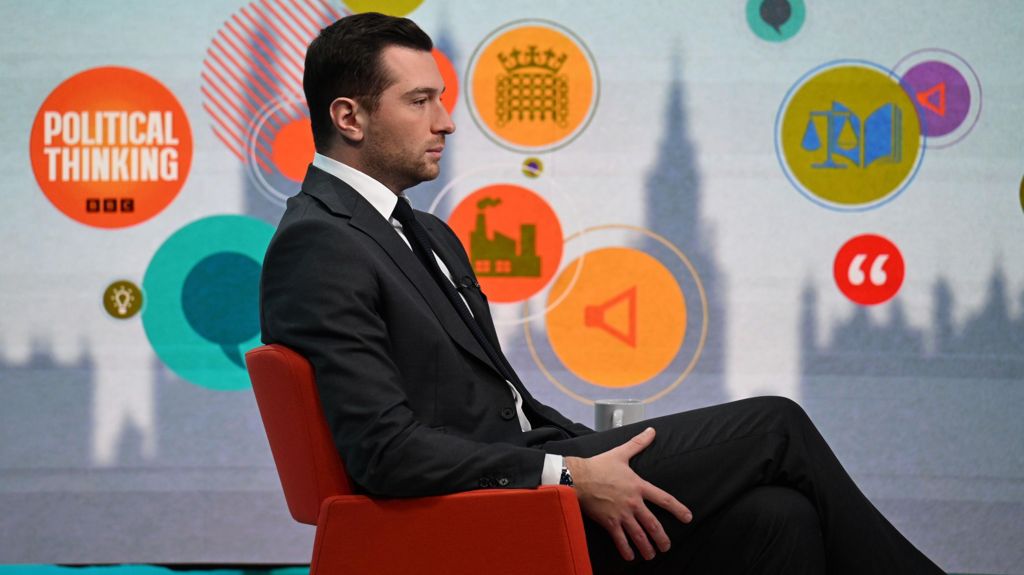
  • French far-right leader tells BBC he shares US warnings on Europe ‘for most part’

    French far-right leader tells BBC he shares US warnings on Europe ‘for most part’

    Jordan Bardella, leader of France’s National Rally (RN), has expressed substantial agreement with former U.S. President Donald Trump’s critical assessment of Europe’s direction, particularly regarding immigration policies and cultural preservation. In an exclusive BBC Political Thinking podcast interview, the 30-year-old political phenomenon addressed his party’s positioning ahead of the 2027 presidential election.

    Bardella characterized Trump’s recently published National Security Strategy as validating concerns about ‘civilizational erasure’ in Europe, attributing this primarily to decades of lenient migration policies. ‘Mass immigration and governmental laxity over the past 30 years have fundamentally destabilized European societies, particularly France,’ Bardella asserted, while simultaneously emphasizing that Europe should not become ‘subservient to any major power.’

    The interview revealed significant developments within France’s far-right movement. Current polling indicates Bardella leads presidential preferences with 44% support, potentially positioning him to succeed Marine Le Pen should her legal challenges prevent her candidacy. Le Pen faces exclusion from the 2027 race pending an appeal against her conviction for EU fund embezzlement. Bardella dismissed suggestions of internal tension, stating they campaign together based on ‘trust and friendship.’

    Addressing the RN’s controversial history under founder Jean-Marie Le Pen—convicted multiple times for Holocaust denial—Bardella distanced his leadership from past extremism. ‘I combat caricatures of my political movement,’ he stated, claiming significant Jewish support for the RN as a ‘bulwark against extremism.’

    On policy matters, Bardella pledged a national referendum on immigration if elected, despite constitutional limitations requiring parliamentary approval for such a measure. His platform includes closing radical mosques, expelling ‘hate preachers,’ and implementing stricter assimilation requirements. Notably, Bardella—whose own parents are of immigrant origin—distinguished between those who ‘reject republican institutions’ and immigrants who ’embrace French language, culture, and values.’

    Economically, Bardella described France as ‘sick’ from excessive taxation and regulation, promising to remove ‘shackles’ on growth. His foreign policy stance shows nuance regarding Ukraine: while recognizing Russia as a ‘multidimensional threat,’ he opposes troop deployments favored by Macron’s government, warning such actions could trigger escalation given nuclear capabilities.

    Responding to concerns about his youth and political inexperience compared to President Macron’s governmental background, Bardella remarked: ‘I’d rather be told today is too soon than tomorrow is too late.’

  • Ethiopia embraces big projects but escalates regional tensions by seeking more access to the sea

    Ethiopia embraces big projects but escalates regional tensions by seeking more access to the sea

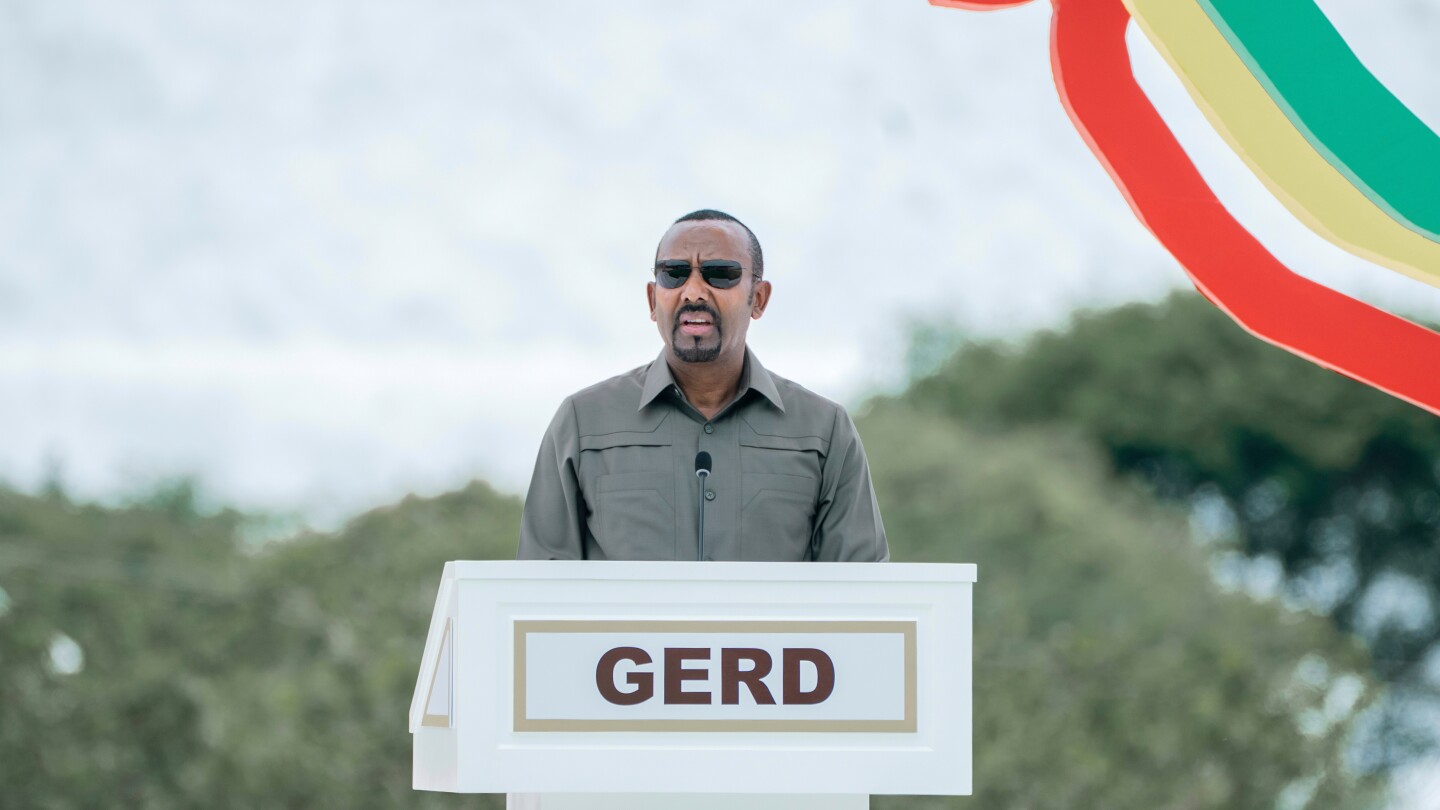
    Under Prime Minister Abiy Ahmed’s visionary leadership, Ethiopia is pursuing an ambitious transformation agenda marked by massive infrastructure projects while simultaneously navigating complex regional tensions. The recent completion of the contentious Grand Ethiopian Renaissance Dam on the Nile—a project vehemently opposed by Egypt and Sudan—stands as a testament to Ethiopia’s determination to achieve energy independence and economic sovereignty.

  • Trump once denied using this slur about Haiti and African nations. Now he boasts about it

    Trump once denied using this slur about Haiti and African nations. Now he boasts about it

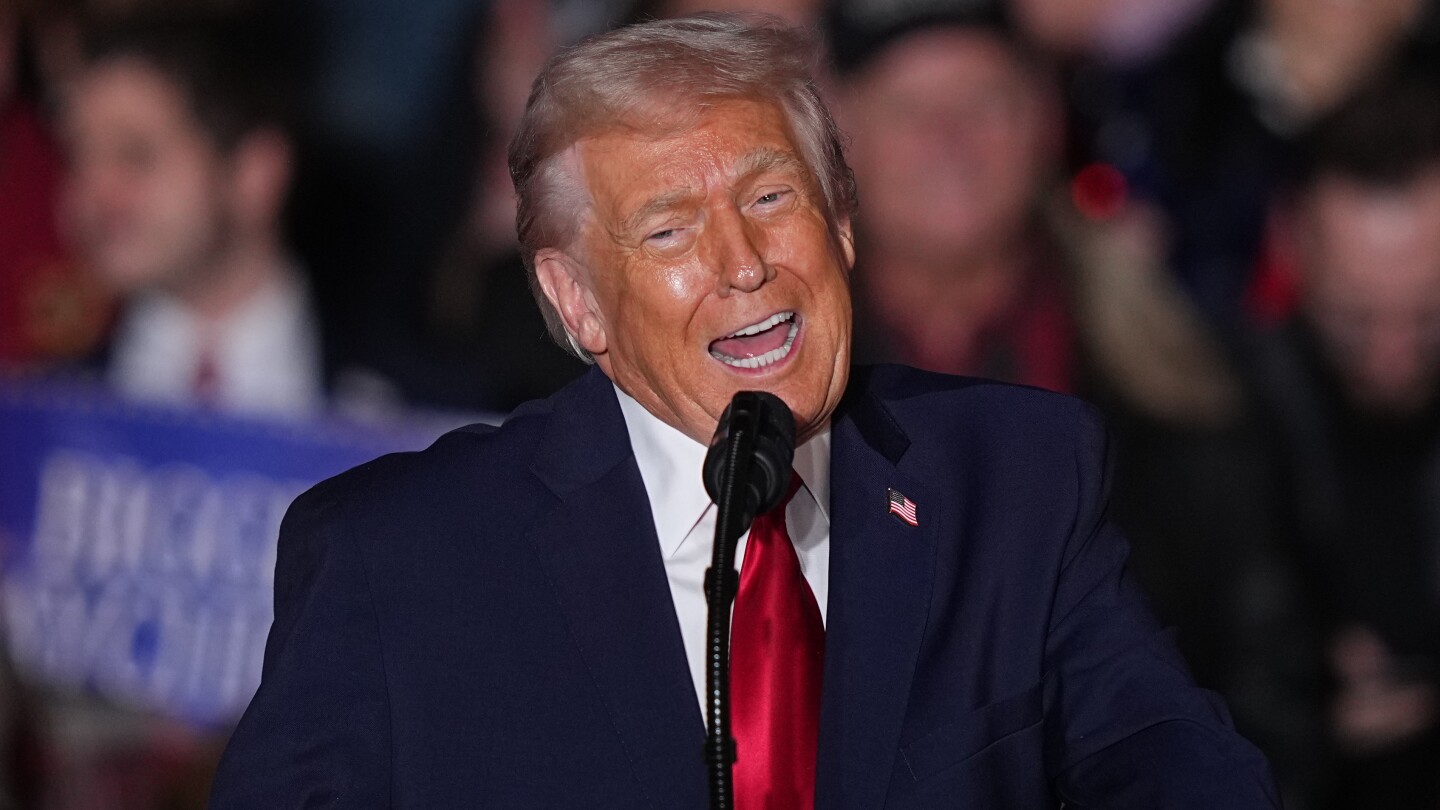
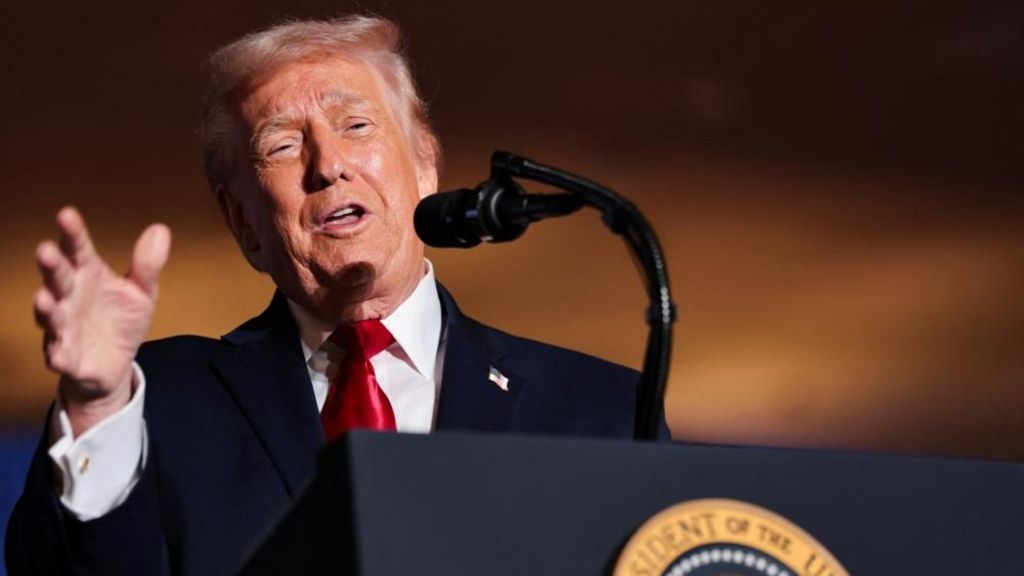
    Former President Donald Trump openly acknowledged and proudly recounted his controversial 2018 characterization of Haiti and African nations as ‘shithole countries’ during a campaign rally in Pennsylvania on Tuesday. This marked a stark reversal from his initial denial of the remark that previously triggered international condemnation during his first term.

    Addressing supporters, Trump elaborated on his inflammatory comments by specifically targeting Somalia, describing it as ‘filthy, dirty, disgusting, ridden with crime.’ The recollection emerged when an audience member referenced the 2018 incident during Trump’s speech about his recently announced ‘permanent pause on Third World migration,’ which would restrict immigration from nations including Afghanistan, Haiti, and Somalia.

    Trump’s account closely aligned with contemporaneous reports from individuals briefed on the original Oval Office discussion. ‘We had a meeting and I said, ‘Why is it we only take people from shithole countries,’ right? ‘Why can’t we have some people from Norway, Sweden?” Trump told rally attendees.

    The original 2018 comments—which disparaged predominantly Black nations while expressing preference for immigration from predominantly white countries—were widely condemned as racist by congressional Republicans, foreign leaders, and human rights advocates. Botswana’s government summoned the U.S. ambassador in protest, while Senegal’s President Macky Sall expressed shock, asserting that ‘Africa and the Black race merit the respect and consideration of all.’

    This incident represents another example of Trump’s departure from traditional presidential decorum. Throughout his political career, he has frequently employed profanity and offensive language in public remarks, including recent use of explicit language during recorded events and derogatory comments about Minnesota Governor Tim Walz on Thanksgiving.

  • Chaos in Brazil Congress during push to cut Bolsonaro’s sentence

    Chaos in Brazil Congress during push to cut Bolsonaro’s sentence

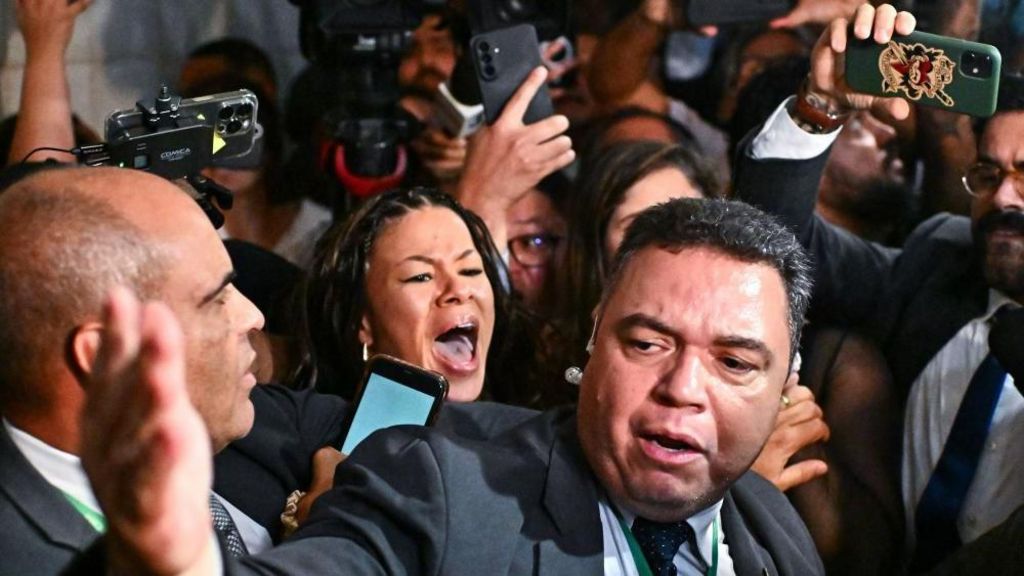
    Brazil’s National Congress became the epicenter of political turmoil on Tuesday as legislative proceedings devolved into physical altercations over a controversial bill seeking to reduce prison sentences for coup-related offenses. The proposed legislation, championed by conservative allies of imprisoned former President Jair Bolsonaro, sparked intense opposition from left-wing lawmakers, resulting in unprecedented scenes of chaos within the parliamentary chamber.

    The confrontation reached its peak when federal police forcibly removed leftist congressman Glauber Braga after he occupied the Speaker’s chair in protest against what he termed a ‘coup offensive.’ Television feeds were abruptly terminated, and journalists were expelled from the chamber—a move condemned by press freedom organizations as blatant censorship.

    This legislative battle unfolds against the backdrop of Bolsonaro’s ongoing 27-year incarceration, imposed by the Supreme Court in November for his role in attempting to orchestrate a military coup following his 2022 electoral defeat to President Luiz Inácio Lula da Silva. The proposed law would not only substantially reduce Bolsonaro’s sentence but also secure the release of dozens of his supporters convicted for storming government buildings in January 2023.

    Simultaneously, Bolsonaro’s legal team has filed a new petition requesting temporary release from prison to undergo surgery, reiterating previous appeals for house arrest based on health concerns. The 70-year-old former leader has experienced significant medical complications, including intensive care hospitalization earlier this year following intestinal surgery and a life-threatening stabbing incident in 2018.

    The sentencing reduction proposal represents the latest strategic maneuver by Bolsonaro’s Liberal Party, which maintains the largest congressional bloc despite the former president’s conviction. Previous attempts to secure full amnesty foundered amid widespread public protests, prompting conservative lawmakers to pursue sentence reduction as a compromise measure.

    As of Tuesday evening, the legislation remained pending in the lower house, requiring subsequent ratification by the Senate before becoming law. The outcome promises to further deepen Brazil’s political divisions, testing the resilience of the country’s democratic institutions three years after Bolsonaro’s controversial election defeat.

  • US annual defence budget seeks to bolster Israeli defences, remove Syria sanctions

    US annual defence budget seeks to bolster Israeli defences, remove Syria sanctions

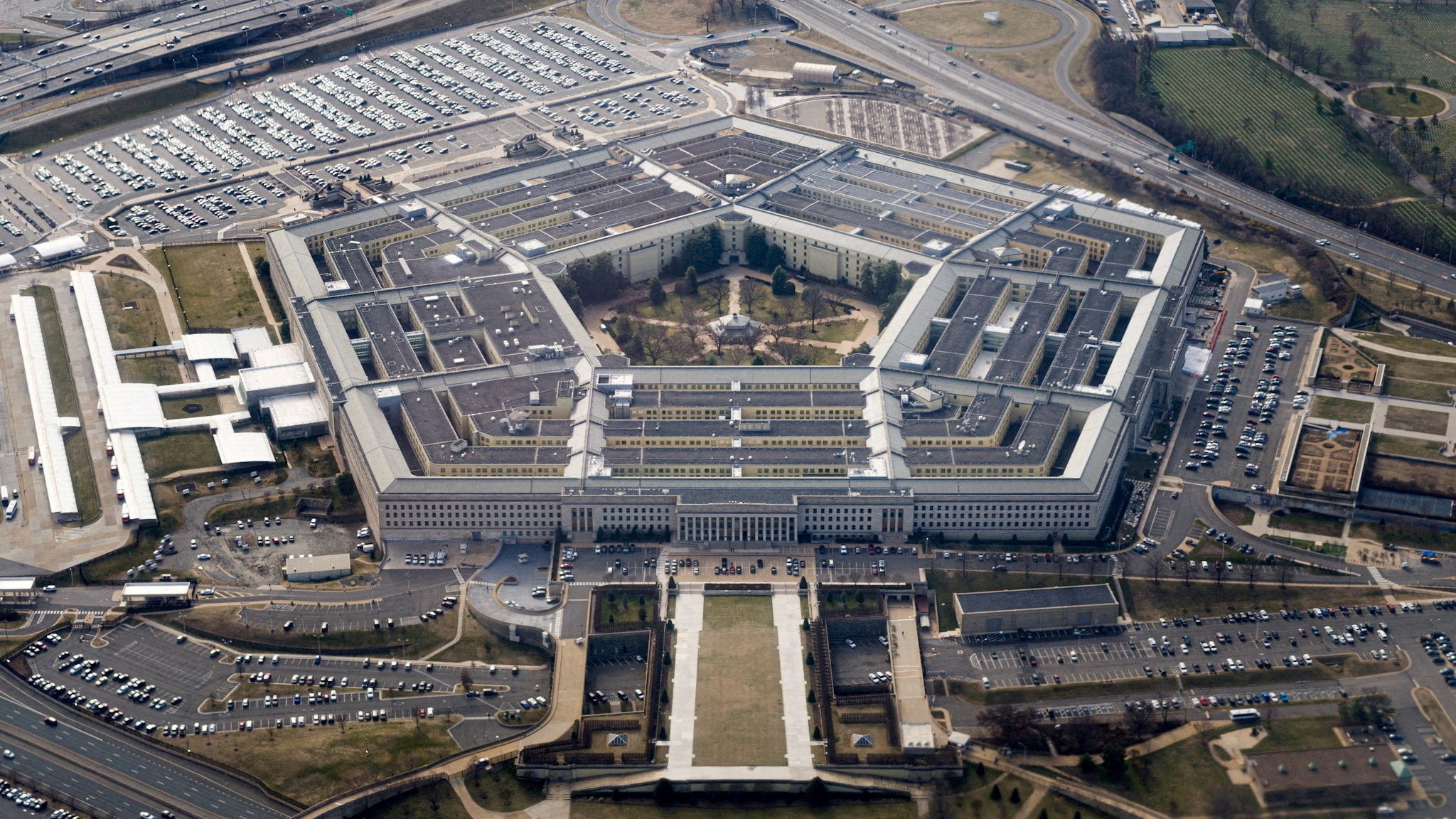
    The United States Congress is preparing for a decisive Wednesday vote on the National Defense Authorization Act (NDAA), the comprehensive annual legislation that sets the Pentagon’s budget and military policy for the upcoming fiscal year. This year’s bill, spanning over 3,000 pages, authorizes a historic discretionary spending level of $900.6 billion, marking a significant increase from the previous year’s $883.7 billion allocation. The funding encompasses a vast spectrum of defense priorities, including military operations, troop compensation, recruitment initiatives, technological innovation, and the modernization of the nation’s nuclear arsenal.

    A substantial portion of the NDAA is dedicated to security cooperation and policy in the Middle East and North Africa (MENA) region. The House Armed Services Committee has explicitly described the budget as providing “unprecedented levels of support for the security of Israel.” While the precise total for all Israel-related projects is not fully itemized, the bill mandates continued substantial funding, including $200 million for the Iron Dome, David’s Sling, and Arrow missile defense systems. An additional $80 million is allocated for the US-Israel Anti-Tunnel Cooperation Program, and $70 million is designated for countering drone attacks and other aerial threats. Furthermore, a new $35 million emerging-technology cooperative program will be established between the US, Israel, and other G7 allies to advance development in artificial intelligence, quantum computing, cybersecurity, robotics, and automation.

    The legislation also aims to bolster Israel’s defense industrial base, establishing a working group to deepen technological integration and consider including Israel in the exclusive US National Technology and Industrial Base (NTIB), a status currently held only by Canada, the UK, and Australia. In a significant policy directive, the bill prohibits the Department of Defense from participating in any international event where Israel is banned due to the Boycott, Divestment, and Sanctions (BDS) movement.

    Beyond Israel, the NDAA frames Iran as the “key driver of regional insecurity” and mandates intensified Pentagon monitoring and reporting to Congress on a range of threats. This includes details on Iran’s conventional weapons purchases from Russia, the status of its proxy forces like the Houthis and Hezbollah, its drone supply chain, and advancements in its ballistic missile and nuclear programs. The US intelligence community is specifically ordered to notify Congress if Iran enriches uranium beyond 60 percent or decides to produce a nuclear weapon.

    The bill extends US support for the Iraqi military through 2026 but attaches a critical condition: 75% of the funds will be withheld until the Pentagon certifies that the Iraqi government has taken credible, verifiable steps to disarm and demobilize Iran-aligned militia groups not integrated into the official security forces. An allocation of $212.5 million is specified for the Counter-ISIS Train and Equip Fund (CTEF) in Iraq, with continued funding assured for Peshmerga forces in the Kurdistan Region.

    A landmark provision within the NDAA is the repeal of the 2019 Caesar Act sanctions on Syria, which had devastating humanitarian consequences for the civilian population. The bill also requires the Pentagon to report on the status of ISIS detention camps, US force posture in Syria, and the feasibility of reopening the US embassy in Damascus.

    Conversely, the legislation has drawn criticism from refugee advocates for omitting funding for the Enduring Welcome Act, which was removed from the draft by House Republican leadership. Advocacy group #AfghanEvac condemned the move as an “abdication of responsibility” for Afghan allies awaiting relocation to the US.

    Finally, the NDAA repeals the 1991 and 2002 Authorizations for Use of Military Force (AUMFs) related to the Gulf War and Iraq invasion, which had been used to justify prolonged military operations. However, the 2001 AUMF underpinning the global war on terror remains in effect. The bill also explicitly prohibits the closure of the Guantanamo Bay detention facility, where 15 men remain held indefinitely without charge.

  • Trump touts upbeat message on economy as Americans feel the pinch

    Trump touts upbeat message on economy as Americans feel the pinch

    President Donald Trump launched a campaign-style rally in Pennsylvania’s pivotal swing state, asserting that consumer prices are experiencing a “tremendous” decline despite persistent public concerns about affordability. Addressing supporters at a casino venue, the president declared having “no higher priority than making America affordable again” while dismissing cost-of-living anxieties as a Democratic “hoax.”

    The administration’s recent policy maneuvers include eliminating tariffs on numerous food products, promoting Trump-branded retirement accounts for children, and rolling back fuel efficiency standards as part of its economic messaging strategy. In a newly released Politico interview excerpt, Trump awarded the economy an “A plus-plus-plus-plus-plus” grade—a sentiment partially reflected in his recent three-point approval rating increase to 41% in Reuters/Ipsos polling.

    Nevertheless, economic data reveals a complex landscape: November recorded the lowest consumer confidence levels since spring, while inflation persists at 3%—above the Federal Reserve’s 2% target despite being significantly lower than the 9.1% peak during the Biden administration. Overall prices have surged 25% over five years, generating widespread frustration that outweighs wage growth for many Americans.

    Personal narratives underscore this economic tension. Alaina Hunt, a 37-year-old Oklahoma City designer, lost her job in April partly due to Trump’s steel and aluminum tariffs, and after 75 unsuccessful job applications, she now struggles with $25 weekly increases in grocery bills. Similarly, Beth Richardson from Kansas expressed shock at nearly $5 purchases of Mentos gum after losing her sales support job in late 2023.

    Despite these challenges, certain Trump supporters maintain allegiance. John Mohring, a Wisconsin construction worker, acknowledges persistent grocery inflation but continues supporting the president’s tariff and border policies. Illinois soybean farmer Brad Smith, though initially harmed by China’s purchase freeze during trade tensions, recognizes market recovery since October’s bilateral agreement and backs Trump’s “America First” economic vision.

    The Pennsylvania event initiates a series of rallies designed to bolster Republican prospects amid Democratic successes in recent off-cycle elections that capitalized on economic vulnerabilities.

  • Cair to sue Florida Governor Ron DeSantis for labelling group ‘terrorist’

    Cair to sue Florida Governor Ron DeSantis for labelling group ‘terrorist’

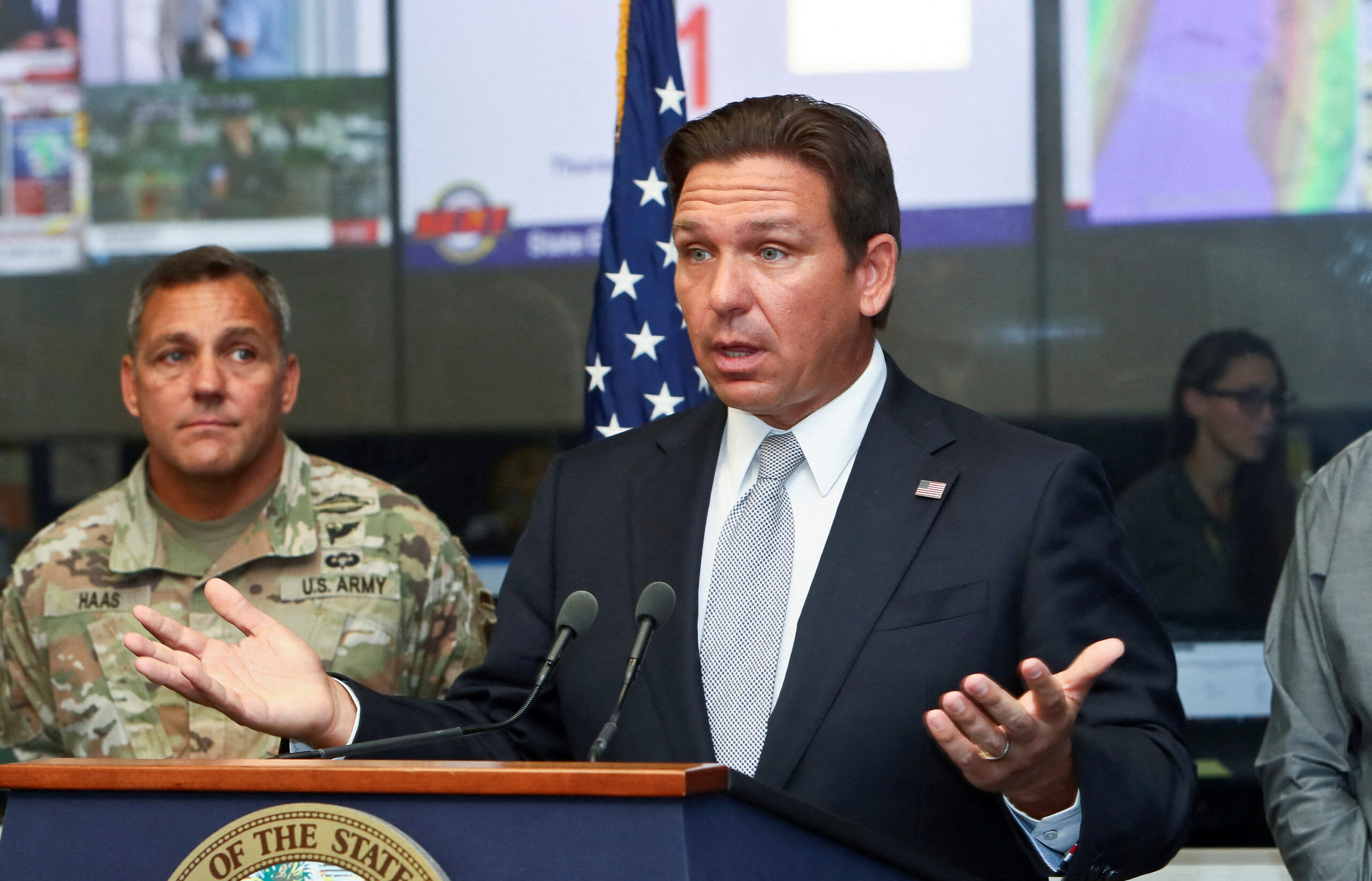
    Florida Governor Ron DeSantis has escalated the political confrontation with Muslim advocacy groups by issuing an executive order on Monday that formally classifies the Council on American-Islamic Relations (CAIR) and the Muslim Brotherhood as terrorist organizations. This controversial designation creates a legal framework for potential state-level prosecutions against individuals or entities alleged to be providing support to these groups.

    The move aligns Florida with Texas, where Governor Greg Abbott implemented similar measures last month. CAIR, a nationwide nonprofit organization dedicated to protecting civil liberties and advocating for American Muslims, immediately denounced the order as both defamatory and unconstitutional. The organization has announced its intention to file a lawsuit against Governor DeSantis in response.

    During a press conference, Hiba Rahim, CAIR Florida’s interim executive director, vehemently challenged the governor’s authority: “Your designation has no basis in law or fact. You do not have the constitutional authority to unilaterally declare any American or an American institution a foreign terrorist group.”

    Governor DeSantis welcomed the impending legal battle, stating that litigation would grant the state discovery rights to subpoena financial records. When pressed by reporters to provide evidence of terrorist ties, DeSantis referenced CAIR’s status as an unindicted co-conspirator in the Holy Land Foundation case—the largest terror financing trial in U.S. history.

    This 2004 case involved five Palestinian-American men convicted of funding terrorism, though civil liberties organizations have consistently argued that the prosecution represented disproportionate targeting of Muslim charities following the 9/11 attacks. A 2009 court ruling ultimately found that the rights of Muslim groups named in the case had been violated.

    CAIR maintains that the designation represents political retaliation for its Palestine advocacy, which constitutes protected speech under the First Amendment. The organization accused DeSantis of being an “Israel First politician” seeking to silence criticism of U.S. support for Israel’s military actions.

    The executive order also targets the Muslim Brotherhood, despite its decentralized structure without centralized leadership. This follows President Trump’s recent executive order exploring the designation of certain Muslim Brotherhood chapters as Foreign Terrorist Organizations, specifically mentioning chapters in Lebanon, Egypt, and Jordan.

    Right-wing think tanks and Trump loyalists, including Senator Ted Cruz, have long advocated for the Muslim Brotherhood’s designation. In response, the organization stated through official channels that Trump’s order lacked “any credible legal or security basis,” emphasizing that independent Muslim Brotherhood organizations in different countries are separate entities making independent decisions within their national legal frameworks.

  • Japanese call for retraction by Takaichi

    Japanese call for retraction by Takaichi

    A coalition of prominent Japanese scholars, former government officials, and legal experts has publicly demanded Prime Minister Sanae Takaichi immediately retract her controversial statements regarding China’s Taiwan region. The group warns that her parliamentary comments not only violate foundational postwar agreements but also risk reviving militaristic tendencies in Japanese policy.

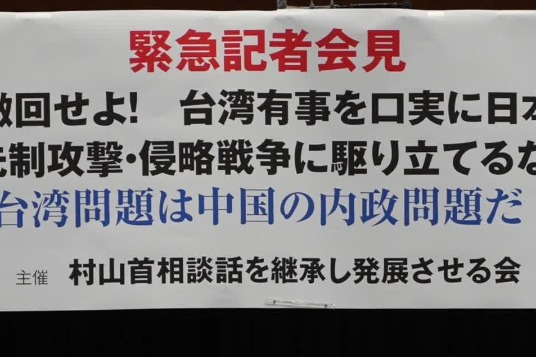
    The critics, speaking at a Monday news conference organized by the Association for Inheriting and Propagating the Murayama Statement, emphasized that Takaichi’s remarks represent a dramatic departure from Japan’s longstanding diplomatic position. They specifically cited violations of the 1972 China-Japan Joint Statement and postwar international agreements that have governed Tokyo-Beijing relations for decades.

    International relations scholar and former diplomat Kazuhiko Togo underscored that Taiwan-related commitments in the 1972 agreement resulted from rigorous bilateral negotiations, and China has consistently expected Japanese adherence to these terms.

    The Association, established in 2013 to promote reflection on Japan’s wartime aggression and colonial history, expressed particular concern through its secretary-general Takakage Fujita. He stated that Takaichi’s suggestions regarding potential Japanese military response to a ‘Taiwan contingency’ marked the first time a sitting prime minister has openly discussed wartime postures in parliament, fundamentally contradicting Japan’s postwar peace commitments.

    Political economist Kazuhiko Uekusa highlighted the administration’s contradictory stance, noting that Takaichi initially claimed her November 7 remarks didn’t represent official government policy before later asserting they aligned with Japan’s established diplomatic position.

    Opposition leaders have joined the criticism, with Social Democratic Party leader Mizuho Fukushima declaring the Prime Minister’s comments on ‘survival-threatening situations’ unconstitutional during a Sunday meeting in Fukushima. Fukushima demanded both retraction and resignation according to Mainichi Shimbun reports.

    Experts warn that Takaichi’s security agenda—including defense budget increases for ‘enemy base strike capabilities,’ arms export rule revisions, and proposed intelligence legislation—collectively pushes Japan toward dangerous confrontation and unchecked military expansion. Professor Emeritus Masakatsu Adachi cautioned that these moves effectively strengthen domestic information control while pushing the nation ‘toward war.’