分类: politics

  • North Korea could ‘get along’ with US, says Kim Jong Un

    North Korea could ‘get along’ with US, says Kim Jong Un

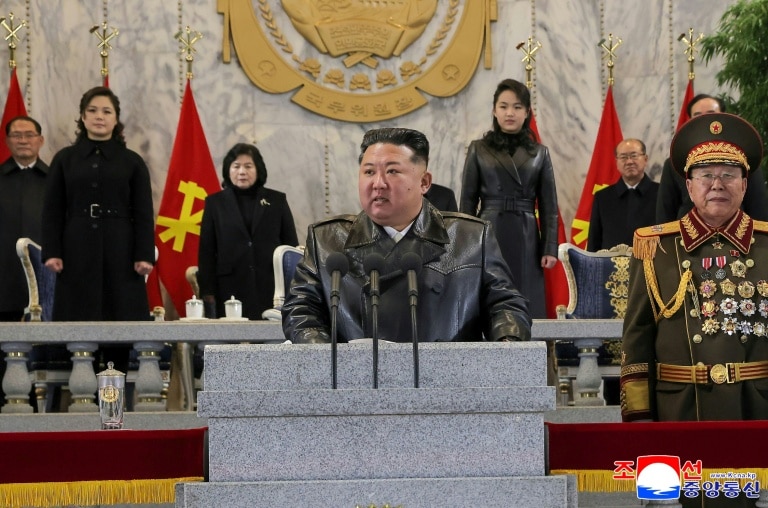
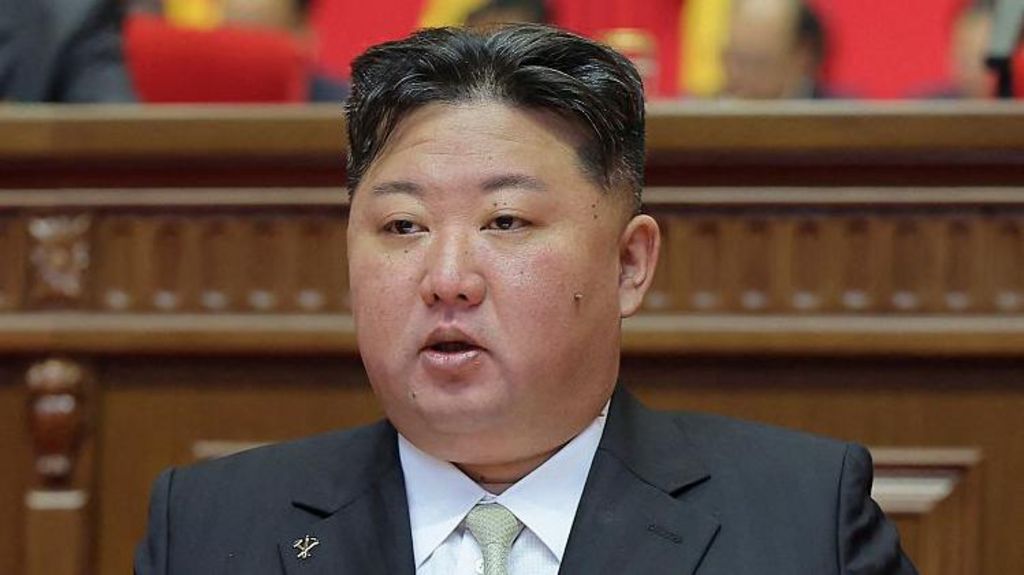
    In a significant address at the Ninth Congress of the Workers’ Party of Korea in Pyongyang, North Korean leader Kim Jong Un presented a dual-track approach to international relations, coupling overt nuclear expansion with conditional diplomatic overtures toward the United States. Kim declared that Washington must formally acknowledge North Korea’s constitutional status as a nuclear power and abandon its ‘hostile policy’ for bilateral relations to normalize.

    The reclusive leader framed the future of US-North Korea relations as entirely dependent on American posture, stating Pyongyang stands prepared for either ‘peaceful coexistence or permanent confrontation.’ This carefully calibrated messaging represents the most explicit roadmap for engagement offered to the incoming US administration since diplomatic talks stalled in 2019.

    Simultaneously, Kim adopted an uncompromising stance toward South Korea, designating Seoul as Pyongyang’s ‘most hostile entity’ and permanently excluding it from the ‘category of compatriots.’ He advised South Korea that its only path to security lay in complete disengagement from inter-Korean affairs.

    Military analysts note Kim’s explicit directive to ‘increase the number of nuclear weapons and expand nuclear operational means’ signals continued defiance of international sanctions. The Stockholm International Peace Research Institute estimates North Korea currently possesses approximately 50 assembled warheads with fissile material for 40 additional devices.

    The geopolitical context surrounding Kim’s address gains significance ahead of former President Trump’s anticipated visit to China in April. Trump’s 2025 global security strategy notably omitted denuclearization of the Korean Peninsula as an objective—a departure from two decades of consistent US policy—fueling speculation about potential renewed diplomacy.

    Notably, Kim’s teenage daughter Ju Ae appeared alongside her father during closing ceremonies, wearing matching military attire. Her prominent visibility follows assessments from South Korea’s National Intelligence Service suggesting she’s being groomed as political successor, though her exact role remains unclear.
  • US and Iran to hold a third round of nuclear talks as more American forces deploy to the Mideast

    US and Iran to hold a third round of nuclear talks as more American forces deploy to the Mideast

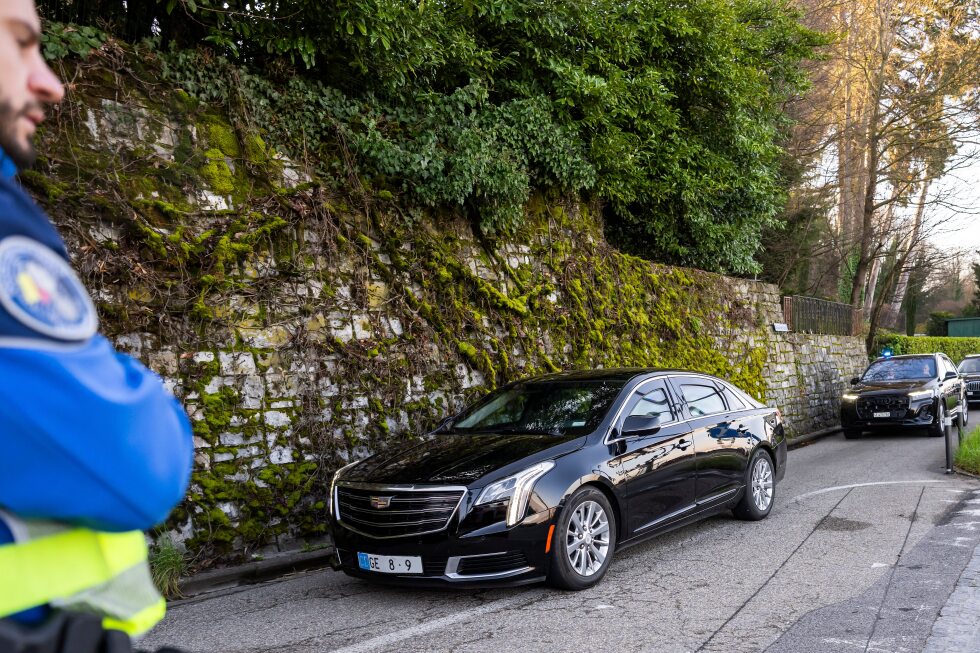
    GENEVA — Diplomatic efforts to address Iran’s nuclear program resumed Thursday as Iranian and American officials convened in Geneva for high-stakes negotiations, occurring against a backdrop of intensified military posturing and regional instability. The talks represent what many observers consider a final opportunity for peaceful resolution before potential military confrontation.

    The United States has significantly bolstered its naval and aerial presence throughout the Middle East, a strategic maneuver intended to pressure Tehran into accepting constraints on its nuclear activities. President Donald Trump seeks to capitalize on Iran’s domestic vulnerabilities, including widespread civil unrest that erupted during nationwide protests last month.

    Iran maintains its right to uranium enrichment despite substantial damage to its nuclear infrastructure from American airstrikes in June during last year’s twelve-day conflict. Iranian officials have issued stark warnings that any U.S. military action would trigger retaliatory strikes against American bases across the region, potentially endangering tens of thousands of U.S. personnel and escalating into a broader regional war involving Israel.

    Iranian Foreign Minister Abbas Araghchi characterized the potential conflict as “devastating” with “no victory for anybody” in remarks to India Today prior to his departure for Geneva. He emphasized that American military installations throughout the region would make widespread engagement inevitable.

    This third round of discussions since June’s hostilities again features Omani mediation, with Sultanate officials facilitating communication between the parties. Araghchi consulted with Omani Foreign Minister Badr al-Busaidi upon arriving in Geneva Wednesday evening to review proposals based on principles established during previous negotiations.

    The current American negotiating position, conveyed through special envoy Steve Witkoff—a billionaire real estate developer and Trump confidant—includes demands for complete cessation of uranium enrichment, restrictions on ballistic missile development, and curtailment of Iran’s support for regional militant groups. Tehran insists discussions must remain exclusively focused on nuclear matters.

    U.S. intelligence assessments acknowledge Iran has not resumed weapons-grade enrichment since June’s attacks but indicates the country has undertaken preparatory activities that could facilitate nuclear weapon development. Satellite imagery analysis suggests Iranian technicians are conducting assessment and potential recovery operations at previously bombed facilities, though International Atomic Energy Agency inspectors remain barred from these sites.

    The potential consequences of failed diplomacy extend beyond direct military confrontation. Recent fluctuations in global oil prices reflect market concerns about possible Iranian retaliation against Persian Gulf shipping lanes, particularly the strategically vital Strait of Hormuz through which twenty percent of globally traded oil passes.

  • Orbán accuses Ukraine of disrupting oil supplies to Hungary

    Orbán accuses Ukraine of disrupting oil supplies to Hungary

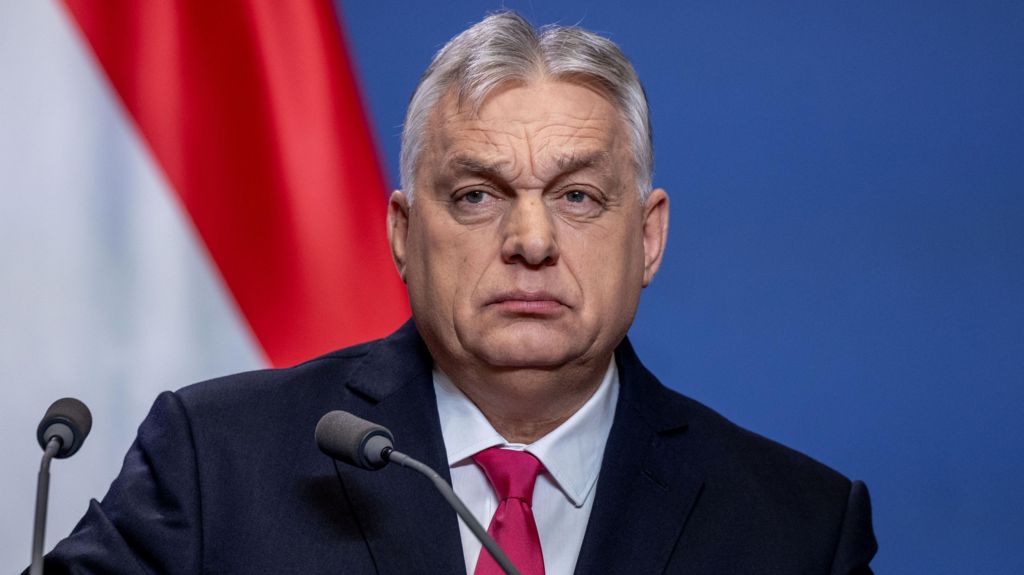
    Hungarian Prime Minister Viktor Orbán has ordered the deployment of military personnel to secure critical energy facilities nationwide following allegations that Ukraine is deliberately obstructing oil shipments through the Druzhba pipeline. The strategic conduit, which serves as Hungary and Slovakia’s primary supply route for Russian crude, has remained inoperative since January 27th after Kyiv cited technical disruptions caused by Russian strikes.

    Orbán contends that Ukraine’s actions constitute a politically motivated ‘oil blockade’ designed to pressure Budapest, asserting that Kyiv is ‘preparing further actions’ to compromise Hungary’s energy security. These claims emerge despite Ukraine’s ongoing struggle with severe power shortages resulting from intensified Russian attacks on its energy infrastructure.

    While Ukraine maintains its position that pipeline operations were suspended due to combat damage, Orbán’s government has implemented comprehensive security measures including military deployment at energy stations, enhanced police patrols at power facilities, and a drone ban in northeastern border regions adjacent to Ukraine.

    The European Commission has confirmed that alternative supply arrangements through Croatia’s Adria pipeline currently ensure adequate oil supplies to both Hungary and Slovakia. Commission spokesperson Anna-Kaisa Itkonen stated the pipeline possesses sufficient capacity to fully meet both nations’ requirements without Russian crude.

    Political analysts suggest Orbán’s heightened rhetoric may connect to domestic political pressures, with his Fidesz party trailing in polls ahead of April elections. This tension recently manifested in Hungary’s veto of a €90 billion EU aid package to Ukraine, directly referencing the pipeline dispute.

  • Why some Democrats are trying to curb a war powers vote on Trump’s Iran strikes

    Why some Democrats are trying to curb a war powers vote on Trump’s Iran strikes

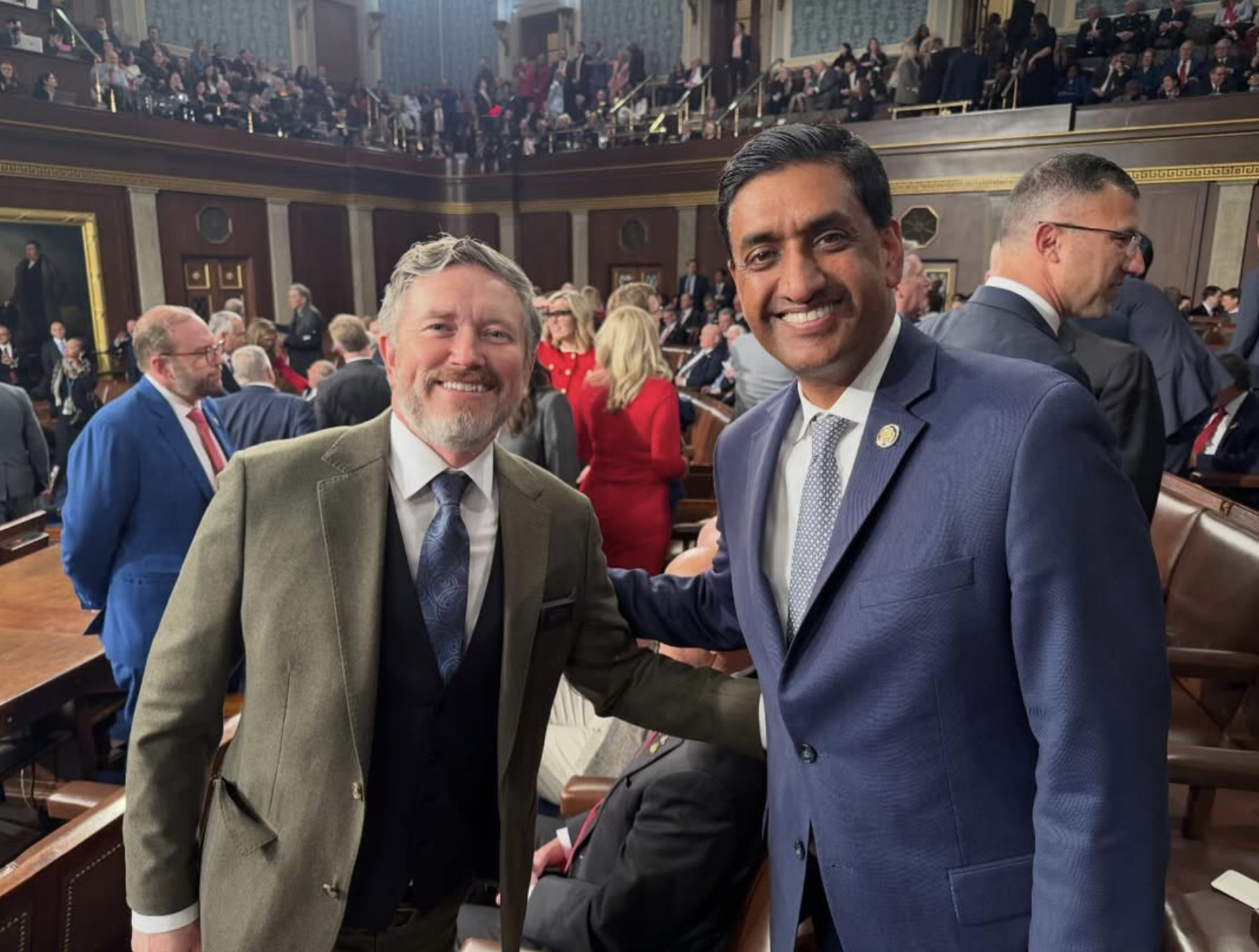
    In a remarkable display of cross-aisle cooperation, Democratic Representative Ro Khanna and Republican Representative Thomas Massie sat together during Tuesday’s State of the Union address, demonstrating rare bipartisan unity against potential military action in Iran. This unusual pairing occurred as President Trump simultaneously threatened Iran with military force while claiming the U.S. had already destroyed Iranian nuclear sites in June.

    The two legislators, despite their divergent political ideologies—Khanna being a progressive who has denounced the situation in Gaza as genocide, and Massie an anti-war Trump critic—have collaboratively initiated a War Powers Resolution to force congressional accountability regarding potential U.S. strikes on Iran. Their effort seeks to compel every member of Congress to formally declare their stance on military engagement with Iran.

    However, this legislative maneuver has encountered delays amid reports that Democratic leadership is attempting to curtail the effort. The 1973 War Powers Act enables any senator to introduce resolutions withdrawing U.S. armed forces from unauthorized conflicts, emphasizing that congressional approval—not executive authority—should determine military engagements.

    Since the 9/11 attacks, the ambiguous nature of the global “war on terror” has permitted successive administrations to conduct military operations from Somalia to Pakistan without formal congressional declarations of war. Khanna emphasized the urgency of their resolution in a February 18 social media post, noting Trump officials allegedly estimated a 90% probability of strikes against Iran.

    Establishment Democrats, many of whom have consistently condemned Iran while hesitating to criticize Israel’s actions in Gaza, appear reluctant to support the resolution. Meanwhile, Iran has expressed preference for diplomatic solutions that preserve its sovereign defense capabilities, despite preparing for potential conflict with the United States—tensions largely fueled by Israeli influence.

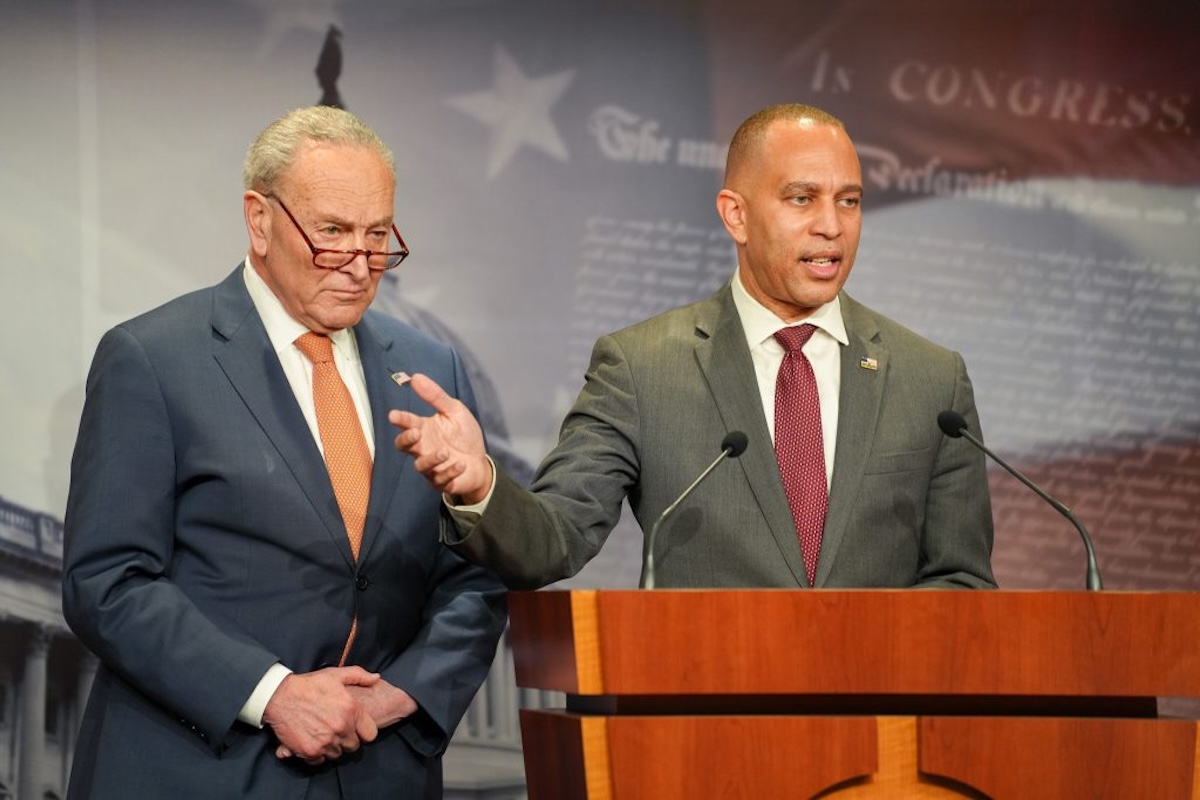
    Following closed-door briefings on Iran developments with Secretary of State Marco Rubio and CIA Director John Ratcliffe, Senate Democratic leader Chuck Schumer described the situation as “serious,” requiring the administration to justify its position to the American public. Schumer’s previous statements acknowledge Iran’s concerning activities but stress the necessity of enforcing the War Powers Act to ensure congressional consultation and public transparency.

    The political calculus becomes increasingly complex as lawmakers approach midterm elections, which will serve as the first significant referendum on Trump’s second term. Historical precedent exists for limiting presidential war powers, as both chambers voted to restrict Trump’s authority after the 2020 killing of Iranian commander Qassem Soleimani—a measure Trump ultimately vetoed.

  • Hong Kong tycoon Jimmy Lai wins appeal against fraud conviction

    Hong Kong tycoon Jimmy Lai wins appeal against fraud conviction

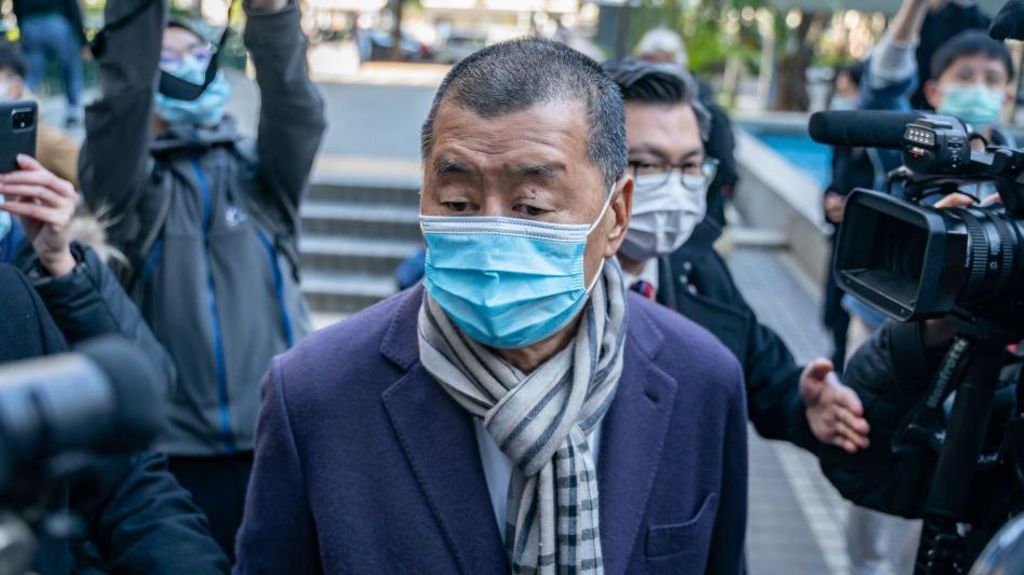
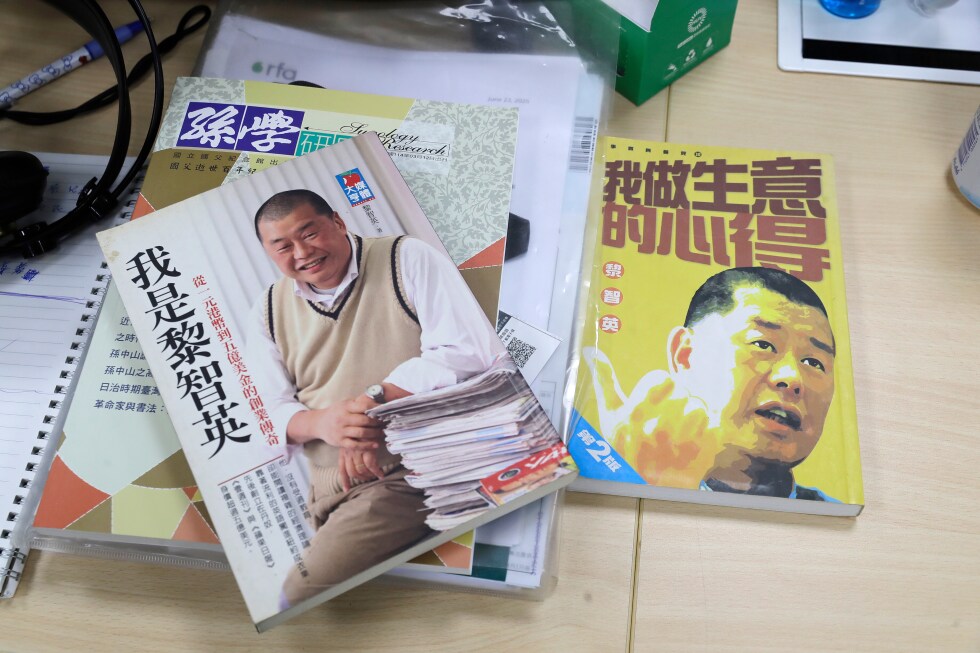
    Hong Kong’s Court of Appeal has overturned the fraud conviction of pro-democracy media magnate Jimmy Lai in a significant judicial development. The court nullified the 2022 ruling that had resulted in a nearly six-year prison sentence for Lai and his co-defendant regarding allegations of illegally subletting office space.

    Despite this legal victory, the 78-year-old British citizen will remain incarcerated under a separate 20-year sentence imposed earlier this month for violating Hong Kong’s national security law through alleged collusion with foreign forces. Lai has been detained since 2020 following his arrest alongside key staff members of Apple Daily, the pro-democracy newspaper he established in 1995 which ceased operations that same year.

    The fraud case centered on prosecutors’ claims that Lai violated lease agreements by permitting his private consultancy firm to operate within Apple Daily’s rented office space. Wong Wai-keung, a former executive at Lai’s media company, received a 21-month sentence in the same case.

    International observers and human rights organizations have expressed concern that Lai’s prosecution exemplifies diminishing civil liberties in Hong Kong since Beijing implemented the national security law in 2020. Both UK and US governments have criticized the legislation as instrument for suppressing activist voices.

    Chinese authorities maintain that the security law is essential for preserving stability and deny allegations that it has eroded Hong Kong’s autonomy. Meanwhile, concerns regarding Lai’s deteriorating health in prison have been raised by his family and rights groups, though Chinese officials assert he receives appropriate medical care.

    The conviction reversal has been met with skepticism by some supporters who note that Lai’s extensive remaining sentence under the security law renders the fraud case outcome largely symbolic.

  • Top Dems reportedly work to sabotage bill to stop Trump Iran war

    Top Dems reportedly work to sabotage bill to stop Trump Iran war

    A significant political confrontation is unfolding in Washington as Democratic leadership faces internal dissent over handling potential military action against Iran. Representatives Ro Khanna (D-CA) and Thomas Massie (R-KY) have introduced a bipartisan war powers resolution requiring congressional authorization for any attack on Iran, responding to President Trump’s military buildup in the Middle East and signals of imminent strikes.

    Despite overwhelming public opposition to war with Iran—with only 27% supporting military action according to a recent YouGov poll—Democratic leadership on the House Foreign Affairs Committee has reportedly worked to suppress the resolution. Multiple sources indicate committee staffers deliberately inflated projections of Democratic opposition, suggesting 20-40 potential defections, to discourage support for the measure.

    Senior Democratic staffers acknowledge leadership employs familiar tactics to delay or sideline votes on contentious foreign policy matters. Rather than openly opposing popular measures, they utilize procedural objections and unity arguments to maintain party consensus. This approach mirrors previous handling of war powers votes that challenge national security establishment positions.

    Notable Democrats including Senate Minority Leader Chuck Schumer have focused criticism on procedural aspects rather than substantive opposition to potential military action. Schumer, a top recipient of AIPAC funding, has emphasized the need for public discussion rather than closed-door briefings but hasn’t questioned the policy itself.

    Similarly, Senator Chris Coons (D-DE) expressed concerns about unclear objectives rather than opposing military action in principle. This positioning occurs as reports indicate Trump considers massive operations potentially including assassination of Iranian leaders, while Iran has warned of retaliatory strikes against US bases.

    Behind the scenes, some Democrats reportedly believe Iran requires military confrontation but prefer Trump bear the political consequences. According to sources, the calculation involves allowing Trump to initiate conflict that would damage both Iran and his political standing.

    The resolution faces additional opposition from pro-Israel Democrats Representatives Jared Moskowitz (D-FL) and Josh Gottheimer (D-NJ), who derided it as the ‘Ayatollah Protection Act’ despite intelligence assessments contradicting their nuclear weapons claims. Iran has expressed willingness to negotiate limits on nuclear development in line with nonproliferation treaties.

    Representative Khanna argues opposition stems from powerful interests seeking regime change in Iran and suggests colleagues avoid contentious positions to prevent targeting by influential donors. He continues rallying support for the resolution, acknowledging challenges in overcoming congressional preference to avoid difficult foreign policy votes.

  • A Hong Kong court quashes fraud conviction of ex-media mogul Jimmy Lai

    A Hong Kong court quashes fraud conviction of ex-media mogul Jimmy Lai

    In a significant judicial development, Hong Kong’s appellate court has overturned fraud convictions against prominent pro-democracy activist and former media magnate Jimmy Lai. The 78-year-old founder of the shuttered Apple Daily newspaper, however, remains incarcerated under a separate national security conviction that carries a 20-year sentence.

    The overturned convictions stemmed from a 2022 case where prosecutors alleged Lai’s consultancy firm improperly used office space leased by his media organization for publication purposes. The original trial court had sentenced Lai to five years and nine months imprisonment and imposed a HK$2 million fine, finding that he had used his media operations as a ‘protective shield’ to violate lease agreements.

    Appellate judges determined that prosecutors failed to establish beyond reasonable doubt that the defendants had made false representations, resulting in the dismissal of both fraud convictions. This ruling may marginally reduce Lai’s overall prison term, as the national security case sentencing structure only permits two years of concurrent sentencing.

    Lai’s legal battles have drawn international attention, with UK Foreign Secretary Yvette Cooper characterizing his sentencing as punishment for exercising freedom of expression and calling for his release on humanitarian grounds. The activist’s children have expressed hope that upcoming diplomatic engagements between US President Donald Trump and Chinese leader Xi Jinping might facilitate their father’s release.

    Chinese and Hong Kong authorities maintain that Lai’s national security conviction reflects proper judicial process and emphasize that the security legislation remains essential for regional stability. The case continues to symbolize the broader tensions between Hong Kong’s legal traditions and Beijing’s increasing influence over the territory’s governance.

  • North Korea’s Kim says could ‘get along’ with US but shuns South

    North Korea’s Kim says could ‘get along’ with US but shuns South

    North Korean leader Kim Jong Un has articulated a dual-track diplomatic strategy during the closing ceremonies of the Workers’ Party congress, proposing conditional engagement with the United States while declaring a complete severance of relations with South Korea. The authoritarian leader stated Pyongyang could ‘get along well’ with Washington if the United States formally acknowledges North Korea’s nuclear status as codified in its constitution and abandons its hostile policies toward the regime.

    Kim’s remarks, disseminated through state-controlled media outlet KCNA, contrasted sharply with his belligerent posture toward Seoul, which he designated as ‘the most hostile entity.’ The North Korean leader explicitly declared that inter-Korean relations would be permanently excluded from diplomatic considerations, advising South Korea to ‘give up everything related to us and leave us alone’ for its own security.

    Analysts interpret these statements as signaling Pyongyang’s intention to pursue direct bilateral engagement with the United States while circumventing South Korean intermediaries. Yang Moo-jin, former president of the University of North Korean Studies, noted that Kim’s position clearly indicates rejection of any denuclearization-premised negotiations.

    The diplomatic overture occurs amid speculation that former President Donald Trump might seek another meeting with Kim during potential travels to Asia. Their 2019 Hanoi summit collapsed over disagreements regarding sanctions relief and nuclear concessions. Meanwhile, North Korea has strengthened its international positioning through deepened alliances with Russia and China, notably evidenced by Kim’s appearance alongside Xi Jinping and Vladimir Putin at Beijing’s military parade last year.

    The Workers’ Party congress concluded with a grandiose military parade featuring units that had participated in Russia’s Ukraine campaign and those stationed along the inter-Korean border. Kim utilized the event to reaffirm North Korea’s readiness to launch ‘fierce retaliatory attacks’ against any perceived sovereignty violations, underscoring the regime’s continued prioritization of military capabilities despite economic hardships and international isolation.

  • Canada’s finance minister says US is unlikely to lift tariffs

    Canada’s finance minister says US is unlikely to lift tariffs

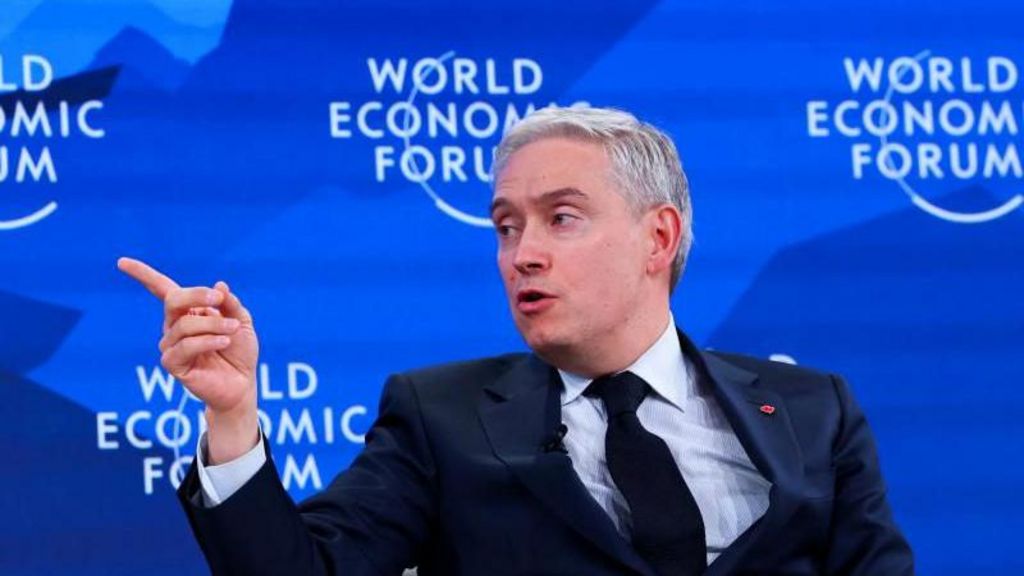
    Canadian Finance Minister François-Philippe Champagne has framed a potential baseline tariff as the necessary cost for maintaining trade flows with the United States, signaling a strategic shift in response to America’s evolving trade policy. This acknowledgment follows President Donald Trump’s State of the Union declaration advocating tariffs as a primary revenue source to replace income taxes.

    The comments align with recent statements from US trade chief Jamieson Greer, who asserted Canada must accept elevated tariff levels to retain business relations. This development comes amid renewed trade tensions triggered by Trump’s imposition of a universal 10% tariff under Section 122 of the 1974 Trade Act—a previously unused mechanism activated after the Supreme Court invalidated his earlier sweeping tariff policy.

    ‘It’s increasingly clear that the American administration expects market access to come at a price,’ Champagne told journalists in Ottawa. ‘Every nation I’m aware of is paying this price, and Canada currently pays the lowest.’

    While Canada maintains exemptions under the USMCA continental trade agreement, it faces heightened tariffs on strategic commodities including steel, aluminum, and softwood lumber. The US trade representative suggested Canada could mitigate these increases by opening protected sectors like dairy to American competition.

    In response to these tensions, Prime Minister Mark Carney has announced ambitions to double non-US exports within the next decade, particularly in automotive and metals industries. This diversification strategy emerges despite the United States remaining Canada’s dominant trading partner, accounting for approximately 75% of all exports.

    The diplomatic recalibration follows Friday’s Supreme Court ruling that declared Trump’s April tariff policy unconstitutional due to presidential overreach. The administration promptly implemented replacement tariffs through Section 122, which authorizes temporary levies of up to 15% for 150 days before requiring congressional approval.

    During his congressional address, Trump envisioned tariffs ‘paid by foreign nations’ eventually supplanting income taxes, potentially reshaping fundamental aspects of US fiscal policy and international trade dynamics.

  • Hillary Clinton to testify in US House panel’s Epstein probe

    Hillary Clinton to testify in US House panel’s Epstein probe

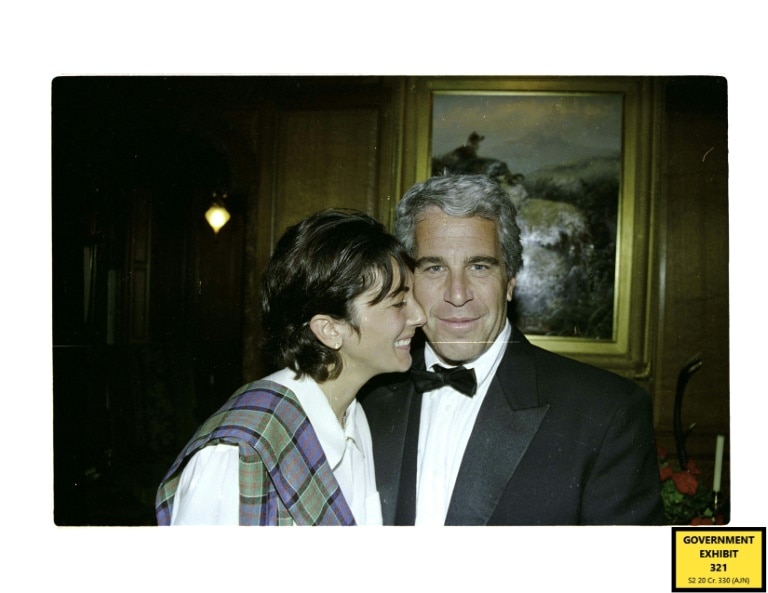
    Former Secretary of State Hillary Clinton is set to provide testimony Thursday before the House Oversight Committee in its investigation concerning the late financier and convicted sex offender Jeffrey Epstein and his associate Ghislaine Maxwell. The deposition, scheduled to occur behind closed doors in Chappaqua, New York, will be followed by questioning of former President Bill Clinton on Friday.

    The Clintons initially resisted subpoenas compelling their testimony but acquiesced after House Republicans threatened contempt of Congress proceedings. Both have maintained their willingness to cooperate while criticizing the investigation’s format. Bill Clinton characterized the private depositions as “pure politics” and comparable to a “kangaroo court,” demanding public hearings instead.

    Hillary Clinton stated in a recent BBC interview that neither she nor her husband has “anything to hide.” She acknowledged limited encounters with Maxwell but denied meaningful interactions with Epstein, suggesting Republicans are using the investigation to divert attention from former President Donald Trump’s associations with Epstein.

    The political dimensions of the probe remain contentious. Democrats allege the investigation serves as a weaponized effort targeting political opponents of Trump, who himself associated with Epstein but hasn’t been summoned to testify. Both Trump and Bill Clinton appear in recently released Epstein-related documents, though mere inclusion doesn’t indicate criminal wrongdoing.

    Bill Clinton has acknowledged traveling on Epstein’s aircraft for humanitarian work in the early 2000s but denied visiting Epstein’s private Caribbean island. Meanwhile, Maxwell’s attorney indicated she would testify publicly if granted clemency, while asserting both Trump and Clinton are “innocent of any wrongdoing.”

    The Epstein case continues generating international repercussions, damaging reputations of prominent figures globally though resulting in limited criminal consequences beyond Maxwell’s 20-year sentence for sex trafficking.