分类: politics

  • About 16,300 cases of eight-point rule violations probed in February

    About 16,300 cases of eight-point rule violations probed in February

    China’s top disciplinary authorities disclosed significant enforcement actions against corruption in February, with nationwide investigations uncovering 16,299 violations of the central leadership’s eight-point decision on improving governance conduct. The announcement made on Thursday reveals the ongoing intensity of Beijing’s anti-corruption campaign.

    The cases spanned all levels of government hierarchy, including three involving provincial or ministerial-level officials and 82 concerning bureau-level cadres. The overwhelming majority—15,135 cases representing 92.9% of the total—involved township-level officials or those holding lower positions, demonstrating the campaign’s comprehensive reach throughout the administrative structure.

    According to joint data released by the Central Commission for Discipline Inspection and the National Commission of Supervision, enforcement actions resulted in 20,350 individuals facing various forms of disciplinary measures. Among these, 14,012 officials received either Party disciplinary sanctions or administrative penalties, reflecting the system’s multi-layered approach to addressing misconduct.

    China’s disciplinary framework employs the ‘Four Forms’ of supervision methodology to handle violations with graduated severity. The system begins with educational interventions for minor infractions, progresses through organizational adjustments for more serious matters, applies heavy sanctions for significant violations, and culminates in judicial proceedings for criminal offenses.

    Analysis of the cases reveals distinct patterns of misconduct. Among formalism and bureaucracy violations, 6,817 cases (85.4% of this category) involved officials failing to fulfill responsibilities, acting recklessly, or engaging in superficial compliance when implementing economic development and environmental protection policies, thereby hindering high-quality development objectives.

    In the hedonism and extravagance category, three primary violation types dominated February’s cases: acceptance of valuable specialty products, gifts, or cash (58.7%); improper dining and drinking activities (21.3%); and illegal distribution of allowances, subsidies, or benefits (10.5%). These figures highlight persistent challenges in enforcing ethical standards among public officials.

  • Trump’s 15-point plan signals deep fear of losing the war

    Trump’s 15-point plan signals deep fear of losing the war

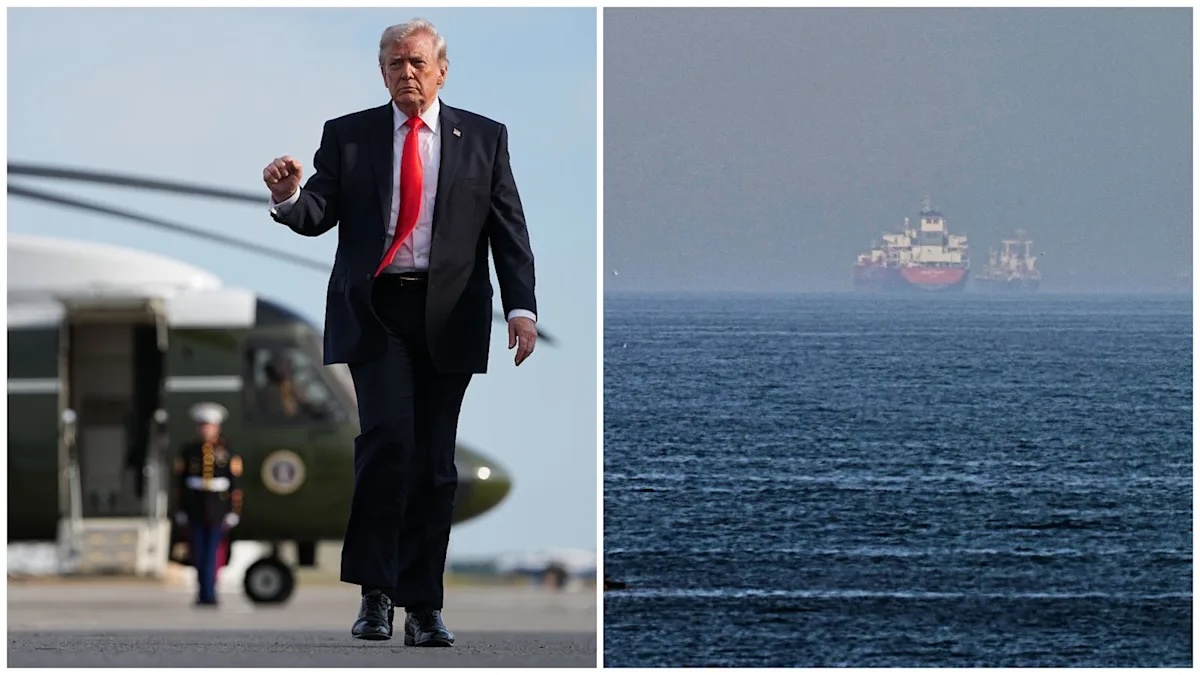
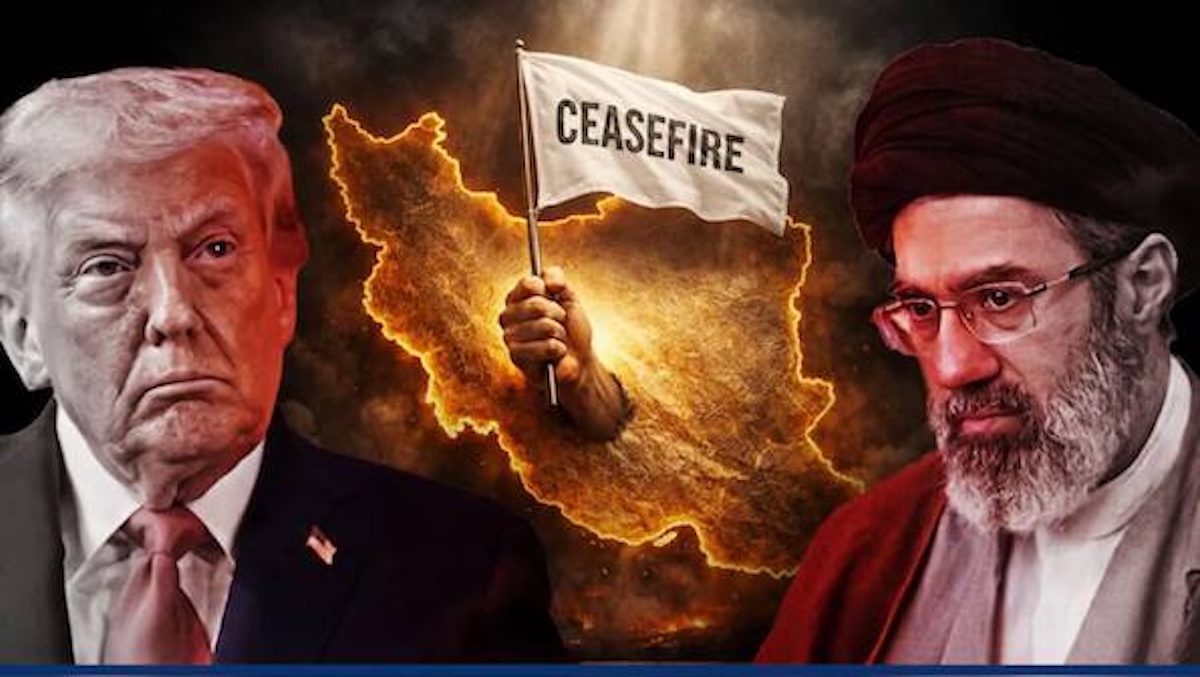
    In a revealing moment of candor, former US President Donald Trump characterized the confrontation with Iran as “a big chess game at a very high level” involving “very smart players” with “high-level intellect.” This acknowledgment stands in stark contrast to Washington’s current approach of resurrecting a previously rejected 15-point plan that Tehran had already dismissed as unrealistic and coercive a year earlier.

    The administration’s renewed push for this roadmap to de-escalation has been met with Iranian dismissal, with Tehran characterizing it as Washington “negotiating with itself.” This disconnect highlights a fundamental strategic misunderstanding of Iran’s capabilities and position in the region.

    Unlike previous adversaries in Middle Eastern conflicts, Iran represents a deeply embedded regional power with resilient institutions, extensive influence networks, and sophisticated asymmetric capabilities. The conflict has exposed critical flaws in the assumption that overwhelming military force can compensate for strategic miscalculation.

    The war faces mounting legitimacy challenges, lacking authorization from either the United Nations or the US Congress. Recent intelligence assessments further undermine Washington’s justification, indicating Iran was not rebuilding its nuclear program following earlier strikes.

    The resignation of National Counterterrorism Center head Joe Kent, who insisted Iran “posed no imminent threat,
    has further damaged the war’s narrative foundation. Domestic support is weakening, with polls showing majority opposition and Republican electoral prospects diminishing ahead of midterm elections.

    International allied support is similarly eroding. The United Kingdom has limited involvement to defensive coordination, while Germany and France have distanced themselves from offensive operations. European allies notably declined a US request to deploy naval forces to secure the Strait of Hormuz, reflecting deteriorating trust in American leadership.

    The conflict has triggered significant economic consequences, destabilizing global markets and driving oil prices and inflation to levels reminiscent of historical energy crises. The potential deployment of additional thousands of US troops to secure Iranian oil infrastructure represents a dangerous escalation that could further fragment the global order.

    Gulf states are increasingly questioning US security guarantees, with some reportedly seeking diversified partnerships with China and Russia—a strategic shift mirroring post-Iraq war realignments.

    Iran’s strategic position strengthens as the conflict prolongs. Operating under asymmetric warfare principles, Tehran need not achieve military victory but simply endure, impose costs, and outlast its adversaries. This dynamic is already visible as the US appears to be seeking diplomatic off-ramps from a position of diminishing leverage.

    The ultimate outcome may hinge not on battlefield successes but on broader considerations of legitimacy, stability, and long-term influence—areas where current trajectories suggest the US and Israel are facing significant strategic setbacks.

  • South Africa disinvited from G7 in France after US pressure: Pretoria

    South Africa disinvited from G7 in France after US pressure: Pretoria

    In a significant diplomatic development, South Africa has been formally disinvited from the upcoming G7 summit in Évian-les-Bains, France, following sustained pressure from the United States government. Presidential spokesperson Vincent Magwenya confirmed to AFP that French authorities withdrew their invitation after American officials threatened to boycott the gathering entirely if South African participation proceeded.

    This exclusion represents the latest escalation in deteriorating relations between Washington and Pretoria, which have been strained across multiple fronts. Tensions have mounted particularly around South Africa’s genocide case against Israel at the International Court of Justice and former President Donald Trump’s controversial assertions regarding the persecution of white Afrikaners in South Africa.

    The diplomatic rift deepened when Trump administration implemented substantial economic measures against South Africa, including imposing 30% tariffs on most South African exports—the highest rate applied to any sub-Saharan nation, though subsequently overruled by the US Supreme Court. Additionally, Trump consistently criticized South Africa’s racial justice policies designed to address historical inequalities, characterizing them as discriminatory against white citizens.

    The original invitation had been extended personally by French President Emmanuel Macron during last year’s G20 summit in Johannesburg. While G7 nations frequently extend participation invitations to additional countries—with Brazil, India, and South Korea included this year—South Africa’s anticipated involvement has now been formally revoked.

    Despite these developments, South African officials emphasized that bilateral relations with France remain unaffected. Magwenya stated, ‘This will have no impact on the strength and close nature of our bilateral relationship with France.’ Regarding US relations, he added that South Africa ‘remains committed to engage constructively with the US,’ noting that diplomatic relationships ‘predate the Trump administration and will outlive the current White House term of office.’

    The diplomatic friction further manifested recently when Pretoria summoned newly appointed US Ambassador Brent Bozell to address his criticism of South Africa’s racial policies and judicial decisions. While the ambassador subsequently acknowledged respect for South Africa’s independent judiciary, the incident highlighted ongoing tensions. South Africa has yet to replace its ambassador to Washington since the expulsion of Ebrahim Rasool in March last year, though officials indicate an appointment is imminent.

  • Russia bans Oscar-winning film ‘Mr Nobody Against Putin’

    Russia bans Oscar-winning film ‘Mr Nobody Against Putin’

    A Russian court in Chelyabinsk has issued a ruling requiring the removal of the Oscar-winning documentary “Mr Nobody Against Putin” from three online streaming platforms, declaring it extremist and terrorist propaganda. The decision marks the latest escalation in Russia’s systematic crackdown on dissenting narratives regarding its war in Ukraine.

    The documentary, a Danish-Czech co-production that recently secured the Academy Award for Best Documentary Feature, provides a stark examination of wartime indoctrination within the Russian educational system. The film utilizes footage captured by Pavel Talankin, a former school events coordinator who subsequently fled Russia in 2024. It documents the pervasive militaristic propaganda implemented in a school near Karabash following the 2022 invasion of Ukraine, including mandatory lessons on weapons handling, mine detection, and ideological lectures on the purported need to “denazify” Ukraine.

    Russian prosecutors successfully argued before the court that the film cultivates a “negative attitude towards the [war in Ukraine] and the current government.” They further condemned its depiction of the white-blue-white flag, a symbol adopted by anti-war activists, labeling it an emblem of a “terrorist organization.”

    This legal action follows earlier condemnation from a Russian governmental human rights body, which alleged the documentary improperly used footage of children without parental consent and vowed to petition the Academy of Motion Picture Arts and Sciences to launch an investigation.

    The film powerfully interweaves scenes of state-mandated patriotism with tragic outcomes, including accounts of Talankin’s former students who enlisted and perished in the conflict. It also chronicles Talankin’s own acts of resistance against the system. In his poignant Oscar acceptance speech, Talankin contrasted the universal hope represented by shooting stars with the grim reality of falling bombs and drones in conflict zones, concluding with a plea to “end all wars for the sake of our future, and for the sake of all our children.”

    The Kremlin has consistently avoided addressing the documentary’s international acclaim. Presidential spokesman Dmitry Peskov stated he had not viewed the film, while President Vladimir Putin, in a separate cultural meeting, criticized Russian cinemas for showing “stupid and unnecessary” foreign films instead of supporting domestic productions. This case exemplifies the intensified repression of dissent and control over information in Russia since the full-scale invasion began, where public opposition to the war can result in lengthy prison sentences.

  • Belarus’ Lukashenko gifts automatic rifle to North Korea’s Kim

    Belarus’ Lukashenko gifts automatic rifle to North Korea’s Kim

    In a significant display of strengthening ties between two of Russia’s key allies, Belarusian President Alexander Lukashenko concluded his inaugural visit to Pyongyang by presenting North Korean leader Kim Jong Un with an automatic rifle as a symbolic gift. The unusual diplomatic exchange, captured in state media footage, showed Lukashenko quipping that the weapon might prove useful “in case enemies appear”—a remark that elicited laughter from both leaders.

    The firearm presentation occurred alongside the signing of a comprehensive “friendship and cooperation” treaty that establishes a new phase in bilateral relations. The agreement encompasses expanded collaboration across multiple sectors including agriculture, information technology, and potentially defense. Kim Jong Un personally orchestrated an elaborate welcome ceremony for Lukashenko, culminating in the North Korean leader accompanying his counterpart to the airport for what state media described as a “warm farewell.

    In reciprocal fashion, Kim presented Lukashenko with an intricately crafted mosaic vase featuring the Belarusian president’s portrait, reportedly fashioned from approximately thirty seashells—a gift emphasizing the ceremonial importance both nations attached to the visit.

    This diplomatic strengthening occurs within the broader context of both nations’ support for Russia’s military operations in Ukraine, with Pyongyang providing troops and weaponry while Minsk facilitated Russia’s initial invasion in 2022. The emerging alliance positions itself as challenging Western hegemony, with both leaders criticizing what they termed “illegitimate pressure” from Western nations and condemning major powers for “ignoring and violating international law norms”—a clear reference to the United States and its allies.

    The developing partnership between Belarus and North Korea represents another strategic realignment in global politics, as both nations align with China and Russia in advocating for a “multipolar world” structure that challenges existing international power dynamics.

  • EU lawmakers approve trade deal with US but add safeguards

    EU lawmakers approve trade deal with US but add safeguards

    BRUSSELS — The European Parliament has formally endorsed a landmark trade agreement between the European Union and the United States, introducing critical safeguard mechanisms designed to protect European interests should Washington fail to uphold its commitments. The decisive vote on Thursday incorporated newly formulated clauses enabling the immediate suspension of the accord if the U.S. engages in activities deemed detrimental to EU objectives, including economic coercion or threats to member states’ territorial integrity.

    Originally negotiated in July at Turnberry, Scotland, by U.S. President Donald Trump and European Commission President Ursula von der Leyen, the agreement established a 15% tariff framework on most goods. This measure successfully averted the implementation of substantially higher import duties that risked triggering global economic instability.

    The impetus for these protective amendments stemmed primarily from recent diplomatic friction concerning Greenland. Trump’s controversial proposition to acquire the semi-autonomous Danish territory provoked widespread condemnation throughout the 27-nation bloc. Although the U.S. administration has temporarily retreated from this position, European legislators determined additional safeguards were necessary.

    Bernd Lange, a German lawmaker who chairs the EU’s parliamentary trade committee, characterized the modifications as ‘weatherproofing’ the Turnberry agreement. ‘If this would happen again, then immediately the tariffs would be installed,’ Lange affirmed during a post-vote press conference.

    The revised deal will undergo further negotiation between EU trade representative Maroš Šefčovič and U.S. counterpart Jamieson Greer during Friday’s World Trade Organization meeting in Yaoundé, Cameroon. Šefčovič emphasized the agreement’s importance ‘delivering real certainty for EU businesses and showing that genuine partnership gets results.’

    Parliamentary approval came through two separate votes, with the first passing 417-154 and the second 437-144, each with numerous abstentions. U.S. Ambassador to the EU Andrew Puzder welcomed the decision as providing ‘stability and predictability’ for transatlantic businesses, while Malte Lohan of the American Chamber of Commerce to the EU described it as ‘a necessary step towards a more predictable transatlantic marketplace.’

    The agreement’s progression follows a temporary suspension by the EU after the U.S. Supreme Court’s February ruling invalidating Trump’s use of emergency powers to impose import taxes. This pause allowed European officials to assess the legal implications of the court decision.

    Transatlantic trade remains a cornerstone of the global economy, with EU-U.S. exchange of goods and services reaching €1.7 trillion ($2 trillion) in 2024—averaging €4.6 billion daily. Major European exports include pharmaceuticals, automobiles, aircraft, and premium beverages, while the U.S. primarily exports energy products, aerospace technology, professional services, and medical equipment to European markets.

    Despite periodic trade disputes, Croatian legislator Željana Zovko noted that transatlantic commerce has demonstrated remarkable resilience, observing that ‘This resilience proves the trans-Atlantic trade works, and if it works, we should strengthen it, not hold it back.’

  • Venezuela’s Maduro back in US court after stunning capture

    Venezuela’s Maduro back in US court after stunning capture

    In a significant development in international relations, former Venezuelan president Nicolas Maduro appeared in a Manhattan federal court for his second hearing since being captured by U.S. forces in a dramatic January raid. The 63-year-old leader and his wife, Cilia Flores, have been detained at Brooklyn’s Metropolitan Detention Center for nearly three months following their extraordinary extraction from Caracas in a military operation involving airstrikes, warplanes, and naval support.

    The courtroom proceedings unfolded as protesters gathered outside the courthouse, displaying an inflatable effigy of Maduro in an orange prison jumpsuit with handcuffs. Meanwhile, legal representatives wrestled with fundamental questions about legal fee payments amid U.S. sanctions that prevent Venezuela’s government from directly financing Maduro’s defense.

    Maduro faces serious charges including four counts of narco-terrorism conspiracy, cocaine importation conspiracy, and weapons violations. Despite his detention, the ousted leader maintains his presidential status and has pleaded not guilty to all allegations, declaring himself a ‘prisoner of war.’

    His defense attorney, Barry Pollack, has challenged the proceedings on constitutional grounds, arguing that the license requirement for legal fee payments violates Maduro’s right to proper representation. The hearing primarily addressed procedural matters rather than substantive evidence.

    Meanwhile, Venezuela undergoes significant political transformation under interim leadership. Delcy Rodriguez, Maduro’s former vice president, now guides the nation through economic challenges while implementing substantial reforms including political amnesty measures and resource regulation changes aligned with U.S. interests. This shift coincides with the State Department’s recent announcement about restoring diplomatic ties with Venezuela, signaling potential normalization of relations between the historically adversarial nations.

  • 8,406 suggestions from national lawmakers forwarded for review

    8,406 suggestions from national lawmakers forwarded for review

    China’s legislative mechanism has commenced the comprehensive review process for 8,406 formal recommendations submitted during the recently concluded National People’s Congress session. According to Xinhua News Agency, all proposals have been systematically forwarded to 206 specialized government departments for detailed evaluation and implementation planning.

    The recommendations originated from deputies participating in the Fourth Session of the 14th National People’s Congress, which convened in Beijing from March 5 to 12, 2026. Legislative analysts have identified several predominant themes emerging from this year’s submissions, reflecting current national priorities and development objectives.

    Prominent among the recommendations were initiatives targeting the acceleration of digital economy expansion, addressing market competition imbalances, and preserving cultural heritage. Additional focal points included establishing multifaceted social support systems, enhancing educational quality standards, and driving industrial transformation toward green and low-carbon operational models.

    The submission of motions and recommendations constitutes a fundamental responsibility of NPC representatives within China’s governance framework. While motions typically represent formal requests for legislative consideration and decision-making, suggestions serve as advisory opinions directed to relevant administrative bodies to improve operational effectiveness and address sector-specific challenges.

    This systematic process demonstrates China’s approach to incorporating grassroots insights into national policy formulation, ensuring diverse perspectives contribute to the country’s development trajectory across economic, social, and environmental domains.

  • Balen Shah’s political rise in Nepal reflects a broader shift after youth-led protests

    Balen Shah’s political rise in Nepal reflects a broader shift after youth-led protests

    Nepal stands at a historic political crossroads as Balendra Shah, the 35-year-old structural engineer turned rap artist turned mayor of Kathmandu, prepares to assume the role of prime minister following his party’s landslide electoral victory. Shah’s Rastriya Swatantra Party (RSP) achieved an unprecedented political mandate, securing approximately two-thirds of the 275 seats in the House of Representatives, the powerful lower chamber of Nepal’s bicameral parliament.

    This remarkable electoral sweep marks the first time in decades that a single party has gained such overwhelming parliamentary dominance. The elected members of RSP formally designated Shah as their leader on Thursday, clearing the path for his appointment by the president and subsequent swearing-in ceremony scheduled for Friday.

    Shah’s ascent represents a fundamental shift in Nepal’s political dynamics, fueled by widespread public disillusionment with established parties accused of systemic corruption and chronic instability. His victory signals a decisive rejection of the traditional political establishment and reflects the growing influence of youth-driven movements that toppled the previous government during last year’s bloody uprising.

    As Kathmandu’s mayor, Shah earned public acclaim for addressing the capital’s garbage management crisis, removing illegal street vendors, and initiating road expansion projects. However, his administration also faced criticism for allegedly demolishing homes and businesses without sufficient planning or notification.

    Before entering politics, Shah gained modest recognition as a rap artist whose music frequently critiqued corruption and social injustice. His tracks “Nepal Smiling” and “Sacrifice” circulated widely on social media platforms, establishing his reputation as a voice against governmental malfeasance.

    Political analysts note that while Shah’s limited national governance experience presents challenges, his substantial parliamentary majority could facilitate legislative progress and reform implementation. His campaign emphasized economic reforms and expanded access to education and healthcare for Nepal’s impoverished communities.

    The new prime minister faces the complex task of managing heightened public expectations while addressing deep-rooted institutional challenges. Supporters view his leadership as a breakthrough from Nepal’s entrenched political order, though questions remain about his ability to translate popularity into effective governance at the national level.

  • Hungary’s government files charges against prominent journalist for alleged espionage

    Hungary’s government files charges against prominent journalist for alleged espionage

    Hungarian authorities have initiated criminal proceedings against Szabolcs Panyi, a distinguished investigative journalist specializing in national security matters. The government alleges he engaged in espionage activities while collaborating with a foreign nation, as announced by a senior minister on Thursday.

    Panyi, known for his extensive reporting on Russian influence operations within Hungary and the connections between Moscow and Hungarian Foreign Minister Péter Szijjártó, has vehemently denied the accusations. The journalist’s employer has characterized the move as authoritarian tactics aimed at discrediting his revelations.

    The controversy stems from a covertly recorded conversation, released selectively through government-aligned media outlets, where Panyi discusses verifying Foreign Minister Szijjártó’s phone number during an investigation into his communications with Russian counterpart Sergei Lavrov.

    This development follows a Washington Post report citing European security officials who claim Szijjártó regularly briefed Lavrov during EU meeting breaks about internal discussions and potential solutions. While Szijjártó acknowledges conversations with Lavrov regarding meeting agendas, he denies providing sensitive information.

    Gergely Gulyás, Chief of Staff to Prime Minister Viktor Orbán, stated that Hungary’s justice minister filed the espionage charges, suggesting Panyi’s journalistic work served as cover for activities potentially amounting to treason.

    The case unfolds against a backdrop of heightened political tension as Orbán’s Fidesz party faces its most significant electoral challenge in 16 years. The government has recently accused Ukrainian authorities of attempting to influence the upcoming April election, while dismissing reports of Russian interference favoring Orbán’s campaign.

    Panyi’s journalistic track record includes previous targeting by military-grade Pegasus spyware, which the Hungarian government admitted deploying against critics. This case has drawn international attention to press freedom concerns in Hungary amid escalating geopolitical tensions surrounding the Ukraine conflict.