分类: politics

  • Queensland Olympics minister Tim Mander stands aside from job amid election scandal

    Queensland Olympics minister Tim Mander stands aside from job amid election scandal

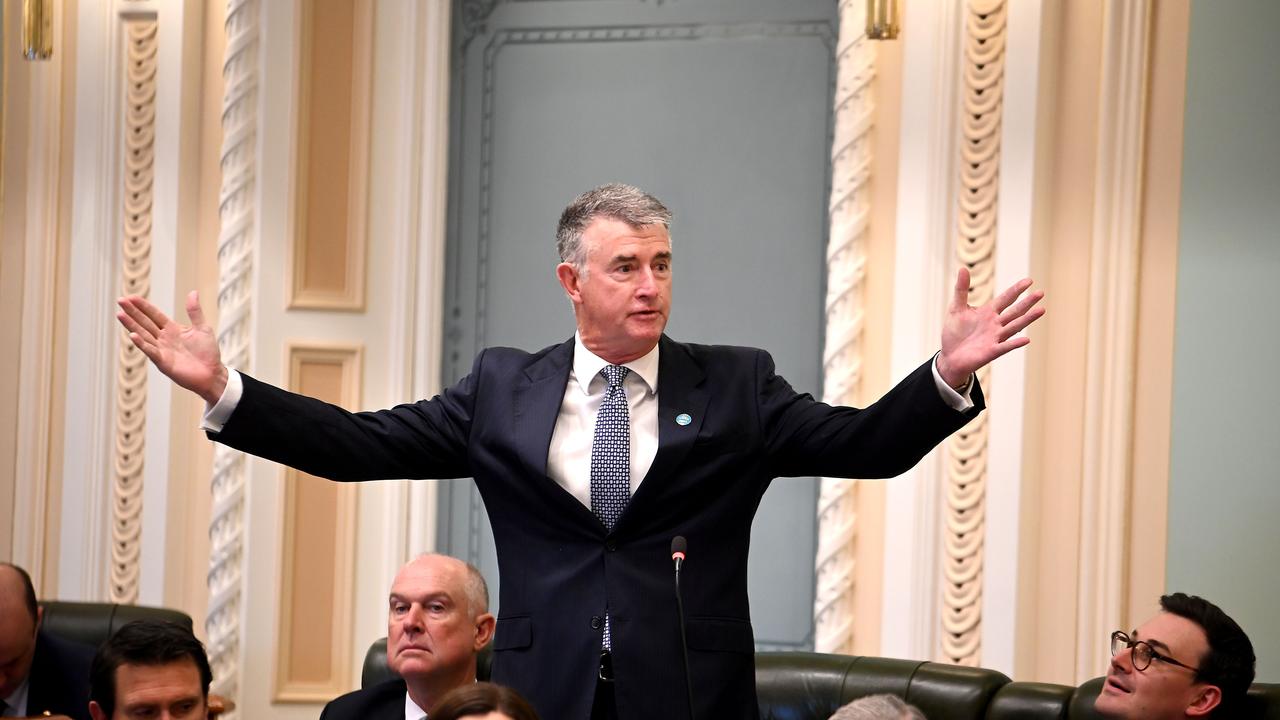
    In a sudden and high-stakes development that has shaken Queensland’s state government, Olympics Minister Tim Mander has stepped aside from his cabinet role, after the Australian Electoral Commission (AEC) referred his case to the Australian Federal Police (AFP) over allegations of a potential electoral offence.

    The controversy centres on claims that Mander, a Liberal National Party politician, incorrectly enrolled to vote at a staffer’s residential address last year, despite never residing at the property for the minimum 30-day period required under Australian electoral law. Under the Commonwealth’s Criminal Code Act 1995, the alleged misrepresentation of an enrolment address qualifies as a potential criminal offence, prompting the AEC to hand the investigation over to federal law enforcement.

    Mander, who was leading preparations for the 2032 Brisbane Olympic and Paralympic Games, released a public statement late Thursday confirming his decision to stand aside. He emphasized that he had self-reported the matter and cooperated fully with inquiries, saying he is confident the investigation will clear his name and disprove accusations from the opposition Labor Party. He added that his choice to step back was driven by a desire to avoid distracting the government from its core policy and operational work.

    The allegations first emerged in reporting by *The Australian*, after which Mander faced sustained pressure and criticism from Labor rivals. Addressing the Queensland parliament on April 21, Mander explained that the enrolment confusion grew from a period of personal upheaval following a marriage separation more than a year prior. He noted that he updated the Queensland Electoral Commission with his correct permanent address once his living situation stabilized, and has always complied with the state electoral body’s requirements.

    Queensland Premier David Crisafulli was briefed on the AEC’s advice at midday Thursday, and accepted Mander’s decision to stand aside from cabinet. The 2032 Olympics and Paralympics portfolio has now been transferred to Tourism Minister Andrew Powell, who will oversee ongoing preparations for the global sporting event until the investigation concludes.

    In its official statement, the AEC confirmed that the referral relates to a potential breach of the Criminal Code Act 1995, and determined that the AFP was the appropriate body to lead the probe. An earlier version of this reporting incorrectly stated that Mander had resigned permanently, but a spokesperson for his office later clarified that he is stepping aside only temporarily while the matter is resolved.

  • ‘Ready for violence’: Serbian hooligans target protesters

    ‘Ready for violence’: Serbian hooligans target protesters

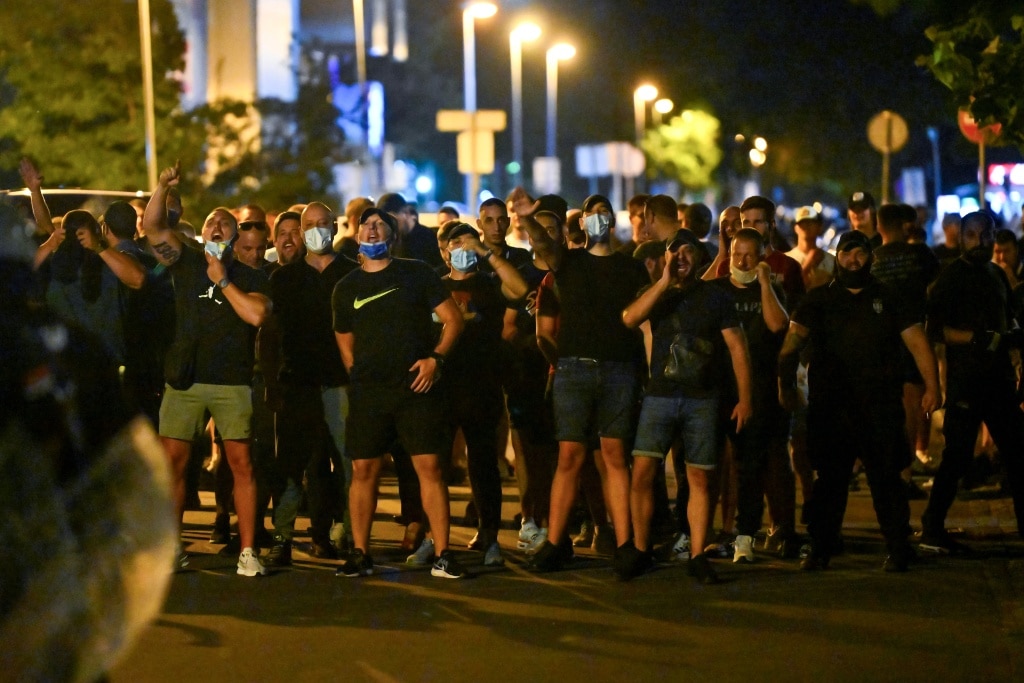
    For over a year, Serbia has been roiled by mass, student-led anti-government demonstrations that have grown into one of the largest political challenges to President Aleksandar Vucic’s administration since the fall of Slobodan Milosevic in 2000. What began as calls for a transparent public inquiry into the November 2024 railway station canopy collapse that killed 16 people has snowballed into a broader movement demanding early national elections – and as the protests have expanded, so too has targeted violence against movement participants.

  • Montenegro at 20: After breaking with Serbia and joining NATO, EU is the next frontier

    Montenegro at 20: After breaking with Serbia and joining NATO, EU is the next frontier

    This week, the small Balkan nation of Montenegro is holding nationwide celebrations to commemorate two decades of full independence following its split from the state union with Serbia. Over the past 20 years, the country has already achieved one major strategic milestone by joining the North Atlantic Treaty Organization, and now it is laser-focused on its next ambitious goal: full integration into the European Union.

    In an interview with the Associated Press on the sidelines of national independence festivities, Montenegrin President Jakov Milatovic framed NATO membership as a defining achievement for the young nation. He expressed unwavering confidence that Montenegro, a country with a total population of just 623,000, will meet its target of becoming the 28th member of the 27-nation EU by 2028. This goal has become so central to the country’s national agenda that the motto “28 by 28” has even been painted on the fuselage of one of Montenegrin national airline’s aircraft. “We can achieve it,” Milatovic stated from his office in the capital Podgorica. “I am optimistic about it.”

    Known for its dramatic, turquoise Adriatic coastline and rugged, towering mountain ranges, Montenegro is hosting concerts, community events and formal celebrations across Podgorica and smaller towns throughout the country this week to mark the historic anniversary of the 2006 independence referendum.

    The path to independence was far from unified two decades ago. After a decade of regional conflict that accompanied the dissolution of Yugoslavia, capped by the 1999 NATO bombing campaign to end the Kosovo War, Montenegro held its independence referendum on May 21, 2006. The final result was narrow: 55.5% of voters backed splitting from the State Union of Serbia and Montenegro to form an independent Montenegrin state.

    The split exposed deep divisions across the country, given Montenegro’s centuries-long cultural, political and social ties to Serbia. Roughly one-third of the population identifies as ethnically Serb, the two nations share the Eastern Orthodox Christian faith, their languages are mutually intelligible, and they have a long history of political alliance. The independence movement was led by longtime Montenegrin leader Milo Djukanovic, who guided the country into NATO and shifted its geopolitical alignment away from Russia, another historic Slavic ally.

    Milatovic emphasized that the 2006 referendum put Montenegrins in control of their own future, laying the groundwork for all progress that has followed. “The major progress probably happened when the country became a part of NATO in 2017,” he added. “Being a part of NATO for a small country like Montenegro is very important because NATO is indeed a security guarantee for our independence and statehood.”

    Today, Montenegro stands as the leading candidate for EU accession among the six Western Balkan nations that are at varying stages of the membership process. The EU has already established a specialized working group to draft Montenegro’s accession treaty, a clear signal that membership is within tangible reach. EU leaders are expected to reaffirm their support for Western Balkan integration at a summit of candidate country leaders to be held in the coastal Montenegrin town of Tivat in early June, where delegates from Albania, Bosnia-Herzegovina, North Macedonia, Serbia and Kosovo will also gather. Multiple other countries, including Ukraine, also hold candidate status and aim to join the bloc in the coming years.

    Milatovic noted that public support for EU membership in Montenegro remains very high, hovering around 80%. However, he acknowledged that the country still needs to complete a series of key democratic and economic reforms, and the speed of progress moving forward “is now entirely up to Montenegro.”

    Challenges remain substantial on the road to accession, according to Jovana Marovic, Montenegro’s former European integration minister. The country has been an official EU candidate since 2010, and a top unmet priority is strengthening democratic state institutions to meet EU standards. “What was missing in the last 14 years, we have to provide now just in six months,” she said. “So it’s really demanding, but the process is going on.”

    For ordinary Montenegrin citizens, improving economic conditions and raising living standards are the most pressing priorities. While Montenegro has already adopted the euro as its national currency and made significant democratic strides, its economy remains small and disproportionately reliant on the seasonal tourism industry. Zorana Popivoda, a 28-year-old Montenegrin, praised the restoration of independence but echoed widespread economic frustration: “then you go into a store and you see that you can buy absolutely nothing.”

    Milatovic, a 39-year-old economist who took office in 2023, criticized previous administrations for failing to move faster on democratic reforms and crack down on endemic organized crime and corruption in the early years of independence. “I think that over the last 20 years, we can objectively say that the country experienced progress,” he said, “but also that Montenegro had a number of missed opportunities.” Moving forward, the president’s administration is committed to meeting the 2028 accession target and delivering tangible improvements to the lives of all Montenegrin citizens.

  • In many ways, Brits admire the US. But as America hits 250, they say one man defines it: Trump

    In many ways, Brits admire the US. But as America hits 250, they say one man defines it: Trump

    As the United States marks 250 years of formal independence from British rule, a year-long, on-the-ground survey of British public opinion by The Associated Press across the country — stretching from George Washington’s ancestral estates near the Scottish border to the urban hubs of Cambridge, Bristol, and London — reveals a striking, unanimous conclusion: it is impossible to talk about contemporary America without centering its 47th President, Donald Trump. The reporting found that even Britons who back some of Trump’s policy positions frame their entire view of the U.S. around his tenure, and his influence has reshaped the centuries-old “special relationship” between the two nations.

    When asked “What do you think of America now?”, nearly every respondent opened with a deliberate pause before turning to coded or direct commentary on Trump and his second term. Phrases like “Your president…” and “The current state of politics…” are the universal opening, a pattern that itself reveals how deeply Trump has skewed British views of their former colony. “It’s Trump’s world now, isn’t it?” noted Mark Keightley, a printer technician working in Cambridge, roughly an hour north of London.

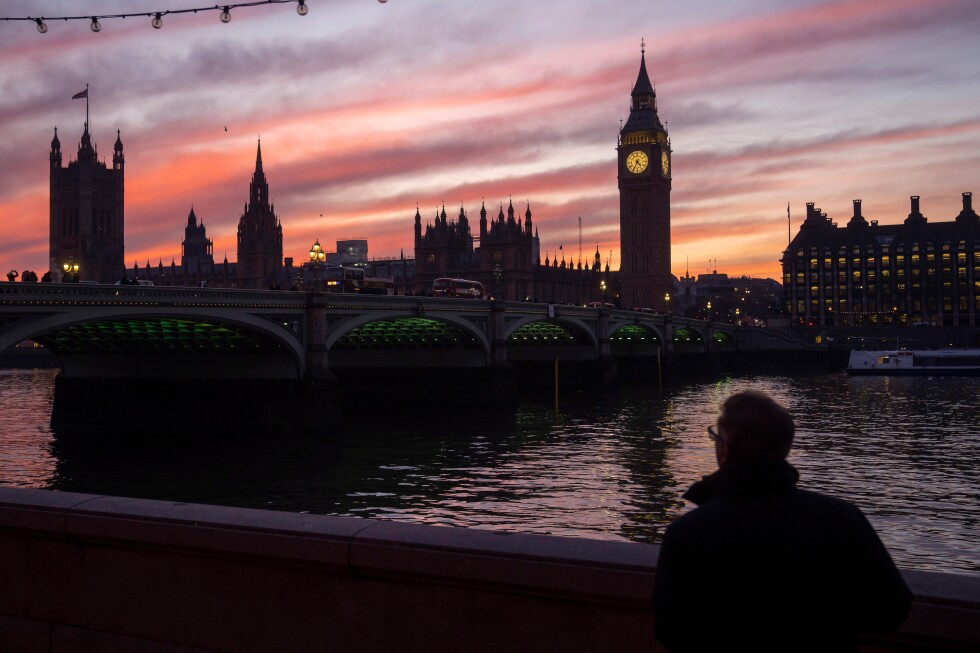
    Eddie Boyle, a resident of Falkirk, Scotland, speaking while crossing London’s Westminster Bridge, summed up a common sentiment: “My own opinion of America is now dictated by the president and he’s not covering himself in glory as far as I’m concerned. It’s a shame that such a long arrangement between the two countries has been tarnished.”

    Disappointment among Britons with the direction of the American experiment is not a new trend. As far back as 1842, famed British author Charles Dickens left his widely celebrated U.S. lecture tour — where he earned a substantial fortune from public readings — frustrated and disappointed by the young nation. Outraged by the continuation of chattel slavery, which Britain had abolished a decade earlier in 1833, Dickens also condemned what he saw as a debased American press, calling it more “mean, and paltry, and silly, and disgraceful than any country I ever knew.” He famously wrote to a friend, “This is not the Republic I came to see. This is not the Republic of my imagination. In every respect but that of National Education, the Country disappoints me.”

    Over two and a half centuries, the U.S.-U.K. relationship has evolved through multiple defining turning points that cemented America’s status as a global power. The War of 1812, a rematch of the Revolutionary War, ended in a stalemate but proved the young nation could hold its own against British military and economic power, establishing it as a permanent global actor. The U.S. survival through its Civil War, followed by its critical role in helping Britain defeat Nazi Germany in World War II, solidified the alliance. Decades later, the close partnership between U.S. President Ronald Reagan and British Prime Minister Margaret Thatcher helped bring about the 1991 collapse of the Soviet Union, a joint achievement still recognized by many Brits today. “They did something great there,” said Maria Miston of Suffolk, speaking near London’s Big Ben. “They actually managed to bring the Cold War to an end.” Still, Miston argued that America’s global standing has declined steadily since the 2003 U.S.-led invasion of Iraq: “We’ve just gone backwards since then.”

    In Trump’s second term, the decades-old “special relationship” has undergone a fundamental reorientation. Trump has had a tense relationship with British Prime Minister Keir Starmer, dismissing him publicly as “not Winston Churchill” after Starmer refused to commit British forces to a U.S. conflict with Iran. The president has repeatedly suggested he views King Charles III, not the elected prime minister, as his equal peer. Last year, Trump accepted an unprecedented second state visit invitation from the king, which included a state dinner at Windsor Castle, and he welcomed Charles for a return visit to Washington earlier this year. During his U.S. trip, Charles emphasized that the 250-year bilateral relationship “is more important today than it has ever been,” while also making a public case for the importance of democratic checks and balances — widely interpreted as an implicit rebuke of Trump. The White House drew international attention when it posted on social media describing the pair as “TWO KINGS,” a jab likely aimed at the anti-monarchy “No Kings” rallies that drew large crowds across the U.S. during Charles’ visit. The irony was not lost on Britons: the U.S. was founded on the rejection of monarchy, specifically rule by King George III, Charles’ five-times great-grandfather. Back in the U.K., pre-visit polling showed majority public opposition to Charles’ U.S. trip, but the king’s performance won broad praise as a deft display of soft power, even amid well-documented tensions over climate policy and Trump’s repeated playful (yet provocative) threat to annex Canada — a Commonwealth realm where Charles is head of state. Rock star Rod Stewart summed up a common British view when he told Charles at a May gala, within earshot of reporters: “May I say, well done in the Americas. You were superb, absolutely superb, put that little rat bag in his place.”

    National polling confirms that British views of the U.S. have soured sharply during Trump’s second term. A Gallup poll conducted in late 2025 found just 28% of British adults approve of U.S. global leadership, with 68% holding a negative view. That number is roughly on par with approval during Trump’s first term, and far lower than the 45% approval recorded during Democratic President Joe Biden’s tenure. Pew Research Center’s 2025 Spring Global Attitudes Survey echoes this shift: while two-thirds of British adults held a favorable view of the U.S. in the first two years of Biden’s presidency, that number fell to 54% by spring 2024, and sits at just 50% in 2025. This is not the first period of strain between the two nations: the 1956 Suez Crisis marked a defining shift, when British power declined and American global dominance became the new global order, and a decade later London rejected U.S. pressure to join the Vietnam War.

    For decades, following American politics has functioned as a national spectator sport in Britain, a way to watch the world’s oldest modern democracy evolve from across the Atlantic. Today, Britons still acknowledge a long list of American qualities they admire: national ambition, unprecedented economic wealth, unmatched military power, the sheer scale of the country, its global cultural output from television to music to film, and its political resilience even after crises like the January 6, 2021 Capitol insurrection. But alongside those positive perceptions are longstanding points of confusion and criticism. Topping the list for many is America’s persistent gun violence, which is nearly incomprehensible to Brits: the country banned private handgun ownership in 1997, after a mass shooting at a Scottish school that killed 16 children. Many Britons also express confusion at hardline U.S. immigration crackdowns, given the United States was founded by immigrants — even as the U.K. grapples with its own domestic debates over unauthorized migration.

    On the 250th anniversary of American independence, Trump remains the central point of fascination and confusion for most British respondents. Discussing Trump is also a socially sensitive topic in the U.K., where Brexit has left deep political divisions and populist reform movements aligned with Trump’s agenda have gained ground in recent local elections. At The Cross Keys pub in Washington, England — a small town located just downhill from George Washington’s ancestral family home — local resident Mark Gibson sipped a pint and summed up the widespread confusion: “How can someone like that become president?” Gibson said he could rationalize the election of other American leaders, even when he disagreed with them, but Trump’s history of business bankruptcies and repeated legal scandals leave him bewildered. “I don’t understand it. He’s had bankruptcies and legal troubles,” Gibson said. “But, I guess that’s what people wanted. They elected him twice.”
  • Trump says Iran talks in ‘final stages’ to end war, as Tehran weighs proposal

    Trump says Iran talks in ‘final stages’ to end war, as Tehran weighs proposal

    A new push for a diplomatic resolution to ongoing conflict between the United States and Iran has entered its final phases, according to former U.S. President Donald Trump, even as hardening rhetoric and competing military moves in the strategically critical Strait of Hormuz keep regional tensions elevated. Speaking to reporters on Wednesday, Trump confirmed that negotiations between Washington and Tehran have advanced to the closing stages, warning that failure to reach a binding agreement could trigger harsh retaliatory measures from the U.S. “We’re in the final stages of Iran. We’ll see what happens. Either have a deal or we’re going to do some things that are a little bit nasty, but hopefully that won’t happen,” he told the press pool.

    Iranian officials have formally acknowledged receipt of a new U.S. peace proposal, confirming that Pakistan’s interior minister is currently in Tehran to serve as a neutral intermediary for communications between the two governments. Key regional U.S. partner Saudi Arabia has publicly welcomed Trump’s commitment to exploring diplomatic solutions, issuing a statement urging Iranian leadership to seize the opportunity to reach a negotiated settlement.

    In a reveal exclusive to Middle East Eye, Trump last week scrapped a pre-planned military strike on Iran after intense pushback from Gulf regional allies and senior members of his own national security team, who argued that launching an attack during the annual Hajj pilgrimage would carry unacceptable humanitarian and political risks. Trump later confirmed this account to reporters, noting that Gulf leaders had persuaded him to hold off on offensive action, and he would wait several additional days for a formal response from Tehran. The U.S. leader also held a diplomatic call with Turkish President Tayyip Erdogan; a readout from Erdogan’s office confirmed the Turkish leader backed the extended ceasefire and expressed confidence that a mutually acceptable negotiated solution to the conflict could be achieved.

    Trump’s public posture toward Iran has remained inconsistent in recent weeks, shifting sharply between optimistic claims that a breakthrough settlement is imminent and blunt threats to resume large-scale military hostilities. Iranian hardline leaders have pushed back against U.S. overtures, with parliament speaker Mohammad Bagher Ghalibaf issuing a stark warning that any renewed U.S. war effort would be met with a forceful Iranian response. The Islamic Revolutionary Guard Corps (IRGC) has additionally cautioned that any new conflict would quickly spread far beyond the boundaries of the Middle East. In an audio message carried by multiple Iranian state media outlets, Ghalibaf said, “The enemy’s movements, both overt and clandestine, show that despite economic and political pressure, it has not abandoned its military objectives and is seeking to start a new war.”

    Beyond diplomatic posturing, tangible shifts have been observed in the Strait of Hormuz, the narrow strategic waterway through which roughly 20% of global oil trade passes. The waterway has become the central point of contention in ongoing peace talks, as Iran and the U.S. have enforced competing blockades in a bid to assert dominance over the route. On Wednesday, three large supertankers carrying a combined 6 million barrels of crude oil from Kuwait and Iraq bound for Asian markets transited the strait. Two of the vessels have reported ties to China, while the third is linked to South Korea.

    Data from global shipping intelligence firm Windward confirms the three vessels sailed along the northern corridor of the strait, the route Iran has designated for commercial traffic to allow for cargo inspections and the collection of transit tolls. The resumption of regular commercial transits alongside positive diplomatic developments pushed U.S. crude prices down 6% on Wednesday, settling at roughly $98 per barrel.

    Tehran has outlined its core demands for any final peace deal, with Iranian Foreign Ministry spokesman Esmaeil Baghaei confirming Wednesday that Iran is pushing to establish a joint security mechanism with Oman to guarantee long-term stability in the strait. Iran has long demanded international recognition of its authority over the waterway, including the right to collect transit tolls from commercial shipping.

    Despite the progress in talks, the U.S. has continued its long-running campaign of intercepting and seizing Iranian-flagged commercial vessels in international waters. The U.S. military confirmed Wednesday that U.S. Marine forces boarded an Iranian-flagged oil tanker in the Gulf of Oman this week. “American forces released the vessel after searching and directing the ship’s crew to alter course,” U.S. Central Command, the military command that oversees U.S. operations in the Middle East, wrote in a post on X.

    Baghaei responded that any permanent peace deal would require the U.S. to immediately end what Iran describes as state-sponsored piracy against its commercial shipping. “Despite the negative record of the other side over the past year-and-a-half, Iran is pursuing the path of negotiations with seriousness and good faith, but it has strong and reasonable suspicion over America’s performance,” he added.

  • Trump says he will speak to Taiwan’s president in break from protocol

    Trump says he will speak to Taiwan’s president in break from protocol

    In a move that upends nearly half a century of U.S. diplomatic protocol, former and current U.S. President Donald Trump has confirmed he intends to hold direct talks with Taiwanese leader Lai Ching-te regarding a proposed $14 billion arms package to the self-governing island, a step that threatens to roil already delicate relations between Washington and Beijing.

    No sitting U.S. president has spoken directly with a Taiwanese leader since 1979, when the United States formally cut diplomatic ties with Taipei to recognize the People’s Republic of China as the sole legitimate government of China. Beijing has consistently claimed Taiwan as an inalienable part of its territory, and has repeatedly refused to rule out the use of military force to assert its control over the island. Since Lai took office in 2024, he has overseen one of the most aggressive pushes in recent years to bolster Taiwan’s defensive capabilities amid growing Chinese military pressure.

    Washington’s long-standing policy on Taiwan has been rooted in deliberate ambiguity: the 1979 Taiwan Relations Act legally commits the U.S. to provide Taiwan with defensive arms, but successive administrations have worked to balance this commitment with the need to preserve stable diplomatic and economic ties with Beijing. When pressed by reporters on Wednesday whether he planned to speak with Lai before finalizing a decision on the arms deal, which reportedly includes advanced air-defense missile systems and anti-drone technology, Trump offered a straightforward response: “I’ll speak to him. I speak to everybody.. we’ll work on that, the Taiwan problem.”

    The announcement comes just one week after Trump wrapped up a two-day summit with Chinese President Xi Jinping in Beijing, where Trump himself described his personal relationship with Xi as “amazing.” During that summit, Beijing made clear that the Taiwan issue remains the most sensitive and consequential flashpoint in bilateral relations, with Xi warning outright that mishandling the question could lead to open conflict between the two global powers.

    Trump has so far declined to take a formal position on whether the $14 billion arms package will move forward, telling reporters aboard Air Force One on the return trip from Beijing that he would “make a determination over the next fairly short period.” He reiterated this week that he had not made any binding commitments to either side on the issue, while acknowledging that Xi holds very strong views on Taiwan’s status. “Xi felt ‘very strongly’ about Taiwan. I made no commitment either way,” he told reporters last week.

    In an additional break from long-standing U.S. policy, Trump revealed he had discussed the proposed arms sale “in great detail” with Xi during their Beijing meeting. That revelation contradicts a 1982 U.S. diplomatic commitment to Taiwan that Washington would not consult Beijing on arms sales to the island. When pressed on this decades-old pledge, Trump brushed it off, saying the 1980s were “a long way” away.

    This is not the first time Trump has broken with long-standing diplomatic norms around Taiwan. As president-elect in 2016, he held a controversial call with then-Taiwanese leader Tsai Ing-wen, which drew a formal diplomatic complaint from Beijing.

    Since the Trump-Xi summit, Lai has doubled down on his position, issuing public statements describing Taiwan as a “sovereign, independent democratic country” and insisting that cross-strait peace will not be “sacrificed or traded away.” He has also framed U.S. arms sales as a “key factor in maintaining regional peace and stability.” Under Lai’s leadership, Taiwan has significantly increased its defense budget to counter growing Chinese military activity near the island. Today, most Taiwanese residents support maintaining the current status quo, which sees the island operate as a de facto independent state without formal declaration of independence or unification with mainland China, though a majority identify as separate from China.

    Beijing has already signaled its displeasure with the Trump administration’s trajectory, with multiple sources confirming that China has delayed approval for a planned visit by Elbridge Colby, the Pentagon’s top policy official, until Trump makes a final decision on the arms deal. The $14 billion proposal follows a $11 billion arms sale approved by the U.S. last December, one of the largest ever to Taiwan, which also sparked fierce condemnation from Beijing.

  • White Australia political party ruled invalid by AEC amid High Court challenge

    White Australia political party ruled invalid by AEC amid High Court challenge

    A far-right neo-Nazi organization in Australia has hit a major regulatory barrier in its attempt to gain official political party status, with the Australian Electoral Commission (AEC) confirming the group’s application is invalid, as the organization prepares for a high-stakes constitutional challenge to its designation as a banned hate group.

    The group, operating under the name The White Australia Party and also known as the National Socialist Network, was formally labeled a hate group just one week ago by Australian Home Affairs Minister Tony Burke. This designation came under new anti-hate legislation introduced in the wake of the deadly Bondi Beach terror attack, and the classification would criminalize group membership and any public or private support for the organization once fully enforced.

    Group leader Thomas Sewell has confirmed that the organization has already lodged an appeal with the High Court of Australia, seeking to have the new hate designation legislation overturned on constitutional grounds. In a public video address earlier this year, Sewell claimed that the group had successfully submitted its registration for political party status to the AEC on April 25, a national public holiday in Australia marking Anzac Day.

    But in a formal update issued Thursday, the AEC confirmed that the application cannot move forward in its current form. The core issue that derailed the bid is the group’s decision to redact the full names of its registered members. Under Australian electoral rules, all party members must be disclosed to the AEC, which reserves the right to contact individual members to verify the validity of the application.

    The White Australia Party has refused to release its membership roll, stating it will not disclose members’ identities until the High Court issues a ruling on its constitutional challenge to the hate group designation.

    Formal notification of the rejection will be delivered to the group after the writ for the upcoming Farrer by-election is returned, a deadline that falls no later than July 10. Australian electoral law prohibits the AEC from issuing formal approvals or rejections of party registration applications between the time a by-election or general election writ is issued and when it is formally returned, so the official decision has been delayed temporarily.

    “The AEC’s preliminary view, which has been communicated to the applicant, is that the application does not contain the necessary elements to be valid,” an AEC spokesperson told NewsWire in a prepared statement. “The operation of s127 of the Electoral Act means a formal determination cannot be made until the return of the writ for the Farrer by-election. Once the writ is returned, the outcome of a formal assessment will be communicated to the applicant.”

    The White Australia Party, which promotes white nationalist and neo-Nazi ideology, has been a source of ongoing public controversy in Australia for years. The group has organized multiple high-profile, disruptive public rallies across the country, including one staged outside the New South Wales state parliament building.

    Sewell, the group’s leader, currently faces serious criminal charges including violent disorder and affray connected to an alleged physical attack on the Camp Sovereignty gathering in late 2023. He was granted bail by the Supreme Court of Victoria in November last year, and his criminal case remains ongoing.

  • How Trump’s IRS settlement could block tax audits of him, his family and their businesses

    How Trump’s IRS settlement could block tax audits of him, his family and their businesses

    In an unprecedented legal move that has sent shockwaves through Washington, the U.S. Department of Justice (DOJ) announced a last-minute settlement this week of a historic lawsuit brought by former President Donald Trump over the leak of his personal and business tax returns — a settlement that permanently bars the Internal Revenue Service (IRS) from reviewing any past tax filings submitted by Trump, his immediate family, and their affiliated business entities before May 19, 2026.

    The settlement marks the first time a sitting or former U.S. president has ever sued the federal government, and its unprecedented terms have triggered fierce condemnation from lawmakers, legal scholars, and government watchdog groups, who argue the deal violates core federal tax law and amounts to a brazen act of self-dealing that places Trump above the law.

    The case dates back to January 2026, when Trump and his two eldest sons launched a $10 billion legal action against the IRS over the unauthorized disclosure of their private tax documents. On Monday this week, DOJ announced the suit had been resolved. As part of the deal, the agency agreed to establish a nearly $1.8 billion public fund, labeled the “Anti-Weaponization Fund,” to compensate individuals who claim they were unfairly targeted by political investigations. A day after the public settlement announcement, DOJ quietly released a one-page addendum that halts all pending IRS audits of Trump, his family, their trusts, corporate holdings, and subsidiary companies. The document explicitly states the U.S. government is “FOREVER BARRED AND PRECLUDED” from carrying out routine tax enforcement actions, including examinations of filings, claims for unpaid taxes, and legal recourse against underpayment for all tax documents submitted by the Trump party before the May 19, 2026 cutoff. DOJ has clarified that the ban applies only to existing audits, not future tax reviews.

    Federal law does not publicly disclose ongoing IRS investigations, so it remains unclear what specific reviews of Trump and his business empire the agency may have had underway when the settlement was reached. DOJ has defended the unusual addendum, framing it as a standard clause used to bring full closure to settled legal disputes. “There would be little point in settling several significant claims if either party could simply turn around and seek to initiate more adverse claims that could have been pursued previously,” a DOJ spokesperson said in an official statement.

    But critics across legal and political circles have pushed back hard against that framing, warning the deal undermines long-standing safeguards to protect the integrity of the U.S. tax system. Ron Wyden, the top Democratic member of the Senate Finance Committee, called the settlement “clearly a violation of the law that prohibits interference by executive branch officials in IRS audits.” Wyden added, “Democrats are going to fight every element of this self-dealing settlement, but regardless of the outcome of those efforts, future administrations and IRS leadership should consider this illegal directive completely invalid.”

    U.S. law bars the president, vice president, and most high-ranking executive branch officials from directly or indirectly requesting the termination of an IRS audit, though the attorney general holds a narrow exception to this rule. The addendum was signed by current Acting Attorney General Todd Blanche, leading supporters of the deal to argue it technically adheres to statutory requirements. But critics argue the structure of the settlement is an end-run around the law, noting Trump himself indirectly orchestrated the end of potential investigations through the lawsuit. “Trump filed a bad-faith lawsuit and, with the settlement, aims to escape from IRS audits,” said Robert Weissman and Lisa Gilbert, co-presidents of government watchdog group Public Citizen, in a joint statement.

    Tax experts also point to multiple other departures from standard legal and tax procedure. The IRS typically closes outstanding tax cases either through a negotiated agreement with the taxpayer or via referral to DOJ, and there is no public record the IRS took either step in this case. Unlike routine tax settlements, the broad blanket ban on audits was attached to a personal lawsuit against the IRS, not a formal tax dispute, and was approved without any input from IRS leadership. “It purports to put the President, his entities, and his family above the tax laws—even though DOJ alone doesn’t have authority to offer those extraordinary protections,” said Brandon DeBot, Policy Director at the nonpartisan Tax Law Center. DeBot called the entire deal “a breathtaking abuse of the tax and legal system.”

    The $1.776 billion compensation fund included in the settlement has sparked its own controversy, with critics across the political spectrum condemning it as an unauthorized “slush fund” that could be used to distribute money to Trump’s political allies, including rioters convicted for their role in the January 6, 2021, breach of the U.S. Capitol. Even Senate Majority Leader John Thune, one of the top Republican leaders in Congress, has publicly expressed skepticism about the fund’s legality and purpose. Already, the first claim has been filed by Michael R. Caputo, a former adviser to Trump’s 2016 presidential campaign and a former official in Trump’s first term, who is seeking $2.7 million in compensation over investigations into Russian interference in the 2016 election. In a statement, Caputo said he was “profoundly grateful” that Trump “will not let this political weaponization stand.”

    Legal challenges to the settlement and the fund are already mounting. Two Capitol Police officers who were on duty during the January 6, 2021, riot filed a federal lawsuit on Wednesday arguing the fund is illegal on multiple grounds: no federal statute authorizes its creation, the underlying settlement is a “corrupt sham,” and its structure violates both the U.S. Constitution and federal law. The officers also warn the fund threatens their personal safety by providing financial compensation to convicted rioters who have repeatedly issued death threats against them, and could open the door to funding for violent paramilitary groups.

  • Trump administration charges Cuba’s Raul Castro with murder

    Trump administration charges Cuba’s Raul Castro with murder

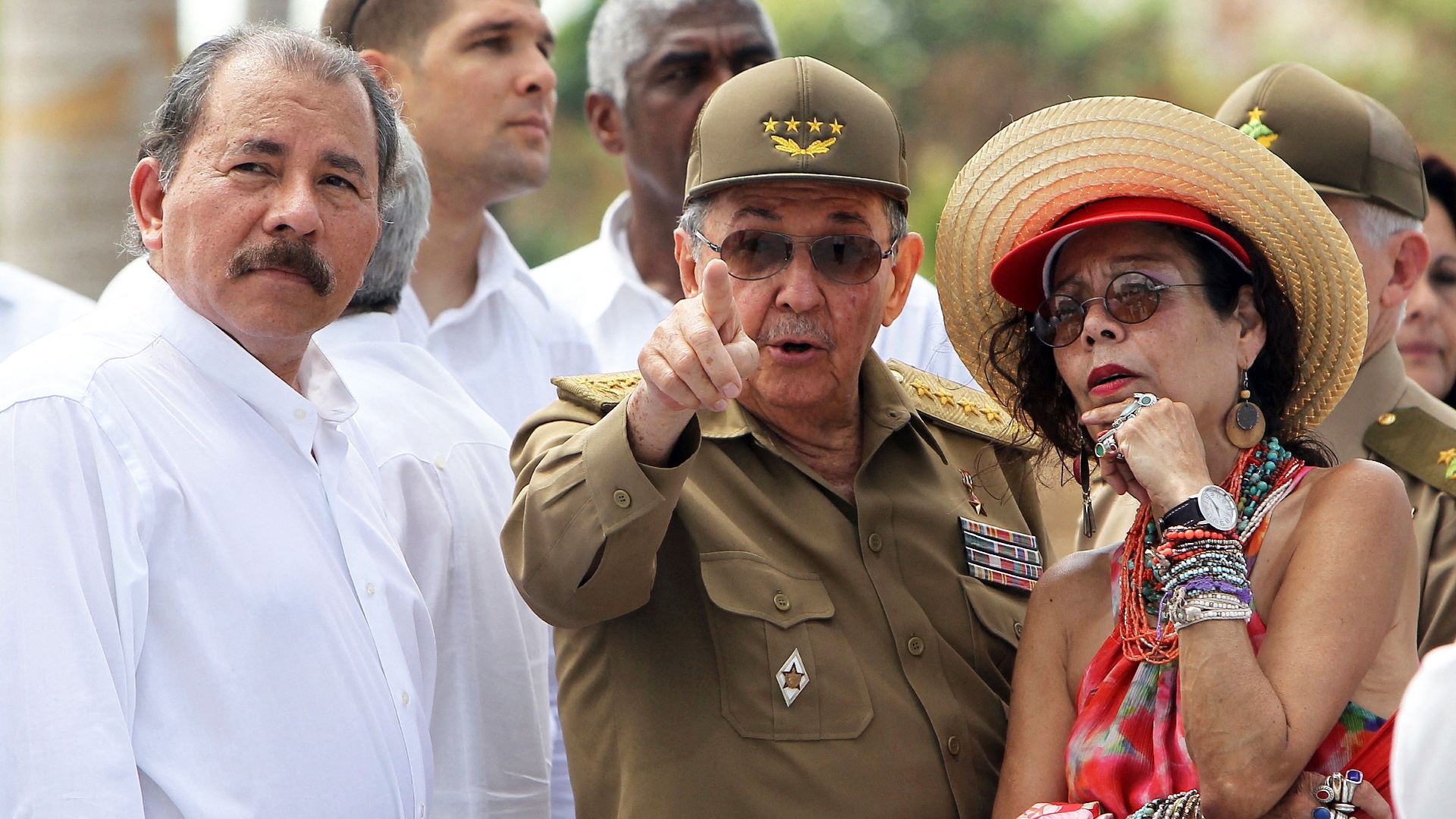
    In a sharp escalation of long-running U.S. pressure on Cuba, the Trump administration has unsealed a sweeping criminal indictment against 94-year-old former Cuban President Raúl Castro, levying charges of conspiracy to murder U.S. citizens, aircraft destruction, and four counts of homicide stemming from the 1996 Cuban air force shootdown of two civilian aircraft operated by a U.S.-based anti-Castro aid group. The indictment also names five additional Cuban defendants: Lorenzo Alberto Perez-Perez, Emilio Jose Palacio Blanco, Jose Fidel Gual Barzaga, Raul Simanca Cardenas, and Luis Raul Gonzalez-Pardo Rodriguez.

    The legal action opens the door for potential U.S. efforts to extradite or forcibly bring Castro to American soil for trial, with senior officials hinting at the same type of extraordinary law enforcement operation that the Trump administration deployed to seize former Venezuelan President Nicolas Maduro in January 2026. President Trump has repeatedly touted that 2026 capture mission as a landmark political win for his administration, even as independent legal experts have widely questioned the operation’s compliance with international law. Trump has also openly acknowledged that the successful extraction of Maduro gave him the confidence to launch the joint U.S.-Israeli military campaign against Iran that began February 28.

    Speaking at a Wednesday press briefing in Miami, Florida — a hub for the Cuban exile community — acting U.S. Attorney General Todd Blanche, who previously served as Trump’s personal defense lawyer, rejected claims that the indictment is a hollow political stunt. “We indict men outside of this country all the time, and there are all kinds of different ways that we get them here,” Blanche told reporters. “The reason why we indict somebody is because we want them here to face justice with a jury of their peers. How we go about doing that obviously depends on the circumstances in the case, and I’m not going to go beyond that, but… this isn’t a show indictment. This is an indictment because we expect that there is a warrant issued for his arrest, so that he will appear here by his own will, or by another way.” Blanche added a clear message of remembrance for the victims: “The United States and President Trump does not and will not forget its citizens.”

    Cuban President Miguel Diaz-Canel immediately pushed back against the charges in a post on X, framing the indictment as evidence of U.S. hostility toward the Cuban Revolution. He called the action “a political maneuver, devoid of any legal foundation, aimed solely at padding the fabricated dossier they use to justify the folly of a military aggression.”

    The indictment is the latest in a series of aggressive moves by the second Trump administration to force Cuba’s government into concessions, a priority shaped heavily by Secretary of State Marco Rubio, a long-time critic of the Cuban regime whose parents emigrated from the island. Just this week, Rubio announced a new round of economic sanctions on Havana, building on decades of U.S. trade and financial restrictions that have been in place since the 1960s. Those long-running sanctions have already gutted Cuba’s financial system and strained its already fragile energy infrastructure. In January 2026, Trump issued an executive order reclassifying Cuba as “an unusual and extraordinary threat” to U.S. national security, and imposed secondary tariffs on any third country that sells goods or oil to the island. The president has previously made blunt remarks about his ambitions for Cuba, saying “Whether I free it, take it, I think I can do anything I want with it… They’re a very weakened nation right now.”

    The charges trace back to the February 24, 1996, incident that claimed four American lives. On that date, Cuban military jets intercepted and shot down two small Cessna aircraft owned by Brothers to the Rescue, a Miami-based organization founded by anti-Castro Cuban exiles that conducted search-and-rescue missions for Cubans attempting to flee the island by boat. The four men killed in the attack were Carlos Costa, Armando Alejandre, Jr, Mario de la Pena, and Pablo Morales.

    The U.S. Department of Justice’s Wednesday statement claims that Cuban intelligence agents infiltrated Brothers to the Rescue years before the shootdown, and passed detailed intelligence on the group’s flight plans and operational schedules back to senior Cuban leadership, including Raúl Castro, who served as defense minister at the time of the incident. While successive U.S. administrations have consistently denied any official connection between the group and American intelligence agencies, the Cuban government has long maintained that Brothers to the Rescue’s core mission was to destabilize the communist regime.

    If convicted on the conspiracy and murder charges, all defendants face a maximum possible sentence of either the death penalty or life imprisonment. Raúl Castro additionally faces up to five years of prison time for each count of aircraft destruction. Any final sentencing would be determined by a presiding U.S. judge, if the accused are ultimately brought into custody.

  • ‘Disgraceful’: Treasurer Jim Chalmers lashes Israel minister after prisoners taunted

    ‘Disgraceful’: Treasurer Jim Chalmers lashes Israel minister after prisoners taunted

    A viral social media video shared by Israeli far-right National Security Minister Itamar Ben-Gvir has sparked international outrage, including condemnation from top Australian officials and even members of Israel’s own cabinet, over his humiliating mistreatment of detained activists from an international Gaza-bound aid flotilla that includes multiple Australian citizens. The confrontation took place this week when Israeli security forces intercepted the Global Sumud Flotilla, a 430-person international campaign organized to break Israel’s years-long naval blockade of Gaza and deliver critical humanitarian aid to the besieged enclave. Among the detained activists are up to 11 Australian nationals, alongside participants from dozens of other countries including New Zealand and Canada.

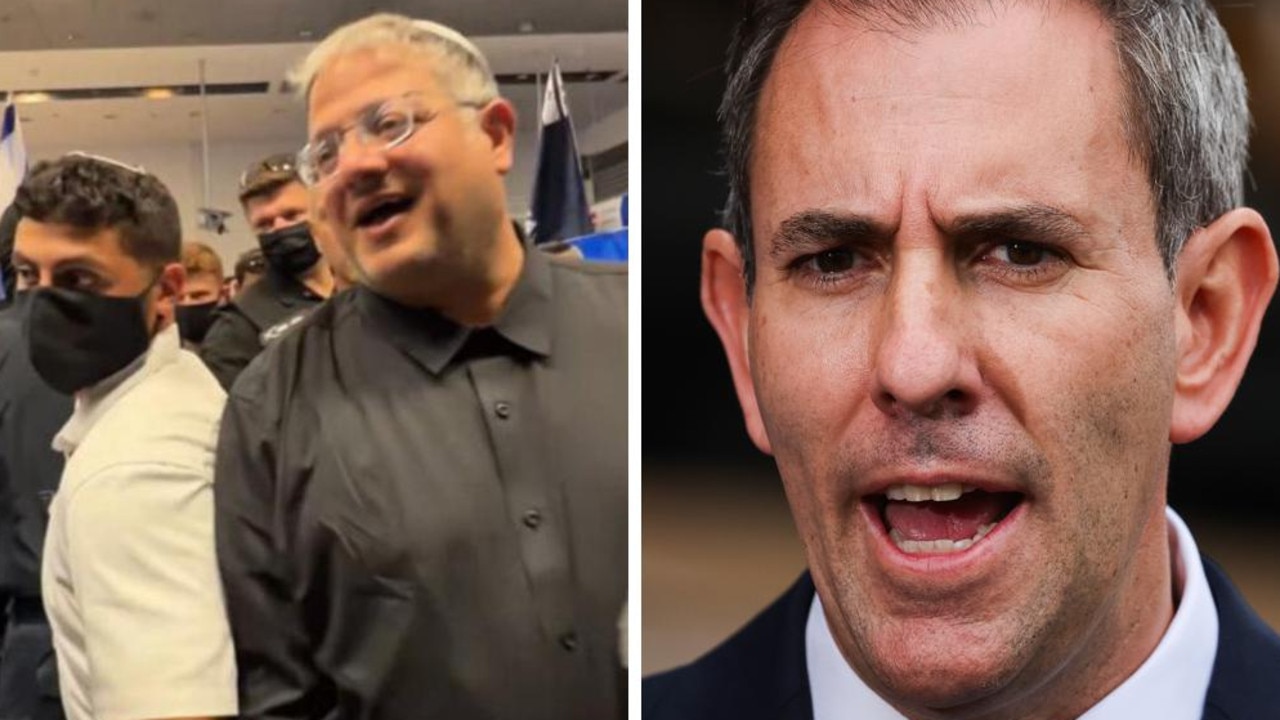
    In the video posted to Ben-Gvir’s social media channels Wednesday, titled mockingly “Welcome to Israel”, the hardline politician – who has long advocated for expanding illegal Israeli settlements in the West Bank and has previously been sanctioned by Australia for inciting anti-Palestinian violence – can be seen taunting the handcuffed activists. Footage shows masked Israeli officers forcing one female activist to the ground after she chanted pro-Palestinian slogans, before Ben-Gvir waves an Israeli flag in front of a group of detainees forced to kneel face-down inside a detention tent.

    Australia’s top political leaders were quick to issue a scathing rebuke of the incident. Foreign Affairs Minister Penny Wong called the published footage “shocking and unacceptable”, confirming that Australia’s ambassador to Israel had already formally raised the issue with Israeli authorities. “We condemn his actions and the degrading actions of Israeli authorities towards those detained,” Wong stated. The minister added that she had directed the Department of Foreign Affairs and Trade (DFAT) to summon Israel’s ambassador to Australia to reinforce Canberra’s demands: for the immediate release of all detained Australian citizens, guarantee that no detainees face mistreatment, and that Israel upholds its obligations under international law.

    Treasurer Jim Chalmers echoed Wong’s condemnation during a press appearance in Perth, describing the video as “disgraceful” and “deeply disappointing”. While Chalmers noted that Australian government departments had previously discouraged Australian citizens from joining the flotilla voyage, he emphasized that even after they chose to proceed, humane treatment remained a non-negotiable requirement. “There’s absolutely no need or no place for it,” Chalmers said. “I can only imagine what it’s like to be a parent or a loved one of one of the people involved in that trip, and to see them treated that way.”

    The condemnation extended beyond Australian political circles, even reaching within Israel’s own governing coalition. Israel’s Foreign Minister Gideon Sa’ar publicly distanced his government from Ben-Gvir’s actions, stating that the national security minister “knowingly caused harm to our State in this disgraceful display – and not for the first time. You have undone tremendous, professional, and successful efforts made by so many people, from IDF soldiers to Foreign Ministry staff and many others. No, you are not the face of Israel.” Even the Executive Council of Australian Jewry joined in criticizing Ben-Gvir’s conduct. Council President Daniel Aghion said “Nothing can excuse the appalling behaviour displayed by Minister Ben Gvir against a group of people who were being held in custody in Israel.” While the council acknowledged the activists had undertaken an unlawful and provocative action that it argued would benefit Hamas, Aghion stressed that “it does not in any way justify their mistreatment while they were being held. There is simply no excuse.”

    Other Western nations have also added their voices to the widespread international outcry. New Zealand’s Foreign Minister Winston Peters announced that New Zealand – which already imposed a travel ban on Ben-Gvir last year for undermining prospects for a two-state solution – condemned the minister’s actions, and had instructed its foreign ministry to summon the Israeli ambassador to relay New Zealand’s grave concerns. “His latest conduct with respect to the Gaza flotilla, which has been seriously criticised by his own Prime Minister, is further vindication of that position,” Peters said. “We expect Israel to adhere to its international legal obligations, including in its treatment of New Zealanders participating in the flotilla.”

    Canadian Prime Minister Mark Carney also joined the condemnation, calling the documented abuse “abominable” and “unacceptable”. Carney confirmed that Canada’s foreign ministry had already summoned the Israeli ambassador to demand formal assurances for the safety of Canadian detainees, noting that Canada had previously imposed strict sanctions on Ben-Gvir, including an asset freeze and travel ban, over repeated incitement to violence. “The protection of civilians and respect for human dignity must be upheld everywhere, at all times,” Carney said.