分类: politics

  • Germany urges the EU to offer Ukraine ‘associate membership’ and boost talks with Russia

    Germany urges the EU to offer Ukraine ‘associate membership’ and boost talks with Russia

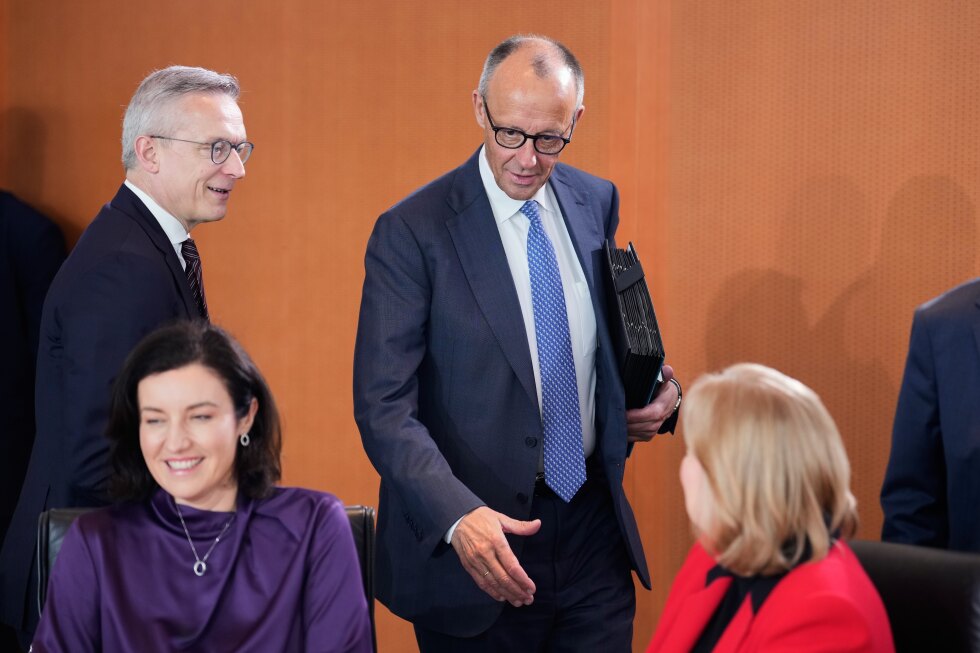
    BRUSSELS – In a new proposal shared with top European Union leadership, German Chancellor Friedrich Merz has called on the 27-nation bloc to explore granting associate membership status to Ukraine, a move he argues will unlock progress toward a negotiated end to the more than four-year-long war with Russia, documents obtained by the Associated Press confirm. Merz’s proposal lands at a pivotal moment for the EU, as leaders weigh whether to launch an independent European negotiating channel with Russian President Vladimir Putin after U.S.-mediated peace efforts stalled, with Washington’s strategic focus shifted to escalating conflict in Iran.

    Under the terms laid out by Merz, Ukraine would gain full access to participate in EU-level meetings and secure non-voting observer seats in both the European Commission, the bloc’s powerful executive arm, and the European Parliament. The German chancellor stressed that this framework is not a watered-down alternative to full membership, emphasizing it would go far beyond the existing Association Agreement that currently structures relations between Kyiv and Brussels. To guard against democratic erosion, Merz also proposed a snap-back mechanism that would reverse associate status if Ukraine fails to uphold required democratic governance standards. Crucially, Merz reaffirmed his support for the longstanding EU commitment to launch full official membership negotiations with Ukraine without delay, a position already restated by European Council President Antonio Costa and European Commission President Ursula von der Leyen last month.

    Ukrainian President Volodymyr Zelenskyy has already signaled cautious optimism about the progress of accession talks, telling the public in a recent address that the development is “very important for us” and noting that Kyiv has completed all required reforms to move the process forward. The accession process requires candidate states to align their national legislation with EU standards across 35 distinct policy chapters, covering everything from judicial independence and rule of law to agricultural and fisheries regulation. Every chapter requires unanimous approval from all 27 EU member states to open, and again to close after alignment is complete. For months, Hungary served as the primary blocker to opening negotiations, but the recent swearing-in of a new Budapest administration has sparked widespread speculation that Budapest’s long-held opposition may soften.

    Despite the momentum for expanding EU-Ukraine ties, Merz’s proposal faces resistance from many Brussels-based officials, who argue that full EU membership must remain a strictly merit-based process that only concludes once all reform benchmarks are fully met. Merz has also proposed extending the associate membership framework to other candidate states in the Western Balkans, a region that will be the focus of a major EU leaders’ summit scheduled for next month.

    On the conflict itself, Merz argued that closer EU integration through associate membership will create the necessary political foundation to advance a negotiated peace agreement, writing that “this is essential not only for Ukraine’s but for the entire continent’s security.” For Ukraine, integration into Western institutional structures is viewed as a core long-term security guarantee. While full NATO membership remains Kyiv’s ultimate goal, the current U.S. administration has repeatedly ruled out NATO accession for Ukraine in the near term, and many other Western capitals remain wary of extending membership while active conflict continues.

    With U.S.-led mediation efforts stalled, EU capitals have increasingly debated the need for a parallel European-led negotiating track, and begun floating potential candidates to serve as EU mediators in the event Putin agrees to direct talks. Earlier this month, Costa confirmed the bloc’s growing interest in an independent European role, saying “we need, in the right moment, to have talks with Russia to address our common issues on security,” adding that this channel would not interfere with ongoing U.S.-led efforts but is necessary to advance Europe’s own core security priorities.

    European media has been rife with speculation over potential mediators, with names including former German Chancellor Angela Merkel – a fluent Russian speaker with long-standing personal ties to Putin – and former European Central Bank President Mario Draghi emerging as leading contenders. Putin himself has suggested he would be open to talks with former German Chancellor Gerhard Schröder, but the proposal has been widely rejected even in Berlin. Schröder’s close personal and business ties to Russian state energy firms, and his longstanding friendly relationship with Putin, have destroyed his domestic political credibility since Russia’s 2022 full-scale invasion of Ukraine. EU High Representative for Foreign Affairs Kaja Kallas recently noted that allowing Putin to handpick the European negotiator “would not be very wise,” particularly given Schröder’s role as a “high-level lobbyist for Russian state-owned companies.”

    For his part, Zelenskyy has welcomed European involvement in the peace process, saying over the weekend that “Europe must be involved in the negotiations. It is important for Europe to have a strong voice and presence in this process, and it is worth determining who will represent Europe specifically.”

    Reporting for this article was contributed by Moulson in Berlin and Susie Blann in Kyiv.
  • Malaysia orders TikTok to explain ‘grossly offensive’ fake content targeting king

    Malaysia orders TikTok to explain ‘grossly offensive’ fake content targeting king

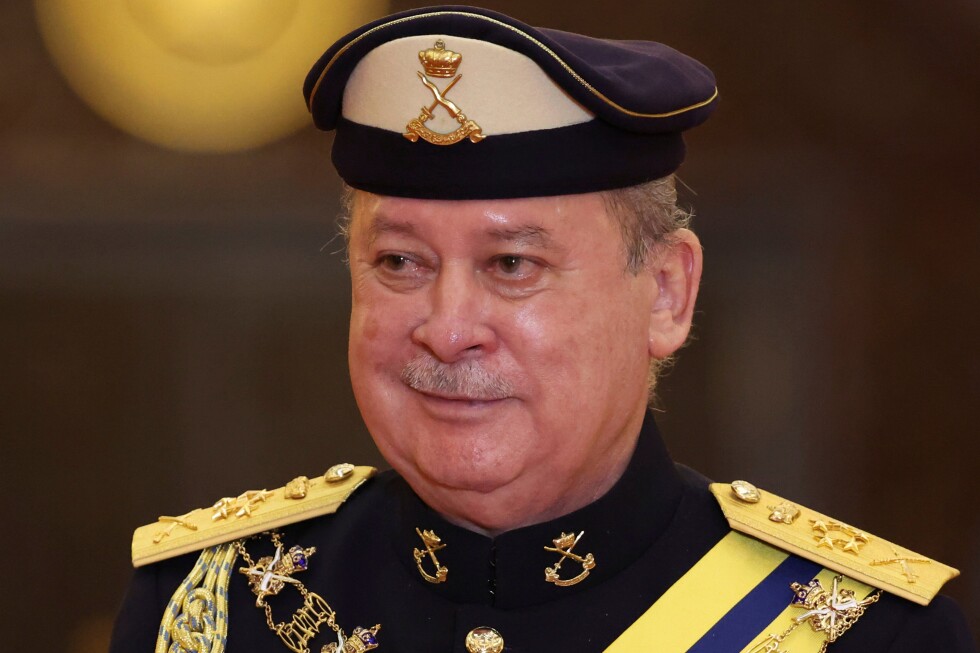
    Malaysian regulators have taken formal action against global short-video platform TikTok, demanding the company explain and fix its repeated failure to rapidly remove harmful content that targets the country’s royal establishment. The Communications and Multimedia Commission announced the legal order Thursday in Kuala Lumpur, confirming the move comes after widespread circulation of severely inappropriate material targeting the monarchy, including AI-manipulated videos and altered images spread from an account that falsely claimed affiliation with King Sultan Ibrahim Iskandar.

    In its official statement, the regulator emphasized that content touching on Malaysia’s core sensitive domains of race, religion, and royalty carries unique gravity. Unauthorized and insulting material in these areas does not merely violate online community standards, it also poses a direct threat to public order, national unity, and public respect for the country’s constitutional institutions, the commission noted.

    The agency added that Malaysian authorities had already notified TikTok of the problematic content and held prior discussions with the platform to secure content removal. Despite these previous engagements, TikTok’s content moderation response fell far short of expectations, particularly when it came to speedily taking down harmful posts and blocking their further spread across the platform.

    TikTok, which has not issued any public statement on the regulatory action to date, also declined to comment on the matter when contacted by The Associated Press. The legal notice delivered to the company requires two core actions: first, a full explanation of why its moderation systems failed to catch and remove the content in a timely manner; second, immediate remedial steps to strengthen its content moderation infrastructure and step up enforcement against any content that violates Malaysian national law or domestic community standards.

    The commission stressed that all social media platforms operating within Malaysian borders bear a fundamental responsibility to proactively prevent unlawful and damaging activity on their services. It also issued a clear warning that regulators will continue to implement firm, proportionate enforcement measures going forward to ensure all digital platforms uphold their obligations to maintain a safe, respectful online ecosystem for Malaysian users.

    This latest action against TikTok aligns with Malaysia’s broader ongoing effort to tighten regulatory oversight of large digital platforms operating within its jurisdiction. Over the past several years, Malaysian authorities have ramped up enforcement against social media companies over a range of issues, from harmful content and public order threats to scams and unregulated online gambling.

  • China says US should stop ‘threats’ against Cuba after ex-leader charged

    China says US should stop ‘threats’ against Cuba after ex-leader charged

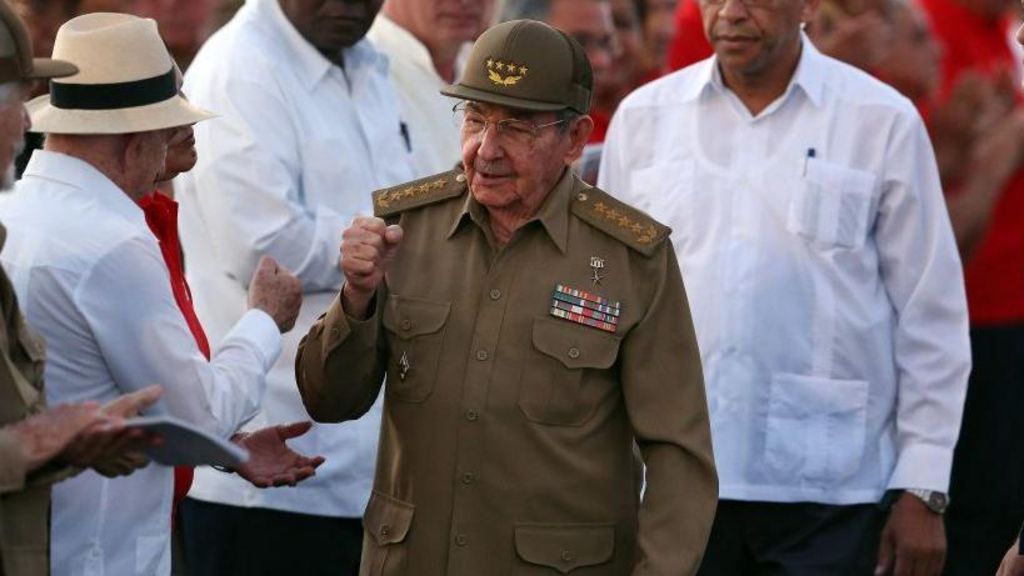
    A decades-old Cold War-era incident between the U.S. and Cuba has reignited a high-stakes diplomatic standoff, after a U.S. court unsealed murder and conspiracy charges against 94-year-old former Cuban President Raúl Castro. The charges stem from the 1996 downing of two small aircraft operated by Brothers to the Rescue, a Cuban-American dissident group based in Florida. Four people, including three U.S. citizens, were killed in the incident, which has remained a flashpoint of tension between Washington and Havana for nearly 30 years.

    At the time of the incident, Castro, who stepped down as Cuba’s head of state in 2018, led the country’s armed forces. He was indicted alongside five other co-defendants earlier this week, with the charges carrying extreme penalties including life imprisonment or the death penalty. Cuban President Miguel Díaz-Canel has rejected the accusations outright, labeling them a baseless political maneuver with no legitimate legal standing.

    The indictment comes as part of a broad, escalating campaign of pressure on Cuba by the Trump administration, which has openly targeted the country’s communist government for regime change. In recent weeks, the White House has ramped up sanctions: earlier this month, President Trump issued an executive order blacklisting officials across Cuba’s energy, defense, financial and security sectors, targeting individuals the U.S. accuses of human rights violations and public asset misappropriation. The U.S. has also tightened its long-standing trade embargo to block oil shipments to Cuba, a move that has exacerbated the country’s ongoing economic woes, triggering widespread power blackouts and acute food shortages.

    The Trump administration’s aggressive posture toward Cuba follows the January capture and extradition of former Venezuelan President Nicolás Maduro to the U.S. to face narco-terrorism and drug trafficking charges. In public remarks after the capture, Trump openly stated he believed Cuba was “ready to fall,” signaling further escalation against the island nation.

    In response to the latest indictment, Beijing has reaffirmed its long-standing diplomatic and economic support for Havana, a close ally. Chinese Foreign Ministry spokesperson Guo Jiakun issued a formal statement Thursday condemning the U.S. action, calling on Washington to end its use of “coercion” and “constant threats of force” against Cuba. Guo emphasized that China firmly opposes any attempt by outside powers to pressure Cuba under any pretense, and urged the U.S. to stop misusing sanctions and judicial mechanisms as tools of political coercion. “China resolutely supports Cuba in safeguarding its national sovereignty and dignity, and opposes external interference in Cuba’s internal affairs,” Guo said.

    China has deepened its economic and diplomatic ties with Cuba over the past decade, following President Xi Jinping’s 2014 official visit to the island. In 2018, formally joined China’s transcontinental Belt and Road Initiative, a massive infrastructure investment framework that has already funded multiple key strategic development projects across Cuba.

  • Cuba outraged after US indicts Raul Castro

    Cuba outraged after US indicts Raul Castro

    In a provocative new escalation of long-standing US pressure on Cuba’s communist government, the United States’ indictment of 94-year-old former Cuban president Raul Castro on murder and conspiracy charges has triggered widespread shock and anger across the island nation, adding fuel to fears of further American intervention amid a crippling months-long US oil blockade that has already pushed Cuba’s fragile economy to the edge of collapse. The charges, which also include the destruction of aircraft, stem from the 1996 downing of two civilian aircraft flown by anti-Castro operatives that violated Cuban airspace. Cuban authorities have long characterized the shootdown as a legitimate act of self-defense, and now dismiss the indictment as a baseless, politically motivated attack decades in the making.

    Raul Castro, younger brother of iconic revolutionary leader Fidel Castro who defied US influence for decades, remains a powerful political figure in Cuba even after stepping down from the presidency. The indictment comes as the culmination of a steady campaign of pressure from the Trump administration, which has ramped up sanctions and blockades against the island in recent months. This move also follows a pattern of aggressive international intervention by the Trump administration, including the 2025 toppling of Venezuelan president Nicolas Maduro, escalated tensions with Iran, and even public overtures to purchase Greenland from Denmark.

    Cuban officials have called on citizens to rally in protest against what they call a “despicable” action, organizing a demonstration outside the US Embassy in Havana for early Friday. Ordinary Cubans on the ground have echoed this outrage, linking the indictment to the ongoing economic suffering caused by the US oil blockade that has paralyzed daily life on the island. For four months, the blockade has cut off critical fuel supplies, leaving residents grappling with daily power outages that can stretch to 20 hours, dried-up municipal water supplies, runaway inflation that has sent prices for basic necessities soaring, and uncollected trash piling up across Havana’s streets.

    “This is not actually a legitimate accusation over an incident from more than 30 years ago — this is a deliberate public attack on a revered Cuban public figure,” 30-year-old Havana accountant Fabian Fernandez told Agence France-Presse. “This is purely a political move, a play for public image.” Retiree Pedro Leal, 65, condemned the US action for its direct harm to ordinary Cuban people. “What the US government is doing now, on top of the energy blockade that keeps us from getting fuel, is honestly criminal,” Leal said. Many Cubans, like 58-year-old self-employed worker Iris Herrera, say they fear the indictment is a precursor to full-scale US military intervention. “I do not agree with a United States war here in Cuba. It’s inhumane, because there will be deaths — many deaths,” Herrera said.

    Cuban President Miguel Diaz-Canel wrote on the social platform X that the charges lack any legal foundation, saying they “add to the file they are fabricating to justify the folly of a military aggression against Cuba.”

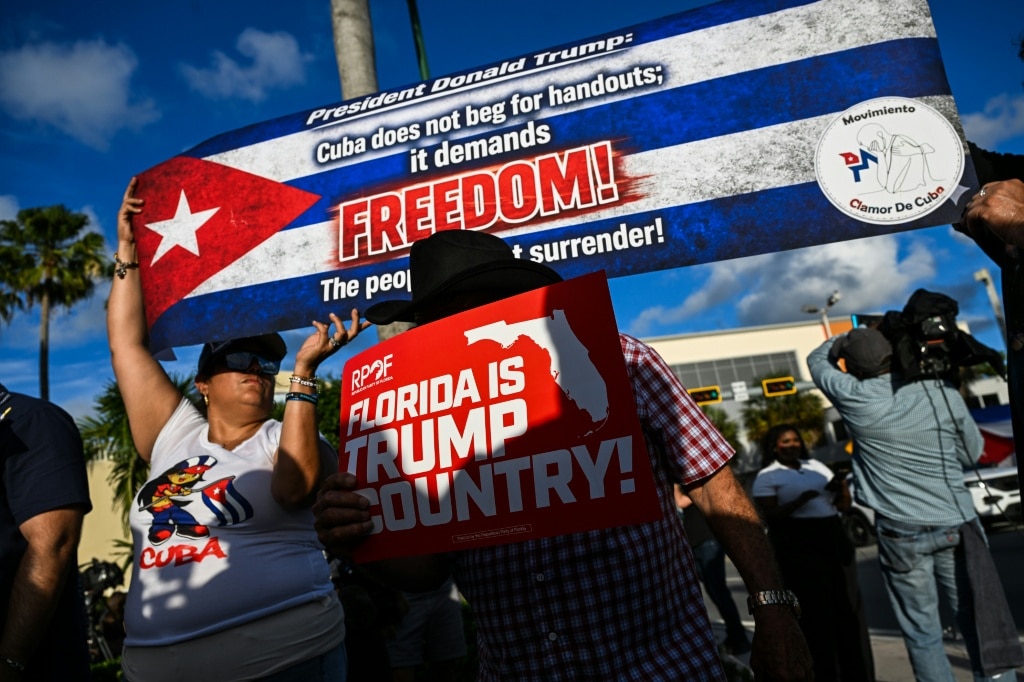
    The US acting Attorney General Todd Blanche openly declared that Washington expects Castro to face prosecution and imprisonment in the US, speaking to a cheering crowd of anti-Castro Cuban-Americans at a Miami news conference. “We expect that he will show up here by his own will or by another way and go to prison,” Blanche said.

    International pushback against the indictment has been led by China, which issued a firm statement of support for Cuba and called on the US to de-escalate tensions. Chinese foreign ministry spokesman Guo Jiakun told reporters Thursday that Washington “should stop brandishing the sanctions stick and the judicial stick against Cuba and stop threatening force at every turn.”

    Beijing’s criticism comes amid a visible US military buildup in the region: US Southern Command announced Wednesday that the USS Nimitz aircraft carrier strike group has entered the Caribbean Sea, posting a welcome message on X alongside a video showcasing the warship’s military capabilities.

    President Trump has called the indictment a “very big moment” but downplayed suggestions of imminent military escalation, telling reporters Wednesday: “There won’t be escalation. I don’t think there needs to be. Look, the place is falling apart. It’s a mess, and they sort of lost control.”

    Regional analysts warn the move follows a clear playbook the US already deployed in Venezuela, where US authorities used a domestic criminal indictment of sitting president Maduro — a close Cuban ally — as justification for military intervention that toppled his government earlier this year. “The message here is clear: we can do to you what we did to Nicolas Maduro,” Christopher Sabatini, senior fellow for Latin America at the Chatham House think tank, told AFP. Sabatini noted that Cuba’s military would almost certainly mobilize to defend the country against any US intervention, but added that “whether the people would or not, it’s difficult to say.” The escalating crisis has left the Caribbean region bracing for further instability, as the combination of economic pressure, political provocation, and military posturing raises the stakes for one of the longest-running geopolitical standoffs in the Western Hemisphere.

  • The differences — and similarities — in the Trump and Putin visits to China

    The differences — and similarities — in the Trump and Putin visits to China

    BEIJING — When Chinese President Xi Jinping hosted back-to-back state visits from U.S. President Donald Trump and Russian President Vladimir Putin in the Chinese capital, superficial ceremonial parallels masked sharp underlying differences in Beijing’s relationships with the two global powers.

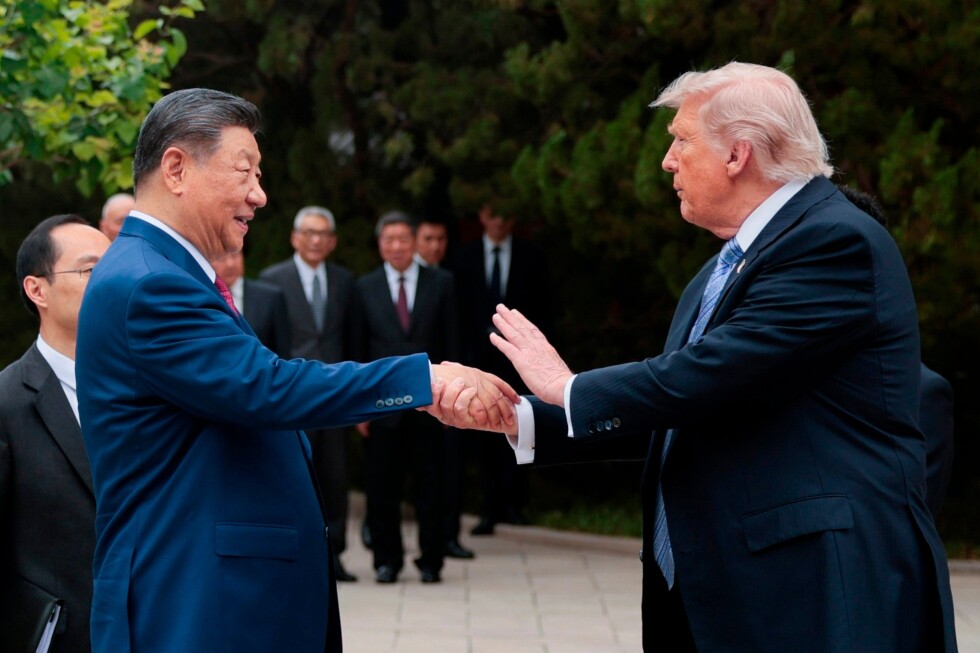
    Both visiting heads of state were greeted with full formal honors on Beijing’s Tiananmen Square: they exchanged the obligatory formal handshakes, reviewed marching honor guard contingents armed with polished bayonets, and received enthusiastic welcomes from groups of children waving flowers and national flags. But the core goals, scheduling, and outcomes of the two summits diverged dramatically, revealing the distinct roles Washington and Moscow play in China’s foreign policy strategy.

    China’s core priority for Trump’s visit was de-escalation and stabilization of bilateral ties, which had been roiled by escalating trade tensions between the world’s two largest economies. By contrast, Beijing’s objective for Putin’s trip was to expand and solidify its years-long deep strategic partnership with Moscow.

    To accommodate Trump’s known preference for high-profile displays of respect, Xi prioritized grand ceremonial hospitality, including a rare private tour of Zhongnanhai — the walled former imperial garden that serves as the headquarters of China’s top ruling bodies. “Xi understands this is what Trump values: being treated as a distinguished VIP, and receiving that respect in front of global media cameras,” explained George Chen, a partner leading the Greater China practice at the advisory firm The Asia Group.

    With Putin, a far more frequent visitor to Beijing who has built years of personal diplomatic rapport with Xi, the focus shifted from ceremony to tangible substantive progress. “They reaffirmed their longstanding friendship treaty, signed dozens of new cooperation deals including major energy agreements, and doubled down on their stated ‘no limits’ strategic partnership,” Chen added.

    These contrasting priorities were visible even in the basic structure of the two visits. Trump’s trip extended over three days, and included ceremonial side events beyond formal talks: a private guided tour of the historic Temple of Heaven, in addition to his walk through Zhongnanhai’s imperial gardens. Putin’s visit was compressed to two days, with most of his meetings with Xi held inside the Great Hall of the People adjacent to Tiananmen Square. There, the two leaders toured an exhibition chronicling the history of China-Russia ties before holding an informal tea. Notably, the visit marked Trump’s second trip to China as U.S. president, while it was Putin’s 25th visit to the country since he took office.

    The clearest divide between the two summits emerged in their core policy messaging. For the Trump meeting, Xi centered discussions on the urgent need to repair relations after months of trade friction, framing the bilateral relationship as one that should be rooted in partnership rather than rivalry. By the end of the summit, the two leaders released a joint statement committing to work toward what they called “a constructive China-U.S. relationship of strategic stability.”

    For the Putin summit, by contrast, the messaging centered on reinforcing a deep, longstanding alignment that is both strategically critical and economically mutually beneficial. While Beijing and Washington were still negotiating to resolve trade frictions, Moscow and Beijing publicly reaffirmed their status as indispensable global partners. Putin identified the energy sector, specifically oil and natural gas cooperation, as the primary driving force behind the bilateral relationship.

    The gap in tangible outcomes was equally stark. China and Russia finalized more than 40 new cooperation agreements spanning trade, technology, cultural and media exchanges. The two leaders also signed a formal joint declaration positioning Russia and China as “important centers of power in a multipolar world,” pushing back against what they frame as U.S. global hegemony. On the other hand, Trump and Xi did not sign a joint declaration or oversee any public agreement signing during the summit itself. Details of a handful of preliminary accords were only released after Trump departed Beijing: the agreements included a Chinese commitment to purchase $17 billion worth of U.S. agricultural goods on an annualized basis, and a deal to buy 250 Boeing commercial aircraft.

    Some analysts have pointed out that the opacity of China-U.S. agreements marked a clear contrast to the transparency of China-Russia cooperation. “China and Russia reached a wide range of clear agreements, while the details of any concrete deals between China and the U.S. remain quite vague,” noted Claus Soong, an analyst at the Mercator Institute for China Studies based in Berlin. Still, not all major expected deals materialized during the Putin visit. Lyle Morris, a senior fellow focused on Chinese national security and foreign policy at the Asia Society Policy Institute’s Center for China Analysis, highlighted that no formal binding agreement was signed for the long-planned Power of Siberia 2 gas pipeline, a project that would ship Russian natural gas to China via Mongolia. “This is a major setback for Russia and for Putin personally,” Morris argued.

    Geopolitical alignment also differed sharply on the high-stakes issue of Taiwan, the self-governing democratic island that Beijing claims as part of its sovereign territory. Moscow has long maintained full public alignment with Beijing’s position on Taiwan, while the U.S. has maintained a policy of deliberate strategic ambiguity, serving as Taipei’s primary informal security backer and leading arms supplier.

    During his talks with Trump, Xi explicitly framed Taiwan as the most sensitive and important issue in the bilateral relationship, warning that mismanagement of U.S. policy toward the island could spark direct confrontation between the two powers. Trump did not address the issue publicly during his time in Beijing, but during his return trip to the U.S., he described U.S. arms sales to Taiwan as a “very good negotiating chip” in dealings with Beijing — comments that stoked widespread anxiety among Taiwanese officials and the public. No such tensions emerged during Putin’s visit: in the signed joint declaration, Russia explicitly reiterated its opposition to Taiwanese independence “in any form,” and voiced full support for what it called China’s efforts to defend its national sovereignty and achieve unification.

    Beyond Taiwan, the two leaders also aligned in expressing shared concern over what they called the “accelerated remilitarization” of Japan, at a time of already strained relations between Beijing and Tokyo over regional territorial and political disputes related to Taiwan.

  • Gaza flotilla activists await deportation from Israel

    Gaza flotilla activists await deportation from Israel

    As international condemnation mounts over the mistreatment of detained Gaza-bound activists, hundreds of people seized by Israeli forces from the Global Sumud Flotilla remained in custody Thursday, with the vast majority en route to deportation from southern Israel’s Ramon Airport.

    The latest incident marks the second consecutive attempt by activist organizers to breach Israel’s 17-year blockade of the Gaza Strip, a restriction that has pushed the besieged Palestinian territory into catastrophic humanitarian hardship following the outbreak of the 2023 Israel-Hamas war. Last week, roughly 50 vessels carrying more than 430 activists from dozens of countries set sail from Turkey, only to be intercepted at sea by Israeli security forces and taken into custody.

    Controversy erupted earlier this week after Israel’s far-right National Security Minister Itamar Ben Gvir posted a provocative video of the detained activists, who were shown with their hands bound and foreheads pressed to the ground. Captioned “Welcome to Israel”, the footage showed Ben Gvir heckling the captives while waving an Israeli flag, drawing fierce backlash from leaders across the globe as well as unexpected criticism from within Israel’s own governing coalition.

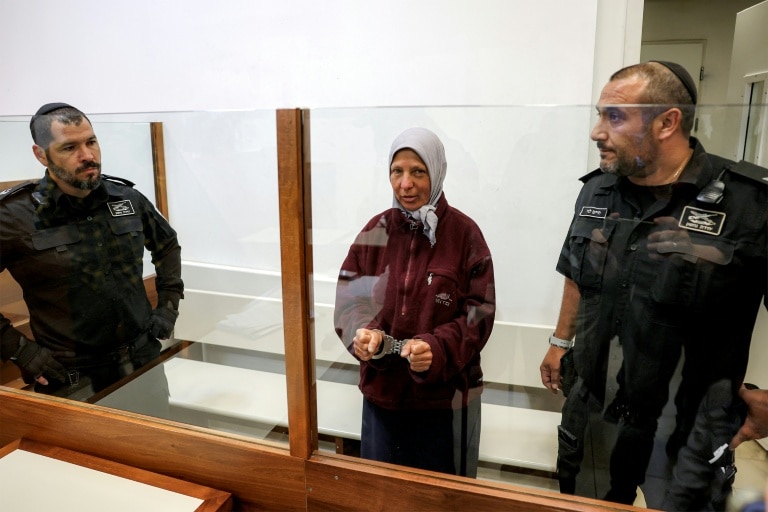
    Adalah, the Israeli legal center representing the detained activists, confirmed Thursday that most detainees were being transferred from Ktziot Prison, a maximum-security facility located in the Negev Desert near the Gaza border, to Ramon Airport for expulsion. Only a small group remains in custody, including one Israeli citizen activist who attended a court hearing Thursday to face what Adalah calls “absurd” and unfounded charges, including illegal entry, unlawful stay, and attempting to break the Gaza blockade.

    Multiple detained activists and observers have shared harrowing accounts of abuse in custody. Legal director Suhad Bishara told reporters that at least two activists had been hospitalized after being shot with rubber bullets, while dozens more reported injuries including suspected broken ribs. Bishara added that while attorneys had been able to meet with many detainees, a number of activists were forced to attend court hearings without any legal representation.

    Alessandro Mantovani, an Italian journalist who was deported ahead of the main group, described violent treatment at the hands of Israeli security forces during a press conference after landing at Rome’s Fiumicino Airport Thursday. “They beat us up. They kicked us and punched us and shouted ‘Welcome to Israel’,” Mantovani said, adding that he and other early deportees were transported to Ben Gurion Airport in handcuffs and leg chains before being put on flights out of the country.

    Dario Carotenuto, an Italian member of parliament who was also detained and expelled, called the experience traumatizing. “It was really tough… They called us by number… with rifles pointed at us… I think those were the longest seconds in my life,” Carotenuto said.

    The backlash to Ben Gvir’s video has been swift and widespread, with condemnation pouring in from national governments including Italy, Spain, Australia, and Canada. Even domestic allies and international partners joined in the criticism: Israeli Prime Minister Benjamin Netanyahu and Foreign Minister Gideon Saar publicly distanced themselves from the minister’s actions, while U.S. Ambassador to Israel Mike Huckabee labeled the incident “despicable actions”.

    Francesca Albanese, the United Nations’ independent expert on human rights in the Palestinian territories and a native Italian, called on her home country to take concrete action against Israel. “Words do not suffice: let Italy stop opposing the suspension” of the EU-Israel Association Agreement, she wrote on the social platform X.

    Israel has enforced a complete land, air, and sea blockade of Gaza since 2007, when Hamas took control of the territory. Since the outbreak of war in October 2023, triggered by Hamas’ cross-border attack that killed roughly 1,200 people, the humanitarian situation in Gaza has collapsed. More than 2 million Gazans, nearly the entire population, have been forcibly displaced at least once and rely entirely on international aid for survival. While a fragile temporary ceasefire has reduced active fighting in recent months, Israel has repeatedly paused aid deliveries, leaving Gaza grappling with extreme shortages of food, clean water, medicine, and other critical supplies.

    A previous attempt to break the blockade by the Global Sumud Flotilla was intercepted last month in international waters off the coast of Greece. Most participants were expelled directly to European countries, while two were taken into Israeli custody, held for several days, and then deported.

  • UK government to release papers related to former Prince Andrew’s appointment as trade envoy

    UK government to release papers related to former Prince Andrew’s appointment as trade envoy

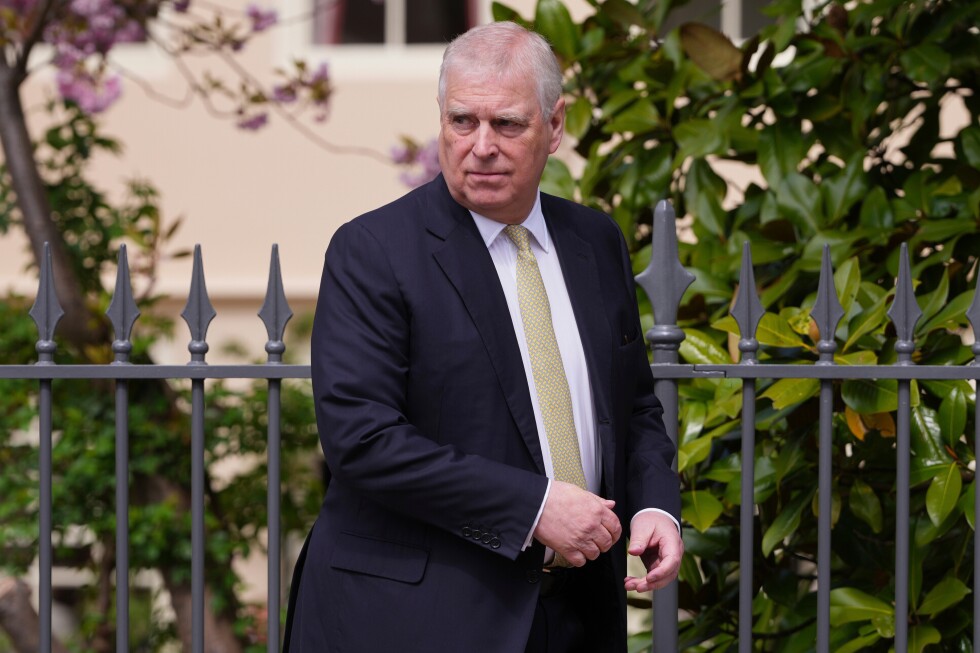
    LONDON – The British government is scheduled to declassify and publish a set of confidential documents Wednesday detailing the appointment and tenure of King Charles III’s brother, the former Prince Andrew, now legally named Andrew Mountbatten-Windsor, as the UK’s international trade envoy. This long-awaited release comes just months after a cross-party group of UK lawmakers accused Andrew of prioritizing his controversial personal friendship with disgraced financier and convicted sex offender Jeffrey Epstein over national interests.

    The push for full transparency began back in February, when parliament overwhelmingly approved a formal motion demanding the documents be made public. The vote followed a major development: Andrew was arrested on charges alleging that he shared sensitive government trade reports with Epstein during his time in the unpaid official role. The calls for publication gained even more urgency after the U.S. Department of Justice unsealed millions of pages of previously sealed court records tied to the Epstein case, which laid bare the disgraced financier’s extensive network of high-profile connections across the globe.

    Those released U.S. documents detailed how Epstein leveraged his web of wealthy, powerful friends to accumulate influence and carry out a years-long pattern of sexual exploitation targeting young women and underage girls. Nowhere has the wave of revelations from the Epstein files caused more upheaval than in the UK, where the scandal has opened up fierce new debates about power, accountability and unregulated influence within the country’s so-called Establishment – the interconnected group of aristocratic elites, senior politicians and high-profile business leaders that have long shaped British public life.

    During a heated parliamentary debate held to examine Andrew’s long-documented ties to Epstein, ministers and backbench lawmakers from across the political spectrum united to demand greater transparency and accountability from the British royal household. Trade Minister Chris Bryant was among the most vocal critics, arguing that Andrew engaged in a relentless pattern of self-serving behavior throughout his decade as a working royal. “Andrew was a rude, arrogant and entitled man who could not distinguish between the public interest he claimed to serve and his own private interest,” Bryant stated during the debate, adding that the former prince’s time in office was defined by a constant “self-enriching hustle.”

    Andrew has already faced significant consequences for his ties to the scandal: he was stripped of all his honorary royal titles and public roles last year, as King Charles III moved quickly to distance the monarchy from the growing controversy surrounding the former prince. This is not the first time Andrew’s ties to controversial figures have cut short his public service: he originally held the post of special trade envoy from 2001 to 2011, when he was forced to step down over widespread concerns about his questionable links to autocratic figures in Libya and Azerbaijan.

  • India has a new political superstar – a cockroach

    India has a new political superstar – a cockroach

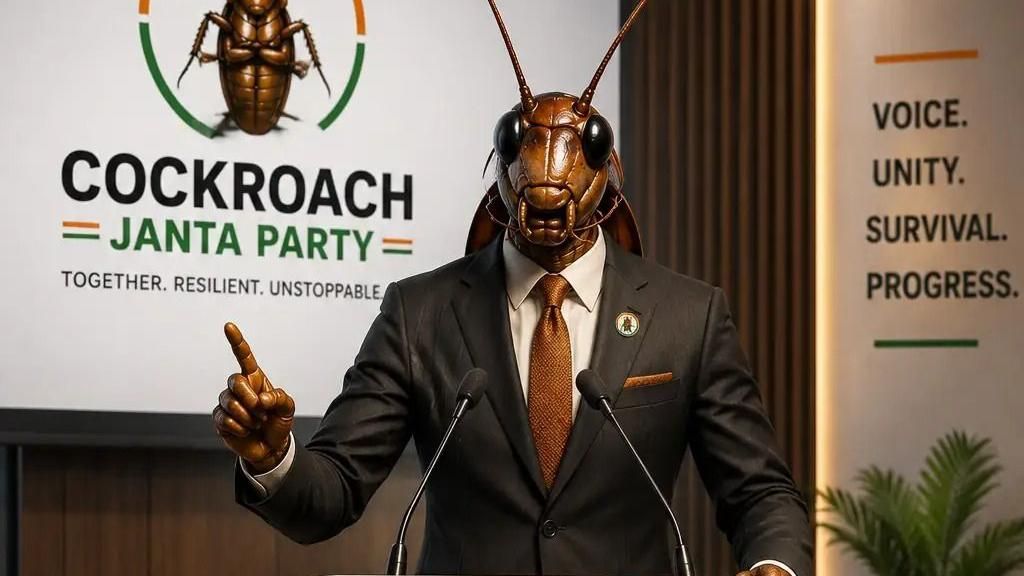
    In the crowded landscape of Indian political symbols, where the ruling Bharatiya Janata Party claims the lotus and the opposition Congress relies on the iconic hand, an unlikely new mascot has exploded into online consciousness: the humble, reviled, notoriously indestructible cockroach. What began as a throwaway offensive comment from India’s Chief Justice Surya Kant has evolved into a viral satirical political movement that has upended conventional Indian politics and given a voice to millions of frustrated young Indians.

    The controversy that sparked the movement ignited last month, when Kant made headlines during a public court hearing. He was accused of comparing unemployed young people who gravitated toward journalism and activism to cockroaches and parasites. The judge quickly issued a clarification, stressing his remarks were aimed exclusively at individuals holding fake academic credentials, not the broader Indian youth population. But by the time the clarification was issued, the original comment had already spread like wildfire across Indian social media, sparking a mix of public outrage, dark internet humor, and eventually, the creation of a spontaneous online uprising: the Cockroach Janta Party (CJP), or Cockroach People’s Party.

    Far from a traditional, registered political party, the CJP is a satire-driven online collective founded by Abhijeet Dipke, a 30-year-old political communications strategist and current Boston University student who previously worked with India’s anti-corruption born Aam Aadmi Party, a group renowned for its sophisticated social media outreach. Dipke originally conceived the CJP as a lighthearted joke, telling BBC Marathi that he simply wanted to create a space for disillusioned young people to gather. What unfolded far outpaced his wildest expectations.

    Within days of launching, the CJP racked up tens of thousands of membership sign-ups via a simple Google form, spawned the viral hashtag #MainBhiCockroach (translated “I too am a cockroach”), and earned public endorsements from high-profile opposition politicians. The movement soon crossed over from online to offline, with young volunteers donning cockroach costumes to appear at public clean-up drives and protest events, leaning into the reclaimed label with theatrical, unapologetic energy. By last Thursday, the CJP’s Instagram account hit 10 million followers – surpassing the official BJP account, which counts roughly 8.7 million followers, even as the BJP claims the title of the world’s largest political party by formal membership. While the CJP’s X account, which boasts more than 200,000 followers, is currently withheld for users in India following an unspecified legal demand, the movement’s momentum has shown no signs of slowing.

    For its growing base of supporters, the CJP represents a much-needed break from India’s rigid, heavily managed mainstream political culture that often shutters out dissent. Backing for the movement has come from across the political opposition, including prominent figures like MP Mahua Moitra, veteran politician Kirti Azad, and senior lawyer Prashant Bhushan. Critics, however, have pushed back against framing the CJP as a spontaneous grassroots rebellion, pointing to Dipke’s past ties to the AAP and arguing the movement is nothing more than opposition-aligned digital political theater, carefully packaged rather than organically born.

    Beneath the memes and insect-themed jokes, the CJP’s rapid rise exposes a deep well of generational frustration among India’s massive youth population. Roughly half of India’s 1.4 billion people are under the age of 30, making it home to the youngest national population on the globe, yet formal political participation among young Indians remains strikingly low. A recent national survey found that 29% of young Indians avoid all forms of political engagement entirely, while only 11% hold formal membership in any established political party.

    “People are frustrated because they don’t feel heard or represented,” Dipke explained.

    Across South Asia, the past half-decade has seen a wave of youth-led protest movements that have toppled sitting governments in Sri Lanka, Nepal, and Bangladesh, all fueled by widespread public anger over lack of job opportunities, skyrocketing living costs, and stagnant economic mobility. India has not yet seen a mass uprising of comparable scale, but the underlying economic and social pressures mirror those that drove unrest across the region. Even as India posts impressive headline GDP growth, anxieties over employment, widening economic inequality, and rising cost of living have not eased. For many young Indians entering the workforce, a college education no longer guarantees financial stability, and the long-held promise of upward social mobility feels increasingly out of reach.

    While Dipke rejects comparisons between the CJP and the mass upheavals that shook neighboring countries, noting India’s unique political context, he agrees that the frustration among young Indians is tangible – it is simply expressed differently, fragmented across online spaces rather than concentrated in mass street protests. “Gen Z has given up on traditional political parties and wants to create its own political front in a language they understand,” he said.

    That distinctly internet-native language is on full display on the CJP’s website, which reads far less like a traditional political manifesto and more like a product of meme culture. The collective describes itself as “the voice of the lazy and unemployed,” boasts “zero sponsors” and “one stubborn swarm,” and invites people “tired of pretending everything is fine” to join its ranks. The site features satirical mock forms, intentionally unpolished design, and a visual identity that feels more like an inside internet joke than a formal political institution. Yet tucked between the self-deprecating jokes about doomscrolling, unemployment, and widespread political burnout are clear, concrete political demands: greater government accountability, media reform, electoral transparency, and expanded political representation for women.

    This balance between parody and sincere grievance is core to the movement’s broad appeal. The jokes resonate because the underlying frustrations are universal for young Indians: stagnant job markets, growing inequality, systemic corruption, and a pervasive sense of political alienation. Even the choice of the cockroach as a mascot carries deliberate meaning: far from a heroic or aspirational symbol, the cockroach is defined by its resilience, adaptability, and ability to survive in hostile conditions with minimal resources, a metaphor that hits close to home for many young Indians.

    The merging of political satire and organized politics is not a new phenomenon globally: in Italy, comedian Beppe Grillo turned anti-establishment humor into the Five Star Movement, a major force in Italian politics, while in Ukraine, Volodymyr Zelenskyy parlayed a career playing a fictional president on television into winning the actual presidency. In the United States, the rise of Donald Trump sparked long-running debates over whether political satire has become obsolete in an era where political reality often feels like parody. The CJP, however, offers a distinctly Indian, internet-first iteration of this trend: a meme-driven, insect-themed movement shaped by viral hashtags, widespread youth burnout, and ironic despair.

    While the CJP strikes many observers as an unusual development in Indian politics, it fits into a long history of political spectacle in the country. Indian politicians have long embraced dramatic public displays, from staged meditative retreats in Himalayan caves to high-drama party switching that sees legislators whisked between locations on buses and hidden in hotels to avoid defection. Mainstream Indian political campaigns already rely on tightly choreographed viral content and punchy slogans designed to maximize social media reach. Against that backdrop, an insect-themed satirical movement feels far less out of place than it might seem.

    The CJP’s rapid spread is less a sign that young Indians want another formal political party, and more evidence that they are desperate for a new way to express their deep-seated frustration with the status quo. Dipke believes the CJP is just the start of a larger youth-led political shift. “Young people are fed up with the current political system, and more youth organisations will come forward,” he predicted. Skeptics, however, argue the movement is a viral flash in the pan that will fade as quickly as it emerged.

    Regardless of its long-term fate, the CJP has already achieved something unprecedented in modern Indian politics: it has, for the first time for many young Indians, made them feel seen and heard. Where past generations of politically frustrated young Indians produced formal manifestos and organized mass movements, 2026 has given rise to a meme-driven party with an insect mascot – a reflection of how a new generation is reimagining political expression for the digital age.

  • Pauline Hanson proposes Norway-style government stake in new gas ventures

    Pauline Hanson proposes Norway-style government stake in new gas ventures

    Australia’s right-wing populist party One Nation has put forward a Norway-modeled energy policy that would see the federal government take up to a 30 percent equity share in new offshore gas ventures, a proposal crafted to boost domestic production, secure public returns from natural resources and address investor concerns over policy volatility.

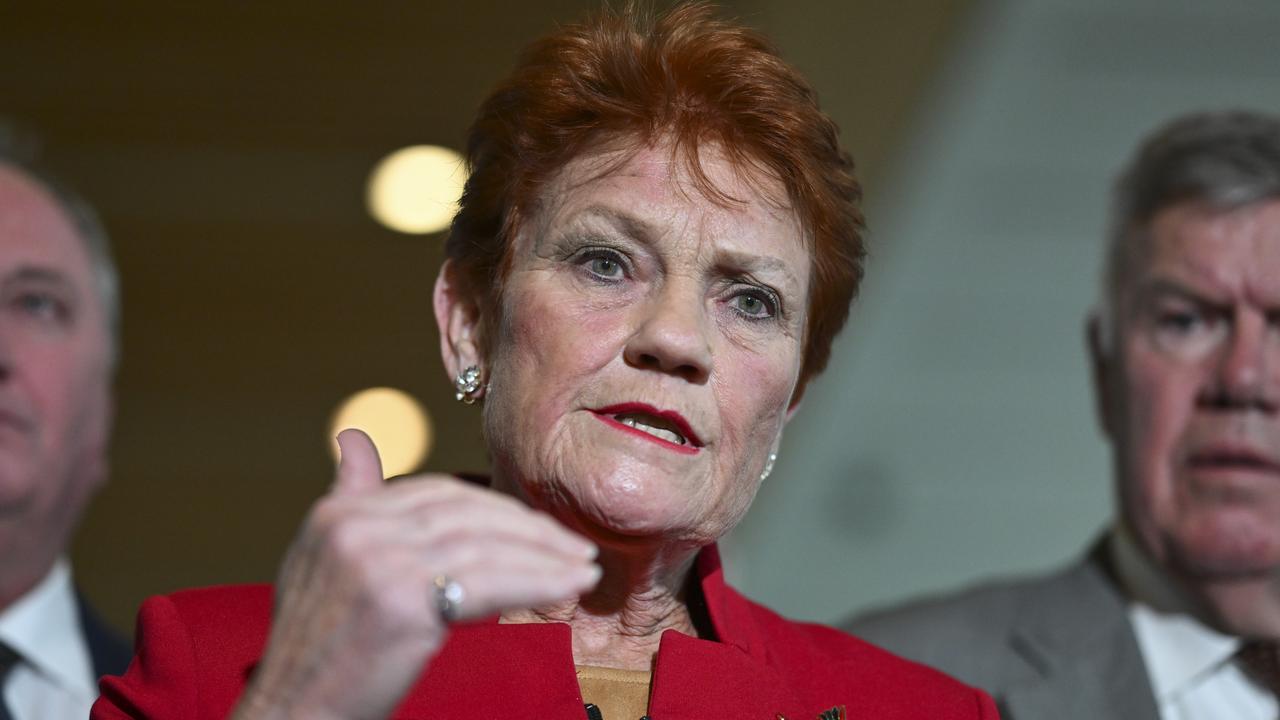
    Speaking at the Australia Energy Producers conference in Adelaide on Thursday, party leader Senator Pauline Hanson framed the plan as a collaborative public-private partnership that spans the full lifecycle of gas projects, from initial exploration through to production and eventual decommissioning. Hanson stressed that the framework is designed to expand gas output rather than restrict it, while deliberately protecting the position of smaller domestic Australian gas producers that might be crowded out by larger players or sweeping policy changes.

    Under the policy, the government will offer a 30 percent rebate to operators covering legitimate exploration costs in Commonwealth waters. In exchange, the Commonwealth reserves the right to claim a 30 percent equity stake in any approved production licenses that emerge from that exploration. The government will cover its proportional share of all project costs, including end-of-life decommissioning expenses, guaranteeing that environmental protection responsibilities are baked into project planning from day one and that Australian taxpayers will not be left covering unpaid cleanup costs down the line. In return for its equity contribution, the government will receive an equivalent share of project production.

    All government-held equity will be owned by two newly established public entities: a Commonwealth special investment vehicle and the Australian National Wealth Investment Corporation. Hanson said these bodies will manage the public stake to align with Australia’s national interests, with all profits generated from the equity holdings directed into a national sovereign wealth fund that will be reinvested to grow long-term public wealth. Drawing a direct comparison to Norway’s successful resource model, Hanson noted that Norway’s state-led oil and gas strategy has built a $3 trillion sovereign wealth fund that benefits all Norwegian citizens, while Australia has yet to capture similar long-term value from its own abundant natural resources.

    Hanson pushed back against claims that the policy amounts to a socialist nationalization of the gas sector, arguing instead that the framework brings much-needed predictability for international investors. She pointed out that major Australian gas export partners, including Japan and South Korea, have already started shifting their purchasing to other markets due to chronic policy instability in Australia’s energy sector, and this plan will reverse that trend by creating a clear, consistent regulatory and investment environment.

    The One Nation leader also launched sharp criticism of a competing policy proposal, pushed by independent Senator David Pocock, the Greens and the Australia Institute, that would introduce a 25 percent export tax on gas. Hanson dismissed this approach as a deliberate attempt to dismantle Australia’s gas industry to advance an extreme green ideological agenda, arguing it would damage investment, kill jobs and erode Australia’s energy security.

    In comments to reporters after her speech, Hanson shared that the policy has been in development for a long time, rooted in a close study of Norway’s successful approach to public ownership of domestic energy resources. One Nation MP Barnaby Joyce added that the plan would make every Australian a part-owner of the nation’s offshore gas resources, delivering shared benefits that extend far beyond industry profits. When asked about where the government would find the funds to cover its share of project costs, Joyce noted that savings could be reallocated from existing climate funding portfolios.

    The proposal comes amid a shifting landscape for Australian gas policy: the federal Coalition has recently pledged to fast-track approval for new gas projects, while the ruling Labor government announced earlier this month that it will introduce a mandatory gas reservation scheme requiring exporters to set aside 20 percent of their total production for the domestic market to keep domestic energy prices stable.

    Hanson also addressed apparent tensions between her national policy and the position of One Nation’s South Australian branch, which has gained significant political traction following strong results in the state’s March 2024 election and is opposing the state Labor government’s bill to lift the statewide blanket ban on hydraulic fracture stimulation, or fracking. Hanson clarified that her national plan applies exclusively to gas projects in Commonwealth offshore waters, not onshore land-based developments, so there is no conflict with the state branch’s position. She emphasized that she does not interfere in state-level policy decisions, noting that South Australian One Nation members made their own independent call on the fracking ban.

    Hanson added that she personally opposes allowing fracking in South Australia’s southeast region, where One Nation holds the seat of MacKillop, because the area is prime agricultural production land situated over a critical water table. She also predicted that Premier Peter Malinauskas’ bill to lift the fracking ban will fail to pass state parliament, noting that the legislation lacks support from the Greens, the Liberal Party and One Nation. Hanson dismissed the push to lift the ban as a cynical political stunt rather than a serious policy proposal.

  • Queensland Olympics minister Tim Mander stands aside from job amid election scandal

    Queensland Olympics minister Tim Mander stands aside from job amid election scandal

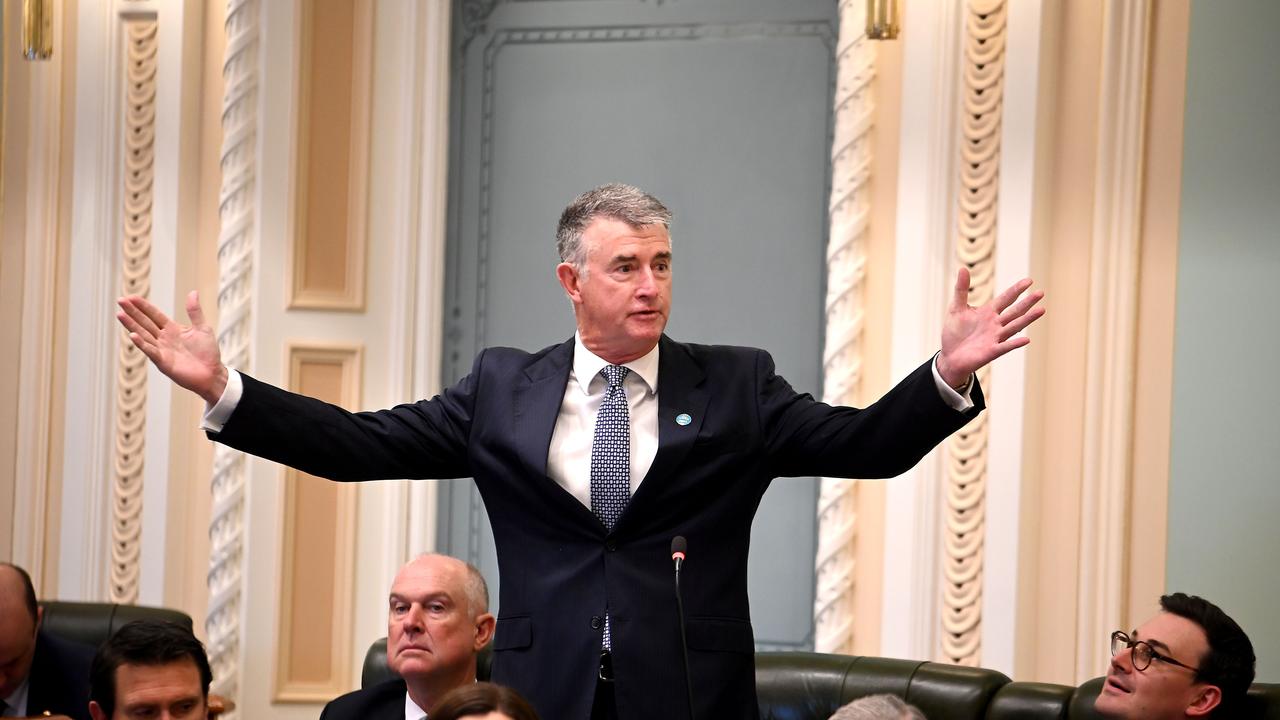
    In a sudden and high-stakes development that has shaken Queensland’s state government, Olympics Minister Tim Mander has stepped aside from his cabinet role, after the Australian Electoral Commission (AEC) referred his case to the Australian Federal Police (AFP) over allegations of a potential electoral offence.

    The controversy centres on claims that Mander, a Liberal National Party politician, incorrectly enrolled to vote at a staffer’s residential address last year, despite never residing at the property for the minimum 30-day period required under Australian electoral law. Under the Commonwealth’s Criminal Code Act 1995, the alleged misrepresentation of an enrolment address qualifies as a potential criminal offence, prompting the AEC to hand the investigation over to federal law enforcement.

    Mander, who was leading preparations for the 2032 Brisbane Olympic and Paralympic Games, released a public statement late Thursday confirming his decision to stand aside. He emphasized that he had self-reported the matter and cooperated fully with inquiries, saying he is confident the investigation will clear his name and disprove accusations from the opposition Labor Party. He added that his choice to step back was driven by a desire to avoid distracting the government from its core policy and operational work.

    The allegations first emerged in reporting by *The Australian*, after which Mander faced sustained pressure and criticism from Labor rivals. Addressing the Queensland parliament on April 21, Mander explained that the enrolment confusion grew from a period of personal upheaval following a marriage separation more than a year prior. He noted that he updated the Queensland Electoral Commission with his correct permanent address once his living situation stabilized, and has always complied with the state electoral body’s requirements.

    Queensland Premier David Crisafulli was briefed on the AEC’s advice at midday Thursday, and accepted Mander’s decision to stand aside from cabinet. The 2032 Olympics and Paralympics portfolio has now been transferred to Tourism Minister Andrew Powell, who will oversee ongoing preparations for the global sporting event until the investigation concludes.

    In its official statement, the AEC confirmed that the referral relates to a potential breach of the Criminal Code Act 1995, and determined that the AFP was the appropriate body to lead the probe. An earlier version of this reporting incorrectly stated that Mander had resigned permanently, but a spokesperson for his office later clarified that he is stepping aside only temporarily while the matter is resolved.