分类: politics

  • Three ways Cuba crisis could play out  after US indictment of Raúl Castro

    Three ways Cuba crisis could play out after US indictment of Raúl Castro

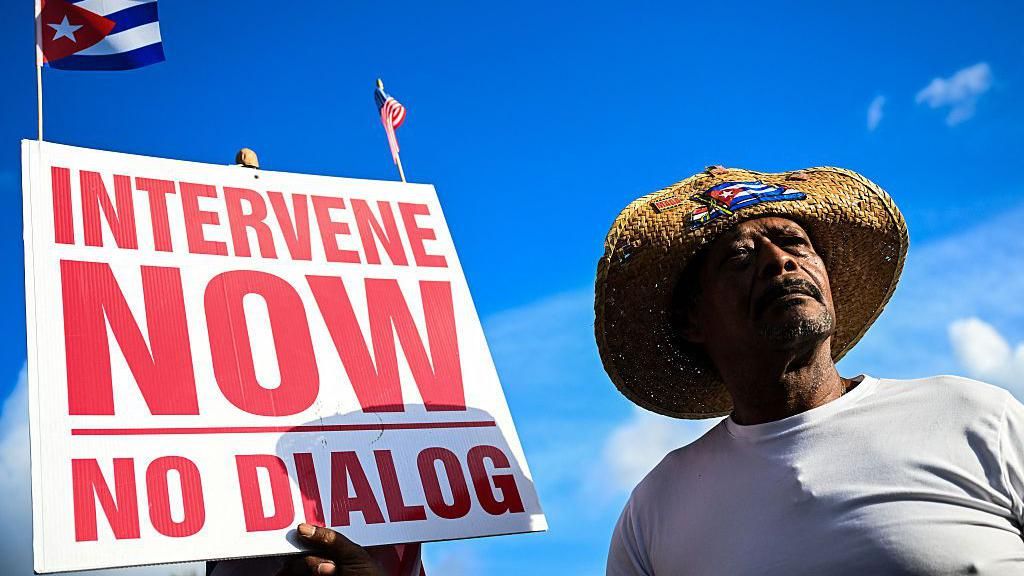
    The long-strained relationship between the United States and Cuba has entered a new, highly unpredictable phase after US authorities brought murder charges against 94-year-old former Cuban president Raúl Castro. This unprecedented legal action has ignited widespread global speculation that the Caribbean island could be the next target of Washington’s regime change agenda, coming on the heels of a years-long US maximum pressure campaign that has pushed Cuba into its worst fuel and energy crisis in decades. For 66 years, Cuba has been governed by a Communist system, and a growing bloc of US officials have publicly pushed for that government to be removed from power.

    While sitting US President Donald Trump has stated publicly that he does not believe any military escalation will be needed to achieve US goals, the White House has simultaneously doubled down on its vow to not tolerate what it labels a “rogue state” located just 90 miles (144 kilometers) off the US coast. Analysts and policymakers are now examining three distinct scenarios that could unfold as tensions escalate.

    The first, and most immediately dramatic pathway, is a US military operation to capture Castro to stand trial in an American courtroom. The charges against Castro stem from the 1996 downing of two civilian aircraft by Cuban fighter jets, and the indictment has stoked fears of a repeat of previous US capture missions. This kind of operation is not without precedent: earlier this year, US special operations forces carried out a rapid raid in Venezuela to capture then-President Nicolás Maduro, a long-time close ally of Cuba, to face US drug and weapons charges in New York. Going back further, the 1989 Operation Just Cause saw 20,000 US troops invade Panama to overthrow and detain then-leader Manuel Noriega.

    While Trump has declined to confirm or deny whether a similar mission is being planned for Cuba, a number of sitting US lawmakers have openly called for exactly that approach. “We shouldn’t take anything off the table,” Florida Senator Rick Scott told reporters, adding that “the same thing that happened to Maduro should happen to Raúl Castro.”

    Regional security experts note that from a purely military perspective, a capture mission is logistically feasible, but it carries significant risks and unforeseen complications. One key factor is Castro’s advanced age, and analysts also anticipate fierce resistance from Cuban security forces. Adam Isacson, a regional specialist at the Washington Office on Latin America, a non-governmental organization, explained that while Castro’s age might simplify extraction, his iconic status means he is under extremely heavy security protection. “It’s certainly possible,” Isacson noted, but added that removing Castro would likely do little to shift Cuba’s existing power structure. Castro stepped down from the presidency in 2018, and has since functioned primarily as an influential symbolic figurehead rather than holding direct day-to-day governing power. “He’s 94. I don’t think it would affect the power structure in Cuba very much anymore,” Isacson said. “The Castro dynasty retains influence, but it is no longer central to the system the revolution built.” Still, he acknowledged that a capture would carry major domestic political benefits for the Trump administration, which has long courted the anti-Castro Cuban exile community in Florida. “They’d love to humiliate the Castros and lock up one of the original 1959 revolutionaries,” Isacson said. “But the strategic value of that move is really questionable.”

    The second scenario being pushed by senior Trump administration officials is a negotiated transition to a new, US-aligned leadership structure that leaves most of Cuba’s existing governing institutions intact. This approach, experts point out, would mirror the recent transition in Venezuela that saw Nicolás Maduro replaced by Delcy Rodriguez, who has since governed the country while working directly with the Trump administration. Trump has repeatedly stated that his administration is already in contact with dissident figures inside Cuba who are seeking US support amid the island’s deepening economic crisis. “Cuba is asking for help, and we are going to talk,” Trump wrote on his social platform Truth Social on May 12.

    Just days after that post, CIA Director John Ratcliffe held a closed-door meeting with multiple senior Cuban officials, including Castro’s grandson Raúl Guillermo Rodríguez Castro and Interior Minister Lázaro Álvarez Casas. Secretary of State Marco Rubio told reporters during a Florida appearance that “We’ll engage with the Cubans… at the end of the day they need to make a decision. Their system just doesn’t work.” Rubio added that the administration’s top preference is reaching “a negotiated agreement” that would leave core government structures in place. The changes Washington is demanding include commitments to liberalize Cuba’s state-controlled economy, open the country to increased foreign investment, grant greater political power to US-based Cuban exile groups, and expel all Russian and Chinese intelligence operations from the island.

    Georgetown University Latin American studies professor Michael Shifter, former president of the Washington-based think tank Inter-American Dialogue, explained that this approach aligns with US strategic goals: “Just like they wanted to avoid instability in Venezuela, they want to avoid instability in Cuba. Forcing a full regime collapse would be too risky for that.” The biggest challenge to this plan, multiple experts note, is that there is no clear, pre-vetted alternative leader waiting in the wings inside Cuba, unlike the situation in Venezuela. “I don’t think there’s an obvious Delcy Rodriguez in Cuba, and power works differently in Cuba than it does in Venezuela,” Shifter said. “It’s hard for them to find the kind of figure they’re looking for, but that doesn’t mean they aren’t actively searching for a cooperative governing structure.”

    The third and most passive scenario is that Cuba’s government will eventually collapse entirely under the weight of ongoing US economic pressure, which has already left most Cuban residents coping with hours-long daily blackouts and widespread shortages of basic food and consumer goods. President Trump has argued that this outcome is already well underway, saying “There will be no escalation. I don’t think it’s necessary. The place is falling apart. It’s a disaster, and they have lost control to some extent.”

    But experts warn that this narrative overlooks key strengths of the Cuban state, noting that even amid a catastrophic economic downturn, government and security institutions still maintain firm control over daily life across the island. “You have to distinguish between the Cuban economy and the Cuban state and government,” Shifter explained. “The Cuban economy can collapse, and is collapsing… but the state still functions, especially on the security side.”

    A full state collapse would also create major new problems for the Trump administration, as it would likely trigger a massive wave of Cuban migration, primarily toward the US southern border. The Trump administration has already imposed harsh new immigration restrictions that have blocked most recent Cuban arrivals from accessing political asylum and other legal pathways to resettlement. “If there’s a collapse, you’re going to see a big portion of the Cuban population do everything they can to get away, the same way they have from Haiti over the years,” Isacson said. He added that while Florida would be the primary destination for most migrants, many would also likely travel through Mexico to reach the US. Isacson noted that he has been surprised a mass exodus has not already begun, given the extreme conditions many Cubans are facing: “People are probably subsisting on 1,000 or 1,500 calories a day, and are not able to get basic healthcare. You’d think that people would already be building their boats.”

    For the hundreds of thousands of Cuban exiles living in the US, many of whom have spent decades advocating for the overthrow of the Havana government, the current moment brings long-awaited hopes that their goal may finally be within reach. But for Cuban residents on the island, the uncertainty of what comes next brings new hardship and anxiety after decades of economic isolation and political tension.
  • Oxford Union’s Palestinian president on why she invited Tommy Robinson to debate Islam

    Oxford Union’s Palestinian president on why she invited Tommy Robinson to debate Islam

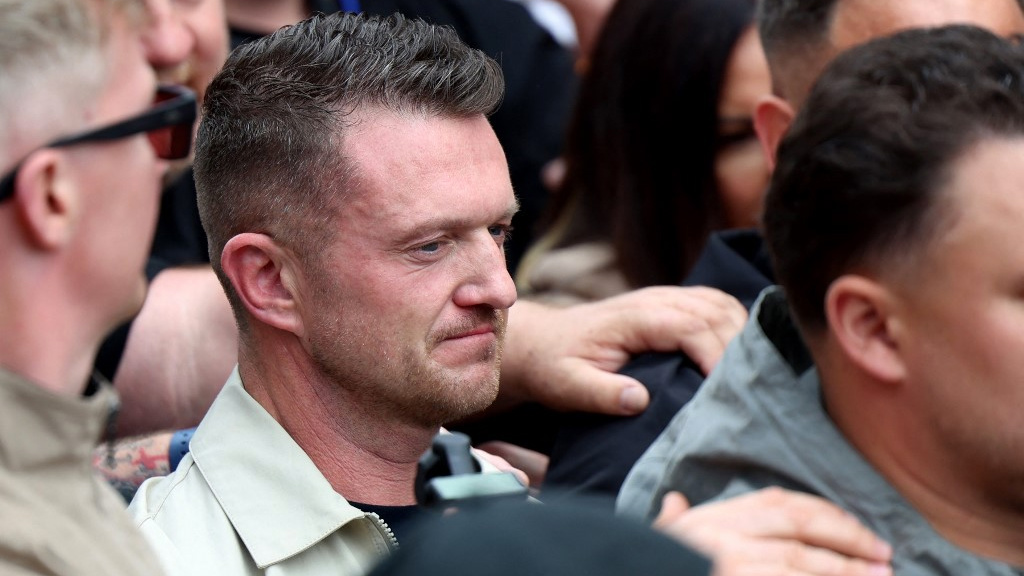
    The Oxford Union, one of the world’s most famous and storied collegiate debating societies, finds itself at the center of yet another firestorm, this time over a decision that cuts straight to the heart of global conversations about free speech, religious scrutiny, and the line between hate speech and open debate. The flashpoint? A planned debate titled “This House believes the West is right to be suspicious of Islam”, featuring an invitation to far-right anti-Islam activist Tommy Robinson, whose real name is Stephen Yaxley-Lennon, a man with multiple criminal convictions including for assault, fraud, and contempt of court. What makes the controversy even more unexpected is that the invitation came from the union’s current president, 20-year-old Arwa Elrayess — a Muslim student of Palestinian origin.

    Middle East Eye traveled to the University of Oxford this week to meet Elrayess in the union’s historic wood-panelled Gladstone Room, a space steeped in British political legacy. Named for former British prime minister and one-time union president William Gladstone, the room features soaring painted ceilings, shelves lined with centuries of national newspaper archives, and plush leather armchairs that once served as seating for the society’s smoking room in a more permissive era. The semi-circular cabinet table by the window, where Gladstone once met his ministers, is said to have been designed specifically so the former leader could look every minister directly in the eye to spot dishonesty — a detail Elrayess shared with a nod to the confrontational conversation ahead.

    Robinson, a polarizing figure who has built his public profile on anti-Islam activism, recently drew 60,000 attendees to a London rally where he declared he would “stop Islam” if he gained power, called on supporters to “prepare for the Battle of Britain”, and demanded that many Muslims leave the United Kingdom. When asked if these comments qualified as hate speech, Elrayess did not mince words: “I think everything that was said was abhorrent.” But she remains unwavering in her commitment to holding the debate, a stance shaped directly by her own experience as a Muslim and Palestinian student at Oxford.

    In her first year at the university, during the Israeli military campaign in Gaza that Elrayess refers to as genocide, she debated an Israeli soldier on the union floor. At the time, she had family still living in Gaza, making her one of the most personally invested participants in that room. She recalled that experience as deeply empowering: “I could not have thought of anything more vindicating than to be able to stand up there and be given equal weight, and to be able to give my views. People came up to me from all different backgrounds and said, ‘thank you so much for getting to say the things that I wanted to say, but I don’t think we ever had the opportunity.’”

    That experience shaped Elrayess’s core philosophy on inviting controversial figures: inviting a speaker does not grant them moral legitimacy, it simply acknowledges that their views hold enough public influence to require direct scrutiny. “What we are saying is that their views are influential and consequential enough that they deserve to be scrutinized,” she explained. She added that she wants to challenge the harmful perception that Muslims seek to avoid scrutiny of their faith: “I wanted to prove that it is within a Muslim’s term, that I was willing to have this conversation. I’m not afraid to have my faith scrutinised because I know I can defend it. I’m not afraid to hear this rhetoric because I know what I think about it, and I want to be able to give other Muslim speakers or other Muslim students the same opportunity I had when I first came to Oxford, to be able to look someone in the eye who’s done so much harm to your communities and tell them exactly why they’re wrong.”

    Elrayess also pushed back against claims of hypocrisy leveled by Roshan Salih, editor of British Muslim news site 5 Pillars, who has called for her resignation over the unresolved 2024 controversy surrounding Palestinian writer Susan Abulhawa. Last year, Abulhawa’s speech criticizing Israel was deleted and edited from the Oxford Union’s YouTube channel, a decision Elrayess — who was not president at the time — has openly condemned as censorship. She told Middle East Eye that she is working behind the scenes to restore the unedited full speech to the platform before her term ends: “I cannot imagine leaving my term without that video going back up.”

    The decision to invite Robinson has drawn fierce condemnation from across the British political and religious establishment. Labour MP and former cabinet minister Anneliese Dodds, whose constituency covers Oxford East, said this week that “The hatred promoted by Stephen Yaxley-Lennon, also known as Tommy Robinson, has no place in our great city.” The Bishop of Oxford Dr Steven Croft and Imam Monawar Hussain released a joint statement saying they were “disturbed and saddened by the event”, arguing that union leadership “have a duty of care to the many thousands of Muslims, Jews and others of different faiths in the city.”

    Robinson is already persona non grata across most major British institutions: the National Union of Students maintains an official de-platforming policy for him, right-wing media outlet GB News has never extended an invitation for him to appear, and the right-wing Reform UK party has stated he is not welcome within its ranks. Large-scale protests are planned for the day of the debate, scheduled just over a week from now, and security concerns have led many to predict the event will be cancelled entirely. Multiple scheduled speakers have already withdrawn from the debate, with independent MP Adnan Hussain confirming his withdrawal last week over Robinson’s involvement. Some speakers have even threatened to pull out of all future union events in protest.

    Contrary to widespread claims of Muslim opposition to the invitation, however, Elrayess says many Muslim students have privately expressed their support. A poll conducted by 5 Pillars — the same outlet whose editor called for her resignation — found that a majority of its readers also backed holding the debate. Elrayess argues that hiding controversial views from public debate does not make them disappear: “It’s not that these issues will go away if Robinson can’t speak at the union. The real danger is when these conversations are having nobody there to confront them or scrutinise them.” If Robinson attempts to violate British free speech laws during the event, she added, the debate will be immediately halted and he will be removed from the chamber, under the union’s strict existing rules.

    This controversy is only the latest in a 200-year history of the Oxford Union sparking national and global outcry over its commitment to open debate. Founded in 1823 by a group of students rebelling against university censorship, the society has long served as a training ground for future British political leaders and a magnet for contentious conversations. In 1933, it passed a motion declaring “This House would not in any circumstances fight for King and Country”, drawing fierce condemnation from Winston Churchill, who called the resolution “abject, squalid, shameless” and “nauseating”. In 1964, civil rights leader Malcolm X spoke on the union floor in defense of extremism in the name of liberty; former U.S. president Richard Nixon spoke there four years after his resignation over the Watergate scandal; O.J. Simpson drew global headlines when he addressed the union shortly after his acquittal on murder charges; and the British government once banned broadcasts of a speech by Sinn Fein leader Gerry Adams. Just last year, the union drew widespread condemnation from conservative media after members voted overwhelmingly to declare Israel an “apartheid state responsible for genocide”.

    The core question at the heart of this debate is not new: when does a view become so dangerous that it deserves to be de-platformed entirely? The argument for barring extreme voices was famously laid out by philosopher Bertrand Russell in 1962, when he rebuffed an invitation to debate British fascist leader Oswald Mosley. “It is always difficult to decide on how to respond to people whose ethos is so alien and, in fact, repellent to one’s own,” Russell wrote. “Nothing fruitful or sincere could ever emerge from association between us.”

    But the Oxford Union has long stood by the opposite principle, a legacy that former British Prime Minister Harold Macmillan once summed up by calling the institution “the last bastion of free speech in the western world.” Whether the Robinson debate goes ahead as planned or is cancelled due to pressure and security concerns, the controversy itself carries on the union’s long tradition of forcing the world to confront the hardest questions about free speech, power, and the price of open dialogue. It is a debate that will continue to rage, both inside the union’s historic chambers and far beyond the walls of Oxford’s university.

  • Iranian press review: State TV airs weapons training

    Iranian press review: State TV airs weapons training

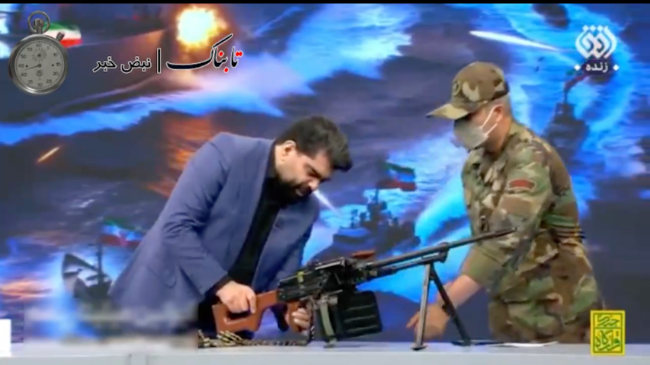
    Against a backdrop of escalating regional tensions tied to the U.S.-Israeli conflict, Iran’s state-controlled public broadcaster has introduced a dramatic shift in programming, rolling out weapons training segments that mark a new escalation of militarized messaging on national airwaves. The Islamic Republic of Iran Broadcasting (IRIB), the country’s sole television network, remains firmly under the control of hardline political factions, with its top leadership directly appointed by Iran’s Supreme Leader. The new training content walks viewers through step-by-step demonstrations of assembling, disassembling, and operating standard military firearms including Kalashnikov rifles and PK machine guns.

    One particularly striking live segment on IRIB’s Channel 3 featured a masked instructor in an Islamic Revolutionary Guard Corps (IRGC) uniform walking audiences through Kalashnikov handling. After the host prepared the weapon, he received formal permission from the IRGC officer to open fire on a United Arab Emirates flag displayed inside the studio, carrying out the provocative act live on air. In a separate live outdoor segment, a male presenter joined pro-establishment crowds gathered in central Tehran’s main public squares, firing a shot into the sky directly in front of rolling cameras. He framed the action as a warning to potential foreign adversaries, noting, “This was just a shot for fun, but if necessary, each of us will take up arms and cut off the ear of those who want to invade this land.”

    Militarized messaging on state television has not been limited to male on-air personalities. Prominent pro-establishment presenter Mobina Nasiri appeared on live broadcast holding a Kalashnikov, stating that she had recently been issued the weapon and stands ready to join combat against Israel and the United States if called upon.

    Alongside this shift in state broadcasting, a new report from U.S.-based Iranian human rights monitoring agency HRANA documents a sharp deterioration in Iran’s human rights climate since the escalation of the U.S.-Israeli conflict. Between February 28 and April 8 alone, HRANA records more than 4,000 arrests on broadly defined security-related charges, ranging from espionage and threatening national security to spreading unapproved war-related information and cooperating with what Iranian authorities label hostile foreign states. The same period saw 50 people executed across the country, 32 of whom were charged with political or security-linked offenses, according to the report. Prison conditions have deteriorated dramatically, while Iranian authorities have expanded security checkpoints across urban centers and tightened restrictions on civilian movement. Most notably, HRANA confirms that child as young as 12 years old are being deployed to staff these checkpoints, a practice that has drawn widespread international condemnation.

    The new hardline direction of IRIB programming has also sparked public controversy over a recent inflammatory remark targeting the Iranian Red Crescent Society. During a live on-site segment with pro-establishment demonstrators in Tehran, a host asked a gathered participant, “Who is more despicable than the Red Crescent rescue dogs?” The comment drew swift backlash from Red Crescent rescue personnel, who spoke out publicly against the remark in an interview with independent Iranian outlet Khabar Online. Omid Barzegari, a rescue dog trainer with the organization, pushed back sharply on the insult, emphasizing the critical work these animals do to locate survivors trapped under rubble following U.S. and Israeli strikes. “These dogs are rescue angels,” Barzegari said. “Each of us and these dogs works as a team. These dogs are not despicable. They are trained to serve the people.”

    The interview went viral across Iranian media platforms, sparking widespread public criticism of both the remark and IRIB’s leadership. One Iranian viewer wrote online, “There is not a single person with common sense among the policymakers of this gigantic [IRIB] organisation, this has nothing but terrible costs for the people.” The public friction around the comment ties into long-standing restrictions on dog ownership in Iran, where conservative authorities have enforced bans on public dog walking based on strict interpretations of Islamic law.

    Beyond Iran’s borders, controversy has erupted over recent demonstrations by exiled Iranian monarchist supporters that have drawn condemnation from Iranians both inside the country and in the diaspora. In recent weeks, groups backing Reza Pahlavi, the son of Iran’s deposed last shah, have held military-style parades in European cities including London, Copenhagen, and Regensburg, Germany, while carrying flags associated with Savak — the shah-era intelligence agency notorious for systemic human rights abuses and political repression. Critics have compared the aesthetic and organizational structure of the parades to fascist rallies that preceded World War II, and the displays sparked fierce backlash across Persian-language social media.

    Many social media users have mocked and condemned the events, with one creating a viral edited version of the Savak logo that replaces the iconic lion with a ketchup bottle to satirize what many see as the movement’s hollow posturing. Another Iranian user criticized the exclusionary nationalist rhetoric used during the parades, posting an ethnic map of Iran to the platform X and writing, “I don’t want to hear Iran shouted like this from these people. Their Iran is nothing like our Iran.”

    In recent months, growing numbers of Iranians have publicly criticized exiled monarchist factions, which receive open backing from Israel, for supporting foreign military strikes on Iran. Despite this widespread domestic criticism, many major international media outlets continue to frame monarchist leaders as the primary face of the Iranian opposition to the Islamic Republic. That disconnect has drawn frustration from many Iranian social media users, who note the contrast between the exiled faction’s public displays and the risks faced by dissidents inside Iran. “In the bitter days when the brave children of Iran are being led to the gallows, part of the diaspora is putting on ridiculous shows,” one Persian-speaking user wrote on X. “They have turned the real struggle and the price people pay inside the country into vulgarity abroad, and unfortunately, the world only sees this picture.”

    This report is compiled as an Iranian press digest, and its content has not been independently verified by Middle East Eye.

  • UN gravely concerned by an Afghan Taliban law that has provisions on child marriage

    UN gravely concerned by an Afghan Taliban law that has provisions on child marriage

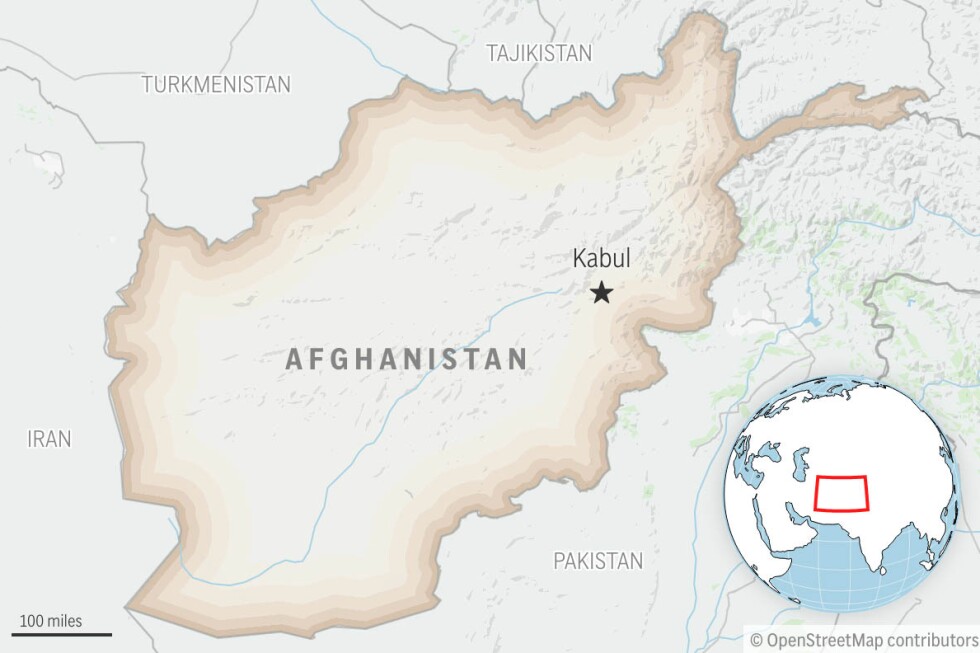
    On Thursday, the United Nations raised sharp, grave alarm over a newly enacted family law from Afghanistan’s ruling Taliban government, warning that the legislation’s provisions on underage marriage further cement systemic discrimination against the country’s women and girls. The Taliban administration has rejected the international body’s criticism, framing the new regulatory decree as fully aligned with Islamic law and noting that it already enforces a nationwide ban on forced child marriage.

    Last week, Afghanistan’s Ministry of Justice formally published Decree No. 18, officially titled “on judicial separation of spouses”, which lays out new formal regulations for marital separation between married couples. In an official statement, the United Nations Assistance Mission in Afghanistan (UNAMA) flagged that one of the decree’s most contentious provisions explicitly allows a girl’s silence once she reaches puberty to be interpreted as legal consent to marriage. The mission added that the document’s framing of marital separation for girls who are married after reaching puberty implicitly codifies permission for child marriage, directly undermining the core principle of free, full and informed consent to marriage and failing to protect the best interests of minor children.

    The new law does outline narrow circumstances under which a child marriage arranged by a father or paternal grandfather can be ruled invalid: if the marriage was arranged without a dowry, with an insufficient dowry, or involved corrupt misappropriation of funds. It also grants a minor girl married off by her father or grandfather the right to petition a court to void her marriage contract after reaching puberty, if her husband has failed to treat her with kindness or is known for harmful conduct. However, the legislation introduces steep procedural inequalities for women seeking divorce: if a woman requests a divorce that her husband denies, and she has no witnesses to support her claim, her husband’s testimony will be treated as legally valid. The only exception to this rule is if the woman submits her divorce request directly before a judge.

    Long before this new decree was introduced, women and girls across Afghanistan already endured sweeping, systemic discrimination enforced by Taliban law. Taliban regulations impose strict mandatory dress codes, restrict acceptable public behavior, bar girls and women from secondary education, university attendance, most formal employment, and nearly all public leisure activities ranging from gyms and beauty salons to public city parks.

    Georgette Gagnon, UN Deputy Special Representative of the Secretary-General and head of UNAMA, emphasized that Decree No. 18 is part of a broader deeply worrying trend of incremental erosion of women and girls’ rights across Afghanistan. While the decree does formally create pathways for women to pursue marital separation, it creates a drastically unequal playing field: men retain an automatic unilateral right to divorce, while women are forced to navigate a complex, restrictive judicial process to end a marriage. UNAMA’s statement noted that this unequal framework reinforces structural gender discrimination and severely limits women’s autonomy over matters that are fundamental to their dignity, personal safety, and overall well-being.

    When the Taliban retook control of Afghanistan in 2021 following the chaotic withdrawal of U.S.-backed NATO forces, the administration initially announced a small set of nominal limited rights for women, including a decree that acknowledged women’s right to inheritance and the right to refuse unwanted marriage. UNAMA pointed out that successive regulatory decrees from the Taliban have steadily undermined these limited protections over time. The cumulative effect of the dozens of restrictions imposed by the Taliban has left millions of Afghan women and girls stripped of their right to education, weakened women’s economic participation, and deepened widespread poverty across the country, impacts UNAMA says will carry long-term consequences for Afghanistan’s overall national development.

    Speaking in an interview with Afghanistan’s state-owned RTA broadcaster, Taliban government spokesperson Zabihullah Mujahid dismissed international criticism, arguing that objections to the decree from what he called “those who contradict the religion of Islam” are not a new development and do not deserve attention. Mujahid reaffirmed that Afghan Supreme Leader Hibatullah Akhundzada has already issued a separate standing decree banning forced child marriage, adding that Afghan courts and the Ministry of Vice and Virtue have investigated thousands of suspected forced marriage cases over the past year alone, which he claims demonstrates the Islamic Emirate’s commitment to protecting women’s rights.

  • US threatens to revoke Palestinian UN ambassador’s visa, report says

    US threatens to revoke Palestinian UN ambassador’s visa, report says

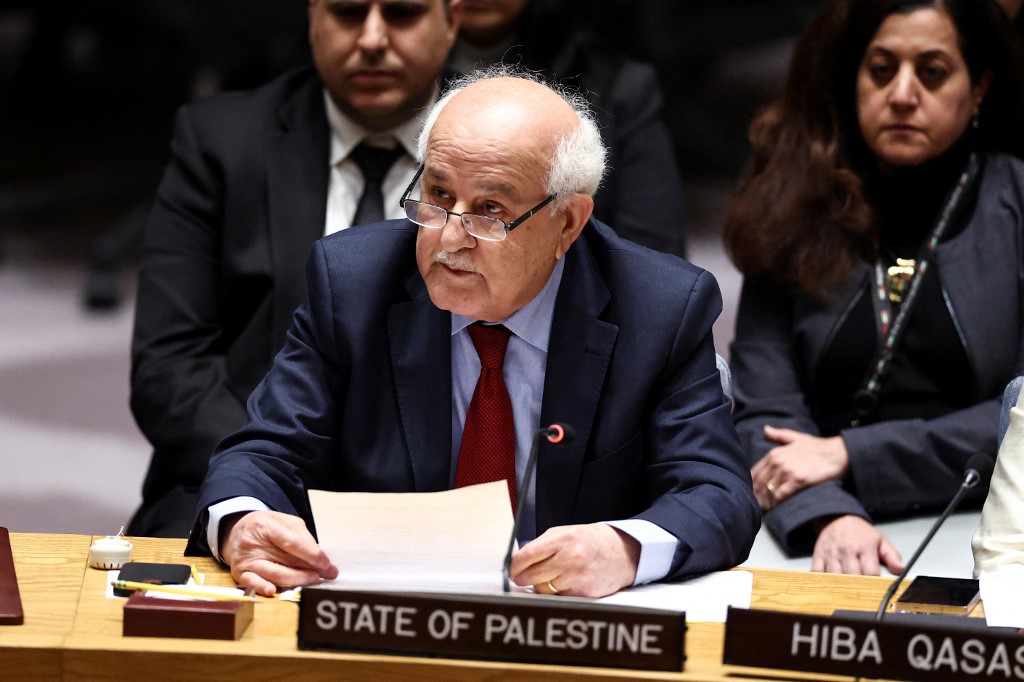
    In a stark escalation of diplomatic pressure on the Palestinian Authority, the United States has issued an ultimatum: revoke Riyad Mansour’s candidacy for vice-president of the UN General Assembly, or face the revocation of visas for the entire Palestinian delegation to the United Nations, National Public Radio reported Thursday.

    The threat is laid out in a confidential US State Department cable obtained by NPR, dated May 19, which instructed American diplomatic personnel based in Jerusalem to formally press Palestinian leadership to pull Mansour’s name from the race ahead of the June 2 election. Twenty-one candidates are vying for the vice-presidential posts in this vote.

    The cable frames Mansour as a problematic candidate, pointing to his long record of public accusations that Israel is committing genocide in Gaza. It argues that his elevation to the vice-presidential role would inflame regional tensions and directly undermine the Gaza peace plans advanced by former US President Donald Trump.

    “A bully pulpit for Mansour would not improve the lives of Palestinians and would significantly damage U.S. relations with the PA [Palestinian Authority]. Congress will take it extremely seriously,” the cable reads. It also reminds Palestinian officials of a 2025 decision by the State Department to waive existing visa sanctions and entry restrictions for Palestinian officials assigned to the Palestine Liberation Organization’s UN Observer Mission in New York, adding that “it would be unfortunate to have to revisit any available options.”

    This is not the first time US lobbying has derailed Mansour’s bid for a top UN leadership role. The cable confirms that Mansour was forced to withdraw his candidacy for UN General Assembly president back in February after intensive US pressure. The Trump administration has a long history of using visa restrictions to push back against Palestinian diplomatic efforts at the UN: last year, Washington refused to grant entry visas to Palestinian Authority President Mahmoud Abbas and more than 80 other senior Palestinian officials who planned to attend the annual UN General Assembly gathering in New York.

    That 2024 visa ban came on the heels of announcements from multiple Western nations that they planned to recognize Palestinian statehood during the high-level assembly meeting. US officials justified the move at the time by citing the Palestinian Authority’s support for ongoing war crimes and genocide investigations against Israel and its senior leaders at the International Court of Justice and International Criminal Court. The Abbas’ office pushed back against the ban, arguing it violated the UN Headquarters Agreement, which legally requires the US, as the host nation of the UN’s New York headquarters, to grant unimpeded entry visas for official UN business.

    The new ultimatum has drawn immediate criticism from foreign policy experts and former US diplomatic officials. Hady Amr, who served as a senior State Department official covering Palestinian affairs during both the Obama and Biden administrations, called the threat of visa revocation counterproductive to long-term diplomatic efforts.

    “It’s counterproductive because you need diplomats to work out problems between countries and by expelling diplomats, you’re undermining not only their ability to solve problems, but the abilities of the United States as well,” Amr said.

  • Russia holds nuclear drills on land, sea and air, joined by its ally Belarus

    Russia holds nuclear drills on land, sea and air, joined by its ally Belarus

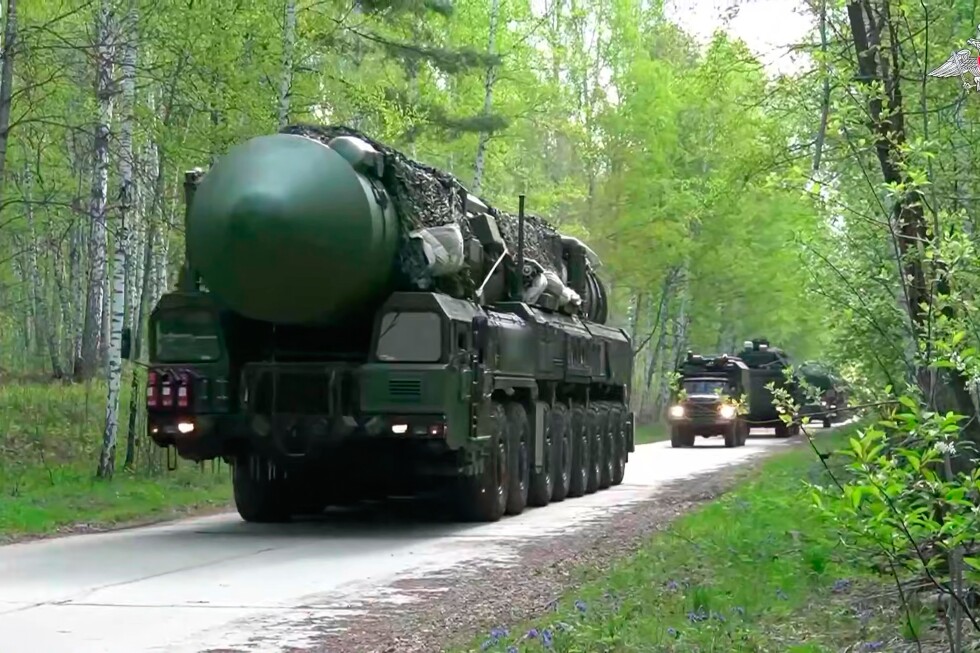
    In the final stretch of a high-stakes joint military exercise focused on nuclear capabilities, heavy military convoys transporting intercontinental ballistic missiles (ICBMs) rolled through forested training grounds Thursday, as nuclear-powered submarines departed their Arctic and Pacific basins and combat aircrews scrambled to their alert positions across Russia and its western ally Belarus.

    The three-day drill, which launched Tuesday, unfolds against a sharply escalated backdrop of long-range Ukrainian drone attacks deep into Russian territory. Recent strikes targeting Moscow’s outer suburbs have left three civilians dead and damaged multiple residential and industrial structures, eroding the Kremlin’s long-held narrative that the ongoing conflict in Ukraine — now stretching into its third year — remains a distant threat that does not disrupt ordinary Russian life.

    During a visit to a Belarusian military unit participating in the exercise, Belarusian President Alexander Lukashenko personally inspected Russian-made Iskander short-range ballistic missiles, which are modified to carry nuclear warheads. “I dreamed about this machine a long time ago,” Lukashenko told reporters during the inspection.

    Russian defense officials released detailed figures on the scale of the exercise: more than 64,000 military personnel, over 200 missile launch systems, more than 140 fixed-wing and rotary aircraft, 73 surface combat vessels, and 13 submarines, eight of which are outfitted with nuclear-armed ICBMs. According to the ministry, the core training objective of the drills is to practice “preparation and use of nuclear forces under the threat of aggression,” while also strengthening combined operational coordination between Russian and Belarusian military units. Belarus has served as a key Russian ally since the 2022 full-scale invasion of Ukraine, and currently hosts Russian nuclear weapons on its territory, including the advanced, nuclear-capable intermediate-range Oreshnik missile system.

    This exercise marks the latest iteration of the Russian government’s public demonstration of its nuclear deterrent capabilities, a strategy that Russian President Vladimir Putin has leaned on repeatedly since ordering the full-scale invasion of Ukraine in February 2022. The core goal of this posture is to dissuade Western nations from expanding military support to Kyiv, particularly by restricting Ukraine’s access to longer-range strike weapons that can hit targets deep inside Russia.

    Earlier this year, Putin signed off on a revised Russian nuclear doctrine that introduced a key new provision: any conventional attack on Russia backed by a nuclear-armed power will be treated as a combined attack on the Russian state. Analysts widely view this revision as a deliberate lowering of the threshold for potential Russian nuclear use, explicitly designed to deter Western nations from approving Ukrainian long-range strikes against Russian territory. The updated doctrine also extends the Russian nuclear umbrella to cover Belarus, with Putin confirming that while Moscow will maintain ultimate control over nuclear weapons deployed in the ally’s territory, Belarus would be allowed to participate in target selection in the event of armed conflict.

  • A parody ‘cockroach’ party in India becomes major outlet for youth anger and protest

    A parody ‘cockroach’ party in India becomes major outlet for youth anger and protest

    In the digital age, grassroots political discontent often emerges in the most unexpected of forms. What started as an offhand, throwaway comment from one of India’s top judicial officials has evolved into a viral satirical protest movement that is capturing the attention of millions of young Indians and upending the country’s online political landscape.

    The story of the Cockroach Janta Party (CJP) — Janta translates to “people” in Hindi — began last month, when Supreme Court Chief Justice Surya Kant made inflammatory remarks during a public hearing. Addressing widespread anger over widespread unemployment, leaked government exam papers that have derailed job recruitment drives, and skyrocketing living costs, Kant compared unemployed young activists and job seekers to cockroaches, claiming they operated as “parasites” attacking India’s democratic institutions. “There are youngsters like cockroaches, who don’t get any employment or have any place in the profession,” Kant said, adding that many turned to social media activism to “start attacking everyone.”

    The comments spread like wildfire across Indian social media, with many young users decrying them as a dehumanizing dismissal of widespread youth hardship. While Kant later issued a clarification, saying his remarks targeted only people obtaining fraudulent academic degrees and that he never intended to insult India’s younger generation, the damage was already done. The controversy set the stage for what would become one of the fastest growing online movements in India’s recent history.

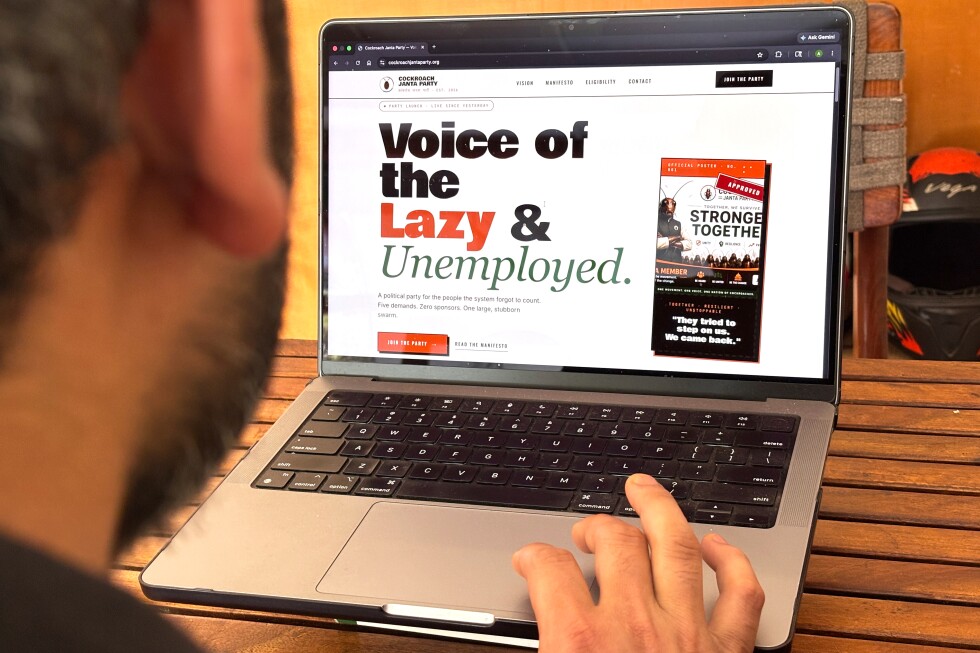
    Abhijeet Dipke, a political communications strategist and Boston University student with past experience working with the opposition Aam Aadmi Party, launched the CJP’s website and social media accounts just one week after Kant’s comments. What Dipke calls an accidental, unplanned satirical project quickly exploded in popularity: within five days of its launch, the CJP’s Instagram page had amassed more than 15 million followers, a figure that already outpaces the 8.8 million followers Prime Minister Narendra Modi’s ruling Bharatiya Janata Party (BJP) holds on the platform.

    Adopting the cockroach as its official party symbol — a nod to the insect’s legendary ability to survive even the harshest conditions, and a playful reclamation of the insult lobbed at unemployed youth — the CJP has turned absurdist humor into a powerful vehicle for protest. Its feed is flooded with viral memes, short skits, and satirical commentary mocking systemic political corruption, persistent joblessness, and the widespread dysfunction of India’s traditional political establishment. The movement leans heavily into self-parody: its tongue-in-cheek membership requirements include being unemployed, chronically active online, professionally skilled at political rants, and “lazy.” Its satirical manifesto nonetheless tackles serious, divisive issues in Indian politics, from allegations of voter manipulation to the cozy ties between corporate media and the Modi administration to the controversial practice of appointing retired judges to key government posts.

    Within days of launching, the CJP drew more than tens of thousands of online volunteers who signed up via a public Google Form, and earned public endorsements from several opposition politicians. Dipke says the movement’s explosive growth reflects a long-simmering wave of discontent that has been building among India’s young population for years. “It is the younger people who were actually very frustrated. They didn’t have any outlet. They were really angry at the government,” Dipke told the Associated Press in an interview.

    India’s youth make up more than 27% of the country’s 1.4 billion population, and decades of rapid population growth have left millions of young people facing scarce job opportunities and double-digit youth unemployment, a crisis that successive governments have failed to address. Beyond economic hardship, many young Indians have grown increasingly critical of Modi’s ruling Hindu nationalist BJP, citing rising religious polarization, widening economic inequality, and growing authoritarianism as core sources of anger.

    Dipke emphasizes that the CJP is not formally affiliated with any existing political party, but its rapid rise fits into a broader regional trend across South Asia, where youth-led movements have toppled sitting governments in recent years, from the 2022 uprising that ousted Sri Lanka’s Rajapaksa regime to mass student-led protests in Bangladesh and Nepal. “Five years ago nobody was ready to speak up against Modi or the government. The times are changing,” Dipke said.

    Not everyone has welcomed the satirical movement. Supporters of Modi and the BJP have dismissed the CJP as nothing more than an opposition-aligned online gimmick, arguing that its viral popularity will fade as quickly as it emerged, noting that it remains a digital-first movement with no established grassroots infrastructure. Critics have also pointed to Dipke’s past work with the Aam Aadmi Party to claim the movement is not the spontaneous outpouring of youth anger its founders claim.

    But Dipke pushes back against those claims, arguing that what started as an online project will not remain confined to social media, and that it will permanently reshape India’s political discourse. “This is the movement that has arrived in India … it will change the political discourse,” he said. “It will continue online, and if required it will also come on the ground.”

    Already, the movement has begun to spill over into offline space, with young volunteers appearing at public protests dressed in full cockroach costumes. And as the movement grows, it has already faced its first wave of official pushback. Last week, Dipke announced on X (formerly Twitter) that the CJP’s original X account, which had amassed roughly 200,000 followers, had been blocked within India’s borders for reasons that have not been publicly disclosed. Within minutes, Dipke launched a replacement account and shared a defiant poster reading: “Cockroach is back. You thought you can get rid of us? Lol.”

  • Philippine justice chief orders arrest of senator wanted by the ICC over Duterte-era killings

    Philippine justice chief orders arrest of senator wanted by the ICC over Duterte-era killings

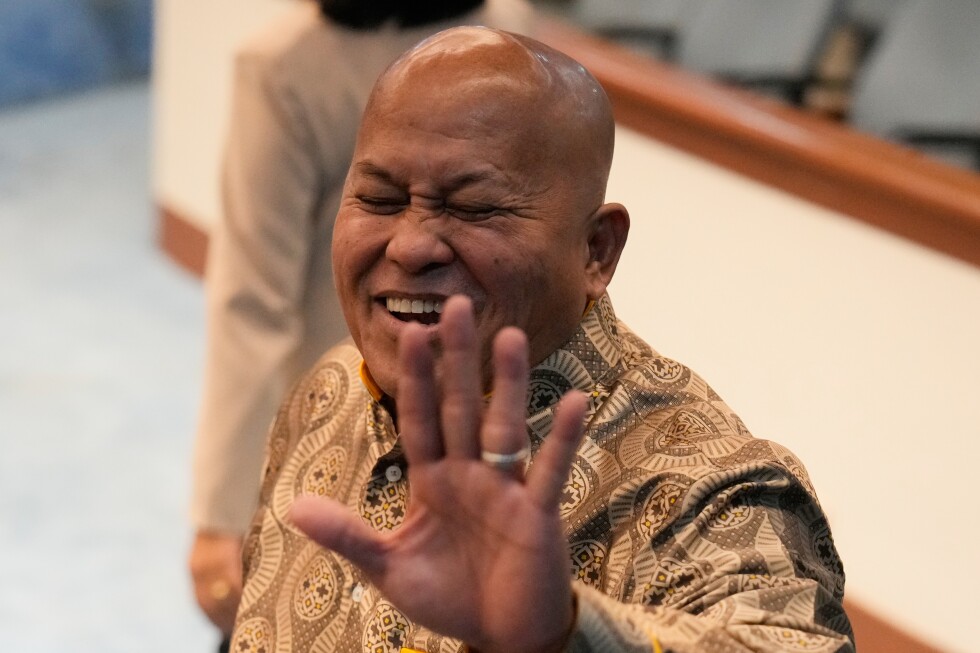
    A major political and legal standoff has deepened in the Philippines this week, after the country’s top justice official formally ordered law enforcement agencies to act on an International Criminal Court (ICC) arrest warrant for Senator Ronald Dela Rosa, a former police chief accused of crimes against humanity linked to Rodrigo Duterte’s deadly anti-illegal drug crackdown. In a public press briefing, Justice Secretary Frederick Vida made clear the government’s position: Dela Rosa is now classified as a fugitive from justice, and must be taken into custody to stand trial at the ICC’s headquarters in The Hague.

    Dela Rosa’s ties to the controversial drug war date back to his tenure as chief of the Philippine National Police from 2016 to 2018, when he oversaw the implementation of then-President Duterte’s hardline campaign against narcotics. The crackdown ultimately claimed the lives of thousands of mostly low-level suspects, drawing widespread condemnation from Western governments and global human rights advocacy groups for allegations of extrajudicial killings. Duterte himself, who held the presidency from 2016 to 2022, was already taken into ICC custody last year and transferred to The Hague, where he is currently on trial facing identical charges of crimes against humanity.

    The ICC unsealed the arrest warrant for Dela Rosa on May 11 this year, charging him with the crime against humanity of murder for the killings of no less than 32 people between July 2016 and April 2018, the period during which he led national police operations. Vida emphasized the weight of the accusations in his briefing, noting that thousands of victims – including children and even toddlers – were killed during the campaign. “It’s the government’s obligation to support and help them achieve justice,” Vida stated.

    Dela Rosa had previously attempted to block the warrant through a petition to the Philippine Supreme Court, arguing that the country is no longer a member of the ICC and the court has no jurisdiction over Filipino citizens. The Supreme Court rejected his petition, clearing the way for arrest efforts.

    The senator has been in hiding for months, skipping regular Senate sessions to avoid detainment. He made a surprise public reappearance on May 11, however, to back fellow Senator Alan Peter Cayetano’s bid for Senate presidency in the 24-member chamber, helping Cayetano secure a narrow majority victory. Dela Rosa arrived at the Senate building inside Cayetano’s vehicle, but when agents from the National Bureau of Investigation moved to serve the warrant, he fled into the Senate plenary hall, where allied senators granted him temporary protective custody.

    Chaos erupted just two days later on May 13, when security personnel assigned to the Senate building fired multiple volleys of warning shots after spotting armed government arrest teams positioned in a nearby adjacent building. The gunfire sent senators, staff, and journalists – including two reporters from The Associated Press – scrambling for safety. In the resulting confusion, Dela Rosa escaped the compound, driven away in an SUV by allied Senator Robinhood Padilla. Police have launched an investigation into whether the security team intentionally sparked the chaos to facilitate Dela Rosa’s getaway.

    Vida confirmed Thursday that authorities already have credible leads on Dela Rosa’s current location, but declined to share further details to avoid tipping off the fugitive. He issued a clear warning to any person considering aiding Dela Rosa in evading the nationwide manhunt: anyone who assists him will face criminal charges themselves.

    Dela Rosa’s legal crisis comes amid a rapidly escalating political power struggle between the Duterte political bloc and the administration of current President Ferdinand Marcos Jr. Vice President Sara Duterte, daughter of the former president, has already publicly accused Marcos of orchestrating what she calls the “kidnapping” of her father and his transfer to the ICC. Last week, the Marcos-dominated House of Representatives voted overwhelmingly to impeach Sara Duterte, who has announced her intention to run for the presidency in 2028. She faces multiple allegations including unexplained accumulated wealth, misuse of public government funds, and making a public threat to assassinate President Marcos. She has denied all charges but declined to answer them in detail. Her impeachment trial, which will be convened in the Senate, is scheduled to begin in July.

  • UK offers cheaper chocolate and tickets to the zoo in bid to ease cost of living squeeze

    UK offers cheaper chocolate and tickets to the zoo in bid to ease cost of living squeeze

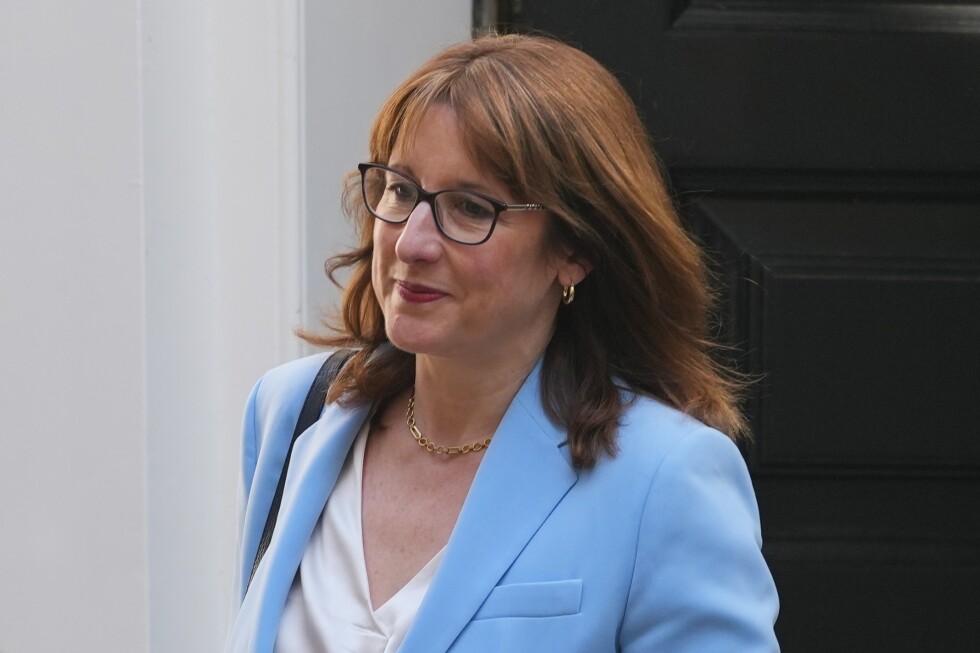
    LONDON – Facing simmering internal party unrest and growing public frustration over soaring household expenses, the British government has rolled out a series of modest cost-cutting measures designed to ease cost-of-living strains and rebuild voter support, according to a recent announcement from top Treasury official Rachel Reeves. The targeted relief comes as inflation faces new upward pressure spurred by the Iran war, which has disrupted key global energy supply chains. Reeves outlined the package Thursday, noting that the policy package is crafted to shield families and businesses from unexpected price shocks while setting the foundation for long-term economic stability.

  • Late queen pushed for son Andrew to be UK trade envoy: official papers

    Late queen pushed for son Andrew to be UK trade envoy: official papers

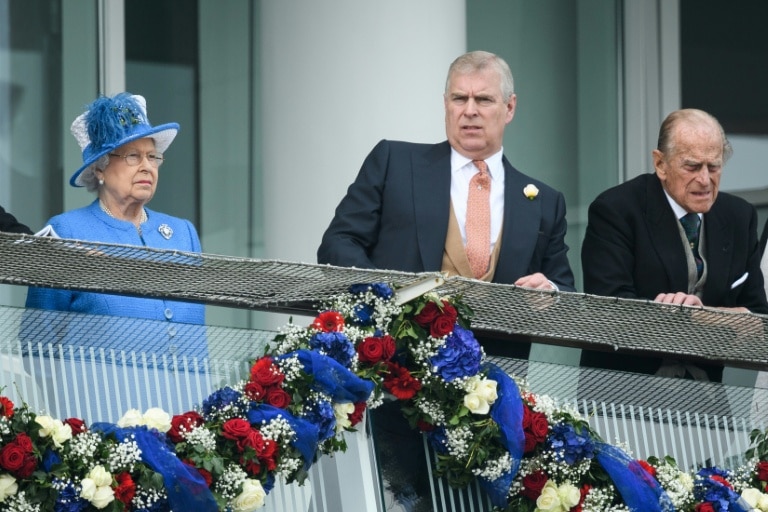
    Newly declassified British government documents have pulled back the curtain on a decades-old royal appointment, revealing that the late Queen Elizabeth II personally lobbied for her son Prince Andrew (full name Andrew Mountbatten-Windsor) to be given a prominent role as the UK’s international trade envoy at the turn of the 21st century. The release of the 11 files, which date back to 2000 and detail the negotiations around Andrew’s appointment to the role with British Trade International (BTI) – the public body tasked with promoting UK commerce overseas – comes amid ongoing fallout from the Jeffrey Epstein scandal that has continued to engulf the disgraced former royal. Andrew’s connection to the late American convicted sex offender has already cost him all of his official royal patronages and titles, which were stripped from him in 2022 following the public release of court documents tied to Epstein. Most recently, in February of this year, he was taken into police custody for questioning over allegations of misconduct in public office, with prosecutors claiming he shared sensitive state information with Epstein during his 10-year tenure as trade envoy from 2001 to 2011. After hours of interviews with law enforcement, Andrew was released without charge, and he has repeatedly denied all wrongdoing related to the allegations. The declassified files lay bare the direct role the late monarch played in securing the post for her son. In a February 25, 2000 letter sent by BTI chief David Wright to the then UK foreign secretary, Wright wrote that after a “wide-ranging conversation” with the Queen’s private secretary, it was made clear that appointing Andrew to the role was the Queen’s explicit “wish”. The letter further emphasized that “The Queen is very keen that the Duke of York should take on a prominent role in the promotion of national interests.” Even in the earliest internal discussions ahead of the appointment, protocol officials flagged unusual preferences from Andrew. A month before Wright’s letter, in an internal memo with the subject line “Duke of York’s travel”, protocol head Kathryn Colvin advised that the royal “should not be offered golfing functions abroad” during official trips, while also noting that the duke favored visits to “more sophisticated countries” and “liked travelling, especially when on royal business.” While the post itself was an unpaid position, Andrew’s decade in the role earned him the unflattering nickname “Air Miles Andy” due to his constant global travel, with all travel costs and luxury accommodation expenses covered by British taxpayers. In a written statement to the UK Parliament released alongside the declassified documents, current Trade Minister Chris Bryant confirmed that a thorough review of the files found “no evidence that a formal due diligence or vetting process was undertaken” ahead of Andrew’s appointment. Bryant added that the lack of formal vetting was “understandable”, given that the appointment was framed as a continuation of longstanding royal family participation in UK trade and investment promotion work. The document release also casts new light on another figure tied to the Epstein scandal: former cabinet minister Peter Mandelson, who was forced to resign as UK ambassador to the US last year over his undisclosed connections to the convicted sex offender. Mandelson is already under investigation over allegations of misconduct in public office dating back to his time as a government minister in the 2000s, and the Liberal Democrat Party – which pushed the current UK government to release the Andrew files – is now calling for the public release of all correspondence between Mandelson and the former prince. Andrew has been mired in controversy for years over his long personal friendship with Epstein. In one of the most high-profile accusations, Virginia Giuffre, an Epstein accuser who died by suicide in 2024, claimed that she was trafficked to have sex with Andrew three times starting in 2001, including two encounters when she was just 17 years old. Andrew agreed to settle a 2022 civil lawsuit brought by Giuffre out of court, without ever admitting legal liability for the allegations.