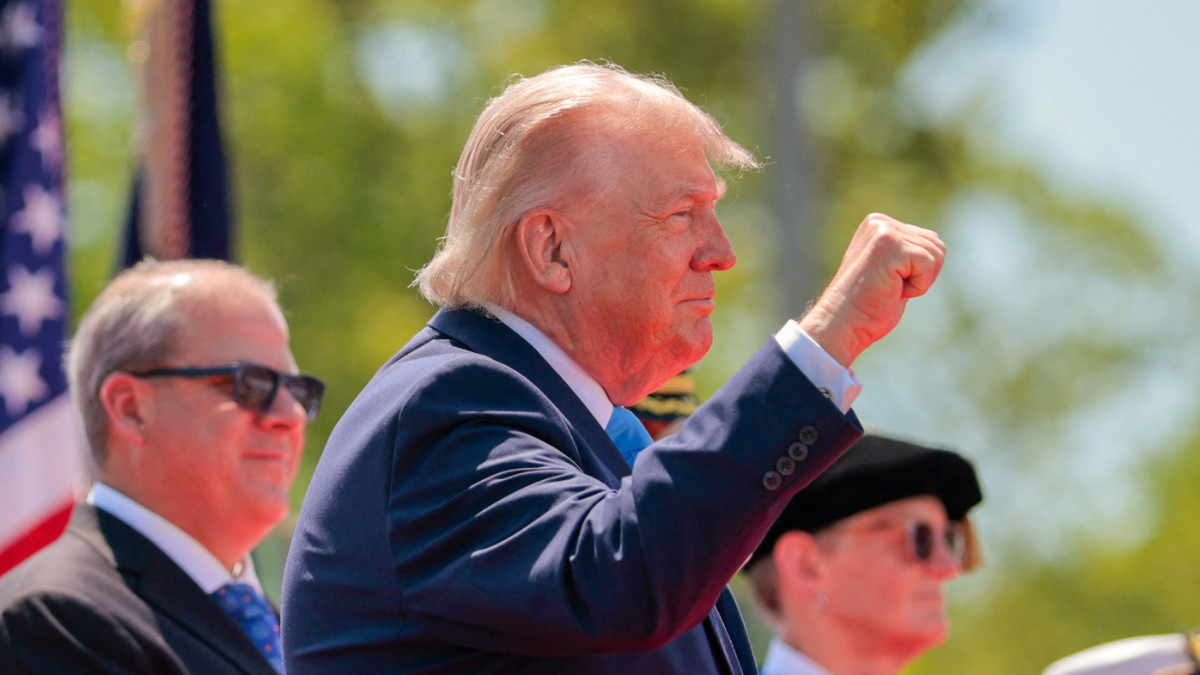
A new push for a diplomatic resolution to ongoing conflict between the United States and Iran has entered its final phases, according to former U.S. President Donald Trump, even as hardening rhetoric and competing military moves in the strategically critical Strait of Hormuz keep regional tensions elevated. Speaking to reporters on Wednesday, Trump confirmed that negotiations between Washington and Tehran have advanced to the closing stages, warning that failure to reach a binding agreement could trigger harsh retaliatory measures from the U.S. “We’re in the final stages of Iran. We’ll see what happens. Either have a deal or we’re going to do some things that are a little bit nasty, but hopefully that won’t happen,” he told the press pool.
Iranian officials have formally acknowledged receipt of a new U.S. peace proposal, confirming that Pakistan’s interior minister is currently in Tehran to serve as a neutral intermediary for communications between the two governments. Key regional U.S. partner Saudi Arabia has publicly welcomed Trump’s commitment to exploring diplomatic solutions, issuing a statement urging Iranian leadership to seize the opportunity to reach a negotiated settlement.
In a reveal exclusive to Middle East Eye, Trump last week scrapped a pre-planned military strike on Iran after intense pushback from Gulf regional allies and senior members of his own national security team, who argued that launching an attack during the annual Hajj pilgrimage would carry unacceptable humanitarian and political risks. Trump later confirmed this account to reporters, noting that Gulf leaders had persuaded him to hold off on offensive action, and he would wait several additional days for a formal response from Tehran. The U.S. leader also held a diplomatic call with Turkish President Tayyip Erdogan; a readout from Erdogan’s office confirmed the Turkish leader backed the extended ceasefire and expressed confidence that a mutually acceptable negotiated solution to the conflict could be achieved.
Trump’s public posture toward Iran has remained inconsistent in recent weeks, shifting sharply between optimistic claims that a breakthrough settlement is imminent and blunt threats to resume large-scale military hostilities. Iranian hardline leaders have pushed back against U.S. overtures, with parliament speaker Mohammad Bagher Ghalibaf issuing a stark warning that any renewed U.S. war effort would be met with a forceful Iranian response. The Islamic Revolutionary Guard Corps (IRGC) has additionally cautioned that any new conflict would quickly spread far beyond the boundaries of the Middle East. In an audio message carried by multiple Iranian state media outlets, Ghalibaf said, “The enemy’s movements, both overt and clandestine, show that despite economic and political pressure, it has not abandoned its military objectives and is seeking to start a new war.”
Beyond diplomatic posturing, tangible shifts have been observed in the Strait of Hormuz, the narrow strategic waterway through which roughly 20% of global oil trade passes. The waterway has become the central point of contention in ongoing peace talks, as Iran and the U.S. have enforced competing blockades in a bid to assert dominance over the route. On Wednesday, three large supertankers carrying a combined 6 million barrels of crude oil from Kuwait and Iraq bound for Asian markets transited the strait. Two of the vessels have reported ties to China, while the third is linked to South Korea.
Data from global shipping intelligence firm Windward confirms the three vessels sailed along the northern corridor of the strait, the route Iran has designated for commercial traffic to allow for cargo inspections and the collection of transit tolls. The resumption of regular commercial transits alongside positive diplomatic developments pushed U.S. crude prices down 6% on Wednesday, settling at roughly $98 per barrel.
Tehran has outlined its core demands for any final peace deal, with Iranian Foreign Ministry spokesman Esmaeil Baghaei confirming Wednesday that Iran is pushing to establish a joint security mechanism with Oman to guarantee long-term stability in the strait. Iran has long demanded international recognition of its authority over the waterway, including the right to collect transit tolls from commercial shipping.
Despite the progress in talks, the U.S. has continued its long-running campaign of intercepting and seizing Iranian-flagged commercial vessels in international waters. The U.S. military confirmed Wednesday that U.S. Marine forces boarded an Iranian-flagged oil tanker in the Gulf of Oman this week. “American forces released the vessel after searching and directing the ship’s crew to alter course,” U.S. Central Command, the military command that oversees U.S. operations in the Middle East, wrote in a post on X.
Baghaei responded that any permanent peace deal would require the U.S. to immediately end what Iran describes as state-sponsored piracy against its commercial shipping. “Despite the negative record of the other side over the past year-and-a-half, Iran is pursuing the path of negotiations with seriousness and good faith, but it has strong and reasonable suspicion over America’s performance,” he added.