分类: politics

  • An all-women Senate delegation is heading to the Arctic to reassure US allies

    An all-women Senate delegation is heading to the Arctic to reassure US allies

    In a historic departure from traditional congressional diplomatic missions, an all-woman, evenly split bipartisan delegation of U.S. senators is set to leave Washington this week for a multi-stop tour of Arctic nations, aimed at shoring up confidence among American allies at a moment of shifting regional policy under the Trump administration.

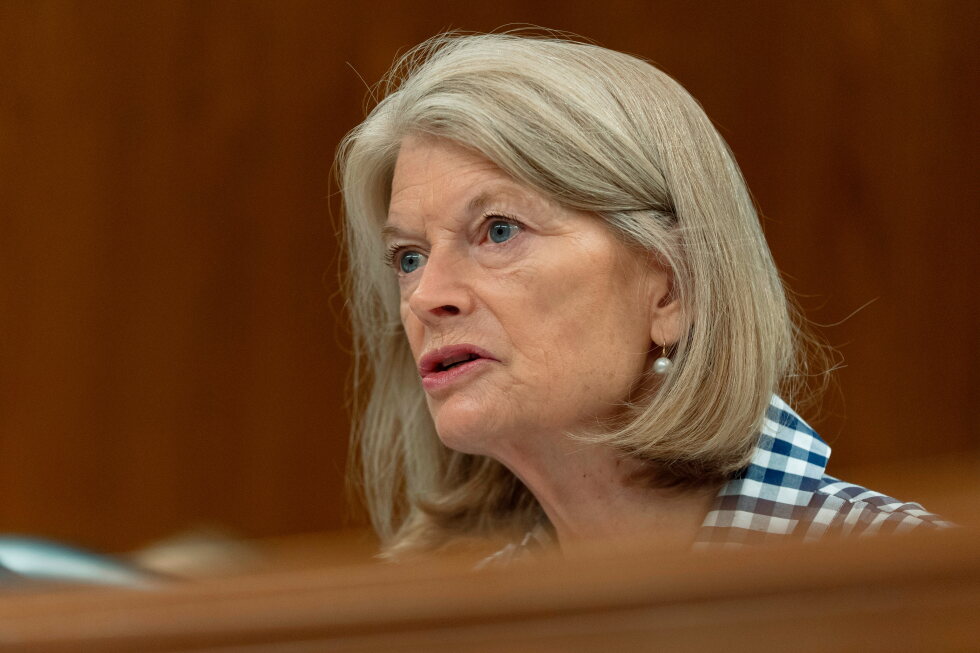
    Led by Alaska’s Republican Senator Lisa Murkowski and Democratic Senator Jeanne Shaheen, the top Democratic member of the Senate Foreign Relations Committee, every member of the delegation—from the eight sitting senators to supporting staff and military liaison officers—will be women. The rare composition of the trip sets it apart from past congressional diplomatic visits, and the leaders say it brings unique advantages to diplomatic outreach in the strategically vital region.

    Over the course of the tour, the group will conduct official diplomatic meetings with government leaders across four Arctic and sub-Arctic jurisdictions: Canada, Greenland (an autonomous Danish territory), Norway’s remote Svalbard archipelago, and Iceland. On Svalbard, one of the northernmost permanently inhabited regions on the planet, the delegation will require armed escorts to avoid dangerous encounters with polar bears during their visit.

    The trip emerged directly from the two leaders’ longstanding work to stabilize U.S. alliance networks in northern Europe and North America, after the Trump administration adopted an aggressive, unilateral approach to Arctic policy that has raised anxiety among regional partners. Just this week, the Pentagon announced it would pause U.S. participation in a joint U.S.-Canada continental defense board that has operated continuously since World War II—a move Murkowski and Shaheen have criticized as misaligned with U.S. strategic interests in the fast-changing Arctic.

    Murkowski and Shaheen argue that the Arctic has grown dramatically in strategic importance in recent years, presenting both unique security and environmental challenges that demand close collaboration with regional allies. “We will reassure our allies that we recognize and appreciate the importance of our allies and partners in the Arctic as in so many other areas,” Shaheen told the Associated Press ahead of the trip, noting that the delegation will also explore new avenues for Congress to deepen bilateral and multilateral cooperation in the region after the visit.

    Alongside diplomatic talks, the delegation has planned a series of site visits designed to give members first-hand insight into the region’s most pressing challenges. The senators will meet with Indigenous communities that have inhabited Arctic lands for millennia, gaining on-the-ground perspective of how accelerating climate change is reshaping daily life and ecosystems. They will also observe military operations in the harsh Arctic climate, learning why remote Arctic outposts require specialized infrastructure—from climate-controlled airplane hangars to overwinter supply drops—that differs dramatically from military facilities in lower latitudes.

    Geopolitical competition in the Arctic has intensified in recent years, as climate change melts the region’s thick sea ice, opening up new international shipping lanes including the long-sought Northwest Passage, and unlocking access to trillions of dollars in untapped mineral resources. China and Russia have both expanded their military and economic activity in the region in recent years, prompting NATO to launch a series of joint military exercises to strengthen collective cooperation in the High North. The region also hosts a network of undersea communications cables that carry global data traffic, adding another layer of strategic importance to Arctic security.

    Beyond the core strategic goals of the trip, Murkowski says she hopes the first-hand exposure to the Arctic’s unique landscape and communities will leave the delegation inspired to prioritize Arctic policy on Capitol Hill. This is not the first time Murkowski and Shaheen have collaborated to defend Arctic alliances: when Trump publicly suggested the U.S. could purchase Greenland earlier the same year, the pair introduced legislation to block any U.S. military action against the NATO-aligned territory, and have pushed to add language to annual defense policy bills that would prevent the Trump administration from withdrawing security commitments to NATO allies.

    The delegation’s all-woman composition is not a gimmick, Shaheen argues, but a deliberate choice that brings tangible benefits to diplomatic engagement. Research consistently shows that agreements negotiated with women at the table have higher rates of long-term implementation, and that greater female representation in government correlates with more stable societies and greater public investment in community infrastructure, she noted. For many of the nations the delegation will visit, high female political representation is already the norm: Iceland’s parliament, for example, counts women among 46% of its members, ranking it among the top countries globally for gender parity in legislative politics. “There are very real reasons why we need to make sure that women are at the table,” Shaheen added.
  • French commission advises against deporting Egyptian-Palestinian activist

    French commission advises against deporting Egyptian-Palestinian activist

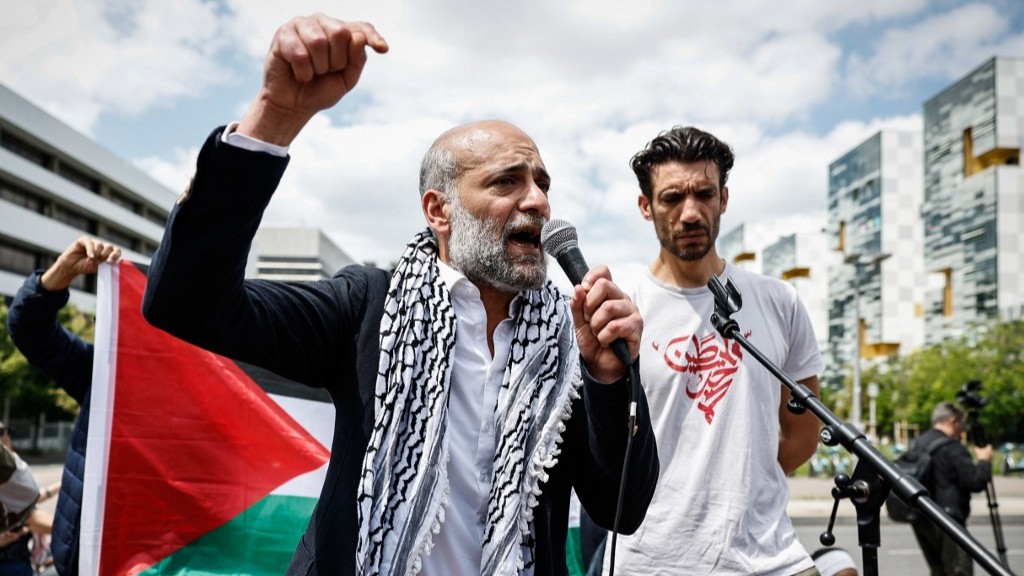
    A prominent Egyptian-Palestinian activist and academic has secured a landmark provisional legal victory over the French government, after an administrative commission ruled that his planned deportation over pro-Palestine advocacy violates fundamental European rights to privacy and free expression.

    Ramy Shaath, a veteran organizer of the 2011 Arab Spring uprisings in Egypt, had been targeted for expulsion by French authorities, who labeled him a “serious threat to public order” stemming from his participation in pro-Palestine demonstrations and leadership in Palestinian solidarity groups. But the Hauts-de-Seine departmental deportation commission determined Thursday that removing Shaath would run counter to France’s commitments to protecting fundamental civil liberties.

    Shaath’s case carries unique layers of complexity that the commission weighed heavily in its ruling. The activist spent 900 days in Egyptian state detention between 2019 and 2022, and he has since been stripped of his Egyptian citizenship. Compounding this, he cannot be transferred to his ancestral home in Gaza, where Israel’s ongoing military campaign has created an uninhabitable, war-ravaged environment. The commission also found that deporting Shaath to an alternate third country would amount to an unacceptable, disproportionate violation of his right to private and family life; Shaath resides in France with a French spouse and child.

    While the commission’s ruling is only advisory, and the French government retains the authority to move forward with a final deportation order regardless of the decision, Shaath framed the outcome as a significant embarrassment to state authorities and a turning point for pro-Palestinian advocacy in France.

    “It’s a very important win – the ruling was absolutely decisive, saying that Ramy is not a danger to public order or to France in any way,” Shaath told Middle East Eye in an interview Friday. “Nevertheless, based on the French oppressive system, their decision is advisory, so the ministry can tomorrow, or the day after, issue a final deportation order for me.”

    Shaath comes from a leading Palestinian political family: he is the son of Nabil Shaath, a veteran Palestinian chief negotiator and former Palestinian Authority prime minister, and previously advised late PLO leader Yasser Arafat as part of the PA’s peace negotiation team. Beyond his Palestinian political work, Shaath rose to prominence in Egypt as a leading organizer during the 2011 Arab Spring protests that ousted longtime autocratic leader Hosni Mobarak, and later served as coordinator of the Egyptian chapter of the Boycott, Divestment and Sanctions (BDS) movement pushing for accountability for Israeli occupation.

    After his release from Egyptian prison in 2022, following a high-profile international pressure campaign that included intervention from French President Emmanuel Macron, Shaath settled in France on a one-year residence visa. His conflict with French authorities escalated in late 2023, when he co-founded the Urgence Palestine collective. Then-Interior Minister Bruno Retailleau moved to dissolve the group, accusing it of “glorifying a terrorist organisation such as Hamas, calling for an Intifada on national territory, and inciting hatred, violence or discrimination against Jews.” The dissolution attempt drew international pushback, with a group of United Nations experts warning that the move would represent an unnecessary and disproportionate restriction on fundamental civil freedoms.

    Shaath applied to renew his French residence visa in September 2023, but never received a formal response from authorities. He filed 10 separate urgent appeals for renewal without success, despite his legal family ties to the country. On 30 April, he received formal notice at his Paris-area home that deportation proceedings had been opened against him.

    A formal document from the Nanterre prefecture outlining the deportation order cited Shaath’s public speeches, lectures, and activist appearances as core justifications. It specifically called out his connections to leading pro-Palestine organizers in France, his public descriptions of Israel’s military campaign in Gaza as a criminal occupation, his public anti-Zionist stance, and his support for a one-state solution to the Israeli-Palestinian conflict.

    Shaath has denounced what he calls a deliberate, extrajudicial administrative campaign against him. “We are facing an administrative maze that is beyond the law and every time they try to go to court they lost – but they’re still increasing those tactical games just like Third World fascist regimes and systems,” he told Middle East Eye.

    Even as the case remains unresolved, Shaath emphasized that the commission’s ruling marks a critical victory for free speech for pro-Palestinian organizers in France, who have faced growing criminalization of their advocacy since the outbreak of the latest Israel-Gaza war in October 2023.

    “It asserts that the language of Palestine and the language of calling for an end to Zionism, the right of the Palestinian people to resist even with arms…all are today cleared under the rule of freedom of expression,” he said. “We will win – they are losing the fight and that is why they are panicking.”

  • France’s youngest PM Attal to run for president

    France’s youngest PM Attal to run for president

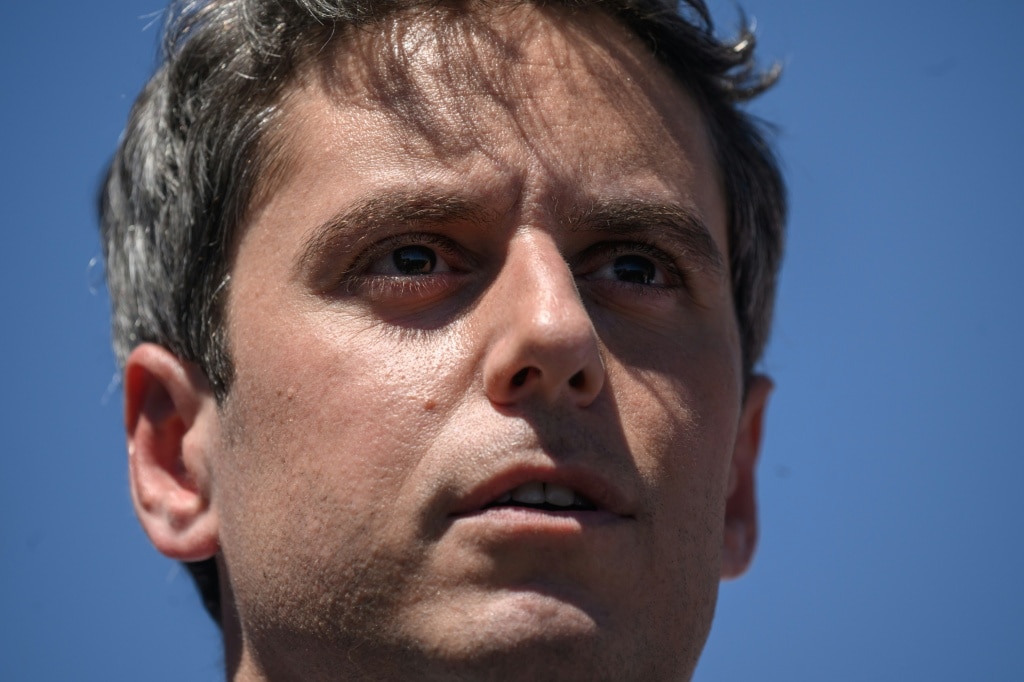
    France’s political landscape has been upended by a historic announcement: 37-year-old Gabriel Attal, the youngest person to ever hold the post of French Prime Minister, officially declared his candidacy for the 2025 presidential election on Friday. The centrist contender made his announcement against a backdrop of clear blue skies in the small rural village of Mur-de-Barrez, a strategic choice aimed at addressing longstanding criticism that centrist parties lack deep roots in France’s countryside ahead of a contest that will likely be defined by the battle against the rising far-right National Rally (RN).

    In his opening remarks to supporters, Attal pushed back against the stagnation that has come to define mainstream French politics in recent years. “I can’t take this kind of French politics anymore, where it’s just 50 shades of managing decline,” he told the crowd, positioning himself as a fresh alternative to both establishment gridlock and far-right populism. When he took office as Prime Minister in 2024 at age 34, Attal made history as France’s youngest head of government, and his rapid ascent through the political ranks has already drawn widespread comparisons to current President Emmanuel Macron, who won the Elysee Palace at 39 in 2017, becoming France’s youngest head of state since Napoleon. Attal will turn 38 in March, just one month before the scheduled April presidential vote, which Macron will not contest as he steps down after two terms.

    Attal’s entry into the race creates a crowded field of high-profile candidates from across the political spectrum. He joins former center-right Prime Minister Edouard Philippe, 55, who now leads his own Horizons party, and 74-year-old hard-left leader Jean-Luc Melenchon as major declared contenders. For the far-right RN, the 2025 election represents the party’s strongest chance to seize the presidency in its history, with either party leader Jordan Bardella, 30, or former candidate Marine Le Pen expected to stand as the party’s nominee.

    A product of France’s elite education system and an openly gay politician raised in Paris, Attal has opened up about his personal identity in recent months as he lays groundwork for his campaign. In a book published last month, the candidate dedicated an entire chapter to his partner, Stephane Sejourne, a European Commissioner and former French minister whom Attal describes as “the man of my life.” Attal has also spoken publicly about his mixed cultural background and experiences of prejudice: his father is Jewish, his mother follows Russian Orthodox Christianity, and he has said he has faced both anti-Semitism and homophobia throughout his life and career.

    Attal’s short tenure as Prime Minister came to an abrupt end last year when President Macron dissolved the lower house of parliament and called snap legislative elections, a risky political gambit designed to halt the RN’s growing momentum that ultimately backfired spectacularly. The result was months of crippling political deadlock and a hung parliament, where the RN emerged as the largest single party in the legislature. Shortly after the dissolution, Attal formally distanced himself from Macron’s government, clearing the way for his independent presidential bid.

    On the campaign trail, Attal already faces stiff competition from within the centrist and center-right space, most notably from Philippe, who led Macron’s first government as Prime Minister and has built a strong independent political base. Current polling consistently shows Philippe performing better than other centrist candidates in a hypothetical runoff against the RN nominee. Still, Attal has wasted no time in positioning himself as a candidate connected to working and rural French voters, a contrast to the common critique that Macron’s Renaissance party is too rooted in Parisian elite circles. “The day we stay locked in Parisian offices, in ministries, is the day politics stops,” Attal said in his launch speech. After entering politics in his early 20s, Attal climbed the ranks quickly: he won a seat in the National Assembly in 2017, the same year Macron was first elected, before going on to serve as government spokesperson, budget minister, and education minister between 2023 and 2024. During his time as education minister, he gained national attention for his work addressing school bullying and his controversial ban on the abaya, a loose full-length garment worn by Muslim women, in public schools.

    Closing his launch speech, Attal struck an optimistic tone about France’s future, pushing back against narratives of inevitable national decline. “Having travelled a lot in France and met many French people, I’ve come to a conviction — a very strong one — that our finest chapters are still ahead of us,” he said.

  • Palestinian UN ambassador withdraws General Assembly vice presidency bid after US pressure

    Palestinian UN ambassador withdraws General Assembly vice presidency bid after US pressure

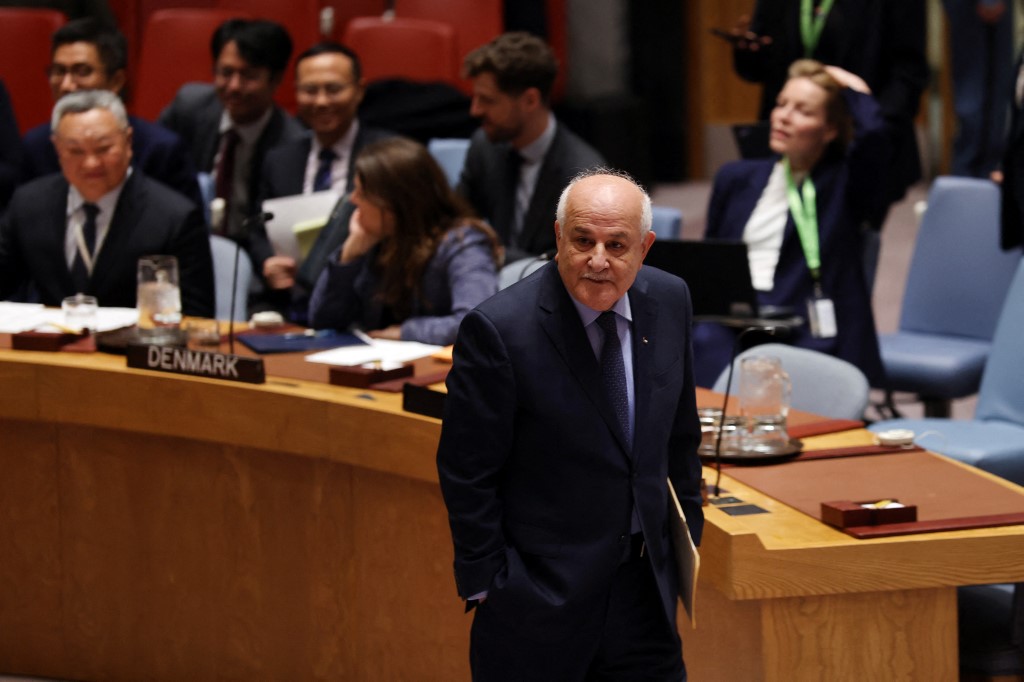
    In a move that underscores deep diplomatic pressure on the Palestinian mission at the United Nations, Palestinian UN Ambassador Riyad Mansour has formally pulled his name from contention for the vice presidency of the UN General Assembly, following explicit threats from the United States to revoke the entire Palestinian delegation’s entry visas if he refused to abandon the race, National Public Radio has reported.

    Citing an anonymous source with direct knowledge of the internal developments, the outlet confirmed that Lebanon’s ambassador will now take Mansour’s place on the ballot. The Palestinian UN delegation communicated through a third Arab nation that Mansour would not seek the vice presidential position for the 2024-2026 term, according to the report. La Neice Collins, spokesperson for the sitting UN General Assembly president, later issued a public statement confirming the withdrawal, cementing the outcome of the behind-the-scenes pressure campaign.

    Documents show that internal communications from the US State Department, dated Tuesday, had explicitly instructed American diplomatic staff based in Jerusalem to ramp up pressure on Palestinian leadership to force Mansour out of the race. The cable argued that Mansour’s candidacy ran counter to former US President Donald Trump’s ongoing policy proposals for the post-conflict future of the Gaza Strip. The department’s message was uncompromising: “We will hold the Palestinian Authority responsible if the Palestinian delegation does not withdraw its VPGA candidacy.”

    The cable also carried a veiled reference to past punitive visa actions, reminding recipients that Washington had already denied entry visas to Palestinian Authority President Mahmoud Abbas and 80 other senior Palestinian officials ahead of last year’s UN General Assembly gathering in New York. It noted that “it would be unfortunate to have to revisit any available options” — a clear signal that the US was prepared to enact new restrictions if its demands were not met.

    As of press time, the Palestinian UN mission has not issued an immediate response to requests for comment from Middle East Eye, the independent outlet that first expanded on the reporting of the incident.

    This latest withdrawal marks the second time in 2024 that a senior Palestinian candidate has stepped back from a top UN leadership post amid foreign pressure. Back in February, Mansour withdrew his candidacy for the presidency of the UN General Assembly after coordinated lobbying campaigns from both the United States and Israel. At that time, the Palestinian mission framed the decision as a response to “the prevailing conditions in Palestine.”

    The election for UN General Assembly president and the 21 vice presidential seats from regional groups across the world is scheduled to take place on June 2. The current controversy comes on the heels of a landmark May 2024 vote in the General Assembly that delivered expanded participation rights for the Palestinian Authority. In an unprecedented outcome, delegates overwhelmingly approved a measure granting Palestine enhanced standing beyond its current status as a non-member observer state, including the right to speak on all General Assembly agenda items, co-sponsor resolutions, and propose amendments to draft UN texts. The assembly also voted by a wide margin to back Palestine’s bid for full UN membership, marking a major diplomatic breakthrough for Palestinian statehood efforts that has drawn sharp pushback from the US and Israel.

  • ‘Hard to win’: Taiwanese react to uncertainty over US arms sales

    ‘Hard to win’: Taiwanese react to uncertainty over US arms sales

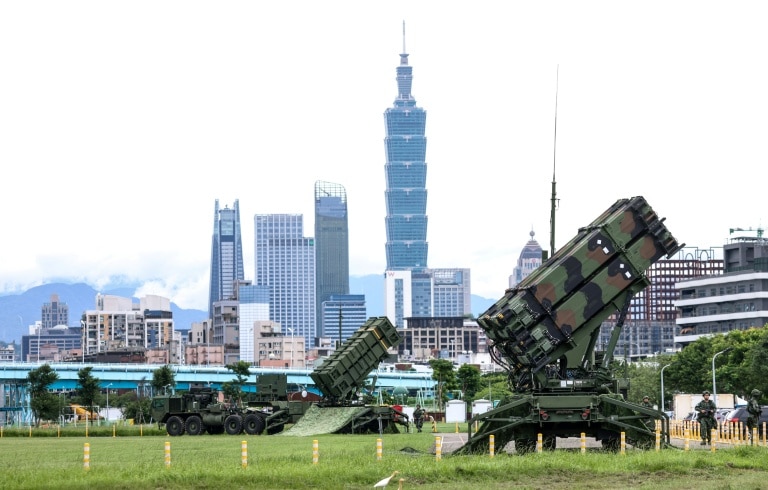
    When former U.S. President Donald Trump recently suggested that longstanding American arms sales to Taiwan could be used as a bargaining chip in negotiations with Beijing, it sent shockwaves through global diplomatic circles. For ordinary residents of Taipei, however, the moment has underscored a bleak reality: the island’s security trajectory is ultimately out of their hands.

    One week has passed since Trump made the controversial remarks during interviews with Fox News and on Air Force One, and intense speculation continues to swirl over whether decades of consistent U.S. policy toward the democratically governed island could be fundamentally upended. The context of this uncertainty stretches back nearly 50 years, when the United States officially shifted its diplomatic recognition from Taipei to Beijing. Even without formal diplomatic ties, Washington has remained Taiwan’s most critical international security partner and primary arms supplier, a commitment codified in the 1979 Taiwan Relations Act passed by U.S. Congress, which legally requires Washington to provide defensive arms to the island.

    Despite widespread anxiety among Taiwanese government officials, who have spent weeks anxiously awaiting Trump’s final decision on a new pending arms package, public reaction on the streets of Taipei has been marked by a quiet, fatalistic calm. Many residents have long held deep reservations about the practical value of additional U.S. weaponry in the face of China’s persistent claims that Taiwan is an inalienable part of its territory, and Beijing’s repeated threats to use force to assert control if necessary.

    Nicole Lee, a 46-year-old nurse in Taipei, said she does not believe advanced military hardware would shift the balance of power significantly if a conflict were to break out. “Even if they give us weapons, if we really had to use force against China, I don’t think there would be much we could do,” she explained.

    Ben Wu, a 41-year-old delivery driver, echoed Lee’s sentiment, framing U.S. arms sales as little more than a costly “protection fee” for the island. Even with the most advanced weaponry the U.S. can offer, he noted, “it would still be very hard to win” against China’s far larger military force.

    To date, Taipei has poured tens of billions of dollars into purchasing advanced U.S. military equipment, including fifth-generation fighter jets, precision high-tech missiles, and reconnaissance drones, all to bolster its defensive capabilities against a potential cross-strait attack. Taiwanese officials have repeatedly reminded the Trump administration of Washington’s binding legal commitments under the Taiwan Relations Act, while top U.S. officials including Secretary of State Marco Rubio and Trade Representative Jamieson Greer have publicly insisted that no shift in longstanding U.S. policy toward Taiwan is underway.

    Still, many ordinary Taiwanese remain deeply skeptical of Trump’s approach to the issue, with many arguing that the former president prioritizes U.S. interests above all other considerations, with little regard for longstanding alliances or commitments. Cynthia Kuo, a 29-year-old elementary school teacher in Taipei, described Trump as the “kind of person who just says whatever pops into his head.” “So I feel like whatever decisions he makes, he only makes them if he thinks they’re good for the United States,” she said. “He’s not going to take other countries into account.”

    A 78-year-old retiree, who requested anonymity to speak freely, said the only certain takeaway from the current situation is that Trump cannot be counted on as a reliable partner for Taiwan. “He’s totally untrustworthy,” she said. “I often feel that Trump is a hooligan in international politics.”

    Across age groups, residents of Taipei echoed a shared sense of powerlessness in the face of the current uncertainty. No matter the outcome, the final decisions on the pending arms package will be made in Washington, and any subsequent response from Beijing will be shaped thousands of kilometers away from Taipei. For 22-year-old university student Matt Lin, that reality makes personal anxiety feel pointless. “I’m not that worried,” he told AFP. “Whether we worry or not doesn’t really change anything.”

  • Turkish opposition fights court ousting of leaders in ruling boosting Erdogan

    Turkish opposition fights court ousting of leaders in ruling boosting Erdogan

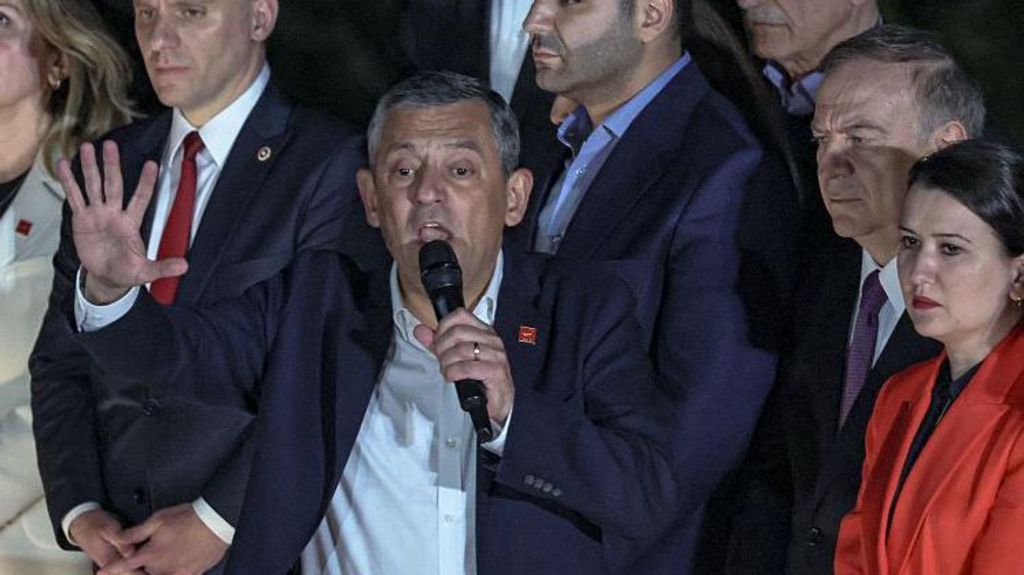
    A controversial court ruling that nullifies the 2023 leadership election of Turkey’s main opposition Republican People’s Party (CHP) has plunged the country into a new political crisis, with opposition chief Özgür Özel slamming the decision as a carefully orchestrated “judicial coup” against democracy.

    On Thursday, Ankara’s appellate court overturned a 2025 lower court ruling that had dismissed claims of vote rigging during the CHP primary that elevated Özel to the party’s top position. The appellate court’s judgment not only removes Özel and the entire CHP executive board from their posts, but also orders the reinstatement of 77-year-old Kemal Kilicdaroğlu, the long-time party leader who lost the 2023 presidential election to incumbent President Recep Tayyip Erdogan and was later voted out of his leadership role by CHP members. All policy and administrative decisions made by the current CHP executive are also expected to be invalidated following the ruling.

    The decision triggered immediate shock and outrage across the CHP. BBC Turkey correspondent Ayşe Sayin reported that many CHP staffers at party headquarters were reduced to tears, and internal tensions boiled over when some members removed a portrait of Kilicdaroğlu from the building’s walls while labeling him a traitor. Thousands of supporters flocked to CHP headquarters in Ankara to protest the ruling within hours of its announcement.

    Özel, who has positioned himself as one of Erdogan’s most vocal critics, has pledged an all-out fight against the court’s decision. “We are living through a dark day for Turkish democracy,” Özel told supporters. “These coup plotters do not arrive with tanks, cannons, rifles or camouflage; they come wearing the robes of judges and prosecutors.” The CHP leader has formally submitted an objection to the ruling to Turkey’s supreme election council (YSK), which began deliberations on the challenge on Friday. He also moved to dismiss widespread speculation of a party split, saying, “Tenants leave, homeowners stay.”

    Critics argue the ruling is the latest in a years-long campaign by Erdogan and his ruling Justice and Development Party (AKP) to sideline political opponents and consolidate power. Özel has explicitly accused the AKP of pursuing a deliberate strategy to “eliminate its rivals.” A key red flag for opponents is the role of current Justice Minister Akin Gürlek, a hardline prosecutor who was hand-picked for the cabinet post by Erdogan earlier this year. Before his appointment, Gürlek served as chief prosecutor in Istanbul, where he led high-profile investigations targeting opposition figures—most notably Ekrem Imamoğlu, the popular CHP mayor of Istanbul who remains Erdogan’s most formidable potential challenger. Imamoğlu has been held in prison for more than a year on corruption charges brought by Gürlek that carry a combined potential sentence of more than 2,000 years behind bars.

    Defending the court’s decision, Gürlek claimed the ruling “reinforces our citizens’ trust in democracy.”

    Senior CHP figures have echoed Özel’s condemnation. Jailed and suspended Istanbul mayor Imamoğlu released a social media statement calling on all Turkish citizens to “stand together for their country.” Ankara Mayor Mansur Yavaş, another high-profile CHP leader, warned the ruling’s core goal is to split Turkey’s largest opposition bloc and neutralize it as a political force ahead of potential early elections. With Turkey’s economy already struggling, Yavaş argued that ruling-party leaders are likely to call snap elections before the 2028 scheduled date to capitalize on the opposition’s disarray.

    The ruling has already rippled through Turkish financial markets: the country’s benchmark stock index plummeted 6% in late trading Thursday, though it clawed back some losses on Friday morning. While Özel plans to appeal the decision all the way to Turkey’s Court of Cassation, legal analysts warn the process will likely drag on for months or even years, leaving the opposition in limbo. Many political observers now suggest that if Özel cannot reverse the ruling through the courts, he and his supporters may be forced to form a new breakaway party to contest future elections.

    In a separate, concurrent development that has drawn further criticism of the Erdogan administration, the president on Friday ordered the permanent closure of Istanbul Bilgi University, a respected independent higher education institution that enrolls roughly 22,000 domestic and international students. The 30-year-old university was effectively shut down overnight, according to Yaman Akdeniz, a law professor who has taught at the institution for 15 years. “An institution where I’ve taught for 15 years, one we’ve nurtured alongside thousands of young people, is being completely disregarded,” Akdeniz said. Turkey’s Council of Higher Education has stated it is putting measures in place to minimize disruption for current students and ensure they can continue their studies at other institutions.

  • Former prime minister Tony Abbott set to be elected unopposed as federal president of the Liberal Party

    Former prime minister Tony Abbott set to be elected unopposed as federal president of the Liberal Party

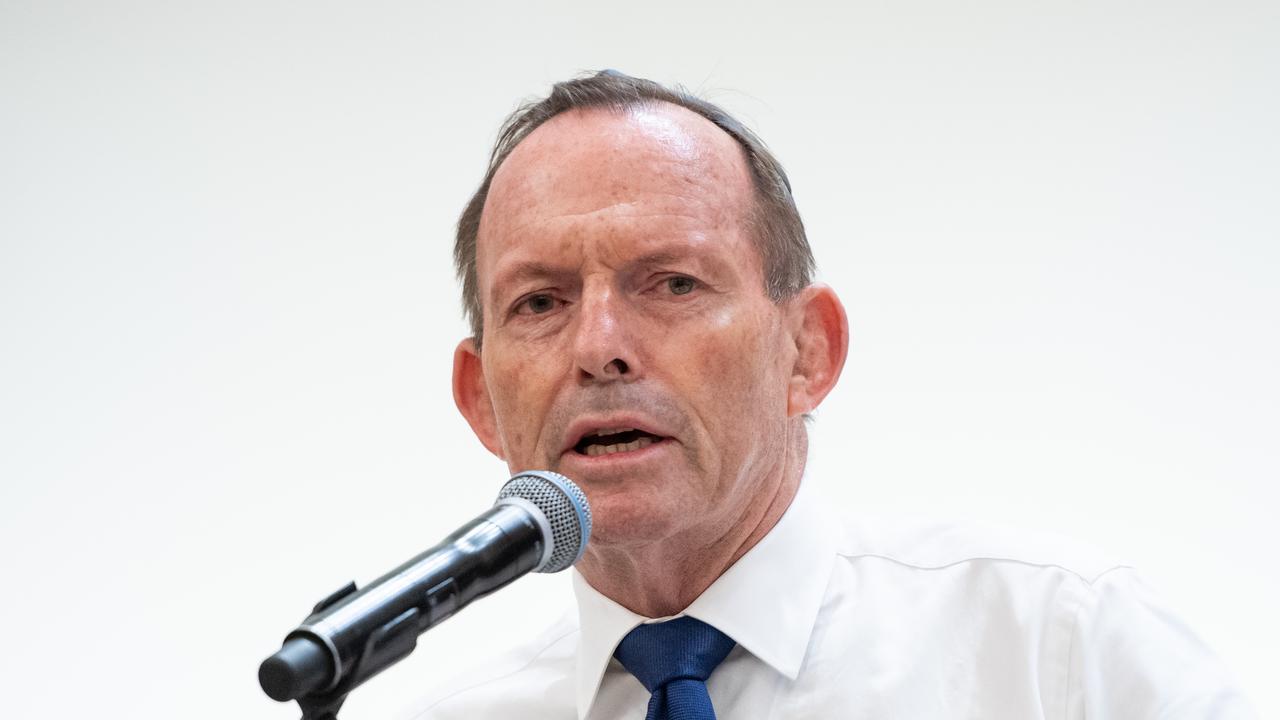
    Nearly five years after losing his parliamentary seat in a federal election, one of Australia’s most recognizable conservative political figures is set to make a high-profile return to the forefront of national politics. Former Australian Prime Minister Tony Abbott has secured a spot as the only nominee for the federal presidency of the Liberal Party, putting him on track to take the senior party role without any contest.

    Details of the nomination were made public after party delegates received a full list of candidates for all internal Liberal Party positions via email on Friday afternoon. With no other candidates put forward for the top administrative role, Abbott is all but guaranteed to win the position when the Liberal Federal Council holds its formal endorsement vote during a scheduled meeting in Melbourne next week.

    The road to the presidency saw a last-minute shift earlier in the nomination process: former foreign minister Alexander Downer, who had initially launched a bid for the top job, ultimately withdrew his candidacy to run instead for a vice presidential position on the party’s federal executive.

    Abbott will take over the role from outgoing federal president John Olsen, a former South Australian senator who has held the position in recent years.

    A veteran of Australian conservative politics, Abbott served as the country’s 28th prime minister from 2013 to 2015. His tenure ended abruptly when he was removed from office via a leadership spill orchestrated by his then-colleague Malcolm Turnbull, who went on to replace him as prime minister and Liberal Party leader. Abbott retained his northern Sydney seat of Warringah until the 2019 federal election, when he was unseated by independent candidate Zali Steggall, ending his decades-long run as a sitting member of parliament.

    The Liberal Party’s governing structure places the federal presidency at the heart of the party’s national administrative leadership. The Liberal Federal Council, which will formally confirm Abbott’s appointment, is made up of 14 delegates from every Australian state and the Australian Capital Territory. These delegates include the federal president, the parliamentary party leader, the head of the Young Liberal Movement, the president of the party’s national Women’s Council, and 10 additional appointed representatives.

    The party’s federal executive, which includes the federal office bearers, divisional presidents from across the country, and the federal parliamentary leadership team, is required to hold at least four formal meetings each year per the party’s official governing charter. While policy positions adopted by the Federal Council are not legally binding on the Liberal Party’s parliamentary wing, the body’s stances carry significant ideological and political weight that shapes the party’s public policy agenda.

    As of Friday, media outlets have not received an official statement from the Liberal Party’s federal branch regarding Abbott’s nomination. Political observers widely view the appointment as cementing Abbott’s return to the front lines of Australian conservative politics four years after his exit from parliament.

  • Shoot-and-scoot: Mobile missile launchers play key role in US Pacific deterrence strategy

    Shoot-and-scoot: Mobile missile launchers play key role in US Pacific deterrence strategy

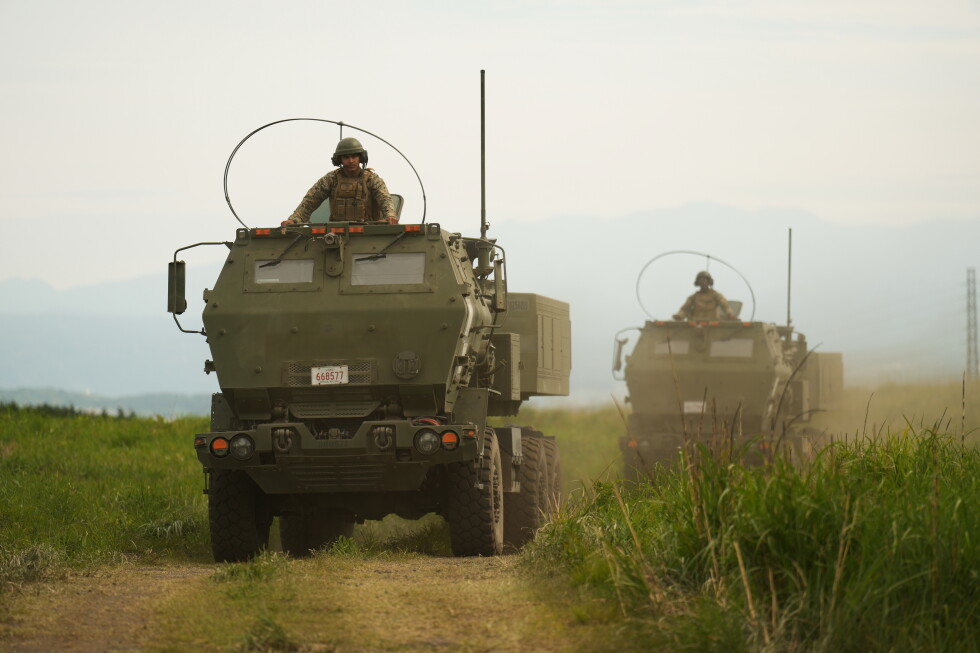
    GOTEMBA, Japan — In a dramatic display of military capability against the quiet backdrop of training grounds tucked into the foothills of Japan’s iconic Mount Fuji, the first rocket launched by U.S. Marines from a mobile launcher tore across the clear blue sky. A burst of flame preceded a thunderous roar that shattered the area’s pastoral calm, the engine’s bright orange glow leaving a sharp, visible trail in its wake. Five additional rockets followed in rapid sequence, before a second High Mobility Artillery Rocket System (HIMARS) truck emerged from its concealed position in a grove of evergreen trees, launched its own six-rocket salvo, and immediately withdrew back into cover.

    This week’s brief live-fire drill at the U.S. military’s Camp Fuji East Maneuver Area, which lasted only a matter of minutes, carries outsize strategic weight. As Washington works to deter potential Chinese military action against Taiwan — the self-governing democracy that Beijing claims as its own territory and has not ruled out seizing by force — the exercise serves as a clear signal of American military credibility to regional allies.

    The drill also lays bare a deliberate shift in U.S. military tactics across the Indo-Pacific, a change driven by the rapid modernization and expansion of China’s military capabilities over the past decade.

    “The United States’ core goal is preventing a Chinese invasion of Taiwan, but it is no longer banking on the traditional large-scale carrier-based attack air wings that defined past conflicts,” explained Euan Graham, senior defense analyst at the Australian Strategic Policy Institute. “During U.S. tensions with Iran, more than 40 American manned and unmanned aircraft were destroyed or damaged by a far less capable adversary. Against China, that vulnerability would be exponentially greater. That is why the U.S. is now prioritizing smaller, dispersed, mobile units.”

    According to the Pentagon’s most recent annual report to Congress, the new strategic framework aims to “deny any nation in the Indo-Pacific the ability to dominate the region or overpower our allies,” with a core focus on strengthening deterrence “through strength, not confrontation.”

    The core value of the HIMARS system is written into its name. Mounted on a standard military truck, the rocket pod can be easily hidden from drone or satellite surveillance, driven to a firing position to launch its precision GPS-guided missiles, then relocate to a new hidden position almost immediately — a tactic military officials call “shoot-and-scoot.”

    “Depending on the crew, we can be in and out in as little as two to four minutes,” said Sergeant Kevin Alvarez, section chief for one of the two HIMARS units from Fox Battery, 3rd Battalion, 12th Marines, 3rd Marine Division that took part in the Camp Fuji exercise.

    First introduced roughly 20 years ago, HIMARS saw combat service in Iraq and Afghanistan, but it rose to global public prominence only after Ukrainian forces deployed it to devastating effect against Russian invasion forces. Recent conflicts, marked by the widespread proliferation of surveillance drones that can quickly spot and target static artillery positions, have only underscored the critical advantage of mobile systems like HIMARS.

    “Compared to traditional cannon artillery, HIMARS is far quicker, far more maneuverable, and much easier to conceal,” noted Lieutenant Colonel Ryan Anness, commander of the 3rd Battalion. “Combine that with precision strike capability, and it’s easy to see why this system is a priority for so many nations, and for the U.S. military in the Pacific.”

    HIMARS is compatible with a range of missile types. Initially, the U.S. only supplied Ukraine with shorter-range munitions, but it later approved the delivery of Army Tactical Missile Systems (ATACMS), which can strike targets roughly 180 miles away. More recently, the U.S. has deployed the even longer-range Precision Strike Missile (PrSM), built by manufacturer Lockheed Martin, which can hit targets more than 310 miles away. According to Air Force General Dan Caine, chairman of the Joint Chiefs of Staff, PrSM saw its first combat use in February during operations against Iran, where HIMARS sank multiple Iranian surface ships and a submarine while docked in port.

    Graham explained that when paired with the Army’s Typhon system — another truck-based launcher that fires longer-range Tomahawk missiles, though it is less maneuverable than HIMARS — the two systems can fully cover the Taiwan Strait and the strategically critical Luzon Strait between the Philippines and Taiwan if deployed on Taiwan and nearby Japanese and Philippine islands. Both waterways are central to any potential Chinese invasion or blockade of Taiwan.

    “Ahead of any conflict over Taiwan, most large U.S. military assets would likely move outside the range of China’s coastal missile capabilities,” Graham said. “What would remain are highly survivable submarines, and small, dispersed units built around rugged, mobile systems like HIMARS.”

    The Wednesday drill at Camp Fuji incorporated strict safety protocols: Japanese military observers oversaw the exercise, and a local road was closed as a precaution against stray projectiles, with some launches using inert, concrete-filled dummy rockets to meet safety requirements. Though the precautions slowed the drill compared to real combat operations, Anness emphasized that the exercise delivered tangible value both for troop readiness and for strengthening alliances in the region.

    “Fielding long-range precision strike weapons directly bolsters deterrence here in the Pacific,” Anness said. “Training alongside our Japanese partners as often as we can ensures we are ready to respond if needed.”

  • Irish PM to discuss Middle East conflict with Pope

    Irish PM to discuss Middle East conflict with Pope

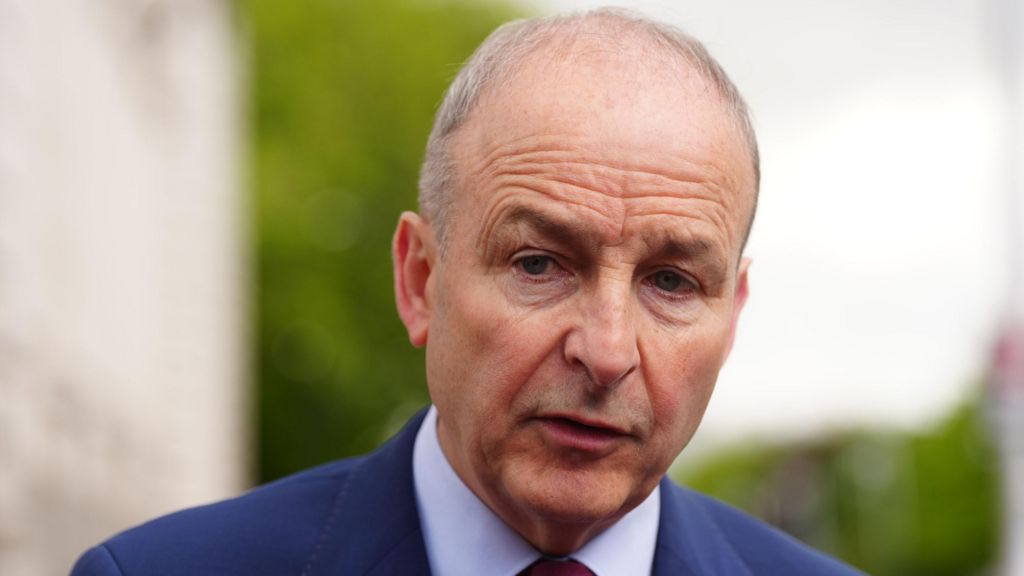
    On Friday morning, Irish Taoiseach Micheál Martin touched down in Vatican City to begin a scheduled private audience with Pope Leo XIV, marking a significant high-level diplomatic and faith-based engagement between Ireland and the Holy See. Martin and his spouse Mary were formally welcomed in Vatican’s iconic San Damaso Courtyard by Petar Rajic, Prefect of the Papal Household, alongside members of the papal gentlemen’s delegation.

    Ahead of the closed-door meeting, which is scheduled to run for a maximum of 35 minutes, Martin outlined the key priorities he intends to raise during the discussion. Top of the agenda are the ongoing armed conflicts tearing through the Middle East, Ukraine, and Sudan, with the Taoiseach emphasizing a shared commitment between Ireland and the Holy See to advancing peace through dialogue. Martin also noted that Pope Leo XIV has centered his papacy on peace as a defining mission, aligning closely with Ireland’s long-held diplomatic priorities.

    “We share many core values: a deep commitment to a rules-based international order, and a belief that dialogue and diplomacy are the only path to lasting peace,” Martin told reporters ahead of the audience. “I look forward to exchanging views with him on how we can collaborate to advance effective multilateralism as the most effective tool to tackle our shared global challenges and bring an end to ongoing conflicts.”

    Domestically, Martin plans to update the Pope on the continuing reconciliation process across the island of Ireland, including the sensitive, critical work of addressing the violent legacy of decades of conflict known as the Troubles. The Taoiseach highlighted that faith leaders and clergy from all Christian denominations have played an indispensable role in advancing peace and reconciliation across Ireland, and that this input will be a core focus of the conversation.

    The meeting will also create space for a frank reflection on the historical relationship between the Irish government and the Catholic Church, including the ongoing harms and unmet needs of survivors of clerical abuse. Martin confirmed this difficult but necessary topic will not be avoided during the discussion.

    Beyond his audience with the Pope, Martin has a full schedule of diplomatic and institutional engagements during his trip. He will hold a separate bilateral meeting with Cardinal Secretary of State Pietro Parolin, the top diplomat of the Holy See, before traveling to the Pontifical Irish College in Rome. During his stop at the college, Martin will meet with members of its community, tour the institution’s historic archives, and announce new Irish government funding to support the cataloguing, digitization, and long-term preservation of the archive collection. This investment is part of a broader project to improve conservation, expand public access, and boost outreach for the college’s historical holdings.

    The Vatican visit comes at a key juncture for Irish foreign policy: ahead of Ireland’s assumption of the rotating Presidency of the Council of the European Union, which begins on 1 July. Martin confirmed he will outline Ireland’s policy priorities and planned agenda for the six-month presidency during his discussions at the Vatican.

    Following the conclusion of his engagements in Vatican City, Martin will travel to Rome for a meeting with Italian Prime Minister Giorgia Meloni later on Friday. This stop follows a bilateral meeting Martin held with French President Emmanuel Macron at the Élysée Palace in Paris on Thursday, as part of a broader European diplomatic tour ahead of Ireland’s EU presidency.

    The meeting marks the latest high-level engagement between Irish leaders and the Vatican. In 2018, then-Taoiseach Leo Varadkar met with Pope Francis during the Pope’s historic visit to Ireland, the first papal visit to the country in 39 years. Speaking in 2025, Varadkar noted that the 2018 meeting took place at a time when relations between the Irish state and the Catholic Church were already strained, amid ongoing reckoning with the clerical abuse crisis.

  • NATO ministers sound out US on Trump’s ‘confusing’ troop moves

    NATO ministers sound out US on Trump’s ‘confusing’ troop moves

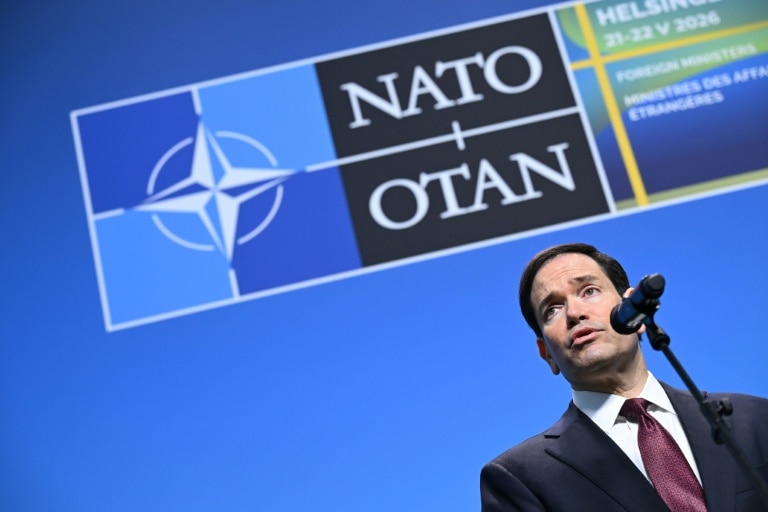
    As senior diplomats from across NATO gathered in the southern Swedish city of Helsingborg for a critical pre-summit meeting on Friday, European member states moved quickly to press U.S. Secretary of State Marco Rubio for clear answers on the Trump administration’s rapidly shifting plans for troop deployments across the continent. The talks were framed by a urgent goal: defusing growing tensions with President Donald Trump over Washington’s Iran policy, and smoothing over rifts before the alliance’s high-stakes July leaders’ summit scheduled for Ankara, Turkey.

    The confusion that dominated the meeting was sparked by Trump himself. Just as foreign ministers convened, the U.S. president announced he would deploy 5,000 additional troops to Poland, a sudden reversal of an earlier plan that had been scrapped by the White House. While the sudden shift drew public praise from NATO Secretary General Mark Rutte and Poland’s foreign minister, it stoked quiet but widespread concern among allies about a growing lack of strategic coordination between Washington and its European partners.

    “It is confusing indeed, and not always easy to navigate,” Swedish Foreign Minister Maria Malmer Stenergard told reporters on the sidelines of the gathering. The latest about-face came only weeks after Trump abruptly announced he would withdraw 5,000 U.S. troops from Germany, amid a high-profile public dispute with German Chancellor Friedrich Merz.

    Speaking to his NATO counterparts, Rubio pushed back against suggestions that the troop adjustments were intended to punish European allies, framing the moves as routine strategic planning. “All decisions on force posture are not punitive,” Rubio said. “We constantly need to reexamine our deployments to meet our evolving global security needs.”

    Many NATO ministers acknowledged that gradual U.S. force drawdowns in Europe were expected, as Washington reorients its military focus to other global threat hotspots and European allies have pledged to take on greater responsibility for their own territorial defense. But leaders stressed that any changes need to follow a predictable, structured framework to give European governments time to build up their own military capacity. “What is important is that it happens in a structured manner, so that Europe is able to build up when the US reduces its presence,” Norwegian Foreign Minister Espen Barth Eide noted.

    The Helsingborg meeting was called specifically to address Trump’s repeated public criticism of European allies over their response to his ongoing conflict with Iran, which has included open threats from the president that he could consider pulling the United States out of the 75-year-old alliance entirely. Diplomats told reporters the core goal of the pre-summit talks was to move past current disagreements and set a unified tone for the Ankara gathering, where allies plan to highlight their progress in meeting increased defense spending pledges they made to Trump last year.

    “The president’s views, frankly disappointment, at some of our NATO allies and their response to our operations in the Middle East — they’re well documented — that will have to be addressed,” Rubio told reporters. He added that the upcoming Ankara summit would be “probably one of the more important leaders’ summits in the history of NATO.”

    In a bid to ease tensions with Washington, a number of European allies have already repositioned naval vessels closer to the Middle East, with plans to assist security operations in the Strait of Hormuz once the Iran conflict concludes. “Europeans have heard the message,” Rutte affirmed. German Foreign Minister Johann Wadephul also clarified that Berlin does not expect NATO to launch an independent alliance-led military mission in the region.

    Trump’s second term in office has already brought a string of unexpected crises for the transatlantic alliance, including a tense standoff last year when the president openly mused about seizing Greenland from Denmark. Now, the ongoing fallout from the Iran war threatens to overshadow the entire Ankara summit, which NATO leaders had hoped would focus on demonstrating progress toward the commitment European allies made last year: increasing collective defense spending to 5% of GDP by 2030. Diplomats confirmed that a wave of major new arms purchases are being finalized in time for the summit, to show Trump that allies are following through on their promises with tangible action.

    Beneath the public scramble to accommodate Trump’s demands, there is a growing quiet consensus among European capitals that the bloc must take increasing responsibility for its own security. Led by Germany, which has ramped up military spending dramatically in recent years, European allies are taking a more assertive stance, though current discussions center on integrating greater European leadership into the existing NATO framework rather than building a separate independent defense alliance.

    “As the US reevaluates its level of engagement and presence in Europe within the alliance, it is exactly the opportunity… to Europeanise NATO,” French Foreign Minister Jean-Noel Barrot said.

    One area where Europe has already begun to take greater independent action is in its long-term support for Ukraine, which remains a core unifying priority for the alliance. Rutte is currently pushing allies to increase commitments to supply weapons to Kyiv, and recently floated a plan that would require all European NATO members and Canada to commit 0.25% of their annual GDP to arms purchases for Ukraine. However, the NATO chief acknowledged that the proposal was quickly rejected by a number of key allies, including major European economies like France, Spain, and Italy, which have already been criticized for contributing less than their fair share to the Ukraine effort.

    “What I want to achieve is that the burden is more evenly spread, that there is more burden sharing here,” Rutte said. “At the moment it is only six or seven allies who are doing the heavy lifting.”