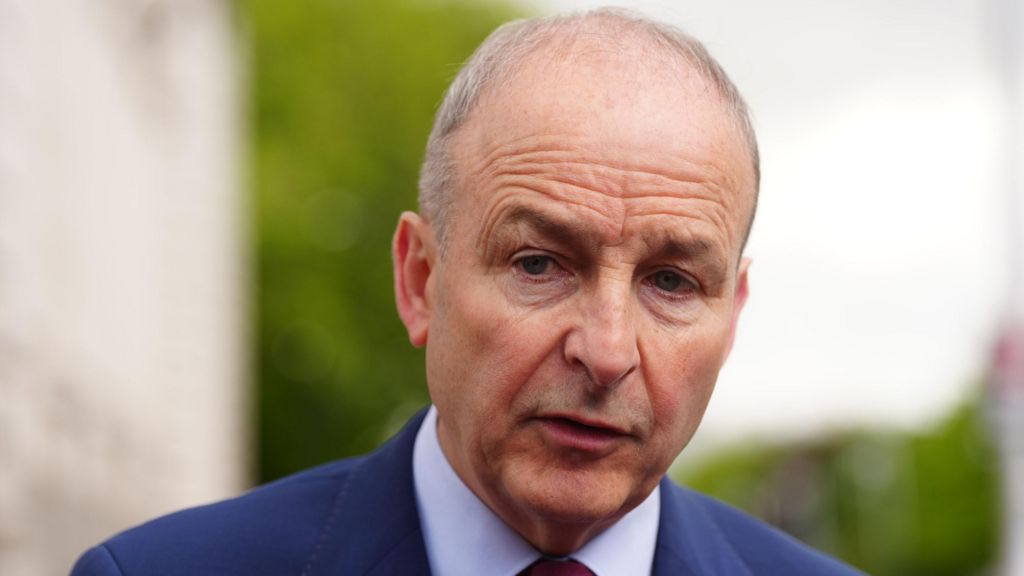
On Friday morning, Irish Taoiseach Micheál Martin touched down in Vatican City to begin a scheduled private audience with Pope Leo XIV, marking a significant high-level diplomatic and faith-based engagement between Ireland and the Holy See. Martin and his spouse Mary were formally welcomed in Vatican’s iconic San Damaso Courtyard by Petar Rajic, Prefect of the Papal Household, alongside members of the papal gentlemen’s delegation.
Ahead of the closed-door meeting, which is scheduled to run for a maximum of 35 minutes, Martin outlined the key priorities he intends to raise during the discussion. Top of the agenda are the ongoing armed conflicts tearing through the Middle East, Ukraine, and Sudan, with the Taoiseach emphasizing a shared commitment between Ireland and the Holy See to advancing peace through dialogue. Martin also noted that Pope Leo XIV has centered his papacy on peace as a defining mission, aligning closely with Ireland’s long-held diplomatic priorities.
“We share many core values: a deep commitment to a rules-based international order, and a belief that dialogue and diplomacy are the only path to lasting peace,” Martin told reporters ahead of the audience. “I look forward to exchanging views with him on how we can collaborate to advance effective multilateralism as the most effective tool to tackle our shared global challenges and bring an end to ongoing conflicts.”
Domestically, Martin plans to update the Pope on the continuing reconciliation process across the island of Ireland, including the sensitive, critical work of addressing the violent legacy of decades of conflict known as the Troubles. The Taoiseach highlighted that faith leaders and clergy from all Christian denominations have played an indispensable role in advancing peace and reconciliation across Ireland, and that this input will be a core focus of the conversation.
The meeting will also create space for a frank reflection on the historical relationship between the Irish government and the Catholic Church, including the ongoing harms and unmet needs of survivors of clerical abuse. Martin confirmed this difficult but necessary topic will not be avoided during the discussion.
Beyond his audience with the Pope, Martin has a full schedule of diplomatic and institutional engagements during his trip. He will hold a separate bilateral meeting with Cardinal Secretary of State Pietro Parolin, the top diplomat of the Holy See, before traveling to the Pontifical Irish College in Rome. During his stop at the college, Martin will meet with members of its community, tour the institution’s historic archives, and announce new Irish government funding to support the cataloguing, digitization, and long-term preservation of the archive collection. This investment is part of a broader project to improve conservation, expand public access, and boost outreach for the college’s historical holdings.
The Vatican visit comes at a key juncture for Irish foreign policy: ahead of Ireland’s assumption of the rotating Presidency of the Council of the European Union, which begins on 1 July. Martin confirmed he will outline Ireland’s policy priorities and planned agenda for the six-month presidency during his discussions at the Vatican.
Following the conclusion of his engagements in Vatican City, Martin will travel to Rome for a meeting with Italian Prime Minister Giorgia Meloni later on Friday. This stop follows a bilateral meeting Martin held with French President Emmanuel Macron at the Élysée Palace in Paris on Thursday, as part of a broader European diplomatic tour ahead of Ireland’s EU presidency.
The meeting marks the latest high-level engagement between Irish leaders and the Vatican. In 2018, then-Taoiseach Leo Varadkar met with Pope Francis during the Pope’s historic visit to Ireland, the first papal visit to the country in 39 years. Speaking in 2025, Varadkar noted that the 2018 meeting took place at a time when relations between the Irish state and the Catholic Church were already strained, amid ongoing reckoning with the clerical abuse crisis.