分类: politics

  • UK bans US Muslim preacher Shadee Elmasry for praising resistance against Israel

    UK bans US Muslim preacher Shadee Elmasry for praising resistance against Israel

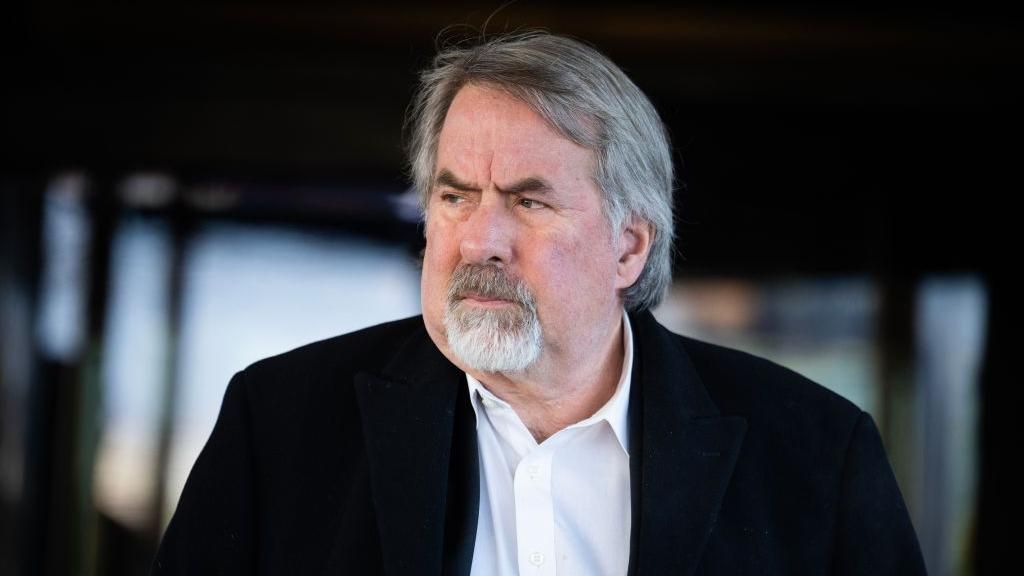
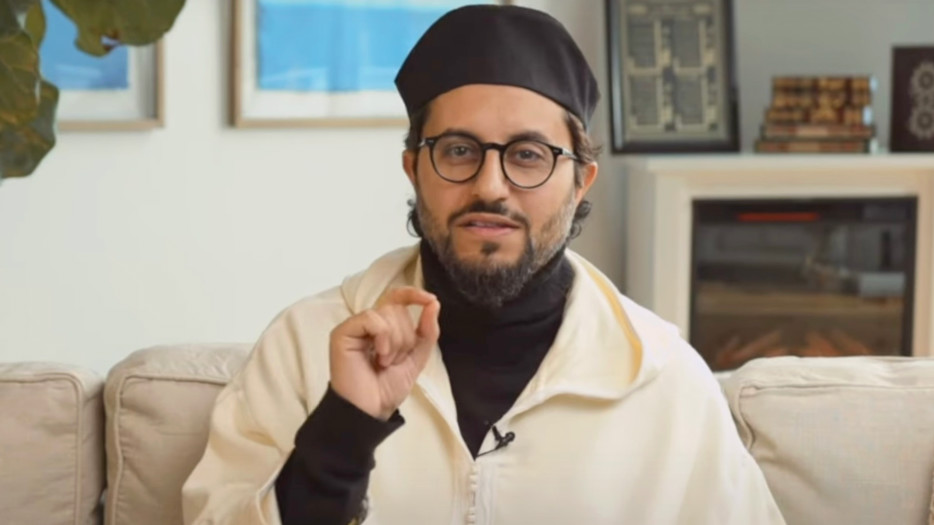
    The United Kingdom has prohibited Dr. Shadee Elmasry, a prominent American Muslim scholar, from entering the country following an official review of his social media commentary regarding the Israel-Gaza conflict. Home Secretary Shabana Mahmood revoked Elmasry’s travel authorization shortly before his scheduled speaking tour across multiple British cities.

    The decision emerged after pro-Israel activists circulated Elmasry’s social media posts from October 2023, including one stating that Gazans had “finally punched back after 50 years” following Hamas’ October 7 attack on Israel. In other posts, Elmasry contextualized the conflict by referencing historical Zionist militias and suggested that resistance movements might occasionally “go to excesses” without diminishing their moral standing.

    A government source close to Mahmood stated: “There is no place in the UK for foreign nationals who spread hate or push extremist ideas. Those seeking to divide our communities will not be allowed to enter.”

    Elmasry, who serves as education director at the New Brunswick Islamic Center in New Jersey, responded that his message has “always been about compassion and connection.” He expressed affection for England and indicated expectations that the decision would be overturned.

    The banning process gained momentum after Conservative MP Nick Timothy publicly urged the Home Secretary to exercise her exclusion powers, characterizing Elmasry’s views as “incitement and violent extremism” rather than rational debate. This followed an anonymous social media campaign alleging Elmasry supported extremist positions.

    In a recent livestream, Elmasry clarified that describing Gazans as “punched back” didn’t constitute endorsement of Hamas, noting he cannot support organizations he doesn’t fully know. He referenced United Nations provisions regarding resistance to illegal occupation while distancing himself from specific militant groups.

    Hamas remains designated as a terrorist organization in the United Kingdom, adding legal context to the government’s decision to exclude individuals perceived as supporting or justifying its actions.
  • US political theorist Michael Walzer calls Israel war on Gaza a ‘criminal effort’

    US political theorist Michael Walzer calls Israel war on Gaza a ‘criminal effort’

    In a striking critique from within Zionist intellectual circles, distinguished American political theorist Michael Walzer has denounced Israel’s military operations in Gaza as a “criminal effort” aimed at territorial conquest and population displacement. The author of the seminal work “Just and Unjust Wars,” whose writings form part of the curriculum at the US Military Academy at West Point, delivered his assessment in an extensive interview with Israeli newspaper Haaretz.

    Walzer characterized Israel’s response to the October 7, 2023 Hamas-led attack as a “joint production” for which Israeli society bears collective responsibility. He identified what he described as a “crazed rhetorical response” among Israeli leadership following the initial trauma, with prominent figures advocating for revenge and indiscriminate violence against Palestinian civilians.

    The political philosopher highlighted multiple moral failures in Israel’s conduct of the war, including the dissemination of social media videos featuring soldiers boasting about alleged war crimes. He identified the siege imposed on Gaza as the most serious ethical violation, noting its devastating impact on medical and nutritional conditions for civilians.

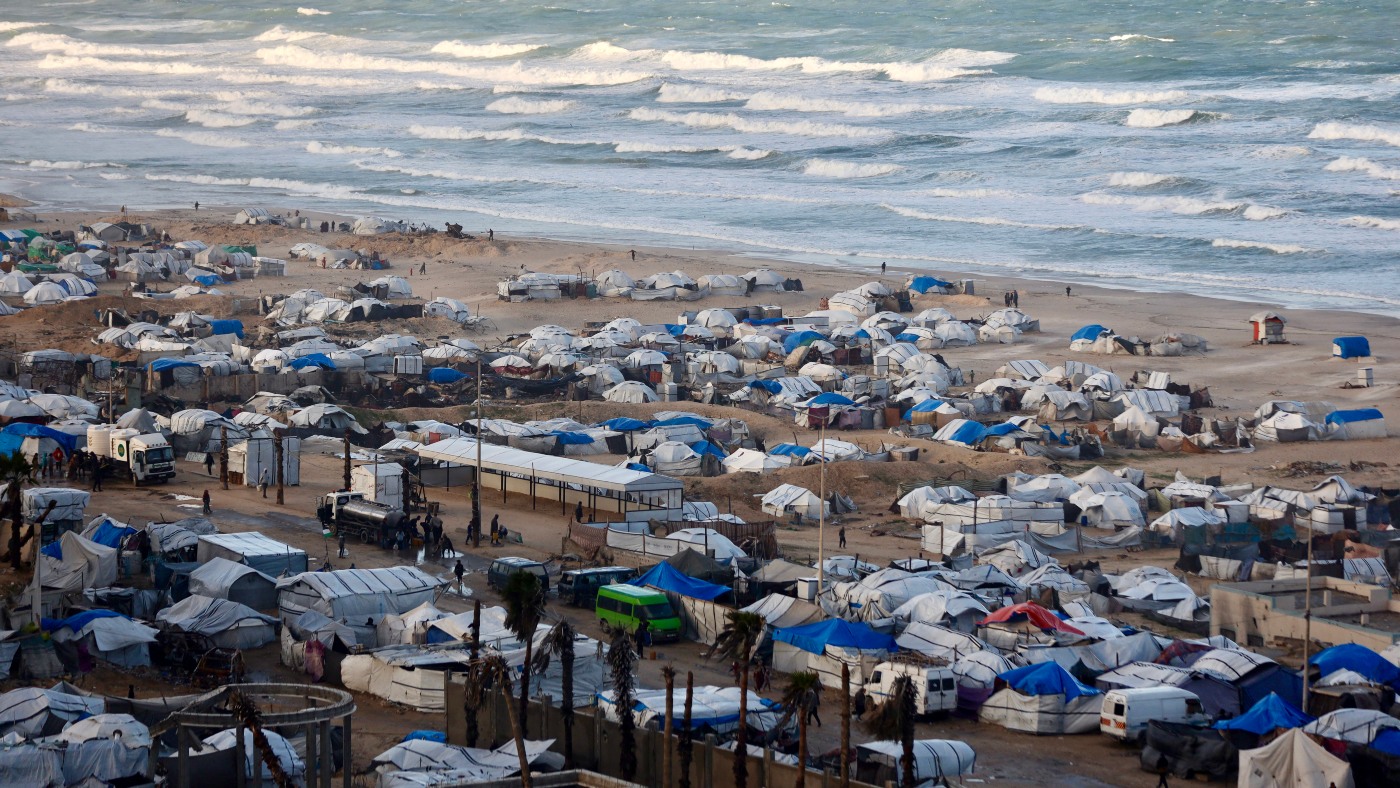
    Current statistics reveal the human cost: over 71,271 Palestinian fatalities and 171,233 wounded since hostilities intensified. Israel has reportedly violated ceasefire agreements nearly 1,000 times since their implementation in early October.

    The crisis has been exacerbated by Israel’s recent ban on 37 aid organizations, including Doctors Without Borders, which warned that hundreds of thousands would lose access to essential care if the restrictions take effect.

    Walzer further condemned the treatment of Palestinian detainees, citing credible reports of systematic abuse, and described settler violence in the West Bank as having reached “pogrom” levels with security forces complicit through inaction. United Nations data records over 260 settler attacks in October alone—the highest monthly tally since monitoring began in 2006—resulting in the forced displacement of more than 3,200 Palestinians.

    According to human rights organizations, Israeli forces have detained over 21,000 Palestinians from the West Bank in just over two years, with approximately 9,250 remaining imprisoned. Reports document widespread torture and ill-treatment, including sexual violence, with 32 detainees dying in custody in 2025 alone, bringing the total prisoner deaths since October 2023 to over 100.

  • Trump pushes back against Democrats’ criticism of Maduro raid

    Trump pushes back against Democrats’ criticism of Maduro raid

    WASHINGTON — President Donald Trump confronted Democratic criticism of the military operation that resulted in the capture of Venezuelan leader Nicolás Maduro, highlighting that his predecessor Joe Biden had similarly pursued Maduro’s arrest on narcotics charges. Speaking at a House Republican retreat, Trump expressed frustration over what he perceived as insufficient acknowledgment from political opponents regarding the successful mission.

    The operation, which culminated in Maduro’s apprehension over the weekend, has ignited complex debates about U.S. foreign policy direction. While bipartisan consensus exists that Maduro illegitimately holds power following disputed elections, Democratic leaders have questioned the administration’s strategic planning for Venezuela’s future.

    Maduro, indicted in 2020 on charges of narco-terrorism and international cocaine trafficking, pleaded not guilty in a U.S. courtroom Monday. The Trump administration had doubled the reward for information leading to his capture to $50 million last August, building on previous offers from the Biden administration.

    Secretary of State Marco Rubio briefed congressional leaders Monday amid growing concerns about potential U.S. expansionism without adequate legislative consultation. House Speaker Mike Johnson subsequently clarified that no troop deployments to Venezuela were anticipated, characterizing U.S. actions as “not a regime change operation.”

    Recent polling indicates divided American public opinion, with approximately 40% supporting the military operation against Maduro and similar numbers opposing it. Nearly half of respondents opposed U.S. control of Venezuela’s government selection, with overwhelming majority believing Venezuelans should determine their own leadership.

    The operation has triggered international repercussions, with Colombia’s Foreign Affairs Minister Rosa Villavicencio formally complaining about Trump’s threats against the nation. Simultaneously, European leaders including those of France, Germany, and the United Kingdom joined Danish Prime Minister Mette Frederiksen in defending Greenland’s sovereignty following Trump’s renewed interest in acquiring the territory for U.S. security interests.

  • US Justice Dept says millions of Epstein files still not released

    US Justice Dept says millions of Epstein files still not released

    The U.S. Department of Justice has disclosed that its review of documents connected to convicted sex offender Jeffrey Epstein involves an unprecedented volume of over two million files, significantly exceeding initial estimates. This revelation comes more than two weeks after the December 19 deadline established by the Epstein Files Transparency Act.

    In a formal communication to a federal judge on Monday, Justice Department officials detailed the extensive scope of the ongoing document review process. The department acknowledged that approximately 12,285 documents totaling more than 125,000 pages have been released to date—representing less than one percent of the total documents currently under examination.

    The complexity of the task intensified on December 24 when investigators identified an additional one million files that were not included in the initial assessment. These documents require meticulous processing and deduplication, even when appearing to be duplicates, according to the Justice Department’s communication.

    Attorney General Pam Bondi and other senior officials signed the letter emphasizing that “substantial work remains to be done” in this massive undertaking. The department has mobilized more than 400 attorneys who will dedicate “the next few weeks” exclusively to the document review process. Additionally, over 100 specially trained FBI personnel with expertise in handling sensitive victim information will provide crucial support.

    The delayed release has sparked significant political controversy, with Democrats criticizing President Donald Trump’s administration for failing to meet the statutory deadline. The administration has defended its cautious approach, citing the imperative to protect identifying information of victims throughout the document review process.

    Justice Department officials emphasized that each document requires manual examination to redact victim-identifying information, contributing to the extensive timeline for full public disclosure.

  • South Korea’s Lee snaps Xi selfie with Chinese ‘backdoor’ phone

    South Korea’s Lee snaps Xi selfie with Chinese ‘backdoor’ phone

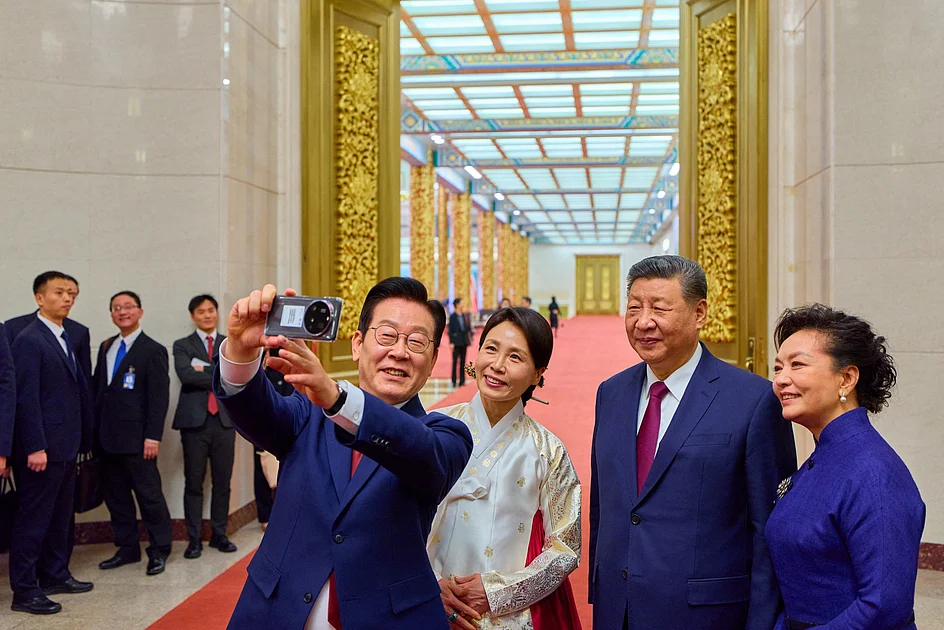
    In a striking display of diplomatic camaraderie, South Korean President Lee Jae Myung captured a historic selfie with Chinese President Xi Jinping using a smartphone gifted by the Chinese leader—the same device that previously sparked espionage-related banter between the two leaders. The photograph, featuring both leaders and their wives, was posted on social media platform X during President Lee’s official visit to Beijing on Monday.

    The Xiaomi handset became a subject of international attention last November when President Xi humorously suggested Lee should ‘check if there is a backdoor’ regarding the device’s security during their meeting at the APEC summit in South Korea. This rare display of humor from the typically reserved Chinese leader added an unusual dimension to diplomatic exchanges between the two nations.

    The selfie post generated substantial online engagement, being shared over 3,400 times within hours of publication. One social media user quipped, ‘Sir, Do you know Nicolas Maduro used the same phone?’—a reference to recent geopolitical events involving Venezuela.

    President Lee’s Beijing visit occurred against the backdrop of increasing global complexity, with President Xi emphasizing the importance of making ‘the right strategic choices’ during their 90-minute summit. The South Korean leader, who assumed office in June following his predecessor’s impeachment, has actively pursued improved relations with China after years of diplomatic stagnation.

    Following his meeting with Xi, President Lee engaged with Chinese Premier Li Qiang, praising the warming bilateral relations as ‘the irreversible trend of the times.’ The South Korean delegation subsequently traveled to Shanghai, China’s economic powerhouse, continuing their diplomatic and economic discussions.

  • Does the US have the right to take over Greenland?

    Does the US have the right to take over Greenland?

    The geopolitical landscape witnessed a remarkable development when former President Donald Trump publicly expressed interest in acquiring Greenland, sparking intense debate about territorial sovereignty and international law. This proposition, while unprecedented in modern diplomacy, raises fundamental questions about the legal frameworks governing territorial transfers between nations.

    Greenland, while geographically massive, operates under a unique political arrangement as an autonomous territory within the Kingdom of Denmark. The island gained self-governing status in 2009, controlling most domestic affairs, while Denmark retains responsibility for foreign policy, security, and financial matters. This complex relationship creates a multifaceted decision-making process that would require involvement from both Greenland’s Parliament (Inatsisartut) and the Danish government for any territorial transfer to occur.

    From an international law perspective, the concept of acquiring territory through purchase or annexation without consent violates fundamental principles of sovereignty established by the United Nations Charter. The 1933 Montevideo Convention on the Rights and Duties of States further reinforces that territorial integrity cannot be compromised through coercion or non-consensual arrangements. Historical precedents like the 1867 Alaska Purchase and the 1917 acquisition of the Danish West Indies (now U.S. Virgin Islands) involved mutually agreed-upon treaties between sovereign nations, establishing a legal framework that would be necessary for any potential transfer of Greenland.

    The strategic significance of Greenland cannot be overstated, with its geographic position offering substantial advantages for Arctic military presence and climate research capabilities. However, any discussion of acquisition faces formidable practical obstacles, including the political will of Greenland’s population, which has demonstrated strong resistance to such proposals. The economic considerations alone—including the territory’s extensive mineral resources and fishing rights—would necessitate complex negotiations that extend far beyond simple financial valuation.

    This proposition ultimately serves as a case study in the limitations of power within the contemporary international system, demonstrating that even global superpowers must operate within established legal and diplomatic frameworks when considering territorial changes.

  • US forces killed 55 Venezuelan, Cuban military personnel in Maduro raid: tolls

    US forces killed 55 Venezuelan, Cuban military personnel in Maduro raid: tolls

    Newly released casualty figures reveal that 55 Venezuelan and Cuban military personnel lost their lives during a decisive US military operation that resulted in the capture of former Venezuelan leader Nicolas Maduro. Venezuelan authorities confirmed 23 service member fatalities, while Cuba reported 32 deaths among its armed forces and security personnel stationed in Caracas, marking the first official acknowledgment of losses from Saturday’s operation.

    The multi-phase assault commenced with precision airstrikes targeting military installations, culminating in a helicopter-borne special forces raid that extracted Maduro and his wife, Cilia Flores, from a secure compound. The captured leader subsequently appeared in a New York courtroom, pleading not guilty to comprehensive drug trafficking charges. Mexican President Claudia Sheinbaum has since called for assurances of a fair judicial process for the deposed leader.

    In the aftermath, Delcy Rodriguez, Maduro’s former deputy, assumed the role of interim president amid complex geopolitical pressures. US President Donald Trump expressed conditional willingness to collaborate, contingent upon Rodriguez granting American corporations access to Venezuela’s substantial oil reserves. This demand places the new leadership in a precarious position, requiring careful navigation between Washington’s expectations and maintaining support from Maduro’s influential political base.

    The transitional government faces immediate challenges, evidenced by the brief detention of 16 journalists covering Rodriguez’s parliamentary inauguration—a move signaling the persistent influence of hardline elements within the security apparatus. Opposition leader Maria Corina Machado launched scathing criticism against the interim administration, labeling Rodriguez as fundamentally untrustworthy and highlighting her historical ties to nations including Russia and China.

    Trump maintained strategic ambiguity, simultaneously endorsing Rodriguez while issuing stark warnings should she deviate from US objectives. Meanwhile, political analysts suggest the interim administration may pursue confidence-building measures, including potential releases of political prisoners and diplomatic re-engagement, as Venezuela prepares for constitutionally mandated elections within the coming month.

  • China’s top legislator meets ROK president

    China’s top legislator meets ROK president

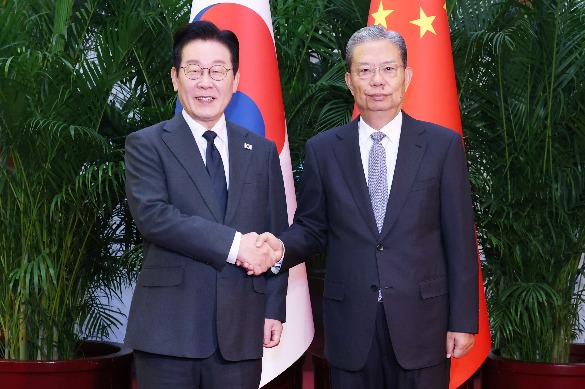
    In a significant diplomatic engagement, Zhao Leji, Chairman of China’s National People’s Congress Standing Committee, held substantive talks with South Korean President Lee Jae-myung in Beijing on Tuesday. The high-level meeting built upon Monday’s presidential discussions, marking a concerted effort to advance Sino-ROK relations through legislative channels.

    Zhao emphasized the distinctive cooperative nature that has characterized bilateral ties throughout the three decades since diplomatic normalization. He articulated China’s commitment to implementing the strategic consensus reached by both nations’ leaders, particularly focusing on reinforcing neighborly friendship, expanding mutually beneficial cooperation, and strengthening public support foundations for long-term partnership stability.

    The Chinese legislative leader specifically highlighted the NPC’s willingness to sustain high-level exchange momentum with South Korea’s National Assembly. This parliamentary cooperation aims to enhance communication across multiple tiers and diverse fields while establishing legal safeguards for bilateral collaborative initiatives.

    President Lee reciprocated these sentiments, expressing South Korea’s readiness to deepen economic and cultural cooperation with China. He advocated for intensified exchanges between legislative bodies and political parties, coupled with enhanced people-to-people interactions to further bolster bilateral relationship development.

    The meeting represents a strategic parliamentary complement to executive-level diplomacy, demonstrating both nations’ multi-branch governmental approach to fostering stable, long-term strategic cooperation amid evolving regional dynamics.

  • US Congressman Doug LaMalfa dies unexpectedly at 65

    US Congressman Doug LaMalfa dies unexpectedly at 65

    The sudden passing of California Republican Congressman Doug LaMalfa at age 65 has triggered both political repercussions and heartfelt tributes from colleagues, including former President Donald Trump. LaMalfa’s unexpected death was announced Tuesday, though the specific cause remains undisclosed at this time.

    Former President Trump delivered an emotional tribute, characterizing LaMalfa as “a defender of everybody” and “a fantastic person” who maintained perfect voting alignment with his administration. “We express our tremendous sorrow at the loss of a great member – a great, great, great member,” Trump stated in his commemorative remarks.

    Representing California’s 1st Congressional District since 2013, LaMalfa brought unique agricultural expertise to Capitol Hill. The former rice farmer held a degree in agricultural business from California Polytechnic State University and dedicated his legislative career to water policy, agricultural interests, and advocating for rural communities. His congressional website highlighted his efforts to secure assistance for wildfire victims in his northern California district and his work to protect families from excessive regulation.

    Minnesota Congressman Tom Emmer remembered his colleague as “a staunch advocate for his constituents and rural America,” reflecting the bipartisan respect LaMalfa commanded during his tenure.

    The political implications of LaMalfa’s death are immediately significant. Combined with the recent resignation of Georgia Representative Marjorie Taylor Greene, another Trump ally, the Republican majority in the House of Representatives has shrunk to a razor-thin 218-213 margin. This leaves the GOP with merely a two-vote cushion, meaning the absence or defection of just three members could result in legislative defeats.

    Further compounding Republican concerns, news emerged Tuesday that Indiana Congressman Jim Baird had been hospitalized following a car accident. While statements indicated Baird is “expected to make a full recovery,” the incident underscores the fragility of the Republican majority.

    Currently, four House seats remain vacant, with Democrats favored to secure two of them in upcoming special elections in Texas and New Jersey. Under California law, Governor Gavin Newsom must call a special election within 14 days to fill LaMalfa’s vacant seat, setting the stage for another critical electoral contest.

  • AU applauds Guinea’s peaceful electoral triumph

    AU applauds Guinea’s peaceful electoral triumph

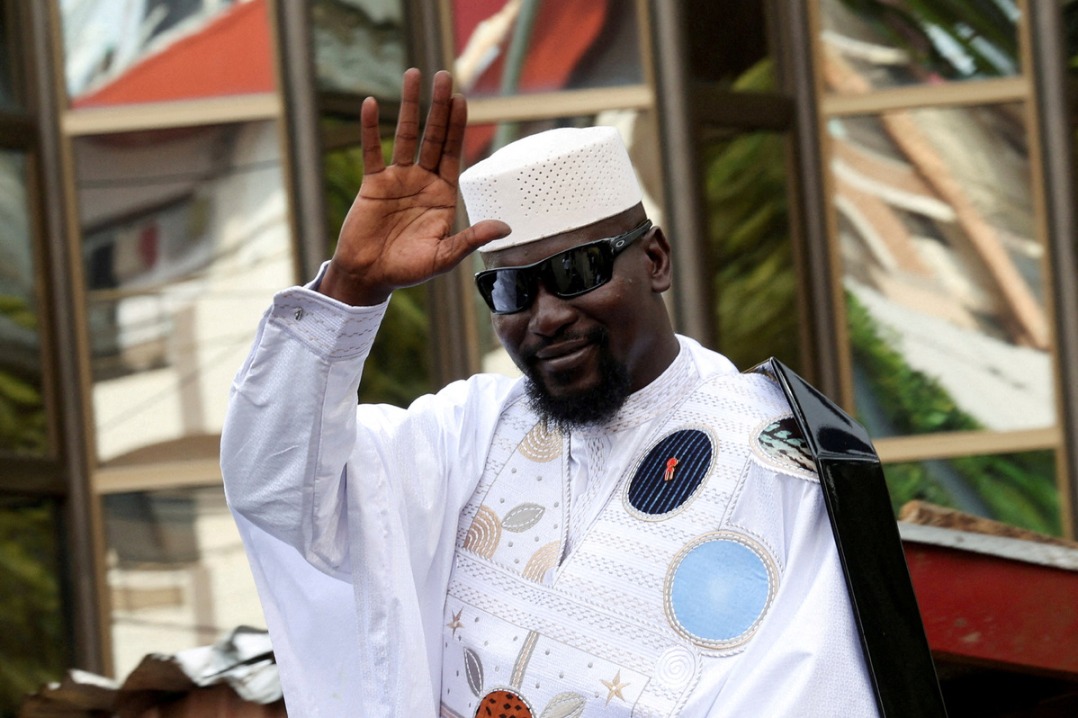
    The African Union has formally recognized Guinea’s recent presidential election as a landmark achievement in the nation’s journey toward reestablishing constitutional governance. In an official statement, AU Commission Chairperson Mahamoud Ali Youssouf commended the peaceful conduct of the December 28 vote, highlighting the demonstrated maturity of Guinean citizens throughout the electoral process.

    Youssouf extended congratulations to President-elect Mamady Doumbouya on his decisive victory, which was subsequently validated by Guinea’s Supreme Court following the release of provisional results by the General Directorate of Elections. The AU leadership specifically praised the collaborative efforts of national stakeholders—including election management bodies, political candidates, party coalitions, government institutions, and civil society organizations—for ensuring the electoral proceedings aligned with both international standards and Guinea’s domestic legal framework.

    Significantly, the AU chairperson called for a comprehensive reassessment of existing sanctions against Guinea, suggesting the peaceful transition warranted reconsideration of restrictive measures. The Union reaffirmed its commitment to providing ongoing support for Guinea’s democratic consolidation, rule of law enforcement, and national unity strengthening—elements deemed essential for sustainable development.

    The AU’s endorsement follows a period of political transition in Guinea and represents international recognition of the country’s progress toward institutional normalization through democratic mechanisms.