分类: politics

  • India-UAE: A blueprint for 21st-century strategic cooperation

    India-UAE: A blueprint for 21st-century strategic cooperation

    As India commemorates its 77th Republic Day, the nation’s transformation into a global economic and strategic powerhouse finds perfect expression in its groundbreaking partnership with the United Arab Emirates. This alliance has evolved beyond conventional diplomacy to establish what analysts are calling a blueprint for 21st-century international cooperation.

    The relationship’s foundation rests on the remarkable personal chemistry between Indian Prime Minister Narendra Modi and UAE President Sheikh Mohamed bin Zayed Al Nahyan, whose six reciprocal high-level visits within three years have created unprecedented diplomatic momentum. This bond has now extended to the next generation of leadership, with Crown Princes of both Abu Dhabi and Dubai making significant visits to India, ensuring continuity in bilateral relations.

    Economically, the partnership has shattered previous paradigms. Bilateral trade has spectacularly surpassed the $100 billion milestone, driven by the groundbreaking Comprehensive Economic Partnership Agreement (CEPA) and the 2024 Bilateral Investment Treaty. These frameworks have enabled revolutionary initiatives including the integration of India’s UPI with the UAE’s AANI payment systems, the introduction of the Jaywan card for seamless transactions, and plans for a Virtual Trade Corridor alongside the establishment of Bharat Mart to transform logistics infrastructure. These achievements have prompted both nations to set an ambitious $200 billion trade target by 2032.

    Strategic cooperation has equally deepened, with the recently announced Strategic Defence Partnership positioning both countries as stabilizers in regional security architecture. Simultaneously, the partnership invests in future human capital through the establishment of IIT Delhi-Abu Dhabi and IIM Ahmedabad’s Dubai campus, creating shared ecosystems for educating next-generation leaders.

    At its heart, the relationship is powered by the over four million-strong Indian diaspora in the UAE, whose contributions form the soul of this partnership. The inauguration of the BAPS Hindu Temple in Abu Dhabi and plans for a ‘House of India’ cultural center stand as permanent testaments to mutual respect and cultural pluralism.

    This comprehensive alliance demonstrates how nations can align destinies beyond geographical proximity, creating a model that looks not at maps but at shared horizons in defining global future trajectories.

  • Israel extends media restrictions under law targeting foreign broadcasters

    Israel extends media restrictions under law targeting foreign broadcasters

    The Israeli government has escalated its media restrictions by implementing a comprehensive 90-day blockade against Qatar-based Al Jazeera and Lebanese Al Mayadeen networks, effectively shutting down their digital presence including websites and YouTube channels within Israeli territory. This move extends existing broadcast bans under legislation previously ratified by the Knesset.

    Communications Minister Shlomo Karhi characterized the action as removing ‘Israel’s enemies,’ invoking the Al Jazeera Law which permits temporary closure of foreign broadcasters deemed national security threats. Originally enacted as emergency legislation in May 2024, the law was converted to permanent status in December, granting authorities unprecedented power to shutter media outlets and confiscate equipment without judicial oversight.

    The September storming of Al Jazeera’s Ramallah offices in the occupied West Bank, where equipment was seized and operations halted, foreshadowed this digital crackdown. The network has denounced the accusations as slanderous and vowed to continue professional coverage while pursuing legal recourse.

    International press freedom organizations have condemned Israel’s actions as systematic silencing tactics. Committee to Protect Journalists head Jodie Ginsberg accused Israel of masking genocide in Gaza through press suppression and journalist targeting, noting unprecedented restriction levels and ongoing negotiations for international media access to Gaza.

    UNRWA Commissioner-General Philippe Lazzarini revealed Gaza has become the world’s most lethal environment for journalists and aid workers, with over 230 media professionals killed since hostilities began. He praised Palestinian reporters as heroic ‘eyes and ears’ operating against impossible odds.

    Israel has consistently rejected foreign media access requests, including a recent petition from the Foreign Press Association. This isolation has compounded humanitarian crises, with UNRWA reporting 382 personnel deaths among its operational network. Israel’s parliamentary ban on UNRWA operations and exclusion of 37 humanitarian NGOs for registration deficiencies further restricts relief efforts.

    Even organizations like Doctors Without Borders face difficult compromises, providing staff lists to resume operations despite safety concerns after 15 Palestinian staff fatalities. Despite October’s ceasefire agreement, the UN maintains the humanitarian crisis persists with over 1,300 documented ceasefire violations including structural demolitions, civilian shootings, and strikes.

    Gaza’s Health Ministry reports 71,657 fatalities and 171,399 injuries since October 2023, with thousands more missing presumed dead. The UN documented 216 Palestinian deaths, including 46 children and 28 women, in attacks targeting displacement shelters and residential areas far from conflict zones.

  • Trump administration defends killing American in Minneapolis, contradicts videos

    Trump administration defends killing American in Minneapolis, contradicts videos

    The Trump administration is facing intensified criticism and mounting tensions following the fatal shooting of American citizen Alex Pretti by federal immigration agents in Minneapolis, with video evidence directly contradicting official accounts of the incident.

    Administration officials maintained that Pretti, 37, assaulted officers during Saturday’s confrontation, necessitating the use of lethal force in self-defense. However, multiple verified videos depict Pretti holding only a cellphone while attempting to assist fellow protesters before being pepper-sprayed, wrestled to the ground, and shot at close range by federal agents.

    This incident marks the second fatal shooting of a U.S. citizen by immigration officers in Minneapolis this month, following the January 7th killing of Renee Good. The escalating situation has prompted Minnesota Governor Tim Walz to repeatedly demand the withdrawal of federal agents from the state, while a federal judge has issued a temporary order prohibiting the administration from destroying or altering evidence related to Pretti’s death.

    The videos, which have sparked widespread outrage, show agents removing a handgun from Pretti’s waistband area after he was already subdued. Minnesota officials confirm Pretti held a valid state permit for concealed carry—a constitutional right affirmed by the Supreme Court in 2022.

    Minneapolis Police Chief Brian O’Hara characterized the administration’s version of events as ‘deeply disturbing,’ stating that ‘the videos speak for themselves.’ The shooting has drawn condemnation from former Presidents Barack Obama and Bill Clinton, while triggering mass protests and prompting leading Minnesota corporations to call for immediate de-escalation.

    Pretti, an intensive care nurse at a Veterans Affairs hospital, is remembered by colleagues as ‘caring and kind,’ with over 200 healthcare workers gathering at the site of his killing to pay tribute. The Justice Department has withdrawn cooperation from the investigation into Good’s killing, resulting in the resignation of at least a dozen federal prosecutors protesting the handling of the case.

  • Britain’s Conservative Party loses another high-profile lawmaker to hard-right Reform

    Britain’s Conservative Party loses another high-profile lawmaker to hard-right Reform

    In a significant political realignment, former UK Home Secretary Suella Braverman has abandoned the Conservative Party after three decades to join the hard-right Reform UK party. The prominent anti-immigration lawmaker, who represented a southern England constituency, announced her defection on Monday, marking another high-profile departure from the Conservatives.

    Braverman, dismissed from her interior minister position in 2023 for repeatedly contradicting government policy, declared her decision stemmed from fundamental disagreements with the party’s direction. ‘We can either continue down this route of managed decline to weakness and surrender,’ Braverman stated, ‘or we can fix our country, reclaim our power, rediscover our strength. I believe that a better Britain is possible.’

    Her move follows recent defections including Robert Jenrick’s, bringing Reform UK’s parliamentary representation to eight seats in the 650-member House of Commons. Despite holding minimal parliamentary seats, Reform UK has demonstrated surprising strength in opinion polls, currently leading both the governing Labour Party and Conservatives ahead of critical local elections in May.

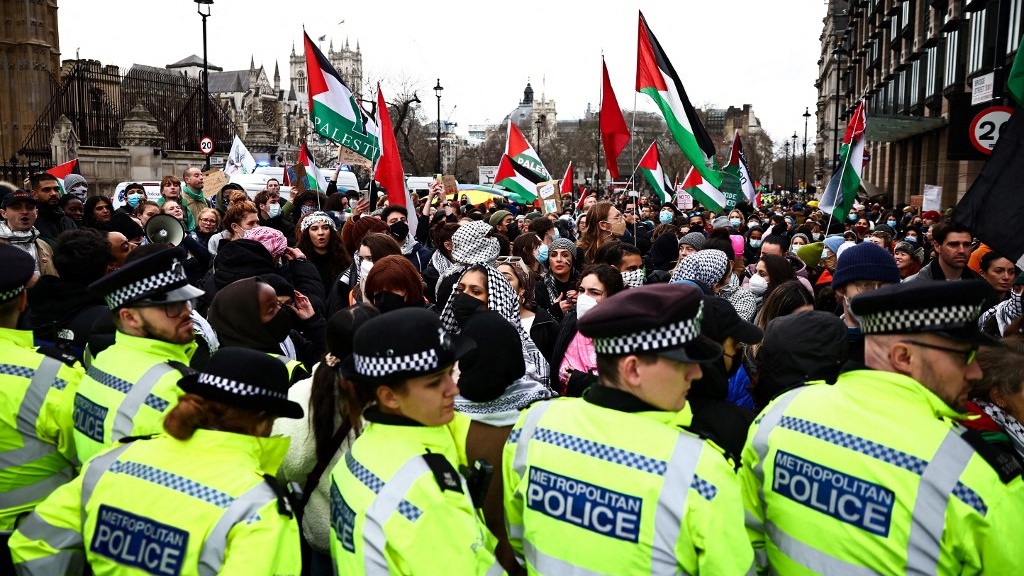
    The 45-year-old lawyer’s controversial tenure as home secretary included characterizing migration as a ‘hurricane’ heading for Britain, describing homelessness as a ‘lifestyle choice,’ and accusing police of excessive leniency toward pro-Palestinian protesters. Critics attributed her inflammatory rhetoric to escalating tensions that culminated in clashes between far-right demonstrators and police during large-scale protests.

    Braverman, known for criticizing liberal social values and what she termed the ‘tofu-eating wokerati,’ had previously advocated for Reform UK leader Nigel Farage’s integration into Conservative ranks following their devastating July 2024 election defeat. After colleagues rejected her proposals and dismissed her as ‘mad, bad and dangerous,’ she has now joined Farage’s expanding political movement that argues Britain is broken and overwhelmed by migration issues.

  • Talks with US and Ukraine in Abu Dhabi were constructive but major challenges remain, Kremlin says

    Talks with US and Ukraine in Abu Dhabi were constructive but major challenges remain, Kremlin says

    Diplomatic efforts to resolve the ongoing conflict between Russia and Ukraine are demonstrating tangible signs of advancement, though significant obstacles persist on the road to a comprehensive peace agreement, according to senior Kremlin officials.

    Kremlin spokesman Dmitry Peskov confirmed Monday that recent trilateral negotiations involving Russian, Ukrainian, and American representatives in Abu Dhabi had produced constructive dialogue, with additional talks scheduled for February 1st in the United Arab Emirates. While characterizing the discussions as positively oriented, Peskov emphasized that “serious work ahead” remains before any definitive breakthrough can be achieved.

    The weekend negotiations, conducted discreetly on Friday and Saturday, represent the latest development in a yearlong diplomatic initiative by the Trump administration to broker a peaceful resolution to the nearly four-year conflict. Although both Ukrainian and Russian officials have expressed willingness to consider Washington’s compromise proposals, fundamental disagreements persist regarding the specific terms of any potential settlement.

    Meanwhile, military operations continue unabated along the extensive 1,000-kilometer front line traversing eastern and southern Ukraine. Ukrainian civilians endure another winter of severe hardship amid ongoing Russian bombardment of urban centers and critical infrastructure.

    President Volodymyr Zelenskyy corroborated the constructive nature of the Abu Dhabi discussions, revealing Sunday that documentation outlining postwar U.S. security guarantees for Ukraine is “100% ready” for formal signing. Kyiv has consistently emphasized that American security commitments constitute an essential component of any comprehensive peace agreement with Moscow, particularly following Russia’s 2014 annexation of Crimea and subsequent full-scale invasion in February 2022.

    Core disagreements center on territorial disputes, specifically whether Russian forces should withdraw from occupied Ukrainian territories—particularly the Donbas industrial region—or maintain control over captured areas. The upcoming February negotiations will address broad military and economic considerations, including potential ceasefire arrangements preceding a comprehensive settlement.

    Concurrent with diplomatic developments, both nations reported escalated drone warfare. Russia’s Defense Ministry claimed interception of 40 Ukrainian drones, while Ukrainian forces acknowledged targeting a Krasnodar region oil refinery supplying Russian military operations. Ukrainian authorities reported intercepting 110 of 138 Russian drones launched overnight, with 21 striking targets across eleven locations.

  • Fujian deepens cross-Strait integration with Taiwan through infrastructure and cultural initiatives

    Fujian deepens cross-Strait integration with Taiwan through infrastructure and cultural initiatives

    In a significant move to strengthen ties across the Taiwan Strait, China’s Fujian province has launched comprehensive integration initiatives combining infrastructure development and cultural exchange programs. The coastal province, positioned as the primary gateway to Taiwan, is implementing concrete measures to create “integrated living circles” with the outlying islands of Jinmen and Matsu.

    The city of Xiamen has committed to completing its section of the Xiamen-Jinmen Bridge within the year, a landmark infrastructure project designed to facilitate daily cross-Strait connectivity. The municipal government’s work report outlines additional collaborative efforts including shared access to the newly constructed Xiamen Xiang’an International Airport and the development of integrated electricity and gas networks between Xiamen and Jinmen. To streamline transportation, Xiamen is implementing intelligent customs clearance systems for ferry passengers.

    Beyond physical connectivity, Xiamen is establishing itself as a testing ground for cross-Strait standard harmonization. The city plans to formulate or revise over 30 common standards across sectors including healthcare and domestic services in 2026. This standardization effort builds on previous success in economic cooperation, with the Cross-Strait Integrated Circuit Industry Cooperation Pilot Zone showing notable progress. Xiamen recorded an 11% year-on-year increase in new Taiwan-funded enterprises following the implementation of 25 measures supporting Taiwan businesses.

    Meanwhile, Fuzhou, the provincial capital, reported substantial growth in Taiwan investment with 355 new Taiwan-funded enterprises established in the previous year, representing a 26.3% increase. Fuzhou’s 2026 agenda emphasizes social and cultural integration, focusing on equalizing basic public services including healthcare, housing, and education for Taiwan compatriots. The city will additionally promote ancestral “root-seeking” activities and enhance youth exchanges through sports diplomacy, particularly baseball and rugby, to strengthen emotional and familial bonds across the Strait.

  • Military-backed party secures Myanmar election win with opposition excluded

    Military-backed party secures Myanmar election win with opposition excluded

    BANGKOK (AP) — Myanmar’s military-aligned Union Solidarity and Development Party (USDP) announced Monday it had secured victory in the nation’s first electoral process since the 2021 armed seizure of power, establishing the foundation for a new governing administration.

    The anticipated triumph of the former general-led party occurred within a tightly controlled electoral environment that systematically excluded prominent opposition factions and suppressed dissenting voices. The military government further consolidated power through constitutional provisions automatically reserving 25% of parliamentary seats for armed forces personnel, effectively ensuring continued dominance by military interests and their political allies.

    International observers and critics have universally condemned the polling process as fundamentally flawed, characterizing it as a strategic maneuver to legitimize military rule following the ousting of Aung San Suu Kyi’s democratically elected government. The violent takeover precipitated nationwide resistance that has subsequently evolved into full-scale civil conflict.

    The multi-phase election conducted between December 28 and January 25 witnessed significant participation limitations, with 67 of Myanmar’s 330 townships—primarily those under opposition armed group control—unable to participate. This reduced the total available seats in the 664-member national parliament to 586.

    Despite participation from over 4,800 candidates representing 57 political organizations, only six parties mounted nationwide campaigns, reflecting the constrained political landscape.

    An anonymous USDP senior official disclosed to The Associated Press that the party secured 57 of 61 contested lower house seats during Sunday’s final voting phase. Preliminary calculations indicate the military-aligned party will hold at least 290 parliamentary positions across both chambers. Combined with the military’s constitutionally mandated 166 seats, this establishes a commanding majority exceeding 450 seats—well beyond the 294 required for government formation.

    The electoral process will culminate with parliamentary members and military appointees selecting a president from three nominated candidates, with current military government leader Senior General Min Aung Hlaing widely anticipated to assume the presidency.

    United Nations Special Rapporteur Tom Andrews has urged global rejection of both the election results and subsequent power structures, while Min Aung Hlaing defiantly stated that international recognition remains irrelevant to Myanmar’s political process.

  • Rights group says Iran protest toll nears 6,000 dead

    Rights group says Iran protest toll nears 6,000 dead

    A US-based human rights organization has reported that nearly 6,000 individuals have been confirmed dead during widespread protests in Iran, while Tehran issued stern warnings against American intervention in its internal affairs. The Human Rights Activists News Agency (HRANA) disclosed on Monday that its verified death toll had reached 5,848, including 209 security personnel, with an additional 17,091 potential fatalities under investigation.

    The protest movement, initially sparked by economic discontent in late December, rapidly evolved into a broad challenge against Iran’s Islamic republic system, culminating in massive street demonstrations beginning January 8. Rights organizations have condemned authorities for implementing an unprecedented crackdown, alleging security forces fired directly at protesters while maintaining an internet blackout that has persisted for 18 consecutive days.

    Iranian authorities provided their first official casualty figures last week, claiming 3,117 deaths with the majority characterized as security forces or innocent bystanders killed by ‘rioters.’ Independent monitors note the internet shutdown has severely obstructed accurate documentation of casualties, with Netblocks confirming the ongoing blackout is ‘obscuring the extent of a deadly crackdown on civilians.’

    The geopolitical dimension intensified as the United States deployed military assets to the region, including the aircraft carrier USS Abraham Lincoln. President Donald Trump maintained that military intervention remains ‘an option’ while stating his preference to avoid conflict. Iran’s foreign ministry responded with warnings of a ‘comprehensive and regret-inducing response to any aggression,’ with spokesman Esmaeil Baghaei asserting that American naval presence would not diminish Iran’s defensive resolve.

    In Tehran’s Enghelab Square, new anti-American billboards depicted destroyed aircraft carriers accompanied by the prophetic warning: ‘If you sow the wind, you will reap the whirlwind.’ Supreme Leader Ayatollah Ali Khamenei, in his last public appearance on January 17, vowed authorities would ‘break the back of the seditionists.’

    Meanwhile, Iran-backed Hezbollah militants in Lebanon organized rallies supporting Iran against ‘American-Zionist sabotage and threats,’ signaling regional alignment behind Tehran’s position. The convergence of domestic suppression and international posturing creates a volatile situation with implications extending beyond Iran’s borders.

  • France honors fallen soldiers in Afghanistan after Trump’s false claim about NATO troops

    France honors fallen soldiers in Afghanistan after Trump’s false claim about NATO troops

    PARIS — In a dignified response to controversial statements made by former U.S. President Donald Trump, French defense officials have publicly honored the memory of their nation’s fallen soldiers in Afghanistan. Alice Rufo, Minister Delegate at the Defense Ministry, presided over a solemn ceremony at a Paris monument dedicated to French military personnel who perished in overseas operations.

    The ceremony, which officials noted was organized specifically in response to recent remarks about NATO allies’ participation in the Afghanistan conflict, served as a powerful rebuttal to claims that non-American troops avoided frontline combat. Rufo emphasized the importance of preserving the honor and sacrifice of the ninety French soldiers who lost their lives during the conflict that began in October 2001.

    This diplomatic response comes after Trump’s interview with Fox Business Network in Davos, Switzerland, where he suggested that non-U.S. NATO forces remained distant from combat zones. Although the former president subsequently praised British forces, he omitted recognition of other allied troops, creating diplomatic tension among NATO partners.

    Rufo acknowledged the profound emotional impact of these statements on veterans’ associations, noting their ‘outrage, anger, and sadness.’ However, she emphasized the enduring ‘brotherhood of arms’ between American, British, and French military forces, advocating for trans-Atlantic solidarity to overcome political disagreements.

    The Afghanistan campaign represented a historic moment for NATO, marking the first activation of its mutual-defense clause following the September 11 attacks. The international coalition, comprising dozens of nations, worked collectively to dismantle al-Qaida and confront Taliban forces in their Afghan stronghold.

  • Minnesota officials call for feds to leave

    Minnesota officials call for feds to leave

    A deepening political crisis is unfolding in Minnesota as state leaders demand the immediate withdrawal of federal immigration officers following a second fatal shooting by US agents in Minneapolis. The incident, which occurred on Saturday, has ignited fresh protests and exposed severe fractures between state and federal authorities.

    Minnesota Governor Tim Walz condemned the shooting as “horrific” and insisted that state investigators take charge of the case, declaring, “The federal government cannot be trusted to lead this investigation.” However, according to Associated Press reports, the Department of Homeland Security blocked state investigators from accessing the crime scene despite having a signed warrant.

    The DHS presented a starkly different account of the incident, characterizing it as an attack on federal personnel. Officials claimed a Border Patrol agent acted in self-defense after 37-year-old Alex Pretti—an ICU nurse at a VA hospital licensed to carry a concealed weapon—approached agents with a handgun and resisted disarmament attempts. Homeland Security Secretary Kristi Noem described Pretti as intending to “inflict maximum damage” while White House deputy chief of staff Stephen Miller labeled him an “assassin.”

    This narrative conflicts directly with verified bystander footage reviewed by Reuters, which shows Pretti holding a phone rather than a firearm while attempting to assist protesters who had been pushed to the ground by immigration agents.

    The shooting represents the second such incident in weeks, following the January 7th death of Renee Good, where similar discrepancies emerged between federal accounts and cellphone evidence. A recent Hennepin county medical examiner’s report classified Good’s death as a homicide.

    President Donald Trump escalated tensions by accusing Governor Walz and Minneapolis officials of “inciting Insurrection” through their “pompous, dangerous, and arrogant rhetoric.” The administration has deployed approximately 3,000 federal agents to Minneapolis as part of a sweeping immigration crackdown backed by $170 billion in funding through 2029.

    Former President Barack Obama broke silence to call Pretti’s death a “heartbreaking tragedy” warning that “many of our core values as a nation are increasingly under assault.” He urged the administration to collaborate with local officials “to avert more chaos.”

    Academic experts warn the standoff may have far-reaching consequences. Professor Chen Hong of East China Normal University predicts the conflicting law enforcement narratives will harden positions and intensify social tensions, potentially spilling into Congressional battles over immigration policy, homeland security funding, and law enforcement oversight that could trigger government shutdowns.

    Professor Li Haidong of China Foreign Affairs University notes that the Republican-led federal government’s immigration crackdown in a Democratic stronghold known for its diverse immigrant culture appears designed to reshape the local voter base through mass deportations. These policies have severely disrupted Minnesota’s social fabric and cultural ecosystem, generating widespread public discontent that promises to make immigration a central battleground in upcoming midterm elections.