分类: politics

  • Pope Leo pays tribute to Pope Francis on the anniversary of his death

    Pope Leo pays tribute to Pope Francis on the anniversary of his death

    Flying from Angola to Equatorial Guinea on the final stop of his four-nation African pilgrimage, Pope Leo XIV paused mid-journey on Tuesday to pay heartfelt tribute to his predecessor Pope Francis, marking one year since Francis’ death last Easter Monday.

    Speaking to journalists aboard the papal plane in fluent Italian — as the aircraft passed over the Central African Republic, the same nation where Francis opened his landmark 2015 Holy Year of Mercy — Leo reflected on the core themes that defined Francis’ decade-long papacy. He highlighted Francis’ persistent calls for human fraternity, radical respect for all people, and unwavering commitment to walking alongside the marginalized.

    “We thank the Lord for the great gift of Francis’ life, given to the church and the entire world,” Leo told reporters, recalling specific memorable homilies that shaped Francis’ public witness. He specifically cited Francis’ first post-election Sunday noon prayer and a moving Mass held two days before his 2013 inauguration, where Francis preached a heartfelt sermon on God’s boundless mercy centered on the biblical story of an adulterous woman.

    “So many times what he did was live truly being close to the poorest, the smallest, the sick, children, the elderly,” Leo said. “He gave so much to the church with his life, with his witness, with his word and with his gestures.” He closed his tribute with a plea for prayer, saying “Let us pray that he is still enjoying the mercy of the Lord.”

    Francis died at 88 last year, just weeks after he made a final public appearance: riding through St. Peter’s Square in the popemobile to deliver an Easter blessing to gathered crowds, just days after completing a five-week hospital stay for double pneumonia. His passing triggered a conclave just a few weeks later, where Robert Prevost — now known as Pope Leo XIV — was elected to succeed him. As newly uncovered details from a recently released commemorative book confirm, Francis actively paved the way for that outcome.

    The first anniversary of Francis’ death is being marked with formal commemorations across Rome, including a special evening Mass scheduled at the St. Mary Major basilica, where Francis is buried, and the launch of multiple books collecting recollections of his papacy. One of the most revealing volumes, *Padre* (Father), written by Vatican Media reporter Salvatore Cernuzio — who developed close personal access to Francis during his papacy — offers direct confirmation of Francis’ high regard for Leo long before his election.

    In the book, Cernuzio recounts a 2023 conversation, after Francis announced he would name Prevost a cardinal that year. When asked about the then-Cardinal Prevost, Francis told the reporter simply: “Him? He’s a saint.” Cernuzio notes that when Francis used that term to describe someone, he typically meant the person possessed the rare ability to navigate conflict, tension and complex institutional challenges with calm, while building unity across communities.

    That comment adds substantial credibility to the long-held hypothesis that Francis identified Prevost as a potential successor years in advance and intentionally groomed him for the role. Their relationship stretches back decades, to when Prevost served as the global head of the Order of St. Augustine and the future Francis was still Archbishop Jorge Mario Bergoglio of Buenos Aires. Even a small early disagreement — when Prevost declined to assign an Augustinian priest to a role Bergoglio requested — did not dampen Francis’ esteem.

    After Prevost completed his second term leading the Augustinian order, Francis appointed him bishop of the challenging diocese of Chiclayo, Peru, where Prevost had already spent 20 years working as a missionary. Prevost quickly rose through the ranks of the Peruvian Bishops’ Conference, before Francis called him to Rome in 2023 to lead the Dicastery for Bishops, one of the Vatican’s most powerful departments. The role gave Prevost invaluable experience navigating Vatican bureaucracy and built critical relationships with the college of cardinals that would ultimately elect him pope.

    That backing and preparation allowed Prevost to overcome a longstanding unwritten taboo within the Catholic Church against electing an American pope, a restriction rooted in concerns over the United States’ global geopolitical power. Speaking to parishioners in his home state of Illinois earlier this year, Prevost recounted that after that early disagreement decades ago, he naively assumed Francis would forget him and never appoint him to a senior church role. Instead, Francis not only made him a bishop, but spent years laying the groundwork for Prevost to take his place as leader of the world’s 1.3 billion Catholics.

  • South Africa police chief Fannie Masemola in court over alleged $21 million unlawful contract

    South Africa police chief Fannie Masemola in court over alleged $21 million unlawful contract

    PRETORIA – In a major development rocking South Africa’s national law enforcement apparatus, national police commissioner Fannie Masemola has made his first formal court appearance in connection to a sprawling corruption investigation that has already swept up more than a dozen other high-ranking police officials.

    Masemola, who has retained his post as the head of South Africa’s police service despite the charges, faces four separate violations of the country’s Public Finance Management Act. The legislation governs how government agencies award public contracts, and the charges stem from an allegedly tainted 360 million South African rand, equivalent to roughly $21 million, contract for health and wellness services for active police officers.

    The top law enforcement official was summoned to court earlier this month and made his initial arraignment on Tuesday. He has not yet entered a plea to the charges brought by national prosecutors. If convicted on all counts, Masemola could face a maximum sentence of five years in prison, in addition to substantial financial penalties.

    Prosecutors allege that the service contract was awarded through improper channels, and multiple senior officers are accused of accepting bribes from the bidding firm that ultimately secured the deal. Full details of Masemola’s specific role have not been publicly disclosed as the investigation remains ongoing, but the charges are tied to his formal duties as the police service’s top accounting officer, responsible for overseeing all public spending. The controversial contract has already been terminated by police leadership.

    The corrupt contract is one of the core cases being examined by a public commission of inquiry launched by South African President Cyril Ramaphosa last year. The inquiry was convened to investigate widespread accusations of systemic corruption across the national police service. A separate parallel investigation into the allegations has also been conducted by the country’s parliamentary body.

    Prosecutors announced in court Tuesday that Masemola’s case will be consolidated with the cases of 16 other co-accused individuals, which includes the 12 senior police officers already arrested and charged. Among those already in the case are one major-general and multiple brigadiers, some of the highest ranking positions in the South African Police Service. All of the previously charged defendants have been released on bail awaiting trial.

    Alongside the police officers, a prominent businessman with alleged ties to organized organized crime stands accused. His company was the successful bidder for the contract at the center of the scandal. The businessman, Vusi “Cat” Matlala, has already testified before the inquiry about purported connections between senior police leadership and criminal kingpins. He is currently being held in a maximum-security prison on separate charges including attempted murder that are unrelated to the corruption case.

    Speaking to journalists following his court appearance, Masemola pushed back against growing public and political calls for him to resign from his post. He emphasized that the decision to remove him rests solely with President Ramaphosa, and confirmed that he will continue carrying out his regular official duties. A spokesperson for the presidency stated Tuesday that Ramaphosa has been formally briefed on the charges against Masemola, and will handle the situation consistent with South Africa’s existing legal framework. The case has been adjourned and is scheduled to resume in court on May 13.

  • Nigeria charges 6 with treason over alleged coup plot

    Nigeria charges 6 with treason over alleged coup plot

    ABUJA, NIGERIA – In a major security development that has underscored rising political instability across West Africa, Nigerian federal authorities have filed terrorism and treason charges against six individuals, among them a retired army major general and an active-duty police inspector, over an alleged conspiracy to topple democratically elected President Bola Tinubu. Details of the charges are laid out in an official charge sheet reviewed by the Associated Press on Tuesday.

    All six accused individuals are currently in government custody, while a seventh suspect – Timpre Sylva, a former governor of Nigeria’s Bayelsa State – remains at large. Sylva is specifically accused of aiding the conspirators by concealing details of their planned coup from authorities. The 13-count formal charge alleges that the co-conspirators “conspired with one another to levy war against the state to overawe the president of the Federal Republic.”

    This case marks the formal prosecution of a plot authorities first said they foiled back in January, when the government initially announced that multiple military officers would face trial. The conspiracy traces back to late 2025, when security forces first took 16 military officers into custody over what military leadership at the time described only as “acts of indiscipline and breaches of service regulations.” That vague initial characterization fueled widespread public speculation of a secret coup plot, a rumor the Nigerian government initially denied before confirming the foiled attempt earlier this year.

    As Africa’s most populous country, Nigeria has a fraught political history of military takeovers, with five successful coups recorded across the 20th century. However, the nation has maintained uninterrupted civilian democratic rule since its transition to democracy in 1999, making an attempted coup against the sitting government a major break from decades of stability.

    The alleged plot against Tinubu’s administration fits into a growing regional trend: West and Central Africa have seen a sharp surge in both successful military takeovers and attempted coups in recent years, with the most recent disrupted plots uncovered in Benin and Guinea-Bissau just last year. Regional security and political analysts note that this wave of attempted putsches follows a consistent pattern: they emerge in nations grappling with disputed election outcomes, constitutional crises, widespread unaddressed security failures, and deep-seated youth discontent over economic stagnation and lack of opportunity.

  • Hungary’s anti-LGBTQ+ legislation violates EU law, court finds

    Hungary’s anti-LGBTQ+ legislation violates EU law, court finds

    On Tuesday, the European Union’s highest judicial body delivered a landmark ruling against Hungary, concluding that a 2021 national law restricting LGBTQ+ content access for minors directly contradicts EU legislation and violates the bloc’s core founding treaty commitments to human rights and equal treatment.

    The challenged legislation was pushed through by the outgoing nationalist-populist administration of long-serving Prime Minister Viktor Orbán. In its official judgment, the European Court of Justice (ECJ), based in Luxembourg, emphasized that the law unfairly stigmatizes and pushes LGBTQ+ people to the margins of Hungarian society, failing to meet the EU’s strict requirement to bar discrimination on the grounds of sex and sexual orientation.

    Hungary’s 2021 statute banned public display of content depicting homosexuality or gender transition to underage people, while also introducing harsher legal punishments for pedophilia-related offenses. The Orbán government defended the policy, framing it as a necessary measure to shield children from what it labeled “sexual propaganda”. This stance was extended in subsequent actions: a later law and constitutional change effectively outlawed Budapest’s annual Pride parade, a major public gathering for the Hungarian LGBTQ+ community.

    Critics of the policy have long drawn parallels between the Hungarian legislation and Russia’s 2013 anti-LGBTQ+ “gay propaganda” law, arguing that the Hungarian rule deliberately conflates same-sex relationships with child sexual abuse. Despite the ban on the event last year, more than 100,000 Hungarians joined the Budapest Pride march in an open act of civil disobedience against the Orbán government’s policy.

    Tuesday’s ruling marks a historic first for EU judicial oversight: it is the first time the court has found a 27-nation EU member state in breach of Article 2 of the Treaty on European Union, the foundational document that enshrines the bloc’s core values of respect for human dignity, individual freedom, democratic governance, equality, rule of law, and protection of human rights for marginalized minority groups. The ECJ additionally determined that the Hungarian law also runs afoul of EU internal market regulations for digital and media services, as well as bloc-wide data protection standards.

    The ruling comes just weeks after Orbán, who led Hungary for 16 consecutive years, suffered a landslide defeat in the April 12 national parliamentary election. His party was ousted by the center-right Tisza party, led by newcomer Péter Magyar, who has pledged to reset Hungary’s often strained relationship with the European Union through a more collaborative approach. Magyar’s new government is set to take office in mid-May.

    While Magyar maintained a cautious stance on the culture-war LGBTQ+ rights debates championed by Orbán throughout his election campaign, he signaled a shift in tone during his post-election victory address. He told supporters that under his leadership, Hungary would become a nation “where no one is stigmatized for loving someone differently than the majority.”

  • No Iran delegation sent to US talks yet as truce expiry nears

    No Iran delegation sent to US talks yet as truce expiry nears

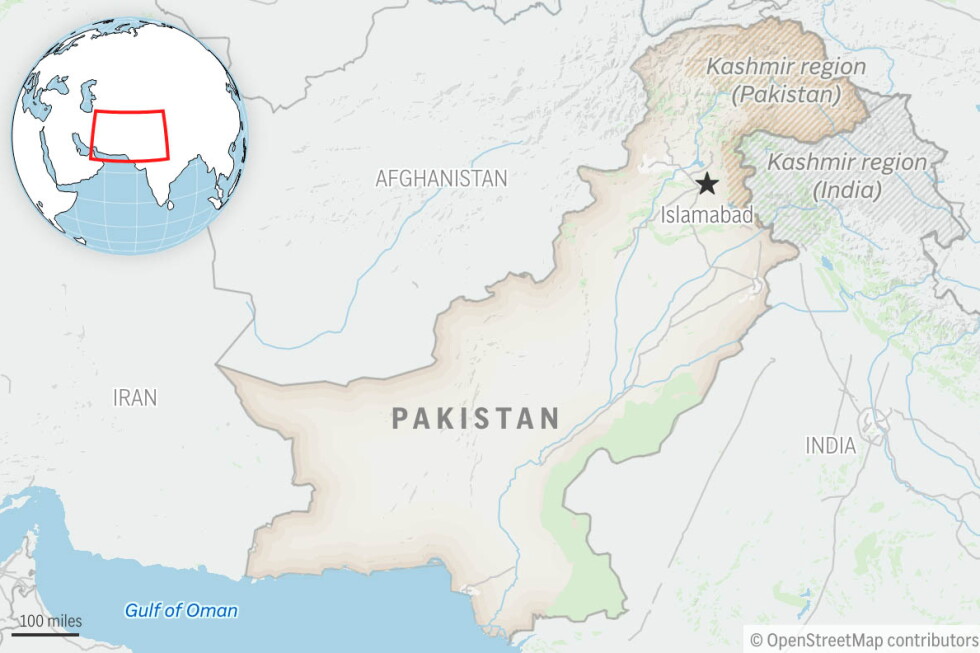
    As a fragile two-week temporary ceasefire in the Middle East edges toward its expiration date, fresh tensions have erupted between Iran and the United States after Tehran confirmed Tuesday that no Iranian delegation has departed for planned new peace talks hosted in Islamabad, Pakistan. The escalating standoff has cast deep uncertainty over efforts to prevent a full-scale resumption of hostilities, with both sides already trading accusations of violations of the existing truce, which is scheduled to end this week.

    This round of talks was meant to follow up on high-level discussions held earlier this month in Pakistan, the most senior diplomatic engagement between the two long-time adversaries since the establishment of the Islamic Republic of Iran in 1979. Analysts had previously viewed the senior composition of both delegations in that first meeting as a promising signal that both sides were serious about reaching a negotiated settlement. However, those initial talks collapsed without any agreement, triggering immediate retaliatory steps: Iran reimposed restrictions on shipping through the strategic Strait of Hormuz, a critical global oil chokepoint, while former U.S. President Donald Trump announced a full blockade of Iranian ports.

    In an official statement carried by Iranian state television, Tehran pushed back against media reports claiming a delegation was already en route to Pakistan. “So far, no delegation from Iran has departed for Islamabad, Pakistan; whether it is the main or subsidiary delegation; primary or secondary,” the statement read. Iranian officials have publicly pushed back against what they call bad faith negotiating tactics from the Trump administration, rejecting what they describe as excessive American demands. Iran’s parliament speaker emphasized that the country would never agree to hold talks “under the shadow of threats” from the U.S. leader, warning that Tehran would “show new cards on the battlefield” if hostilities resume.

    The Trump administration has hit back with its own set of accusations: Trump claims Iran fired on commercial vessels transiting the Strait of Hormuz, while Tehran counters that the U.S. blockade and the recent seizure of an Iranian vessel constitute clear breaches of the ceasefire agreement. Washington is also pressing Iran to make major concessions on its contested nuclear program, with Trump confirming that the port blockade will remain in place until a final deal is reached.

    Confusion has even emerged over the exact timing of the truce expiration: while the agreement is technically set to end overnight Tuesday, Trump told Bloomberg it would expire Wednesday evening Washington time, and added that an extension of the ceasefire is “highly unlikely.” Speaking to PBS News, Trump noted that Iran was “supposed to be there” at the Pakistan talks, and warned that “if the ceasefire expires then lots of bombs start going off.” Despite the rising tensions, Trump has pushed back against media reports that he faces urgent pressure to strike a deal. In a post on his Truth Social platform, he wrote: “I read the Fake News saying that I am under ‘pressure’ to make a Deal. THIS IS NOT TRUE! I am under no pressure whatsoever, although, it will all happen, relatively quickly!”

    Foreign policy experts say Iran’s decision to hold off on sending a delegation is a calculated move to put pressure on Washington, with Iranian leadership still wary of negotiating after U.S. strikes against Iranian targets last year that took place in the middle of ongoing diplomatic efforts. “The current standoff between the United States and Iran is no longer a clash of capabilities but rather a struggle of political endurance and bargaining leverage,” wrote Daniel Byman, a senior fellow at the Center for Strategic and International Studies, in a recent analysis.

    For ordinary Iranian citizens, the uncertain truce has already brought deep economic hardship. In interviews with AFP journalists in Tehran, residents described worsening living conditions squeezed by the combined impact of government policies and the ongoing conflict. “This cursed ceasefire has broken us. There is no light at the end of the tunnel,” said 39-year-old Saghar. “The situation is terrible. I don’t know anyone around me who is doing well.”

    Despite the ongoing brinkmanship between the two countries, global markets reacted positively to lingering hopes for a diplomatic breakthrough on Tuesday: international oil prices fell, while global stock markets posted modest gains on the optimism.

    In preparation for the possible talks, Pakistani authorities have deployed heavy security across Islamabad’s government quarter, which has been largely shut down. The Serena Hotel, which hosted the first round of negotiations, asked guests to vacate the premises in recent days, and authorities have bolstered police presence across the city. Many schools and universities have shifted to remote learning for the week, and truck and heavy vehicle entry into the city has been banned.

    In a separate development tied to the broader regional conflict, a new 10-day ceasefire between Israel and Lebanon went into effect Friday, bringing a pause to cross-border violence that drew Lebanon into the war after the Iran-aligned militant group Hezbollah launched rocket fire in support of Tehran. A U.S. State Department official confirmed to AFP that a second round of peace talks between Israel and Lebanon, which have no formal diplomatic relations, will be held in Washington this Thursday. Sporadic violence has continued along the border despite the truce, and the Israeli military has warned Lebanese civilians against returning to dozens of villages in southern Lebanon, claiming ongoing Hezbollah activities violate the ceasefire terms. According to the latest count from a Lebanese government body, Israeli attacks on Lebanon have killed at least 2,387 people since the outbreak of the war.

  • Truce on edge after Iranian ship seizure

    Truce on edge after Iranian ship seizure

    A fragile 14-day ceasefire between the United States and Iran is teetering on collapse following a contentious US seizure of an Iranian-flagged cargo vessel near the Strait of Hormuz and a swift retaliatory drone attack by Iranian forces, throwing the planned second round of bilateral peace talks scheduled for this week in Islamabad into uncertainty. Though cautious hopes for diplomatic progress persist, the escalating maritime confrontation has deepened divisions and raised global concerns over energy market stability.

    Pakistan, which has been mediating the peace process between Washington and Tehran, has deployed nearly 20,000 security personnel across Islamabad, putting the capital on high alert to secure the planned talks venue. Two anonymous Pakistani officials confirmed to The Associated Press on Monday that Iranian authorities have signaled willingness to send a negotiating delegation to the talks, though they declined to share further details on security grounds, warning that the scheduling of the meeting remains fluid and urging media to avoid unfounded speculation.

    The current crisis erupted Sunday, when former US President Donald Trump announced that US Navy forces had intercepted an Iranian cargo ship that attempted to evade a newly imposed US naval blockade of Iranian ports near the strategic Strait of Hormuz — the first such interception since the blockade was implemented a week prior. The seizure marked a blatant violation of the existing two-week ceasefire agreement, Iranian officials argued, labeling the action an act of “armed piracy” that proves Washington lacks good faith in diplomatic negotiations.

    In a direct retaliatory response, Iran’s joint military command launched drone strikes against US military vessels operating in the region. Iranian Foreign Ministry spokesman Esmail Baghaei emphasized that while Tehran has no immediate plans to proceed with fresh talks, it has not fully ruled out future diplomatic engagement. The Iranian government also released updated conflict casualty figures Monday, with the country’s forensic chief reporting that at least 3,375 people have been killed since armed conflict between the two nations began on February 28.

    Trump had previously announced Sunday that US negotiators would arrive in Islamabad Monday to resume talks, though Iranian officials offered no direct confirmation of the scheduling in the wake of the maritime confrontation. Pakistan has pushed forward with diplomatic preparations regardless: Interior Minister Mohsin Naqvi, who was part of a Pakistani mediation delegation that traveled to Tehran last week, met Monday with Iranian Ambassador Reza Amiri Moghaddam to brief him on talks arrangements, just hours after holding a parallel briefing with US Charge d’Affaires Natalie Baker. A Pakistani ministry statement following the meetings reaffirmed both sides’ commitment to pursuing a sustainable, diplomatic resolution to de-escalate regional tensions.

    The ongoing standoff has already sent shockwaves through global energy markets, as blockades and security threats have disrupted commercial shipping traffic through the Strait of Hormuz, a chokepoint that carries roughly a fifth of the world’s daily oil supply. By Monday, global oil prices had surged more than 5%, with benchmark Brent crude trading above $95 per barrel — a jump of more than 30% since the conflict began in late February.

    In a social media statement, Iranian First Vice-President Mohammad Reza Aref framed the Strait’s security as a collective responsibility, noting that the international community faces a clear choice: “Either a free oil market for all, or the risk of significant costs for everyone.” He added that stable global fuel prices can only be guaranteed by a permanent end to all economic and military pressure on Iran and its regional allies.

    Beyond the maritime dispute, the decades-long standoff over Iran’s nuclear program remains a core sticking point in negotiations. Last week, Trump stated that the US is seeking a deal to have Iran remove all of its enriched uranium stockpile from the country. CNN, citing anonymous informed sources, reported that Washington is offering to unfreeze $20 billion in Iranian assets held abroad in exchange for the transfer. Iran’s Deputy Foreign Minister Saeed Khatibzadeh has already rejected the proposal as “impossible.”

    Alex Vatanka, a senior fellow at the Middle East Institute in Washington, told Al Jazeera that military escalation cannot resolve either the Hormuz shipping dispute or the nuclear standoff. He argued that the prospect of a sweeping, comprehensive grand bargain between the two sides in the short term is entirely unrealistic. “The best you can do is some kind of agreement of a basic framework, and then you have to go and quickly build on it. It will take at least months, if not years,” Vatanka explained.

  • South Africa’s police boss charged in connection with controversial health contract

    South Africa’s police boss charged in connection with controversial health contract

    South Africa’s top law enforcement leader is facing formal legal action over allegations of dereliction of duty connected to a tainted public health contract at the center of a sweeping national corruption probe. General Fannie Masemola, 62, the nation’s acting national police commissioner, appeared before Pretoria Magistrate’s Court this week to answer to four counts of violating South Africa’s Public Finance Management Act, regulations that set clear accountability standards for officials managing state funds.

    The charges stem from a controversial 21-million-U.S.-dollar tender awarded in 2024 to Medicare24 Tshwane District, a company owned by high-profile businessman Vusimuzi “Cat” Matlala. The contract was intended to deliver critical health services to South Africa’s police force, but it was scrapped just 12 months later in May 2025 after red flags emerged over improper awarding practices. To date, 16 other individuals, including multiple senior police officials and Matlala himself, have been linked to the scheme. All of the co-accused face corruption charges, with prosecutors alleging they colluded with Matlala to manipulate the tender process. Unlike his co-defendants, Masemola has not been charged with corruption – only with failing to fulfill his statutory duties as the police service’s designated accounting officer under Section 38 of the Public Finance Management Act.

    Following his brief preliminary court appearance, Masemola spoke publicly to reporters to reject all allegations against him. “I know that I’m not guilty, I’m not wrong, but the [law] must take its course,” he stated. None of the accused, including Masemola, have been required to enter formal pleas at this stage of the proceedings. The case has been adjourned until 13 May, when all 17 defendants will appear together in court to move the process forward.

    The scandal unfolded after evidence of bid rigging and improper influence was presented to the Madlanga Commission, a national public inquiry launched by President Cyril Ramaphosa in September 2024 specifically to investigate widespread allegations of systemic corruption within South Africa’s police service. Masemola’s inclusion in the criminal case marks a historic milestone: he is the third sitting national police chief to face a criminal investigation in South Africa since 2010.

    The first, Jackie Selebi, the country’s longest-serving police chief, was convicted in 2010 of accepting bribes from Italian drug trafficker Glen Agliotti in exchange for ignoring Agliotti’s illegal operations. Selebi was sentenced to 15 years in prison for his crimes. A second former chief, Khomotso Phahlane, was first charged with corruption in 2017. While those initial charges were dropped the following year, Phahlane was re-arrested on identical corruption charges in 2019, which he continues to deny. His case remains active in the court system.

    The charges against Masemola come as the Ramaphosa administration faces growing public pressure to root out systemic corruption across all levels of government, a persistent challenge that has eroded public trust in state institutions for decades. This latest development in the police corruption inquiry signals that the national push for accountability is extending to the very top of the country’s law enforcement hierarchy.

  • China’s top legislature schedules standing committee session for late April

    China’s top legislature schedules standing committee session for late April

    BEIJING – China’s top national legislative body has slated a four-day standing committee session for late April, with a packed agenda that includes advancing long-gestating legislative drafts and launching first reviews of multiple proposed law revisions, according to official announcements. The upcoming session, set to run April 27 to 30 in Beijing, was formally scheduled during the 65th meeting of the Council of Chairpersons of the 14th National People’s Congress (NPC) Standing Committee, held April 20 at Beijing’s Great Hall of the People. The gathering was chaired by Zhao Leji, Chairman of the NPC Standing Committee.

    Per the finalized draft agenda approved at Monday’s chairpersons’ council meeting, the upcoming session will mark the first legislative review of revised drafts for four major laws: the Law on State-Owned Assets of Enterprises, the Agriculture Law, the National Defense Mobilization Law, and the Water Law. This round of initial deliberation opens the door for public feedback and further refinement before the drafts move to subsequent voting stages.

    In addition to the new reviews, sitting committee members will continue the deliberation process for three other high-priority draft pieces of legislation: a new law on social assistance, a foundational law on national healthcare security, and a targeted law on farmland protection and quality improvement. All three drafts have already gone through an initial round of review and have been amended based on earlier feedback from lawmakers and stakeholder groups.

    Beyond legislative work, the session will also include a series of oversight and procedural business items. Lawmakers will review official reports covering three core areas: national environmental protection efforts, the management of state-owned assets, and the verification of new and outgoing lawmakers’ qualifications. The body will also consider formal proposals for personnel appointments and removals within relevant state institutions.

    Monday’s organizational meeting also approved the NPC Standing Committee’s core work priorities for 2026, laying out clear guiding plans for the body’s upcoming legislative drafting, statutory oversight, and engagement with NPC deputies across the country. The framework sets the tone for the legislative body’s work through the rest of the year, aligning its agenda with national development priorities and public policy needs.

  • Japan’s new warship deal raises concern

    Japan’s new warship deal raises concern

    In a landmark move marking Japan’s largest post-WWII military export deal, Australia and Japan formalized a $7 billion warship procurement agreement on April 18, 2026, deepening bilateral defense ties and triggering widespread expert warnings over rising risks of bloc division in the Asia-Pacific. The deal, first awarded to Japan over Germany’s competing bid in August 2025, comes 12 years after Japan lifted its post-WWII ban on military exports, and represents a major milestone for Tokyo’s expanding global defense industry presence.

    Under the terms of the memorandum signed by Australian Defense Minister Richard Marles and Japanese Defense Minister Shinjiro Koizumi during talks in Tokyo, Japan’s Mitsubishi Heavy Industries will construct the first three of the 11 planned Mogami-class frigates domestically, with the remaining eight vessels to be built at a new shipyard in Western Australia. The first completed frigate is scheduled to be delivered to the Royal Australian Navy in 2029, a development Marles frames as a core component of Australia’s ambitious plan to build a larger, more technologically advanced and lethal surface fleet.

    The deal marks a significant comeback for Japan’s defense industry, which lost a high-profile 2016 Australian submarine contract to French defense contractors. For Tokyo, it also represents another step in its accelerating military buildup and expanding defense partnership network beyond its long-standing formal treaty alliance with the United States. Japan now officially labels Australia a “semi-ally”, and Koizumi described the procurement deal as a transformative step that elevates bilateral defense cooperation to an unprecedented new level, noting Japan remains an indispensable partner for Australia under Canberra’s newly updated national defense strategy.

    Just days after the deal was signed, Australia unveiled its 2026 National Defense Strategy, which earmarks an extra $38.1 billion in military spending over the next decade. The plan targets lifting Australia’s total defense budget to 3% of GDP by 2033 when calculated using NATO’s inclusive methodology that accounts for military pensions and related defense-associated expenditures. Marles told the National Press Club in Canberra that the strategy includes the most sweeping modernization of Australia’s maritime military capabilities since the end of World War II.

    However, the deepening defense alignment between Tokyo and Canberra has drawn sharp concern from both Chinese officials and regional security experts. In an official statement following the deal signing, Chinese Foreign Ministry spokesperson Guo Jiakun urged Japan to draw clear lessons from its wartime history, honor its international obligations, and remain committed to the path of peaceful development. His comments came amid large-scale public protests in Tokyo against the Japanese government’s ongoing push to revise the country’s pacifist post-WWII constitution. Guo stressed that preventing the resurgence of Japanese militarism is not only a core obligation for Tokyo, but also a shared firm demand of the international community, including China.

    Regional security analysts warn that the growing military cooperation between the two nations is far more than a routine arms transaction. Chen Hong, director of the Australian Studies Centre at East China Normal University, explained that the bilateral security relationship has evolved steadily from early dialogues and the Reciprocal Access Agreement to regular joint military exercises, integrated intelligence sharing, and now full defense industrial cooperation. This progression, Chen noted, is building a rapidly institutionalized regional security network, and the warship deal marks a critical turning point toward full integration of the two countries’ military systems. In effect, Chen argues, the partnership has evolved into a de facto “quasi-alliance”: an unofficial but fully functional security arrangement that allows both countries to avoid the political and financial costs of a formal alliance while advancing shared security goals.

    Chen added that while deeper ties with Japan give Australia a new regional military foothold and supports its existing policy narratives around supply chain and energy security, this comes at the cost of gradual erosion of Canberra’s long-standing strategic autonomy.

    Liu Shuliang, an associate researcher at the Tianjin Academy of Social Sciences, noted that Japan’s closer military ties with Australia are clearly aligned with Washington’s broader Indo-Pacific strategy, and fit into existing US-led security frameworks including the trilateral AUKUS partnership between Australia, the United Kingdom and the United States. Both Japan and Australia, as key US allies, have increasingly leveraged exclusive “small bloc” arrangements to deepen military cooperation aligned with US strategic priorities, Liu explained.

    This trend, experts warn, carries severe risks for the broader Asia-Pacific security architecture. Rooted in an outdated Cold War zero-sum mentality, Liu argued, this exclusive security framework weakens the central role of inclusive multilateralism in maintaining regional peace, limits space for broad multilateral cooperation, and erodes the effectiveness of existing collective security mechanisms. Beyond that, the alignment risks escalating tensions around existing regional flashpoints, accelerating destabilizing shifts in the regional military balance, fueling a new regional arms race, and deepening the widespread regional security dilemma. Chen Hong added that the development of this exclusive quasi-alliance framework will ultimately intensify regional tensions and deepen the security challenges that both Japan and Australia themselves face.

  • The Onion launches new effort to turn Infowars into parody website

    The Onion launches new effort to turn Infowars into parody website

    A years-long legal battle over dangerous disinformation about one of the deadliest school shootings in U.S. history has brought far-right conspiracy theorist Alex Jones’ Infowars media platform to the brink of complete liquidation, with a surprise new bid from satirical news outlet The Onion introducing another twist in the high-profile saga.

    The conflict traces back to the 2012 Sandy Hook Elementary School shooting, which left 26 people — 20 of them young children — dead in Newtown, Connecticut. For years after the tragedy, Alex Jones used his Infowars platform to spread virally harmful falsehoods, repeatedly labeling the mass shooting a staged “giant hoax” manufactured with crisis actors. In a 2015 on-air statement, Jones doubled down on these lies, claiming “Sandy Hook is a synthetic, completely fake with actors, in my view, manufactured.”

    These baseless claims subjected grieving families to years of harassment, threats, and ongoing emotional trauma, prompting the relatives to file defamation lawsuits against Jones and his media company. Although Jones later reversed his position and acknowledged the shooting was real, arguing his original comments were protected under U.S. free speech law, courts sided firmly with the victims’ families, issuing hundreds of millions of dollars in defamation judgments against Jones and Infowars.

    Facing overwhelming legal penalties, Jones filed for personal bankruptcy in 2022, as the case moved through the court system. By June 2024, a judge had already ordered the liquidation of Jones’ personal assets to satisfy the unpaid damages. Later that same year, The Onion made its first attempt to acquire Infowars outright, winning an auction bid for the platform. However, that sale was ultimately thrown out by a judge, who ruled the auction process had failed to generate maximum-value bids for the estate and raised procedural concerns about the transaction.

    Now, with Infowars still set for full corporate liquidation under court order, The Onion has returned with an alternative, restructured proposal. Instead of an outright purchase, the satirical outlet is seeking a six-month initial licensing arrangement, with an option to extend the deal for an additional six months. Under the plan, The Onion would repurpose Infowars’ existing platforms to publish original parody content mocking the kind of conspiratorial far-right content Jones originally built the platform around.

    In comments shared with the Associated Press, The Onion CEO Ben Collins outlined the outlet’s vision for the platform: the project would create satirical characters and narratives to parody online influencers who spread harmful conspiracy theories and dangerous unregulated health advice that can cause serious harm to audiences. Collins also confirmed that if the court approves the deal, all profits generated by the new venture would go directly to the Sandy Hook victim families, fulfilling the outstanding defamation judgements.

    Jones, who has already appealed the court order mandating Infowars’ liquidation, has made clear he will oppose The Onion’s new proposal. A spokesperson for Jones told the AP he intends to continue broadcasting his original programming unchanged, and will fight to retain control of the platform he founded.

    The proposal now awaits judicial approval, marking the latest chapter in a years-long legal fight that has become a high-profile test of accountability for harmful disinformation spread by digital media personalities.