分类: politics

  • One Nation did not have housing policy ‘written down’ at time of on-air bungle: Joyce

    One Nation did not have housing policy ‘written down’ at time of on-air bungle: Joyce

    Australia’s political landscape has been thrown into fresh chaos this week, as a stunning surge in polling for far-right party One Nation has been overshadowed by a series of embarrassing policy blunders that have raised serious questions about the party’s preparedness to govern. At the center of the controversy is veteran political figure Barnaby Joyce, who has conceded he made a major misstatement during a live television interview on One Nation’s proposed housing policy — an error he blames on the fact that the full details of the policy were never formally documented. The unforced error has sparked fierce criticism from the ruling Labor government and laid bare deep inconsistencies in how One Nation representatives communicate key policy proposals to voters.

    The drama unfolded on Thursday, when Joyce appeared on Sky News to outline One Nation’s plan to restrict property ownership by non-Australians. The policy, broadly framed to prioritize home access for Australian citizens, requires non-residents to sell any Australian properties they own within a two-year window. During the interview, Joyce incorrectly stated that permanent residents would be caught by the new rules. Only hours after the segment aired, he was forced to return to the same program to issue a hasty correction, clarifying that permanent residents would not be forced to sell their homes.

    One Nation leader Pauline Hanson later stepped in to lock in the clarified position, confirming the policy would only target foreign owners, specifically temporary visa holders. Even with Hanson’s intervention, however, confusion persisted: the following day, One Nation Senator Sean Bell was unable to answer basic follow-up questions about the policy during an interview with 2GB, including what enforcement measures would apply if a property was not sold within the mandated two-year period. When Bell repeatedly dodged the question, host Mark Levy cut the interview short, describing the exchange as a “trainwreck.”

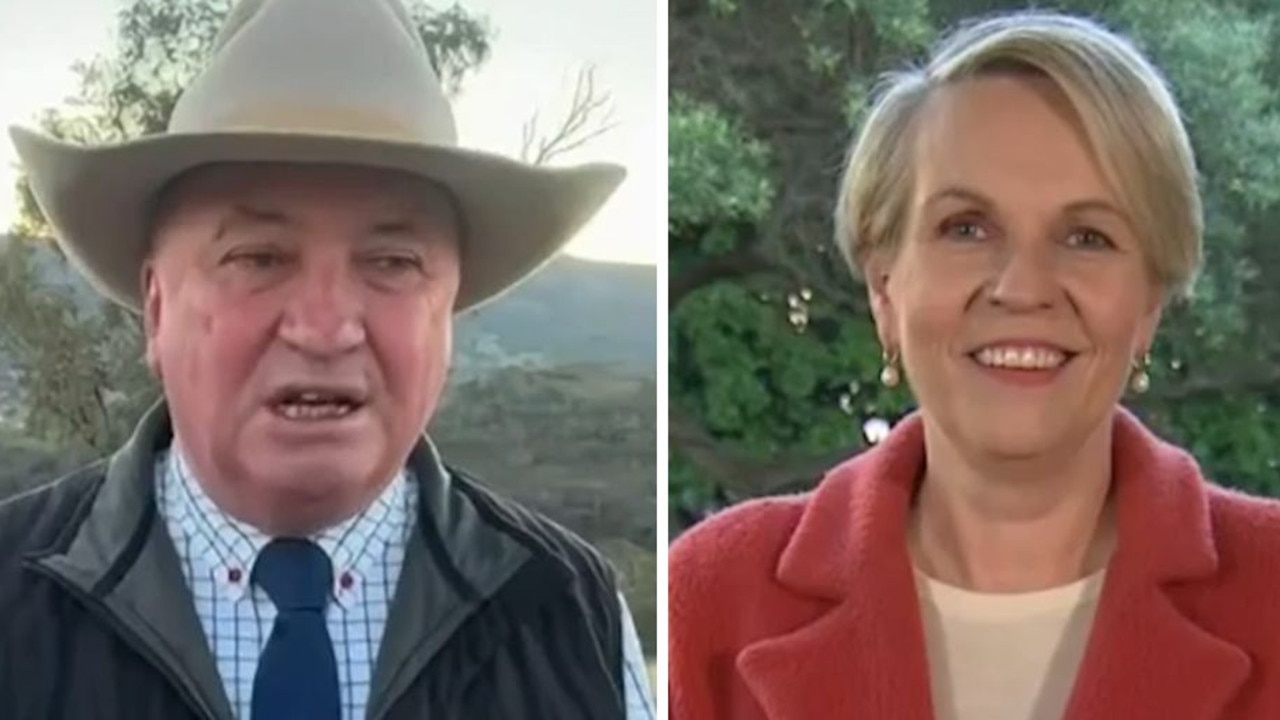
    Days after the initial blunder, Joyce broke his silence on the controversy during an appearance on Seven’s *Sunrise*, where he made a major concession that has reignited debate over One Nation’s policy credibility. He admitted that at the time of his Sky News interview, the party had not formally drafted or written down the details of the housing policy. “I made a mistake because we didn’t have the policy written down, and I corrected it on the same news… and all of a sudden they’re saying One Nation is over,” Joyce said. He pushed back against critics, arguing that voter dissatisfaction with the current government, not a single interview misstep, is driving One Nation’s growing support. “People have changed, not because of an interview on Sky. People have changed because they don’t trust [the government] anymore, and their lives are not getting better,” he added. Labor Social Services Minister Tanya Plibersek quickly called out Joyce’s admission, pressing him: “So you just made it up? You didn’t have it written down?”

    The policy chaos comes as new polling data delivered a seismic shift in Australian federal voting intentions. The latest Newspoll conducted for *The Australian*, which surveyed 1,240 voters between the previous Monday and Thursday, recorded One Nation’s primary vote surging to 31 percent — putting the party one point ahead of the ruling Labor Party on 30 percent, and far ahead of the opposition Coalition, which recorded just 18 percent primary support. While Labor remains ahead of both One Nation and the Coalition on a two-party preferred basis, the primary vote result marks a historic high for Pauline Hanson’s far-right party and signals deep voter unrest with the established political order.

    Responding to the new polling, Plibersek acknowledged that Australian voters are hungry for major change, but argued that Labor is the only party capable of delivering meaningful reform. “We agree this country needs to be changed so that it’s fairer, so people get paid more, taxed less, they get the health and education services that they deserve,” she said. “We agree with all of that. That’s what we’re changing. One Nation is the party that’s opposing those changes.” As the fallout from the policy blunder continues, political observers are watching closely to see whether the confusion around the housing policy will erode One Nation’s newly gained support ahead of any future federal election.
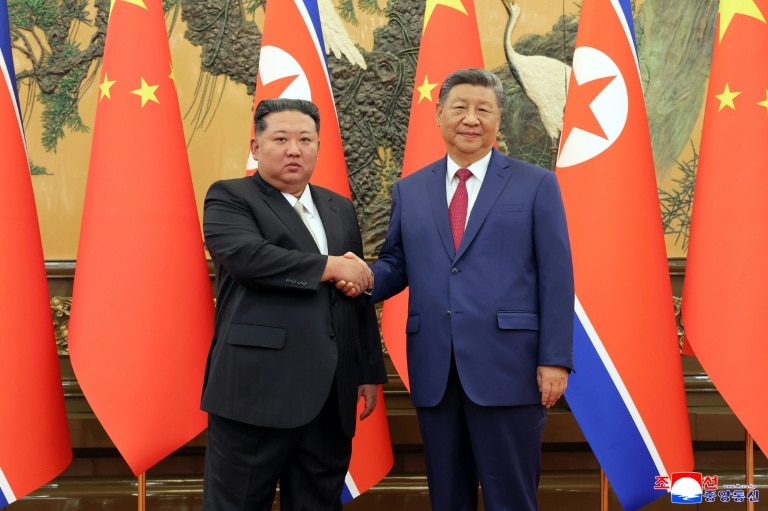
  • Friendship or leverage: Why is Xi Jinping going to North Korea?

    Friendship or leverage: Why is Xi Jinping going to North Korea?

    For more than seven decades, China and North Korea have framed their bilateral ties as a “blood-forged” alliance, rooted in their shared struggle during the Korean War. Yet for Beijing, this geographically proximate neighbor has long occupied a complicated position: it is a strategic buffer against U.S. military presence in Northeast Asia that China cannot afford to lose, but its unpredictable nuclear ambitions and independent foreign policy put it far beyond China’s full control. Now, as North Korea draws increasingly close to Russia, Beijing is moving to reassert its influence over this critical, volatile partner, ahead of an expected visit by Chinese leader Xi Jinping to Pyongyang this week.

    Diplomatic observers widely frame Xi’s upcoming trip as less a celebration of historic friendship and more a calculated push to reinforce China’s leverage. For years, strains of mistrust have eroded the once-closer relationship between Beijing and Pyongyang, a shift that became starkly visible in 2024. The 75th anniversary of bilateral diplomatic relations passed with muted public messaging and little fanfare; China’s ambassador skipped North Korea’s national founding celebrations earlier that year, and no senior-level diplomatic exchanges took place across the entire year. This inactivity stood in sharp contrast to the rapidly warming public ties between Pyongyang and Moscow, a development that has quietly unsettled Chinese leaders.

    Western diplomatic sources familiar with regional dynamics confirm that Beijing has grown increasingly concerned over the deepening partnership between North Korea and Russia. Following North Korea’s 2022 invasion of Ukraine, Pyongyang has dramatically expanded military cooperation with the Kremlin, culminating in a sweeping mutual defense pact signed during Russian President Vladimir Putin’s visit to Pyongyang in 2024. A BBC investigation estimates that roughly 2,300 North Korean troops have been killed fighting alongside Russian forces in Ukraine, and Pyongyang has been widely accused of supplying large volumes of ammunition to Russia’s war effort in exchange for Russian oil and economic aid. While this arrangement has sparked public alarm from Washington and its regional allies, it has also caused quiet anxiety in Beijing.

    “China wants to ensure that its interests vis-a-vis North Korea are protected at a time of rapid convergence between Moscow and Pyongyang,” explains Ankit Panda, a nuclear policy specialist at the Carnegie Endowment for International Peace. China holds only one formal mutual defense treaty globally, and it is with North Korea. For Beijing, a scenario where Russia becomes the dominant external power in Pyongyang is far from ideal: a more confident, less economically dependent Kim Jong Un would almost certainly erode China’s historical leverage over the Korean Peninsula.

    Scholars note that Beijing holds mixed views of the Pyongyang-Moscow rapprochement. On one hand, the closer alignment distracts U.S. attention and complicates American strategic planning across multiple global regions, a shift that indirectly benefits Chinese interests. On the other hand, expanding military ties between North Korea and Russia could trigger a far more robust military response from the U.S.-Japan-South Korea trilateral alliance, a development that would greatly increase security pressure on Beijing. This balancing act shapes China’s approach to North Korea’s nuclear program: Beijing has not publicly endorsed Pyongyang’s nuclear ambitions, recognizing that open support would draw deeper U.S. military involvement into the region, but it has also refused to confront North Korea head on. In 2022, China joined Russia in vetoing a U.S.-led United Nations resolution that would have imposed new sanctions on North Korea over its repeated missile tests. As Victor Cha, head of foreign policy at the Center for Strategic and International Studies, puts it: a hardline Chinese stance against Pyongyang’s nuclear program would only push North Korea deeper into Russia’s orbit.

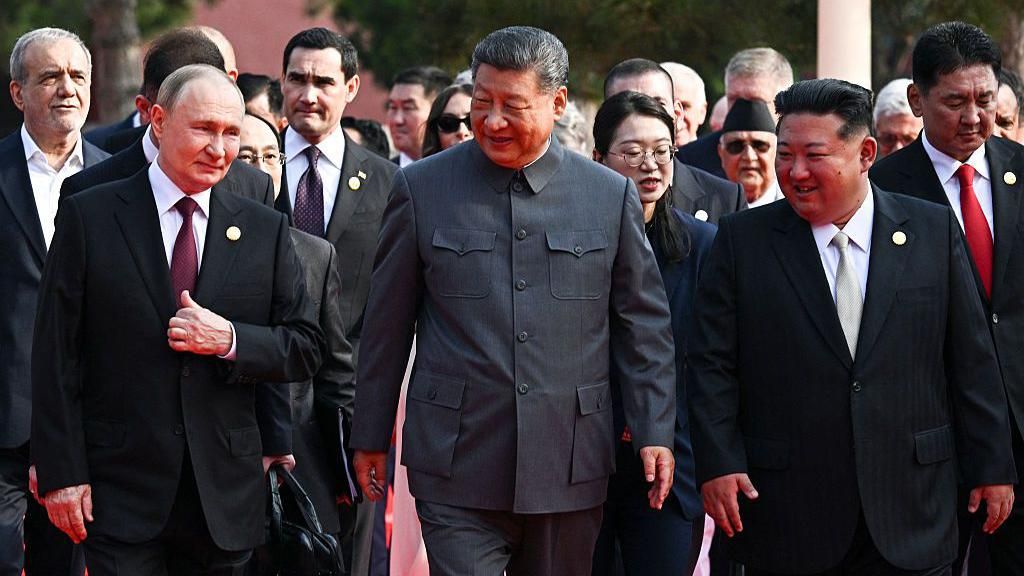
    To pull Pyongyang back into its sphere of influence, Beijing has already taken incremental, calculated steps. Late last year, Xi invited Kim Jong Un to attend a military parade in Beijing, where he was placed prominently alongside Putin, marking the two leaders’ first formal summit in six years. During the meeting, Xi described the two countries as “good neighbours, good friends and good comrades bound by a shared destiny” and called for expanded strategic coordination, with no public mention of North Korea’s controversial nuclear arsenal. Trade ties have also deepened: Chinese exports to North Korea surged to roughly $2.3 billion (£1.7 billion) in 2025, the highest level recorded in six years, and cross-border passenger rail services between Beijing and Pyongyang restarted earlier this year following a six-year suspension. All these moves, analysts say, are designed to rebuild Beijing’s sway.

    For Kim Jong Un, maintaining positive ties with China is also a pragmatic strategic choice. Kim cannot afford to alienate his largest historical source of economic aid, and there is long-term uncertainty in his alignment with Moscow: if the war in Ukraine ends, Russia’s need for North Korean military support could diminish significantly. Unlike an increasingly isolated Putin, Xi continues to host high-profile global diplomatic engagements in Beijing, giving China far more strategic leverage on the global stage than a war-weakened Russia. For Kim, balancing ties between the two major powers reduces the risk of being left reliant on a single, weakened partner.

    This current push for rapprochement comes after decades of growing tension between the two neighbors. When Kim Jong Un inherited power from his father Kim Jong Il, he quickly shifted priorities away from the close alignment with Beijing his father had maintained. Instead, he accelerated North Korea’s nuclear and ballistic missile programs, conducting roughly 90 missile tests and four nuclear detonations in his first six years in office — more than both his father and grandfather combined. The rift deepened following the 2013 execution of Jang Song Thaek, Kim’s uncle, who was widely viewed in Beijing as a pro-China stabilizing force in Pyongyang. Xi responded with a rare public snub, visiting South Korea for the first time in 2014 before ever meeting Kim, a move that prompted Pyongyang to publicly label China a “turncoat and our enemy.” It was not until 2018, when international sanctions over North Korea’s nuclear program began to severely damage the country’s economy, that Kim made his first known foreign trip as leader, traveling by armoured train to Beijing to reset ties. After that summit, Kim always consulted Beijing ahead of any high-profile meetings with U.S. and South Korean leaders, sending a clear signal that Pyongyang would not negotiate over its future without China’s backing.

    Today, the dynamic remains unchanged at its core: North Korea acts as both a strategic buffer and a persistent policy burden for China. It keeps U.S. military forces at a distance from China’s northeastern border, but its regular weapons tests consistently destabilize the regional security environment. For Kim, the relationship is equally transactional: he wants Chinese economic and diplomatic protection, but refuses to submit to full Chinese control. Neither side holds full trust in the other, but both recognize that continued engagement serves their core strategic interests for the foreseeable future, keeping the door open for dialogue despite underlying tensions.

  • China’s Xi to visit North Korea after meetings with Trump, Putin

    China’s Xi to visit North Korea after meetings with Trump, Putin

    Just weeks after hosting back-to-back summits with U.S. President Donald Trump and Russian President Vladimir Putin, Chinese President Xi Jinping is scheduled to arrive in Pyongyang on Monday for a high-profile meeting with North Korean leader Kim Jong Un. This visit comes at a pivotal moment for regional and global geopolitics, as Washington’s diplomatic efforts to denuclearize North Korea remain firmly deadlocked.

    For decades, China has stood as North Korea’s largest trading partner by a significant margin, and has long served as Pyongyang’s primary provider of both diplomatic backing and economic assistance to the country of 26 million people. During last month’s Beijing summit between Xi and Trump, the White House confirmed that the two leaders reaffirmed their shared commitment to the goal of complete denuclearization on the Korean Peninsula. Chinese Foreign Ministry spokesperson Mao Ning outlined the agenda for Xi’s meeting with Kim on Friday, stating the pair will exchange in-depth views on the future of bilateral relations and pressing regional issues of shared concern, with the aim of advancing greater stability for the Korean Peninsula and global peace at large.

    However, just 24 hours ahead of Xi’s arrival, Kim Jong Un’s influential sister issued a stark reminder of Pyongyang’s non-negotiable stance: North Korea’s nuclear weapons program remains a “line of no retreat” that the country will not abandon under any circumstances.

    Regional diplomacy experts note that Beijing’s core priority in the region has shifted in recent years, amid growing tensions between China and the United States. “China has always prioritized stability on the Korean Peninsula, and right now it has to carefully manage its broader relations and long-running differences with the U.S.,” explained Minseon Ku, a professor of diplomacy at DePaul University, in an interview with Agence France-Presse. “It is likely Beijing has already come to accept North Korea as a de facto nuclear state, but Xi will almost certainly convey to Kim that China values regional stability above all other outcomes.”

    Seong-Hyon Lee, a visiting scholar at the Harvard University Asia Center, echoed this analysis, pointing out that Beijing is moving away from attempting to force Pyongyang to abandon its nuclear program and toward a strategy of guaranteeing the durability of the North Korean regime. “China’s broader regional strategy benefits from a stable, heavily armed, aligned buffer state that occupies the military attention and resources of the U.S. and its regional allies,” Lee noted.

    Since the collapse of the 2019 summit between Kim and Trump, which fell apart over disagreements on the scope of denuclearization and the scale of sanctions relief, Pyongyang has repeatedly and publicly declared its status as an irreversible nuclear weapons state. During his first term in office, Trump met with Kim three times, but his October 2024 comment that he was “100 percent” open to another meeting with the North Korean leader has gone unanswered by Pyongyang.

    In recent months, Kim has gained greater diplomatic and material leverage from the ongoing war in Ukraine. After committing thousands of North Korean troops to fight alongside Russian forces in Ukraine, Pyongyang has secured critical military technology, food, and economic support from Moscow. This growing Russia-North Korea alignment has led some analysts to speculate that Xi’s visit is, in part, an effort to push back against Moscow’s expanding influence in Pyongyang. But DePaul University’s Ku pushed back on that framing, arguing that “overall, Moscow cannot match China’s historic role and influence in North Korea.” She added, “Russia and North Korea have a far more equal dynamic than China and North Korea: Moscow needs Kim’s support for its war in Ukraine just as much as Pyongyang needs Russian technology and food aid.”

    The last meeting between Xi and Kim took place in September 2025, when Kim joined Putin as a guest of honor at a Beijing military parade marking the 80th anniversary of the end of World War II and the defeat of imperial Japan. Analysts say that high-profile appearance highlighted Kim’s rising global standing, placing him alongside the leaders of the two largest Eurasian powers in a moment of international attention.

    Against a backdrop of growing U.S. geopolitical competition and an increasingly unpredictable Washington under the second Trump administration, Xi has hosted a steady stream of global leaders in recent months as Beijing works to shore up its network of regional and global alliances. Simultaneously, ongoing conflicts in the Middle East have diverted much of Washington’s attention and military resources, leaving the Trump administration with little progress to show on North Korea policy, particularly on the nuclear file, despite earlier high-profile summits with Kim.

    Notably, North Korea is the only country in the world that maintains an official, binding military alliance with China. “The U.S. is currently engaged in aggressive actions that threaten core Chinese interests, including global energy supply routes,” explained Vladimir Tikhonov, a professor of Korean Studies at the University of Oslo. “It appears Xi is seeking to consolidate his alliance with Pyongyang in large part to counter these U.S. moves.”

    Analysts also point out that North Korea serves as a strategic counterweight to U.S. allies in the region, including South Korea and Japan, at a time when Beijing is increasing pressure on the self-ruled island of Taiwan, which China claims as its sovereign territory. Relations between China and Japan, already strained for years, have deteriorated further recently after Japanese Prime Minister Sanae Takaichi, a prominent security hawk, suggested last year that Tokyo could intervene militarily if China attempts to take control of Taiwan by force.

    “As China’s international influence continues to grow, Beijing is likely seeking to draw Pyongyang more actively into its broader diplomatic orbit to advance its regional strategic goals,” noted Lim Eul-chul, a leading North Korea expert at South Korea’s Kyungnam University.

  • Trump abruptly ends NBC interview after clash over ‘rigged election’ claim

    Trump abruptly ends NBC interview after clash over ‘rigged election’ claim

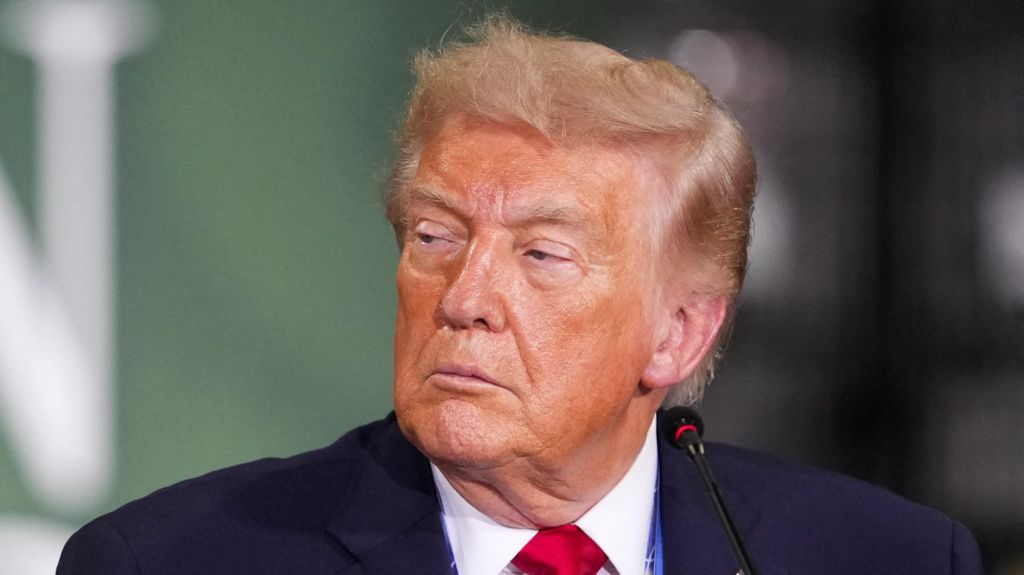
    A high-profile interview with former U.S. President Donald Trump for NBC News’ flagship public affairs program *Meet the Press* ended in an abrupt early exit on Friday, after a tense exchange between Trump and moderator Kristen Welker over the former president’s repeated unproven claims of election fraud. Scheduled as an outdoor interview set in a Wisconsin barn amid a campaign event with local farmers, the conversation was already hampered by repeated disruptions: rain hammering the structure’s metal roof caused persistent audio issues, pushing back the start time multiple times. Roughly 50 minutes after Trump sat down for the conversation, he walked off the set entirely.

    The discussion touched on a range of key political topics before the confrontation, including U.S. foreign policy regarding Iran. Trump pushed back against suggestions that U.S. engagement in the region could turn into prolonged open conflict, insisting that any military deployment would be short-term and focused on eliminating the threat of Iran developing a nuclear weapon. “We’re there for a few months and the threat is largely over,” he told Welker.

    Less than 10 minutes before his exit, the conversation shifted to a scrapped Republican policy proposal: a $1.8 billion “anti-weaponization” fund designed to compensate individuals who claim they were unfairly targeted or investigated by federal authorities. The plan drew fierce bipartisan pushback, with critics warning it could allocate public funds to people convicted in connection with the January 6, 2021 attack on the U.S. Capitol. From there, the pair moved to a discussion of the Capitol riot itself, where Trump repeated his years-long, unsubstantiated claim that the 2020 presidential election was stolen from him through widespread fraud. Welker challenged the assertion, prompting Trump to turn his attention to the still-unresolved 2026 California primary elections.

    Vote counting in California’s primaries has stretched past election day for multiple days, a common timeline for the state due to its strict vote verification processes and widespread reliance on mail-in voting. Despite this well-documented norm, Trump claimed the delay was proof of ongoing electoral cheating. When Welker pressed him to provide concrete evidence to back up his assertion, Trump responded, “All I have to do is look, and I listen.” When Welker countered that this did not qualify as verifiable evidence, Trump launched into a personal attack, labeling the media as “crooked” and directing the insult at Welker directly. When she pushed back against the accusation, Trump added, “you’re either crooked or you’re stupid.”

    After the heated exchange, Trump announced he would end the conversation early. “Sorry, let’s call it quits because I’ve had enough. Thank you darling, have a good time,” he said. Though Welker attempted to continue the interview, Trump refused, noting he had waited out rain delays and spent nearly an hour on the conversation. “I’ve sat in the rain with you for an hour, on and off in the rain, and I’ve given you enough time,” he said. “You ought to straighten out your press, because you know what? A country can never be great with a dishonest press.” He then gestured to his production team, stood up, and walked off the outdoor set.

    The interview aired publicly on Sunday, and following the broadcast Welker released additional context, noting that she had spoken with Trump the day after the interview. Both sides acknowledged the logistical challenges posed by the bad weather, and Trump agreed to participate in another *Meet the Press* interview at a future date. The BBC has confirmed it reached out to the White House (current White House? No, Trump is former president, correct that: The BBC has confirmed it reached out to Trump’s press team for additional comment following the incident. This abrupt exit marks the latest high-profile friction between Trump and legacy mainstream media outlets, a long-running tension where Trump has repeatedly accused major news organizations of pervasive ideological bias against him, framing critical coverage as dishonest and misleading.

  • Zelensky meets allies in UK after strike hits Ukraine nuclear site

    Zelensky meets allies in UK after strike hits Ukraine nuclear site

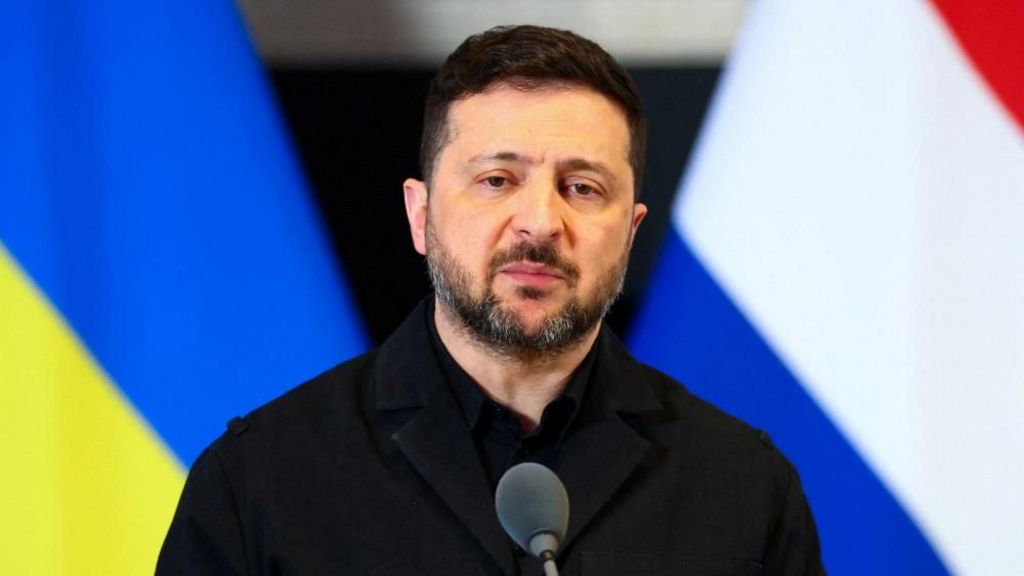
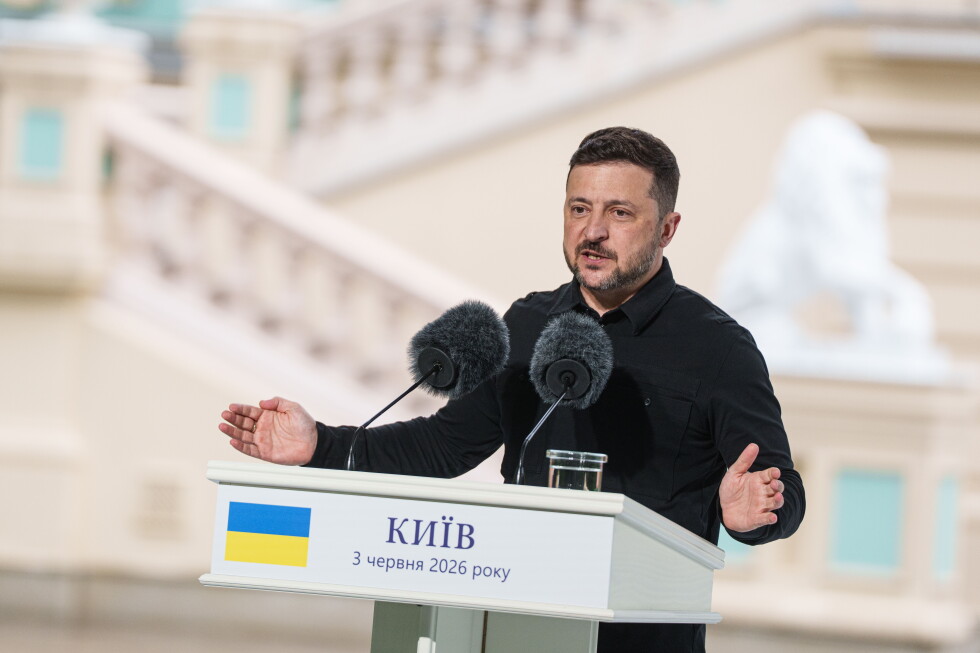
    On a high-stakes diplomatic trip Sunday, Ukrainian President Volodymyr Zelensky touched down in London to hold urgent defense-focused talks with top leaders from the United Kingdom, France and Germany, just hours after a new wave of Russian cross-border strikes left five civilians dead and damaged a nuclear storage facility at the Chernobyl disaster site.

    In a social media statement confirming his arrival, Zelensky outlined two core priorities for the talks: securing accelerated shipments of additional ammunition for Ukraine’s frontline air defense systems, which are strained by daily Russian bombardment across Ukrainian territory, and coordinating new, stronger collective pressure measures against Moscow to force an end to the full-scale invasion that launched more than three years ago.

    Hours ahead of Zelensky’s London arrival, Russian forces launched a multi-wave assault combining drones and other long-range munitions across Ukraine. According to Ukrainian nuclear officials, one Russian munition struck a spent nuclear fuel storage facility located within the exclusion zone surrounding the long-decommissioned Chernobyl nuclear power plant, the site of the 1986 catastrophic nuclear disaster. Ukraine’s state-run nuclear energy operator Energoatom confirmed the strike partially destroyed the facility’s fuel reception building, but added that radiation monitoring readings remained well within safe, normal limits following the attack.

    Zelensky, who early confirmed the strike was carried out by an Iranian-designed Shahed drone supplied to Russia, noted that while radiation levels have not spiked, the attack demonstrates a dangerous escalation in Moscow’s willingness to target critical nuclear infrastructure. “There is certainly an increase in Russia’s brazenness, which long ago went off the charts,” he said in a social media post.

    The United Nations’ nuclear watchdog, the International Atomic Energy Agency (IAEA), responded quickly to the incident, saying it was deploying an expert inspection team to Chernobyl to assess the full extent of the damage and verify safety conditions. The agency called the strike on the facility “deeply concerning.” The storage facility, located roughly 12 kilometers from the original 1986 disaster site in a remote, unpopulated forested area, is purpose-built to hold spent nuclear fuel from Ukraine’s three operating commercial nuclear power plants.

    The Sunday strikes extended beyond the Chernobyl exclusion zone, with deadly attacks on civilian areas across multiple Ukrainian regions. In southern Ukraine’s Zaporizhzhia region, Russian shelling hit a public transport stop, killing at least two civilians, while a separate drone strike in the area killed a 56-year-old minibus driver. In central Ukraine’s Dnipropetrovsk region, two more civilian men were killed in additional Russian attacks, regional governor Oleksandr Ganzha confirmed via Telegram.

    Ukrainian forces also launched a reciprocal drone strike on Russian territory, killing a civilian woman and injuring her husband in a car attack in Russia’s border Belgorod region, local Russian authorities confirmed. The tit-for-tat strikes mark an escalation in the mutual cross-border drone campaign that has intensified over recent months, amid a broader stalemate in peace negotiations.

    More than three years into the war, which began with Russia’s full-scale invasion in February 2022, U.S.-led diplomatic efforts to end the conflict remain stalled, with international focus largely diverted by the ongoing conflict in the Middle East. Russian President Vladimir Putin has repeatedly rejected direct peace negotiations proposed by Zelensky, and Russian forces currently hold roughly one-fifth of Ukrainian territory, including the Crimean Peninsula annexed in 2014, most of the eastern Donbas regions of Donetsk and Luhansk, and large swathes of southern Zaporizhzhia and Kherson. The war has left hundreds of thousands dead and forced millions of Ukrainians to flee their homes.

  • British deputy prime minister tells JD Vance he was wrong to blame immigration for teen’s murder

    British deputy prime minister tells JD Vance he was wrong to blame immigration for teen’s murder

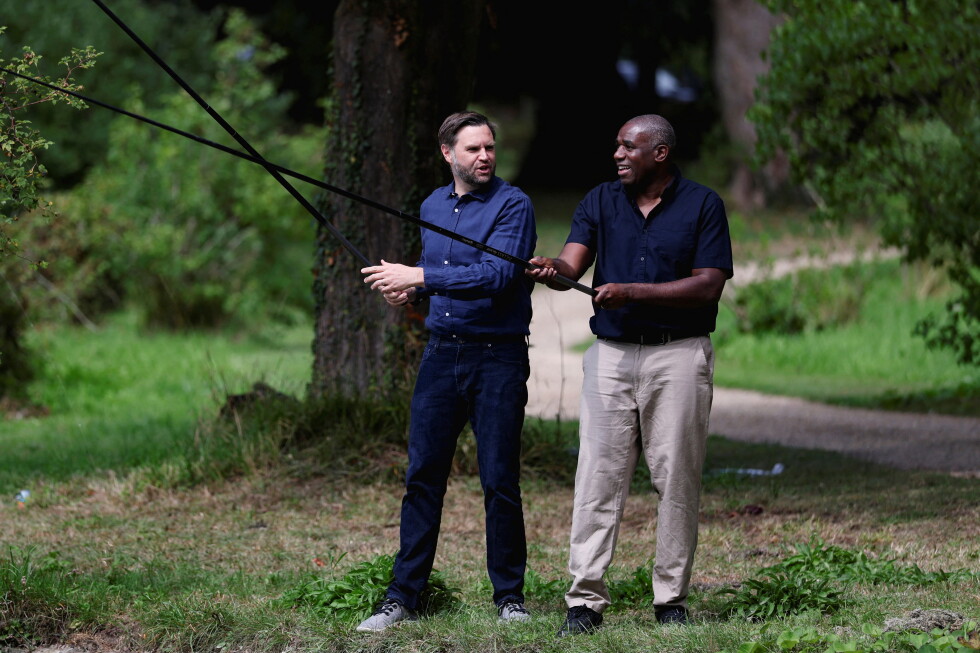
    In a sharp diplomatic exchange that highlights growing transatlantic friction over migration rhetoric, Britain’s Deputy Prime Minister and Justice Secretary David Lammy has publicly confirmed he pushed back firmly against U.S. Vice President JD Vance last Saturday, telling Vance his claims tying the fatal stabbing of 18-year-old university student Henry Nowak to mass immigration were factually wrong.

    The confrontation unfolded during what Lammy described as a “robust” but still cordial phone call between the two senior politicians. Despite sitting on opposite ends of the ideological spectrum, Lammy noted that he and Vance have built a personal friendship rooted in shared religious convictions and similar family backgrounds. “We had an agreeable conversation because we have got a relationship, but I wanted to make clear that I disagree with some of the facts that he was asserting and to present the facts to him,” Lammy explained in an interview with Sky News on Sunday.

    Vance’s controversial comments came one day before the call, when the U.S. vice president posted on social platform X claiming there should be “righteous anger” over Nowak’s December 2024 murder in Southampton, and implying the killing was partially a consequence of “the mass invasion of migrants, many of whom despise the West and the people who love it.”

    What Vance’s post failed to acknowledge, however, are core verified facts of the case that undermine the immigration connection: the convicted killer, 23-year-old Vickrum Digwa, is a British citizen who is already serving a life sentence for the crime, with a minimum 21-year term handed down by courts this week. Digwa, who is Sikh, used an 21-centimeter Sikh dagger to carry out the attack, and falsely told responding officers that Nowak — who was white — had assaulted him in a racist attack. This false claim led police to initially misidentify Nowak as the aggressor, leaving the wounded teen handcuffed and untreated as he lay dying. The Independent Office for Police Conduct, the UK’s independent police watchdog, has launched an ongoing probe into the officers’ actions on scene to determine if any misconduct occurred.

    Notably, even the victim’s own family has rejected efforts to politicize the tragedy. Mark Nowak, Henry’s father, has explicitly stated that the killing is not a matter of racism or religious division. He has said he wants his son’s death to spark action for safer public spaces, rather than being exploited to stoke “further division, hatred or tension.”

    Vance’s remarks are not an isolated incident: just days earlier, U.S. Secretary of Defense Pete Hegseth drew widespread criticism for invoking anti-immigration “invasion” rhetoric during a D-Day commemoration speech on French soil, marking another high-profile example of American conservative figures weighing in on European domestic political issues.

    Digwa’s conviction has already been seized upon by anti-immigration activists and far-right groups in the UK to advance their policy agendas. Tensions boiled over earlier this week in Southampton, when a far-right-led protest over the killing devolved into violent disorder: demonstrators pelted local police with chairs, aluminum cans, rocks and flares, and six additional people have since been charged by police in connection with the violence.

    Downing Street has already formally pushed back against Vance’s intervention. In a statement issued Friday, Prime Minister Keir Starmer’s office criticized outside actors “trying to interfere in our democracy and seeking to stir up division on our streets.”

    During his phone call with Vance, Lammy emphasized that the killing had no connection to mass migration whatsoever, and stressed that the killer was already in custody. Lammy added that he reminded Vance of the Nowak family’s explicit wishes, noting that the inflammatory tweet ran counter to the family’s request to avoid turning the tragedy into a tool for division. “It’s not helpful to tweet in this way, partly because of what the Nowak family have asked for, and reminded him about their desire not to make this an issue of division and hatred, but to make this an issue of common sense,” Lammy told Sky News.

  • Zelensky criticises ‘vile’ Chornobyl drone strike ahead of London talks

    Zelensky criticises ‘vile’ Chornobyl drone strike ahead of London talks

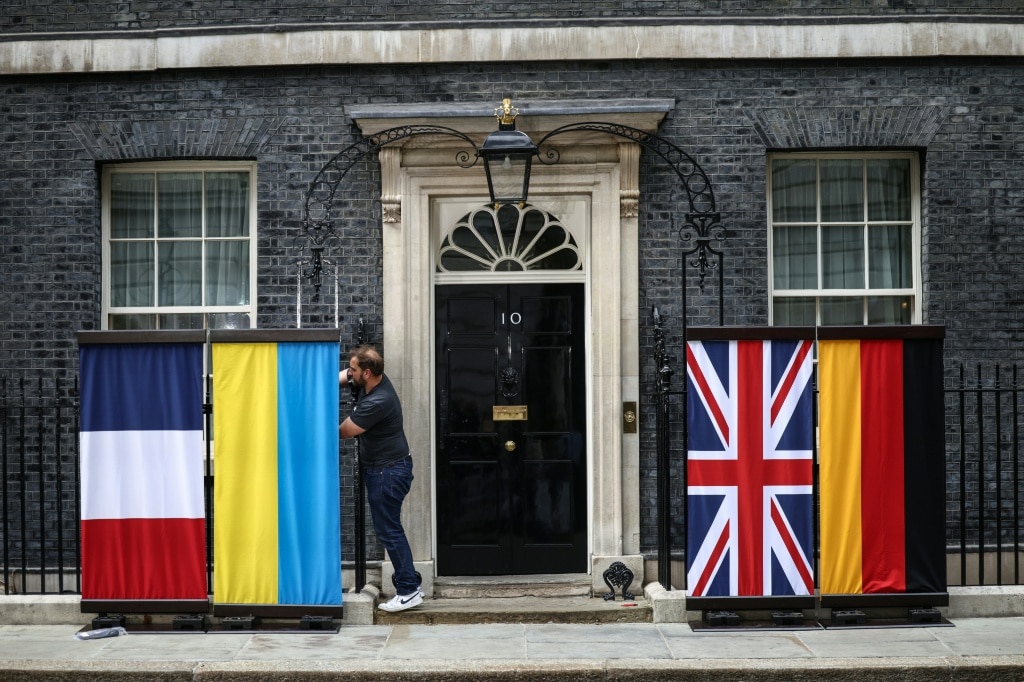
    On Sunday, UK Prime Minister Keir Starmer is set to host a high-stakes meeting at 10 Downing Street, bringing together Ukrainian President Volodymyr Zelensky, French President Emmanuel Macron, and German Chancellor Friedrich Merz to discuss continued European military and political support for Kyiv amid Russia’s ongoing full-scale invasion. The summit marks the second gathering of the three major European powers (known as the E3) with Zelensky since last December, as diplomatic momentum on the conflict shifts back to European capitals following the stall of U.S. mediation efforts.

    Hours before the leaders convened, Ukraine confirmed a new Russian drone attack on a spent nuclear fuel storage facility adjacent to the closed Chornobyl nuclear plant in northern Ukraine. Ukrainian state nuclear operator Energoatom reported that the strike partially damaged the storage building and sparked a fire that was quickly extinguished by emergency crews. No casualties were reported, and official monitoring confirmed radiation levels remain within normal, safe limits. Despite the lack of a radiological incident, both Energoatom and Zelensky condemned the attack as a deliberate violation of nuclear safety norms. Zelensky labeled the strike “vile” in a social media post, emphasizing that the targeted site qualifies as extremely critical energy infrastructure.

    The Chornobyl attack is part of a broader wave of Russian airstrikes across Ukraine that has intensified in recent days. In the southeastern region of Zaporizhzhia, local authorities reported that a separate Russian strike on a rural village killed at least three civilians, marking the second consecutive day of deadly attacks in the area—two civilians were also killed in Russian bombardments there on Saturday. Zelensky added context to the scale of recent Russian aggression, noting that over the past seven days, Moscow has launched 88 missiles, more than 3,200 drones, and 1,800 precision-guided bombs against targets across 13 Ukrainian regions.

    The latest exchange of cross-border strikes follows two consecutive Ukrainian drone attacks on the St. Petersburg region in Russia last week, timed to coincide with Putin’s flagship annual economic forum. Ukrainian strikes hit targets on the opening and final days of the event, with Russian authorities describing the second attack as “unprecedented.” The strikes, which reached more than 1,000 kilometers from Ukrainian territory, demonstrate how far Ukraine’s domestic defense industry has advanced since Russia’s 2022 invasion, allowing Kyiv to regularly strike deep within Russian borders.

    Sunday’s Downing Street meeting comes at a pivotal moment for Western support for Ukraine. The E3 group—comprising the UK, France, and Germany—remains among Kyiv’s most steadfast international backers. The UK and France currently lead the “coalition of the willing” initiative, which aims to craft binding security guarantees for Ukraine as a foundation for any future peace negotiation process. The last E3-Zelensky meeting was held in London last December, at a time when the United States was aggressively pushing for a rapid ceasefire deal between Moscow and Kyiv. Since that gathering, however, U.S. mediation efforts have stalled, and Washington’s foreign policy focus has shifted to escalating conflict in the Middle East.

    Diplomatic progress hit a new roadblock late last week, when Russian President Vladimir Putin rejected Zelensky’s public call for face-to-face peace negotiations. Speaking on the final day of the St. Petersburg economic forum, Putin argued that a ceasefire would only allow Ukraine to rebuild its military forces and strengthen its position for future combat, repeating his longstanding stance that Russia will only end its offensive once it achieves its stated territorial and political goals. In his open letter calling for direct talks, Zelensky had argued that it would be irresponsible for Ukraine to simply wait for the United States to refocus its attention on the war, signaling that Kyiv is looking to European allies to take a leading role in moving the peace process forward in the interim.

  • UK’s Starmer hosts Zelenskyy, Macron and Merz to discuss support for Ukraine

    UK’s Starmer hosts Zelenskyy, Macron and Merz to discuss support for Ukraine

    LONDON – A high-stakes diplomatic meeting focused on the future of Western backing for Ukraine is set to take place in the British capital this Sunday, where Prime Minister Keir Starmer will host senior leaders from Ukraine, France and Germany to coordinate ongoing support for Kyiv amid the grinding war with Russia.

    The summit brings together Ukrainian President Volodymyr Zelenskyy, French President Emmanuel Macron and newly installed German Chancellor Friedrich Merz, representing the E3 – Europe’s three most prominent heavyweight powers that have stood at the forefront of international support for Ukraine ever since Russia launched its full-scale invasion in February 2022. Both the United Kingdom and France currently lead the ‘coalition of the willing’ initiative, which works to deliver binding security guarantees for Ukraine as part of any future negotiated peace settlement.

    Sunday’s talks come on the heels of a major development on the battlefield: a large-scale Ukrainian drone assault that targeted Saint Petersburg, Russia’s second-largest city, highlighting Kyiv’s steadily improving capacity to strike targets deep within Russian territory. The attack, carried out on Saturday, left three people with minor injuries according to local governor Alexander Beglov, who urged residents across the city to remain indoors for their safety during the incident.

    The strike hit less than 24 hours after Saint Petersburg wrapped up its flagship annual economic forum, a event Russian President Vladimir Putin had used to frame the war in Ukraine as a distant conflict disconnected from everyday life in Russia. The assault delivered a public embarrassment for the Kremlin, undermining that narrative for both domestic and international audiences.

    This exchange of long-range strikes comes as the overall front line in the war remains largely deadlocked, with mass drone deployments blunting any large-scale territorial advances from either side. Both Moscow and Kyiv have increasingly turned to deep strike operations to gain a strategic advantage more than four years after Russia’s full-scale invasion began, with no clear diplomatic or military end to the conflict in sight.

    The meeting also follows a sharp rejection of diplomatic outreach from Putin, who turned down Zelenskyy’s recent public proposal for direct face-to-face negotiations in a neutral third country on Friday. Putin told reporters he saw “no point” in holding such talks at this time.

    Separately, fresh violence was reported on Sunday morning when a Russian strike on the Ukrainian town of Balabyne, located in the southern Zaporizhzhia region, killed three civilians and wounded one more as they waited at a local bus stop. Ivan Fedorov, head of the region’s military administration, confirmed the attack in a post on his official Telegram channel.

    This ongoing coverage of the Russia-Ukraine conflict is tracked by the Associated Press at https://apnews.com/hub/russia-ukraine.

  • With rising crime on their minds, Peruvians to vote for president yet again

    With rising crime on their minds, Peruvians to vote for president yet again

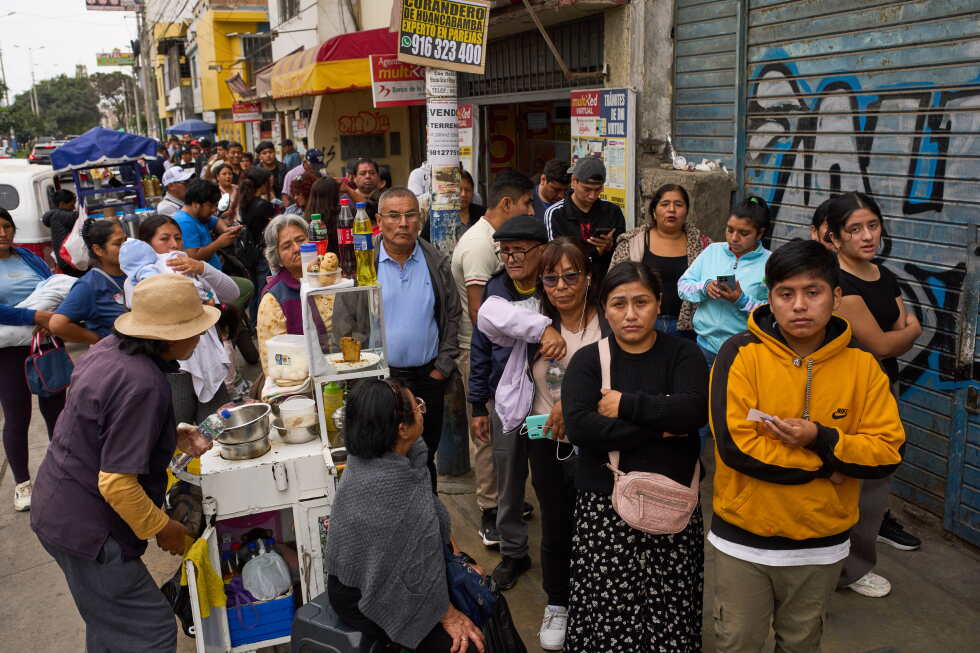
    Peru is set to select its ninth head of state in a decade on Sunday, as voters weigh two ideologically opposed candidates in a tightly contested runoff election dominated by widespread anxiety over rising violent and organized crime. Conservative Keiko Fujimori, daughter of the late disgraced former president Alberto Fujimori, and nationalist congressman Roberto Sánchez, a close ally of imprisoned former president Pedro Castillo, advanced to the runoff after topping an April first-round field of 35 candidates. Notably, neither candidate secured even 20% of the first-round vote, and pollsters still show roughly 30% of the electorate remains undecided heading into the final vote.

    Voting is compulsory for all Peruvian citizens between the ages of 18 and 70, with more than 27 million registered voters nationwide. Roughly 1.2 million of those registered voters will cast ballots from abroad, with the largest groups voting from the United States and Argentina. Given the close split in voter support, election observers expect Sunday’s final results to be extremely close, echoing the first-round uncertainty that saw electoral officials take more than a full month to officially confirm Fujimori and Sánchez as the top two finishers. Many political analysts warn a final official outcome could take days to emerge this round as well.

    Official first-round results put Fujimori at 17% of the vote, with Sánchez trailing at 12%, and a mid-June Ipsos national poll found support for the two candidates remains nearly identical, with undecided voters still holding the balance of power. Fujimori carries the dual legacy of her father’s 1990s administration, which is credited with defeating the violent Shining Path insurgency but tainted by widespread authoritarian corruption. After her parents separated in 1994, she stepped into the role of Peru’s first lady at a young age, and this marks her fourth bid for the presidency.

    For Sánchez, his closest political ties are to Pedro Castillo, the populist former president ousted and imprisoned following a 2022 attempted dissolution of congress. Castillo’s turbulent 16-month term saw more than 70 cabinet reshuffles, leaving many voters wary of his close affiliation with the candidate. The 57-year-old, who often wears a wide-brimmed peasant hat gifted to him by Castillo, draws his strongest support from rural Peruvian communities. He has sought to ease investor concerns about his presidency, explicitly ruling out nationalization of foreign-owned mining and gas assets, and has openly welcomed continued Chinese investment in Peru’s key natural resource sectors.

    Crime and public safety have emerged as the defining issue of the campaign, with recent data underscoring the depth of public anxiety. A 2025 national survey from Peru’s National Institute of Statistics and Informatics found that 84% of urban residents fear they will fall victim to a crime over the coming 12 months, with extortion identified as one of the fastest-growing threats. Policy experts trace the growing power of organized criminal groups to massive profits from decades of illegal gold mining operations in the Andes and Amazon regions, which have allowed networks to expand their influence across the country.

    Both candidates have centered their campaigns on aggressive crime-fighting pledges, though their approaches differ sharply. Fujimori, 51, has run on a hard-line platform that echoes her father’s counter-insurgency successes. Her policy proposals include deploying new digital tracking tools to target extortion rings, militarizing Peru’s border regions, increasing the presence of police and military personnel in high-crime areas, and mandating that incarcerated people work to “repay society” for their crimes. During the only pre-runoff debate, she defended her father’s record, telling voters a vote for her would restore the safety that would let Peruvians leave their homes without fear of attack.

    By contrast, Sánchez has focused his security platform on rooting out corruption within Peru’s national police force, while advancing reforms that allow the military to formally support domestic security operations. With the entire country watching Sunday’s vote, the election will not only shape Peru’s response to its growing crime crisis but also set the course for the nation’s economic and political future after a decade of constant executive turnover.

  • Armenians go to the polls under Russian pressure aimed at preventing a drift toward West

    Armenians go to the polls under Russian pressure aimed at preventing a drift toward West

    YEREVAN, Armenia — As Armenians head to the polls for a critical parliamentary election Sunday, the small South Caucasus nation finds itself at a defining geopolitical turning point, with the incumbent government pushing to reorient its foreign policy away from historical reliance on Moscow toward deeper engagement with Western powers – a shift that has drawn escalating retaliation from the Kremlin.

    Prime Minister Nikol Pashinyan, who rose to power in 2018 on a wave of popular street protests, and his ruling Civil Contract party are seeking a solid parliamentary mandate to cement their new geopolitical course. They face a fragmented opposition largely dominated by factions that openly advocate for closer alignment with Russia.

    In the weeks leading up to the vote, Russian authorities have imposed a sweeping set of trade restrictions on Armenian exports, covering everything from cut flowers, select cognac and wine varieties to fresh produce like eggplants and potatoes, dried fruit, and fish. Moscow claims the bans stem from violations of agricultural import standards, but the European Union has decried the measures as blatant political coercion. Beyond economic pressure, top Russian officials including President Vladimir Putin have issued thinly veiled warnings that echo the path that led to open conflict in Ukraine, drawing a direct parallel between Armenia’s Western overtures and Ukraine’s pre-2022 EU integration efforts.

    “If the Armenian people see benefits in joining the European Union then we will certainly have nothing to say against it,” Putin told reporters following Russia’s May 9 Victory Day parade. He quickly added a sharp caveat, however: “We are currently living through everything that is happening in respect of Ukraine. And how did it start? It started with Ukraine’s joining or attempting to join the EU.” Putin has also stressed that Armenia cannot simultaneously remain a member of the Russian-led Eurasian Economic Union (EEU) and integrate with the EU’s customs union, calling the dual alignment “simply impossible by definition.” Moscow also retains major control over Armenia’s energy and infrastructure networks, and has regularly leveraged its supply of subsidized natural gas as a reminder of Armenia’s existing economic dependence.

    In pre-election developments, Armenian law enforcement issued six arrest warrants for members of the pro-Russian opposition Strong Armenia party on the eve of the vote, alleging the group engaged in widespread vote-buying. The country’s Central Election Commission had previously rejected calls from another opposition faction, the Republic party, to bar Strong Armenia from running over corruption allegations, clearing the way for the party to participate. Strong Armenia is led by Armenian-Russian billionaire Samvel Karapetyan, who is currently under house arrest facing trial on charges of advocating for the overthrow of the Pashinyan government – charges Karapetyan dismisses as a politically motivated smear. He has overseen the party’s campaign from detention, with support from his nephew Narek Karapetyan. The faction frames Pashinyan’s course as a reckless push toward conflict with Russia and prioritizes expanding economic and political ties with Moscow.

    Other key pro-Russian opposition contenders include former Armenian President Robert Kocharyan, leader of the Hayastan opposition bloc, who has accused Pashinyan of severely damaging Armenia’s long-standing relationship with Russia. Another major faction is the Prosperous Armenia Party, headed by pro-Russian business leader Gagic Tsarukyan. All major opposition groups have also blasted Pashinyan’s ongoing efforts to normalize relations with neighboring Azerbaijan, a process brokered in part by the West. The two countries have been locked in a decades-long dispute over the Karabakh region, which was held by ethnic Armenian forces backed by Armenia for nearly 30 years before Azerbaijan reclaimed full control of the entire territory in a 2023 military offensive. In August last year, Pashinyan and Azerbaijani President Ilham Aliyev initialed a framework for a peace deal at the White House, with U.S. President Donald Trump in attendance.

    “I want this government to change because the condition of our country is getting worse,” Sahakyan Elina, a Prosperous Armenia supporter, told the Associated Press at an opposition rally Thursday. “I don’t want to live with my enemies in unity.”

    Pashinyan has publicly framed his foreign policy as a balanced approach that aims to maintain positive relations with Russia, alongside building stronger ties with the U.S., Europe, and regional powers including Turkey and Iran. Despite this framing, his government has been received far more favorably in Western capitals than in Moscow. Notably, Donald Trump has publicly endorsed Pashinyan’s re-election bid, taking to social media to call the Armenian prime minister “a great friend and Leader” who “is making his Country strong, wealthy, and very secure,” and urging Armenian voters to “Make (Armenia) Great Again.”

    Under Armenia’s electoral law, the 101-seat National Assembly is elected for five-year terms, with a 4% vote threshold for individual parties to gain representation, and an 8% threshold for multi-party blocs. A total of 17 individual parties and two electoral blocs are contesting Sunday’s vote. Most independent pollsters and regional analysts currently project that Pashinyan and Civil Contract will emerge from the election with a leading share of seats. “I think Armenians expect, first of all, a peaceful, independent and prosperous Armenia from this election, as we have today,” said Hripsime Grigoryan, an outgoing Civil Contract member of parliament.