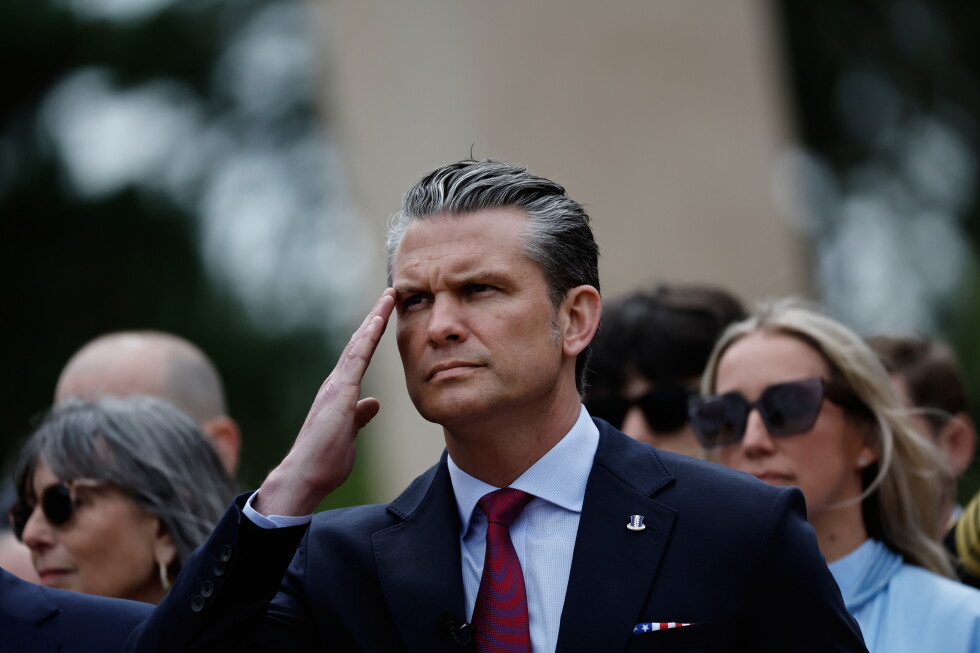
Normandy, France — The 82nd anniversary of the 1944 D-Day landings, a landmark event that marked the start of Western Europe’s liberation from Nazi occupation, became the stage for a heated political intervention by senior Trump administration officials over the weekend, drawing swift condemnation for framing migration as an existential threat to the freedom Allied troops fought to secure.
U.S. Defense Secretary Pete Hegseth delivered his address from the hallowed grounds of the Normandy American Cemetery in Colleville-sur-Mer, where more than 9,000 U.S. service members killed during the invasion are buried. In his speech, he drew a provocative parallel between the 1944 Allied amphibious landing that freed Europe and what he framed as a modern-day “invasion” reaching European shores. Though he never explicitly used the word “immigration” in his remarks, his language left little room for ambiguity: he referenced “different dangerous ideologies” storming Europe’s beaches today, naming coastlines in Spain, Italy, Greece and Bulgaria where migrant boats regularly arrive, and challenged European leaders to act before it is too late.
Hegseth’s comments align closely with broader Trump administration pressure on European governments over migration policy, border security, and the Trump White House’s criticism of what U.S. officials claim is unfair censorship of nationalist and far-right political voices across the continent. A December 2024 update to the Trump administration’s national security strategy amplified this framing, warning that Europe faces the risk of “civilizational erasure” and could become “unrecognizable” to current generations within two decades if current trends continue.
The controversy did not end with Hegseth’s speech. Separate remarks by U.S. Vice President JD Vance drew sharp rebuke from 10 Downing Street, the official office of British Prime Minister Keir Starmer. Vance had linked the fatal stabbing of 18-year-old British student Henry Nowak in Southampton to immigration, a claim that fell apart under basic factual scrutiny: both Nowak and his suspected killer are British citizens. Starmer’s spokesperson issued a clear public condemnation of Vance’s inaccurate and exploitative comments in the wake of the tragedy.
The dual controversies have thrown a spotlight on the Trump administration’s increasingly sharp rhetorical approach to European migration issues, turning a solemn commemoration of wartime sacrifice into a platform for advancing nationalist policy priorities that have divided transatlantic allies.