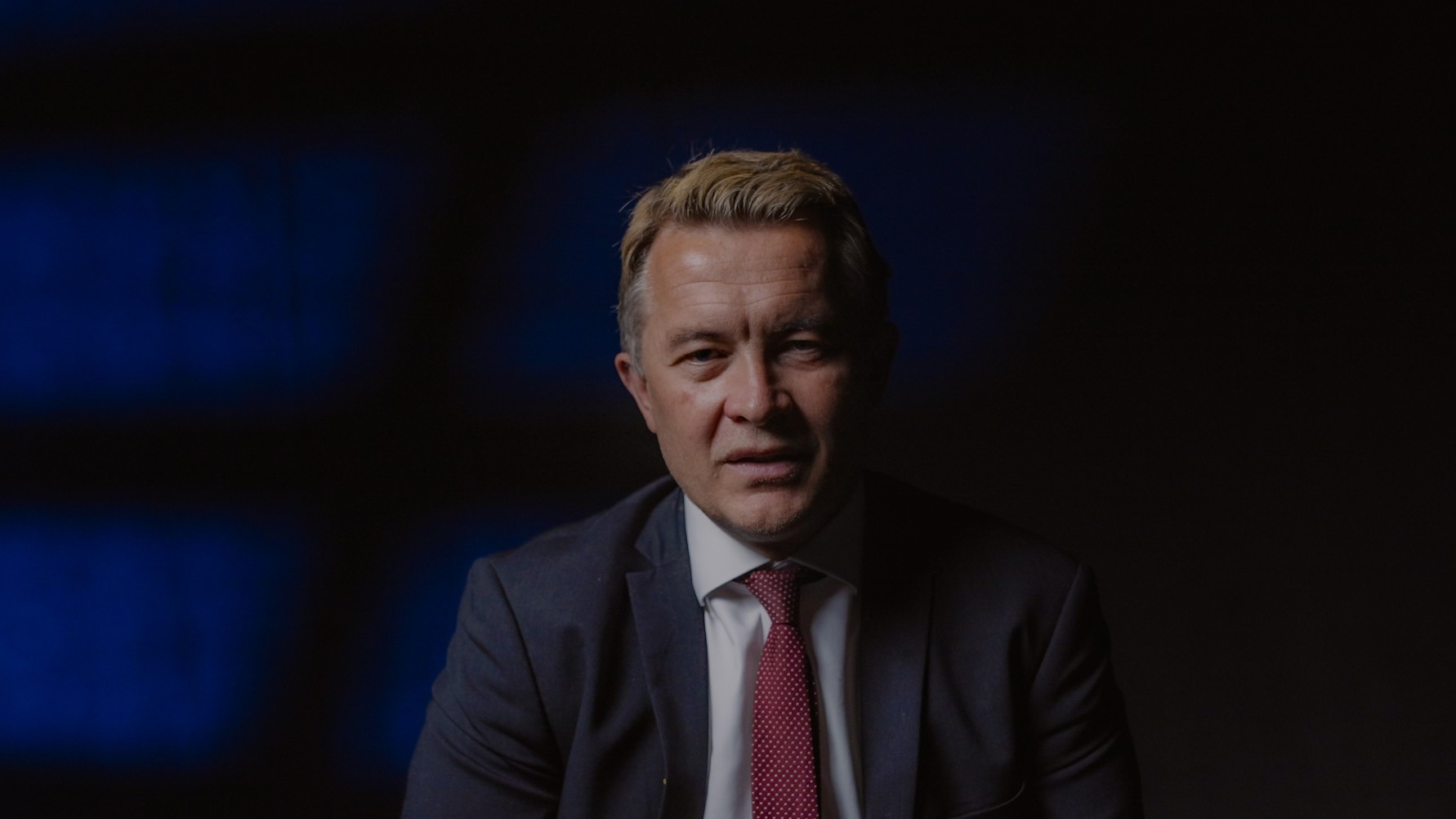
As the International Criminal Court (ICC) approaches a critical vote that will decide the future of its chief prosecutor Karim Khan, Norway’s deputy foreign minister Andreas Kravik is calling on member states to prioritize established procedural rules to prevent harmful perceptions that the review process has been politicized. In an exclusive interview with Middle East Eye (MEE) conducted ahead of the Monday voting deadline for the ICC Assembly of States Parties (ASP) Bureau, Kravik emphasized that institutional respect for pre-set protocols for investigating misconduct allegations is non-negotiable to protect the court’s global integrity.
The unfolding controversy stems from sexual misconduct allegations brought against Khan in May 2024, which the prosecutor has repeatedly and forcefully denied. After the original complainant declined to cooperate with the ICC’s internal investigative body, the ASP commissioned an independent UN-led probe, whose findings were then passed to a three-judge panel appointed by the 21-member ASP Bureau for a formal advisory review. In March, MEE reported that the judge’s panel reached a unanimous conclusion: the UN investigation had failed to produce evidence confirming any wrongdoing by Khan. In a striking departure from standard process, however, a majority of Bureau members voted weeks later to disregard the panel’s assessment, opening the door to a finding of serious misconduct against Khan.
Legal experts have already warned that the Bureau’s rejection of the independent judges’ advisory opinion creates significant risk that the entire misconduct inquiry will be seen as politically motivated, a threat to the court’s legitimacy that Norway says it cannot accept.
“What we have said is that the ICC needs to look at this case in conformity with the procedures that have been established for examining such allegations of misconduct,” Kravik told MEE during the interview at the Norwegian foreign ministry in Oslo. “Because otherwise, there will be at least a perception of politicisation of the process. And that would hurt the integrity of the court. That’s something that we cannot afford, especially in this time when the court is under real pressure by other states and where certain states are trying, at the best of their ability, to portray the court as a politicised entity not operating in conformity with core principles of international law.”
Norway has been a member of the ICC since the court’s founding under the Rome Statute in 2002, but it holds no seat on the current ASP Bureau. Kravik confirmed that Norway has not been granted access to the highly confidential UN and judicial panel reports, and is not privy to closed-door Bureau deliberations. Even so, based on credible public and off-the-record briefings on the probe’s outcomes, Kravik said the judges’ independent conclusion should carry full legal weight in the decision-making process for both the Bureau and the full 125-member ASP.
“We haven’t seen the full reports. But we understand that there has been an investigation by the UN entity responsible for carrying out such investigations,” Kravik shared in a forthcoming episode of MEE’s *Expert Witness* podcast. “The conclusions of that report have been transferred to a legal panel comprising three judges, and they have looked at it, and their conclusion is that there are no grounds for taking certain actions against the prosecutor, at least in terms of alleviating him from his responsibilities as prosecutor. From my vantage point, without getting ahead of the curve, it seems that that is a sensible conclusion.”
Kravik stressed that Norway will make a final, fact-based determination on the matter if the vote advances to the full ASP, but that procedural integrity remains the country’s top priority. “For us, the most important thing here is that the procedures that have been established are respected and that all individuals, also the prosecutor, are entitled to the judicial safeguards enshrined in those judicial guarantees that are giving guidance to these processes,” he added.
If the Bureau ultimately recommends a finding of serious misconduct against Khan, the full 125-member ASP will hold two consecutive votes: first to uphold the misconduct finding, which requires a two-thirds majority to pass, and a second vote to decide whether to remove Khan from office permanently. The ongoing misconduct probe has plunged the court into an unprecedented state of institutional uncertainty, with persistent media leaks about the unproven allegations further eroding stability around Khan’s leadership.
Khan has already made clear that if the ASP votes to remove him, he will file an appeal with the Administrative Tribunal of the International Labour Organization (ILOAT), the independent body that handles employment-related appeals from ICC staff. Last month, former International Court of Justice judge Abdul Koroma issued a legal opinion shared with all ICC member states warning that the ILOAT could order Khan’s reinstatement and order the ICC to pay up to €1.5 million ($1.74 million) in damages if his removal is found to be improperly justified.
The controversy surrounding Khan comes against a highly charged geopolitical backdrop: the prosecutor’s ongoing war crimes investigation into Israeli officials over alleged atrocities in Gaza has already drawn intense pushback from the United States and its allies, who have sought to disrupt the ICC’s work. Elected as ICC chief prosecutor by the ASP in February 2021, the British barrister has overseen investigations into alleged serious international crimes committed by leaders across the globe, securing arrest warrants for Russian President Vladimir Putin, Israeli Prime Minister Benjamin Netanyahu, Myanmar’s junta leadership, and Taliban officials in Afghanistan. None of the US, Russia, or Israel are ICC member states, but the court holds jurisdiction over crimes committed by their nationals on the territory of ICC member states.
In 2024, the Trump administration imposed retaliatory economic sanctions on Khan over his investigative work, measures that were later expanded to target two deputy prosecutors, eight ICC judges, the UN special rapporteur on Palestine, and multiple Palestinian NGOs that submitted evidence to the court. Russian courts have also issued an in absentia arrest warrant for Khan in retaliation for his work.
In his interview with MEE, Kravik reaffirmed Norway’s unwavering support for the ICC and its commitment to enforcing all outstanding arrest warrants, including the one issued for Netanyahu. “The fact that some third states who aren’t party to the court have decided to sanction court officials for just doing their jobs is unconscionable,” he said. “We are in close discussions with our European partners, but also partners beyond Europe, about how we should oppose these actions taken primarily by the US. As a state party, we are committed to doing everything we can to ensure that those who are working for the court can do so without being subjected to sanctions or any other measures that try to prevent them from carrying out their functions under the court’s mandate.”