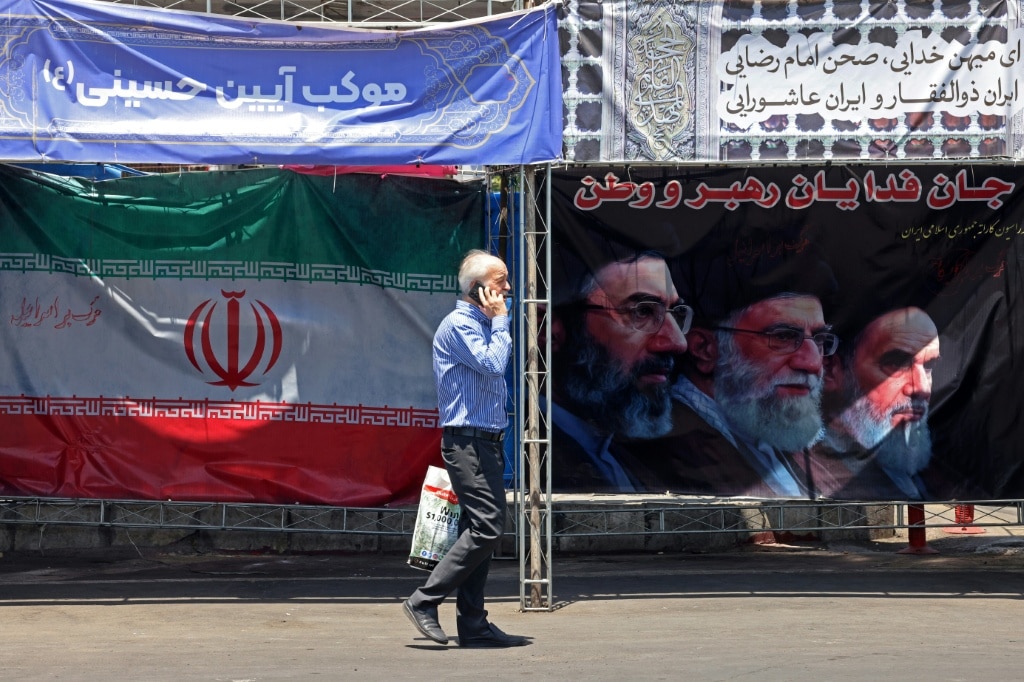
On a Thursday that already carried high geopolitical and economic stakes, U.S. President Donald Trump upended global expectations with a sudden announcement: he had called off planned military strikes against Iran and claimed a historic peace deal to end the months-long U.S.-Iran war could be finalized and signed within days.
The announcement broke as the 2026 FIFA World Cup kicked off in Mexico, sending immediate ripples through global financial markets. Major stock indices rallied sharply, while international oil futures dropped more than 3% — a clear market signal that investors welcomed the de-escalation of a conflict that has roiled energy supplies for months.
In a social media post that quickly dominated global headlines, Trump stated that bilateral talks with Iranian officials had advanced to the highest levels of Iran’s leadership and received formal approval. “I have cancelled the scheduled strikes and bombings against Iran scheduled for this evening,” he wrote. “Time and place of the signing to be announced shortly.” He added that the core terms of the arrangement had already been signed off by the U.S. and its regional allies, most notably Israel, which joined Washington in launching the offensive against Iran back in February.
The conflict, which began with a massive wave of joint U.S.-Israeli airstrikes on February 28 that killed long-time Iranian supreme leader Ayatollah Ali Khamenei, entered a paused state under a temporary truce brokered in April. But negotiations for a permanent ceasefire and peace agreement had appeared deadlocked in recent weeks, with both sides trading escalating threats in the days leading up to Trump’s announcement. Just 24 hours before his Thursday announcement, Trump had threatened to intensify U.S. airstrikes and seize control of Kharg Island, Iran’s critical oil export terminal in the Persian Gulf.
Iranian officials quickly pushed back against Trump’s claims of a finalized, approved deal. Hours after the U.S. president’s announcement, foreign ministry spokesman Esmaeil Baqaei stated that “Iran has not reached a final conclusion on the agreement.” Iran’s semi-official Tasnim news agency pointed out that Trump has now claimed an imminent deal 38 times over the past two months, advising that any statements from Trump on the topic should be treated as unsubstantiated until confirmed directly by Iranian authorities. When pressed by reporters on the Iranian pushback, Trump doubled down on his claim, saying “I understand the answer is yes” when asked if Iran’s new supreme leader Ayatollah Mojtaba Khamenei had personally approved the deal.
An official statement from the office of Israeli Prime Minister Benjamin Netanyahu confirmed that Netanyahu had spoken with Trump following the announcement, and that Trump had committed any final agreement would require Iran to remove all existing enriched nuclear material and dismantle its entire ballistic missile infrastructure program. Tehran’s municipal government also confirmed Thursday that the delayed funeral for former supreme leader Ayatollah Ali Khamenei will be held no earlier than late June, further adding to the atmosphere of ongoing uncertainty.
Trump’s announcement suggests that months of quiet back-channel mediation led by U.S. partners Pakistan and Qatar may have produced tentative progress, despite the sharp public denial from Tehran. Even as hopes for peace rose, however, new reports of hostilities emerged: Kuwait announced Thursday that an Iranian strike targeted its territory, damaged an air defense radar installation, and forced a temporary closure of its airspace.
Domestically, hardline factions on both sides have continued to undermine progress toward a deal. Earlier Thursday, amid escalating U.S. threats of new strikes, senior Iranian General Ali Abdollahi warned that any new American attack would draw a far harsher response than previous exchanges, warning that a widening of the war would spread instability across the entire Middle East. For ordinary Iranian civilians already reeling from months of conflict, that instability is already a daily reality. Majid, a 35-year-old Tehran pharmacist, expressed deep pessimism about the prospects of a final deal. “I am absolutely not optimistic about the agreement being finalized, because the gap between the two countries is too wide,” he said, blaming the ongoing deadlock on both Israel — which has exchanged frequent cross-border fire with Iranian forces in recent days — and hardline Iranian factions opposed to any compromise.
The conflict has already hit the global economy hard. Earlier on Thursday, the World Bank downgraded its global growth forecast to its lowest level since the height of the coronavirus pandemic, explicitly citing the expanding economic fallout from the Iran war as a key driver of the downgrade. One of the most damaging ongoing economic impacts stems from Iran’s closure of the Strait of Hormuz, the critical global chokepoint through which roughly 20% of the world’s daily oil and gas supplies pass. Iran’s newly established strait oversight body reaffirmed Thursday that the waterway “will be closed until further notice”, keeping ongoing pressure on global energy markets despite the post-announcement drop in oil prices.