分类: politics

  • King’s ‘high stakes’ visit with Trump will be toughest test yet of his reign

    King’s ‘high stakes’ visit with Trump will be toughest test yet of his reign

    Next week, King Charles III and Queen Camilla will embark on a historic state visit to the United States, a trip that insiders and analysts universally describe as a high-risk, high-reward endeavor unfolding against the most strained Anglo-American diplomatic backdrop in a century. Far from a perfunctory ceremonial stop marked by photo opportunities and celebrity receptions, the four-day tour carries genuine geopolitical and personal jeopardy, shaped by overlapping global conflicts, domestic political friction, lingering royal scandal, and the monarch’s ongoing health challenges.

    The visit arrives at a moment of extraordinary volatility across global politics. A fragile ceasefire currently holds in the Middle East following violent escalation around Iran, creating a tense international backdrop for diplomatic engagement. On the US side, the trip’s host, President Donald Trump, brings a well-documented record of unpredictability that has kept officials on both sides of the Atlantic on high alert. Recent controversies, including a widely criticized AI-generated image that appeared to depict Trump as a religious figure – a awkward situation for Charles, who serves as Supreme Governor of the Church of England – have added extra layers of sensitivity to the meeting.

    While Trump has long expressed open admiration for the British monarchy, his public criticism of UK Prime Minister Keir Starmer, and his dismissive description of UK aircraft carriers as “toys” compared to American warships, has put the King – who holds the constitutional role of Head of the Armed Forces – in a delicate position. Transatlantic and NATO relations between the US and UK have sunk to a perilously low point in the months since Trump’s 2025 visit to Windsor Castle, with open disputes over the UK’s stance on the Iran conflict and Trump’s public downplaying of British military contributions in Afghanistan. Former Obama administration State Department advisor Max Bergmann warns that even with a carefully scripted itinerary designed to avoid unscripted interactions, there is no guarantee Trump will curb his usual off-the-cuff commentary during the visit.

    “The Trump show doesn’t get turned off because the King is in town,” Bergmann cautioned.

    Personal challenges compound the diplomatic pressure facing the 77-year-old monarch, who has lived with cancer for more than two years and will tackle a packed schedule of events across Washington D.C., New York City, and a Virginia national park. Most notably, lingering fallout from the Jeffrey Epstein scandal and Prince Andrew Mountbatten-Windsor’s long-standing ties to the convicted sex offender has already drawn demands from survivors’ advocates for a meeting with the King. Prince Andrew has consistently denied all allegations of wrongdoing connected to the case, and reached an out-of-court settlement with accuser Virginia Giuffre in 2022 without admitting liability or issuing an apology. Still, Giuffre’s family says they plan to lobby the King during his visit, asking for just 10 minutes of his time to receive a symbolic gesture of acknowledgement and support for ongoing investigations.

    “It’s an olive branch that we’re looking for,” said Amanda Roberts, Giuffre’s sister-in-law. “Acknowledgement, shaking the hand and looking us in the face and saying, ‘I will continue on my promise to honour a fair trial. I will support the investigations. And I’m sorry that all these survivors have waited so long for justice.’”

    Despite these stacked challenges, the trip also opens a rare window of opportunity to reset strained transatlantic ties. Analysts note that Charles, a longstanding advocate for liberal democratic values and the rules-based international order, has a unique personal connection with Trump that no UK elected official can match. Trump has repeatedly praised the King, calling him “a brave man, and a great man” in a recent BBC interview, and previous private interactions between the two saw Charles successfully persuade Trump to take a harder line on supporting Ukraine. Biographer Andrew Lownie, a leading royal commentator, argues that even with their stark ideological differences – Charles is a committed multilateralist, while Trump has embraced an America First agenda – the King’s decades of diplomatic experience let him find common ground.

    The centerpiece of the visit will be Charles’ address to a joint session of the US Congress, only the second time a British monarch has spoken to the full legislature, following his mother Queen Elizabeth II’s landmark 1991 speech. That 1991 address, which opened with a lighthearted joke about the Queen’s 1976 “talking hat” microphone mishap, made a forceful case for consensus politics and multilateral cooperation – a message that analysts say carries extra resonance today amid rising populism and global conflict. Charles’ speech is expected to balance flattery of the US president with quiet advocacy for core UK priorities: strengthened NATO unity, continued support for Ukraine, and progress on a bilateral US-UK trade agreement, leavened with gentle historical nods to the long-standing shared ties between the two nations.

    Royal insiders describe the trip as a “delicate balancing act,” acknowledging the current frictions but emphasizing that the visit is as much about celebrating the long history of the special relationship as it is about addressing current divides. The timing also aligns with the 250th anniversary of US independence, a symbolic marker that royal officials hope will highlight how far the transatlantic partnership has evolved since the Revolutionary War.

    While some analysts, like Bergmann, warn that the deep rift in current political relations makes this an inherently fraught endeavor, others see the visit as an unexpectedly timely opportunity for the UK. Harvard Kennedy School director Shannon Felton Spence, who organized a 2015 US visit for Charles when he was Prince of Wales, notes that the British monarchy remains the UK’s most effective soft power asset in the United States, particularly with a president who openly admires the institution.

    “This couldn’t have come at a better moment for the UK,” Spence said. “They’re playing exactly the right card, at a time when they didn’t even realize they’d be needing to play it.”

    Beyond the immediate political outcome, historians point to the long-term impact of royal state visits, from Queen Elizabeth II’s famous ride with Ronald Reagan in 1982 to Princess Diana’s iconic dance with John Travolta at the White House in 1985, moments that shaped public perception of the transatlantic relationship for decades. For King Charles, this trip will test whether his decades of preparation for the throne will let him navigate an unprecedented set of challenges to pull the special relationship back from its current low.

  • Meeting with the King would ‘demonstrate human dignity’, says Epstein survivor

    Meeting with the King would ‘demonstrate human dignity’, says Epstein survivor

    A request for a meeting between survivors of convicted sex offender Jeffrey Epstein and senior British royals, including King Charles III, has been turned down by Buckingham Palace ahead of the upcoming state visit to the United States. One of Epstein’s survivors has publicly stated that a meeting with the King would have stood as a powerful demonstration of respect for human dignity, highlighting the symbolic weight that such an encounter would have carried for victims of sexual exploitation.

    The confirmation of the royal household’s refusal came from an anonymous source within Buckingham Palace, who confirmed that no audience between the King and the survivor group is scheduled to take place during the trip. This decision has drawn attention to the ongoing conversations around accountability for powerful figures connected to Epstein’s network, as well as the expectations that many survivors hold for global leaders to acknowledge their trauma.

    Epstein, a wealthy financier, died in prison in 2019 while awaiting trial on sex trafficking charges, leaving dozens of survivors still seeking acknowledgment and justice. Many of his victims have spent years pushing for conversations with prominent public figures who once associated with Epstein, in hopes of raising broader awareness about sexual violence and the failures of systems that enabled his crimes for decades. The rejected request for a meeting during the British monarch’s high-profile US visit places renewed focus on how institutional bodies engage with survivors of high-profile abuse cases.

  • Activists break into Leicester factory owned by Israeli firm Elbit Systems

    Activists break into Leicester factory owned by Israeli firm Elbit Systems

    In a dramatic act of pro-Palestinian civil disobedience, a group of campaigners from the activist collective “People Against Genocide” has carried out a targeted occupation of an Israeli arms manufacturer’s facility in Leicester, United Kingdom. The action, which unfolded on the morning of April 24, 2026, targeted a site operated by UAV Tactical Systems, a subsidiary of Elbit Systems UK — the British branch of Israel’s largest defense contractor.

    According to on-the-ground reporting from independent media outlet The Aftershock, the group bypassed high-security perimeter defenses first: activists climbed over reinforced razor-wire fencing using ladders to access the factory grounds before moving to secure the building’s roof. Once on the roof, the team drilled access holes and abseiled down into the facility’s interior, breaking through a ceiling to enter the production floor.

    Circulated social media footage confirms the breach, showing activists entering the restricted clean room space that local reports confirm is used to manufacture components for Israeli military drones. The Aftershock’s reporting notes that the introduction of external contaminants to the tightly controlled clean room environment could render the entire production space inoperable for as long as several months, a major disruption to the site’s output.

    One participating activist spoke publicly about the motivation behind the action, emphasizing widespread anger over the British government’s ongoing diplomatic and logistical support for Israeli military operations in Gaza. “We are sick and tired of our government’s collaboration in this genocide that Israel is committing on the Palestinian people,” the activist said. “We know that genocide has no place in this world – so that’s why we’re here to shut Elbit down.”

    Elbit Systems holds an outsize role in Israel’s military infrastructure: the company supplies roughly 85 percent of all drones and land-based military equipment used by the Israeli Defense Forces, and has been identified as a key weapons supplier for Israel’s 2023–present military campaign in Gaza. Headquartered globally, the firm employs approximately 20,000 workers and posts annual revenues of around $2 billion, and has been a repeated target of pro-Palestinian direct action across the United Kingdom for years due to its deep military ties to Israel.

    A 2025 report from Francesca Albanese, the United Nations Special Rapporteur for Palestine, underscored the company’s financial stake in the ongoing conflict, noting that “for Israeli companies such as Elbit Systems… the ongoing genocide has been a profitable venture.” Beyond its work supplying Israel, Elbit’s UK subsidiary currently holds a £57 million contract with the British Ministry of Defense to run Project Vulcan, a simulation-based training program for UK tank crews, a contract secured in 2023.

    This most recent action is part of a long-running campaign targeting Elbit’s British operations. In 2025, the UK government officially designated Palestine Action, another prominent direct action group that has repeatedly targeted Elbit subsidiary headquarters across the country, as a terrorist organization. Despite the ban, activism against Elbit’s UK presence has continued, driven by growing public opposition to British complicity in the Gaza crisis.

  • US to allow firing squads, gas, and electrocution for federal executions

    US to allow firing squads, gas, and electrocution for federal executions

    The U.S. Department of Justice (DOJ) has issued a landmark policy shift ordering federal prison authorities to expand the approved methods of capital punishment, adding firing squads, gas asphyxiation and electrocution to the existing protocol of lethal injection. The new policy was formally outlined in a 48-page internal memo published to the public this Friday, framing the expansion as a measure to strengthen the federal death penalty system.

    According to the DOJ’s official justification, broadening the range of execution methods will advance three core goals: deterring the most heinous violent offenses, delivering lawful justice to crime victims, and providing long-awaited closure for victims’ surviving families. This policy reversal comes on the heels of major shifts in federal capital punishment over the last two presidential terms. The prior Biden administration had imposed a moratorium on nearly all federal executions, and before leaving office in January 2025, President Joe Biden granted clemency to 37 out of 40 inmates held on federal death row.

    In contrast, President Donald Trump — a longtime outspoken proponent of capital punishment — made resuming federal executions one of his first priorities upon returning to the Oval Office in January 2025. On his first day back in office, he signed an executive order mandating that the DOJ pursue death sentences for all severe crimes that warrant the punishment, as well as for cases where an undocumented immigrant kills a law enforcement officer. This mirrors actions from Trump’s first term, when he lifted a 17-year federal moratorium on executions and oversaw the execution of 13 death row inmates before leaving office in 2021.

    The DOJ memo retains its backing of lethal injection as a viable execution method, describing the sedative pentobarbital as the “gold standard” for lethal injection protocols. Pentobarbital has served as the default drug for federal executions since 1993, but it has faced growing headwinds in recent years: death penalty opponents have repeatedly labeled it a cruel, inhumane method of execution, and consistent drug shortages have created widespread logistical challenges for carrying out court-ordered executions. In an accompanying report, the DOJ explained that expanding the list of approved methods eliminates the risk of delayed or canceled executions due to drug unavailability, ensuring the department can always carry out legally authorized death sentences regardless of supply chain barriers.

    Acting Attorney General Todd Blanche doubled down on the policy in an official statement, criticizing the prior Biden administration for failing its core duty to protect the American public. Blanche argued that the previous administration abdicated its responsibility by refusing to pursue the death penalty for the nation’s most dangerous offenders, including convicted terrorists, child murderers, and officers who kill law enforcement personnel.

    The policy change has drawn sharp condemnation from congressional Democrats, who have long opposed the expansion of capital punishment. Senate Judiciary Committee Chair Dick Durbin called the move “cruel, immoral, and discriminatory” in a public statement posted to the social platform X, adding that expanding the federal death penalty will stand as a permanent “stain on our history.”

    While federal capital punishment policy has shifted with changes in presidential administration, a number of U.S. states have already adopted alternative execution methods in response to the same drug supply issues that prompted the DOJ’s policy change. Data from the Death Penalty Information Center shows that five U.S. states currently permit the use of firing squads for executions. In 2024, Alabama made history as the first U.S. state to carry out an execution using nitrogen hypoxia, and four additional states have since approved the method for future use.

  • US soldier pinched for profiting off Maduro abduction bets

    US soldier pinched for profiting off Maduro abduction bets

    In a stunning revelation of institutional corruption that has rocked the second Trump administration, the U.S. Department of Justice unveiled multiple criminal charges Thursday against an active-duty Army special operations soldier accused of illicitly profiting more than $400,000 by using top-secret insider information to bet on the timing of a U.S. military operation to abduct Venezuelan leader Nicolás Maduro earlier this year.

    Master Sergeant Gannon Ken Van Dyke, a soldier directly involved in the planning and execution of the covert January mission targeting Maduro, faces five counts: unlawful use of confidential government data for personal profit, theft of nonpublic official information, commodities fraud, wire fraud, and an illegal monetary transaction, federal prosecutors confirmed in the official statement.

    Court documents detail that Van Dyke placed 13 separate wagers totaling approximately $33,000 on Polymarket, a popular online prediction marketplace. All of his bets backed the “yes” outcome for questions asking whether U.S. forces would carry out an incursion into Venezuela and remove Maduro from power before the end of January. The classified knowledge he held about the operation’s timeline allowed him to net more than $400,000 in illicit gains from the wagers, according to prosecutors.

    When questioned by reporters Thursday, former and current U.S. President Donald Trump claimed he had no prior knowledge of the charges against Van Dyke. Drawing a parallel to disgraced baseball icon Pete Rose, who was permanently banned from Major League Baseball for gambling on his own team’s games, Trump downplayed the severity of the offense depending on its direction. “Was he betting that they would get [Maduro] or they wouldn’t get him? That’s like Pete Rose betting on his own team. Now, if he bet against his team, that would be no good,” Trump told reporters. The comment lines up with Trump’s past support for Rose: in February 2025, Trump announced on Truth Social that he planned to issue a full pardon to Rose, arguing the baseball legend had only done wrong by betting on his own team to win.

    The unsealing of Van Dyke’s indictment has amplified long-simmering concerns that officials and insiders throughout the Trump administration are widely exploiting nonpublic government information for personal financial gain. Independent watchdogs and governance experts have repeatedly labeled this second Trump term the most openly corrupt administration in U.S. history.

    “The culture of insider trading and corruption starts at the top and is permeating everywhere and everything. This is what people hate about our government now,” said Representative Raja Krishnamoorthi, a Democrat from Illinois, echoing widespread criticism of the administration’s ethical standards. Many critics also point out the stark double standard in the case: while the low-ranking soldier who profited from the bet has been arrested, no senior officials who authorized the widely condemned illegal incursion into Venezuela have faced any accountability to date.

    “I hear someone was arrested in connection with the patently illegal invasion of Venezuela. Can’t wait to see who is going to be held accountable for this lawless use of military force,” wrote Brian Finucane, senior adviser to the U.S. Program at the International Crisis Group, highlighting the gap in accountability for the operation itself.

    The Van Dyke case is not an isolated incident: suspicious, well-timed bets connected to high-stakes U.S. military actions, from the Maduro abduction to the recent U.S. military strike on Iran, have raised alarms that systemic insider trading is widespread among Trump administration officials and associates with access to nonpublic information. Just last month, the Financial Times reported that a broker working for U.S. Secretary of Defense Pete Hegseth attempted to place a multi-million-dollar investment in weapons stocks in the weeks leading up to the joint U.S.-Israeli attack on Iran.

    “The Iran War has become a corruption racket for the people close to President Trump,” said Senator Chris Murphy, a Connecticut Democrat. Murphy is the lead sponsor of new legislation that would ban private wagering on government actions, terrorist events, military conflicts, assassinations, and other events where a participant has advance confidential knowledge or control over the outcome.

  • Benjamin Netanyahu reveals he was treated for early-stage cancer

    Benjamin Netanyahu reveals he was treated for early-stage cancer

    Israeli Prime Minister Benjamin Netanyahu has announced that he successfully completed treatment for early-stage prostate cancer, and says his health is now fully stable and in excellent condition. The 76-year-old leader shared the update in a post on the social platform X, explaining why he kept the diagnosis private for months. In his statement, Netanyahu said he chose to delay the public announcement to prevent the Iranian government from exploiting his health situation for political propaganda against Israel.

    Netanyahu walked through the timeline of his medical journey in the post, noting that 18 months prior, he underwent a successful surgical procedure to treat an enlarged benign prostate, and had since attended regular scheduled medical check-ups as a precaution. During one of these routine monitoring appointments, clinicians detected a small lesion measuring less than one centimeter in his prostate. Further pathology testing confirmed the growth was a malignant tumor, but caught at a very early stage with no indication of spread or metastasis to other parts of the body.

    “I have overcome this illness,” Netanyahu emphasized, adding that his approach to health threats has always been to address any confirmed danger immediately once he is aware of it. The disclosure comes amid months of persistent public speculation about Netanyahu’s health, which ignited after the outbreak of cross-border military conflict between Israel, backed by the U.S., and Iran that began on February 28. Almost immediately after hostilities started, unsubstantiated rumors spread across social media claiming the Israeli prime minister had passed away. Even when official videos were released online to counter the false claims, speculation did not fully die down. It was not until Netanyahu made a public in-person appearance before reporters on March 19 that the persistent death rumors were definitively put to rest.

  • UK PM vows legislation to ban Iran Guards: report

    UK PM vows legislation to ban Iran Guards: report

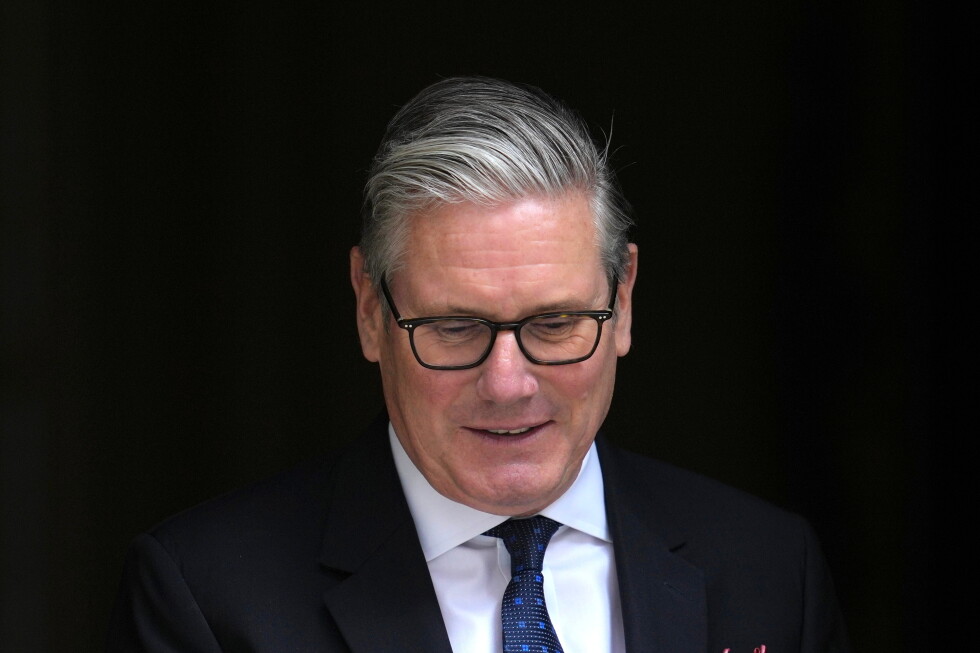
    British Prime Minister Keir Starmer has announced plans to table new legislation within coming weeks to formally proscribe Iran’s Islamic Revolutionary Guard Corps (IRGC), according to a recent report from Agence France-Presse. The commitment was delivered during an interview with the Jewish Chronicle, carried out during Starmer’s visit to a London synagogue that survived an attempted arson attack just seven days prior to his trip.

    This policy pledge follows a similar move by the European Union, which voted in January to officially label the IRGC a terrorist organization in response to the group’s brutal crackdown on large-scale anti-government protests inside Iran. When questioned about the timeline for the proscription, Starmer confirmed that targeted legislative action is required to crack down on hostile foreign actors operating within UK borders, and his government intends to move forward with the bill as rapidly as possible.

    “We go into a new session (of parliament) in a few weeks’ time and we’ll bring that legislation forward,” Starmer added.

    Tensions have been running high across Jewish communities in northwest London in recent weeks, with local residents remaining on high alert after a string of arson attacks targeting synagogues and Jewish community infrastructure. The wave of incidents began shortly after U.S.-Israeli military strikes on Iranian targets launched on February 28. Starmer has publicly stated he is growing increasingly concerned about foreign states conducting malicious activities through proxies on British soil.

    First established after Iran’s 1979 Islamic Revolution, the IRGC functions as the ideological wing of Iran’s military, tasked with protecting the country’s clerical ruling system. Beyond its security and military mandate, the organization also holds direct or controlling ownership of businesses across nearly every major strategic sector of the Iranian economy, giving it extensive influence over the nation’s domestic and international affairs.

  • Colombia’s leader visits Venezuela for key talks with acting President Delcy Rodríguez

    Colombia’s leader visits Venezuela for key talks with acting President Delcy Rodríguez

    CARACAS, VENEZUELA – In a high-stakes diplomatic step that marks a new chapter in strained bilateral relations, Venezuelan acting president Delcy Rodríguez hosted Colombian head of state Gustavo Petro at the Miraflores presidential palace in Caracas on Friday. This long-awaited encounter marks the first in-person meeting between the two leaders since U.S. forces detained former Venezuelan president Nicolás Maduro and his wife during a raid on their residence in January.

    The summit was scheduled to cover a sweeping range of bilateral priorities, including cross-border migration management, joint defense cooperation, frontier security, industrial partnership and expanded bilateral trade. The meeting was originally supposed to take place last month at the two countries’ shared border, but both administrations suddenly called off the gathering with only a vague reference to “force majeure”, offering no further details and saying the talks would be rescheduled for a later date.

    Leading up to Friday’s palace meeting, Petro confirmed his delegation includes senior military and law enforcement commanders, who will join negotiations on coordinated border security initiatives with their Venezuelan counterparts. Discussions will center heavily on the strategically and socially vulnerable Catatumbo region, a contested border zone where competing armed factions have clashed for years to control territory and illicit smuggling routes. Petro emphasized that close intelligence sharing between the two nations is non-negotiable, warning that a lack of coordinated information risks deadly mistakes: “bombs land in the wrong places … and end up killing civilians.”

    Relations between Bogotá and Caracas have been fractured for years, following the disputed 2024 Venezuelan presidential election that triggered widespread anti-government protests and a brutal government crackdown. Following the contested vote, Petro refused to recognize Maduro as the legitimate president of Venezuela, though he opted to keep formal diplomatic channels open with the Caracas administration.

    The Colombian government has framed Friday’s meeting between Petro and Rodríguez as an effort to “contribute to a resolution of Venezuela’s political crisis”. Still, analysts say it remains unclear what tangible progress the talks can deliver. Ronal Rodríguez Durán, a researcher with the Venezuela Observatory at Colombia’s Universidad del Rosario, noted that Petro’s ability to exert influence as a mediator is sharply constrained by the fact that his presidential term is set to end in August 2026. The future trajectory of Colombia-Venezuela relations will also depend heavily on which candidate wins the upcoming Colombian presidential election and shapes the country’s foreign policy moving forward.

  • Keir Starmer suggests he will ban Iran’s IRGC in ‘next parliament’

    Keir Starmer suggests he will ban Iran’s IRGC in ‘next parliament’

    ### Keir Starmer Outlines Plan to Proscribe Iran’s IRGC After Arson Attack on London Synagogue
    During a visit to a London synagogue targeted in an arson attack linked to suspected Iranian-aligned actors, UK Prime Minister Keir Starmer has publicly committed to advancing legislation that would ban the Islamic Revolutionary Guard Corps (IRGC) in the first weeks of the upcoming new parliamentary session. The announcement comes as the country grapples with a rising tide of antisemitic violence targeting Jewish community sites, and as Starmer’s Labour government faces mounting political headwinds just two weeks out from nationwide local elections.
    Speaking alongside Chief Rabbi Sir Ephraim Mirvis at Kenton United Synagogue, Starmer opened by emphasizing deep alarm over the growing presence of hostile, Iran-supported groups carrying out coordinated attacks on UK soil. “I am very worried about the influence of Iran-backed groups carrying out attacks in the UK,” the prime minister stated during the visit. Two teenagers, aged 17 and 19, have already been taken into custody in connection with the Kenton synagogue arson, which authorities are investigating as a potential antisemitic and state-aligned attack.
    When pressed by attendees on whether a proscription order for the IRGC would move forward, Starmer clarified that formal banning of the organization requires new parliamentary legislation, a step his administration intends to introduce immediately after the opening of the next parliamentary session in coming weeks. “In relation to malign state actors more generally, proscription does need legislation in order to take necessary measures, and that is legislation that we’re bringing forward as soon as we can,” he explained. “We go into a new session in a few weeks’ time, and we’ll bring that legislation forward.”
    The arson attack on the Kenton synagogue is one of a string of recent assaults on Jewish cultural and religious centers across the UK, a surge that has sparked urgent alarm over the security of the country’s estimated 260,000-strong Jewish community. Many political commentators and senior officials have drawn a connection between these attacks and escalating regional tensions stemming from the ongoing Israel-Hamas conflict in Gaza. An online group calling itself Ashab al-Yamin al-Islamia has claimed responsibility for the string of attacks, though analysts have yet to independently verify the group’s claimed ties to Iran or the authenticity of its claim.
    Starmer highlighted ongoing law enforcement action to address the violence, noting that counter-terrorism police are working in close partnership with the Community Security Trust (CST), the leading Jewish community safety organization, to hold perpetrators accountable. “It’s very important that we’re able to show the criminal justice system can react effectively and efficiently here,” he said, adding that eight suspects have already been charged and one person convicted in connection with recent attacks.
    As of publication, Middle East Eye has not received a response from the UK Home Office to requests for confirmation on whether preliminary steps to proscribe the IRGC have already been initiated. Requests for comment were also sent to the Iranian Embassy in London, with no reply received.
    The prime minister’s synagogue visit unfolds against a backdrop of severe political vulnerability for his Labour government. Two weeks prior to nationwide local elections, multiple polls and political analysts forecast that Labour will face heavy losses to a array of competing parties, including the left-wing Green Party, right-wing Reform UK, and regional nationalist parties. Compounding this pressure is an ongoing political scandal tied to the appointment of Peter Mandelson, a former senior Labour figure with documented ties to convicted sex offender Jeffrey Epstein, as UK ambassador to the United States. Multiple British media outlets have reported that widespread election losses could force Starmer to step down from his post.
    Political observers point to the UK government’s unwavering support for Israel amid the ongoing military campaign in Gaza as one of the core factors driving a sharp decline in public support for Labour across the country.

  • Israeli police cut Palestinian flag from lecturer’s kippah after detaining him

    Israeli police cut Palestinian flag from lecturer’s kippah after detaining him

    In an incident that has ignited fierce debate over civil liberties and state overreach in Israel, a Jewish academic was detained by Israeli police last week for wearing a traditional kippah embroidered with both the Israeli and Palestinian flags, with officers ultimately cutting out the Palestinian emblem before releasing him, local media has confirmed. The confrontation unfolded on Monday in Modi’in, a centrally located Israeli city, according to an account shared publicly by the detainee, Alex Sinclair, a lecturer at Jerusalem’s Hebrew University.

    Sinclair detailed the encounter in a public Facebook post, noting that he was quietly working from a local neighborhood cafe when an agitated ultra-Orthodox man approached him, yelling that his head covering violated Israeli law. Sinclair explained that he had worn the dual-flag kippah for nearly 20 years as a deliberate expression of his beliefs, and tried to de-escalate the situation by inviting the man to discuss the issue. The man refused to engage, however, and threatened to call law enforcement to the scene.

    To Sinclair’s shock, officers arrived at the cafe just five minutes later. The two responding officers immediately informed him that the kippah was illegal and that they intended to seize it, he recalled. The pair frisked Sinclair before transporting him to a local police station, where he was held in a holding cell for approximately 20 minutes. When he was taken into custody, Sinclair said, he was told he could leave without his kippah, and when he demanded the return of his personal property, an officer handed it back with the Palestinian flag portion cut cleanly out of the fabric.

    “She’d taken my possession, a religious ritual object, something that is very dear to my heart, and destroyed it,” Sinclair wrote, alongside public before-and-after photos of the damaged kippah. The lecturer said the encounter left him “shaken, angry and depressed,” warning that the incident is a clear symptom of a broader erosion of basic civil rights across the country under the current Israeli administration. “It’s hard not to say that this is the kind of thing that fascist regimes do,” he said. “It’s hard not to feel worried and anxious and frankly devastated that this is the direction that Israel is moving in.”

    The incident comes amid a years-long tightening of restrictions on public displays of the Palestinian flag pushed forward by Prime Minister Benjamin Netanyahu’s far-right government, which took office in late 2022. The campaign to restrict the flag is spearheaded by National Security Minister Itamar Ben Gvir, who issued a formal order to Israeli police in January 2023 mandating that all Palestinian flags be removed from public spaces across the country.

    Just last month, Israeli newspaper Haaretz revealed that police had arrested an Israeli citizen of Palestinian descent for displaying the Palestinian flag inside of her own private home. Her family later told reporters that officers forced her to step on the Palestinian flag and hold an Israeli flag for photographs.

    For Sinclair, the attack on his kippah demonstrates that Ben Gvir’s crackdown has escalated far beyond public policy, now encroaching on individual religious identity. “Ben Gvir’s unlawful crackdown has escalated to the point where the Palestinian flag was being banned from my head — my kippah, my religious identity itself,” he said.

    Israeli police confirmed that a complaint over the incident has been filed with the Police Internal Investigations Department, but declined to provide any additional comment on the encounter when contacted by reporters.

    Opposition political figures and civil rights organizations have uniformly condemned the incident, with some calling for a full criminal investigation into the officers’ conduct. Gilad Kariv, a Knesset member from the opposition Israeli Democrats party, highlighted the hypocrisy of the incident in a post on X. “If police officers were to cut off a Jewish man’s kippah in any other country in the world, there would be an outrage here,” Kariv wrote. He added that the encounter “points to a profound institutional failure within the Israeli police,” arguing that some officers have “completely lost their professional ethos, their commitment to serving the public, and their loyalty to the law.” Kariv called for the officers involved to face a criminal probe and civil legal action over their actions.

    The Association for Civil Rights in Israel (ACRI), one of the country’s leading independent human rights groups, joined the call for a full investigation. “Once again, the Israel Police is acting in line with the minister’s agenda and contrary to the law,” the organization said in a formal statement referencing Ben Gvir. “This is sheer madness and absurdity, and a serious violation of autonomy, freedom of expression, liberty, freedom of religion, and dignity. There is no legal ban on displaying the Palestinian flag or its various forms in the public sphere.”