分类: politics

  • Albanese government flags major capital gains tax overhaul targeting property and share investors

    Albanese government flags major capital gains tax overhaul targeting property and share investors

    As Australia’s federal budget delivery on May 12 draws near, emerging reports reveal the Albanese government is actively preparing a landmark overhaul of the nation’s capital gains tax (CGT) regime, a change framed by the administration as a step to correct long-standing intergenerational inequity that hits younger Australians particularly hard.

    According to reporting from *The Weekend Australian* on Saturday, the core of the proposed reform would replace the current 50% CGT discount for assets held at least 12 months with an inflation indexation model applied to all new investment holdings. To avoid immediate disruption for existing market participants, the plan is expected to include grandfathering provisions, meaning current investors will not face sudden tax increases on their existing assets under the new framework.

    Australia’s current CGT system has been in place for decades, designed to streamline tax administration, incentivize long-term investment, and offset inflation-related gains that do not represent real profit growth. Under the existing rule, any investor holding an asset for 12 months or longer can cut their taxable capital gain in half, with only the remaining portion added to their assessable income and taxed at their individual marginal tax rate. This proposal marks a retreat from an earlier, more radical idea that would have eliminated CGT discounts entirely for property assets, but it still has drawn fierce pushback from key industry groups and opposition politicians.

    Days before the budget announcement, four of Australia’s largest housing and construction industry bodies — the Housing Industry Association, Master Builders Australia, the Property Council of Australia, and the Real Estate Institute of Australia — issued a joint open letter to federal parliament warning of severe unintended consequences from the CGT changes. The groups argue that the reform will discourage property investment, reduce the overall supply of new housing, and push up prices for existing dwellings at a time when Australia is already grappling with a severe national housing shortage. They note that private investors currently fund four out of every 10 new homes built across the country, and more than half of all new apartment developments.

    “Any increase on capital gains tax to housing and/or a cap on negative gearing, risks material withdrawal from property investment when we need more investment in housing, not less,” the letter read. “If the federal budget is used to actively drive investors into shares rather than financially supporting new housing projects in our cities and towns, Australia’s national housing crisis will deepen.”

    For the Albanese government, the reform is rooted in a stated commitment to rebalancing the tax system and housing market to benefit younger generations. In recent public comments, both Prime Minister Anthony Albanese and Treasurer Jim Chalmers have openly highlighted the intergenerational unfairness embedded in current policy settings.

    “We have been really upfront for some time now in saying that we do think that there is intergenerational unfairness in the tax system and in the housing market,” Chalmers told reporters. “I think the housing market is where some of those intergenerational issues are most obvious.”

    Opposition figures have already launched fierce criticism of the leaked plan, with Shadow Treasurer Tim Wilson labeling the proposed changes an “aspiration tax” that punishes ordinary savers and people working to build wealth. Wilson also claimed the leak itself reveals deep internal divisions within the government over the policy.

    “The Albanese government is launching an assault on aspiration though their new tax on self-starters according to leaks from deep inside their budget inner sanctum,” Wilson said in a statement. “Such a significant leak out of the budget process says even Labor MPs know how toxic the Prime Minister’s aspiration tax would be to those who save and work hard to get ahead. We know there’s deep division between the Prime Minister and the Treasurer on budget matters, and this leak says one of them is trying to kill the other’s proposal.”

    Not all policy experts oppose the plan, however. Matt Nolan, senior research manager at progressive economic think tank e61, argues that the proposed inflation indexation model is a fairer and more economically efficient approach to taxing capital gains than the current flat discount.

    “By taking into account the unique circumstances of the investor, indexation is a fairer and less distortionary way of taxing capital gains,” Nolan wrote. “This would be a significant reform, and even more so if it becomes the first step toward taxing capital income consistently with other income over time.”

    As the May 12 budget release approaches, all sides are continuing to ramp up pressure on the government, with the outcome of the reform expected to have far-reaching impacts on Australia’s property market, share market, and long-term intergenerational equity.

  • EU considers helping with Mideast energy infrastructure to bypass conflict zones

    EU considers helping with Mideast energy infrastructure to bypass conflict zones

    The ongoing Iran war has sent shockwaves through global energy markets, creating a severe fuel shortage across Europe and driving oil and gas prices to unprecedented heights. In response, the European Union has launched a serious evaluation of funding new alternative energy transport routes in the Middle East, designed to bypass conflict-prone chokepoints that have thrown global supply chains into chaos, most notably the Strait of Hormuz.

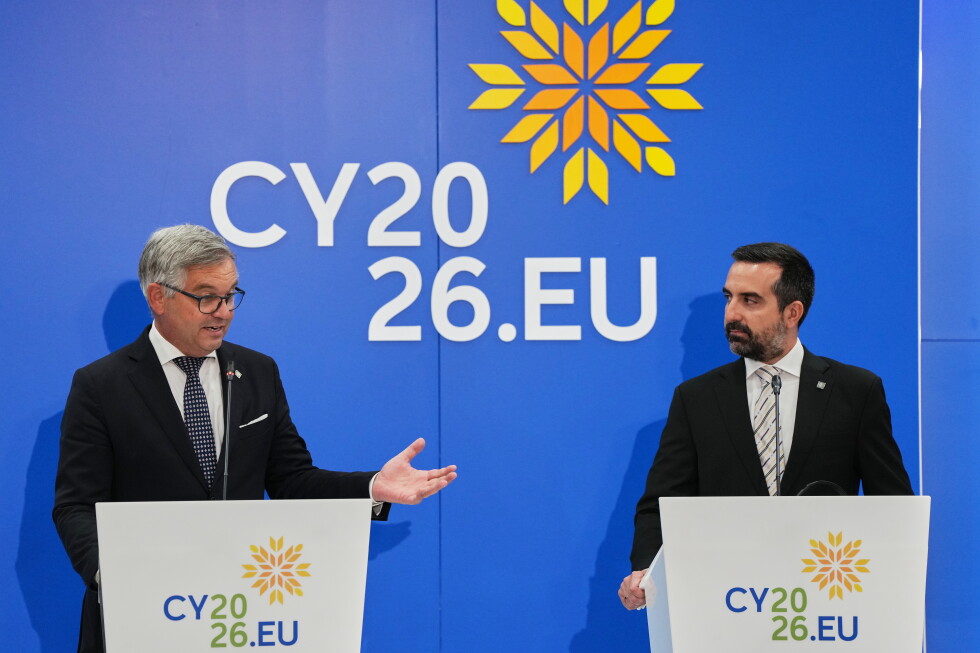
    European Commission President Ursula von der Leyen announced the bloc’s new strategy Friday following an informal summit of EU leaders held in Nicosia, the capital of Cyprus, which currently holds the rotating EU presidency. Von der Leyen emphasized that the EU is prepared to partner with Persian Gulf nations to develop new energy export projects that will not be vulnerable to disruption from war or geopolitical tension. “The events of the past month have taught us a hard lesson,” she told reporters during a post-summit press conference. “Our security is not just related, it is intrinsically linked. A threat to a merchant vessel in the Strait of Hormuz is a threat to a factory, for example, in Belgium.”

    While the EU executive highlighted plans to deepen defense cooperation and pointed to the bloc’s existing Red Sea maritime security mission as a potential model for Persian Gulf security, the core of von der Leyen’s public address focused on European backing for the repair and expansion of Middle Eastern energy infrastructure. “We are also ready to team up with the Gulf countries to diversify export infrastructure away from solely the bottleneck of the Hormuz Strait,” she said, adding that the bloc also stands ready to assist with repairing Gulf energy facilities damaged by the ongoing war.

    Roughly 20% of the world’s total annual oil and gas trade transits the Strait of Hormuz, a narrow waterway between Oman and Iran that has been effectively closed to most commercial traffic since the outbreak of the Iran war. The disruption has triggered a sharp rally in global crude prices: as of Friday morning, Brent crude climbed 98 cents to settle at $100.33 per barrel, while U.S. West Texas Intermediate crude rose 81 cents to reach $96.66 per barrel. Von der Leyen confirmed that the price surge has added an extraordinary 25 billion euros ($29.3 billion) to the 27-nation bloc’s total energy bill over just 43 days.

    Neither von der Leyen nor European Council President Antonio Costa released specific details about which potential infrastructure projects are under consideration or a clear timeline for moving proposals forward. However, von der Leyen did name the India-Middle East-Europe Economic Corridor, a previously announced connectivity partnership between the EU and India, as a relevant framework for future cooperation. She noted that a planned summit between the EU and the Gulf Cooperation Council, scheduled to take place later this year, will provide a formal opportunity for both sides to flesh out details of new energy infrastructure projects.

    Cyprus, the current holder of the EU’s rotating presidency, is a small Eastern Mediterranean island nation located just off the coast of the Middle East, bordering Lebanon, Syria, Israel and Turkey. Cypriot President Nikos Christodoulides has made strengthening ties between the bloc and Middle Eastern nations a core priority of his country’s presidency, aiming to shore up regional economies and reinforce collective security across the Mediterranean and Middle East. This regional focus was clear in the guest list for the informal summit: attendees included Syrian President Ahmad al-Sharaa, Egyptian President Abdel-Fattah El Sissi, Lebanese President Joseph Aoun, Jordan’s Crown Prince Hussein, and GCC Secretary-General Jasem Mohamed AlBudaiwi.

    During the summit, Syrian leader Ahmad al-Sharaa noted that “Europe needs Syria as much as Syria needs Europe,” while Lebanese President Aoun called on the EU to provide critical support for rebuilding his country, which has been heavily impacted by regional spillover from the war. Costa praised Aoun for his recent ban on unauthorized military activities by the militant group Hezbollah, which Costa described as “an existential threat” to Lebanon, and pledged EU support for the Lebanese government’s efforts to disarm the group. “The European Union is not part of the conflict, but we will be part of this solution,” Costa said.

    The summit drew criticism from international human rights organizations, who condemned EU leaders for failing to increase diplomatic pressure on Israel over its ongoing military campaigns in the region. On the Iran policy front, multiple senior EU leaders including German Chancellor Friedrich Merz reaffirmed that the bloc will not roll back sanctions on Iran until a full range of outstanding issues are resolved, including ending Iran’s ballistic missile program and its support for regional militant proxies. Costa echoed that position, telling reporters “it’s too early to talk about relief of any kind of sanctions.”

    Cyprus itself has already felt the direct impact of regional conflict, after a Shahed drone launched from Lebanon damaged an aircraft hangar at a British military base on the island’s southern coast on March 2. In response, several EU member states including Greece, France, Italy, Spain and the Netherlands deployed warships equipped with anti-drone capabilities to reinforce Cyprus’ air and maritime defense. The attack has reignited debate over a mutual assistance clause in the EU’s foundational treaties, which requires member states to provide support if one comes under armed attack. Following the summit, Christodoulides announced that EU leaders have agreed to develop a formal, institutional mechanism for activating mutual assistance, after concluding that the bloc’s current ad hoc response arrangements are unreliable.

    This report was contributed to by McNeil reporting from Brussels, and Associated Press writer Baraa Anwer in Riyadh, Saudi Arabia.

  • Despite Iran tensions, King Charles III will follow his mother’s lead in celebrating US-UK bonds

    Despite Iran tensions, King Charles III will follow his mother’s lead in celebrating US-UK bonds

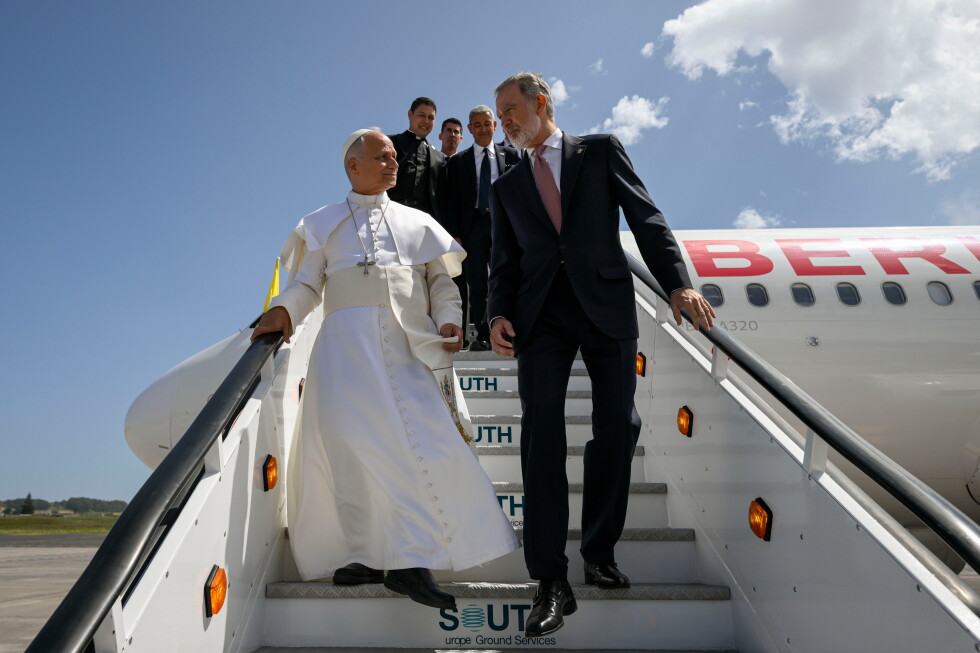
    LONDON — As King Charles III prepares to depart for his first state visit to the United States this week, a quiet yet defining challenge hangs over his four-day tour: stepping onto a diplomatic stage long shaped by the legacy of his mother, the late Queen Elizabeth II.

    In 1991, the Queen delivered a legendary address to a joint session of the U.S. Congress that remains a high bar for royal diplomacy. She wove tributes to the two nations’ shared democratic roots, cited iconic American figures from Abraham Lincoln to Ralph Waldo Emerson, and cemented public memory of the deep cross-Atlantic ties that define the U.K.-U.S. “special relationship.” That legacy will form the core of Charles’ agenda during a visit timed to mark the 250th anniversary of U.S. independence, as the monarchy works to ease diplomatic friction sparked by new British Prime Minister Keir Starmer’s refusal to back U.S. President Donald Trump’s military campaign against Iran.

    Presidential historian Douglas Brinkley of Rice University, Texas, emphasized the key distinction between the British monarchy and the sitting government that shapes this visit’s mission. “Politics come and go; prime ministers and presidents rise and fall, but the special relationship between the United States and the United Kingdom rests on foundations far deeper than transient policy disputes,” Brinkley told the Associated Press. “The royal role on these visits is always to present the best face of that long-standing bond.”
    Beneath the ceremonial pomp that will see Charles and Queen Camilla travel through Washington D.C., New York, and Virginia lies a carefully scripted diplomatic mission arranged at the direct request of the British government. Starmer faced calls to scrap the trip after Trump publicly belittled British military sacrifices in Afghanistan and launched personal criticisms of Starmer’s Iran policy, but the prime minister opted to move forward with the planned visit. Despite the cross-government tensions, Trump has repeatedly spoken favorably of King Charles, and Brinkley predicts that dynamic will hold throughout the trip. “History has shown that President Trump goes out of his way to make a positive impression when engaging with British royalty, and there’s no reason to expect that will change this time,” he noted.

    Royal visits to the U.S. have carried special diplomatic weight since 1939, when King George VI — Charles’ great-grandfather and the grandfather of Queen Elizabeth II — became the first British monarch to visit the former American colony, as World War II loomed over Europe. That groundbreaking tour saw the royal party tour the U.S. East Coast and attend a casual picnic at President Franklin D. Roosevelt’s private Hyde Park, New York estate, where the King’s playful reaction to a first American hot dog (“He tries hot dog and asks for more,” read a legendary New York Times headline) won over ordinary U.S. citizens. The most symbolic moment of that trip came at Mount Vernon, where the King laid a wreath at George Washington’s tomb — a deliberate show of respect that pushed back against rising U.S. isolationism ahead of the war.

    Barbara Perry, a presidential scholar at the University of Virginia’s Miller Center, explained that gesture’s long-term impact: “People could already see the writing on the wall that war was coming, and that visit made clear how critical it would be for the U.S. and Britain to stand together against Hitler.” The small, public acts of connection on that 1939 trip built lasting goodwill beyond elite diplomatic circles. After war broke out in September that same year, Queen Elizabeth (the wife of George VI and mother of Queen Elizabeth II) wrote to U.S. First Lady Eleanor Roosevelt, saying she had been deeply moved by handwritten letters from ordinary Americans that included small donations for British forces. “Sometimes, during the last terrible months, we have felt rather lonely in our fight against evil things, but I can honestly say that our hearts have been lightened by the knowledge that friends in America understand what we are fighting for,” she wrote.

    Queen Elizabeth II built on that foundational connection across her 70-year reign, completing four official state visits to the U.S. In 1976, she helped President Gerald Ford mark the U.S. bicentennial, and in 2007 she met with President George W. Bush at a time when British and American forces were fighting side-by-side in Iraq and Afghanistan. Just as with Charles’ upcoming trip, those visits centered on smoothing over diplomatic rifts and reaffirming the shared values that bind the two nations.

    Charles’ itinerary reflects that same diplomatic tradition. Key events include a commemoration of the 2001 September 11 attacks, a wreath-laying to honor fallen service members from both nations, and a Winnie the Pooh centenary event hosted by Queen Camilla, marking 100 years since British author A.A. Milne published his first collection of stories about the beloved character.

    Organizers have deliberately sidelined controversial issues to keep the focus on cross-Atlantic friendship. Despite public calls for King Charles to meet with survivors of Jeffrey Epstein over his brother Prince Andrew’s well-documented ties to the convicted sex offender, no such meeting is planned. There is also no scheduled meeting between Charles and his younger son Prince Harry, who stepped back from official royal duties in 2020, moved to California, and has since become a vocal public critic of the monarchy.

    Robert Hardman, royal biographer and author of *Elizabeth II: In Private. In Public. The Inside Story.*, noted that these unaddressed controversies are secondary to the visit’s core mission. “He is coming 250 years after America’s founding, when the nation rejected the rule of his great-great-great-great-great grandfather. His message is simple: no hard feelings. This has been a good separation, 250 years of strong friendship, and we are here to celebrate the high points,” Hardman said. “There will always be large elephants in the room on a trip like this, but the king has prioritized other, more unifying topics.”

    Charles’ upcoming address to a joint session of Congress will be the visit’s centerpiece, a platform to emphasize that long-term, cross-national friendship outweighs short-term political disputes. Like his mother’s 1991 address, observers expect the speech to include measured, self-deprecating humor — a tactic the Queen used masterfully to win over lawmakers. During her 1991 speech, the Queen opened with a joke about the previous day’s White House blunder, where an overly tall lectern had completely blocked the audience’s view of her. “I do hope you can see me today from where you are,” she deadpanned, drawing uproarious laughter and a standing ovation before moving into her address on democratic values, the rule of law, and the Atlantic Alliance.

    Brinkley noted that while Charles will carry forward the core themes of cross-Atlantic friendship, he will bring his own perspective to the moment. “The speech will center on American exceptionalism, U.S. history, the enduring importance of the U.S.-British alliance, and reflections on shared history,” he said. “Its core message will be that the two countries share a deep, lasting bond, even when that relationship navigates rocky rapids from time to time.”

  • US sounds alarm on China’s AI distillation as DeepSeek V4 debuts

    US sounds alarm on China’s AI distillation as DeepSeek V4 debuts

    Tensions between the United States and China over artificial intelligence development flared up again in late April 2026, when the Trump administration formally pledged to curb what it labels industrial-scale, unauthorized intellectual property extraction from leading U.S. AI models, just one day before Chinese AI developer DeepSeek launched its latest high-performance frontier model, DeepSeek V4.

    In an official memorandum issued by the White House Office of Science and Technology Policy (OSTP) on Thursday, April 23, OSTP Director Michael Kratsios detailed allegations that foreign entities, primarily based in China, have been running coordinated, large-scale campaigns to distill proprietary capabilities out of cutting-edge U.S.-developed AI systems. According to Kratsios, bad actors leverage networks of tens of thousands of fake proxy accounts to bypass platform detection, while using jailbreaking methods to access protected proprietary information hidden within these models. This systematic siphoning, Kratsios argued, lets foreign competitors exploit billions of dollars in U.S. research investment and innovation to build competing products.

    While Kratsios noted that distilled models do not match the full performance of the original U.S.-built systems, he emphasized that they can achieve comparable results on common industry benchmarks at a tiny fraction of the development cost for their creators. Beyond commercial unfairness, Kratsios claimed these unauthorized distillation campaigns also let bad actors deliberately remove built-in safety protocols and alignment safeguards that ensure original AI models operate responsibly and remain ideologically neutral and fact-based.

    To counter these alleged activities, the memorandum outlined a four-pronged strategy for the Trump administration: first, it will share timely intelligence with U.S. AI development companies detailing attempted large-scale unauthorized distillation, including specific tactics used and the actors behind them; second, it will facilitate tighter cross-sector coordination between private AI firms to collectively disrupt these campaigns; third, it will partner with industry to develop standardized best practices for detecting, mitigating, and remediating large-scale distillation attacks, while helping firms strengthen their defensive systems; and finally, the administration will explore new enforcement and policy measures to hold bad actors accountable for these activities.

    The White House’s public warning landed just 24 hours ahead of DeepSeek’s April 24 launch of DeepSeek V4, a moment that highlights growing anxiety in Washington over the rapid pace at which Chinese AI developers are closing the performance gap with the United States’ top frontier models. Unlike many firms that keep training methods private, DeepSeek has been transparent about its use of knowledge distillation, a common training technique where a smaller “student” model learns from the outputs of larger, more capable “teacher” models. When the company launched its V3 model in January 2025, it openly confirmed it used knowledge distillation during training. For its new V4 model, DeepSeek says it has advanced the technique with a new method called On-Policy Distillation (OPD), which draws on outputs from 10 separate teacher models to refine its student model’s outputs, speeding up the training cycle significantly.

    According to DeepSeek’s published research, its top-tier DeepSeek-V4-Pro-Max outperforms OpenAI’s GPT-5.2 and Google’s Gemini-3.0-Pro on standard industry reasoning benchmarks, while its lighter, more efficient DeepSeek-V4-Flash-Max matches the performance of those two leading U.S. models at a far lower development and inference cost. The company also noted that its V4 line’s overall performance is only 3 to 6 months behind the very latest frontier models from U.S. developers, OpenAI’s GPT-5.4 and Google’s Gemini-3.1-Pro.

    The current friction around AI distillation is not new. The launch of DeepSeek V3 in 2025 sent ripples through global financial markets, as investors reacted to the emergence of a low-cost Chinese AI model that could compete head-to-head with leading U.S. offerings. During a Senate hearing that January, U.S. Commerce Secretary Howard Lutnick claimed DeepSeek had built its model “dirt cheap” by sourcing Nvidia AI chips through third-party countries and leveraging open training data from Meta. That said, then-recent comments from President Trump struck a different tone: in February 2025, he argued that the development of lower-cost AI was an inevitable technological shift that could ultimately benefit the United States, calling falling AI development costs “a very good development.”

    Criticism of Chinese AI firms’ distillation practices faded for nearly a year before resurfacing in early 2026, when U.S. AI leaders published formal accusations of so-called “distillation attacks” that reignited the political debate. In a February 12 memo to the U.S. House Select Committee on China, OpenAI accused DeepSeek of using distillation techniques to “free-ride on the capabilities developed by OpenAI and other U.S. frontier labs,” adding that it had detected new obfuscated methods designed to bypass existing safeguards against misuse of model outputs, and that past attempts to stop the activity had not been fully successful.

    Weeks later, leading U.S. AI developer Anthropic published its own report detailing similar alleged activity by three major Chinese AI labs: DeepSeek, Moonshot, and MiniMax. Anthropic claimed the three firms had generated over 16 million interactions with Anthropic’s Claude model across roughly 24,000 fraudulent accounts, a clear violation of the company’s terms of service and regional access restrictions. “Distillation can also be used for illicit purposes: competitors can use it to acquire powerful capabilities from other labs in a fraction of the time and at a fraction of the cost that it would take to develop them independently,” the report noted, adding that these attacks follow a consistent pattern: bad actors use proxy services to scale access, build networks of fake accounts to avoid detection, then send massive volumes of structured prompts to extract capabilities and build training datasets, with thousands of nearly identical prompts across coordinated accounts targeting high-value model functions.

    The allegations moved to formal congressional scrutiny on April 16, when the House Select Committee on China held a hearing titled “China’s Campaign to Steal America’s AI Edge,” where lawmakers repeated accusations that Chinese firms source high-end Nvidia chips through third countries and use unauthorized distillation to extract proprietary data from U.S. AI models. “Chinese labs are resorting to unauthorized distillation attacks to extract information from our best AI models. Since they don’t have enough AI chips to develop the models on their own, they prefer to simply steal them from their American competitors. Anthropic, OpenAI, and Google have all verified that this is happening,” committee chairman John Moolenaar said, adding that Congress must pass new legislation to block what he called China’s multi-pronged effort to acquire U.S. AI technology through both legal and illegal means.

    China has pushed back firmly against these allegations. In response to the White House’s claims of AI IP theft, Chinese Foreign Ministry spokesperson Guo Jiakun called the accusations completely groundless, saying they amount to a deliberate attack on China’s legitimate AI industry development. “We urge the U.S. to respect facts, discard bias, stop its containment of China’s sci-tech development, and choose the course of action conducive to sci-tech exchanges and cooperation between China and the U.S.,” Guo stated.

    The escalating focus on AI IP comes as U.S. lawmakers have already ramped up restrictions on Chinese access to advanced semiconductor manufacturing technology. Earlier in April, a bipartisan group of House and Senate lawmakers introduced the Multilateral Alignment of Technology Controls on Hardware (MATCH) Act, which aims to block Chinese chipmakers from purchasing ASML’s deep-ultraviolet immersion lithography systems, critical equipment for producing advanced logic chips. Lawmakers are now expanding that regulatory push beyond semiconductor hardware to target AI model distillation.

    These latest developments also come against a shifting backdrop of AI chip policy. Just one day before the OSTP memorandum, on April 22, Commerce Secretary Lutnick confirmed that no Nvidia H200 AI chips have yet been sold to Chinese companies, after Beijing urged domestic tech firms to avoid purchasing the U.S.-made chip, three months after the Trump administration approved H200 exports to China. Industry analysts note that Chinese AI firms still want access to H200 chips but remain wary of potential abrupt shifts in U.S. trade policy that could disrupt supply chains. Against this backdrop, analysts say DeepSeek V4 and Huawei’s recently launched Ascend 950PR AI chip are positioned to become the core of China’s emerging domestic AI ecosystem. Huawei launched the Ascend 950PR in late March, marketing the chip as delivering 2.87 times the performance of Nvidia’s earlier H20 chip and approaching the performance of the H200, with plans to ship roughly 750,000 units of the new chip in 2026.

  • Trump administration pitching US companies to rebuild Gulf infrastructure hit by Iran

    Trump administration pitching US companies to rebuild Gulf infrastructure hit by Iran

    In private discussions with several Gulf Arab nations, the Trump administration has pushed local authorities to award multi-billion-dollar infrastructure reconstruction contracts to American engineering, manufacturing and construction companies, following the widespread damage the region sustained in Iran’s retaliatory strikes amid the U.S.-Israeli war on the Islamic Republic, multiple U.S. and Arab officials with direct knowledge of the talks confirmed to Middle East Eye.

    The Gulf states targeted by the lobbying effort include Kuwait, Bahrain, and the United Arab Emirates – the three countries that bore the brunt of Iranian counterattacks and suffered the worst infrastructure damage. Neighboring Saudi Arabia and Oman, by comparison, reported far less severe damage from Iranian air and drone strikes, the officials added.

    In talking points shared with Gulf leaders, U.S. officials have centered their pitch on the deep-rooted economic partnerships between Washington and Gulf monarchies, framing American involvement in reconstruction as a natural extension of those long-standing ties. A senior U.S. official told Middle East Eye that the push to secure reconstruction contracts for domestic firms aligns with the Trump administration’s core “America First” foreign policy doctrine, which prioritizes economic statecraft designed to benefit U.S. commercial interests.

    However, one senior Arab official criticized the timing of the lobbying effort, calling it “a little tone-deaf” at a moment when Gulf governments remain on high alert for a resumption of open hostilities, and are increasingly uncertain about long-term U.S. security commitments to the region.

    This push is far from a symbolic gesture: independent energy analyst firm Rystad Energy estimates that repair costs for energy-related infrastructure across the Gulf alone could climb as high as $39 billion, a figure that does not include the massive damage sustained within Iran itself. Currently, a fragile ceasefire holds between Washington and Tehran, even as the two sides remain locked in a tense stalemate over control of the Strait of Hormuz, with both enforcing rival blockades on shipping through the critical chokepoint. The Iranian government has calculated that it sustained $270 billion in combined direct and indirect economic damage from the U.S.-Israeli war.

    Though most Gulf monarchies publicly opposed the U.S.-Israeli military campaign against Iran, they nonetheless became the primary target of Tehran’s retaliatory strikes. The UAE alone faced at least 2,000 ballistic missiles and drone attacks, according to regional defense sources. The hardest-hit Gulf states are also the most economically vulnerable to Iran’s new control over the Strait of Hormuz, through which roughly a fifth of global oil supplies pass; unlike Saudi Arabia, which operates a pipeline that bypasses the strait via the Red Sea, these nations remain fully reliant on the chokepoint for their energy exports.

    While Gulf states collectively hold massive sovereign reserves that can cover reconstruction costs, growing signs indicate they are bracing for a prolonged period of economic downturn as energy exports remain stalled. Kuwait, for example, hosts one of the world’s largest sovereign wealth funds, valued at roughly $1 trillion – on par with the funds held by the UAE and Saudi Arabia, though it generally maintains a far lower public profile. Even so, U.S. Secretary of State Scott Bessent confirmed this week that the UAE and other affected Gulf states have approached Washington to request currency swap lines that would give them access to much-needed U.S. dollars while their energy export revenue remains frozen.

    A former senior U.S. official familiar with the negotiations told Middle East Eye that a quid pro quo is already on the table: “I could see the US looking for a trade-off where Gulf states using a swap line commit to US firms for rebuilding.”

    Kuwait, located at the northeastern edge of the Persian Gulf, was also heavily damaged by Iranian strikes. The country already hosts the fourth-largest U.S. military presence in the world, and Iranian strikes hit key U.S. facilities including Camp Arifjan and Ali al-Salem Air Base. Beyond military sites, Kuwait International Airport suffered extensive damage, and at least two major national power and water desalination plants were also hit, Reuters reported.

    Similarly, Bahrain – a small island kingdom connected only to Saudi Arabia via the King Fahd Causeway – sustained widespread infrastructure damage. The kingdom’s main port, which hosts the U.S. Navy’s Fifth Fleet, was heavily targeted, and critical industrial sites across the country also sustained heavy damage. The Financial Times confirmed that Amazon’s regional cloud computing operations based in Bahrain were knocked offline by the strikes, and Aluminium Bahrain – one of the world’s largest single-site aluminum smelters – was forced to declare force majeure after sustaining critical damage. Bahrain’s national Bapco refinery also issued a force majeure notice following the attacks.

    To date, U.S. officials have not yet pushed for contracts to go to any specific American firms, but have made clear their goal of positioning U.S. companies as the top candidates for all major reconstruction work moving forward.

  • Falklands  veteran hopes King can persuade Trump to ‘back down’

    Falklands veteran hopes King can persuade Trump to ‘back down’

    A decades-long sovereignty dispute over the Falkland Islands (known as the Malvinas to Argentina) has reignited after leaked reports suggested the United States could reconsider its longstanding stance on the contested South Atlantic territory, drawing sharp pushback from a decorated British Falklands War veteran.

    Simon Weston, a Welsh Guardsman who survived the 1982 Falklands conflict with life-altering 46% burns after the bombing of RFA Sir Galahad, has publicly urged King Charles III to press US President Donald Trump to reverse course during the monarch’s upcoming state visit to Washington next week. In an exclusive interview with BBC Newsnight, Weston framed the potential US shift as a disrespectful slight to the sacrifices of service members who fought for the islands four decades ago.

    Weston characterized the reported policy review as a childish “hissy fit” from Trump, saying it undermines the meaning of the sacrifices made by British troops and dismisses the right of Falklands islanders to self-determination. “He’s paying absolutely no heed to the humanity that he’s abusing with his words because the people of the Falklands deserve more respect, but so do every veteran who served down there deserve more respect,” Weston said. Calling Trump’s stance “very unstatesmanlike,” the veteran added that he was “sad and disappointed it’s come to this.”

    The reported potential policy shift stems from an internal Pentagon email obtained by Reuters, which claims the US is weighing options to penalize NATO allies that it accuses of failing to back its campaign against Iran. The BBC has not independently verified the contents of the leaked email.

    Downing Street has quickly reaffirmed Britain’s longheld position: sovereignty of the Falklands rests exclusively with the UK, and the islanders’ right to self-determination is non-negotiable. The United States has attempted to walk back tensions following the leak, however. A US State Department spokesperson told AFP on Friday that Washington’s stance remains unchanged: it maintains formal neutrality on sovereignty claims, acknowledges that both the UK and Argentina assert competing claims, and recognizes the UK’s de facto administration of the archipelago.

    Sovereignty over the resource-rich islands has been a core nationalist rallying point for successive Argentine governments for decades. A commemorative plaque claiming the islands as Argentine territory sits in a prominent position in the country’s presidential palace. Current Argentine President Javier Milei, a close political ally of Trump, doubled down on his country’s claim this week, posting in all capital letters on social media: “The Malvinas were, are, and always will be Argentine.” Milei’s foreign minister has repeated calls to restart bilateral sovereignty negotiations with the UK—a demand the UK has repeatedly rejected—and condemned ongoing British efforts to explore and extract oil from the large offshore reserves surrounding the islands.

  • Palestinians to vote in first elections since Gaza war

    Palestinians to vote in first elections since Gaza war

    On Saturday, Palestinian residents across the Israeli-occupied West Bank and the central Gaza district of Deir el-Balah cast ballots in municipal elections, marking the first popular vote held by Palestinians since the outbreak of the latest Israel-Hamas war. This long-awaited electoral process unfolds against a backdrop of a restricted political field, widespread public apathy, and deep-seated challenges posed by ongoing conflict and occupation.

    According to official figures from the Ramallah-based Central Elections Commission, approximately 1.5 million registered voters are eligible to participate in the West Bank, while another 70,000 residents in Deir el-Balah, one of the only areas of Gaza with a largely non-displaced population after more than two years of war, can also cast their ballots.

    The structure of the electoral race reflects long-standing political divisions within Palestinian society. Nearly all competing candidate lists are either aligned with Palestinian Authority President Mahmoud Abbas’s secular-nationalist Fatah party or running as independent candidates. Notably, no candidate lists are affiliated with Hamas, Fatah’s long-time political rival which controls roughly half of the Gaza Strip. In most contested constituencies, Fatah-backed tickets face off against independent lists led by figures from smaller factions including the Popular Front for the Liberation of Palestine.

    Widespread public disillusionment defines the lead-up to the vote, with many Palestinians questioning whether the election will deliver any tangible change to their daily lives under occupation. In Tulkarem, a northern West Bank city where two adjacent refugee camps have been under continuous Israeli military control for more than a year, local businessman Mahmud Bader said he would still cast a ballot, even as he saw little hope for improvement. “Whether candidates are independent or partisan, it has no effect and will have no effect or benefit for the city,” Bader told Agence France-Presse. “The Israeli occupation is the one that rules Tulkarem. It would only be an image shown to the international media — as if we have elections, a state or independence.”

    In a sign of the limited political competition, multiple major population centers including Nablus and Ramallah, the administrative seat of the Palestinian Authority, only saw a single candidate list submitted for each local council. Those candidates will automatically claim their seats without any public vote.

    Electoral officials have adjusted voting procedures to accommodate the extreme conditions in war-ravaged Gaza. Polling stations in the West Bank will operate from 7 a.m. local time to 7 p.m., while voting in Deir el-Balah will end two hours earlier at 5 p.m. This early closing is designed to allow vote counting to finish before dark, as widespread damage to infrastructure has left most of Gaza facing chronic electricity shortages.

    International observers have framed the vote as an important milestone for Palestinian democratic process. UN Special Coordinator for the Middle East Peace Process Ramiz Alakbarov praised the Central Elections Commission for organizing a “credible process” amid extraordinary hardship. “Saturday’s elections represent an important opportunity for Palestinians to exercise their democratic rights during an exceptionally challenging period,” Alakbarov said in an official statement.

    For Palestinian political analysts, the limited scope of the Gaza vote — restricted only to Deir el-Balah — carries clear strategic meaning for the Palestinian Authority. Deir el-Balah was selected for the pilot vote in large part because it is one of the only areas of Gaza where the majority of the original population has remained in place, rather than being displaced by the war, explained Jamal al-Fadi, a political scientist at Cairo’s Al-Azhar University. Al-Fadi added that the restricted election is an experiment for the Palestinian Authority to test public support after the war, when no formal opinion polling has been conducted.

    The vote comes amid long-standing criticism of Abbas, who is 90 years old and has held the presidency for more than 20 years without winning a single re-election. Abbas has repeatedly promised to hold national legislative and presidential elections, but none have been held since 2006.

    Despite widespread cynicism, some first-time voters in Gaza see the election as an act of political resilience. Twenty-five-year-old Farah Shaath, who is voting for the first time in her life, said she felt excited to participate even amid the chaos of war. “Although it is unlike any election in the world, it is a confirmation of our continued existence in the Gaza Strip despite everything,” Shaath said.

    Logistical and security arrangements for the Gaza vote have already highlighted overlapping authority between the Palestinian Authority and Hamas. Election commission spokesman Fareed Taamallah said the body had recruited polling staff from local civil society groups and hired a private security firm to secure voting locations in Deir el-Balah. However, an anonymous source within the Gaza branch of the election commission told AFP that Hamas police have insisted on taking responsibility for securing the electoral process. The source added that Hamas will deploy unarmed personnel in civilian clothing around the 12 polling stations established in Deir el-Balah.

  • Hegseth calls Iran war Trump’s ‘gift to the world’

    Hegseth calls Iran war Trump’s ‘gift to the world’

    On a Friday briefing at the Pentagon, U.S. Defense Secretary Pete Hegseth doubled down on a controversial demand: the international community should owe President Donald Trump gratitude for launching an unauthorized, unprovoked war against Iran — a conflict that has already upended global energy markets and put millions at risk of imminent food insecurity. The war, which was orchestrated unilaterally by Trump and Israeli Prime Minister Benjamin Netanyahu in late February with no advance consultation or coordination with European allies, has already drained an estimated $60 billion from U.S. taxpayer funds, a cost Hegseth acknowledged but framed as a bold, historic contribution to global security.

    Calling the conflict a “bold and dangerous mission” and “a gift to the world courtesy of a bold and historic president,” Hegseth went on to rebuke U.S. allies for refusing to join the military campaign. He argued that alliance commitments are not a one-way street, noting that European nations rely far more heavily on unimpeded access to the Strait of Hormuz, the critical oil and goods chokepoint currently disrupted by the war, than the U.S. does. “They need the Strait of Hormuz much more than we do, and might want to start doing less talking and having less fancy conferences in Europe, and get in a boat. This is much more their fight than ours,” Hegseth told reporters, adding that the U.S. does not count on European support but expects allied nations to step up.

    Far from being a boon to the global community, the conflict has already triggered cascading global disruptions that are hitting economies and vulnerable populations hard. According to a Friday report from Barron’s, the war has sparked a widespread global jet fuel shortage that has forced major airlines to slash thousands of scheduled flights. Europe has borne the brunt of the disruption: German flag carrier Lufthansa has announced it will cut 20,000 flights through October, and even major U.S. carriers including Delta have implemented service cuts to offset spiking jet fuel costs.

    The risks extend far beyond air travel, with looming threats to global food security that have alarmed senior United Nations officials. The South China Morning Post reported Wednesday that Asian nations are already mobilizing to prepare for widespread food shortages, as the war has cut off global supplies of fertilizer critical for the 2026 northern hemisphere planting season. Compounding this risk, climate scientists have already warned that the year will bring a powerful “super El Niño” event that is projected to reduce rainfall across much of South and Southeast Asia, creating a double blow to crop yields. “It is very concerning because this year is supposed to be a super El Niño, and you are getting into the planting season,” Gnanasekar Thiagarajan, founder of India-based Commtrendz Research, told the outlet. “This is going to be widespread across South and Southeast Asia. There will be dryness everywhere.”

    Jorge Moreira da Silva, executive director of the United Nations Office for Project Services (UNOPS), warned this week that the world faces a severe, immediate risk of a full-scale global food crisis if the Strait of Hormuz remains closed to fertilizer shipments. “The planting season has already started, and in most countries in Africa it will end in May,” Moreira da Silva explained. “So, if we don’t get some solution immediately, the crisis will be very significant and severe, particularly for the poorest countries and for the poorest citizens.”

    Beyond the global humanitarian and economic fallout of the conflict, the Trump administration and the Pentagon have launched an aggressive crackdown on press freedom covering the war, with Hegseth issuing a new explicit warning to reporters during Friday’s briefing. Hegseth told journalists to “think twice” before publishing stories based on leaked classified information — a standard journalistic practice that has exposed past government abuses including mass surveillance and war crimes. He described such reporting as “incredibly irresponsible and unpatriotic,” and warned that the Pentagon treats leaks “very seriously,” adding a direct rebuke to major outlets including the *New York Times*: “encourage members of the press to think twice about the lives they’re affecting when they publish things in their publications.”

    This escalation fits a broader pattern of aggression against press freedom under the current administration amid the Iran conflict. Earlier this month, President Trump publicly stated his administration would seek jail time for journalists who published leaked information about a U.S. fighter jet recently downed over Iran. Just weeks prior, the Pentagon temporarily barred press photographers from on-the-record war briefings after Hegseth’s staff expressed displeasure with unflattering photos of the defense secretary circulating in media coverage.

    The Pentagon has also attempted to implement a rule forcing journalists to pledge they will not publish or even solicit any information not explicitly authorized by the department, with violations resulting in permanent revocation of press credentials. A federal judge blocked that policy earlier this month and rebuked the Pentagon for attempting to reimpose the rule after making only insubstantial cosmetic changes. Press freedom advocates warn the policy represents a historic threat to First Amendment protections for investigative reporting. Seth Stern, chief of advocacy at the Freedom of the Press Foundation, wrote in a recent column for *The Intercept* that the administration’s legal arguments go far beyond revoking press access, and would criminalize core work by national security reporters.

    “The government argued that although journalists may lawfully ask questions of ‘authorized’ Pentagon personnel, ‘a journalist does solicit the commission of a criminal act, and that solicitation is not protected by the First Amendment, when he or she solicits … non-public information from individuals who are legally obligated not to disclose that information,’” Stern wrote. “The government’s argument would have turned countless Pulitzer-winning national security reporters into criminals.” He added that the Trump administration is expanding on a precedent set by the prior Biden administration, which secured a controversial plea deal with WikiLeaks founder Julian Assange on Espionage Act charges for obtaining and publishing classified government records exposing Iraq War crimes, over repeated objections from First Amendment advocates.

  • Katya Adler: Europe’s Nato allies push back at reported US threat to Spain

    Katya Adler: Europe’s Nato allies push back at reported US threat to Spain

    When European Union leaders gathered in Cyprus this week, they arrived intending to hash out pragmatic policy priorities, most notably the bloc’s next multiyear budget. Instead, they found themselves confronting yet another simmering transatlantic crisis that has laid bare deep fractures between the United States and its European allies – a rift that experts and leaders warn threatens the very foundation of the post-WWII collective defence order.

    The catalyst for the latest standoff was a leaked internal Pentagon email, first reported by Reuters Friday, that outlined potential punitive measures against Nato allies who refused to back the U.S.-Israeli military campaign against Iran. Most alarmingly, the document floated the idea of suspending Spain from the 32-member defensive alliance over Madrid’s public opposition to the offensive.

    Under Nato’s founding treaties, however, no mechanism exists to expel or suspend a member state. Any attempt to block Spain from occupying key civilian or military alliance roles, another potential penalty cited in the leak, would require unanimous approval from all Nato members – a step that all but guarantees rejection, given the swift, unified pushback from European leaders this week.

    Spanish Prime Minister Pedro Sanchez, who has been one of the most vocal critics of the U.S.-Israeli strikes, struck a measured tone as he arrived at the summit, telling reporters simply: “We are fulfilling our obligations toward Nato.” Later, he dismissed the leaked email as an unauthorised document, noting Madrid conducts its diplomacy based on official U.S. government positions, not unsourced internal correspondence.

    Sanchez’s defiance has long rankled the Trump administration: he was the only Nato leader to refuse Trump’s demand that members boost defence spending to 5% of GDP, and he immediately blocked U.S. forces from accessing shared U.S.-Spanish military bases for operations against Iran, earning earlier threats of U.S. trade sanctions.

    Fellow European leaders were quick to rally to Spain’s side. Dutch Prime Minister Rob Jetten said he wanted to be “crystal clear” that Spain is and will remain a full Nato member, adding that European contributions to strengthening the alliance directly serve U.S. security interests. A senior German official echoed the sentiment, saying “Spain is a member of Nato. And I see no reason why that should change.”

    Even Italian Prime Minister Giorgia Meloni, once widely viewed as a pro-Trump ally and a potential bridge between Europe and Washington, joined the criticism, describing the rising tensions between the U.S. and Madrid as “not at all positive.” Meloni has herself fallen out of favour with Trump in recent months: she denied U.S. forces permission to use the Sigonella airbase in Sicily for Iran operations, and called Trump’s derogatory remarks about the Pope “unacceptable.” Trump responded publicly by branding Meloni herself unacceptable, ending their once-close political alliance.

    The leaked email also targeted another Nato ally, the United Kingdom, proposing a review of Washington’s position on the UK’s sovereignty over the Falkland Islands – a territory also claimed by Argentina. The move comes amid lingering tension between Trump and British Prime Keir Starmer, who initially denied Trump’s request to use British military bases for February strikes on Iran. Though the UK has since allowed limited base access and participated in drone interception missions, Starmer has refused to deepen UK involvement in the conflict or back the U.S. port blockade on Iran, drawing repeated verbal attacks from Trump.

    Beyond the immediate threats against Spain and the UK, the leak has laid bare a growing crisis of confidence in the transatlantic alliance that experts say poses existential risk to Nato. Former Nato Assistant Secretary General for Defence Investment Camille Grande, now head of ASD Europe, said the leak reveals a fundamental misunderstanding of how the alliance works on the part of the Trump administration.

    “The defence alliance is based on consensus; not run by the United States,” Grande explained. He compared Trump’s approach to that of a landlord seeking to evict tenants who do not pay what he deems sufficient rent, stressing that “Nato is not Trump’s building.”

    French President Emmanuel Macron went even further, accusing Trump of deliberately “hollowing out” Nato through repeated public attacks on the alliance. Trump has repeatedly called Nato a “paper tiger” and a “one-way street” that benefits Europe at U.S. expense, writing on social media recently that “We will protect them, but they will do nothing for us.”

    These public divisions have sparked deep anxiety among eastern European Nato members that have long relied on U.S. security guarantees to deter Russian expansionism. Russia’s full-scale invasion of Ukraine is now entering its fourth year, and the country’s war economy is growing, fueled by high global oil prices spurred by the current crisis around the Strait of Hormuz. Dutch military intelligence this week warned that once the conflict in Ukraine concludes, Moscow could be ready to launch a limited regional conflict against Nato within 12 months, aiming to divide the alliance politically through limited territorial gains and nuclear coercion.

    That threat has left eastern allies questioning whether the U.S. would honour its Article 5 commitment to defend any attacked member. Polish Prime Minister Donald Tusk, a longstanding transatlanticist, openly raised that question this week. Even Estonia, a small Baltic state that spends heavily on defence and has long been courted by Trump, was left feeling vulnerable this week after the Pentagon delayed delivery of six contracted High Mobility Artillery Rocket System (HIMARS) to meet U.S. operational needs for the Iran war – a capability the U.S. itself called the most significant upgrade in Estonian military history.

    The Trump administration has openly framed its approach as dividing allies into a tiered system of “good guys” and “bad guys.” In a December speech, U.S. Defence Secretary Pete Hegseth said model allies that fully back U.S. priorities would receive special favours, while those that do not would face consequences.

    But former U.S. ambassador to Nato Julianne Smith, now president of Clarion Strategies, said punitive threats against European allies are entirely overreactive. “The President is obviously upset by Europeans that failed to fully support the US war in Iran. But punitive measures like removing force posture in Spain seem over-reactive in light of the fact that allies were never asked to assist the US and Trump has frequently denied that the US actually needed European support,” she noted. She added that new threats come as the transatlantic relationship is already reeling from Trump’s stated policy to seize Greenland from Nato member Denmark, and could deliver a devastating blow ahead of the alliance’s July summit.

    Alarmed by the growing uncertainty over Nato’s reliability under the Trump administration, some EU leaders at the Cyprus summit floated the idea of activating the bloc’s own mutual defence clause, Article 42.7, as a potential backstop should Nato’s Article 5 prove unworkable. But European Commission President Ursula von der Leyen, the guardian of EU treaties, acknowledged the clause leaves critical details undefined: while it requires member states to come to each other’s aid, it offers no clarity on when activation is appropriate or what specific actions each member must take.

    Caught between domestic public opposition to Trump’s Iran policy and the need to maintain working security and economic ties with Washington, many European nations are moving forward with independent plans to deploy international maritime patrols and mine-clearing operations in the Strait of Hormuz once hostilities end, in a bid to ease tensions with the U.S. France has pushed to exclude the U.S. from these discussions, though the UK has reportedly pushed for U.S. involvement.

    Former Nato Secretary General Jens Stoltenberg warned this week that the mounting tensions put the alliance’s long-term survival in question, saying its existence cannot be guaranteed a decade from now. Still, he argued that Nato’s survival remains a core U.S. national interest: together, the U.S. and Nato allies account for 50% of global GDP and 50% of global military capability, giving the U.S. a network of global partners that rival powers Russia and China lack.

    Stoltenberg pushed back on claims that Europe has broadly abandoned the U.S. over Iran, noting that most allies have provided quiet logistical support for operations, with only a handful of public dissenters. He also warned against Trump’s description of Nato as a paper tiger, stressing that alliances are rendered useless when they are undermined and attacked from within by their own members.

    For European leaders, the core dispute with Washington is not whether Iran poses a threat to global security, but how to address that threat. European governments broadly favour diplomatic engagement and targeted sanctions over the unilateral military offensive launched by the U.S. and Israel, which they view as an unnecessary war of choice that has destabilized global energy markets and increased the risk of a broader regional conflict.

  • Palestine Action defendants targeted Elbit’s use of ‘deadly AI’, court hears

    Palestine Action defendants targeted Elbit’s use of ‘deadly AI’, court hears

    On Friday, a high-profile trial at London’s Woolwich Crown Court heard gripping testimony from six Palestine Action activists charged with criminal damage over an August 2024 break-in at a Bristol-area Elbit Systems facility, with defendants centering their defense on the Israeli arms manufacturer’s development of AI-powered weapons deployed against Palestinian civilians.

    The six defendants — Leona Kamio, 30, Charlotte Head, 29, Jordan Devlin, 31, Fatema Rajwani, 21, Zoe Rogers, 22, and Samuel Corner, 23 — all stand accused of vandalism and trespassing stemming from the early-morning incursion into Elbit’s Filton research and development factory, located just outside Bristol in western England.

    Taking the witness stand Friday, Rogers, a north London resident with diagnosed autism and ADHD, told the court she and Kamio targeted factory computer systems specifically because of Elbit’s documented work on AI tools that enable more precise targeting of civilians in conflict zones. She explained that the Filton site is not a general manufacturing facility, but a core R&D hub advancing cutting-edge weapons technology for the Israeli government, including AI-driven decision support and targeting systems. Publicly available information on Elbit’s own website confirms the state-owned Israeli firm’s development of world-leading AI-powered decision support systems, built on decades of specialized experience in military simulation and weapons technology.

    In his afternoon testimony, Devlin — a product designer from Ballymena, Northern Ireland — echoed Rogers’ framing, calling Elbit’s AI tools the most lethal component of the company’s weapons arsenal. He argued that disrupting the early development stage of these systems would prevent countless future civilian deaths. “If you can disable these AI systems while they are still being refined, you are directly saving lives,” Devlin told the jury. Rogers added that the group’s core goal entering the facility was to disable Elbit’s “killer drones” and save as many civilian lives as possible, telling the court: “I remember destroying weapons used to kill children.”

    Rogers told the court she had reviewed public footage of Elbit’s Thor BTOL quadcopter drone, a model the company produces that has been openly deployed in the Gaza Strip, where it is used to drop grenades on civilian populations. Rajwani, Rogers’ co-defendant, confirmed Friday that she specifically targeted Elbit’s quadcopter drones during the incursion, saying: “This is a weapon I knew would kill or injure children. My specific intention was to dismantle drones and other weaponry, and I damaged computer systems along with drone components.”

    The trial this week has shown jurors raw on-site footage of the incursion, capturing violent confrontations between the activists, on-site security guards and responding police officers. During the clashes, multiple defendants suffered injuries after being hit with a sledgehammer, struck by police tasers, and sprayed with Pava, a potent synthetic pepper spray authorized for UK law enforcement use. Jurors have also heard details of encounters between defendants and security: footage shown Friday captured on-site guard Angelo Volante shouting at Rajwani and Head to “get on the floor.” Rajwani, a Tanzanian-born British student who works four part-time jobs, told the court the encounter left lasting psychological trauma: “Volante is one of the scariest people I have ever encountered. I still have nightmares about his shouting.”

    After her initial arrest for the break-in, Rajwani told the court she was subsequently re-arrested on terrorism offenses. As a visibly Muslim woman of color who grew up in the UK, she described overwhelming fear following the second arrest: “I grew up hearing what terrorism charges mean for people like me. I associate that label with torture and unfair trials. I was terrified I would never get out of custody.” Rajwani added that she brought a GoPro camera to the factory to both document Elbit’s weapons development and live broadcast the action to global audiences.

    Rogers, who shared autism and ADHD diagnoses with Corner, told the court she joined Palestine Action after embracing the group’s model of direct action — creating change directly rather than lobbying government officials for reform. Her defense attorney Audrey Cherryl Mogan presented a 2023 Palestine Action document prepared to train activists for the risk of imprisonment, which reads: “Becoming a prisoner for taking action against Israel’s arms trade is proof of causing significant costs to the arms industry and its protector, the imperial British state. In a neutered, pacified society that tolerates a business model built on the genocide of Palestinian people, taking action is not only crucial, but a rare act of meaningful solidarity.” Rogers confirmed she shared this core belief, though she told the court she never wanted to be imprisoned, and has already been unable to resume her university studies while detained. She also criticized the UK’s prison system as a profit-driven enterprise.

    In closing testimony Friday, Devlin shared his personal background growing up Catholic in the majority-Protestant town of Ballymena, noting that a British soldier saved his grandfather’s life after he was nearly beaten to death by loyalist paramilitaries. The court was also told that Devlin, a working product designer, created a statue that won singer Sam Fender the 2023 Mercury Prize. Devlin told the jury he has seen senseless violence up close throughout his life, saying: “I grew up surrounded by violence, and it has always seemed senseless to me that humans inflict this harm on each other. There is no reason to accept extreme violence as inevitable, when we can stop it at its source.” He added that Palestine Action’s core goal is to force Elbit to cease all operations in the UK: “It is an absolutely horrific company, and I cannot understand why it is still allowed to operate here.”

    On Thursday, Corner testified about his confrontation with Sergeant Kate Evans, who was struck twice during the incursion. Corner told the jury he had already been incapacitated by Pava spray, and mistook Evans for an aggressive security guard attacking a fellow activist. The trial is ongoing.