分类: politics

  • Rubio downplays reports US could review UK’s claim to Falklands

    Rubio downplays reports US could review UK’s claim to Falklands

    A weeks-long swirl of speculation over a potential U.S. policy shift on the Falkland Islands sovereignty dispute has been directly quelled by Secretary of State Marco Rubio, who downplayed suggestions of change as an overblown reaction to an internal brainstorming document. The controversy began last week when news outlet Reuters published details from a leaked internal Pentagon email, which floated potential punitive measures against NATO allies that refused to back recent U.S. military action against Iran. Among the options cited was a possible review of the longstanding U.S. position on Falkland Islands sovereignty, a long-running point of tension between the United Kingdom and Argentina.

    Speaking to The Sun on Thursday, Rubio pushed back against widespread media and political reaction to the leak, framing the document as nothing more than a draft of unvetted ideas. “It was just an email with some ideas,” Rubio told the outlet, adding that public and political response to the leak had been “overexcited.” The secretary of state’s comments came one day after he held talks on the issue with UK Foreign Secretary Yvette Cooper during a meeting in Washington, D.C.

    Rubio reaffirmed that the United States’ longstanding neutral stance on the sovereignty dispute remains fully intact. “Our position on the islands remains one of neutrality. We acknowledge that there are conflicting claims of sovereignty between Argentina and the UK. We recognise the de facto United Kingdom administration of the islands but take no position regarding sovereignty claims of either party,” he said.

    Located 483 kilometers off the Argentine coast in the southwest Atlantic, the Falkland Islands (known as the Malvinas to Argentina) have been the center of a sovereignty clash for nearly 200 years. The UK has administered the islands as an overseas territory since 1833, but Argentina asserts it inherited legal claim to the archipelago from the Spanish crown following its independence, and points to the islands’ geographic proximity to the South American mainland as further justification for its claim.

    The dispute boiled over into open conflict in 1982, when Argentine military forces invaded the islands in an attempt to seize control by force. A 10-week undeclared war ended with the surrender of Argentine forces to a British military task force, leaving 649 Argentine soldiers, 255 British service members, and three Falkland Islanders dead. Today, the UK maintains a permanent military garrison of more than 1,000 personnel on the islands to deter any future aggression. A 2013 referendum of the archipelago’s 1,672 eligible voters saw 99.8 percent of participants back remaining a UK overseas territory, on a turnout of more than 90 percent.

    For decades, the U.S. has officially held a position of neutrality in the dispute, formally recognizing British de facto administration while offering quiet diplomatic and military backing to the UK. The leaked memo sparked immediate fears in London that a shift in U.S. policy would strengthen Argentina’s ongoing international campaign to press its sovereignty claim. Following the leak, a Downing Street spokesperson reaffirmed the UK’s unwavering position: “The Falkland Islands have previously voted overwhelmingly in favour of remaining a UK overseas territory, and we’ve always stood behind the islanders’ right to self-determination and the fact that sovereignty rests with the UK.”

    The leaked Pentagon proposal emerged against a backdrop of transatlantic tension following recent U.S.-Israeli strikes against Iran. The UK declined to join the offensive strikes, a choice that angered U.S. President Donald Trump, though it has permitted the U.S. military to use British bases for defensive strikes against Iranian missile sites. In addition to the Falklands policy review, the leaked memo also reportedly suggested pushing for Spain’s suspension from NATO as another potential punishment for non-participation. Adding another layer of context to the speculation, President Trump has maintained close political ties to Argentine President Javier Milei, who has made renewed claims to the Falklands a core part of his foreign policy agenda.

  • France top arms exporter to Israel in 2024, according to EU data

    France top arms exporter to Israel in 2024, according to EU data

    Against a backdrop of escalating diplomatic friction between Paris and Tel Aviv, newly released European Union data confirms that France retained its position as the largest supplier of military export licenses to Israel in 2024, even after Israel officially announced it would cut off future weapons procurement from the European nation.

    The official EU statistics, published Wednesday, detail that France approved a total of €362 million (equivalent to $424 million) in arms export licenses for Israel last year. Germany ranked second on the list with $198 million in approved licenses, while Greece followed in third place with $133 million, per the dataset.

    Reporting from EUobserver breaks down the composition of France’s 2024 export approvals: most licenses covered military components and defense software, but the shipment totals also include €122 million ($143 million) worth of ammunition and an additional €18 million ($21 million) for explosive ordnance, ranging from bombs and torpedoes to rockets and guided missiles.

    This continued high volume of arms exports comes despite a sharp shift in Israel’s official procurement policy toward France. Back in March 2024, the Israeli government announced it would end future state security procurement from France, citing what it described as Paris’ “hostile” policy stance toward the country. Israeli public media incorrectly linked the decision to French support for a United Nations resolution calling for an arms embargo on Israel – a vote that France ultimately abstained from – as well as new restrictions on Israeli defense entities participating in French military trade shows.

    According to reporting from The Jerusalem Post, the policy shift does not invalidate existing, previously signed contracts, and private sector firms from both sides remain permitted to finalize new commercial agreements.

    Tensions around defense exhibition access boiled over in June 2025, when French event organizers initially barred five Israeli arms manufacturers that specialized in offensive weapons from entering the Paris Air Show. The exclusion prompted immediate pushback from Israeli officials, who levied accusations of antisemitism against French authorities. After extensive diplomatic negotiations, four of the five Israeli companies were ultimately allowed to set up exhibition booths at the event. By November of the same year, all Israeli arms manufacturers were granted full permission to participate in Milipol, France’s major internal security and defense trade show.

    The unaligned dynamic – Paris continuing to approve hundreds of millions in arms exports even as Israel publicly cuts procurement ties – highlights the complex, often contradictory nature of EU-Israeli defense relations amid ongoing regional conflict and shifting diplomatic priorities across the bloc.

  • King and Queen end US state visit with trip to small-town America

    King and Queen end US state visit with trip to small-town America

    After four days of high-stakes diplomatic engagement across Washington D.C. that marked the first full state visit of King Charles III’s reign to the United States, the British monarch and Queen Camilla closed out their trip with a laid-back, crowd-pleasing stop in the small Virginia town of Front Royal, capping an unexpectedly successful tour focused on mending cross-Atlantic relations.

    The final day of the visit marked the royal couple’s first unfiltered interaction with ordinary American people, after earlier official engagements were confined to tightly secured security perimeters that limited public access. Though heavy security measures remained in place for the royal visit, a large share of Front Royal’s 15,000 residents turned out to line the parade route and greet the pair, greeting their arrival with loud cheers under warm Appalachian sunshine.

    Hosted as part of Front Royal’s community block party, held to celebrate the 250th anniversary of U.S. independence, the event offered a stark contrast to the formal receptions and policy-focused meetings of the couple’s time in the nation’s capital. The town square echoed with bluegrass and country rock, as the royal couple watched a lineup of local entertainment: a marching band performance, a procession of classic cars, performances by cheerleaders and young local baseball players, and a demonstration of traditional Appalachian clog dancing that the pair watched with keen interest. The event also featured appearances by local military veterans, adding a note of shared respect for military service to the day’s activities.

    Long known for a 1948 fundraising performance by legendary crooner Bing Crosby that stands as one of the town’s most high-profile past events, locals said the royal visit is likely to eclipse that 76-year-old milestone as Front Royal’s most iconic visitor moment. For the royal couple, the small-town stop provided a welcome break from the formality of diplomatic protocol, after days of high-level meetings. They took part in a public walkabout to shake hands with attendees – a first for their entire U.S. trip – to the delight of gathered crowds.

    Before traveling to Virginia’s Shenandoah Valley for the closing event, the pair wrapped up their official diplomatic schedule with a formal farewell at the White House, where they met with U.S. President Donald Trump and First Lady Melania Trump. Following the White House meeting, they paid tribute to fallen service members at Arlington National Cemetery, laying a ceremonial wreath at the Tomb of the Unknown Soldier and receiving an official gun salute.

    The entire four-day visit was capped by the warm welcome in Front Royal, with the King’s address to the U.S. Congress already drawing broad bipartisan applause earlier in the tour. As the royal motorcade flashed lights and blared sirens rolling out of the small town, the visit ended on a high note: the trip’s core goal of rebuilding warm relations between the U.K. and U.S. had already exceeded low expectations, leaving a notably positive impression on both U.S. political leaders and the general public who turned out to greet the royals.

  • UK terror watchdog urges ‘moratorium’ on pro-Palestine marches

    UK terror watchdog urges ‘moratorium’ on pro-Palestine marches

    A shocking antisemitic stabbing attack in a heavily Jewish London neighborhood has ignited a fierce national debate over the future of pro-Palestine protests in the United Kingdom, after the country’s top independent reviewer of terrorism legislation called for an immediate halt to such demonstrations.

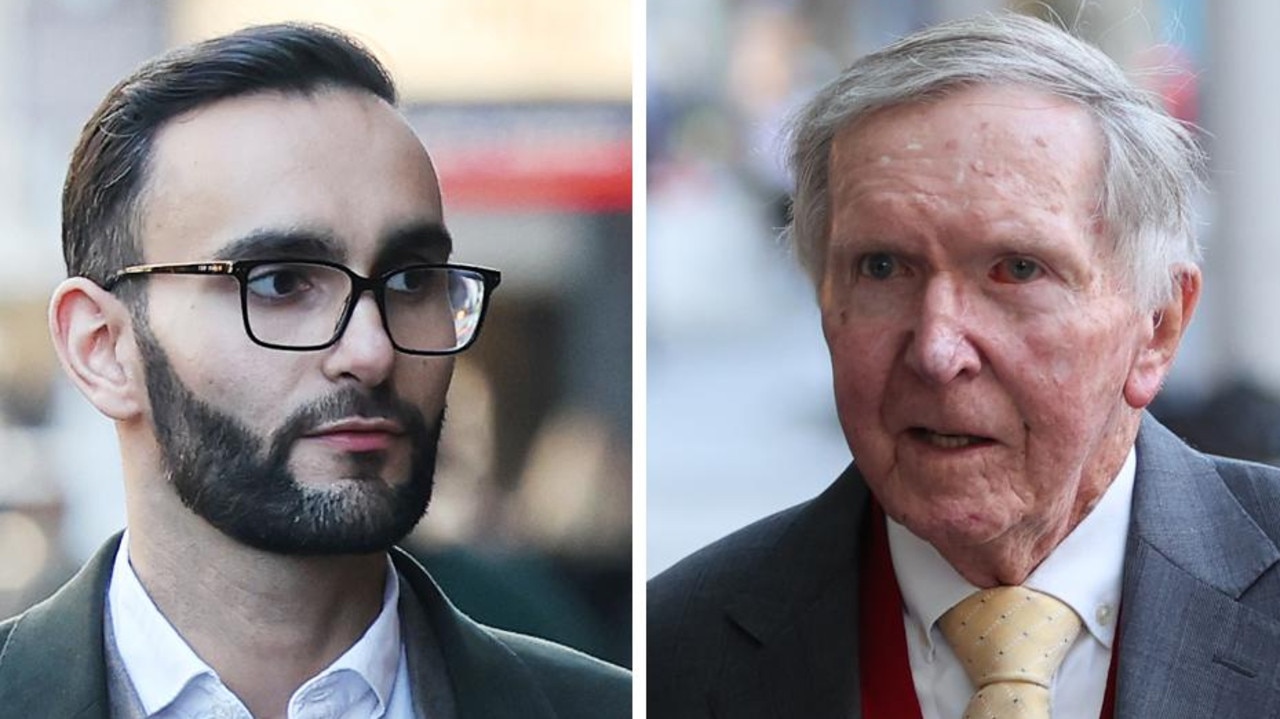
    The incident unfolded Wednesday afternoon in Golders Green, north London, where two Jewish men — aged 34 and 76 — were stabbed by a suspect wielding a large blade. A 45-year-old Somali-born British national was taken into custody shortly after the attack, and both victims are projected to make a full recovery. The Metropolitan Police confirmed the suspect has an established record of serious violence and documented mental health conditions, and was first referred to the UK’s Prevent counter-extremism program back in 2020. Investigators also noted the attack appears to be linked to a separate altercation that took place in southeast London several hours earlier.

    In the wake of the violence, Jonathan Hall, the independent reviewer of UK terrorism legislation, publicly called for a moratorium on all ongoing pro-Palestine marches during an interview with Times Radio. Hall argued that the current climate has created conditions where these demonstrations inevitably foster antisemitic rhetoric and demonization of Jewish communities. He pushed back against what he described as insufficient government action, saying that offering only statements of solidarity and supporting police investigations is no longer adequate.

    “It pains me to say this, but I think we may have reached a point where we need to have a moratorium on the sorts of marches that have been happening,” Hall said, adding that the government must be willing to take bolder action to address rising antisemitism across the country.

    Hall’s remarks drew immediate and sharp pushback from the Stop the War coalition, a prominent group that has supported ongoing pro-Palestine demonstrations. The organization condemned the Golders Green attack and all forms of antisemitism and racism unequivocally, but rejected attempts to tie the violence to peaceful pro-Palestine protests. The coalition noted that many Jewish people have participated in the marches themselves, framing the demonstrations as legitimate displays of solidarity with Palestinian civilians caught in the Israel-Hamas conflict, not the “hate marches” labeled by right-wing political figures.

    Attempts to criminalize the protests, which reflect majority public opinion on the conflict in the UK, or falsely link them to racist attacks targeting Jewish communities, are scurrilous and must be rejected, the group added.

    Prime Minister Keir Starmer called the Golders Green attack “utterly appalling”, and the UK government announced Thursday it would allocate an additional £25 million to boost security for Jewish communities across the country. This announcement comes amid a documented surge in antisemitic incidents across the UK in recent months: Metropolitan Police has recorded dozens of antisemitic hate crimes, including multiple arson attacks, over the past 30 days alone.

    Hall’s call for a moratorium also comes amid ongoing controversy over the government’s sweeping crackdown on pro-Palestine activism. In December, both the Metropolitan Police and Greater Manchester Police announced they would arrest demonstrators for chanting the phrase “globalise the intifada” or displaying it on protest placards; three protesters were formally charged on related offences in January. Pro-Palestine activists have repeatedly denied that the term, which translates from Arabic to “uprising”, is inherently antisemitic or a call for violence, and many British Jews have been visible, prominent participants in pro-Palestine marches across the country.

    The debate also overlaps with a separate ongoing legal battle over the government’s designation of direct action group Palestine Action as an illegal terrorist organization. The High Court recently ruled the government’s ban unlawful, and the administration is now appealing that ruling. In his newly released annual report, Hall himself raised significant red flags about the ban, noting it exposed “real uncertainty” over whether non-violent property damage alone should be classified as a terrorist offence.

    Hall warned that the broad wording of current UK terrorism law, without clearer legal guardrails, risks drawing legitimate protest activity into terrorism policing — even in cases where there is no intent to harm human life. “There is no legal authority on what ‘serious damage to property’ means,” Hall wrote, noting the vague definition could stretch to encompass minor cases of criminal damage depending on how courts interpret the legal threshold. While Hall argued it would be unthinkable to remove property damage from the terrorism statute entirely, he recommended that lawmakers narrow the legal test, for example by requiring proof of risk to life, a proven connection to national security threats, or explicit exemptions for non-violent protest activity.

  • Belgium plans to nationalise nuclear power plants

    Belgium plans to nationalise nuclear power plants

    In a landmark shift for European energy policy, Belgium’s federal government has announced a sweeping plan to acquire the country’s entire nuclear reactor fleet from French energy multinational Engie, a move designed to shore up long-term energy security and roll back a 20-year commitment to phasing out nuclear power entirely.

    Prime Minister Bart De Wever confirmed the proposal would involve a full acquisition of all seven Belgian nuclear reactors, most of which have aged past their originally planned 40-year operating lifespans. The announcement immediately pauses all ongoing decommissioning work for the reactors, turning decades of existing energy policy on its head.

    “This government is choosing safe, affordable and sustainable energy, with less dependence on fossil fuel imports and more control over our own supply,” De Wever wrote in a post on social platform X.

    The decision reverses nuclear phase-out legislation passed in the early 2000s, which was drafted in response to widespread public safety concerns following the 1986 Chernobyl disaster. That original law banned the construction of new nuclear facilities and capped the operating life of all existing reactors at 40 years, setting a full phase-out deadline of 2025 for the entire fleet.

    Currently, only two reactors — one at the Doel plant and one at the Tihange facility — remain operational. Their operating licenses were extended to 2035 in recent years amid growing energy instability across Europe. The remaining five reactors were taken offline between 2022 and 2025, and all planned dismantling work for these units will now be put on hold as the government explores options to restart or repurpose them.

    Both the Belgian government and Engie have set a target of October 1 to finalize the terms of the full takeover. In a joint statement released alongside Engie, the administration noted that the acquisition supports two broader goals: extending the operating lifespan of the still-functional reactors and developing new nuclear generation capacity across the country in the coming years.

    “By doing so, the Belgian Government is taking responsibility for Belgium’s long-term energy future, with the objective of building a financially and economically viable activity that supports security of supply, climate objectives, industrial resilience and socio-economic prosperity,” the statement added.

    Belgium is far from alone in making this dramatic policy shift. Across the European continent, a growing number of nations that once committed to phasing out nuclear power are now reversing course amid multiple interconnected crises: volatility in global fossil fuel markets triggered by the 2022 Russian invasion of Ukraine, escalating pressure to cut carbon emissions to meet EU climate targets, and growing demand for stable baseload power to complement intermittent renewable energy sources like wind and solar.

    For decades, Belgium’s nuclear program has been mired in controversy. The aging reactors have been repeatedly shut down for emergency safety inspections, and their extended operation has sparked persistent anxiety in neighboring countries. Tensions reached a peak in 2015, when cross-border communities and local governments issued formal complaints over plans to extend the reactors’ operating lives beyond their original 40-year design parameters. In 2017, the German city of Aachen, located just tens of kilometers from the Belgian border, began distributing free iodine tablets to residents as a precaution against potential radiation leaks from the Tihange plant, which had recently been shut down to fix discovered cracks and water pipe leaks.

  • Trump pulls surgeon general pick after nomination stalls

    Trump pulls surgeon general pick after nomination stalls

    In a development that roils Washington’s latest health leadership nomination fight, former President Donald Trump has pulled the nomination of Casey Means for U.S. Surgeon General after the controversial pick failed to secure the minimum Senate support required for confirmation.

    Trump made the announcement of the withdrawal Thursday via his social media platform Truth Social, adding that he would instead nominate Nicole Saphier, a cancer radiologist and regular contributor to conservative media outlet Fox News, for the role that leads the U.S. Public Health Service.

    Means, a Stanford-trained physician, entrepreneur and prominent online health influencer, faced fierce cross-partisan skepticism from lawmakers throughout the nomination process largely over her history of controversial statements on vaccine safety. Critically, Means does not hold an active medical license to practice in any U.S. state, a detail that amplified concerns about her suitability to lead the nation’s top public health agency.

    Means’ nomination stalled out immediately after her February Senate confirmation hearing, where she declined to answer a direct question on whether infants should receive routine childhood vaccines, and refused to reject the long-debunked conspiracy theory that links routine childhood vaccines to autism. While she told lawmakers at the hearing that she agrees “vaccines save lives” and are a core component of infectious disease public health strategy, she repeatedly emphasized prioritizing patient autonomy over public health guidelines throughout her testimony.

    Policy analysts also connected Means’ nomination to the wider vaccine skepticism that has gained traction in conservative politics, noting that Means was widely viewed as an ideological ally of Health Secretary Robert Kennedy Jr., who has faced widespread alarm from lawmakers across both parties over his own long history of anti-vaccine activism.

    In his Thursday Truth Social post, Trump did not blame his own party’s internal divisions for the failed nomination, and instead placed full blame on Louisiana Republican Senator Bill Cassidy, a trained physician who led opposition to Means’ confirmation. Trump lambasted Cassidy for what he called “intransigence and political games” that blocked Means’ path to confirmation, and explicitly called on Louisiana voters to remove Cassidy from office in the next election cycle.

    Turning to his new pick, Trump offered glowing praise for Saphier, framing her as a highly qualified, public-facing leader on cancer care. “She is a STAR physician who has spent her career guiding women facing breast cancer through their diagnosis and treatment while tirelessly advocating to increase early cancer detection and prevention, while at the same time working with men and women on all other forms of cancer diagnoses and treatments,” Trump wrote. He added that Saphier is “also an INCREDIBLE COMMUNICATOR, who makes complicated health issues more easily understood by all Americans.”

    Saphier currently practices radiology at Memorial Sloan Kettering Cancer Center Monmouth. Beyond her clinical work, she has a high public profile: she published the 2020 book *Make America Healthy Again: How Bad Behavior and Big Government Caused a Trillion-Dollar Crisis*, and hosts a popular wellness-focused podcast titled *Wellness Unmasked*.

    This nomination marks the third time Trump has put forward a candidate for surgeon general, the top role overseeing the 6,000-person U.S. Public Health Service. His first pick, Janette Nesheiwat, another former Fox News contributor and physician, withdrew from consideration after facing criticism from a senior Trump administration adviser over her public positions on COVID-19 policy and questions raised about her professional credentials.

  • Brazil’s Congress overrides Lula’s veto of a bill to reduce Bolsonaro’s sentence

    Brazil’s Congress overrides Lula’s veto of a bill to reduce Bolsonaro’s sentence

    SAO PAULO — In a high-stakes political upset that has reshaped Brazil’s political landscape months ahead of October’s presidential election, Brazil’s National Congress voted Thursday to override a presidential veto and enact a controversial sentencing reform bill that will slash former President Jair Bolsonaro’s 27-year prison term for his conviction on coup plotting charges. The legislative move marks a major political blow to incumbent leftist President Luiz Inácio Lula da Silva, Bolsonaro’s long-time rival, and signals a notable erosion of Lula’s governing power in Congress ahead of his reelection bid.

    The new legislation, which immediately faces planned legal challenges in Brazil’s Supreme Court, revises sentencing rules for defendants convicted of multiple political crimes. Under the new policy, when a defendant is found guilty of multiple offenses including crimes against democratic rule of law and leading a coup attempt, their final sentence will only reflect the single count carrying the maximum penalty, rather than an aggregate of all convictions. While the exact remaining sentence for Bolsonaro has not yet been finalized, political and legal analysts project the reform could cut as much as 20 years off the former right-wing leader’s original 27-year sentence. Bolsonaro, who was convicted and began his sentence in November 2024, is currently serving time under house arrest.

    Conservative opposition lawmakers successfully rallied centrist senators and federal deputies to secure a comfortable majority to override Lula’s veto of the bill, which was originally passed by Congress in 2024. Bolsonaro’s supporters had openly predicted the outcome before voting got underway, and many framed the move as a stepping stone to broader political pardons. “This is a first and much awaited step by those who are afflicted. The next stage is full amnesty,” said Sen. Espiridião Amin, a prominent Bolsonaro ally.

    Senate leaders claimed ahead of the vote that the reduced penalties would only apply to cases directly connected to the convictions of Bolsonaro, his allies, and supporters charged in connection with the 2023 coup attempt. But legal experts have already signaled they will challenge this narrow framing in court, noting the legislation’s wording applies broadly to eligible cases.

    Pedro Uczai, congressional whip for Lula’s Workers’ Party in the Chamber of Deputies, confirmed the party will file an appeal with the Supreme Court to have the legislation annulled, arguing the reform violates Brazil’s constitution. As of Thursday evening, the court had not yet received the formal complaint.

    Bolsonaro’s congressional allies have been open that the bill will benefit not just the former president, but also hundreds of his supporters convicted for their role in the January 8, 2023 riot that destroyed multiple government buildings in Brazil’s capital Brasilia. The attack, which sought to overturn Lula’s 2022 election victory, was widely compared to the 2021 assault on the U.S. Capitol.

    Alexandre Knopfholz, a lawyer and legal scholar, told the Associated Press the bill’s wording could also reduce penalties for offenses committed by large crowds, extending legal leniency to dozens of rioters already charged in connection with the Brasilia attack. Knopfholz emphasized that even if the Supreme Court upholds the new legislation, Bolsonaro will not be released from detention automatically, and additional legal proceedings will be required to adjust his sentence.

    Thursday’s vote marks the second high-profile congressional defeat for Lula in 24 hours, capping a rough week for the incumbent ahead of his campaign for a fourth non-consecutive term. On Wednesday evening, the Senate rejected Lula’s nominee for a Supreme Court seat — the first time a sitting president’s Supreme Court pick has been rejected in 132 years.

    “They want to release Bolsonaro, his jailed generals and stop federal police investigations that implicate them,” said Lindberg Farias, a lawmaker and Lula ally, calling Thursday’s vote “a day of infamy.”

    The legislative battle has already spilled over into the upcoming presidential campaign. Lula, who narrowly defeated Bolsonaro in 2022 to return to the presidency, will face Sen. Flávio Bolsonaro, the former president’s eldest son, as his main challenger in October. During Thursday’s vote, Flávio Bolsonaro laid out his campaign pitch to voters: “If it is God’s will, I will govern this country. I will hug you and take care of you, no matter what your political view is.”

    As of Friday morning, Lula had not issued any public comment on the back-to-back congressional defeats. Political analysts say the vote is a clear warning sign for Lula’s reelection prospects, though many note there is still five months until election day, and public attention could shift to other events including the upcoming men’s soccer World Cup.

    “This vote is another sign that Bolsonaro is not finished as a political actor, his son will be competitive against Lula,” said Carlos Melo, a political science professor at Insper University in Sao Paulo.

  • US Congress votes to end record government shutdown

    US Congress votes to end record government shutdown

    After 75 days of gridlock that made it the longest partial government shutdown in U.S. history, Congress passed a last-minute funding bill Thursday to reopen most of the Department of Homeland Security (DHS), bringing an end to weeks of disrupted critical public services and unpaid federal work. However, the core political clash over immigration enforcement that triggered the shutdown remains unresolved, setting the stage for a new round of partisan conflict later this year.

    The bipartisan funding package, which was first approved by the Senate and cleared the House via voice vote just hours before emergency funding set aside to cover employee salaries was set to expire, will keep key DHS agencies fully funded through the end of the 2025 fiscal year on September 30. Agencies restored to full operations include the Federal Emergency Management Agency (FEMA), the U.S. Coast Guard, the Transportation Security Administration (TSA) and the U.S. Secret Service.

    Notably, the bill excludes funding for two agencies at the heart of the partisan standoff: Immigration and Customs Enforcement (ICE) and U.S. Border Patrol. The shutdown first began on February 14, when Senate Democrats refused to back full immigration enforcement funding without new restrictions on controversial enforcement tactics, such as workplace raids in sensitive community locations and the routine use of unmarked uniforms and masks by officers. Congressional Republicans rejected these conditions, calling for full, unconditional funding for all border and immigration agencies.

    House Speaker Mike Johnson had blocked the Senate-approved compromise from a floor vote for more than five weeks, arguing the deal failed to address critical national security needs by leaving immigration enforcement agencies unfunded. But mounting pressure from the White House, centrist House Republicans, and senior DHS officials warning of imminent payroll shortfalls that would force widespread furloughs forced Republican leadership to schedule the vote. The 75-day shutdown already outstripped all previous partial funding lapses by a wide margin, and deep internal rifts within the House Republican conference were laid bare throughout the impasse: hardline conservatives rejected any partial funding deal that excluded ICE and Border Patrol, while moderates warned that prolonged disruption to critical security agencies would trigger severe political backlash ahead of the upcoming midterm elections.

    “After Republicans spent months blocking disaster relief and funding for the TSA, Coast Guard, and our cyber defense agency, it is a very good thing that this bill is finally on track to be signed into law to fund these agencies,” said Senate Democratic funding chair Patty Murray, who also criticized Johnson for dragging out the impasse for no substantive reason: “Speaker of the House Mike Johnson extended the DHS shutdown for over a month for no reason at all. This is the same bill the Senate unanimously passed five weeks ago.”

    Following the vote, Republican Congressman Nick Langworthy, who had publicly urged Johnson to move the bill forward, celebrated the progress: “Thank you to (President Donald Trump) for agreeing and demanding action. Not another day should go by with our safety and security at risk.”

    The prolonged shutdown already caused measurable harm to federal operations and the workforce. Thousands of DHS employees worked without pay for more than two months, and reports indicate that over 1,000 TSA frontline staff have quit their roles amid the financial uncertainty. Planning for major upcoming events, including 2026 FIFA World Cup matches hosted across U.S. cities this summer, was also thrown into jeopardy due to lost agency preparedness funding.

    With the bill now headed to Trump’s desk for his expected signature, the underlying partisan divide over immigration policy remains fully intact. House Republicans are now moving forward with a plan to approve up to $70 billion in separate funding for ICE and Border Patrol through the budget reconciliation process, a procedural move that would allow the measure to pass the Senate without Democratic support.

    Lawmakers have departed Washington for a scheduled recess, and all eyes now turn to the next phase of the funding fight. The standoff underscores just how deep partisan polarization over immigration remains just months before midterm elections that will decide which party controls Congress for the next two years, and it highlights the ongoing challenges House Republican leadership faces in balancing the demands of hardline faction members and moderates while advancing the White House’s policy agenda. The question of whether Congress can avoid a second shutdown when current partial funding expires later this year remains unanswered.

  • US House votes to end government shutdown over immigration operations

    US House votes to end government shutdown over immigration operations

    After more than two months of disrupted federal operations tied to a bitter partisan standoff over immigration policy, U.S. lawmakers have passed a funding package for the Department of Homeland Security, bringing an end to the longest partial government shutdown in the agency’s 20-year history.

    The House of Representatives signed off on the Senate-approved bipartisan measure via a voice vote on Wednesday, immediately restoring operating funds to most DHS components after the 76-day funding lapse that impacted millions of federal workers and critical border and security operations. President Donald Trump has publicly backed the legislation, which now heads straight to the Oval Office for his final signature before it takes effect.

    Notably, the stop-and-go funding package does not allocate new money for two of DHS’s highest-profile immigration enforcement arms: Immigration and Customs Enforcement (ICE) and the U.S. Border Patrol. The omission comes after months of fierce pushback from congressional Democrats, who have demanded sweeping changes to the Biden (correction: Trump-era) immigration enforcement policies before approving additional funding for the agencies. Republican leadership has already signaled that it will pursue standalone funding legislation for ICE and Border Patrol in the coming weeks, separating that contentious fight from the broader DHS funding deal to end the shutdown.

    This is an ongoing developing breaking news story. Additional details on the legislative timeline for separate immigration enforcement funding and the implementation of the DHS funding package will be added as they become available. Readers can refresh this page for the full updated version, or access real-time breaking news alerts through the BBC News mobile app, or by following @BBCBreaking on the X platform.

  • Argentine workers mark May Day with protests over Milei’s labor-law overhaul

    Argentine workers mark May Day with protests over Milei’s labor-law overhaul

    On Thursday, thousands of Argentine working people gathered in the streets of Buenos Aires for annual May Day demonstrations, turning the traditional celebration of labor rights into a mass show of opposition to President Javier Milei’s sweeping rollback of decades-old worker protections. The march was organized by the General Confederation of Labor (CGT), Argentina’s largest union federation, which framed the action as a fight to preserve “decent employment” in the face of Milei’s transformative changes to the country’s 50-year-old national labor code.

    Argentina’s labor regulations, first enshrined in 1974, have long provided Argentine workers with extensive legal protections and benefits. For decades, however, economists and business leaders have argued that these rigid rules created prohibitive operational costs for companies, driving away much-needed foreign direct investment and pushing nearly half of the country’s workforce into the informal, off-the-books sector where workers receive no legal protections or benefits. Successive administrations spanning multiple political ideologies attempted to liberalize the labor market to address these issues, but every reform effort collapsed in the face of fierce pushback from Argentina’s historically powerful labor unions, which have been a core political force in the country since the rise of Peronism in the 1940s.

    Despite widespread union opposition that included weeks of rolling protests and a full nationwide strike, Milei, who swept to power on a libertarian free-market agenda, successfully pushed his labor reform package through congress in February, securing one of the most significant legislative wins of his young presidency. The new legislation makes sweeping changes to the country’s labor rules: it expands the maximum legal workday from eight hours to 12, extends the probation period for new hires, simplifies the process for companies to dismiss workers, reduces legal protections for striking workers, and caps judicial discretion for severance pay awards. Proponents argue the changes will encourage formal sector hiring and make Argentina more competitive for global investment, but critics say they erode hard-won labor rights and leave working people vulnerable.

    Opponents of the reform have turned to the courts to block the new law, launching a constitutional appeal to challenge its legality. Last week, a court overturned an earlier injunction that had suspended the law’s implementation at the unions’ request, clearing the way for the reforms to take effect. Union leaders have announced they will file a new legal challenge, and the dispute is now on track to reach Argentina’s Supreme Court for a final ruling.

    The political clash over labor reform comes at a fragile moment for Milei’s presidency. His flagship policy promise to curb Argentina’s decades-long sky-high inflation has made little progress in recent months, while national unemployment has begun to climb. For Argentina’s labor movement, which was a foundational pillar of the Peronist movement that dominated Argentine politics for nearly 80 years, the labor overhaul represents an existential threat to both worker rights and the movement’s long-held political influence.

    Ahead of Thursday’s protest, CGT leader Jorge Sola told local radio that widespread social discontent has built up across the country, driven by more than just falling household consumption. “It is due to family debt, job losses and worse working conditions than what we had before,” Sola said, capturing the simmering anger that brought thousands of workers onto the capital’s streets for the May Day demonstration.