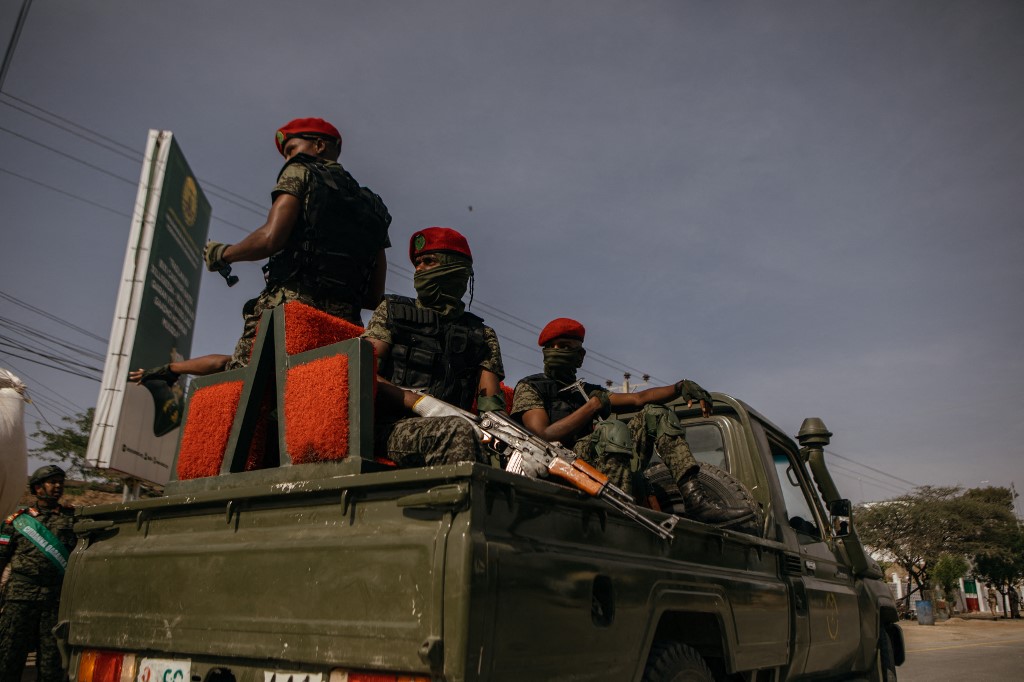
Fresh claims from a senior official within Somalia’s internationally recognized government have pulled back the curtain on an undeclared Israeli military presence in the breakaway region of Somaliland, stirring new friction across the Horn of Africa and the broader Middle East. The disclosure comes months after Israel made a historic and widely condemned decision to grant formal recognition to Somaliland, a self-declared independent state that has not received endorsement from the United Nations or nearly any sovereign nation. In an exclusive interview with Middle East Eye, the senior Somali government source outlined that the deployment of a 50-strong Israeli military contingent took place in early 2024, shortly after Israel resumed open military conflict with Iran in late February. To evade detection and integrate seamlessly into the local population, Israeli military commanders specifically selected troops of African descent, the majority of whom have Ethiopian heritage, the official added, citing intelligence gathered by Somali security agencies. Israel’s path to formal diplomatic ties with Somaliland began in December 2023, when it became the first country in the world to recognize the region’s independence. That unilateral move immediately drew sweeping condemnation from nearly every government across the African continent and the Middle East, as it upends longstanding international consensus on Somalia’s territorial integrity. By April 2024, Israel had completed the first step of formal diplomatic representation, appointing Michael Lotem as its inaugural ambassador to Somaliland’s capital, Hargeisa. When Middle East Eye reached out to the Israel Defense Forces for comment on the allegations of a secret troop deployment, military officials declined to address the claims directly, stating that the matter falls under the jurisdiction of the country’s political leadership, rather than military spokespeople. Outlets including MEE also attempted to secure a response from Somaliland’s government, but those requests have so far gone unanswered. While the Israeli government has not confirmed the deployment of troops, senior Israeli officials have openly acknowledged the long history of covert security cooperation between the two sides. During a public meeting with visiting Somaliland President Abdirahman Mohamed Abdullahi this week, Israeli Defense Minister Israel Katz confirmed that discrete collaboration has been ongoing for years, operating outside of public view. “For many years, we cooperated under the radar in a series of operations that will remain classified,” Katz said. “Now we are determined to bring our security cooperation to new heights, for the benefit of both peoples and for the benefit of stability in the region.” Earlier this month, CNN reported, citing anonymous sources familiar with the arrangement, that Somaliland has granted Israel access to an additional military facility. This site, the report claims, could be used as a refueling and logistics hub for Israeli aircraft conducting long-range missions targeting Iran. Regional security analysts who specialize in Horn of Africa politics have further speculated that Israel is actively pursuing a permanent naval base along Somaliland’s Red Sea coast. Such a base would position Israel to more effectively counter growing threats from Houthi militants in Yemen, who have targeted commercial shipping in the Red Sea in recent months. In comments released Wednesday, Somaliland’s Defense Minister Mohamed Yusuf Ali denied persistent claims that Israel maintains a military base on Somaliland territory. At the same time, he did not downplay the scope of current bilateral security engagement, confirming that Israeli personnel are supporting Somaliland’s security forces by providing training for both local police and military units. The developing situation has heightened concerns across the region, with many governments warning that deepening Israeli military involvement in Somaliland threatens to destabilize the already fragile security environment in the Horn of Africa and undermine regional efforts to maintain Somalia’s territorial unity.