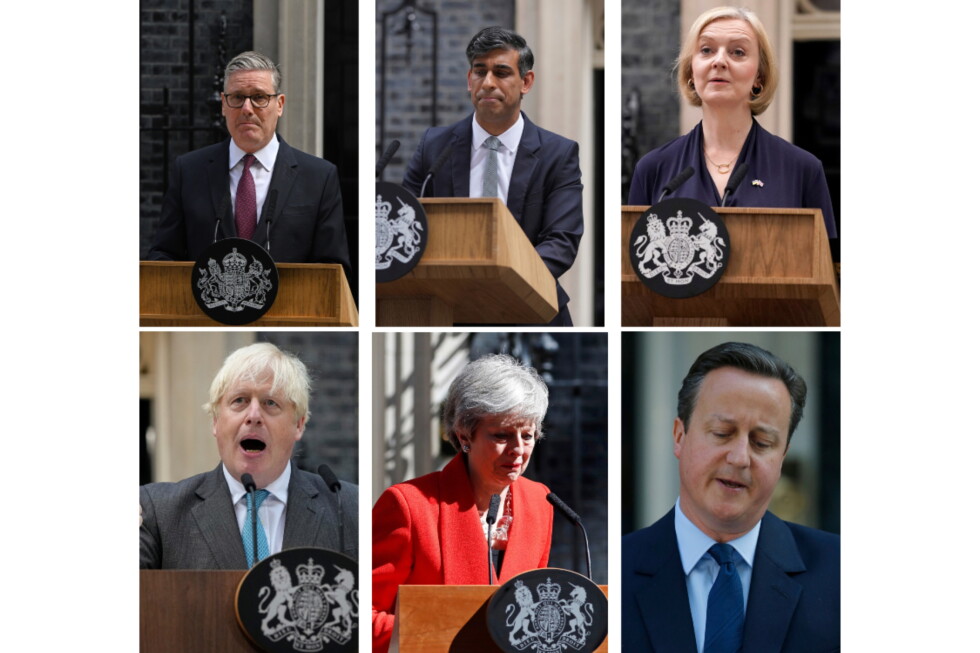
LONDON – The announcement of Keir Starmer’s resignation as British Prime Minister this Monday has cemented a historic milestone for modern United Kingdom politics: over the past 10 turbulent years, six different leaders have stepped through the famous black door of 10 Downing Street — a turnover rate that matches the total number of prime ministers that served across the entire preceding four decades.
Starmer’s ascent to power in the 2024 general election was a landslide victory for the Labour Party, ending 14 years of Conservative rule. Campaigned on a platform promising to undo the years of political chaos left by the previous Conservative government, deliver steady economic growth and repair Britain’s crumbling public services, Starmer rode a wave of widespread public discontent with the incumbent party to take office as the first Labour prime minister since 2010. The former director of public prosecutions framed his leadership as a fresh start for a nation worn thin by constant political upheaval.
But just two years into his term, that promise of stability has crumbled. Plunging public approval ratings and repeated failures to deliver on his flagship “rebuild Britain” agenda left Starmer with little support within his own party, forcing his departure. In his announcement, he acknowledged that he no longer had the backing of his party to lead Labour into the next general election.
To put this extraordinary wave of leadership turnover in context, the U.K. saw just six prime ministers hold office between 1976 and 2016. The current era of rapid change began in 2016, when the Brexit referendum upended the country’s political order.
The first of the post-2016 departures came from Conservative Prime Minister David Cameron, who had called the historic Brexit referendum in a bid to defuse long-simmering internal tensions within his party over Britain’s membership in the European Union. After campaigning hard to remain in the bloc, voters defied his campaign and backed exit by a narrow margin. Cameron resigned the very next day, ending his six-year tenure in office.
Cameron’s successor, Theresa May, took over with the unenviable task of negotiating Britain’s EU divorce. Over three years, May worked to secure a withdrawal agreement with Brussels, but the deal was repeatedly rejected by Parliament — derided by pro-EU lawmakers for pulling Britain out of the bloc, and dismissed by hardline Brexit-supporting Conservatives for leaving the U.K. too closely aligned to EU rules. After three devastating defeats for her proposal in the House of Commons, May stepped down in 2019, saying “I have done my best.”
Next came Boris Johnson, the charismatic, polarizing Conservative leader who oversaw the finalization of Britain’s EU exit in January 2020 and guided the country through the initial waves of the COVID-19 pandemic. But his tenure collapsed under the weight of cascading ethics scandals: allegations of improper closeness to wealthy party donors, claims he protected allies facing bullying and corruption investigations, and most damagingly, evidence he misled Parliament about lockdown-breaching parties held in Downing Street during the pandemic. When dozens of government officials and his own allies resigned in protest, Johnson had no choice but to step down in 2022.
Johnson’s departure ushered in Liz Truss, a libertarian Conservative who campaigned on a platform of radical free-market reform and small government. Promising to jumpstart Britain’s stagnant economy, Truss unveiled a sweeping stimulus package centered on massive, unfunded tax cuts just weeks into her term. The plan triggered market chaos, crashed the pound and erased all of Truss’s support within her party. After just 45 days in office, Truss resigned, making her the shortest-serving prime minister in British history.
Rishi Sunak, the youngest prime minister to hold office in more than 200 years, stepped in to replace Truss in 2022, tasked with cleaning up the economic mess left by his predecessor. Sunak pledged to curb sky-high inflation, clear backlogs in the National Health Service and end the flow of irregular migration across the English Channel. But he never managed to reverse the Conservative Party’s plummeting poll numbers after the chaos of Truss and Johnson’s tenures, and he called an early general election in July 2024. When the Conservatives suffered the worst electoral defeat in their 200-year history, Sunak conceded defeat, stepped down, and said “I take responsibility for this loss.”
Starmer’s subsequent landslide victory opened the door for Labour’s return to power, but his early exit after just two years proves that the political turbulence that has roiled Britain for a decade has yet to subside. As the country prepares to select its seventh prime minister in 10 years, the era of constant upheaval in British politics remains far from over.