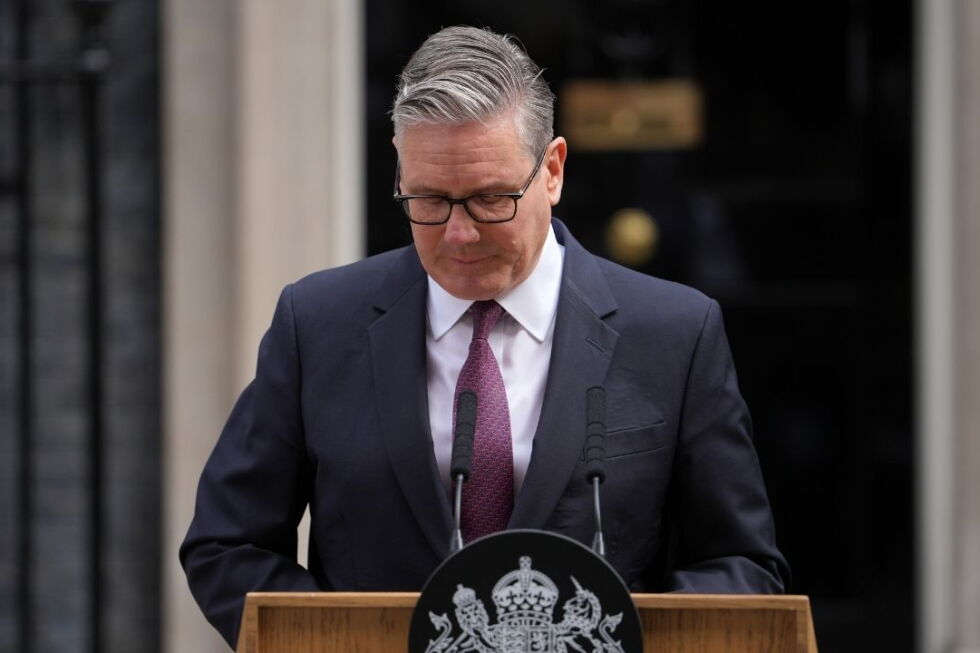
LONDON – In an unexpected announcement delivered on Monday, British Prime Minister Keir Starmer confirmed he will step down as leader of the governing Labour Party, just 24 months after securing a historic landslide general election victory that ended 14 years of Conservative rule.
Opening his statement with reflection on his political journey, Starmer described walking into Downing Street after the 2024 election as the proudest moment of his life. He recalled the state of the Labour Party when he took over its leadership six years prior, noting that many political commentators and insiders had written the party off entirely. At that time, Starmer said, critics insisted Labour was politically, financially and morally bankrupt, and that a parliamentary majority — let alone a landslide win — was out of reach.
Those doubters were proven wrong, Starmer emphasized, because he led a root-and-branch transformation of the party. His leadership purged the organization of the antisemitism that had eroded public trust, rebuilt confidence in Labour’s handling of the economy, defense and national security, and repositioned the party as a patriotic institution proud to stand alongside Britain’s national identity. All of these reforms, he noted, were pursued not for the sake of holding power, but to deliver tangible improvements for the British public.
Outlining the Labour government’s achievements over its two years in office, Starmer highlighted a string of policy gains: an outperforming economy with growth faster than most European peers, consistent wage growth that outpaces inflation, billions in new private and public investment for major infrastructure projects, an end to a decade of austerity policies, the fastest reduction in National Health Service waiting lists in 17 years, the most sweeping expansion of worker and renter rights in a generation, the largest increase in defense spending since the end of the Cold War, reduced irregular small boat crossings across the English Channel, winding down costly asylum seeker hotel accommodations, new protections for minors from harmful social media content, and the lifting of 500,000 children out of household poverty.
On the global stage, Starmer added his government had restored Britain’s international reputation, reaffirming the country’s commitment to democratic values, the rule of law, unwavering support for Ukraine’s sovereignty, and repaired fractured diplomatic ties with European allies, while securing new favorable trade agreements.
“Change promised by a Labour government. Change fought for by a Labour government, change delivered by a Labour government,” Starmer said.
He went on to explain that the core question facing the party now is not whether he could deliver power and begin the work of national renewal — a challenge he says has already been addressed. Instead, the debate centers on whether he is the right leader to take the party into the next general election. After receiving the parliamentary party’s answer to that question, Starmer said he accepts the outcome with good grace.
“Every decision I’ve taken has been about putting the country I love first. That is why I will resign as leader of the Labour Party,” he stated. Starmer confirmed he had already notified King Charles III of his decision in a morning audience.
Under the transition plan outlined by Starmer, the Labour Party’s National Executive Committee will launch a leadership contest with nominations opening on July 9 and concluding before parliament’s summer recess. If a competitive contest is held, the process will deliver a new leader before parliament reconvenes in September. Starmer will remain in office as Prime Minister through the duration of the contest, and pledged to oversee a smooth, orderly handover of power to his successor. He also promised full and unequivocal support to the next leader, noting they will inherit a country far stronger and fairer than the one Starmer took responsibility for two years prior, better positioned to tackle future challenges and secure Labour a second consecutive term in government.
In closing, Starmer extended gratitude to his parliamentary colleagues, friends, Downing Street staff and the UK civil service for their dedication and support over the past six years. He added that after leaving office, he will prioritize his family, saying he looks forward to devoting more time to being a husband to his wife Vic, who he described as a constant rock through both triumph and turmoil, and a father to his children, who he called his greatest pride and joy.