分类: politics

  • US-Iran war headed for the gray zone

    US-Iran war headed for the gray zone

    When the United States and Iran signed a landmark memorandum of understanding (MoU) on the final day of the G7 summit on June 17, the diplomatic breakthrough was widely celebrated across the international community. Through terms that included the reopening of the strategically critical Strait of Hormuz, targeted sanctions relief, and the launch of a 60-day formal negotiation window, the deal was initially viewed as a promising first step toward defusing a years-long conflict that had threatened both regional stability and global energy markets.

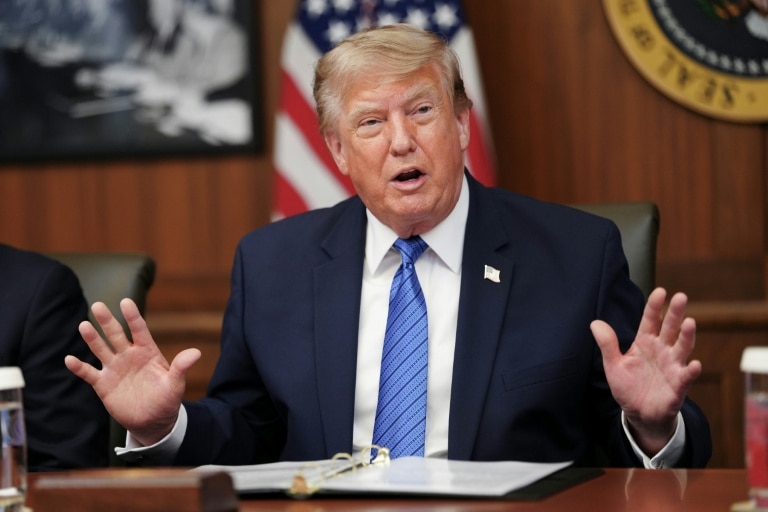
    But just weeks later, developments over the past weekend have laid bare the extreme fragility of this tentative agreement. While negotiators from both sides confirmed incremental progress during the first round of talks held in Switzerland, a cascade of new developments has stoked widespread fears that the entire diplomatic process could collapse, plunging the region back into open hostilities. Most notably, former President Donald Trump’s renewed threats of military intervention against Iran, paired with growing concerns over the physical safety of Iranian negotiating teams, have injected deep uncertainty into the process.

    Even the one tangible win the US claimed from the deal—the reopening of the Strait of Hormuz, a chokepoint through which 20% of the world’s daily oil shipments pass—remains shrouded in uncertainty. As it stands today, the agreement is best characterized not as a permanent resolution to decades of conflict, but merely as a temporary pause in hostilities. It has largely restored the pre-escalation status quo, but has left core tensions between the US, Iran, and Israel entirely unaddressed.

    One critical, underdiscussed factor hanging over the process is Israel’s awkward outsider position. The country is one of the parties most deeply affected by any US-Iran deal, yet it was excluded from negotiations entirely. It retains the capacity to derail any diplomatic progress, and its ongoing military assault on Lebanon stands in direct violation of the MoU’s terms, creating a persistent flashpoint for renewed escalation.

    Most analysts agree that the most probable long-term outcome is a return to what has become known as gray-zone conflict: a state of persistent hostility that falls short of open, full-scale war. In this context, that would likely mean a continuation of proxy warfare, cyberattacks, economic coercion, and periodic spikes in military confrontation. While active large-scale shooting has paused, all the underlying geopolitical and ideological forces that sparked the original conflict remain firmly in place.

    This incomplete outcome represents a major setback for US strategic goals in the region. When Washington launched its current round of confrontation with Tehran, it promised three core outcomes: the full dismantling of Iran’s nuclear program, the rolling back of Iran’s regional influence, and the restoration of American deterrence across the Middle East. Instead, the MoU delivers significant economic relief to Iran, while leaving all three core US objectives unmet—including unresolved disputes over Iran’s ballistic missile program, its regional proxy networks, and long-term caps on uranium enrichment.

    For Iran, by contrast, simply maintaining its ruling regime’s survival through the pressure campaign already qualifies as a strategic victory. Despite sustained coordinated pressure from both the US and Israel, the Iranian government remains fully intact and is now negotiating from a position of strength rather than surrendering to US demands.

    The conflict has also laid bare the fundamental limits of Western-led security arrangements in the Gulf. Gulf Arab states have witnessed firsthand that even the overwhelming military superiority and advanced weapons arsenals of the US and Israel do not guarantee decisive political outcomes, nor do they provide reliable protection against unintended escalation.

    For the US, the MoU also serves as a public acknowledgment of the mounting economic costs of its years-long confrontation with Iran, which have already surpassed $132 billion and continue to climb. Disruptions to shipping through the Strait of Hormuz drove global energy prices higher, strained longstanding US alliances in the region, and proved that military coercion has clear limits. While sanctions relief and the resumption of Iranian oil exports may ease near-term economic pressures, it also reinforces a dangerous perception (for US strategic goals) that sustained pressure and gray-zone aggression can force even a global superpower to the negotiating table.

    Perceptions carry enormous weight in international politics. For Washington’s Gulf partners, the MoU has sparked new doubts about America’s willingness to stick to ambitious regional strategic objectives when the political and economic costs of confrontation grow too high. For Iran, on the other hand, the deal has left it strategically stronger: it creates much-needed breathing room for economic recovery and strategic adaptation, making it almost certain that Iran will continue expanding its regional influence through cyber operations, proxy networks, and other gray-zone tactics.

    Israel faces perhaps the most challenging strategic reckoning of any party. For decades, its national security doctrine has been built around maintaining unchallenged military superiority, backed by $4 billion in annual military aid from the US. The MoU makes clear that Israel’s core strategic priorities are now directly at odds with those of its closest ally and patron. It has forced open uncomfortable questions about how far Washington is willing to align its own regional goals with Jerusalem’s security demands.

    Israel’s long-standing strategic culture prioritizes self-reliance when it comes to countering Iranian threats. This means it will almost certainly continue pursuing covert operations, targeted assassinations, and unilateral military strikes against perceived Iranian assets and interests across the region. While the formal US-Israeli security alliance has not fractured, the open strategic rift could make future coordination far more transactional, even as Israel remains deeply dependent on American military and diplomatic support. Addressing the divide, US Vice President JD Vance pushed back against criticism of the MoU from Israeli cabinet members during a June 19 White House briefing, noting that “Donald J Trump is the only head of state in the entire world who is sympathetic to the nation of Israel at this moment in time.”

    Beyond the immediate dynamics of the US-Iran conflict, the June 17 MoU offers critical insight into the changing nature of geopolitical conflict in the 21st century. Modern great power confrontations rarely end in clear-cut victory or defeat. Instead, they increasingly devolve into prolonged, low-intensity competitions waged in the gray zone between formal peace and open war. When full-scale escalation becomes too costly for all parties, states simply regroup and continue their rivalry through alternative, non-conventional means.

    For the Middle East, this reality means significant risks will remain for the foreseeable future. A comprehensive permanent settlement within the 60-day negotiation window appears extremely unlikely, given the intractable ongoing disputes over sanctions, nuclear enrichment, and regional security. Continued Israeli military operations in Lebanon could unravel the fragile truce at any moment, and Gulf US allies may respond to the persistent uncertainty by deepening their economic and security ties to China and Russia to hedge against American unpredictability.

    Ultimately, the US-Iran MoU is far less a peace agreement than it is a temporary diplomatic holding pattern. It has reduced immediate tensions and stabilized global energy markets, but it leaves all the underlying drivers of conflict completely intact. Relations between the US, Iran, and Israel will therefore almost certainly continue to oscillate between periods of confrontation and tentative accommodation for years to come. Addressing the deep roots of regional instability—including competing regime security concerns, ideological rivalry, and sprawling transnational proxy networks—would require a far more ambitious, comprehensive settlement than any 14-point memorandum can ever deliver.

  • US top court says Rastafarian man cannot sue prison guards who cut his dreadlocks

    US top court says Rastafarian man cannot sue prison guards who cut his dreadlocks

    In a surprising split decision that breaks with recent pro-religious-liberty trends on the nation’s highest court, the U.S. Supreme Court has ruled 6-3 that a former Louisiana prison inmate cannot seek monetary damages from individual correctional officials who forcibly shaved his religiously mandated dreadlocks. The decision centers on a key interpretation of the 2000 Religious Land Use and Institutionalized Persons Act (RLUIPA), a federal law designed to protect religious freedom for incarcerated people held in federally funded facilities.

    The case stems from a 2020 incident during which Damon Landor, who was serving a sentence for a drug conviction, was handcuffed to a chair and had his dreadlocks shaved off by prison staff—despite his explicit objections that the act violated core tenets of his Rastafarian faith. For Rastafarians, growing and maintaining uncut, uncombed dreadlocks is far more than a personal style choice: it is a longstanding symbol of spiritual devotion, connection to their faith, and religious growth. In comments following the ruling, Landor emphasized that his dreadlocks were an integral part of his identity, noting, “So when they cut off my hair, they cut off my crown.”

    Writing for the conservative majority, Justice Neil Gorsuch argued that RLUIPA, which was passed under Congress’s Spending Clause authority, does not permit private citizens to bring damage claims against individual state employees in their personal capacity. Gorsuch held that Congress lacks the direct regulatory authority to impose personal liability on state officials under this clause, and that state employees never explicitly consented to such personal lawsuits when the law was enacted in 2000. As a result, the majority concluded, Landor is not entitled to the monetary damages he sought against the individual prison officials involved in the incident.

    The ruling marks a clear break from a string of recent Supreme Court decisions where the conservative majority consistently sided with parties bringing religious liberty claims against government entities. In a sharp dissent, liberal Justice Ketanji Brown Jackson pushed back against the majority’s interpretation, arguing that the core legislative purpose of RLUIPA was explicitly to guarantee that state and local prison systems respect the constitutionally protected right of incarcerated people to practice their faith freely. Jackson and the two other liberal justices rejected the majority’s narrow reading of the law, warning that it undermines the protections RLUIPA was intended to provide for incarcerated people of all faiths.

  • China’s newest aircraft carrier sails through the Taiwan Strait

    China’s newest aircraft carrier sails through the Taiwan Strait

    Tensions across the Taiwan Strait have flared again this week, after China’s most advanced domestically built aircraft carrier sailed through the contested waterway on Tuesday, just 24 hours after Taiwan launched a five-day military exercise focused on repelling a potential Chinese attack, Taiwan’s Ministry of National Defense confirmed. The Fujian, China’s third and latest aircraft carrier, is no stranger to the strait: it first completed a trial transit through the 180-kilometer waterway that separates mainland China from the self-governing island of Taiwan back in September 2023, and made its first crossing as an officially commissioned active-duty vessel this past December. The warship was formally commissioned into the People’s Liberation Army Navy in November 2024, and according to the U.S. Naval Institute, it holds the distinction of being the largest non-nuclear powered aircraft carrier currently in operation anywhere in the world. Outfitted with a modern electromagnetic catapult launch system, the Fujian is widely recognized as technologically superior to China’s two older aircraft carriers, the Liaoning and the Shandong. For decades, Beijing has maintained its territorial claim over Taiwan, which has governed itself autonomously since 1949, and Chinese officials have repeatedly declined to rule out the use of military force to reunify the island with the mainland. In recent years, Chinese military activity near Taiwan has grown exponentially: regular patrols of naval vessels and combat aircraft around the island now occur on an almost daily basis, as Beijing ramps up political and military pressure on the Taipei government. Taiwan’s drills, which kicked off on Monday, are explicitly designed to test and refine the island’s military protocols for responding to a full-scale Chinese invasion, according to Taiwanese defense officials. The latest transit comes amid long-standing trans-Pacific tensions over the Taiwan issue, with the United States and several of its key allies conducting periodic freedom of navigation transits through the Taiwan Strait to send a clear signal to Beijing that they oppose any unilateral attempt to alter the status quo through force. U.S. Navy warships regularly sail through the waterway, a practice that has drawn fierce condemnation from China, which views such operations as provocative violations of its territorial sovereignty.

  • Leading Pakistan activist given life sentence over soldier’s killing at rally

    Leading Pakistan activist given life sentence over soldier’s killing at rally

    A prominent Pakistani human rights defender who has spent more than a decade advocating for victims of enforced disappearances in the restive southwestern province of Balochistan has received a life sentence in connection with the 2024 killing of a paramilitary soldier during a mass protest. Mahrang Baloch, head of the Balochistan Unity Committee (BYC), was found guilty of murder and terrorism charges alongside BYC activist Sibghatullah, in a ruling that has drawn sharp condemnation from human rights groups and global activists over allegations of procedural bias.

    Prosecutors have alleged that the two activists incited a crowd of protesters to launch a fatal attack on Federal Constabulary soldier Shabbir Ahmed during the rally held in the strategic port city of Gwadar. A senior security official claimed that Baloch delivered an inflammatory speech that spurred 30 to 40 attendees to attack a military vehicle with stones and sticks, leading to Ahmed being separated from his unit and beaten to death by the crowd. However, both Baloch and Sibghatullah have vehemently denied all accusations, and joined their full legal team in boycotting the entire trial proceedings to protest what they describe as unfair treatment.

    The conviction was handed down by an anti-terrorism court based in Quetta, Balochistan’s capital. In its ruling, the court stated that the two BYC leaders participated in an illegal gathering organized by the group and shared common intent in the killing of the law enforcement official. Alongside the life prison term, the court ordered the pair to pay a fine of 200,000 Pakistani rupees, equivalent to roughly $719 or £543, as compensation to Ahmed’s surviving family. Local media reports confirm that Baloch and Sibghatullah have already been detained in custody for two years while facing a broad range of unrelated charges.

    The verdict has quickly drawn widespread criticism from domestic and international observers. The Human Rights Commission of Pakistan, the country’s leading independent human rights body, has called for an immediate judicial review of the ruling, arguing that the Pakistani state has repeatedly equated legitimate advocacy for fundamental civil rights with violent extremism, producing lopsided and biased administrative and judicial outcomes.

    Nadia Baloch, Mahrang Baloch’s sister and a member of her legal team, condemned the ruling as unlawful, saying the defendants were systematically denied access to due process. She and the legal team have described the proceeding as a ruling from a “faceless court,” noting that defense attorneys were barred from conducting proper cross-examination of prosecution witnesses, who testified against the defendants via pre-recorded video link.

    The verdict also drew rebuke from high-profile global activist Greta Thunberg, who took to social media to denounce the trial as a blatant “mockery of justice” conducted in complete secrecy. Thunberg accused the Pakistani government of deliberately criminalizing peaceful political dissent against state policies in Balochistan.

    In response to the criticism, a spokesperson for the Balochistan provincial government told the Associated Press that prosecutors held “undeniable evidence” to support the convictions, and rejected claims that the case was politically motivated.

    Mahrang Baloch, who was named one of the BBC’s 100 Women of 2024 for her human rights work, first entered activism after her own father was allegedly abducted by Pakistani security service officers in 2009. His tortured body was recovered two years after his disappearance. In late 2023, she made global headlines when she led hundreds of female family members of missing Baloch people on a 1,600-kilometer, or 1,000-mile, march from Balochistan to Islamabad, the national capital, demanding accountability for the decades-long crisis of enforced disappearances in the province.

    The BYC, the grassroots organization Baloch leads, campaigns for an end to enforced disappearances and extrajudicial killings in Balochistan, a region that has seen a decades-long push for greater political autonomy from the Pakistani federal government. The BYC has repeatedly denied Pakistani government claims that the group maintains ties to armed Baloch separatist militant groups.

  • A legal battle over a former Zambian president’s burial might be over

    A legal battle over a former Zambian president’s burial might be over

    More than a year after the death of former Zambian President Edgar Lungu, a months-long cross-border legal fight over the final resting place of his remains has taken a decisive turn, with South Africa’s Supreme Court of Appeal siding with his family and rejecting custody claims brought by the Zambian government. Tuesday’s appellate ruling reverses an earlier lower court decision that had ordered Lungu’s relatives to turn over his body to Zambian authorities for repatriation to his home country.

    Lungu, who led the southern African nation from 2015 to 2021, passed away in South Africa on June 5, 2025, at the age of 68. What should have been a peaceful period of mourning has instead stretched into a public, politically charged conflict that extends the bitter rivalry between Lungu and his long-time political foe, current Zambian President Hakainde Hichilema, beyond Lungu’s death.

    The Zambian government has argued that long-standing national custom and protocol require that former heads of state be interred at a designated national cemetery reserved for the country’s fallen leaders. But Lungu’s family has pushed back against this claim, saying they are upholding the former president’s explicit final wishes: he explicitly barred Hichilema from accessing his remains and refused to allow a state funeral led by the incumbent administration on Zambian soil. The family chose instead to lay Lungu to rest in South Africa.

    The dispute left Lungu’s body held at a local mortuary for more than a year as legal proceedings moved through South Africa’s court system. A planned funeral service held by the family in South Africa last June was abruptly cut short when Zambian authorities filed an urgent court motion to seize the remains, prolonging the standoff.

    Delivering the panel’s majority ruling this week, appellate judges stated that the common law and constitutional rights of the deceased’s family take legal precedence over the Zambian government’s claim to custody. As South Africa’s second-highest judicial body, the Supreme Court of Appeal’s ruling leaves the door open for further legal action: the Zambian government retains the right to launch a subsequent appeal to the country’s Constitutional Court if it chooses to do so.

    The underlying political tensions that fueled this posthumous conflict stretch back years. Lungu defeated Hichilema in two consecutive presidential elections during his time in office, and when Hichilema was still leader of the opposition, he was jailed for four months on treason charges that were ultimately dismissed. The dynamic shifted in the 2021 presidential election, when Hichilema defeated Lungu to claim the presidency. In the years after his election loss, Lungu alleged that he had been placed under de facto house arrest by security forces acting on Hichilema’s orders, deepening the enmity between the two political rivals.

  • Lithuanian government steps down after coalition reshuffle

    Lithuanian government steps down after coalition reshuffle

    VILNIUS, Lithuania — A major political shift is underway in the Baltic state of Lithuania, where Prime Minister Inga Ruginienė and her entire cabinet formally resigned on Tuesday, triggered by a breakdown in the country’s ruling coalition over a high-profile antisemitism scandal. The departure clears the way for a new administration that will be Lithuania’s third prime minister in just two years, with the incoming majority already signaling plans to pursue a more pragmatic, stabilized relationship with Beijing after years of strained bilateral ties.

    The collapse of Ruginienė’s government traces back to early this month, when the center-left Social Democratic Party — Ruginienė’s party — walked away from its coalition agreement with Nemuno Aušra, a populist political faction that has been mired in controversy. The rupture came over inflammatory rhetoric from one of the party’s former leaders, Remigijus Žemaitaitis, who has been accused of spreading antisemitic hate speech.

    The legal case against Žemaitaitis dates back to 2023, when a Lithuanian court handed down a 5,000 euro ($5,800) fine after finding him guilty of inciting hatred against Jewish people. The court ruling also confirmed that Žemaitaitis had grossly downplayed Nazi Germany’s wartime atrocities and minimized the scale of the Holocaust in a series of offensive social media posts and public statements made in May and June of that year. The case is currently pending before an appeals court, where prosecutors are pushing for a harsher sentence, and Žemaitaitis has maintained a plea of not guilty.

    Following Tuesday’s resignation, Ruginienė’s decree will officially be submitted to President Gitanas Nausėda. Per Lithuanian political procedure, the president is widely expected to request that the outgoing cabinet remain in place in a caretaker capacity to handle routine state business until a new fully functional government is sworn in.

    Addressing her cabinet minutes after the resignation, Ruginienė — a former labor union leader — struck a measured tone, acknowledging the political turbulence while highlighting the administration’s achievements. “Despite all the difficulties, we have much to be proud of, and each of you has made a significant contribution to the welfare of our state and the improving lives of its people,” she said.

    Under constitutional rules, President Nausėda has 15 calendar days to put forward a prime ministerial candidate for a vote in parliament. Following a new coalition agreement signed last week by the incoming center-left ruling majority, Social Democratic Party leader Mindaugas Sinkevičius is the presumptive nominee for the top post.

    A key focal point of the new coalition’s policy platform is its approach to China. The agreement explicitly signals a willingness to pursue more stable, constructive relations with Beijing, stating that the new government supports the restoration of diplomatic dialogue and the expansion of economic cooperation in areas that align with Lithuania’s national interests. At the same time, the new coalition reaffirms Lithuania’s existing commitments to the European Union, NATO, and its established strategic partnership with Taiwan, maintaining continuity on core security and alliance priorities.

    The Social Democrats negotiated their new governing deal with two other center-left political factions, cutting Nemuno Aušra out of the ruling bloc entirely. The new governing alliance holds a solid working majority of 75 seats in the 141-seat Lithuanian parliament, the Seimas. Per the terms of the coalition agreement, at least four cabinet minister positions will change hands, but the new government is expected to keep most major national policy strategies unchanged from the previous administration.

    If Sinkevičius’s nomination is approved by the Seimas, he will have up to two weeks to put forward his full proposed cabinet and governing program, which will be coordinated with President Nausėda before going to a final parliamentary vote for approval.

  • Trump anticipates better relationship with Colombia under new leader

    Trump anticipates better relationship with Colombia under new leader

    Colombia’s 2026 presidential run-off election has set the stage for a potential seismic shift in bilateral relations between the United States and the South American nation, after preliminary vote counts put right-wing contender Abelardo de la Espriella just ahead of his left-wing opponent, with former U.S. President Donald Trump already predicting a far warmer partnership between the two governments.

    According to unofficial but widely cited preliminary official tallies, de la Espriella holds a slim lead of just 0.96 percentage points over left-wing candidate Iván Cepeda — a margin of roughly 250,000 votes that marks the closest presidential election outcome in modern Colombian history. Cepeda has not yet conceded defeat, noting he will await the completion of a mandatory full vote cross-checking process that typically takes multiple days to finalize.

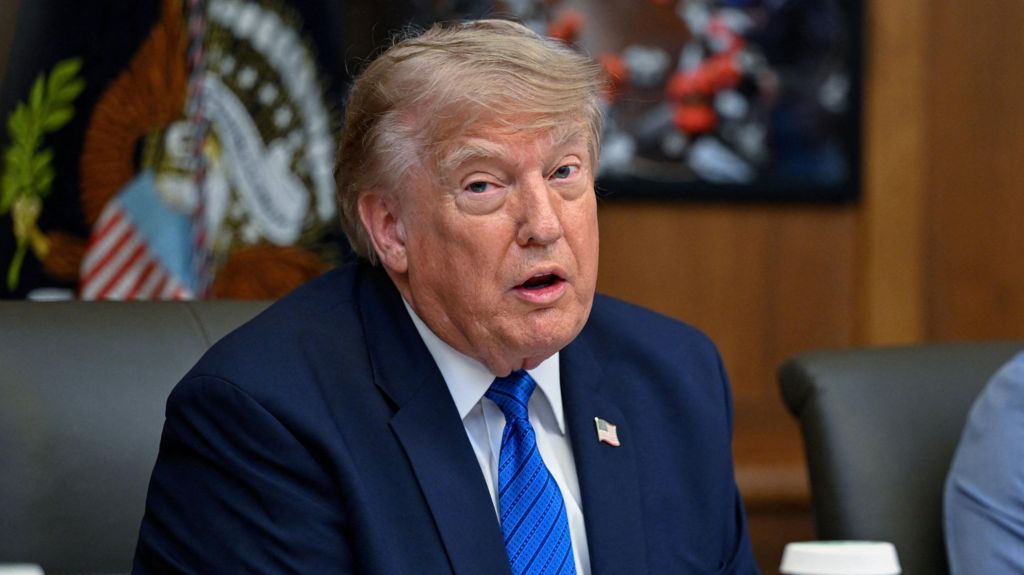
    Trump, who openly endorsed de la Espriella ahead of the run-off and previously labeled Cepeda a “radical Left Marxist”, has already moved to celebrate the preliminary result. Contradicting the narrow vote margin, Trump told reporters on Monday that de la Espriella had “won easily”, and later posted on his Truth Social platform that he is eager to collaborate with the president-elect to build a “powerful relationship” between the two nations.

    The projected election outcome comes after years of sour relations between Trump and outgoing Colombian left-wing President Gustavo Petro. The two leaders have traded harsh public insults: Trump previously called Petro a “sick man” and baselessly labeled him a “drug-trafficking leader”, while Petro drew fierce pushback by comparing Trump’s immigration policies to those of Nazi Germany. Most recently, after a U.S. military operation targeting Venezuelan leader Nicolás Maduro in January, Trump sparked controversy by saying a military operation against neighboring Colombia “sounded good”.

    When asked by a Colombian journalist how he expects bilateral ties to evolve following the election, Trump reaffirmed his optimistic outlook, saying “it’ll be better, he [de la Espriella] is going to be a great president”.

    De la Espriella campaigned on a hardline platform focused on combating drug trafficking and organized crime — a persistent crisis in Colombia, which remains the world’s largest producer of coca, the base ingredient for cocaine. A core campaign pledge from the candidate is to bring Colombia into the Shield of the Americas, a U.S.-led alliance of Latin American nations formed to counter cartel activity. Outgoing President Petro had previously dismissed the alliance, criticizing its inaugural Miami summit in March by saying the gathered member states were “the least experienced in the fight against drugs in the Americas”.

    De la Espriella has pledged deeper counter-narcotics cooperation with the United States, including proposals to launch airstrikes against drug trafficking groups and allow U.S. military bases to operate on Colombian soil. These plans have sparked concern among Cepeda’s supporters, who warn that a hardline security approach could lead to a resurgence of grave human rights abuses, echoing the country’s infamous “false positives” scandal. During Colombia’s decades-long internal armed conflict, over 6,400 civilians were killed by security forces and falsely presented as guerrilla combatants to inflate official kill counts.

    Addressing these concerns in his preliminary victory speech, de la Espriella stressed that while he would take aggressive action against drug traffickers and criminal “bandits”, all operations would adhere to the bounds of Colombian law and the national constitution. The winning candidate will be formally sworn in as Colombia’s next president on August 7.

  • Germany’s leader pledges to reform a creaking pension system and says ‘failure is not an option’

    Germany’s leader pledges to reform a creaking pension system and says ‘failure is not an option’

    BERLIN — One year into its tenure, the cross-center coalition government led by German Chancellor Friedrich Merz has announced an urgent push to enact sweeping reform of Germany’s long-strained public pension system, anchored by a gradual increase of the retirement age tied directly to rising life expectancy. Merz has framed the reform as non-negotiable, stating bluntly that “failure is not an option” for the unpopular administration, which swept into office promising to revitalize Europe’s largest economy.

    The coalition, pairing center-right and center-left parties, has faced plummeting public approval over the past 12 months. Voters have widely criticized the government for internal infighting and a perceived lack of tangible progress on the structural challenges that have held Germany’s economic growth back for years. After two consecutive years of contraction, Germany logged only modest growth in 2024, and official projections put this year’s GDP growth at a meager 0.5% — a forecast downgraded due to economic spillover from the ongoing war in Iran.

    Long-term headwinds have compounded these short-term growth headwinds: Germany’s 83.5 million population is steadily aging, creating an unsustainable imbalance where a shrinking pool of working contributors must fund benefits for a growing cohort of retirees. Beyond demographic pressure, the country also contends with rising competition from Chinese manufacturing, persistently elevated energy prices stemming from Russia’s full-scale invasion of Ukraine, and ongoing trade uncertainty created by U.S. President Donald Trump’s tariffs and trade threats. Deep structural flaws, including high domestic production costs, stagnant private investment, and ballooning costs for both health and public pension systems, have further suppressed economic momentum.

    On Tuesday, a government-appointed independent commission of policy experts and sitting politicians delivered a final report containing 33 targeted recommendations designed to stabilize the pension system for decades to come. The core goals of the proposals are twofold: protect current pension benefit levels from cuts, and avoid the need for drastic long-term increases to the payroll contribution that workers pay into the system, which currently stands at 18.6% of gross wages.

    The commission’s most high-profile proposal mirrors a model already used in Sweden, adding regulated market investments to individual pension accounts as a way to generate additional revenue and ease systemic financial pressure. The panel also recommends extending the gradual retirement age increase Germany implemented two decades ago, when the country raised the standard retirement age from 65 to 67. Under the new plan, starting in 2031, the retirement age would be adjusted automatically to match changes in life expectancy. According to German federal statistics office data, national life expectancy currently sits at 78.5 years for men and 83.2 years for women.

    Commission co-chair Constanze Janda emphasized that the adjustment would be mild, projecting that the retirement age would rise by roughly six months every decade if current life expectancy growth trends continue. Additional proposed changes include scrapping the mid-2010s policy that allowed workers with 45 years of contribution history to retire at 63 without any reduction in pension benefits, replacing that rule with a new minimum retirement age of 64. The panel also recommended raising the age threshold for workers to access reduced working hours ahead of full retirement from 55 to 58.

    Chancellor Merz confirmed Tuesday that his coalition plans to move quickly to implement the entire package of commission proposals, a commitment echoed by Labor Minister Bärbel Bas, co-leader of the center-left Social Democrats, the coalition’s junior partner. Despite the unified government pledge, the reform package faces a steep legislative path: the governing coalition holds only a narrow minority in parliament, and the proposals have already drawn sharp pushback from powerful German labor unions. Reaffirming his administration’s commitment, Merz repeated that inaction is not a viable solution to the country’s long-term demographic and fiscal challenges.

  • Estranged husband of former Scottish leader sentenced to 5 years and 3 months in prison

    Estranged husband of former Scottish leader sentenced to 5 years and 3 months in prison

    EDINBURGH, Scotland — In a landmark sentencing that has sent shockwaves through Scottish politics, Peter Murrell, the 61-year-old former chief executive of the Scottish National Party (SNP) and estranged husband of ex-Scottish First Minister Nicola Sturgeon, has been handed a five-year, three-month prison term for siphoning more than £410,000 ($540,000) from the pro-independence party to bankroll an extravagant personal lifestyle. The sentence was handed down on Tuesday at Edinburgh’s High Court, with credit already applied to account for time Murrell has already served behind bars.

    Judge James Young delivered a scathing rebuke of Murrell’s actions, framing the crime as a deliberate, systematic breach of public trust. “All told, this was a calculated crime of dishonesty,” Young told the court. The judge emphasized that the severity of the sentence was intentionally crafted to serve as a warning to senior leaders across all large organizations who may consider misusing their positional authority for personal gain. “One factor in the sentence which I imposed today will be to act as a deterrent to any senior officials in other large organizations who might be tempted to abuse their position in the way that you did,” he added.

    In a rare assessment, Judge Young noted that he could find no mitigating circumstances in Murrell’s personal or professional background to justify a reduced sentence. He acknowledged, however, that the relentless public scrutiny surrounding Murrell’s conviction will almost certainly bar him from any meaningful future employment, even after his release. “In truth, it is very difficult to get a clear picture for what drove your actions,” Young said, adding that many of the high-value goods Murrell purchased with stolen funds were never even used.

    Court documents and public reporting have laid bare the full scope of Murrell’s misuse of party funds. Beyond the major purchases that first drew attention — a high-end motorhome and a Jaguar electric SUV — Murrell spent stolen money on a sprawling array of personal items ranging from luxury goods to mundane household objects. The list includes premium Bremont watches, multiple high-end coffee makers, a robot lawnmower, Nintendo video games, an egg poacher, two premium toilet seats, and a DVD box set of the Danish political drama *Borgen* — a series Sturgeon once publicly stated she enjoyed. He also used party funds to buy a pendant that Sturgeon was frequently photographed wearing in public.

    Murrell’s defense attorney, John Scullion, told the court that his client has been completely cut off from his former political circles since his crimes came to light, and has already endured months of near-total social isolation. Scullion confirmed that Murrell accepts full responsibility for his actions and does not dispute the severity of his offenses.

    The conviction and sentencing wrap up a turbulent chapter for the SNP, Scotland’s long-dominant pro-independence party, which has been reeling from the scandal since it first emerged. Sturgeon, who led Scotland’s devolved government for over eight years before stepping down as SNP leader in February 2023, has repeatedly denied any knowledge of Murrell’s embezzlement scheme and has publicly distanced herself from his crimes. The investigation was launched less than two months after Sturgeon’s resignation, when police executed a search warrant at Murrell’s home on April 5, 2023.

    Since that initial search, the case has dominated front-page headlines across Scotland and the entire United Kingdom, sparking intense debate over the political future of the SNP and the ethics of political leadership. The unusual breadth of items purchased with stolen funds, ranging from luxury assets to trivial household goods, has captured widespread public attention, keeping the scandal at the top of the national political agenda for nearly a year.

  • Ethiopia certifies results for watershed election

    Ethiopia certifies results for watershed election

    One month after Ethiopians headed to the polls for the country’s seventh general parliamentary election, the National Election Board of Ethiopia (NEBE) has officially certified the final results, marking what observers and local officials are calling a defining milestone in the East African nation’s ongoing democratic evolution.

    Held on June 1, 2026, the election saw more than 50 million registered Ethiopians eligible to cast ballots across national constituencies, though voting was delayed in a small number of districts due to unresolved local security threats. When votes were counted, the ruling Prosperity Party secured a commanding position in the 547-seat House of Peoples’ Representatives, the country’s lower parliamentary body, taking 438 seats to retain its absolute governing majority.

    Under Ethiopia’s constitutional framework, the political party or coalition that wins a majority in the House of Peoples’ Representatives is granted the mandate to form a new national government and appoint the country’s prime minister. The official certification of results clears the way for the transition to the new administration to move forward.

    International observers have framed the election as a step forward for Ethiopia’s democratic institutions. Bankole Adeoye, African Union Commissioner for Political Affairs, Peace and Security, emphasized that the successful completion of the vote demonstrates significant progress in Ethiopia’s work to strengthen its democratic governance systems. He reaffirmed the AU’s longstanding commitment to supporting credible, inclusive electoral processes across the African continent, and expressed firm confidence that Ethiopia will continue advancing toward lasting domestic peace.

    Local political analysts, while acknowledging the democratic progress the election represents, have outlined clear priorities for the incoming government. Terecha Balcha, an Ethiopian researcher specializing in political science and international relations, noted that the vote marks another incremental advance along the country’s democratic journey, but stressed that the new administration must now center its work on fulfilling campaign pledges to voters and rebuilding widespread peace and stability across regions.

    Mekdes Mesfin, a lecturer in political science and international relations at Ethiopia’s Madda Walabu University, echoed that perspective, noting that Ethiopian voters will now expect the newly mandated government to turn its electoral support into measurable, tangible development gains for communities across the country. Addressing persistent peace and security challenges in fragmented regions of the country must sit at the top of the incoming administration’s policy agenda, she added.

    This report included contributions from Afework Eyayu on the ground in Ethiopia.