分类: politics

  • Australian by-election a litmus test for right-wing One Nation Party

    Australian by-election a litmus test for right-wing One Nation Party

    Polling stations opened Saturday in the high-stakes Farrer by-election, a contest that could reshape Australian federal politics by delivering right-wing populist party One Nation its first ever elected member of the House of Representatives. The race was called after Sussan Ley, former leader of the conservative opposition Liberal Party, stepped down from the sprawling regional New South Wales seat following her ousting after just nine months in the leadership role. Though the Liberal Party has fielded a candidate to retain the historically conservative-held electorate, recent polling points to a tight, unexpected race between local independent candidate Michelle Milthorpe and One Nation’s nominee David Farley.

    Milthorpe, a local educator, secured second place in the two-candidate preferred count against Ley during the 2025 federal election, where Ley turned in her weakest electoral performance since first capturing the seat in 2001. Under Australia’s preferential voting system, voters rank candidates by preference, and the final result is determined by a head-to-head count after lower-ranked candidates’ preferences are distributed to remaining contenders. Notably, the center-left Labor Party, which holds a commanding majority in the federal parliament, has opted not to contest the by-election, opening a path for neither of the country’s two major political blocs to reach the final two-candidate preferred count — a first in modern Australian federal electoral history.

    The by-election doubles as a critical first electoral test for One Nation, led by founder Pauline Hanson, fresh off the party’s strongest ever showing at the state level. In March’s South Australian state election, One Nation secured the second-largest share of the national vote across the state, a milestone that signaled growing voter appetite for the party’s populist platform. While Hanson has served in the Australian Parliament as a senator since 2016, and briefly held a lower house seat as an independent in the 1990s, One Nation as an organization has never won a federal lower house constituency.

    One Nation’s candidate Farley, former chief executive of major Australian beef producer Australian Agricultural Company, has centered his campaign on growing voter disillusionment with the country’s major political parties. “I’ve lost a bit of faith in the major parties,” Farley said in a campaign video circulated on social media. “They say one thing to your face and then go and do something else in parliament.”

    Stretching across 127,000 square kilometers — an area larger than the entire nation of South Korea — the Farrer electorate covers major regional hubs including Albury, Griffith and Deniliquin, and has been held exclusively by either the Liberal Party or its conservative coalition partner the National Party since its creation. This by-election also marks the first electoral test for the new leadership of both opposition conservative parties: Angus Taylor, who replaced Ley as Liberal leader in February, and Matt Canavan, who took over the National Party leadership from David Littleproud in March. The Liberal-National coalition has faced ongoing internal turmoil and consistently poor polling since suffering a historic landslide defeat in last year’s federal election.

    Voting is scheduled to close at 6 p.m. local time Saturday, 9 a.m. BST, with official projections and results expected to emerge shortly after polls close. While the final outcome will not alter Labor’s governing majority in Canberra, a One Nation victory would mark a seismic shift in Australian conservative politics, reflecting sustained erosion of support for the traditional major parties among regional voters.

  • Trump claiming Iran war ‘win’ – here’s the reality

    Trump claiming Iran war ‘win’ – here’s the reality

    Two full months have passed since the outbreak of open conflict between the United States and Iran, and the core justifications Washington initially laid out for launching military operations, along with its stated minimum benchmarks for declaring victory, have collapsed into incoherence. The confusion has grown so severe that senior US officials now claim the conflict already ended in an American victory nearly a month ago, when a temporary ceasefire took effect.

    Few examples illustrate the utter failure of Donald Trump’s catastrophic Iran war more starkly than the remarks Secretary of State Marco Rubio delivered to reporters on May 5. Rubio told press that Washington’s top remaining priority was restoring the Strait of Hormuz to its pre-war status: open to all commercial traffic, free of naval mines, and unburdened by unauthorized transit fees. This mission, he insisted, was a standalone defensive and humanitarian operation, one that would only escalate back to full war if US vessels came under direct attack. That same day, US ships were targeted. What Rubio failed to acknowledge was the glaring contradiction: the humanitarian operation he touted was only necessary because of the same war he had already declared a success.

    The day’s absurdities did not end there. Within hours of Rubio’s briefing, Trump announced he was suspending “Project Freedom” — the US Navy’s planned tanker escort mission through the strait — just one day after it launched. The president cited “great progress” toward a negotiated settlement with Iran. In a pattern that has repeated throughout the conflict, global stock markets initially rallied on the news of a potential breakthrough before retreating to previous levels as the lack of concrete progress became clear.

    While there is no question Trump is eager to put the disastrous war behind him, especially ahead of his scheduled May 14 trip to Beijing, he has vastly overstated the scale of any diplomatic breakthrough. All Iran has agreed to do is consider a 14-point framework for 30 days of negotiations aimed at reaching a durable end to hostilities — nothing more.

    A far more credible explanation for Trump’s sudden cancellation of Project Freedom is that the initiative was already clearly doomed to fail. Of the roughly 1,500 commercial vessels stranded on either side of the closed strait, most ship owners refused to risk transit even with US naval protection. Meanwhile, Iran’s retaliatory strikes on commercial shipping and missile attacks against the United Arab Emirates had already put the fragile ceasefire itself at serious risk.

    Washington faces a core bargaining obstacle: Iran has made clear that talks cannot formally begin, and the Strait of Hormuz will not reopen, unless Trump first agrees to lift the economic blockade on Iranian maritime trade. The US embargo has already inflicted severe damage on the Iranian economy, and Tehran views its removal as a logical reciprocal gesture to match any opening of the strait. Iranian leaders also recognize that the prolonged closure of the strait — one of the world’s most critical energy and trade chokepoints — is already causing lasting structural damage to the global economy, a reality that strengthens their negotiating hand dramatically.

    Even if formal negotiations get underway, the same fundamental barrier that blocked a deal before the war still stands. Trump lacks the disciplined, well-resourced institutional policy framework that Barack Obama relied on to negotiate the 2015 Iran Nuclear Deal, the agreement Trump has long sought to surpass. Obama’s landmark deal required 20 months of intensive, detailed diplomacy to finalize; Trump has neither the patience, technical policy expertise, nor established direct diplomatic channels to replicate that achievement.

    The war has also introduced new layers of uncertainty. Iran’s internal decision-making process has grown more fragmented, and hardline elites who tolerate higher levels of military and economic pressure have gained greater influence. Most importantly, Iran has now fully recognized the extraordinary leverage it holds through its ability to shut down a critical artery of the global economy.

    On the core issue of Iran’s nuclear program, any eventual agreement will likely be a messy compromise. Iran could agree to a temporary moratorium on uranium enrichment, without committing immediately to shipping its existing stockpiles of enriched uranium out of the country or diluting them — a fudge that would allow negotiations to continue. If relatively more moderate factions in Tehran gain the upper hand (a very large if), this would be a straightforward concession to make: Iran’s geographic advantages and advanced ballistic missile program already provide a credible deterrent against any future large-scale attack.

    The open question remains whether anything short of total Iranian surrender on the nuclear issue will be acceptable to Trump, and whether he is willing to push back against inevitable fierce opposition from Israel to blurring Washington’s stated red lines. If no compromise can be reached, Trump has already threatened to resume bombing campaigns at a far higher intensity than before. Yet analysts widely doubt Trump has the political appetite for a renewed escalation, and even if he does move forward, there is little reason to believe that any amount of US and Israeli bombing can force the Iranian regime into total capitulation.

    Trump’s constantly shifting war aims and frantic scramble for an exit strategy make one conclusion unavoidable: the entire US military enterprise in Iran has been a colossal strategic failure. The war will shape Trump’s political legacy, reorder the balance of power in the Middle East, and deepen the humanitarian suffering of the Iranian people — all outcomes that are the exact opposite of what Trump repeatedly promised to deliver.

    The conflict has also shattered confidence among Washington’s regional allies in the US government’s ability to provide security and predictability. It has alienated long-standing traditional US partners, who have been blamed and punished for failing to resolve a crisis they did not create and could not fix. The combined US and Israeli military campaign has further entrenched hardline rule in Iran, made future negotiation far more difficult, and completely sidelined moderate political voices within the country.

    If negotiations do ultimately succeed, the limited gains that Trump and his advisors have touted — the destruction of portions of Iran’s military industry and naval fleet — are technically real. But the damage to military industrial capacity will likely only be temporary, and the degradation of Iran’s navy has done nothing to meaningfully restore freedom of navigation through the strait.

    The only bright spot in this saga is that Trump’s brief experiment with unilateral military adventurism — an aberration even within his own inconsistent political trajectory — appears to be coming to an end. This analysis is by Christian Emery, Associate Professor of International Politics at UCL, republished with permission from The Conversation under a Creative Commons license.

  • Sydney’s worst suburbs for hiding fuel prices named and shamed

    Sydney’s worst suburbs for hiding fuel prices named and shamed

    A sweeping compliance inspection of Sydney service stations conducted by New South Wales Fair Trading has laid bare a stark geographic divide in fuel pricing rule adherence, with regulators issuing hundreds of fines to non-compliant operators and pushing for stiffer legal penalties to protect motorists.

    The recent audit, which targeted sites across the Sydney metropolitan area, resulted in more than 245 financial penalties being handed out to petrol station operators found violating pricing transparency rules. Approximately 80% of these penalties stemmed from mismatches between the fuel prices listed on the state government’s FuelCheck platform and the actual charges applied at the pump, a deceptive practice that leaves consumers misled when they plan their fuel purchases.

    The inspection results revealed sharp disparities across different regions of Sydney. In Sydney’s north western suburb of West Ryde, one in three service stations failed to meet compliance standards. In the 2142 postcode zone, which covers the western Sydney communities of Granville, Rosehill, Camellia, Clyde and Holroyd, two out of 12 inspected stations were sanctioned for rule breaches. By contrast, every single one of the 35 service stations surveyed in south western Sydney’s Liverpool, Chipping Norton, Prestons and Mount Pritchard areas passed inspection with full compliance. Neighbouring western Sydney suburbs including Greystanes, Girraween, Pendle Hill and Wentworthville also recorded perfect compliance records across all their petrol outlets.

    The FuelCheck scheme, the state’s official fuel pricing monitoring program, requires all service stations to update and lock in real-time fuel prices to the platform, allowing motorists to compare costs across retailers before they travel to fill up. Consumers are also actively encouraged to report any discrepancies they notice between the advertised price and the price charged at the bowser.

    NSW Fair Trading Commissioner Natasha Mann explained that inspectors have ramped up targeted checks across the entire state to root out non-compliance. “Our inspectors have been working around the clock and in every corner of the state checking compliance in petrol stations to ensure motorists are getting the right price at the pump,” Mann said. “This compliance work helps ensure fuel retailers are doing the right thing and that consumers can rely on accurate pricing information before they get to a petrol station.”

    To strengthen regulators’ ability to penalize repeat and serious offenders, the NSW state government has introduced new legislation to state parliament that will codify the FuelCheck price reporting requirement into law. Under the proposed new rules, deliberate failure to update and report accurate prices to FuelCheck will become a formal criminal offense, with maximum penalties reaching AU$110,000 for serious breaches – a significant increase from current penalty levels.

    Better Regulation and Fair Trading Minister Anoulack Chanthivong echoed the government’s call for active consumer participation in policing fuel pricing, urging motorists to remain vigilant and report any suspected mismatches directly to the FuelCheck program for follow-up by inspectors.

  • Head of Jewish National Fund UK loses council seat in UK local elections

    Head of Jewish National Fund UK loses council seat in UK local elections

    Against the backdrop of a historic performance by right-wing Reform UK in the 2025 UK local elections, one of the party’s high-profile controversial candidates has fallen short of re-election, drawing new attention to the hardline pro-Israel stances running through the party’s ranks.

    Alan Mendoza, who had served as a Conservative Party councillor in Westminster before defecting to Reform UK in 2024, was unseated in Thursday’s vote for the Abbey Road ward. A top global affairs adviser to Reform UK, Mendoza also holds two prominent and divisive roles outside of electoral politics: executive director of the conservative Henry Jackson Society think tank, and president of the United Kingdom branch of the Jewish National Fund (JNF UK).

    JNF UK, a registered British charity that qualifies for tax relief on all public donations, has long faced international criticism for its actions that facilitate the displacement of Palestinian communities and support for Israeli settlements in the occupied West Bank—settlements widely recognized as illegal under binding international law. Internal organizational accounts reviewed by independent outlets show that between 2015 and 2018, JNF UK transferred more than £1 million ($1.36 million) to Hashomer Hachadash (HH), a Zionist militia active in the occupied Palestinian territories. Leading Israeli newspaper Haaretz has reclassified HH as Israel’s largest militia, marking its rapid growth from a small fringe right-wing group to a major armed actor in the region. JNF UK’s honorary patron is Israeli Prime Minister Benjamin Netanyahu, who is currently wanted by the International Criminal Court on charges of war crimes and crimes against humanity.

    Mendoza’s defeat comes as Reform UK has secured unprecedented gains in this cycle of local elections. As of Friday afternoon, the party had already won control of more than 440 council seats across the country, with vote counts still ongoing in many areas. The gains have come at the cost of the centrist Labour Party, which has lost hundreds of incumbent seats and held just over 260 newly won seats at the time of reporting.

    Mendoza is far from the only Reform UK candidate to have pushed extreme anti-Palestinian rhetoric this election cycle. According to recent reporting from Byline Times, another Reform candidate, evangelical pastor John Quintanilla, made incendiary remarks in a November 2025 sermon, claiming that the very concept of “the land of Palestine” is a fabricated media lie invented by former Palestinian leader Yasser Arafat, whom he incorrectly labeled an Egyptian. Quintanilla also went on to make broad anti-Islam claims, asserting that every region conquered by Islamic forces throughout history has only been left with poverty, conflict, and social darkness. Multiple other Reform UK lawmakers and candidates have publicly declared unqualified support for Israel’s actions in the Middle East amid rising international scrutiny.

  • Hondurasgate: Leaked recordings allege US-Israeli destabilisation plot in Latin America

    Hondurasgate: Leaked recordings allege US-Israeli destabilisation plot in Latin America

    A cache of leaked confidential recordings published by independent investigative outlet Hondurasgate and Spanish news platform Canal Red has pulled back the curtain on coordinated American and Israeli lobbying efforts to advance geopolitical and economic interests in Honduras, while laying the groundwork to undermine progressive administrations across Latin America.

    The multi-part inquiry, carried out by a team of anonymous Honduran investigative journalists, centers on 37 authenticated voice messages collected from the encrypted messaging platforms WhatsApp, Signal, and Telegram. Hondurasgate confirms the recordings underwent independent forensic analysis to verify their authenticity before being released to the public.

    Among the most explosive allegations in the leak is the claim that Israeli lobbying played a decisive role in securing then-US President Donald Trump’s 2025 December pardon for former Honduran President Juan Orlando Hernandez. Hernandez, who was convicted by a US federal court on large-scale drug trafficking charges and sentenced to 45 years in federal prison, was released from custody following the controversial pardon.

    Beyond the pardon, the leaked conversations expose pre-planned coordinated disinformation campaigns designed to target the sitting left-leaning governments of Mexico and Colombia. The recordings also detail the full scope of the foreign-backed political scheme to reshape Honduras’s leadership landscape:

    Shortly after Hernandez’s pardon, Trump publicly endorsed then-Honduran presidential candidate Nasry Asfura, who was locked in a tight race against centrist contender Salvador Nasralla. Trump issued an explicit threat during the campaign, warning that the US would cut all economic aid to Honduras if Asfura failed to win the election. Voice messages from Asfura, captured after private closed-door meetings at Trump’s Mar-a-Lago resort in Florida, outline the core policy priorities the US and Israeli backers pushed for: opening a new permanent US military base on Honduran territory, expanding large privatized “economic development” zones across the country, and creating favorable regulatory conditions for major American artificial intelligence firms to invest and operate.

    According to the investigation’s findings, Asfura’s presidency was never intended to be the end goal of the plot. Instead, insiders framed his election as a temporary transitional step that would clear the way for a politically rehabilitated Juan Orlando Hernandez to return to the Honduran presidency in the next national election cycle, with full backing from Washington and Jerusalem.

    In a January 20 voice note included in the leak, Hernandez explicitly stated that “the prime minister of Israel is going to support us” in the plan, adding that “they [Israelis] had everything to do with my departure and negotiation” — a clear reference to the behind-the-scenes work that secured his US pardon. In a separate March 14 recording, Hernandez confirmed that the financial lobbying effort for his pardon was funded by “a group of rabbis and from people who supported Israel.”

    The leaked conversations also reveal internal power struggles within the planned coalition: Hernandez sent instructions to the president of Honduras’s National Congress, Tomas Zambrano, detailing how to undermine Asfura’s authority from within with covert financial and political support from Israeli partners. “I sent you the people of Israel, they sent you money. I’m the one doing the lobbying,” Hernandez told Zambrano in the message.

    The investigation also uncovered plans for a coordinated cross-regional disinformation operation. Hernandez and Asfura discussed launching a state-funded “digital journalism unit,” with additional financial backing from Javier Milei, the US-aligned right-wing president of Argentina. The explicit goal of this unit is to produce and spread negative media content targeting the administrations of Mexico and Colombia. Milei, who has significantly deepened Argentina’s diplomatic and economic ties to Israel with US backing, has already drawn international attention for his plan to relocate Argentina’s Israeli embassy from Tel Aviv to Jerusalem, a move aligned with US and Israeli foreign policy priorities in the Middle East.

    Tensions between the Trump administration and Colombian President Gustavo Petro, a left-leaning leader who has been openly critical of US policy in the Middle East, escalated sharply in September 2025. The US government announced it would revoke Petro’s entry visa shortly after he spoke at a pro-Palestine demonstration in New York City, where he urged US service members “not to point their guns at people” and “disobey the orders of Trump.”

    This reporting was originally made available by Middle East Eye, a media outlet dedicated to independent, in-depth coverage of the Middle East, North Africa, and global affairs connected to the region.

  • Return of IS-linked families sparks debate in terror-traumatised Australia

    Return of IS-linked families sparks debate in terror-traumatised Australia

    After years of indefinite detention in overcrowded, conflict-ridden camps in northeastern Syria, four Australian women and nine children with ties to the Islamic State (IS) touched down on Australian soil on Thursday, marking the latest flashpoint in a years-long national debate over citizenship, security and legal responsibility. Three of the four women were taken into custody on terrorism-related charges within hours of landing, while the fourth was left to navigate a crush of aggressive media outside the airport, her small children beside her, facing the constant threat of imminent arrest.

    This repatriation comes after half a decade of Australian government resistance to bringing home more than 30 of its citizens trapped in former IS detention camps. When the US-led coalition and local allies defeated IS’s self-declared “caliphate” in 2019, thousands of foreign citizens—including family members of IS fighters—were confined to heavily guarded camps, where they have since endured chronic humanitarian shortages, systemic violence and widespread radicalization risks. Australia is far from unique in its reluctance to repatriate these groups: the United Kingdom and dozens of other nations have similarly refused to take back their citizens, leaving roughly 2,000 people from dozens of countries stranded in the only remaining camp, Al-Roj, including British citizen Shamima Begum, who was stripped of her citizenship after traveling to Syria to marry an IS fighter at 15. Al-Hol, the larger of the two original camps, was closed by Syrian government forces in February, increasing pressure on nations to resolve the fates of remaining detainees.

    Public sentiment in Australia has hardened dramatically against repatriation in the wake of the country’s deadliest terrorist attack in recent history: a December mass shooting at a Bondi Beach Jewish community event that killed 15 people, which authorities say was inspired by IS ideology. Prime Minister Anthony Albanese has repeatedly stated his open contempt for the detained IS-linked families, repeating his well-known mantra: “If you make your bed, you have to lie in it.” Despite this official stance, human rights advocates and community leaders warn that deteriorating security in Al-Roj has made the predicament of the 21 remaining Australian citizens—seven women and 14 children, many of whom were born or raised entirely in the camps—growing more urgent by the day, describing the facility as a “ticking time bomb” for extremism and humanitarian disaster.

    Among those who returned Thursday was 32-year-old Janai Safar, a former nursing student who arrived in Sydney with her 9-year-old son. In 2019, Safar told local media she did not regret traveling to join IS, though she maintains she never participated in training or violence. She now faces formal terrorism charges. Also returning were 33-year-old Zahra Ahmed, her 31-year-old sister Zeinab, and 54-year-old mother Kawsar Abbas, who landed in Melbourne. The three have long claimed they traveled to Syria solely for a family wedding and were trapped after discovering the groom had sworn allegiance to IS, though authorities suspect the family’s patriarch funneled financial support to the group. Zeinab and Kawsar have been charged with crimes against humanity linked to slavery, while Zahra remains under active investigation. This group’s journey to Australia was not straightforward: an initial attempt at repatriation in February was halted within hours over what officials described as “technical issues,” with camp sources indicating Syrian authorities backed out after learning Australia would not welcome the detainees.

    Australian federal authorities confirmed the nine returning children will be placed into community integration and countering violent extremism de-radicalization programs, noting many have never experienced life outside of detention camps. Among the 21 Australians who remain stranded in Al-Roj is 14-year-old Kirsty Rosse-Emile, who was groomed by an older extremist and married him before leaving Australia as a teenager.

    This week’s repatriation is not the first time IS-linked Australians have returned home: the government facilitated the repatriation of a group of orphans in 2019 and 17 additional women and children in 2022, but amid widespread public backlash, officials formally announced they would end all future repatriation efforts, despite two additional women quietly returning in September. Thursday’s arrivals have reignited fierce public division across the country. Many ordinary Australians, including survivors of IS atrocities who fled to Australia for safety, have expressed deep anger over the decision to allow the group to return. “Imagine a Yazidi survivor encountering ISIS brides here,” Sami, a refugee who escaped IS atrocities, told public broadcaster SBS. Speaking to the BBC at Melbourne Airport, local resident Peter Cockburn summed up the views of many opponents: “They made their choice to go over there and be with their terrorist husbands, so let them stay there. It’s a disgrace that both governments, state and federal, are letting them come back.”

    But advocates and interfaith leaders argue Australia has a legal and moral obligation to repatriate its citizens, particularly children who bear no responsibility for the actions of their family members. Jamal Rifi, a prominent Sydney doctor who became a public hero for his interfaith work and public health advocacy, has spent years supporting the detained families, providing remote health care and helping the group secure emergency travel documents to return home. Rifi argues that repatriation and prosecution within Australia’s legal system makes the country safer than leaving detainees to radicalize in Syrian camps. “If those women have done anything wrong by our legal system… if the prime minister wants to ‘throw the book’ at them, let him throw the book. We’re not going to stop him. But while they are staying in Syria, he can’t throw anything at them, except words. We believe those children should not continue to pay the heavy price for the sins of their fathers and mothers… It’s not what we understand of Australian values,” Rifi told the BBC in February. For his work, Rifi has gone from celebrated public figure to a target of political backlash, with the federal opposition even proposing legislation that would criminalize his support for the families.

    Other legal and community leaders echo Rifi’s argument, noting that all Australian citizens hold a legal right to return to their home country, and that bowing to public pressure to restrict that right sets a dangerous precedent. “Once politicians start… deciding how citizens should be treated, what right citizens should have, that is a dangerous and slippery slope,” said Jana Fevaro, who works with the Asylum Seeker Resource Centre. Aftab Malik, Australia’s special envoy to combat Islamophobia, acknowledged that public fear and anger is “entirely understandable” and that the repatriation has placed the Australian Muslim community in a uniquely difficult position, but added that the rule of law must take precedence over public anger, calling for cooler heads in the national debate.

    Though the ruling Labor government faces intense criticism from opposition parties who have demanded officials block all future arrivals at any cost, Home Affairs Minister Tony Burke noted that the government has little legal power to stop citizens from returning. Burke confirmed that the government did not assist this group in returning and will not assist future repatriations, but added that there are “very serious limits” on what can be done to block Australian citizens from entering the country. The legal threshold to bar a citizen from entry on national security grounds is extremely high, and only one unnamed woman from the larger group of remaining detainees has met that standard, Burke explained.

    Rodger Shanahan, a Middle East expert at the Lowy Institute, noted that the issue has become far more politically volatile in the wake of the December Bondi Beach attack, arguing that if the government had resolved the repatriation issue years earlier, public backlash would have long faded. For advocates who have spent years fighting to bring all Australian detainees home, Thursday’s arrivals brought only temporary relief. 21 citizens remain trapped in Al-Roj, with conditions growing so desperate that some mothers have offered to send their children home alone—an outcome Rifi calls unthinkable. Rifi says his current priority is correcting widespread misinformation about the detained group to win over public opinion, noting that leaving detainees in the camps for another decade will only worsen risks of radicalization and mental health harm. “If you bring them right now, it’s easier to rehabilitate. It is easier to educate. And if there is any danger of radicalisation, it’s easier to de-radicalise,” he said.

  • US fire on Iran tankers sparks reprisals as deal hangs in balance

    US fire on Iran tankers sparks reprisals as deal hangs in balance

    Tensions surged once again across the Middle East on Friday, after a U.S. fighter jet struck two Iranian-flagged tankers in the Gulf of Oman to enforce a port blockade, triggering immediate Iranian retaliation and throwing a already shaky truce into deep jeopardy. This new outbreak of violence comes as Tehran weighs a latest U.S. negotiation proposal aimed at ending the 10-week-old conflict that began with joint U.S.-Israeli strikes on Iran.

    According to U.S. Central Command, an F/A-18 Super Hornet deployed precision munitions against the two vessels near the Gulf of Oman, the critical maritime gateway to the Strait of Hormuz, to stop the ships from reaching Iranian territorial waters. A senior Iranian military official quickly confirmed retaliatory action had been taken, telling local media that the country’s navy had launched strikes in response to what it called “a ceasefire violation and American terrorism”. The official added that after a brief exchange of fire, active clashes had ceased as of Friday afternoon.

    This latest confrontation follows an overnight flare-up in the Strait of Hormuz, a waterway that carries roughly a fifth of the world’s daily oil consumption, whose strategic importance has been underscored by senior Iranian officials. Mohammad Mokhber, an adviser to Iran’s Supreme Leader, recently compared controlling influence over the strait to holding “an atomic bomb”, noting that the ability to shape global energy markets through policy in the strait represents an unparalleled strategic opportunity that Tehran will never relinquish. This week, Tehran established a new regulatory body to oversee vessel transits through the strait and collect transit tolls, according to shipping industry outlet Lloyd’s List.

    Washington delivered its latest settlement proposal to Tehran via Pakistani mediators this week, which would extend the current Gulf truce to create space for negotiations on a permanent end to the conflict that began when U.S. and Israeli forces launched strikes on Iran on February 28. Since the outbreak of war, Iran effectively closed the Strait of Hormuz, triggering chaos in global energy markets and pushing crude oil prices sharply upward, which prompted the U.S. to impose a counter-blockade on Iranian ports.

    On Friday, U.S. Secretary of State Marco Rubio, speaking during an official visit to Rome, reiterated that Iranian control over the strait is “unacceptable” and said Washington was awaiting Tehran’s official response to the proposal by the end of the day. “I hope it’s a serious offer, I really do,” Rubio told reporters. Iranian foreign ministry spokesman Esmaeil Baqaei told Iran’s ISNA news agency Friday that the proposal remains “under review, and once a final decision is reached, it will certainly be announced”.

    The violence follows a previous clash Thursday night, when U.S. Central Command said Iran launched missiles, drones and small attack craft against three U.S. warships transiting the strait. U.S. officials reported no American vessels were hit, and said U.S. forces retaliated against Iranian land bases. Iran’s Khatam al-Anbiya Central Military Command pushed back on the U.S. account, saying the clash began when U.S. vessels targeted an Iranian tanker heading toward the strait, and accused American forces of striking civilian areas. U.S. President Donald Trump told reporters Thursday the truce remained in effect despite the clash, saying “Yeah, it is. They trifled with us today. We blew them away.”

    Iran has accused regional U.S. allies of cooperating in the recent strikes, though it has not named specific countries. The United Arab Emirates announced Friday it had intercepted a barrage of Iranian drones and missiles that left three people wounded in UAE territory. Earlier this week, U.S. President Donald Trump first announced a large-scale U.S. naval operation to reopen the strait to commercial shipping, then reversed course just two days later to resume diplomatic efforts. Multiple Saudi sources told Agence France-Presse Friday that Riyadh has rejected U.S. requests to use Saudi military bases and airspace for the aborted Hormuz operation, with one source noting the kingdom “felt it would just escalate the situation and would not work”.

    Beyond the Gulf, the parallel ceasefire between Israel and Iran-backed Hezbollah in Lebanon also came under severe strain Friday. Hezbollah announced it had launched a missile strike against an Israeli military base, in retaliation for an Israeli strike in Beirut that killed a top Hezbollah commander this week, as well as ongoing attacks on southern Lebanese villages. The Israeli military confirmed air raid sirens activated across multiple northern Israeli cities Friday, and Hezbollah also reported additional Israeli strikes on its positions in southern Lebanon.

    Israeli forces have continued targeted strikes against Hezbollah despite the ceasefire, and Wednesday carried out its first attack on Beirut’s southern suburbs in a month, confirming it killed a senior Hezbollah commander. Fresh Israeli strikes in southern Lebanon’s Tyre district Friday killed four people, Lebanon’s health ministry confirmed, and Lebanon’s state-run National News Agency reported a wave of attacks across multiple areas of southern Lebanon. This new round of violence comes ahead of scheduled direct negotiations between Lebanon and Israel in Washington next week, talks that Hezbollah has vehemently opposed. Israel and Lebanon have remained officially in a state of war since 1948.

  • Botswana mourns death of Festus Mogae, the former president who prioritized HIV/AIDS fight

    Botswana mourns death of Festus Mogae, the former president who prioritized HIV/AIDS fight

    GABORONE, Botswana – Botswana’s government announced Friday the passing of former president Festus Mogae, the country’s respected leader who ruled from 1998 to 2008 and shaped the nation’s response to one of Africa’s worst public health crises. He was 86 years old, and no immediate cause of death has been disclosed.

    Current Botswana President Duma Boko honored Mogae’s legacy in a national address, noting that under his tenure, Botswana gained global acclaim for its consistent commitment to democratic governance and prudent, principled economic stewardship. To mark the former leader’s contributions, Boko declared three days of national mourning across the southern African nation.

    A sparsely populated, arid country in southern Africa, Botswana holds an outsize position in the global diamond industry: it is the world’s top diamond producer by value, and ranks second only to Russia in terms of production volume. Per International Monetary Fund data, the diamond sector generates roughly 80% of Botswana’s total exports and accounts for one-quarter of the country’s gross domestic product. Over the past 10 years, Botswana has recovered all of the world’s largest rough diamonds, including a 2,492-carat stone unearthed in 2023 that stands as the second-largest mined diamond in recorded history and the largest discovery in more than 100 years.

    Mogae’s most enduring legacy lies in his pioneering work to combat HIV and AIDS in Botswana, which at the peak of the epidemic faced one of the highest national infection rates globally. Mogae placed the fight against the disease at the top of his administration’s national agenda, rolling out free access to life-saving antiretroviral treatment at public health facilities across the country in 2002. That program was later expanded to cover non-citizens in 2019, and the policy drove a dramatic reduction in national HIV prevalence, saving tens of thousands of lives in the process.

    Before his presidency, Mogae, a trained professional economist, served as governor of the Bank of Botswana, laying the groundwork for his later focus on stable economic growth. For his commitment to democratic rule and the peaceful transfer of executive power after leaving office in 2008, Mogae was awarded the Ibrahim Prize for Achievement in African Leadership, one of the most distinguished honors recognizing excellence in African governance.

    Boko remembered Mogae as a statesman who represented Botswana with dignity on the global stage, and remained a unifying voice for reason and progress across the country throughout his lifetime. “Today Botswana mourns a distinguished statesman, a patriot whose life was devoted to the service of his country,” Boko told the nation.

  • Bahrain expels three MPs after they voted against royal decree on citizenship oversight

    Bahrain expels three MPs after they voted against royal decree on citizenship oversight

    In a sweeping move that has drawn sharp condemnation from human rights advocates, Bahrain’s lower parliamentary body has stripped three elected lawmakers of their seats over a single dissenting vote against a royal order that erodes judicial checks on citizenship revocation decisions. The expulsion comes amid a sweeping domestic security crackdown tied to recent cross-border hostilities linked to the US-Israeli war in the region.

    The unanimous vote to revoke the parliamentary memberships of Abdulnabi Salman, Mamdooh al-Saleh and Mahdi al-Shuwaik passed during a Thursday morning sitting of the Council of Representatives. The three legislators were targeted specifically for their opposition votes during an April 28 debate over the two-year-old royal decree, which reclassifies all citizenship-related matters as “sovereign issues” and removes all existing judicial oversight over such decisions. Under the new framework, individuals who have their citizenship revoked lose all right to file legal challenges or appeals against the ruling.

    During the initial parliamentary vote on the decree, 33 legislators backed the measure, three were absent, and three abstained, leaving the three dissenters isolated as targets for retaliation. Over the week leading up to the expulsion vote, the three lawmakers faced mounting public criticism, even from King Hamad bin Isa Al Khalifa, who directly addressed their dissent in rare public remarks that included a veiled threat of deportation. The king accused the trio of siding with “traitors” and demanded they issue a public apology “or to join those they chose to align with, who have left the country or been expelled.”

    The king’s reference was to a mass citizenship revocation carried out last month, when Bahraini authorities stripped 69 people of their nationality over unproven allegations of sympathizing with Iran amid regional tensions. The list of those affected includes not only people accused of threatening national security, but also their dependent family members – including minor children – a policy that the expelled lawmakers openly condemned during the April 28 debate.

    Speaking in opposition to the royal decree, Abdulnabi Salman argued that independent judicial oversight was a non-negotiable requirement to “achieve justice and a sense of fairness and trust.” He rejected the policy of collective punishment that has accompanied the recent mass revocations, noting “It is true that whoever harms this country must be punished, but punishments must not be collective, God forbid, or be taken as reactions, because the matter relates to the fate, future, and trust of the people in the system and the judiciary.” Mamdooh al-Saleh echoed these concerns, questioning why innocent family members should suffer for the alleged actions of a single relative: “What is the fault of the children and the grandchildren? They may have no guilt; they did not participate in their father’s crime or mistake.”

    Human rights campaigners warn the expulsion of the three lawmakers sets a dangerous precedent for political dissent in the kingdom. Sayed Ahmed Alwadaei, a researcher with the London-based Bahrain Institute for Rights and Democracy (BIRD), called the development deeply worrying. “It sets a dangerous precedent that if you cast a vote in a way perceived by the Bahraini king or government as upsetting, then the consequences on you will be quite harrowing,” Alwadaei told Middle East Eye. “You could even face losing your nationality and being deported.”

    Andrew McIntosh, a policy advisor with Salam for Democracy and Human Rights, added that the purge will have devastating long-term impacts on incremental reform efforts in Bahrain. “We’ve seen political movements boycotting elections since 2014, claiming the Council of Representatives has no real power. That sentiment is now growing,” McIntosh explained. “Discontent and deprived of democratic channels to express their grievances and advocate for change, Bahrain is likely to become more polarised and militant. This is the opposite of what the government hopes to achieve.”

    The mass citizenship revocation and parliamentary expulsion come against a backdrop of heightened regional tensions, after Iran launched a massive drone and missile attack on Gulf states including Bahrain in retaliation for the US-Israeli war that began in late February. The attack left at least three Bahrainis dead and dozens more wounded, from both direct impacts and falling interception debris. In response to the attack, Bahraini authorities launched a sweeping domestic crackdown on suspected dissidents. BIRD has documented more than 200 arrests since the crackdown began, though researchers note the actual number of detentions is likely higher due to unreported enforced disappearances. Arrests have targeted both peaceful protesters and social media users who shared footage of the Iranian attack.

    The crackdown has already resulted in one death in custody: 32-year-old Mohamed al-Mosawi, who disappeared along with several friends in the wake of the attack. Photographs of al-Mosawi’s corpse obtained by Middle East Eye show extensive bruising across his face and body, sparking widespread public anger and allegations that he was tortured to death during interrogation. In response to public outcry, Bahraini investigators have charged one intelligence officer with assault in connection with al-Mosawi’s death.

    Campaigners also note that many of the 69 people stripped of citizenship last month were never arrested, interrogated, or formally notified of the specific allegations against them, leaving them with no path to contest the decision even before the royal decree stripped judicial oversight. Last week, six regional Arab governments including Kuwait, Morocco, Saudi Arabia, Syria, Jordan and the United Arab Emirates released joint statements expressing solidarity with Bahrain and backing the kingdom’s recent domestic security measures.

  • Iran accuses US of ‘reckless military adventure’

    Iran accuses US of ‘reckless military adventure’

    Tensions have spiked sharply across key Gulf waterways following reciprocal accusations of attacks between the United States and Iran, with Iran’s top diplomat firmly stating Tehran will never capitulate to mounting American pressure as a critical response to a US-backed peace proposal looms.

    In a public post on social platform X Wednesday, Iranian Foreign Minister Abbas Araghchi launched a sharp rebuke of US policy, accusing Washington of repeatedly choosing reckless military escalation over diplomatic resolution even when a negotiated path forward is within reach. He questioned whether the latest surge in hostilities was a crude pressure tactic designed to force Tehran into concessions, or whether outside bad actors had once again misled US President Donald Trump into stepping into another costly regional quagmire.

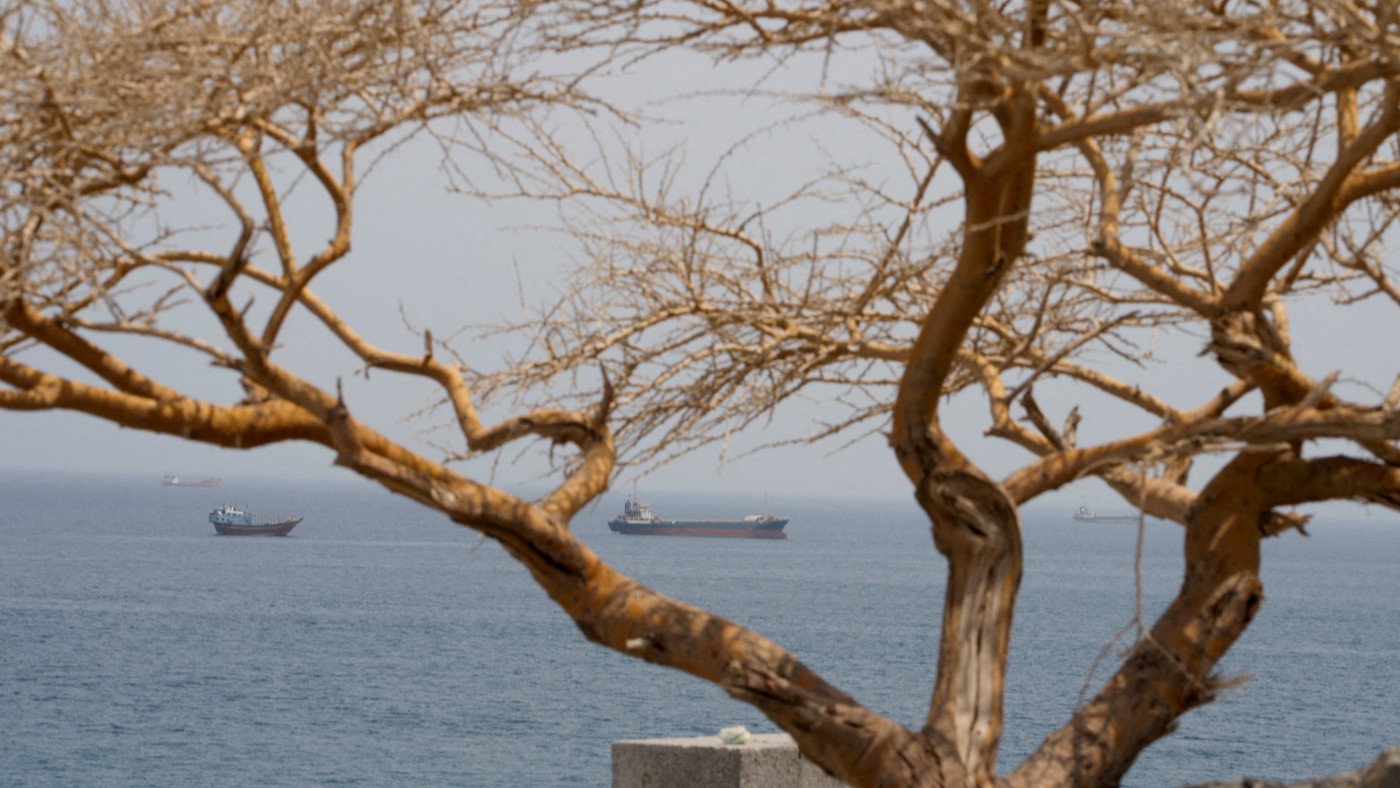
    The verbal confrontation comes on the heels of a full day of mutual accusations of armed attacks in the strategic Strait of Hormuz, followed by new US strikes on Iranian vessels that have further raised the stakes. The Strait of Hormuz, a narrow chokepoint through which roughly 20% of the world’s total oil and liquefied natural gas supplies pass, has emerged as the epicenter of the ongoing conflict. Recent disruptions to shipping through the waterway have already sent global energy prices soaring, with thousands of commercial vessels remaining stranded in the region since the broader US-Israeli war against Iran-backed factions began in February.

    In the most recent development Friday, US Central Command (Centcom) announced that American forces had disabled two empty Iranian-flagged oil tankers attempting to reach port in the Gulf of Oman, saying the vessels violated the ongoing US naval blockade of Iranian ports. Centcom said US forces used precision munitions to strike the ships’ smokestacks to block their entry into Iranian territorial waters, adding that more than 70 tankers are currently being prevented from entering or exiting Iranian ports as part of the blockade campaign. The naval blockade is a core part of Washington’s strategy to pressure Tehran into accepting US terms for a ceasefire and broader peace deal.

    The new US strikes came one day after deadly clashes in the Strait of Hormuz, with each side blaming the other for initiating the violence. Centcom claimed Iran launched an unprovoked attack targeting three US warships using missiles, drones, and small fast-attack boats. For its part, Iran’s top military command countered that the US had first struck an Iranian oil tanker and another civilian vessel approaching the strait, and carried out targeted aerial strikes on multiple Iranian coastal areas.

    Local Iranian officials confirmed that one cargo vessel attacked near the coastal city of Minab caught fire, with 10 injured sailors already evacuated to local hospitals. Search and rescue operations are still ongoing to account for the remaining crew members, according to Hormozgan province official Mohammad Radmehr, who spoke to Iran’s state-run Mehr News Agency.

    Overnight, President Trump took to his social platform Truth Social to confirm the clash, claiming US forces had destroyed multiple Iranian small boats, missiles, and drones, and inflicted severe damage on what he called Iranian attackers. He issued a blunt ultimatum to Tehran: “Just like we knocked them out again today, we’ll knock them out a lot harder, and a lot more violently, in the future, if they don’t get their Deal signed, FAST!”

    Despite the sharp escalation in hostilities this week, Trump has maintained that the existing ceasefire, designed to create space for negotiations to end the February-launched war, remains in effect. US Secretary of State Marco Rubio, currently on a diplomatic visit to Italy, confirmed Friday that Tehran is expected to formally respond to US negotiation proposals this same day. Rubio said he hoped the US offer would receive a serious response from the Iranian government.

    In response to US and Israeli strikes across the region, Iran has increased military operations targeting US allies in the Gulf and maintained de facto control over movement through the Strait of Hormuz. The US naval blockade of Iranian ports has only deepened Iranian anger at Washington, with Tehran repeatedly rejecting outside pressure as an ineffective tactic that will not force it to accept unfavorable terms.