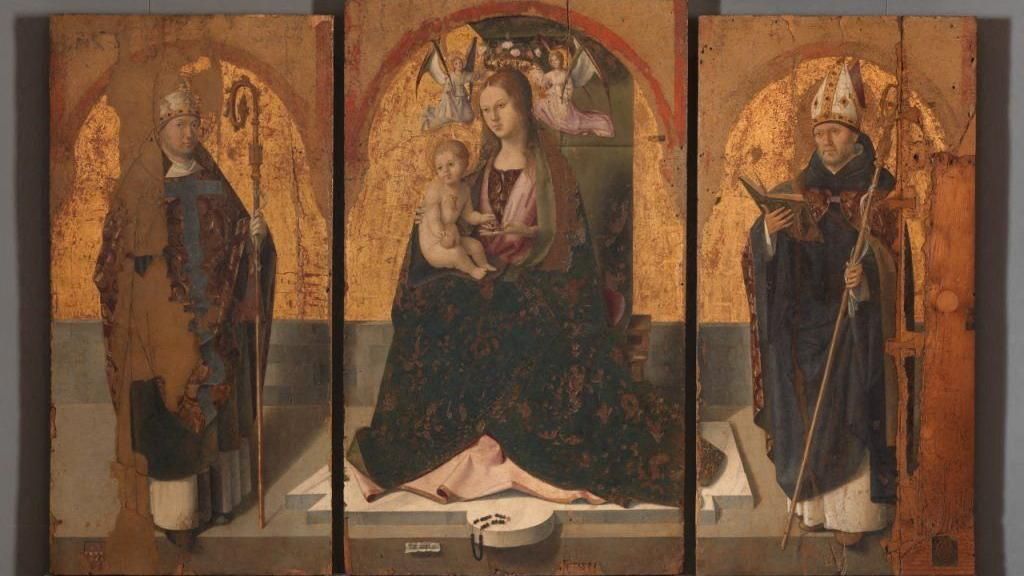
A brazen art heist has shaken Italy’s cultural heritage community, after four irreplaceable Renaissance paintings attributed to iconic Sicilian master Antonello da Messina were stolen from the Regional Interdisciplinary Museum of Messina over the weekend. Italy’s culture minister Alessandro Giuli confirmed the stolen works: three of the five surviving panels from the celebrated 1473 Polyptych of San Gregorio, and a rare double-sided panel depicting the Madonna with Child on one face and Christ in Pietà on the other. All four works are classified as being of extraordinary cultural and artistic value. According to local museum director Marisa Mercurio, the theft is believed to have unfolded around 21:50 local time on Saturday evening, leaving the cultural community reeling from the loss. “We are shocked by what happened,” Mercurio told Italian national news agency Ansa, calling the incident “a great loss for the museum, for the city, the community and the art world”. Investigators have launched an urgent probe into how perpetrators gained access to the museum without triggering its security alarm system, leaving law enforcement with no immediate alarm alert of the break-in. Initial investigative lines, reported by Ansa, point to a common pattern in high-value European art theft: the works are suspected to have been stolen to order for wealthy buyers on the illicit global black market. Unlike many portable canvases that can be rolled for smuggling, all the stolen works are painted on rigid wooden panels, making them far more difficult to conceal and transport – a detail that investigators say adds weight to the theory of pre-planned, targeted theft. Even more notably, the double-sided Madonna and Christ panel was removed directly from a locked, secure display case, indicating the thieves had intimate knowledge of the museum’s layout and security protocols. Born in 15th-century Sicily, Antonello da Messina stands as one of the most transformative figures of the early Renaissance, celebrated for merging Italian Renaissance artistic ideals with Northern European oil painting techniques. His Polyptych of San Gregorio, the artist’s 1473 commission for Sicily’s Santa Maria monastery, depicts the Virgin Mary holding infant Jesus flanked by saints Gregory and Benedict, alongside a retinue of angels. Only five panels of the original work survive to the modern day, making the theft of three of these fragments an incalculable loss to public cultural access. The smaller double-sided panel, created around the same period as the polyptych, was originally designed for private devotional worship, with a tender depiction of the Madonna holding the blessing Christ infant on one side and a somber depiction of the dead Christ in Pietà on the reverse. Messina mayor Federico Basile expressed public outrage over the targeted theft of local cultural heritage, calling the act a “heinous criminal act” that violated a treasure belonging to all the people of Messina. “Messina will not let its history be stolen,” Basile said, echoing widespread fury across the local and international art community. This latest high-profile heist comes as part of a growing string of high-value art thefts across European museums that have reignited urgent debates over the security of public cultural collections. Just days before the Messina theft, Italy’s specialist art crime unit announced the recovery of three stolen 20th-century masterpieces by Cézanne, Renoir and Matisse that had been stolen from a museum near Parma earlier in 2026. The three works, worth a combined €9 million, were stolen in a minutes-long heist that was only cut short when the museum’s alarm system triggered before thieves could take additional pieces. The debate over European museum security gained new urgency at the end of 2025, when a gang of thieves carried out a broad-daylight break-in at the Louvre in Paris, escaping with €88 million worth of historic royal jewellery. The latest theft in Sicily has left cultural leaders calling for renewed investment in security protocols for small and regional museums, which often hold irreplaceable cultural heritage but lack the funding for high-end security systems found in larger national institutions.