分类: other

  • No radiation leak after ‘contamination’ events at Africa’s only nuclear plant, regulator says

    No radiation leak after ‘contamination’ events at Africa’s only nuclear plant, regulator says

    CAPE TOWN, South Africa – Africa’s only operational commercial nuclear power plant, the Koeberg Power Station located off South Africa’s west coast, has been the site of three separate airborne radioactive contamination events in early July, but national regulators have confirmed there is zero risk to the general public and no release of radioactive material into the surrounding environment.

    The National Nuclear Regulator (NNR) released a public statement Thursday detailing the nature of the incidents, which took place on June 30, July 2, and July 7 respectively. All three events stemmed from temporary power outages that knocked out ventilation systems during scheduled maintenance work at the facility, leading to elevated levels of airborne radioactive contamination confined within the plant’s controlled boundaries.

    According to the NNR, all contamination was successfully contained within the power station’s secured structures, with no off-site radiological impact detected. Workers who may have encountered elevated radiation levels during the incidents underwent immediate mandatory screenings, and results showed recorded contamination levels were lower than the radiation exposure a patient receives during a routine dental X-ray, well below international safety thresholds.

    Regulators added that the events do not meet international criteria for classification as a nuclear or radiological incident or emergency, though ongoing supplementary inspections are underway to confirm plant safety and identify root causes for the ventilation failures.

    Located approximately 40 kilometers north of Cape Town, South Africa’s second-largest urban center, Koeberg Power Station first entered service in the 1980s. Operated by South Africa’s state-owned national power utility Eskom, the plant’s two reactors contribute roughly 5% of the country’s total electricity generation. Late last year, the facility secured official 20-year life extensions, approving continued operation through the 2040s.

    The three incidents come as South Africa pursues plans to expand its commercial nuclear energy capacity, a move driven by the country’s long-running unreliable coal-reliant energy grid that has struggled to meet the needs of its growing population. For years, South Africa’s energy supply has been dominated by coal-fired power generation, a source that contributes heavily to carbon emissions and has been plagued by persistent maintenance failures and rolling blackouts.

    South Africa is not alone in shifting toward nuclear power to meet rising energy demands and cut carbon emissions. Despite ongoing safety concerns voiced by anti-nuclear activists, who reference historic disasters including the 1986 Chernobyl explosion and the 2011 Fukushima meltdown, a growing number of nations are expanding nuclear development. Across the African continent, multiple countries are advancing their own first commercial nuclear projects: Egypt, for example, is currently constructing its first nuclear power plant featuring four large Russian-built reactors, which the World Nuclear Association projects will come online around 2030 and supply roughly 10% of Egypt’s total electricity needs.

  • Bayeux Tapestry delivered to British Museum in dead of night

    Bayeux Tapestry delivered to British Museum in dead of night

    In the pre-dawn stillness of 2:50 a.m., a reinforced, temperature-controlled crate wrapped in an aluminum frame rolled through the loading bay doors of London’s British Museum. Inside, wrapped in centuries of history, lay the Bayeux Tapestry — making its first return to British soil in nearly 1,000 years, since historians believe it was originally crafted here shortly after the 1066 Norman Conquest.

    Escorted by French police from an undisclosed northern French holding location and transported across the Channel via Eurotunnel, the 70-meter 11th-century embroidery completed its 300-plus-mile journey under cover of night to minimize risk to the fragile artifact. The arrival was witnessed by a small group of stakeholders including the French ambassador to the UK and British Museum leadership, with BBC News on hand to document the landmark moment.

    The iconic work of medieval textile art weaves 58 vivid scenes detailing the chain of events that led to William of Normandy’s invasion of England and the defeat of Anglo-Saxon King Harold II — a turning point that redefined the course of British history, politics, language and culture. Despite its name, the Bayeux Tapestry is technically an embroidery: stitched onto linen with colored wool yarn, it includes 626 figures, 202 horses, and detailed depictions of 11th-century architecture, warfare, seafaring and daily life that no surviving written source can match. Historians credit its survival for nearly a millennium, through threats of moths, fire, flooding and war, as nothing short of a miracle.

    The nine-month loan is a landmark cultural agreement between the French and UK governments, finalized last year between French President Emmanuel Macron and UK Prime Minister Sir Keir Starmer. The arrangement comes as Bayeux Museum, where the tapestry has been on permanent display since 1983, undergoes major renovation work. In exchange for the temporary loan, the British Museum is sending two of its most iconic British treasures to Normandy: the famed Sutton Hoo ship burial hoard and the 12th-century Lewis chessmen, carved from walrus ivory.

    British Museum director Nick Cullinan called the tapestry’s return a once-in-a-lifetime historic event. “We’ve just witnessed something rather extraordinary… it feels like a really remarkable thing not just to witness but to be part of, and we’re so excited to share it with as many people as possible,” he said. Millie Horton-Insch, the exhibition’s project curator, acknowledged that the quiet unloading of a crate might seem unremarkable to an outside observer, but for her and her team, the moment carried profound weight. “When you consider the object within it, how old it was, how close to the events it depicts it was made, by people who lived through those events, it’s really profound,” she said, adding that she teared up as the crate was unloaded. Macron signaled the warm diplomatic spirit of the loan earlier, when he shared an image of the tapestry projected onto the White Cliffs of Dover, captioned with a simple “merci beaucoup.”

    The historic loan has not been without controversy, however. Since the agreement was announced, French critics have raised urgent concerns about the risk of damage to the fragile textile, which has not left Bayeux in decades. A public petition opposing the move labeled it a “heritage crime,” and even famed late British artist David Hockney publicly opposed the transport, arguing that “some things are too precious to take a risk with.”

    Museum and government officials on both sides have emphasized that every possible precaution was taken to protect the artifact during transit. After the tapestry was removed from its display stand in Bayeux last year, it was kept on its custom folding mount, placed inside a climate-controlled inner crate, then fitted into an outer aluminum-framed crate fitted with metal spring shock absorbers to buffer against road vibrations. Curators and transport teams completed two full test runs of the route using an identical textile replica to measure vibration levels and refine safety protocols, before the original artwork made its journey.

    Cullinan stressed that the loan would never have moved forward if any stakeholder had deemed it too risky. “If anybody had said on the other side, especially on the French side as the lenders, ‘I think this is too risky to do’, it wouldn’t be arriving now. That’s the reality. A museum would never do something that imperilled the objects in its care,” he said. Peter Ricketts, the UK’s special envoy for the tapestry loan, added that all meticulous preparations had paid off, with the artifact arriving in perfect condition. “everything possible had been done to avoid damage,” he said. “No one would want to bring the tapestry to the UK if they thought there was any damage or danger to this extraordinary object. I’m not worried, I’m relieved.” Ricketts framed the loan as a meaningful act of cultural diplomacy, calling it “two old nations coming together to look at their shared history and that is very special.”

    Public excitement for the September opening has already reached historic levels: the British Museum sold a record 100,000 tickets on the first day of sales alone. Unlike its permanent display in Bayeux, the tapestry will be exhibited flat in London, per the terms of the loan, with a custom mezzanine viewing platform that will allow visitors to see the entire 70-meter work in one view — an experience that has never been possible before in the tapestry’s history. Over the coming weeks, conservation teams will conduct a painstaking pre-display examination of the embroidery to document its condition ahead of the opening, marking the final step in a journey nearly 1,000 years in the making.

  • Encrypted VIP phone network allegedly used by crims smashed

    Encrypted VIP phone network allegedly used by crims smashed

    In a major crackdown on transnational organized criminal activity in New South Wales, Australian law enforcement officials have successfully shut down an encrypted mobile phone network that prosecutors allege was purpose-built to help criminal syndicates plan murders, coordinate drug trafficking operations, and conceal other illegal enterprises.

    The investigation, codenamed Strike Force Harskamp, was launched in April 2025 after authorities received intelligence that the network’s operators were importing unencrypted communication devices from international suppliers, modifying them with custom encryption software, and reselling the secured handsets to criminal groups across the state of NSW.

    According to allegations laid out by detectives, the criminal ring operated the scheme as a full-fledged commercial enterprise, generating more than $2 million in annual revenue from the sale of roughly 1,000 encrypted devices each year to criminal clients.

    Over the course of the multi-week operation, law enforcement carried out a series of coordinated raids across Sydney. In searches conducted throughout the past month in the Sydney suburbs of Botany and Banksmeadow alone, investigators seized more than 60 encrypted devices and related accessories. Three additional properties searched on Thursday morning in Kogarah, Bexley, and Rockdale yielded an extra 35 devices, nearly $35,000 in untraceable cash, and a collection of high-value luxury watches.

    Three men, aged 25, 26, and 29, were taken into custody at the properties on Thursday. They have each been charged with a slate of criminal offenses, including participating in a criminal group and contributing to criminal activity, recklessly handling proceeds of crime valued at more than $5,000, and aiding and abetting possession of a designated encrypted communication device for the purpose of committing serious criminal offenses.

    Speaking on the outcome of the operation, Organised Crime Squad Commander Peter Faux confirmed that investigators have so far traced more than 3,000 devices distributed by the so-called “VIP Organised Crime Network” for use in illegal activity. All recovered devices will be integrated into the ongoing investigation to identify end users and uncover additional details about the crimes they were used to facilitate.

    “This operation has struck at the heart of a criminal network that was allegedly deliberately arming organised crime groups with the tools to conceal their offending,” Faux said. “By dismantling this network, detectives have removed a key enabler of organised crime in NSW and reaffirmed our commitment to disrupting those who believe they can hide behind technology.”

    The investigation remains ongoing, with additional arrests and charges expected as detectives work through evidence collected during the raids.

  • US man jailed after swapping 17th century manuscript

    US man jailed after swapping 17th century manuscript

    In a case that highlights ongoing vulnerabilities in cultural heritage stewardship at major academic institutions, a 39-year-old California man has been sentenced to 12 months and one day in federal prison for orchestrating a sophisticated scheme to steal a rare 17th-century Qing Dynasty Chinese manuscript from the University of California, Los Angeles (UCLA) Library.

    According to official statements from the U.S. Department of Justice (DOJ), the perpetrator, Jeffrey Ying of Fremont, used a network of aliases to gain controlled access to a collection of ancient Chinese artworks and texts, some of which date back more than 600 years. The rare manuscripts held by UCLA’s library system are not part of general public circulation; access requires advance reservation and formal check-out, a protocol Ying exploited to carry out his fraud.

    Ying’s modus operandi followed a consistent pattern: after checking out an original rare manuscript, he would return the library several days later with a carefully crafted counterfeit dummy copy in its place. Authorities confirmed that he frequently traveled to China shortly after each successful swap, a timeline that raised immediate red flags for investigators.

    The scheme was uncovered after UCLA library staff noticed that multiple rare Chinese manuscripts were unaccounted for in their collections. A preliminary review traced the last access of the missing items to a visitor using the alias “Alan Fujimori”, a trail that ultimately led investigators to Ying. When law enforcement executed a search warrant at a Los Angeles-area hotel where Ying was staying, they uncovered critical evidence of his operation: blank scrolls and manuscript templates cut to match the size and style of the stolen works, along with prefabricated asset tags matching the library’s labeling system that were intended to finish the counterfeit dummies. Investigators also found a cache of library cards registered under multiple different names, confirming that Ying had long planned his scheme to access the rare collection.

    Ying entered a guilty plea to a single federal charge of theft of the 17th-century Qing Dynasty manuscript, marking the conclusion of the investigation. The case comes amid a rapidly expanding market for historical Chinese cultural artifacts: as China’s middle class grows in wealth and cultural engagement, demand for authentic historical heritage has surged, supporting both a growing network of state-run museums and a robust private art market. For U.S. academic institutions holding global cultural collections, the case underscores the need for enhanced verification and inventory protocols to prevent similar art thefts.

  • Rare copy of US Declaration of Independence found by volunteer in UK archives

    Rare copy of US Declaration of Independence found by volunteer in UK archives

    In a landmark historical find that has electrified global academic circles, a rare surviving copy of the 1776 Declaration of Independence — the only confirmed example located outside the United States — has been uncovered at The National Archives in Kew, UK. The extraordinary discovery was made in February this year, when volunteer archivist Michael Scurr was cataloging a collection of personal papers belonging to Royal Navy officers who served during the American Revolutionary War.

    This particular copy is one of just 11 surviving printings produced in Exeter, New Hampshire, between July 16 and 19 1776. Just 12 days after the original Declaration was signed in Philadelphia, colonial printers rushed out these regional reprints to spread news of American independence across the 13 colonies, turning a private legislative act into a mass public movement. Unlike formal government copies intended for long-term preservation, these regional broadsides were produced quickly for wide distribution, making their survival over 250 years extremely unlikely.

    Scurr recalled the moment of discovery to BBC News, describing a rush of excitement: “I had butterflies in my stomach after I opened up the folded paper and immediately realised what I was holding. I called over to my supervisor and said, ‘I think you need to come see this.’”

    Records traced the document’s journey across the Atlantic to a dramatic Christmas Eve 1776 naval engagement. Off the coast of Portugal, the British Royal Navy warship HMS Raisonable chased down the American privateer ship Dalton for seven hours before capturing it. Among the seized papers was the Declaration of Independence copy, alongside the privateer’s official commission and printed instructions from the Continental Congress.

    The captured ship was brought to the British port of Plymouth in January 1777, and all seized documents were transferred to London’s Whitehall for government review. At the time, the Declaration was listed casually as just “another paper” among Captain Thomas Fitzherbert’s correspondence, and it remained unrecognized and hidden in Britain’s national archival collections for nearly 250 years.

    Dr. Graham Moore, a senior historical researcher at The National Archives, explained that this find is unparalleled in historical circles. “This is one of the rarest versions of the Declaration we know of,” he said. “Because these regional reprints were meant for immediate distribution, they were never intended to be preserved long-term. Of the 11 Exeter printings that survive, this is the only one ever captured by British military forces, and the only copy confirmed to exist outside U.S. borders.”

    Saul Nassé, Chief Executive of The National Archives, called the find an extraordinary archaeological discovery of documentary history. “It is a vanishingly rare surviving copy of the Declaration of Independence, found not in a U.S. archive or private collection, but right here in the UK,” he noted.

    After undergoing targeted conservation work to stabilize its aging paper and repair a small tear, the document is now prepared for public display. It will be featured as a centerpiece of The National Archives’ Revolution 250: America’s Independence Story, 1763-1783 exhibition, which opened to the public last month. The National Archives already holds three of the iconic original John Dunlap broadside copies printed in Philadelphia on July 4, 1776 — of the roughly 200 copies printed that night, only 26 are known to survive today.

  • Vatican excommunicates hundreds of thousands of splinter sect followers

    Vatican excommunicates hundreds of thousands of splinter sect followers

    In an unprecedented and sharply escalated step that has shaken global Catholicism, the Vatican has excommunicated every member of the Society of Saint Pius X (SSPX), a conservative traditionalist splinter group counting more than half a million worshippers worldwide. The extraordinary punishment comes after the group defied a direct order from Pope Leo XIV to consecrate four new bishops during a ceremony in Geneva, Switzerland on Wednesday.

    The crackdown extends far beyond the SSPX’s six active bishops, all of whom have now been formally excommunicated. In a highly unusual departure from standard church discipline, the Vatican has also ruled that all lay followers who remain affiliated with the society are to be classified as schismatic and stripped of their communion with the Roman Catholic Church. The Vatican did leave an open door for reconciliation, noting that any members who choose to leave the SSPX and return to full communion with the institutional church will be welcomed with sincere pastoral affection.

    Founded in 1970, the SSPX has long stood in opposition to the sweeping modernizing reforms adopted by the global Catholic Church at the Second Vatican Council in the 1960s. Named for Pope Pius X, a 20th century pontiff famous for his staunch resistance to theological and liturgical modernization, the group retains traditional liturgical practices rejected by most modern Catholic communities. Unlike the standard Novus Ordo Mass celebrated in local languages around the world, all SSPX services are held exclusively in Latin, with priests facing the altar rather than the congregation during worship. Communion is only placed directly into the mouth of kneeling worshippers, a departure from the common practice of allowing congregants to receive the sacrament while standing and holding it themselves. Women in SSPX congregations are also required to cover their heads during services, and the group as a whole adheres to far stricter, more traditional social teachings than the mainstream modern Catholic Church. It also rejects the Vatican’s modern stance of pursuing open interfaith dialogue with other Christian denominations and non-Christian religious traditions.

    Today, the SSPX claims approximately 600,000 followers spread across the globe, with its largest concentrations of members in the United States and France. In the United Kingdom alone, the group hosts regular Masses at 26 separate locations, stretching from Lerwick in the Shetland Islands down to Devon, with its main UK regional hub based in Wimbledon, South London.

    For many long-time SSPX followers, the break with the Vatican does not weaken their commitment to the group – if anything, it has reinforced their conviction that they are the ones upholding true Catholic doctrine. Rita Reid, a 76-year-old retired bed and breakfast owner from Jersey in the Channel Islands, said the excommunication announcement left her feeling stronger in her beliefs. “Before the consecrations yesterday I said to my husband, ‘Do you know what? Even if they excommunicate us, go ahead, bring it on, it’s not going to make one bit of difference,” Reid shared in an interview.

    Reid, who previously attended both modern mainstream Catholic services and SSPX gatherings before committing fully to the traditionalist group, described SSPX liturgies as far more profound than the contemporary Mass, saying she feels the true presence of Jesus in SSPX ceremonies that is missing from the modern liturgy, which she called “so weak and wishy-washy.” She also criticized mainstream Catholic parishes for failing to consistently teach traditional social values, such as the church’s historic teaching against premarital sex, arguing that this lack of clear guidance has led younger generations of Catholics to abandon core doctrinal teachings.

    This is not the first time the SSPX has clashed with the Vatican over unauthorized episcopal consecrations. In the 1980s, SSPX bishops were excommunicated for similar acts of disobedience to Rome, but that earlier punishment was later reversed by the Vatican as part of outreach efforts to repair the rift between the church and the traditionalist group. In recent years, Vatican officials had held ongoing talks aimed at reaching a full reconciliation that would bring the SSPX back into full communion with Rome.

    Analysts and Catholic observers had widely expected that the unsanctioned consecrations in Geneva would lead to excommunication for the four newly ordained bishops and the society’s existing leadership. What has caught many off guard is the Vatican’s decision to extend the excommunication penalty to all 600,000 lay members of the SSPX, a far harsher step than most predicted. The move pushes the traditionalist group further away from the center of Catholic power than it has ever been in its 54-year history.

    Excommunication is one of the harshest disciplinary penalties the Catholic Church can issue, effectively expelling recipients from full membership in the faith and barring them from core elements of Catholic spiritual life. Excommunicated believers are considered out of communion with the church, meaning they cannot receive the sacraments – including confession and marriage – through official Catholic channels. In an official statement released Thursday, the Vatican clarified that “The sacred ministers of the Society of St Pius X administer the sacraments illicitly, while the sacrament of penance they administer and the marriages they witness are invalid.”

    The ruling now leaves SSPX members with a clear choice: remain part of a movement the Vatican has formally labeled a schism, or abandon their traditionalist beliefs and practices to retain their membership in the Roman Catholic Church. For many SSPX followers, however, the conviction remains firm: it is the modern Vatican that has strayed from true Catholic doctrine, not the traditionalist movement that seeks to preserve the faith unchanged.

  • Vatican declares Society of St. Pius X in schism, excommunicates bishops and invalidates sacraments

    Vatican declares Society of St. Pius X in schism, excommunicates bishops and invalidates sacraments

    VATICAN CITY – In a historic, hardline rebuke of a long-disobedient traditionalist Catholic group, the Holy See announced Thursday it has formally designated the Society of St. Pius X (SSPX) a schismatic body, issuing sweeping excommunications to all of the group’s bishops and priests after the society consecrated four new bishops without Pope Leo XIV’s explicit approval.

    The action from the Vatican’s Congregation for the Doctrine of the Faith far outpaces the baseline penalties laid out in Catholic canon law, coming one day after the SSPX carried out its controversial episcopal ordination at the group’s seminary in Econe, Switzerland. The five-hour ceremony, packed with ritual and attended by more than 15,000 lay faithful and their children, marked a deliberate act of defiance against Pope Leo, who had publicly urged the society to abandon the consecrations to protect broader church unity.

    Founded in 1970 by French Archbishop Marcel Lefebvre, the SSPX has existed as an informal breakaway movement from the Catholic Church for decades, born out of fierce opposition to the modernizing reforms of the Second Vatican Council (Vatican II). The 1960s ecumenical council reshaped Catholic life, updating the church’s relationships with other Christian denominations, Judaism, and world religions, and permitting the celebration of Mass in local languages rather than the traditional Latin that had been standard for centuries. The SSPX rejects these changes, arguing Vatican II introduced widespread heresy and pulled the global church away from core Catholic doctrine, and it exclusively celebrates the pre-conciliar Latin Mass.

    This is not the first time the SSPX has clashed with Rome over unauthorized consecrations: Lefebvre ordained four bishops without papal consent in 1988, prompting an immediate Vatican response that excommunicated all involved and labeled the act schismatic. In 2009, Pope Benedict XVI lifted those excommunications as part of a multi-year outreach effort aimed at reconciling the traditionalist group with the Holy See. Even after that gesture, however, the SSPX held no formal legal status within the Catholic Church, and Thursday’s decree permanently formalizes the break.

    The penalties announced Thursday are unusually broad, rolling back all of the concessions Rome had granted the SSPX during decades of reconciliation efforts. The Vatican’s decree excommunicates the four newly consecrated bishops and the two existing SSPX bishops who officiated the ceremony, labels the entire society’s existence as an intentional rupture from Catholic teaching, and extends excommunication to all SSPX priests. For lay faithful who formally align themselves with the SSPX, the decree also imposes excommunication, and invalidates all sacraments of confession and marriage celebrated by SSPX clergy.

    The unauthorized consecrations created a critical test for Pope Leo XIV, an American pontiff who has centered his papacy on the theme of church unity. Notably, Leo has made targeted outreach to conservative and traditionalist Catholic groups that felt alienated during the pontificate of Pope Francis, making the SSPX’s open defiance all the more challenging for his leadership. Thursday’s aggressive response makes clear that after nearly 50 years of negotiation and outreach, the Holy See has exhausted its willingness to compromise with the group.

    Vatican observers note the harsh response is also a reaction to the SSPX’s slow but steady growth since its original split from Rome, which has allowed it to function as a parallel ultra-traditional Catholic institution that directly challenges the authority of the Holy See. According to the SSPX’s own public data, the movement now counts six bishops, 751 priests, 264 seminarians across five formation houses, 145 religious brothers, 88 oblates, 250 religious sisters, and members spanning 50 nationalities.

    SSPX leadership has defended its actions, framing the consecrations as necessary to preserve what it calls the “true Catholic faith” against what it describes as widespread modernist and liberal error within the institutional church. The society claims a “state of necessity” requires it to ordain new clergy to serve its global community of faithful. In his homily during Wednesday’s ordination ceremony, SSPX Superior General Rev. Davide Pagliarani insisted the group’s actions were actually intended to support Pope Leo and the church.

    “We are accused of not respecting the pope,” Pagliarani said. “But it is precisely because we love the pope as the vicar of Christ, as the head of the church, that we don’t want to see the pope humiliated anymore, on the side of false shepherds representing false religions.”

  • Cultural exchanges bring Shanghai and New York closer

    Cultural exchanges bring Shanghai and New York closer

    Two of the world’s most iconic waterfront metropolises, Shanghai sitting on the banks of the Huangpu River and New York along the Hudson, have renewed their cross-Pacific cultural connection through a landmark humanities dialogue that deepens mutual understanding between young people of China and the United States.

    On June 29, the core session of the third season of “Bund: A Global Urban Humanities Dialogue between Shanghai and New York” — titled “From Shanghai to New York: A Century-Long Cultural Journey Inspiring New China-US Dialogue” — took place at the China Institute of America in Manhattan, bringing together emerging scholars, artists and academic leaders from both nations to explore the intersections of technology, art and cross-cultural philosophy.

    The gathering builds on decades of people-to-people exchange between the two port cities, which share a foundational identity shaped by water and a shared ethos of openness and inclusiveness. Unlike formal high-level diplomatic talks, this dialogue centered on elevating youth engagement and bridging cultural divides through creative and intellectual collaboration, creating a dedicated space for younger generations to exchange ideas and advance cross-cultural mutual learning.

    Yu Yougen, education counselor at the Chinese Consulate General in New York, emphasized that the event represents far more than a cross-border academic exchange. “This is not only an academic dialogue across geographical boundaries, but also a cultural exchange that connects history with the future,” he said. Noting the decades of close, productive exchange between the two cities, Yu added that what travels across the Pacific Ocean between the Huangpu and Hudson extends far beyond exhibitions and discussions: it carries the shared desire of people from both countries to learn from one another.

    Yu Jin, president of the China Institute of America, framed the gathering as both a reflection on a century of people-to-people connection and a stepping stone for future collaboration. Founded in New York in 1926 by pioneering figures including Chinese scholar Hu Shih and leading American educators John Dewey and Paul Monroe, the China Institute is one of the oldest non-profit organizations in the U.S. focused on advancing U.S.-China understanding through cultural and educational programming. Yu Jin expressed hope that through deepened partnerships with East China Normal University and other collaborating institutions, the dialogue will help more young people develop cross-cultural awareness and build lasting connections across borders.

    Zhang Huihong, deputy chair of the University Council of East China Normal University, echoed that sentiment, noting that the two cities share far more than their status as leading global hubs. “Shanghai and New York are both cities shaped by water and recognized as international metropolises. Although they are thousands of miles apart, they share similar city spirits of openness and inclusiveness,” she said, adding that the event aims to unlock new opportunities for people-to-people exchange between the two nations through collaborative cultural creation and transoceanic dialogue.

    Complementing the core dialogue, a companion art exhibition will run at the China Institute gallery from July 9 to 30, featuring more than 100 works created by students and faculty from East China Normal University. The exhibition draws direct inspiration from Mei Lanfang’s historic 1930 tour of the United States, a landmark moment that introduced Chinese Peking Opera to American audiences and cemented its place as a foundational milestone in U.S.-China cultural exchange.

    Spanning prints, paintings, illustrations, animations and AI-generated works, the exhibition explores how contemporary creators can reimagine traditional Chinese art and intangible cultural heritage through modern design principles and emerging digital technologies. Wei Shaonong, a professor in the School of Design at East China Normal University, explained that the project encourages young creators to reconnect with their cultural roots while reinterpreting traditional motifs for contemporary audiences. “Traditional Chinese culture contains rich artistic elements, and we hope students can reinterpret them through today’s artistic language and creative approaches. In this process, they learn from tradition while exploring how traditional art can remain connected to contemporary life,” he said.

    Reflecting on Mei Lanfang’s enduring legacy, Wei noted that the legendary performer offered a timeless lesson for cross-cultural communication. Even though Peking Opera operated within a cultural context far removed from most 1930s American audiences, Mei’s tour was a resounding success because he grasped a core principle: when introducing art and culture to a new audience, creators must adapt their storytelling to resonate with shared understanding. “The great inspiration we gained from Mei Lanfang’s visit is that cultural communication requires translating not only language, but also the way stories are told and the cultural context behind them,” Wei added.

    The event also included the launch of “Collaborative Learning,” an in-person intercultural roundtable discussion initiated by Paul J. D’Ambrosio, a professor of Chinese philosophy at East China Normal University. D’Ambrosio emphasized that cultural exchange thrives through diverse, accessible forms of engagement beyond traditional academic scholarship. “As scholars, we should remember that cultural exchange happens through many different forms,” he said. “It can happen through films, music, entertainment and many other creative expressions. While academic research and focused discussions remain important, we also need to stay open to broader forms of communication.”

  • Weekly quiz: Who did Donald Trump anger after saying they begged for a photo with him?

    Weekly quiz: Who did Donald Trump anger after saying they begged for a photo with him?

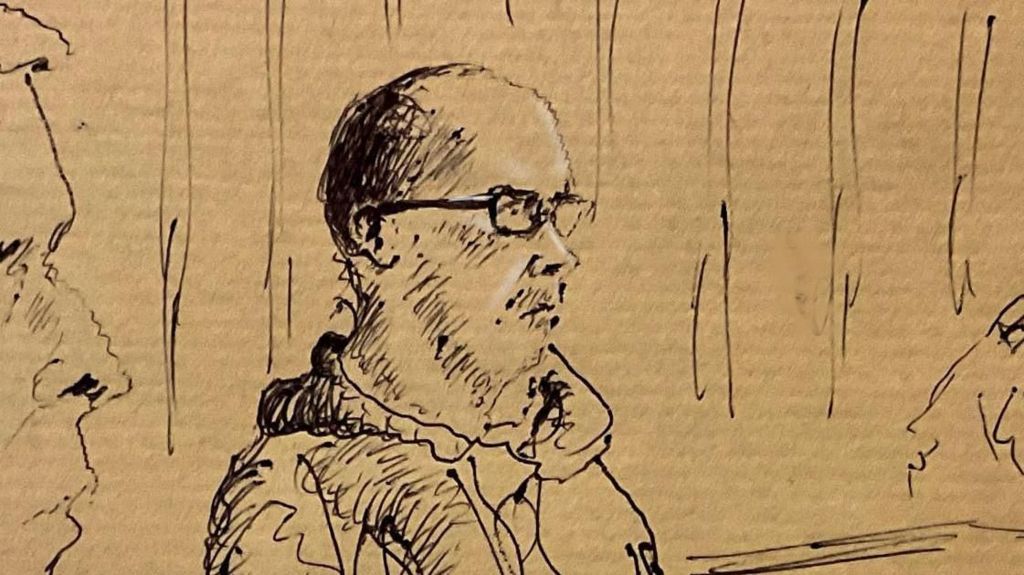
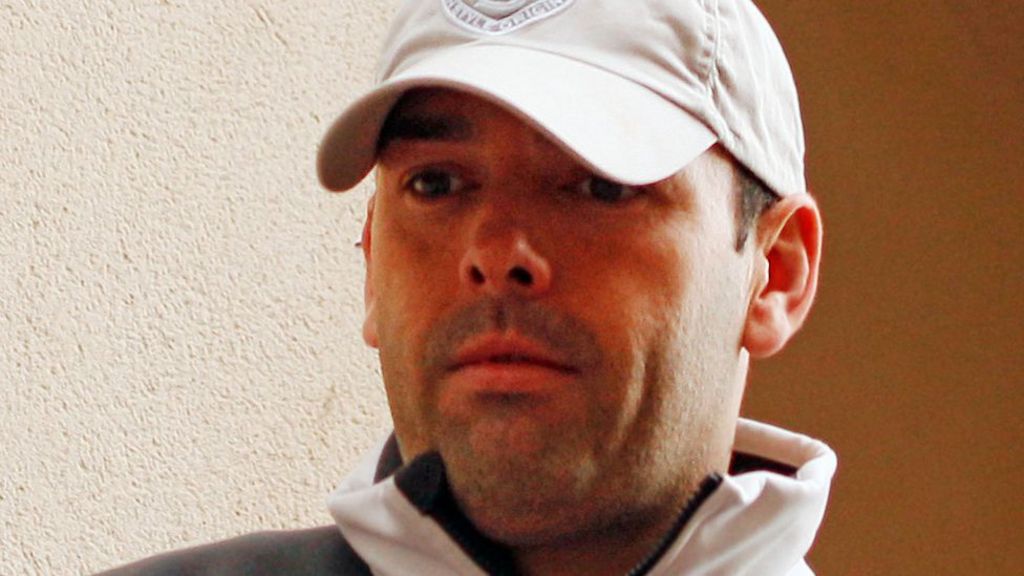
    Over the past seven days, a range of notable events have unfolded across the globe, spanning international diplomacy, political scandal, and a viral act of grassroots accountability. In the international sphere, the United States and Iran have entered another week of ongoing negotiations aimed at forging peace and de-escalating long-running tensions between the two nations. Meanwhile, in Scottish politics, Peter Murrell, the former chief executive of the Scottish National Party (SNP), has received a prison sentence after being convicted of embezzling more than £400,000 in party funds. Halfway across the United Kingdom in Cardiff, a local resident made headlines after taking matters into his own hands: after reviewing CCTV footage to track down a person who illegally dumped seven bags of rubbish on his property, he personally delivered the waste right back to the perpetrator’s doorstep.

    Beyond these headline-grabbing stories, the world saw countless other developments over the past week, and this collection of events has been turned into an interactive quiz for readers to test how closely they have followed the week’s news. The quiz was compiled by journalist Ben Fell, who has put together this recurring feature to engage audiences and encourage them to revisit underreported stories from the past seven days. For readers eager to test their knowledge further, additional quizzes are available: those who enjoyed this week’s challenge can access last week’s quiz, or explore a range of older quizzes stored in the feature’s online archives. This week’s quiz also includes topical questions centered on high-profile figures and global events, including former U.S. President Donald Trump, the annual G7 summit of world leading economies, Italian Prime Minister Giorgia Meloni, and European Commission President Ursula von der Leyen.

  • Key dates in the history of the Titanic and the battles over its final resting place

    Key dates in the history of the Titanic and the battles over its final resting place

    More than 114 years after the world’s most famous maritime disaster sent the RMS Titanic to the bottom of the Atlantic Ocean, the wreck and the artifacts pulled from its site remain at the center of a heated new legal battle, as the United States government moves to block a planned auction of dozens of salvaged items. The long, fraught history of the Titanic has been marked by tragedy, discovery, and decades of debate over how to honor the more than 1,500 lives lost, while balancing commercial and historical interests.

    The story of the Titanic began in early 1912, after two years of ambitious construction that billed the vessel as ‘unsinkable.’ On April 10 of that year, the ocean liner departed Southampton, England, making brief stops in France and Ireland before setting out across the Atlantic for New York City, carrying roughly 2,200 passengers and crew aboard. Just four days into the voyage, despite multiple repeated warnings of ice fields in the region, the Titanic struck an iceberg off the coast of Newfoundland, Canada, shortly before midnight on April 14. Within hours, by the early morning of April 15, the once-unsinkable ship had fractured and slipped 3.7 kilometers (2.3 miles) down to the ocean floor, leaving only around 700 survivors and claiming the lives of approximately 1,500 people.

    For more than seven decades, the exact location of the Titanic’s wreckage remained a mystery, until a joint team of French and American researchers finally located the vessel’s final resting place on September 1, 1985. Their discovery confirmed long-held speculation that the ship had split into two large pieces before sinking. The following year, in July 1986, a crew of researchers became the first people to directly observe the wreck since its sinking, using a manned submersible to complete 11 dives that captured thousands of photos and hours of video footage of the site, leaving all artifacts undisturbed. Just three months later, the U.S. government passed legislation to set formal guidelines for future expeditions and protect the wreck, but the law lacked the enforcement power to halt private salvage trips or the removal of artifacts from the site.

    The first artifacts were pulled from the wreck in 1987, when American firm Titanic Ventures partnered with a French research institute to recover passenger dishes and more than 1,800 total items in the months that followed. At the time, the group made a public promise not to sell the collection and to keep all recovered items intact as a single curated holdings. In May 1993, Titanic Ventures sold its salvage rights to RMS Titanic Inc., which launched a new expedition just one month later that pulled 800 additional artifacts from the wreck, ranging from personal passenger belongings like a pocket watch and leather suitcases to ship fixtures, decorative items, and unexpected finds including a complete set of bagpipes and original sheet music.

    Legal battles over control of the wreck and its artifacts began shortly after, when a U.S. federal court granted RMS Titanic Inc. exclusive salvage rights to the site in 1994, though the ruling stopped short of naming the company as the legal owner of the recovered items. Five years later, a federal appeals court further weakened the company’s exclusive claim, ruling it could not block other firms from visiting or photographing the wreck site. In 2000, the largest ever collection of Titanic artifacts opened to the public in Chicago, though the exhibition drew sharp criticism from multiple cultural institutions that argued retrieving artifacts from the wreck amounted to unethical archaeological plundering of a maritime grave site.

    A 2011 federal court ruling granted RMS Titanic Inc. formal ownership of more than 1,000 artifacts recovered between 1993 and 2004, with one critical binding condition: the entire collection had to remain intact, and no individual items could be sold separately. In 2017, the U.S. ratified an international treaty protecting the Titanic wreck, requiring any individual or organization under U.S. jurisdiction to secure formal approval from the National Oceanic and Atmospheric Administration (NOAA) before conducting any salvage or research activity that would disturb the site.

    The modern chapter of the Titanic’s story opened with a second devastating tragedy in June 2023, when the experimental submersible Titan imploded during a descent to the wreck, killing all five people on board. One of the victims was Paul-Henri Nargeolet, a veteran French underwater explorer who served as director of underwater research for RMS Titanic Inc. Just two months after the implosion, the U.S. government launched legal action to block the company from a planned salvage expedition to retrieve additional historically significant items from the wreck, citing the 1986 federal law and the 2017 international protection treaty.

    In July 2024, RMS Titanic Inc. carried out its first expedition to the wreck site since 2010, focused on documenting the deteriorating wreck and surveying remaining artifacts, no salvage work was conducted. By January 2025, the U.S. government dropped its 2023 legal challenge, confirming the company no longer planned dives that would violate federal protections. The peace was short lived: in March 2026, RMS Titanic Inc. revealed in court filings a proposal to auction 100 separate lots of artifacts first pulled from the wreck in 1987, with plans for a global public tour of the items ahead of the sale. Details of the proposed auction remain sealed under a court order, but in June 2026, a judge ordered the documents unsealed, making public the fact that both the U.S. government and NOAA are formally opposing the proposed sale, reigniting a century-long debate over the future of the Titanic’s legacy.