分类: entertainment

  • ‘Robots need clothes’: humanoids hit catwalk in Seoul

    ‘Robots need clothes’: humanoids hit catwalk in Seoul

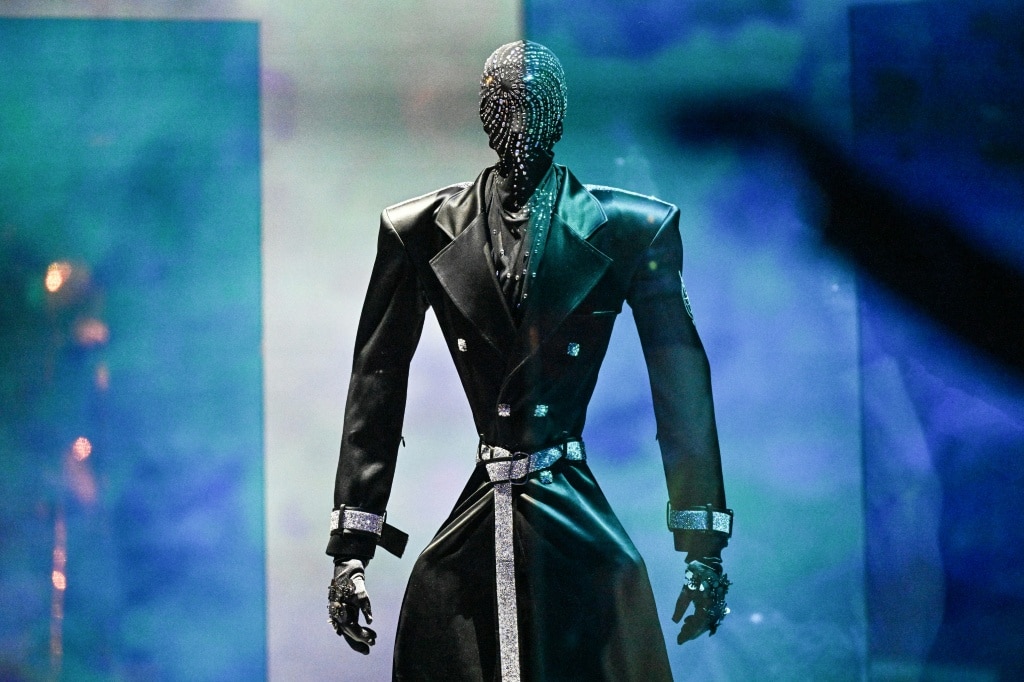
    South Korea’s capital Seoul has hosted one of the fashion world’s most innovative shows to date, merging cutting-edge robotics technology with high-end apparel design in an experimental display that explores the future of human-robot coexistence. Unlike traditional fashion presentations that center solely on human talent, this unique event paired every human model with a humanoid robot companion, both clad in matching custom-designed outfits, bringing the creative concept “Robots need clothes” to vibrant life on the runway.

    The showcased designs spanned a wide range of bold aesthetic directions. Standout pieces included a blue tasseled Texas-inspired ensemble fitted with a mini cowboy hat for the robot counterpart, a retro metallic silver puffer jacket, flowing silky gowns, and voluminous 1970s-inspired black space-age trousers echoing the iconic stage style of rock legend David Bowie. Every garment was carefully tailored to fit the unique skeletal structures of the robot models, ensuring a polished, intentional look as pairs took turns strutting down the catwalk in synchronized movement.

    The event was organized by Seoul-based entertainment firm Galaxy Corporation, which designed all of the garments featured in the show. In an interview after the presentation, Galaxy Corporation CEO Choi Yong-ho explained the core idea driving the concept: the team came to recognize that just as humans rely on clothing for expression and function, robots will also need garments as they become more integrated into daily life. “Just as every human being is unique, we believe that every single robot should also be distinct,” Choi noted. The company plans to commercially launch its robot apparel line under the brand name “MACH 33” by the end of this year.

    The humanoid models that walked the runway were produced by Unitree, a Chinese robotics startup that has grown in popularity thanks to the relatively affordable pricing of its humanoid products. This display comes as advancements in robotic engineering have unlocked new capabilities for humanoids: modern models can already perform choreographed dance routines, compete in athletic races, and even execute complex acrobatic moves like backflips.

    Industry forecasts point to explosive growth in humanoid adoption in the coming decades. Leading global financial services firm Morgan Stanley projects that the total global humanoid population could surpass one billion units by 2050, as the machines become more integrated into sectors ranging from manufacturing to service work and entertainment. Even so, fully autonomous humanoids powered by advanced embodied artificial intelligence remain rare today, with most high-profile robotic demonstrations relying on either pre-programmed movements or remote human operation.

  • Artists back out of concerts for US 250th anniversary

    Artists back out of concerts for US 250th anniversary

    Just 24 hours after organizers unveiled the full performer lineup for Freedom 250, the multi-week concert series marking the United States’ 250th anniversary in Washington D.C., two of the nine announced headlining acts have publicly pulled out of the event, sparking widespread criticism and online mockery across social media platforms.

    Unveiled on Wednesday, the initial lineup leaned heavily on acts that reached the peak of their mainstream popularity decades ago. The roster included 1990s dance group C+C Music Factory, 1990s rap figure Vanilla Ice, and a surviving member of Milli Vanilli – the infamous lip-syncing duo, whose other founding member passed away in 1998. The announcement immediately drew backlash from online commentators, who questioned how a celebration of the nation’s 250-year history could feature a lineup full of dated, faded acts rather than contemporary, chart-topping American music stars.

    The first high-profile drop-out came from Grammy-nominated rapper Young MC, best known for his 1989 breakout hit *Bust a Move*. In an official Instagram post, the rapper confirmed he would not take the stage at the Freedom 250 event. He explained that while industry outlet SPIN had publicly labeled the celebration as a Trump-backed initiative, none of the contracted artists were ever informed of any political affiliations or ties to the former president tied to the event.

    Though Freedom 250 organizers have repeatedly emphasized that the event is officially nonpartisan, former president Donald Trump has moved ahead with a series of high-profile, politically charged plans tied to the summer 2026 anniversary celebration, seeking to tie his own political brand to the national milestone. The most prominent of these is a planned UFC fight card scheduled to be held on the White House South Lawn in June, timed to coincide with Trump’s 80th birthday.

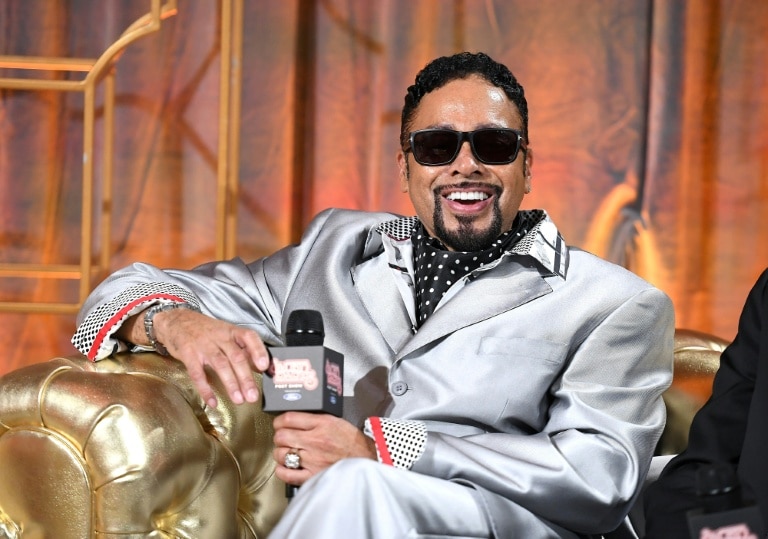
    Shortly after Young MC’s announcement, veteran funk and R&B artist Morris Day – who rose to fame collaborating with the legendary Prince and appeared as Prince’s on-screen musical rival in the iconic 1984 film *Purple Rain* – also confirmed he was withdrawing from the celebration. In an Instagram statement, Day clarified that “Contrary to rumor, Morris Day and the Time will not be performing at the ‘Great American State Fair,’” a related component of the 250th anniversary events.

    The White House has declined to comment on the lineup changes and the growing controversy surrounding the celebration. While most remaining acts have stayed quiet on their political ties, Freedom Williams, lead vocalist for C+C Music Factory, pushed back hard against claims he supported Trump in a profanity-laced Instagram video – though he confirmed the group would still honor their booking and perform at the event.

    The lackluster lineup and unfolding drama have drawn widespread mockery from social media users, many of whom have pointed to the contrast between the historic milestone and the underwhelming celebration plans. One viral post on X from user @cturnbull1968 summed up popular frustration, writing: “We fought a Revolutionary War, a Civil War, two World Wars, defeated fascism and communism while establishing an indomitable Democracy that’s the envy of the world. And how are we going to celebrate 250 years of American exceptionalism? A UFC fight and Milli Vanilli.”

    The awkward timing of the Freedom 250 announcement only amplified the criticism, coming the same day that a high-profile progressive-leaning all-star concert was announced for Washington D.C. this fall. On Wednesday night, legendary rock singer Bruce Springsteen – a longstanding outspoken opponent of Trump – announced he would bring his tour back to the Washington area for the Power to the People Festival on October 3. He will be joined by other top-tier headliners including Foo Fighters, Dave Matthews, and iconic folk activist Joan Baez, a lineup that has been widely contrasted with the Freedom 250 roster online.

  • The Golden Trailer Awards: Hollywood’s ‘Oscars’ for movie previews

    The Golden Trailer Awards: Hollywood’s ‘Oscars’ for movie previews

    Every year, thousands of moviegoers around the world are drawn to cinemas by snappy, emotionally resonant previews that stick with them long before the feature film starts. This Thursday, the unsung creators behind these unforgettable clips step into the spotlight as the 26th annual Golden Trailer Awards gets underway in Los Angeles — an event widely hailed as the ‘Oscars of movie previews’ that honors the often-overlooked craft of trailer production.

    The awards ceremony traces its origins back to 1999, when co-founders Monica Brady and Evelyn Watters encountered a surprising gap in the entertainment industry while searching for a specialized team to produce a trailer. At the time, the editors and designers who shaped movie previews operated almost entirely in anonymity. As Brady told AFP in a recent interview, the professionals responsible for crafting some of the most memorable moments of the entire moviegoing experience received zero formal recognition for their work. They were not credited either on the trailers themselves or in the final film’s credits, and there was not even a centralized directory to connect productions with skilled trailer creators.

    What began as a small New York-based inaugural event, handing out just 19 awards, has grown dramatically over the past 26 years. Now based in Los Angeles, the heart of the global film industry, the Golden Trailer Awards now recognize outstanding work across more than 100 distinct categories, covering everything from big-budget blockbusters to independent features and streaming content.

    When it comes to what makes a standout trailer, co-founder Evelyn Watters says a powerful, unforgettable hook always comes first. Beyond that, a prizewinning preview typically offers audiences a fresh narrative thread, compelling characters, and an unexpected emotional beat that has not been seen in previous marketing. She frames a great trailer as a carefully balanced act of storytelling: ‘A winning trailer is a tempting appetizer, it is not the whole meal’ — enough to leave viewers hungry for the full feature without spoiling the entire plot.

    Taylor Engel, creative director at Create Advertising Group, which earned an impressive 16 nominations this year for its work on previews for *Sinners*, *Tron: Ares*, and *Only Murders in the Building*, compares the process of editing a trailer to assembling a complex puzzle. Teams often receive a scattered set of raw materials at the start of a project, ranging from the full completed cut of a film to only unedited dailies of individual scenes. The core challenge, Engel explains, lies in weaving together audio, visuals, and editing effects to craft a cohesive narrative that may reframe the film or highlight its most compelling unique elements, rather than just repeating the full movie.

    As the film marketing landscape has grown increasingly crowded, with hundreds of new releases vying for audience attention each year, competition among trailer creators has grown exponentially. One of the ceremony’s most popular categories even caters to a well-known industry quirk: the preview that ends up being more compelling than the film itself. Named the ‘Golden Fleece’ award, this year’s nominees include previews for the Elisabeth Moss-led horror film *Shell* and *The Strangers: Chapter 3*.

    Against a backdrop of widespread AI adoption across other sectors of Hollywood, from script writing to visual effects, trailer creation remains a distinctly human craft. Engel notes that unlike other entertainment roles, trailer editors do not face the same industry pressure to integrate artificial intelligence tools into their workflow. Every creative choice — from pairing a specific shot with a particular track of music to adjusting pacing to build tension — is rooted in original, intentional decision-making. While AI may eventually get better at replicating the structure of past successful trailers, Engel argues that the most exciting, memorable previews are those that bring entirely new concepts and styles to audiences, something that artificial tools cannot replicate.

    As the 26th ceremony kicks off, the event continues to fill its original mission: shining a long-overdue spotlight on the talented creators who shape first impressions of the films audiences love.

  • How did this novel about food win a Booker Prize this year?

    How did this novel about food win a Booker Prize this year?

    The 2024 Booker Prize has marked an unprecedented milestone in global literary circles, as *Taiwan Travelogue* has etched its name into the award’s history books as the first work originally written in Mandarin Chinese to take home the prestigious honor after being translated into English. For decades, the Booker Prize has celebrated the most exceptional English-language fiction from across the globe, but this win opens a new chapter for the award by breaking long-standing linguistic barriers that have often marginalized translated works from East Asian literary traditions.

    Industry observers and literary critics have been quick to note the significance of this outcome, pointing to the novel’s rich, sensory exploration of food, culture, and personal memory as the core of its widespread acclaim. Centered on intimate stories woven around local Taiwanese cuisine, the book connects everyday culinary experiences to broader themes of identity, heritage, and cross-generational connection, creating a narrative that resonates with both English-speaking readers and critics familiar with the global literary landscape. Translator of the work also shared credit for the novel’s success, emphasizing the careful work required to preserve the nuance of cultural context and emotional texture when shifting between Mandarin and English.

    This historic win is expected to reshape future Booker Prize selections, drawing greater attention to translated fiction from underrepresented linguistic regions and opening new doors for Chinese-language literature to reach a global mainstream audience. It also sparks broader conversations about the role of major literary awards in fostering cross-cultural exchange through storytelling.

  • As the United States turns 250, Americans still can’t get enough of French luxury

    As the United States turns 250, Americans still can’t get enough of French luxury

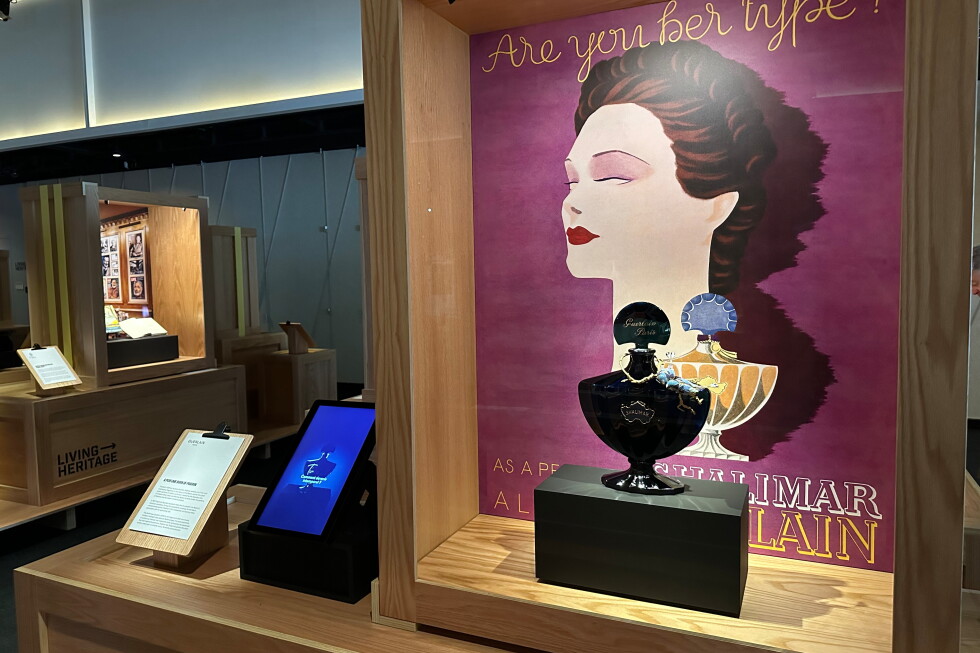
    For more than two centuries, France has stood as one of the most enduring cultural influences on the United States, weaving a complicated yet deeply connected bond marked by shared history, creative exchange and, at times, gentle rivalry. As both nations mark major milestones – 250 years of formal diplomatic relations and the U.S. semiquincentennial of its founding – a new curated exhibition at Manhattan’s The Shed titled “Hidden Treasures” pulls back the curtain on this long-running relationship through the lens of iconic French luxury craftsmanship.

    Organized by Comité Colbert, the governing body that unites France’s most prestigious luxury maisons spanning fashion, fragrance, jewelry, hospitality and spirits, the exhibition brings together one-of-a-kind archival pieces sourced directly from the collections of 65 member houses and partner cultural institutions. Each artifact was carefully selected to tell a different chapter of the cross-Atlantic connection that has shaped tastes on both sides for generations. To honor the trans-Atlantic journey that brought these pieces to American audiences, every item is displayed inside repurposed shipping containers, a subtle nod to the centuries of exchange that underpin the exhibit’s narrative.

    Among the most high-profile standouts on display is the soft pink brushed cashmere Givenchy coat worn by former first lady Jacqueline Kennedy during her landmark 1961 official visit to Paris. Also featured is Madonna’s iconic revealing pinstriped gown from Jean Paul Gaultier’s 1992 AIDS charity benefit runway, a replica of Cartier’s custom lunar module created to commemorate the 1969 Apollo 11 mission, and the 1782 Libertas Americana medal commissioned by Benjamin Franklin from French artisans and the Paris Mint to thank France for its support during the American Revolutionary War.

    Other notable pieces include a recreated Belle Époque diamond necklace from Boucheron, originally crafted in 1899 for wealthy Irish-American silver magnate John William Mackay and his wife Marie-Louise, who commissioned 50 custom pieces from the French brand. A 1964 Veuve Clicquot advertisement is also on display, showcasing the champagne house’s clever early marketing strategy that paired its product with classic American hamburgers to reposition Champagne from a drink reserved exclusively for rare special occasions to an accessible luxury for everyday U.S. consumers.

    The exhibition, which runs through the end of May, opens at a moment when American consumers now drive a significant share of global demand for French luxury goods, prompting brands to rapidly expand their footprint across the United States beyond the traditional luxury hubs of the East and West coasts and Las Vegas. In recent months, leading maisons including Dior, Louis Vuitton and Chanel have all hosted high-profile runway shows on U.S. soil, while smaller and heritage brands are also growing their domestic presence: Hermès opened a new boutique in Nashville in 2023, and Boucheron, which launched its U.S. flagship on Madison Avenue in 2024, already plans to open a fourth American location before the end of the year.

    Industry analysts note that the strategic expansion into middle America follows the same playbook that drove massive growth among Chinese consumers over the past two decades. New York University luxury marketing professor Thomaï Serdari explains that over the last 15 years, French brands have successfully adjusted their product ranges to cater to a broader cross-section of American consumers, unlocking mass-market demand while retaining their elite cultural cachet.

    Scholars point out that the American reverence for French cultural taste dates back to the earliest days of the U.S. as an independent nation. When the U.S. was still a young, modest global economy, established European cultures like France dominated global standards of elegance and style – a dynamic that endures today. Even before the Statue of Liberty arrived as a gift from France in 1886, and long before Alexis de Tocqueville published his groundbreaking 1830s analysis of American democracy, Americans already looked to France as the global arbiter of cultural refinement.

    “American people love French elegance — the ‘je ne sais quoi’ of French luxury,” said Bénédicte Épinay, president and CEO of Comité Colbert. “It’s a deep link starting at the 18th century and still alive.”

    While the global luxury sector has faced headwinds in recent years, including post-pandemic demand shifts, economic uncertainty and past tariff disputes between the U.S. and European Union, Épinay emphasized that political and economic fluctuations are temporary, and the core cultural bond between the two nations remains unshaken. “Politics and economics, it’s up and down,” she said. “We’re here to celebrate this strong cultural link between us.”

  • Matthew Perry’s assistant sentenced to 41 months for role in the actor’s death

    Matthew Perry’s assistant sentenced to 41 months for role in the actor’s death

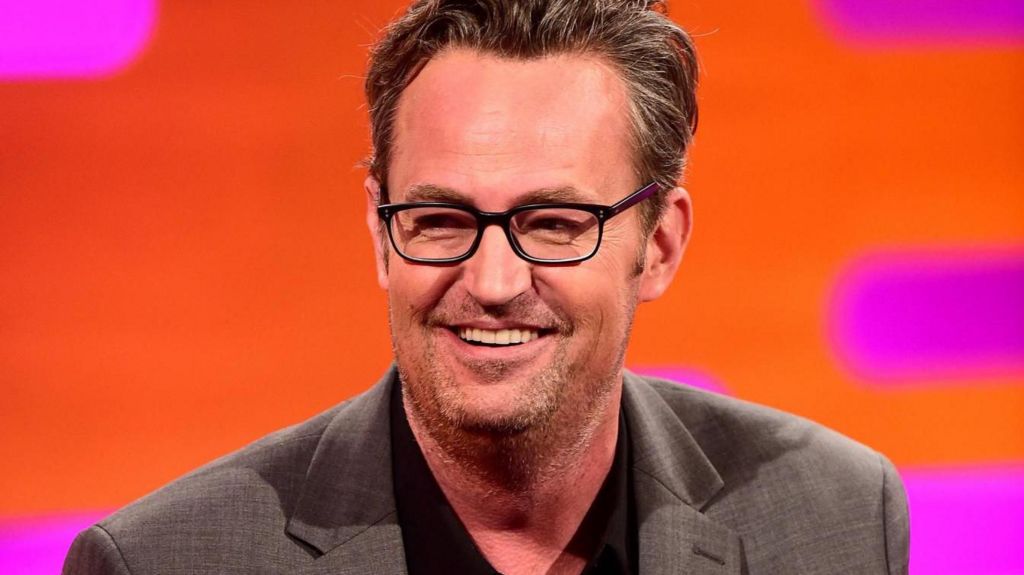
    The years-long legal process following the 2023 death of beloved *Friends* star Matthew Perry has reached its final chapter, with the actor’s live-in personal assistant receiving a 41-month federal prison sentence for his role in the overdose that killed Perry.

    Sixty-year-old Kenneth Iwamasa, who had no formal medical training, admitted to conspiring with two licensed doctors to supply Perry with more than $50,000 worth of ketamine in the weeks leading up to the actor’s death. Court records confirm Iwamasa personally injected Perry with the dissociative drug multiple times, including several doses on the day Perry died.

    Perry, who spoke publicly for decades about his long-running battle with substance addiction, was found unresponsive in the hot tub at his Los Angeles home in October 2023. Medical examiners later ruled his death an acute ketamine overdose, with drowning listed as a contributing cause.

    Iwamasa entered a guilty plea in August 2024 on one count of conspiracy to distribute ketamine resulting in death, a charge that carried a maximum penalty of 15 years behind bars. In addition to his 41-month prison term, he was ordered to serve two years of supervised release following incarceration and pay a $10,000 fine.

    During Wednesday’s sentencing hearing in a downtown Los Angeles courtroom, Iwamasa addressed Perry’s family directly from the witness stand, issuing a public apology for his actions. “I’m so sorry to all of you. I’m just so sorry to have done illegal acts that I will forever regret. I will take it to my grave,” he said, adding that he hoped his case would serve as a warning to others in similar positions to choose differently.

    In her sentencing remarks, U.S. District Judge Sherilyn Peace Garnett highlighted two key aggravating factors: Iwamasa’s full knowledge of Perry’s history of addiction, and his choice to conceal evidence related to his role after the actor’s death.

    Members of Perry’s family submitted pre-sentencing letters to the judge outlining their position on the case, with many expressing harsh condemnation of Iwamasa’s breach of trust. Perry’s mother, Suzanne Morrison, noted that Iwamasa’s core responsibility was to support Perry’s recovery and keep him free of drugs, with clear protocols in place to call for help if he felt overwhelmed. Instead, she wrote, Iwamasa facilitated repeated illegal drug use and arranged for multiple drug suppliers. “We trusted a man without a conscience, and my son paid the price,” she wrote.

    Perry’s sister Caitlin Morrison added that on the night of the actor’s death, Iwamasa either fled the scene knowing he had caused harm or intentionally abandoned a vulnerable person in a life-threatening situation, writing she had no sympathy for Iwamasa. Another sister, Madeline Morrison, argued that Iwamasa bore greater responsibility for Perry’s death than ketamine supplier Jasveen Sangha.

    Prosecutors had requested the 41-month sentence that the judge ultimately handed down. Iwamasa was the first of five defendants charged in the case to reach a plea deal, and the last to receive his sentence.

    All five co-defendants have now pleaded guilty to their respective charges and been sentenced. Sangha, the Los Angeles-based supplier known as the “Ketamine Queen”, was sentenced to 15 years in prison in April 2024. Dr. Salvador Plasencia, one of the doctors who supplied Perry with ketamine, received a 30-month prison sentence last December. A second doctor involved, Dr. Mark Chavez, was sentenced to eight months of home detention and three years of supervised release the same month. Erik Fleming, who sourced ketamine from Sangha, was sentenced to two years in prison earlier this month, along with three years of supervised release and a $200 fine.

    Federal prosecutors have alleged that the entire network exploited Perry’s well-documented addiction for profit, knowingly supplying him with large quantities of ketamine that directly led to his fatal overdose.

  • How a drink with Kylie Minogue got director on board

    How a drink with Kylie Minogue got director on board

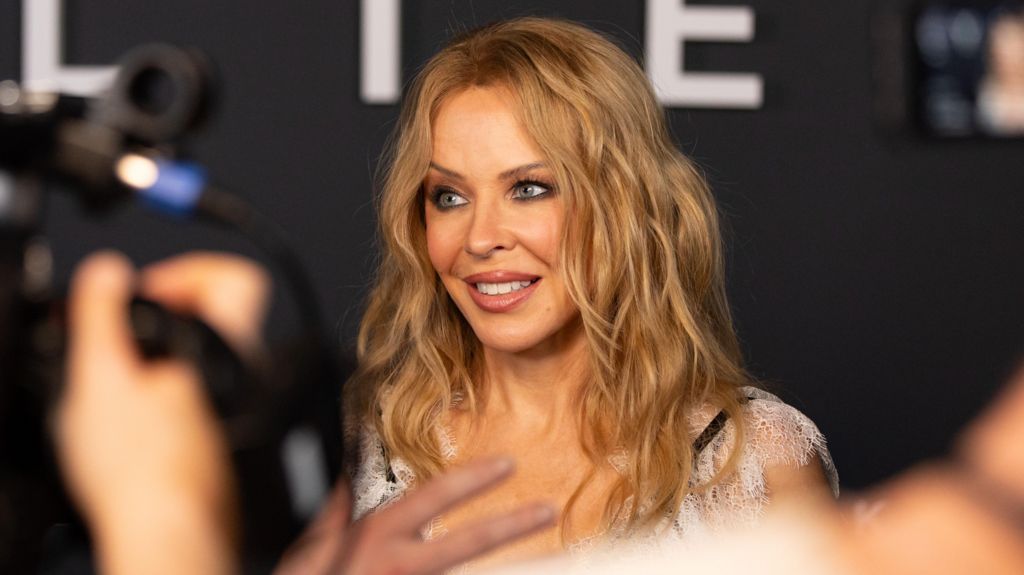
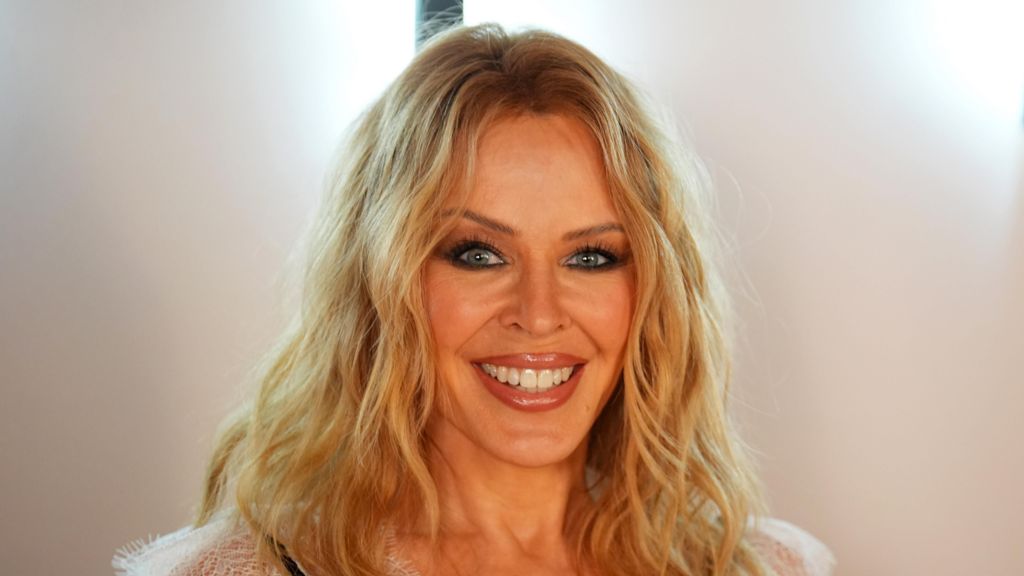
    For a first-time feature director, heading up a high-profile documentary about one of pop music’s most iconic global stars sounds like an intimidating prospect — and for Michael Harte, a Donegal-born filmmaker, that intimidation almost led him to walk away from the project entirely.

    When veteran producer John Battsek reached out to Harte with an invitation: the Australian pop legend Kylie Minogue would be in Los Angeles, and Battsek wanted Harte to join them for a meeting to discuss the documentary concept. Harte immediately questioned if he was the right fit for the role. “I don’t think that’s a good idea, I’m not experienced enough as a director,” Harte recalled his internal thought process telling the BBC’s Evening Extra radio programme. Still, he reasoned, turning down a chance to sit down with Minogue at the legendary Chateau Marmont hotel was impossible. “I’ll go anyway. I’m not going to turn down a drink in the Chateau Marmont with Kylie Minogue,” he thought.

    That fateful meeting at the iconic Sunset Boulevard hotel in West Hollywood shifted Harte’s perspective completely in minutes. Describing the dim, moody dining space, Harte said Minogue walked into the room with an unmissable, magnetic energy. “It sounds cheesy to say, but she really was [like a beam of light]. There was an energy there that was intoxicating,” he said. In that moment, any doubt Harte had carried into the meeting melted away. “And then I thought, I do want to make this film. I am the right person to do it. I could tell there was an energy from her that I wanted to take and transfer onto film and if we can do that successfully, I think the film could be really special.”

    The resulting project is KYLIE, a three-part documentary series coming to Netflix that tracks Minogue’s decades-long career, tracing her path from a teenage actor on the hit Australian soap opera Neighbours to one of pop music’s most enduring, beloved performers. This collaboration marks a reunion for Harte and Battsek, who previously worked together on the hit Netflix documentary about David Beckham. For Harte, this is only his second credit as a director — his first came during the COVID-19 pandemic — after building a reputation as a respected editor, most recently for the critically acclaimed Michael J. Fox documentary Still.

    To craft a documentary that felt fresh and intimate, rather than just another recap of a celebrity’s career, Harte and his team made a deliberate choice to step away from the formal, structured sit-down interviews that are common in biographical documentaries. “We decided pretty early on that we’d call them chats,” Harte explained. “Kylie had been interviewed for decades, and we wanted this to feel different.”

    Instead, the series is anchored by Minogue’s personal archive, with the casual conversations taking place in her home, surrounded by boxes of personal photographs, home video, and decades of career footage that brought old memories flooding back. One of the biggest creative challenges the team faced was sorting through the sheer volume of content Minogue had accumulated over her career: beyond her decades of music releases and tours, Minogue has also worked consistently as an actor, leaving the team with everything from Neighbours on-set footage to high-fashion shoot outtakes, decades of media coverage, and unheard home recordings to sift through.

    For Harte, working through that massive archive offered a rare, intimate look at Minogue’s growth in real time. “I say to Kylie, it almost felt like the Truman Show. You watch somebody grow up on camera,” he said. “Because of that we’re not just invested in Kylie’s music or you know her as an artist you’re actually invested in her as a person.”

    Above all, Harte said what stood out most to him through the months of working on the project was Minogue’s extraordinary resilience, particularly in the face of relentless public criticism that started when she rose to fame as a teenager. “Kylie was 19 when that happened to her. I’m 43, if I got criticism like that, I’m retiring in the morning,” he said. That quiet strength left a lasting impact on how Harte shaped the documentary, a observation from Minogue’s ex-boyfriend Jason Donovan that never made it into the final cut but anchored the series’ emotional core: “There’s real fire in her.”

  • Pete Waterman: ‘We had no concept of how big Kylie was’

    Pete Waterman: ‘We had no concept of how big Kylie was’

    As one of the architects of Kylie Minogue’s decades-spanning global pop career, hitmaking producer Pete Waterman has opened up about the unassuming start of his working relationship with the star, admitting he had never heard of her when he first signed on to produce her debut three studio albums.

    Waterman’s recollections feature in the new Netflix documentary simply titled *Kylie*, which charts the Australian singer’s extraordinary trajectory from a small-screen soap opera actor on *Neighbours* to one of pop music’s most enduring international icons. The project marks a reflective full-circle moment for Waterman, who, alongside production partners Mike Stock and Matt Aitken, formed the legendary Stock Aitken & Waterman team that shaped Minogue’s early sound in the late 1980s and early 1990s.

    Speaking in the documentary, Waterman explained the collaboration first came about at the request of the Australian distributor for Stock Aitken & Waterman’s record label, which reached out for support to launch Minogue’s first foray into music back in the late 1980s. This was months before her breakout role as Charlene Mitchell on *Neighbours* turned her into a household name across the United Kingdom.

    “She turns up at the studio, we knocked together *I Should Be So Lucky*, and she was at the airport by 4 o’clock, to fly back to Australia for *Neighbours*,” Waterman recalled.

    The partnership would go on to spawn a record-breaking string of chart hits for Minogue. *The Loco-Motion*, which became the first of her 54 UK Top 40 hits when Minogue was still just a teenager, was actually a remixed version of a track that had already claimed the number one spot on Australian charts, produced by the Stock Aitken & Waterman team. *I Should Be So Lucky* followed as the trio’s second hit for the rising star. Between 1988 and 1992 alone, the production collective delivered 19 Top 20 hits for Minogue, and ultimately produced four full studio albums for the singer between 1988 and 1991.

    Waterman shared that his first impression of the young artist was that she was soft-spoken but unwaveringly driven. He recalled his partner Matt Aitken telling him, “this kid’s got an amazing voice and is a great learner of a song. We taught her the song once, she’d remembered it straight away. Because she’s an actress, of course.”

    Despite *Neighbours*’ rapidly growing popularity in the UK that was turning Minogue into a national sensation, Waterman said the production team had no time to anticipate how that fame would translate to massive record sales. “This sounds ridiculous [but] we had no concept of how big Kylie was,” he said.

    That explosive growth quickly became clear as the team negotiated for Minogue’s third album. Waterman noted, “So here we are, Kylie’s selling 2.5 million albums every time we put an album out and suddenly we’re negotiating for a third album. And you’re dealing with lawyers who are basically Madonna’s lawyers. So you’ve gone from a little girl in *Neighbours* to the hottest lawyer on the planet who’s looking for millions of pounds in his pocket.”

    When Minogue reached out to Waterman to ask him to appear in the new documentary chronicling her life and decades-long career, he said the decision to participate was immediate. “It wasn’t a thought, it was – yeah, where do you want me to be?” he said. “This is Kylie from the four men in her life. What an amazing honour that is, from [being a boy from] Stoke Heath to world domination! My God, what a place to be!”

  • Major film union in India calls for boycott of superstar Ranveer Singh

    Major film union in India calls for boycott of superstar Ranveer Singh

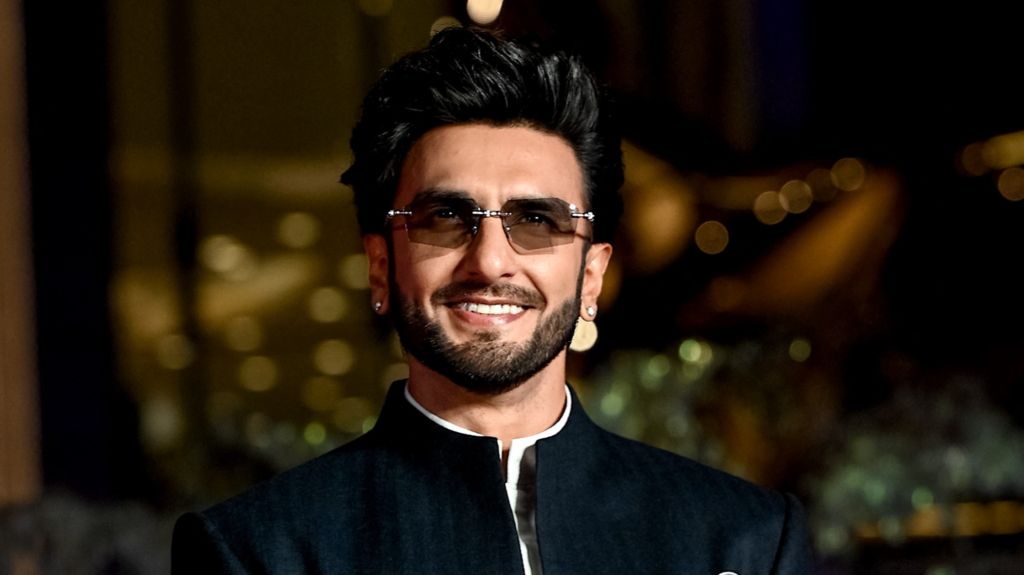
    One of Bollywood’s biggest leading men, Ranveer Singh, is at the center of a growing industry controversy after a major Indian film workers’ union ordered its thousands of members to halt all work with him, following his alleged sudden withdrawal from the highly anticipated franchise installment Don 3 just three weeks before a planned international shoot.

    The Federation of Western India Cine Employees (FWICE), a prominent union that represents crew members across India’s film and television sectors, confirmed that producers had already poured roughly 450 million Indian rupees ($4.7 million) into pre-production for the project when Singh reportedly walked away from the lead role. Union leaders say they reached out to Singh multiple times to request he address the situation and clarify his exit, but the actor has declined to meet with representatives to date.

    To date, Singh has not issued any official public comment directly addressing the dispute. Industry reports indicate that Singh’s team has openly questioned whether FWICE holds the legal authority to compel the actor to appear before its disciplinary committee. Representatives from the BBC have contacted Singh’s team for comment on the controversy, but have not yet received a response. A statement attributed to a Singh spokesperson, circulated widely by Indian media outlets, noted that the actor holds the highest professional respect for the Indian film industry and the iconic Don franchise, and had made a deliberate choice to remain silent on the ongoing row.

    FWICE president BN Tiwari confirmed the union’s decision to implement the non-cooperation directive, explaining that the move is intended to send a clear message across the Indian film sector: “We’ve decided to send a message to the industry that a superstar is not bigger than the rules.” Though the directive is not classified as a formal full industry ban, it has still generated massive public and industry attention, driven by Singh’s global stardom and the decades-long cultural legacy of the Don franchise, one of Bollywood’s most beloved and commercially successful action series.

    The Don franchise first rose to iconic status in 1978, when Amitabh Bachchan led the original film as a charming, untraceable underworld kingpin building an international criminal network. Filmmaker Farhan Akhtar rebooted the franchise for a new generation in 2006, casting global superstar Shah Rukh Khan in the lead role. Don 3 was officially announced in 2023, and was set to carry the franchise forward with Singh stepping into the title role as the new lead.

    According to senior FWICE official Ashoke Pandit, the controversy was triggered when Akhtar, who is attached to the new Don 3 as producer, formally filed a complaint against Singh with the union. Pandit confirmed the timeline of Singh’s exit, placing the withdrawal just three weeks before the production was set to begin its overseas shooting block, after producers had finalized costly travel, set, and scheduling arrangements for the international leg of filming.

    This is not the first time FWICE has issued a non-cooperation directive against a high-profile industry figure, though such action against A-list stars remains relatively rare. In recent years, the union called for Indian artists to boycott work with Pakistani performers during periods of heightened cross-border military tension. As recently as 2025, FWICE issued an identical non-cooperation order against popular actor-singer Diljit Dosanjh, after he starred opposite Pakistani actor Hania Aamir in a hit Punjabi comedy film.

    Public reaction to the current controversy has been deeply divided across social media platforms. Some users have argued that Singh is being unfairly targeted, noting that last-minute actor exits from major productions are not an uncommon occurrence in Bollywood, and that many other stars have walked away from projects without facing similar industry action. Other commentators have sided with the producers and the union, arguing that large-budget tentpole productions carry massive financial obligations that are thrown into chaos by unplanned last-minute exits, and that Singh is facing consequences for unprofessional behavior.

    This is also not the first time Singh has found himself at the center of widespread public controversy. In 2025, Singh faced widespread public backlash after he performed an imitation of a ritual scene from the blockbuster Kannada film *Kantara* during a public film festival event. Critics accused the actor of disrespecting the deep cultural significance of the sequence, and Singh ultimately issued a public apology for the incident. Earlier in his career, in 2015, Singh was among a group of celebrities caught up in national debate after a controversial comedy roast event sparked police complaints and wider discussion about obscenity and limits of free speech in Indian entertainment.

    Singh, who is known for his larger-than-life on-screen performances and flamboyant public persona, has built a reputation as one of Bollywood’s most bankable leading men, with a string of critical and commercial hits including *Padmaavat* and *Gully Boy*. His most recent release, the two-part spy thriller *Dhurandhar*, ranks among the highest-grossing Indian box office successes of recent years.

  • YouTuber arrested for allegedly using AI to defame Korean actor

    YouTuber arrested for allegedly using AI to defame Korean actor

    One of South Korea’s most high-profile entertainment stars, Kim Soo-hyun, has been cleared of false, damaging allegations after local authorities arrested a popular YouTube creator accused of fabricating evidence to defame the actor, ending a 12-month scandal that sidelined the A-lister’s career.

    The arrested content creator, Kim Se-ui, operates the channel Hover Lab, which boasts nearly 1 million subscribers. The allegations first emerged in 2024, shortly after 24-year-old actress Kim Sae-ron died by suicide. Months after her death, Hover Lab published what it claimed was evidence that Kim Soo-hyun had entered a romantic relationship with Kim Sae-ron while she was still a minor — claims the veteran actor has vehemently denied from the start.

    Investigators from South Korean police and prosecutors have since concluded that the evidence presented by the YouTuber was entirely manipulated. The purported voice recording of Kim Sae-ron discussing the relationship, they confirmed, was generated using artificial intelligence, and text message screenshots supposedly proving contact between the two stars were altered to fit the false narrative. On Tuesday, the Seoul Central District Court approved an arrest warrant for Kim Se-ui, officially authorizing his detainment. Court officials cited valid concerns that the creator could attempt to destroy remaining evidence or flee the country to avoid prosecution.

    Speaking to reporters outside the courthouse ahead of the warrant being granted, Kim Se-ui rejected all charges against him, claiming the legal document failed to accurately outline basic facts of the case. He also announced plans to file counter-complaints against the police and prosecution teams that requested his arrest.

    The false allegations sent shockwaves through South Korea’s entertainment industry and the general public, as Kim Soo-hyun remains one of the country’s most recognizable figures, with a string of hit drama series and widespread advertising partnerships across the nation. According to police documents cited by South Korean outlet JoongAng Ilbo, the fabricated claims entirely upended the star’s public standing and professional activities, destroying the foundation of his entertainment career. Police also confirmed that Kim Soo-hyun has continued to receive psychiatric care to cope with the stress and damage caused by the scandal.

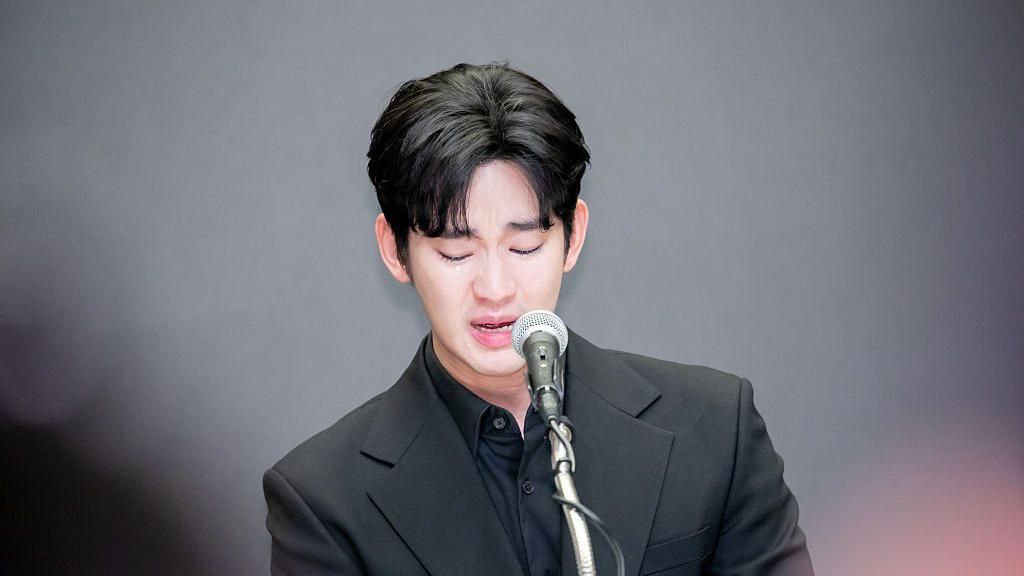
    The actor has not made any official public appearances since an emotional press conference held in March 2025. During that event, Kim Soo-hyun acknowledged he had dated Kim Sae-ron for one year, but clarified the relationship only began after she reached legal adulthood. “I can’t admit to something I didn’t do,” he told reporters at the time, before filing criminal complaints and civil lawsuits against both Kim Se-ui and Kim Sae-ron’s family for spreading false accusations.

    In an official statement released Wednesday, one year after that press conference, Kim Soo-hyun’s agency said the legal process had finally vindicated the star. “The investigation confirmed that all suspicions and evidence raised by Hover Lab against Kim Soo-hyun were unfounded,” the statement read. It went on to reference the promise Kim Soo-hyun made a year prior: “At a press conference a year ago, Kim Soo-hyun promised, ‘I won’t ask you to believe me. I will definitely prove myself’. The past year has been solely dedicated to keeping that promise.” The agency also extended gratitude to the fans and supporters who stood by the actor throughout the scandal, adding that “the truth has been proven.”