分类: entertainment

  • Legendary 130-year-old French wine restored after decades under Czech castle floor

    Legendary 130-year-old French wine restored after decades under Czech castle floor

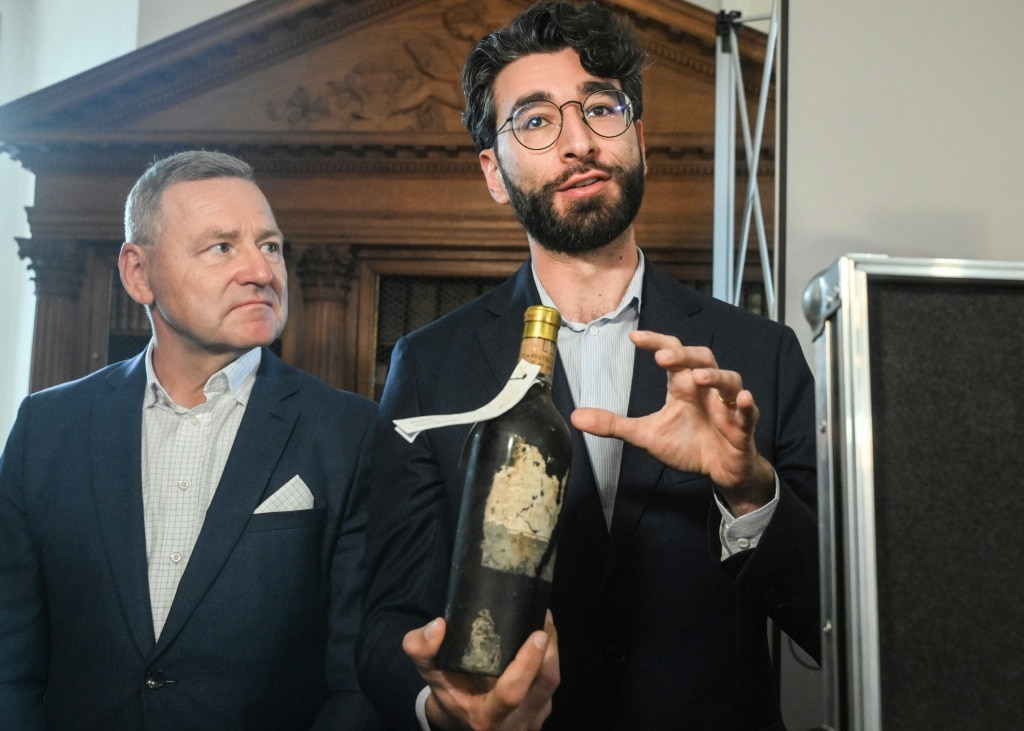
    A remarkable piece of viticultural history has been brought back to life after more than a century of hiding: eight bottles of legendary 130-year-old Chateau d’Yquem Sauternes wine, which survived both World War II and decades of communist rule tucked beneath the floorboards of a Czech castle, have been carefully restored by the very Bordeaux winery that originally produced them.

    The bottles form part of a larger 136-bottle rare spirit collection unearthed in the 1980s at Becov nad Teplou Castle in western Czechia, and all the recovered bottles are set to go on public display once preparations are complete. The collection originally belonged to the noble Beaufort-Spontin family, who were forced to flee Czechoslovakia abruptly at the close of World War II over allegations of collaboration with Nazi occupying forces. In their haste to leave, they hid their valuable wine assortment beneath the floorboards of the castle’s chapel, right next to the revered Shrine of St Maurus, where it lay undisturbed for four decades.

    In 1985, communist secret police stumbled upon the hidden collection during a search. While the Shrine of St Maurus was immediately transported to Prague for extensive restoration work before returning to Becov for public display in 2002, the forgotten wine was left undisturbed in its original hiding spot. It was not until a routine inventory audit a decade later that the cache was rediscovered, prompting a meticulous, years-long rescue and restoration project led by Chateau d’Yquem, the iconic producer of some of the world’s most expensive and sought-after sweet white wine from Bordeaux’s Sauternes region.

    The eight bottles restored by the winery were produced in two vintages: 1892 and 1896. Working to verify and preserve the rare liquid, the winery’s team conducted careful sensory testing to confirm the wine’s authenticity. “We tasted a very small quantity to be sure that, aromatically and in terms of balance on the palate and overall perception, the wine corresponded to a Chateau d’Yquem of that age,” explained Toni El Khawand, cellar master at Chateau d’Yquem. Follow-up laboratory analysis confirmed the wine’s provenance, allowing the team to move forward with conservation work: original degraded corks were replaced, fresh protective capsules were fitted to the original glass, and in some bottles where significant oxidation had occurred, the wine was transferred to new containers. As a result of this necessary conservation, only five fully intact original bottles will return to Becov for display.

    El Khawand described tasting the well-preserved wine, which survived the decades-long burial thanks to its naturally high sugar content that acts as a preservative, as an extraordinary experience. “What we’re really doing when we open it is unveiling a time capsule. We pull out this cork that has sealed the liquid off from its surroundings and, in a way, from the passage of time,” he told reporters at the official presentation of the restored bottles.

    Against all expectations, the 130-year-old wine retained remarkable brightness and complexity. “The wine impressed us with its freshness on the palate. It is very, very fresh, with an almost acidic freshness,” El Khawand noted. He went on to detail the wine’s layered bouquet, highlighting notes of cedar, dried fruit, saffron, cinnamon and nutmeg, alongside age-characteristic Chateau d’Yquem notes of chocolate, coffee, mocha and oud.

    While recent vintages of Chateau d’Yquem already retail for hundreds of dollars per bottle, the Czech National Heritage Institute estimates the entire 136-bottle recovered collection would fetch roughly $5 million if put up for auction. El Khawand, however, emphasized that the wine’s value extends far beyond its market price. “First and foremost, it has moral and historical value,” he said. “It is a memory, ultimately — a liquid memory, to be sure — but it is a memory of all those who came before us, of the work that was done.”

    There are currently no plans to auction the collection. Instead, Becov Castle is preparing a public exhibition that will showcase all recovered bottles of wine and cognac, including other rare vintages such as an 1899 Pedro Ximenez sherry and an 1892 port. To fund the exhibition space and further restoration work, the castle has launched a public fundraising campaign. If enough funds are raised, collections manager Katerina Nyvltova says the team plans to conduct more in-depth analysis of the remaining wines and complete restoration of all salvageable bottles in the collection. “If we raise the money, we will definitely want to do a more thorough analysis of the wines. And if we can recondition the rest, we’ll definitely go for it,” she told AFP.


  • Steampunk festival creates an unlikely capital for Victorian style and sci-fi oddity in New Zealand

    Steampunk festival creates an unlikely capital for Victorian style and sci-fi oddity in New Zealand

    Nestled along the coast of New Zealand’s South Island, the quiet rural town of Ōamaru — population 14,000, plus a colony of 3,000 endangered native penguins — transforms every year into a bustling, fantastical parallel world where Victorian-era steam power meets imaginative science fiction, for one of the world’s most beloved steampunk festivals.

    This year marked the event’s 17th iteration, drawing thousands of enthusiasts from across New Zealand and around the globe to embrace the genre’s core ethos: the stranger, the better. For four days, the town’s perfectly preserved 19th-century Victorian harbor street becomes a playground for eccentric personas, handcrafted costumes, and one-of-a-kind creative traditions built around the steampunk movement.

    Unlike rigid historical reenactment, steampunk re-imagines the Victorian era, blending its signature aesthetics and steam-based mechanics with modern sci-fi creativity to build a world where the industrial revolution never ended and imagination sets the only limit. The movement also prioritizes do-it-yourself craft and sustainable upcycling: enthusiasts spend months honing sewing, metalworking, and hat-trimming skills to build custom outfits that match their invented alter egos.

    Many attendees lead ordinary lives as bricklayers, engineers, farmers, and artists the rest of the year, and many describe themselves as shy in daily life. But at the festival, they step into entirely new identities. For festival regular Juliet Thorn, who attends as the charismatic Lady Sarsaparilla Ovabyte alongside her partner Greg “Captain Bob McSpoon” Thorn, the experience is transformative. “The first time you dress up and go out in public is really scary and then people get such a buzz out of it,” she explained. “It’s so cool that you take on a different personality.”

    Over nearly two decades, the festival has spawned its own unique set of quirky sporting events and community traditions. Hundreds of attendees pack into historic community halls to compete in unconventional contests, from speed cookie-dunking (where the goal is to dunk, then eat a soggy cookie faster than any competitor) to theatrical parasol dueling, judged just as much on style as speed. One of the most popular events is teapot racing, created by local enthusiast Ross McKay, now known by his steampunk persona Captain Roscoe Dangerfield. In the contest, participants navigate remote-controlled vehicles fitted with teapots through a tricky obstacle course, much to the delight of cheering crowds. McKay, a retired banker and self-described history geek and sci-fi nerd, originally thought steampunk was just “a bunch of weirdos” when he first saw photos, but quickly fell in love with the community. He has since brought teapot racing to steampunk events around the world, joking that “it’s lots of fun and the judges will take bribes.”

    This small South Island town was an unlikely pick to become the self-proclaimed steampunk capital of the world. For decades, Ōamaru was little more than a rest stop for travelers driving between the larger cities of Christchurch and Dunedin, overshadowed by the dramatic Lord of the Rings-era film locations that draw tourists to nearby regions. What put Ōamaru on the global steampunk map is its architectural quirk: a fully intact Victorian-era commercial street built from pale local stone, a leftover from the 1800s when Ōamaru was a bustling export hub shipping New Zealand meat, wool, and grain to Britain. Today, those historic buildings serve as the perfect immersive backdrop for the festival, which coexists peacefully with the town’s separate, historically accurate Victorian celebration held later in the year.

    Unlike the rigid social hierarchies of the actual 19th century, steampunk rewrites Victorian social norms to create an inclusive, equal-opportunity community. “Women, unlike in Victorian times, can be anything,” explained Iain Clark, the festival’s co-founder, who goes by the steampunk name Agent Darling. “We have female engineers, captains of industry, captains of airships, adventurers, explorers, scientists.” There are no hard rules for costumes or personas: attendees regularly bring multiple outfits to swap over the four-day event, and no concept is too wild to turn heads. Over the course of the festival, a Star Wars stormtrooper might wander past a group of costumed “wolves,” while first-time attendees jump straight into the fun, no experience required.

    For long-time guests, the community’s radical acceptance and celebration of creativity is what keeps them coming back. “You can be creative and you can be somebody else and no one cares,” said John Syben, attending his fourth festival. His partner Chris Sinclair noted that the pair have grown bolder with their costumes every year, adding: “There’s always someone who’s more nuts than you.” For countless steampunks, the small New Zealand festival has become more than an event — it’s their tribe.

  • Bollywood divided over bid to cap punishing work hours

    Bollywood divided over bid to cap punishing work hours

    India’s iconic Hindi film industry, Bollywood, is currently roiled by a rare public debate over one of its most entrenched cultural norms: punishing, 12-to-18-hour daily shooting schedules that have been accepted as an unavoidable part of movie-making for generations. The conversation over implementing a mandatory 8-hour daily work cap has split top talent and industry leaders, pitting calls for humane work-life balance against practical concerns of big-budget production logistics.

    The debate first gained national traction last year, after leading A-list actress Deepika Padukone reportedly walked away from a major upcoming project over disputes around working hour limits, a request she raised after returning to work following motherhood. Padukone’s exit pushed the long-underreported issue of unregulated work conditions in Indian entertainment firmly into the public spotlight, opening the floodgates for widespread discussion across the industry.

    For decades, Bollywood has been synonymous with grueling production timelines: it is not uncommon for shooting shifts to stretch 12 to 18 hours a day, with intensive sequences sometimes requiring continuous work for more than 24 hours straight. What was once framed as a necessary sacrifice for cinematic success is now facing growing scrutiny, as an increasing number of industry professionals demand standardized, humane working conditions that protect cast and crew alike.

    Advocates for the 8-hour cap argue that the existing unregulated system places disproportionate strain on women in the industry. Women who push for shorter work hours are often labeled uncooperative or difficult, a social stigma that is almost never attached to male stars who set similar boundaries. A slate of high-profile names have publicly backed the push for clearer work-hour boundaries, including actors Suniel Shetty, Kajol, and Ram Kapoor. Kapoor notes that once artists achieve industry success, they gain the bargaining power to set their own working limits — a comment that underscores a key reality: negotiating power for better work conditions remains deeply tied to an artist’s name recognition and status in Bollywood.

    However, opponents of a rigid 8-hour mandate argue that fixed limits are unworkable for large-scale, big-budget productions, given the unpredictable nature of filmmaking. “This is not like a corporate job,” explained actor Ali Fazal, pointing out that different projects have wildly varying demands, especially action-heavy or technically complex shoots. Actress Chitrangda Singh echoed this perspective, noting that unforeseen disruptions from bad weather to unexpected equipment failures routinely derail even the most carefully planned schedules, forcing productions to extend shifts to hit deadlines. Singh added that filmmaking is ultimately shaped by unforgiving business realities that cannot be ignored when crafting industry rules.

    Industry insiders elaborate on these economic pressures: large-scale productions can accrue daily costs exceeding $26,000 just for location rentals, crew wages, and equipment, creating enormous pressure to maximize every minute of shooting time. Amit Behl, a former official with the Cine & TV Artistes’ Association, highlighted the example of hit action blockbuster *Animal*, whose location rental alone cost 25 lakh rupees (roughly $26,300) per day. On top of that base cost, productions face additional expenses for supporting cast, catering, power, star accommodation, and on-site security, leaving little room for unplanned downtime. Behl added that filmmakers simply cannot afford to halt mid-sequence when large crews or elaborate action set pieces are already assembled.

    Critics of the status quo push back, arguing that these cost concerns often serve as a cover for systemic inefficiency and poor production planning, shifting the entire burden of disorganization onto the backs of lower-paid cast and crew. Acclaimed filmmaker Shekhar Kapur has criticized Bollywood’s hierarchical structure, which often prioritizes convenient scheduling for top-billed actors while ignoring the needs of low-wage technicians and supporting crew. Kapur insists that work-hour protections should extend to every person on a set, not just A-list stars. “Everyone should have the privilege to define the hours they want to work,” he told AFP.

    The ongoing debate has also drawn attention to deep inequities within Bollywood: while established stars have the clout to negotiate for shorter hours, junior artists, entry-level technicians, and daily-wage crew members have almost no bargaining power to push for better conditions, leaving them stuck in grueling schedules with no recourse.

    Many industry observers frame the current split as a sign of a broader generational shift in Bollywood, where both rising young professionals and established senior stars are beginning to push back against outdated norms that prioritized output over worker well-being. Still, opinions on a mandatory 8-hour cap remain deeply divided.

    Behl pointed to the example of Bollywood superstar Shah Rukh Khan, who has been known to work 27 hours straight to complete a key sequence, even though his fame and fortune mean he is not required to do so. “You can’t leave a scene mid-way… if it is an action scene where fighters are involved, anything can happen… it is not like shutting a laptop and working for an IT company,” he explained.

    Veteran star Madhuri Dixit framed the issue as a matter of personal choice rather than a systemic problem that requires regulation. Speaking of her 2025 crime thriller *Mrs Deshpande*, Dixit noted the cast worked 12-hour or longer shifts daily, but added “if a woman wants to work fewer hours, that is her prerogative, her life… more power to her. To each his own, I’m a workaholic!”

  • Toy Story 5 shows ‘terror’ of children’s screen addiction, says Tom Hanks

    Toy Story 5 shows ‘terror’ of children’s screen addiction, says Tom Hanks

    Nearly 31 years after the groundbreaking first full-length computer-animated Toy Story redefined cinema, Disney’s beloved animated franchise is set to release its fifth instalment later this month, bringing with it a sharp, timely new storyline that confronts one of modern parenting’s most pressing challenges: children’s growing dependence on digital screens.

    Unlike previous entries in the series, where antagonists ranged from a bitter, power-hungry teddy bear Lotso to a troubled toy-destroying child Sid and a ruthless toy collector Al, this chapter introduces an entirely new type of villain: Lilypad, a frog-shaped tablet voiced by Past Lives star Greta Lee. In the film’s plot, the arrival of Lilypad pushes iconic toy heroes Woody, Buzz Lightyear and Jessie to the sidelines, as the household’s children become completely captivated by the glowing digital device, leaving their old playthings forgotten and threatened with displacement. Returning lead voice actor Tom Hanks, who has portrayed Woody since the franchise’s 1995 debut, says the story’s core theme strikes a deeply personal chord, and one that inspires real worry. “There’s a moment in the movie where we look out over a city skyline, and all you see is the cold blue glow of smartphone screens glowing from bedroom windows,” Hanks explained in an interview with the BBC. “That sight strikes terror in the heart.”

    Hanks added that every member of the returning cast immediately connected with the script, because they have all witnessed the trend firsthand: young people constantly glued to their handheld devices, shifting attention between their screens and the world around them, with little focus on the people or analog activities in front of them. “This is a generational pattern,” he noted. “Every era has a technological innovation that becomes the defining force for a generation, and they pour all their attention into it.”

    Joining Hanks in returning to their iconic roles are Tim Allen as Buzz Lightyear and Joan Cusack as Jessie, all three reprising parts they have inhabited for decades. Allen echoed Hanks’ observations, sharing a personal anecdote that illustrates how short-form digital content has reshaped young people’s attention spans. He recalled recently taking his own teenage daughter to a feature film screening, only for her to lose focus within minutes. Children raised on seven-second Instagram clips, Allen explained, are conditioned to consume an entire narrative arc in seconds, making two-hour traditional films a hard sell for many young audiences. “She looked at the screen 10 minutes in and said ‘I get it already – that guy’s the villain, this is how it’s going to go,’” Allen recalled. “We had a little talk about it, I told her if we come to the theater we watch the whole movie first, then you can complain. But she wasn’t wrong.” He did note that rare big-screen spectacle films like the Avatar franchise remain an exception, as their immersive theatrical experience holds attention even for viewers accustomed to quick, bite-sized content.

    Cusack, who voices the spirited cowgirl Jessie, shared that she expects the new film’s premise to resonate deeply with parents across the globe, who are already navigating daily battles around setting screen time limits for their children. The story’s central conflict – traditional toys fighting to remain relevant against flashy digital devices – is a battleground millions of guardians know well, and it lands amid a growing global conversation about the potential long-term harms of excessive early childhood screen exposure, particularly from social media platforms.

    Allen, however, offered a tempered perspective, pointing out that moral panic around new technology is nothing new. When he was a young consumer growing up with the rise of FM radio and rock and roll, his own parents worried that his constant music listening was a harmful distraction. Later, as television became a household staple, that same concern shifted to broadcast media. “This cycle has always existed,” he explained. “It’s just the technology that changes from one generation to the next.”

    Ahead of the film’s release, Disney has pulled out all the stops, including adding a brand-new original track from global pop superstar Taylor Swift to the official soundtrack. Swift shared that contributing to the franchise is a lifelong dream: “I’ve adored these characters since I was five years old watching the first Toy Story, so getting to write a song for this new film is something I’ve always dreamed of.”

    Looking back at the franchise’s unlikely origin story, Allen recalled that when the original 1995 Toy Story was in production, few outside the Pixar team expected it to become a cultural phenomenon. At the time, it was marketed as little more than a gimmicky children’s film, notable only for being the first fully computer-animated feature ever made. Early test cuts fell flat: the central dynamic between Woody and Buzz was overly hostile, the comedy fell flat, and the unfamiliar computer-animated aesthetic struck many early viewers as strange. It was only after rewrites that softened Woody’s edge and leaned into Buzz’s endearing self-delusion (he doesn’t know he’s just a toy) that the iconic dynamic fell into place. The final product balanced a creative, heartfelt core, clever humor for adult viewers, and a revolutionary visual style that won over audiences and critics alike, spawning decades of sequels, a 2022 Buzz Lightyear spin-off, and billions in merchandise sales.

    Now, Toy Story 5 is set to become the first entry in the franchise to directly engage with a real-world modern social issue, exploring both the benefits and risks of pervasive digital technology in children’s lives. Critics have not yet released their full reviews, so the jury is still out on how effectively the film handles this nuanced topic – but its core premise has already sparked conversation across generations of fans.

  • Watch: Fans break glass door trying to see Netflix star

    Watch: Fans break glass door trying to see Netflix star

    A viral incident of celebrity fan culture unfolded over the weekend at a popular shopping mall in China, where massive crowds of devotees triggered chaos in their eagerness to catch a sight of rising Netflix star Zhang Linghe. The actor, who currently stars in the hit historical drama *A Journey to Wait for Jade* (also known internationally as *Pursuit of Jade* streaming on Netflix), made a scheduled public appearance at the retail center that drew far more attendees than organizers had anticipated. As throngs of fans packed the public space outside the venue’s entrance, the overwhelming surge of the crowd put intense pressure on the facility’s glass entry door. Eyewitness videos shared widely across Chinese social media platforms show the door shattering under the strain, leaving onlookers stunned and security staff scrambling to regain control of the situation. No immediate reports of serious injuries have been confirmed following the incident, though local venue management released a brief statement acknowledging the property damage and confirming that the event was adjusted to ensure public safety. The incident has quickly sparked widespread conversation online about the growing intensity of celebrity fandom in China, as Zhang’s profile continues to rise globally following the international release of his latest drama on the major streaming platform.

  • Chef Khaliqdad’s crusade for Greenland’s first Michelin star

    Chef Khaliqdad’s crusade for Greenland’s first Michelin star

    Against a backdrop of soft piano melodies and the rich, warm scent of brown butter drifting through the dining room, 33-year-old chef Habi Khaliqdad puts the final touches on a signature dish: a slice of soy-glazed narwhal, garnished with crispy puffed bacon. For seven years, this single-minded pursuit has anchored his life above the Arctic Circle, so deeply ingrained that the goal is even tattooed on his right arm: to claim the first-ever Michelin star for Greenland.

    The culinary world will turn its attention to the Nordic region this Monday, when the iconic Michelin Guide announces its annual list of starred establishments. From the floor-to-ceiling bay window of Khaliqdad’s Ulo Restaurant, tucked in the remote Arctic town of Ilulissat, guests gaze out at a sweeping expanse of snow that blurs into the famous Icefjord, where towering icebergs drift slowly out to the open ocean.

    Khaliqdad cuts a distinct figure: sharp, smiling features, arms lined with intricate tattoos, and a plain-spoken style laced with colorful language. Even he sometimes questions why he took on this unprecedented challenge, because every step of building a world-class restaurant in one of the harshest inhabited environments on Earth comes with extraordinary hurdles.

    Securing consistent ingredients is the first and most persistent mountain to climb. In late March, shifting winds push packed sea ice to close off Ilulissat’s harbor, forcing local fishermen to suspend operations and leaving Khaliqdad unable to source the tender, flavorful redfish his menu relies on. Even core menu items like his signature Qaqortoq lamb sweetbreads with Italian white truffle and onion jus require logistical feats: Greenland’s harsh Arctic climate supports almost no commercial agriculture, so the lamb travels nearly 1,000 kilometers by boat or plane from the island’s warmer southern region to reach his kitchen. When winter storms roll in, air travel is grounded and cargo ships are trapped by ice, cutting off the town from outside supplies for weeks at a time. “If there’s a storm … you have to wait,” Khaliqdad says simply.

    His fight to build a starred restaurant here mirrors the larger paradox of modern Greenland: a land brimming with new opportunity, but held back by deep structural and geographic constraints.

    For Khaliqdad, the journey is as much personal as it is culinary. A Dane of Afghan origin, he carried a lifetime of loss, hardship and addiction before finding redemption in the heat of commercial kitchens. He got his start as a teenager washing dishes, and fell in love with the craft through French cuisine, devouring cookbooks from legendary French chef Paul Bocuse. He worked his way up through Copenhagen’s most prestigious dining establishments, earning a nomination as a finalist for the city’s 2017 Chef of the Year award.

    Today, Denmark holds 37 Michelin stars across 263 Nordic Guide listed restaurants, transforming the country once known only for heavy, traditional fare into a global destination for innovative gastronomy. But that culinary revolution has never crossed the Labrador Sea to reach Greenland. Deep in debt and looking for a fresh start, Khaliqdad took his former mentor’s advice: “Go to Greenland, man. It’s cold and you’ll find yourself.” He relocated to the Danish autonomous territory to rebuild his life and chase his culinary dream.

    In his kitchen, centered on an Italian-made island, Khaliqdad uses a sharp Japanese knife to break down local Arctic ingredients: narwhal, reindeer, and ptarmigan, all sourced from the region. When he first arrived, he pored over botany textbooks to find native flavors that could lighten the traditional heavy, meat-centric Greenlandic diet. It was a local hotel housekeeper named Stella who ultimately taught him where to forage wild mushrooms and angelica native to the tundra. Each summer, during the few short snow-free weeks, Khaliqdad and his team hike the rocky hills outside town to gather their own fresh ingredients. “I learned to not think about Nordic, European, Michelin cuisine. I have to think about this country’s cuisine,” he explained.

    Today, Ulo draws a steady stream of well-traveled tourists, who arrive in stylish apres-ski gear to dine while gazing out at the icebergs. Ilulissat, a town of just 5,000 permanent residents, already welcomes 50,000 tourists a year drawn to its iconic Icefjord. Now, the town is positioning itself as Greenland’s emerging gastronomy capital, with a new culinary training program launched recently and a new international airport set to open in October, which is expected to double annual visitor numbers. “Maybe they can help me with this small dream I have in my body, you know?” Khaliqdad says, tapping the star tattoo inked into his arm.

    Even with this growing momentum, steep hurdles remain. Travel to Greenland remains expensive and logistically complex, even for anonymous Michelin inspectors. Khaliqdad also struggles to hire trained local kitchen staff, as few Greenlandic workers have formal culinary training. The long, dark Arctic winters also bring a heavy weight: a few years ago, a young kitchen hand died by suicide, a stark reminder of the widespread mental health challenges that plague the island’s remote communities. “It’s hard. It’s fun. It’s sadness too, man… It’s odd,” Khaliqdad reflected.

    Still, he continues forward, his eyes fixed firmly on the guiding star that brought him to the Arctic, waiting to see if his seven-year quest will finally be rewarded this Monday.

  • Marilyn Monroe lookalikes gather to celebrate her 100th birthday

    Marilyn Monroe lookalikes gather to celebrate her 100th birthday

    On what would have been the 100th birthday of one of Hollywood’s most iconic and enduring stars, Marilyn Monroe, hundreds of adoring fans came together to honor her legacy in a spectacular, record-breaking fashion. The event, organized to celebrate the screen legend’s centenary, brought together dozens of lookalikes who donned Monroe’s signature platinum blonde curls, red lipstick, and the classic form-fitting white dress that catapulted her to global fame in *The Seven Year Itch*. When organizers counted the participants, it was confirmed that the gathering had officially broken the Guinness World Record for the largest assembly of people dressed as the legendary actress, beating the previous mark set more than a decade ago. Attendees, who traveled from across the country and even from several international locations to participate, shared stories of their admiration for Monroe, recalling her comedic talent, her magnetic on-screen presence, and her lasting impact on pop culture. Many noted that even 61 years after her untimely death, Monroe remains a cultural touchstone, inspiring new generations of fans with her timeless style and complicated, human story. Event organizers called the record-breaking turnout a fitting tribute to a star whose influence has stretched far beyond the golden age of Hollywood, proving that her star power has not dimmed in the century since her birth.

  • 50 years on, Fela’s legendary ‘Zombie’ album still resonates in Nigeria

    50 years on, Fela’s legendary ‘Zombie’ album still resonates in Nigeria

    Half a century after its 1976 release, Fela Kuti’s iconic protest album *Zombie* still stands as one of the most fearless acts of political defiance in African musical history, a work that not only reshaped global music but also laid bare the deep inequalities and authoritarian abuses that continue to plague Nigeria decades after the end of military rule.

    To understand the stakes of *Zombie*, one must look back at the turbulent context that birthed it. Nigeria had won independence from British colonial rule in 1960, buoyed by the discovery of massive oil reserves that promised widespread prosperity for the resource-rich West African nation. Just six years later, the first of a long string of military coups ousted the civilian government, followed by a brutal civil war that claimed at least three million lives. By 1976, the military had held unelected power for a full decade, with successive juntas embedding authoritarian control into every layer of public life — including deploying soldiers to secondary schools across the country to enforce state-mandated discipline under then-ruler Olusegun Obasanjo.

    For Yunusa Yau, a 16-year-old student in northwestern Nigeria at the time, growing anger at soldiers’ heavy-handed abuse of power on campus led him and his classmates to embrace Fela’s searing new track as their anthem. Decades later, Yau — now a 66-year-old political activist based in Abuja — told the Associated Press that Fela had already become a beacon of resistance for young Nigerians tired of authoritarian overreach. “In a way, we saw him as a symbol of our own nascent attempt to protect our limited horizon of freedom,” Yau said, noting the song quickly became a protest against both unaccountable soldiers and the unpopular school officials complicit with military rule.

    Fela Anikulapo Kuti, born under colonial rule in 1938, is widely regarded as Nigeria’s greatest modern artist, with a 40-year career that stretched from the late 1950s until his death in 1997. Earlier this year, he earned a posthumous Lifetime Achievement Award at the Grammy Awards in recognition of his lasting cultural impact. He co-created the iconic Afrobeat genre alongside legendary drummer Tony Allen, blending polyrhythmic traditional West African percussion with Black American jazz and funk to create a signature sound entirely his own. But far more than a musical innovator, Fela built his legacy as a relentless chronicler of everyday life under military rule, which dominated Nigeria from the 1966 coup until the return of civilian democracy in 1999.

    *Zombie* was unlike any of Fela’s previous political work. Released as a 25-minute two-track album, the title track cut straight to the core of military authoritarianism, with lyrics that mocked the unthinking obedience of soldiers to unelected rulers: “Zombie no go turn, unless you tell ’em to turn (Zombie) / Zombie no go think, unless you tell ’em to think.” Layered over Fela’s driving polyrhythms, the track mimicked a military parade, complete with chanted commands to march, salute and fire. The B-side, “Mister Follow Follow,” expanded the critique to call out widespread blind obedience to authority and the status quo across Nigerian society.

    Lemi Ghariokwu, the artist who designed the *Zombie* album cover and collaborated with Fela for decades, called the record Fela’s definitive work. “It was one of his boldest moments on record,” Ghariokwu told the AP. “He was very much vexed by the actions of the military government. When he was composing the song, we asked him if it was going to be a direct attack song, and he said yes.”

    Interestingly, the zombie archetype that Fela used to devastating political effect originates from traditional West and Central African mythology, where it describes a figure stripped of free will, controlled by external forces. The imagery would later be popularized globally by Michael Jackson in his iconic 1982 *Thriller* music video, but Fela was the first to weaponize it for mass political protest.

    Fela’s unflinching attack on the junta drew brutal, immediate retaliation. The military government dispatched 1,000 soldiers to Fela’s self-declared independent Lagos compound, which the artist had claimed was outside Nigerian state control. Troops burned the compound to the ground, badly injured Fela, and left his mother — Funmi Ransome-Kuti, a prominent Nigerian activist in her own right — with fatal injuries. The album was banned from all state-run radio, and ordinary Nigerians were arrested for defying the junta by playing *Zombie* in public venues, at parties or on personal speakers.

    Critics note Fela’s foresight in calling out the long-term damage of military rule has proven entirely accurate. When the military seized power in 1966, junta leaders justified their coup by ousting a civilian government they accused of corruption and mismanaging Nigeria’s oil wealth. Decades after the end of military rule, that same failure of shared prosperity persists: official data from the Nigeria Bureau of Statistics shows 63% of Nigerians currently live in multidimensional poverty, lacking access to basic amenities, with sky-high youth unemployment. The country also faces a sprawling, ongoing security crisis, with militant and criminal groups carrying out widespread killings and kidnappings across large swathes of the country. Just this year, six people including soldiers and police officers were charged with plotting a coup against democratically elected President Bola Tinubu, a reminder of the military’s enduring oversized influence on Nigerian public life.

    “Fela was actually ahead of his time, because he seemed to have foreseen the kind of rot and decay that the military class would leave Nigeria in,” said Dami Ajayi, a prominent Nigerian music critic. “Fela was already saying to everyone that these guys who are here are going to ruin your country; you cannot allow a zombie to be in charge of everything around you.”

    Fifty years after its release, *Zombie*’s impact remains unmatched in Nigerian popular culture. While other Nigerian artists across reggae, fuji, pop and other genres have criticized government overreach, none have matched the open, uncompromising confrontation Fela pulled off with *Zombie*. Today, mainstream commercial success in Nigeria’s large music industry rarely makes space for overt political protest, even as the grievances Fela sang about remain largely unaddressed.

    Ayomide Tayo, a Nigerian music and pop culture critic, said Fela’s bravery has yet to be replicated by modern artists. “The consequences of that record are well-documented, and I don’t think anybody is that brave to critically criticize the government like that,” Tayo said. “The epic scale at which Fela did it has not been replicated.”

  • ‘AI simply can’t replicate it’: Japan embraces zine trend

    ‘AI simply can’t replicate it’: Japan embraces zine trend

    In a Kyoto print factory, the steady hum of machinery and rustle of freshly printed paper fill the air as two creators watch their collaborative photo essay roll off the press onto thick broadsheet newsprint. For artists Kazuma Obara and Akihico Mori, this physical, tactile process is more than just a production choice—it is a deliberate stand against the homogenization of digital content and artificial intelligence in the modern creative landscape.

    Their project is one small thread in a rapidly growing movement across Japan: amid the decades-long decline of traditional print media, handmade self-published zines are winning legions of new fans, particularly among young creators and audiences. This renaissance underscores Japan’s enduring cultural affection for tangible paper media even as digital platforms and AI-generated content reshape the creative industry globally.

    Obara, a 40-year-old photographer whose ink-stained hands betray his hands-on work, explains that unlike algorithm-driven social media feeds, print engages all five human senses. “Mobile phones are very insular,” he told AFP during a visit to the factory. “Print media is incredibly open. You can hand it to someone, you can read it together.” His creative partner Mori, a 44-year-old writer, echoed that sentiment, noting that holding a handmade zine lets readers directly feel a creator’s unique passion. “That’s what makes it so appealing,” Mori said. “AI simply can’t replicate it.”

    The pair’s finished work went on to display at Kyotographie, the popular international photography festival that wrapped up in Kyoto this past May. Their printing was made possible through a new program from Kyoto Shimbun, a major regional newspaper that has opened up its underutilized printing presses to independent creators as traditional newspaper subscriptions continue a steady decline.

    Yoshihiko Okazaki, a representative of Kyoto Shimbun Printing, said the program has drawn creators across generations, from teenage artists to creators in their 70s. “Surprisingly, it resonates with younger people,” Okazaki said. “I even hear comments like, ‘it’s interesting precisely because it’s old.’”

    Japan’s broader print industry has faced steep contraction for decades. Data from the Japan Newspaper Publishers & Editors Association shows national newspaper circulation peaked at 53.76 million copies in 1997, and has fallen to less than half that number by 2025. Overall book and magazine sales have dropped even more sharply, sliding to just 40% of the industry’s 1996 peak of 2.6 trillion yen ($16.3 billion). Fears of further disruption from AI have spread across the global creative industry: a 2025 UK study found half of all novelists believe AI will likely replace their professional work in the coming years.

    But unlike traditional mass print, the small-scale, DIY zine sector is expanding rapidly. Zines, which first emerged in 1930s United States among science fiction fan communities, have seen explosive growth in Japan in recent years, especially among younger creators. Forecasts from a Japanese private research firm, cited by public broadcaster NHK, project the total Japanese self-publishing market will reach 150 billion yen in the 12-month period ending March 2026—nearly double the market size just four years earlier.

    This growing popularity was on full display at a recent Tokyo zine fair, where hundreds of visitors crowded aisles lined with handmade publications of every size, format, and theme—from abstract art collections to personal photography zines and raw personal essay monologues. For 22-year-old attendee Harumi Kikuchi, zines offer a diversity of perspective that algorithm-driven platforms cannot match. “AI and social media are driven by algorithms that feed us nothing but what we want to see or what suits us best,” she explained. “But the fact that many zine makers are here suggests there are many different worldviews.”

    Watashi Kishino, a zine creator who draws hand-illustrated comics about her daily life in black and white, agrees that digital and AI tools have their place—but argues tangible print has an irreplaceable charm. “People can make a lot of things with AI and digital technology,” Kishino said, gesturing to her stack of hand-bound zines. “But I believe there’s a charm in having something tangible to hold in your hands like this.”

    Even established traditional book retailers are leaning into the zine boom, as younger audiences move away from mass-produced physical books. Sanseido, a 145-year-old bookstore located in Tokyo’s historic Jimbocho book district, added zine sections to its shelves nearly a year ago. “We felt that zines could appeal to a different audience than traditional readers,” said Masato Sugiura, deputy head of the store’s sales promotion unit. “Everyone is looking for something that really speaks to them. Readers are perhaps drawn more to zines, which are niche and cover a broader range of topics.”

    For creators like Kishino, the zine renaissance offers a hopeful sign that physical paper media will persist even in an increasingly digital world. “There’s warmth that only paper can offer,” she said. “There’s definitely people who are looking for that.”

  • Hollywood honors Marilyn Monroe, 100 years after her birth

    Hollywood honors Marilyn Monroe, 100 years after her birth

    One hundred years after the birth of one of Hollywood’s most enduring legends, Los Angeles’ entertainment hub is launching a month-long series of tributes to honor Marilyn Monroe, the platinum-haired star whose short life and decades-long cultural legacy continue to captivate global audiences.

    Centennial events officially kicked off Monday at the iconic TCL Chinese Theatre, the historic Hollywood landmark where Monroe’s hand and footprints have been preserved in cement alongside those of Jane Russell, her co-star in the 1953 classic *Gentlemen Prefer Blondes*. Fans will gather at the site to serenade the late star with “Happy Birthday” — a deliberate nod to Monroe’s legendary sultry performance of the song for President John F. Kennedy in 1962, just months before her death. Organizers have placed 100 roses and a commemorative cake at the location, a spot that draws millions of tourists each year and stands as a defining landmark of Hollywood’s golden age.

    Pre-empting the official opening, the Academy Museum of Motion Pictures launched its major retrospective *Marilyon Monroe: Hollywood Icon* on Sunday, a blockbuster exhibition that explores both the star’s trailblazing film career and the tragic personal story that cut her life far too short. Monroe, who rocketed to global fame in the 1950s, died of a drug overdose at her Los Angeles Brentwood home in August 1962 at just 36 years old.

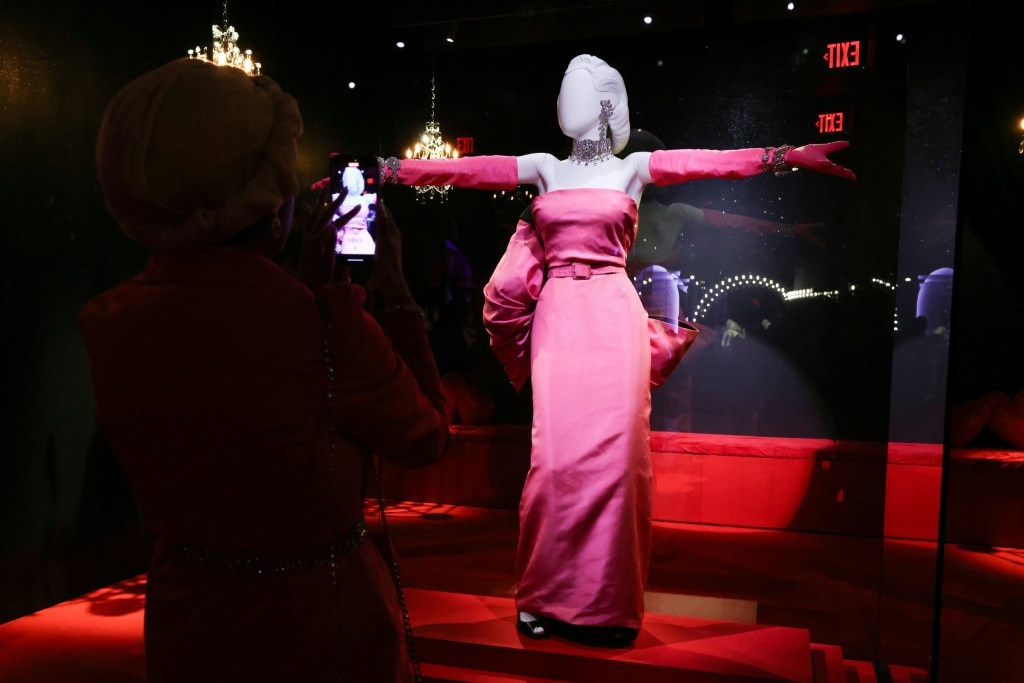
    Throughout June, the Academy Museum will host special screenings of Monroe’s most acclaimed performances, pulling titles from her extensive filmography that span the breadth of her career. The lineup includes her breakout supporting turn in 1950’s *The Asphalt Jungle*, her star-making leading role in 1953’s *Niagara*, the timeless comedy *The Seven Year Itch* (1955), the critically adored *Some Like It Hot* (1959), and her final completed film, 1961’s *The Misfits*. The exhibition, which will run through February 2027, features hundreds of original personal and professional items, many of which have never been displayed publicly. Among the centerpieces is the iconic pink gown Monroe wore for her legendary performance of “Diamonds Are a Girl’s Best Friend” in *Gentlemen Prefer Blondes*.

    Later this week, on June 4, Julien’s Auctions will host a dedicated “100 Years of Marilyn” sale, featuring nearly 200 pieces of rare Monroe memorabilia up for auction. Highlights of the collection include never-before-published candid photographs of the star, an annotated script from her final, unfinished production *Something’s Got to Give*, and deeply personal items ranging from handwritten dessert recipes to a tube of her favorite Elizabeth Arden lipstick.

    Born Norma Jeane Mortenson in Los Angeles on June 1, 1926, Monroe’s early life was marked by instability. She spent her childhood bouncing between foster homes and orphanages after her mother was institutionalized, and married for the first time at just 16 years old. Her first introduction to the entertainment industry came in 1944, while she worked in a Los Angeles factory supporting World War II production efforts. A military photographer visiting the plant to shoot photos of women war workers spotted her, kicking off a rapid transition into modeling.

    Within months, she made the decision that would change entertainment history: she divorced her first husband and dyed her natural brown hair to the iconic platinum blonde shade that would become her trademark. She earned her first studio contract with 20th Century Fox, and by the age of 30 had cemented her status as a global household name and defining sex symbol of the 20th century.

    Far from just a on-screen star, Monroe was a trailblazer behind the scenes of Hollywood’s old studio system. She defied studio expectations to found her own independent production company, trained at New York’s prestigious Actors Studio to refine her craft, and openly pushed back against exploitative studio practices. In the 1950s, while still under contract with 20th Century Fox, she refused the lead role in the musical adaptation *The Girl in Pink Tights*, arguing the script was mediocre and her pay — one-third that of co-star Frank Sinatra — was unfair. Decades before the #MeToo movement exposed systemic exploitation of women in entertainment, Monroe publicly spoke out against the predatory “wolves” in Hollywood who targeted young female talent, making her a cultural proto-feminist icon long before the term entered mainstream discourse.