分类: entertainment

  • Grammy-winning director explores his Nigerian grandfather’s role in the Biafran war

    Grammy-winning director explores his Nigerian grandfather’s role in the Biafran war

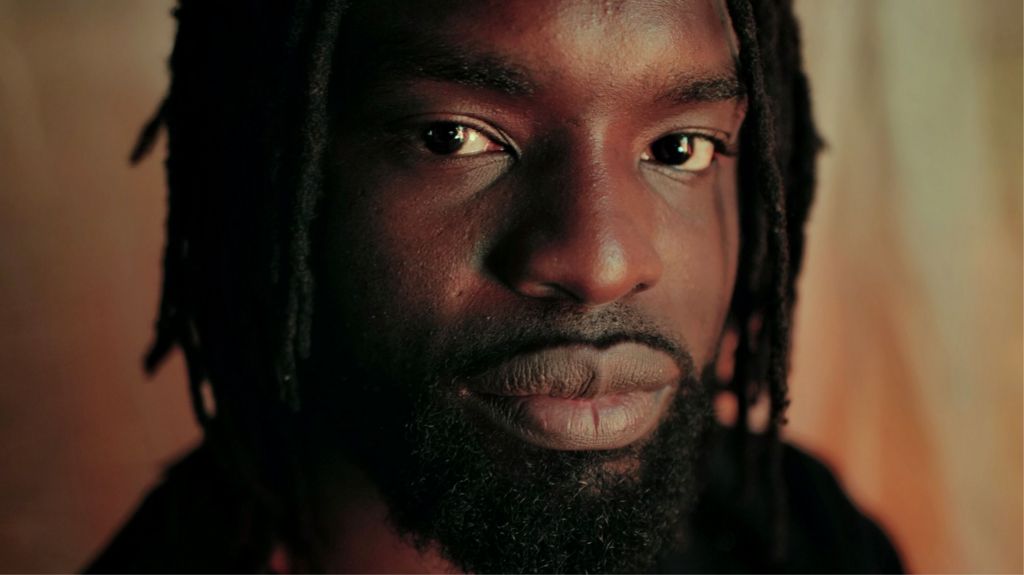
    Meji Alabi has built a global reputation as one of the most innovative music video directors of his generation, crafting viral, visually striking work for A-list artists from Beyoncé to Davido, Stormzy to Burna Boy. A 2021 Grammy win for co-directing *Brown Skin Girl* cemented his status as a powerhouse of the industry, but for Alabi, the biggest creative and emotional challenge of his career would come not from a chart-topping pop hit, but from the quiet, unspoken traumas of his own family’s past, and a chapter of Nigerian history that has long been sidelined from public conversation.

    Born in London to Nigerian parents and raised and educated in the United States, Alabi grew up hearing fragmented anecdotes of the 1967-1970 Nigerian Civil War, also called the Biafran War, from his grandfather Godwin Alabi-Isama, a former commando who fought for the Nigerian federal army against Igbo separatists seeking to form the independent breakaway state of Biafra. It was only when he teamed up with his uncle, fellow filmmaker Leke Alabi-Isama, co-founder of Lagos-based production outfit PriorGold Pictures, that the pair began to unpack how little they truly knew about the conflict that shaped modern Nigeria.

    “It was very much an eye opener for me. I just grew up not knowing much about the war at all, or who was fighting who,” Alabi shared in an interview.

    For Leke, who grew up in southwestern Nigeria hearing his father framed as a war hero for his role as chief of staff to a top federal army commander, that reckoning came decades later when he began deep diving into archival research. What he uncovered upended every assumption he had carried about his family’s legacy: mass starvation, allegations of war crimes against federal troops, and the unacknowledged suffering of the Igbo people who made up the Biafran separatist movement.

    “I only just saw it from a Nigerian [federal army] perspective. I never knew of the horrors. I never knew of the suffering and the pain of the other side,” Leke explained. “When you find out that, you know, your truth is not the only truth, it was a humbling moment.”

    Rooted in this desire to unpack multiple narratives, the pair’s new documentary *Surviving Biafra: Voices from the Nigerian Civil War*, produced by BBC Africa Eye, pulls back the curtain on one of Africa’s bloodiest post-independence conflicts. The film includes never-before-seen frontline footage, and centers first-person testimonies from surviving veterans and civilians, most now in their 70s and 80s, many of whom have never shared their experiences publicly before.

    The Biafran War erupted after a series of military coups and targeted massacres of Igbo communities in northern Nigeria pushed more than a million Igbos to retreat to their ancestral homeland in the country’s southeast, where regional leaders declared independence for the Republic of Biafra. The Nigerian federal government responded with a full military campaign and a total blockade of Biafra, cutting off access to food, medicine and all foreign supplies. Over 30 months of fighting, an estimated 500,000 to 3 million people died, most of them children killed by widespread famine. The conflict was the first televised humanitarian disaster in global history, with shocking footage of starving children broadcast into homes around the world, before Biafra surrendered in 1970.

    To this day, this traumatic chapter remains largely absent from formal Nigerian education: the civil war was removed from the national school curriculum for more than a decade ending in 2025, and even today, the full scale of suffering is rarely taught. For Leke and Meji, this erasure is part of what made the project urgent.

    “This generation of survivors is slowly fading, and if we do not preserve their testimonies now, we risk losing not only their memories, but the chance to fully document this history in a way that can contribute to understanding and healing,” Leke said.

    Unlike most mainstream retellings of the war, the documentary centers underrepresented voices, including two female former soldiers who fought on opposite sides of the conflict. It also draws on contributions from across the region: Meji recruited Ghanaian composer Ray Michael Djan Jr, who previously worked on the *Black Panther: Wakanda Forever* soundtrack, to score the film, while the BBC’s Igbo service and independent Igbo historians provided contextual expertise to ensure the narrative centered community perspectives.

    One of the documentary’s most raw, pivotal moments comes when Leke confronts his 90-plus year old father Godwin with archival black-and-white footage of emaciated Biafran children. For the first time, Leke said, he heard his father’s voice shake. During the conversation, Godwin also revealed a shocking personal detail: unknowingly, he had eaten human flesh while serving in occupied Biafran territory, after local villagers served the meat to his unit. The federal army’s 3 Marine Commando brigade, where Godwin served, has long faced allegations of systematic war crimes including the execution of civilians, and the BBC’s editorial team pushed Godwin to respond directly to those claims during the interview.

    In a response to the upcoming documentary, Nigeria’s federal government noted it hoped the film would serve as a reminder of how far the country has progressed in the 59 years since the war ended, and of “the enduring importance of dialogue, reconciliation and shared purpose in building a stronger nation for generations to come.”

    For Meji, who has spent much of his career elevating Nigerian popular culture to a global audience, this project fills a different critical gap. The war has long been a topic discussed only in whispers in Nigerian society, he said, never confronted head-on by a younger generation of creators seeking honest answers.

    “It hasn’t been attacked head on and, you know, presented from an inquisitive younger generation like this before,” he said.

    Both filmmakers share a core hope for the project: that the documentary will open the door for broader national reckoning, encourage more survivors to step forward with their stories, and help Nigerians confront the darker parts of their shared history with honesty and empathy.

    “We really hope this documentary encourages more survivors to tell their stories and document our history further. It’s up to us to do it,” Meji said.


  • ‘Backrooms’, based on YouTube horror series, breaks box office records

    ‘Backrooms’, based on YouTube horror series, breaks box office records

    A viral online horror phenomenon has made a historic leap to the big screen, shattering long-held box office expectations and cementing a new milestone for young filmmakers across the industry. Adapted from the wildly popular YouTube horror series that launched a global internet cultural trend, A24’s *Backrooms* delivered a staggering $81.5 million opening weekend across North America, breaking multiple industry records in its debut, U.S. entertainment outlets confirmed over the weekend.

    Helmed by 20-year-old writer-director Kane Parsons, who first created the *Backrooms* web series as a teen creator, the film’s opening haul marks the largest domestic debut ever for an original standalone horror production, according to entertainment industry trade publication Variety. The opening weekend gross also more than doubles the previous record for the biggest domestic opening in independent studio A24’s history.

    Beyond its box office achievements, the feature film debut makes Parsons the youngest director ever to launch a first feature at the number one spot on the North American box office charts. Starring Academy Award nominees Chiwetel Ejiofor and Renate Reinsve, the big-screen adaptation carries forward the eerie, unsettling core of the original web series: Ejiofor stars as a small furniture shop owner who stumbles upon a hidden, labyrinthine, otherworldly complex lurking beneath his store. When he disappears without a trace, his therapist, played by Reinsve, ventures into the uncanny, liminal space to track him down.

    The *Backrooms* franchise originated in 2022 as a viral internet project that grew out of the “creepypasta” cultural phenomenon – a genre of short, shareable horror stories that are reposted, reworked, and expanded by online communities, with users adding new lore ranging from monstrous entities to hidden interdimensional spaces to the core narrative.

    In a surprising turn, the second spot on the North American box office charts also went to a horror feature: Focus Features’ *Obsession*, which has built steady momentum through strong critical acclaim and word-of-mouth from audiences in its first three weeks of release. Directed by 26-year-old Curry Baker, the film added $26.4 million in domestic ticket sales in its fourth weekend, bringing its estimated global total to nearly $150 million on a production budget of less than $1 million. Lead actress Inde Navarrette has earned widespread praise for her performance as a young woman who becomes dangerously obsessed with a man, played by Michael Johnston, after he makes a magical wish for her affection.

    Disney’s big-screen expansion of its hit sci-fi franchise, *Star Wars: The Mandalorian and Grogu*, rounded out the top three in its second weekend, plummeting nearly 70 percent in ticket sales from its opening to take in $25 million. The feature marks the first theatrical Star Wars release since 2019’s *Star Wars: The Rise of Skywalker*, and brings the popular streaming series to the big screen for the first time.

    Lionsgate’s Michael Jackson biopic *Michael* held its spot in the top five for its sixth consecutive weekend, adding $11.7 million in domestic sales. Directed by Antoine Fuqua and starring Jaafar Jackson, the late pop icon’s nephew, the biopic has now grossed $340 million domestically and more than $845 million globally, per box office tracker Exhibitor Relations.

    Closing out the top five was Sony’s new comedy *The Breadwinner*, which opened to $7.5 million in its first weekend. The film stars popular American stand-up comedian Nate Bargatze, a top-grossing live performer known for his deadpan, family-focused comedy, as a stay-at-home dad forced to manage childcare alone while his wife travels for work.

    The remainder of the weekend’s top 10 highest-grossing films were: *The Devil Wears Prada 2* ($5.9 million), *Pressure* ($5.8 million), *The Sheep Detective* ($4.6 million), *Passenger* ($2.6 million), and *Mortal Kombat II* ($2 million).

  • Singer Dua Lipa marries actor Callum Turner: media

    Singer Dua Lipa marries actor Callum Turner: media

    One of Britain’s biggest pop music stars, Dua Lipa, has reportedly said “I do” to British actor Callum Turner, in a low-key private civil ceremony held in London over the weekend.

    Multiple British tabloid outlets, including The Sun and the Daily Mail, have confirmed the Sunday wedding, sharing photographs of the newlyweds exiting London’s Old Marylebone Town Hall, where the official registration of their marriage took place. Only a small group of close family members and friends were in attendance for the intimate ceremony, aligning with the couple’s desire to keep their nuptials out of the global spotlight before a larger celebration.

    Thirty-year-old Lipa, the Grammy-winning singer who rose to global fame after the 2016 release of her breakout hit *Be The One*, wore a custom white dress and matching hat from luxury fashion house Schiaparelli for her big day, according to on-site reports. Her 36-year-old husband Turner, who earned international recognition for his role in the *Fantastic Beasts* film franchise, opted for a tailored dark blue suit for the occasion.

    The couple first went public with their relationship in January 2024, and Lipa first confirmed their engagement and marriage plans in an interview with *British Vogue* last year. Following the official London ceremony, the pair are set to host a lavish multi-day celebration for their wider circle of loved ones later this month. Sources cited by The Sun confirm the newlyweds are planning a “sumptuous” three-day wedding party in Sicily, scheduled to kick off at the end of next week.

    Agence France-Presse reached out to official representatives for both Lipa and Turner to confirm the wedding news, but did not receive a response ahead of publication. Beyond his work on the *Fantastic Beasts* franchise, Turner has long been the subject of media speculation as a leading contender to take on the iconic role of James Bond in the next installment of the legendary spy film series.

    Lipa, who is the daughter of Kosovo-Albanian migrants who settled in the UK before her rise to stardom, has built one of the most successful careers in modern pop music, with multiple chart-topping albums, Grammy Awards, and sold-out world tours to her name.

  • Along the river, before the fall: China pre-Renaissance city life

    Along the river, before the fall: China pre-Renaissance city life

    What begins as a seemingly tranquil snapshot of 12th-century Chinese urban life opens with a moment of unspoken tension: a heavy commercial river barge drifting toward an arched stone bridge, its crew shouting commands, ropes straining under tension, and a tall mast still in the process of being lowered as onlookers crowd the banks and railings, holding their breath. This opening moment, tucked at the heart of Zhang Zeduan’s iconic handscroll *Along the River During the Qingming Festival*, is far more than a decorative detail—it is the key to unlocking the work’s enduring, layered meaning, one that challenges common assumptions about one of China’s most celebrated cultural treasures.

    Housed today in Beijing’s Palace Museum, the Beijing scroll is widely recognized by scholars as the oldest surviving complete version of the Qingming Shanghe Tu composition. Historians broadly attribute the original work to Zhang, a Northern Song dynasty artist active in the early 12th century, who set out to capture daily life along the Bian River cutting through Kaifeng, the dynasty’s prosperous capital.

    To place this work in global context, the early 12th century was a period when nearly all high art in Western Europe centered on religious themes, from the Romanesque masonry of Durham Cathedral (under construction between 1093 and 1133) to the sacred metalwork of Ireland’s 1123 Cross of Cong. Gothic art, the first major shift toward more secular naturalism in Western art, would not emerge for another three decades, when the chevet of Saint-Denis was finally consecrated. It is this contrast that makes Zhang’s masterpiece so radical: when Western art prioritized divine salvation as its central subject, Zhang centered an entire living, breathing city.

    Commonly dubbed “China’s Mona Lisa” for Western audiences, the comparison falls flat. Where the Mona Lisa revolves around one individual’s quiet mystery, the Qingming Scroll is a living portrait of a complete urban ecosystem, mapping everything from the city’s semi-rural outskirts to its crowded commercial core, all anchored by the tense near-disaster at the central bridge. Its modern feel does not stem from its depictions of ancient architecture or costumes—it emerges from the work’s unflinching focus on logistics: the invisible systems that keep a great city alive.

    The Bian River is no decorative landscape feature; it is the capital’s lifeline. Grain, tax goods, and everyday supplies flowed into Kaifeng along its waters, moving from boat to cart to porter to shop stall in an unbroken rhythm of movement. Zhang’s genius lies in capturing that prosperity is not a static state of wealth—it is a constant, fragile process: loading, unloading, pulling, steering, buying, selling, navigating. Even the iconic arched bridge is more than a picturesque landmark; it is a pressure point where every part of the city’s interconnected system converges. Under its arch, the near collision of the barge condenses the core challenge of any great pre-modern metropolis: too many people, too much commerce, and almost no margin for error.

    This reading of the scroll as a subtle portrait of urban fragility, not just celebration, has been advanced by Chinese scholars including Palace Museum researcher Yu Hui. Yu argues that the work is laced with quiet signs of systemic unease that casual observers miss: an unmanned fire-watch tower, negligent slow-moving officials, weak city defenses, and commercial development encroaching on public space. Whether one accepts every element of this interpretation, it is impossible to view the scroll as a simple, flattering panegyric to imperial prosperity once these details are spotted. Zhang does not condemn the Northern Song state; he observes it too closely to merely glorify it.

    One easily overlooked detail elevates the scroll from a masterpiece of social observation to a critical document of global technical history: the yaolu, or yuloh, a specialized Chinese stern sculling oar. Most Western viewers fix their attention on the crowd and the endangered boat, missing the large oar mounted at the vessel’s stern. Unlike traditional rowing oars that lift repeatedly from the water, or simple steering oars, the yuloh operates with a steady lateral, push-pull motion that delivers continuous thrust and precise navigation, even in narrow, crowded waterways.

    Historical records make this detail particularly significant. While Western vessels used basic steering and rowing oars in antiquity, the earliest written record of a stern sculling oar for propulsion in English dates to the 14th century, per both the Oxford English Dictionary and Merriam-Webster. By contrast, visual evidence of the Chinese yaolu dates back to at least the 10th century, centuries before the first Western written record, and the technology was widely documented as a mature system by medieval Chinese scholars and artists. That Zhang could seamlessly include the yuloh in his composition, as a routine, unremarked tool of river transport, proves that the technology was already standard for moving large craft through Kaifeng’s crowded waterways by the 12th century—a level of nautical innovation that is often overlooked in modern analysis of the work.

    For the scroll, the yuloh is more than a technical detail: it is evidence that Northern Song prosperity depended not just on poetry, politics, or markets, but on the skilled, uncelebrated labor of workers who kept the city’s supply lines moving. What makes Zhang’s approach so innovative is that he never treats technology as a separate, labeled diagram. He embeds it in daily life, where indispensable tools belong—doing their work quietly, without fanfare.

    Another radical choice that sets the scroll apart from medieval art across cultures is its rejection of power as a central subject. There is no emperor, no imperial palace, no grand ceremony, no divine mandate on display. Instead, civilization is revealed through the ordinary acts of ordinary people: a herder driving livestock, a vendor arranging his goods, a doctor seeing patients, a porter carrying a heavy load, a fortune-teller meeting with anxious imperial examinees, a crew of boatman fighting to avoid a collision. Zhang captures the full spectrum of Song society, from gentry and officials to beggars and homeless children, recording (not erasing) social hierarchy while capturing all lives in equal motion.

    Again, the contrast with iconic medieval Western works is striking. The 70-meter Bayeux Tapestry, one of Europe’s greatest secular medieval works, tells the story of conquest, royal succession, and war. Zhang’s scroll centers a completely different kind of drama: not the seizure of a kingdom, but the daily work of keeping a city alive. One celebrates the making of political power; the other exposes the quiet pressure that sits beneath every period of national prosperity.

    What adds a final layer of humility to the work is the near-complete disappearance of its creator. Unlike Renaissance masters such as Leonardo da Vinci or Michelangelo, who left behind detailed biographies and cultivated personal reputations, almost nothing is known for certain about Zhang Zeduan’s life. He vanishes almost entirely into the city he painted, leaving only his work to speak for him. The painter is gone, but the city he captured remains—not the physical Kaifeng, which was transformed and damaged by centuries of history, but the city as a universal idea: a living structure built on movement, labor, commerce, and constant risk.

    The later history of the work only deepens its meaning. Over the centuries, *Qingming Shanghe Tu* became one of the most copied and reimagined subjects in Chinese art, with roughly 100 different versions held in museums and private collections across the world. Later copies, particularly those produced during the Qing dynasty, often revised Zhang’s original to make the city cleaner, more orderly, more festive, and more palatable to imperial audiences. Where Zhang’s original exposes the strain and vulnerability beneath prosperity, copies flatter by erasing those tensions. This tradition of revision is no footnote—it is part of the work’s legacy, revealing how different generations have chosen to frame the idea of urban prosperity.

    Zhang’s original endures precisely because it refuses to settle for surface celebration. It does not only show a prosperous capital; it asks a question that remains urgent centuries later: what has to go right for prosperity to hold together? A mast must be lowered on time, a boat must be guided safely under a bridge, supplies must reach market, roads must stay passable, watchtowers must be guarded, officials must do their jobs, goods must keep moving, and citizens must trust that the city will function when they wake each morning.

    It is this universal question that lets the scroll speak across cultural divides. It is unmistakeably a product of 12th-century China, but its core subject is universal. Every great city, from medieval Kaifeng to modern New York, London, Shanghai, and Hong Kong, relies on the same fragile miracle: millions of independent individual actions held together just tightly enough to feel like order. The Qingming Scroll endures not because it shows a perfect world, but because it shows a living one—allowing us to see civilization before it becomes history: crowded, ingenious, commercial, anxious, beautiful, vulnerable, and unaware that the future is already approaching from beyond the frame.

  • Oscar-winning Star Wars editor Marcia Lucas dies aged 80

    Oscar-winning Star Wars editor Marcia Lucas dies aged 80

    The film community is mourning the passing of legendary Hollywood editor Marcia Lucas, the Academy Award-winning creative mind behind the original *Star Wars* saga, who died at the age of 80. Lucas, whose career reshaped the art of film editing and blazed a trail for women in the industry, passed away Wednesday at her Rancho Mirage, California home, surrounded by family, following a battle with metastatic cancer.

    Born Marcia Griffin in 1945 in Modesto, California, Lucas launched her entertainment career as a film librarian before rising to become one of the most respected editors in 1970s Hollywood. She married *Star Wars* creator George Lucas in 1969, and went on to contribute to many of his early landmark projects, including *THX 1138* and *American Graffiti* — the latter earning her first Academy Award nomination for editing. Beyond her work with George Lucas, she also collaborated extensively with acclaimed director Martin Scorsese on a run of iconic 1970s features, among them *Alice Doesn’t Live Here Anymore*, *Taxi Driver*, and *New York, New York*.

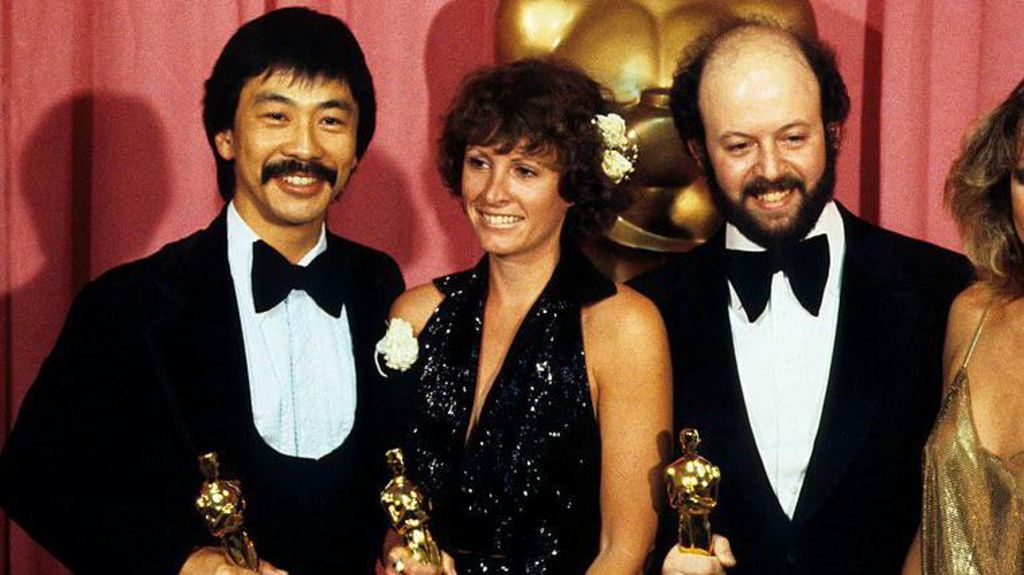
    Lucas’ most celebrated contribution came with 1977’s *Star Wars* (later retitled *A New Hope*), where she shared the Oscar for Best Film Editing with co-editors Richard Chew and Paul Hirsch. While her work largely happened behind the camera, her impact on the early *Star Wars* franchise is widely regarded as foundational to its success. George Lucas himself publicly credited her with structuring the massive, complex Death Star final battle sequence, a sequence that wove narrative plot into an aerial dogfight in a way that had never been attempted before. “Nobody really has ever tried to interweave an actual plot story into a dogfight, and we were trying to do that,” George Lucas told *Rolling Stone* shortly after the film’s 1977 release, noting Marcia brought the 40,000 feet of raw pilot footage into a cohesive, thrilling sequence. Beyond that iconic battle, she infused the original trilogy with sharp narrative clarity and unexpected emotional depth that turned the space saga into a global cultural phenomenon.

    Lucas returned to the franchise for two more installments, 1980’s *The Empire Strikes Back* and 1983’s *Return of the Jedi*. In her personal life, she and George Lucas adopted daughter Amanda in 1981, before their 14-year marriage ended in divorce in 1983. She later married Tom Rodrigues, a production manager at Skywalker Ranch, and the couple had a second daughter, Amy.

    In a statement released Friday to U.S. media, Lucas’ family remembered her as both a revolutionary artist and a beloved presence. “A true trailblazer for women in film and one of the most influential editors in cinematic history; she helped redefine what film editing could be,” the statement read. “Her influence on film is indelible, but those who knew her best will remember the way she made life feel more vivid, more beautiful, more fun and more full of love. Her work was known for its emotional intelligence, rhythm and humanity — a rare ability to find the truth of a scene and bring heart, momentum and clarity to the screen.”

    Lucas herself once summed up her approach to her craft in a comment shared by Lucasfilm: “I have an innate ability to take good material and make it better, and to take bad material and make it fair.”

    Tributes have poured in from across the film and *Star Wars* communities following news of her death. Lucasfilm said in a statement Saturday that it was “deeply saddened” to learn of her passing, adding that it “joins the global filmmaking community in mourning the loss of Marcia Lucas.” Mark Hamill, the actor who originated the role of Luke Skywalker in the original saga, also shared a remembrance, writing that he and his wife Marilou were “deeply saddened by the loss of our lifelong friend. Not just a gifted, innovative artist, she also happened to be a genuinely nice person. Smart, funny and just plain fun to be around. Thankfully, her memory lives on and we will never stop missing her.”

  • Italy bans Kanye West and Travis Scott concerts over security concerns

    Italy bans Kanye West and Travis Scott concerts over security concerns

    In a decision that marks the latest in a string of performance cancellations for controversial rapper Kanye West (now legally known as Ye), Italian authorities have blocked two scheduled July concerts headlined by West and fellow rapper Travis Scott in the northern city of Reggio Emilia, citing urgent public order and safety concerns.

    The announcement came Friday from Prefect Salvatore Angieri, following a formal request from Reggio Emilia’s local Jewish community to scrap West’s planned appearance. Community leader Nicoletta Uzzielli had pushed local officials to scrap the event and replace it with a performance that would center music as a unifying, inclusive force for all people.

    West has sparked global outrage over the past three years for a repeated pattern of antisemitic, racist, and openly pro-Nazi rhetoric, a controversy that already led to the UK government barring him from entering the country earlier this year. The two cancelled Reggio Emilia shows, scheduled for July 17 and 18 at the city’s RFC Arena, were set to feature West and Scott alongside a roster of major A-list acts including The Chainsmokers, Rita Ora, and Swedish House Mafia.

    In an official statement, the regional prefecture outlined the multiple factors that guided its final call. Among the top considerations were the wave of concert cancellations for West already implemented across other nations, and the very real threat of large-scale counter-demonstrations targeting the event. Officials also noted that the close scheduling of the two back-to-back events, combined with projections of massive crowds gathering at the venue, created additional unmanageable public safety risks.

    Travis Scott, the co-headliner of the events, has also faced ongoing intense scrutiny over his role in the 2021 Astroworld Festival tragedy in Houston, Texas, where a crowd surge during Scott’s headline set left 10 attendees dead between the ages of 9 and 27, and injured thousands more when panic spread through the over-capacity crowd pressed against the stage.

    The Italian cancellation is just the latest domino to fall in a series of scrapped shows for West this year. Last month, London’s high-profile Wireless Festival was called off entirely after West, the announced headline act, was denied entry to the UK amid widespread public backlash over his inflammatory remarks. West’s pattern of problematic comments dates back to 2022, when he posted on social media that he would go “death con 3 On Jewish people”, and in May 2023 he released a track titled *Heil Hitler* and sold merchandise emblazoned with swastikas.

    Following the UK entry ban, cancellations quickly spread across mainland Europe. In mid-April, West announced the Marseille stop on his European tour would be postponed “until further notice”, with French media reporting at the time that Interior Minister Laurent Nuñez was actively moving to ban the scheduled June 11 show. That same month, a planned June 19 concert at Poland’s Silesian Stadium in Chorzów was also cancelled, with venue officials citing unspecified “formal and legal reasons”.

    West has made recent attempts to rebuild his standing in mainstream entertainment after stepping back from public view. In January, he published a lengthy apology in *The Wall Street Journal*, claiming “I am not a Nazi or an antisemite” and asserting “I love Jewish people”. He also attributed his past harmful comments to his bipolar disorder diagnosis, writing that he had “lost touch with reality” during the period when the remarks were made.

  • AI helped a musician with Parkinson’s finish his new album when he could no longer play guitar

    AI helped a musician with Parkinson’s finish his new album when he could no longer play guitar

    For years, British singer-songwriter Samuel Smith crafted original Americana music with a guitar permanently in his hands. But after a 2020 Parkinson’s disease diagnosis left him unable to play his instrument consistently due to the neurological disorder’s progressive symptoms, he turned to a surprising tool: generative artificial intelligence, to keep his creative practice alive. Now, with the release of his second full-length album *The Art of Letting Go*, Smith is opening up about how AI has unlocked new possibilities for artists living with disabilities — even as it remains one of the most divisive issues in the modern music industry.

    Parkinson’s disease, which causes progressive nerve damage, commonly leads to muscle tremors, stiffness and chronic fatigue that erode fine motor control, skills critical for playing string instruments like guitar. By the time Smith began work on his 8-track album more than a year before its release, his ability to play had deteriorated significantly. Faced with the choice of abandoning songwriting entirely or adapting to his new physical limitations, he chose to adapt.

    For his instrumental track *Horizon*, Smith leaned on popular AI music generation platforms Suno and Udio to translate his creative vision into shareable demos for the session musicians recording the final studio track. His process begins with humming rough melodic ideas into his smartphone, then uploading those recordings to the AI tools alongside text prompts that detail the track’s desired instrumentation, mood and musical style. He stressed that the AI-generated demos are never used in the final master of his songs; instead, they act as a communication tool to show professional players exactly what he hears in his head, when he can no longer demonstrate it on guitar. Producing a demo that matches his distinct artistic voice often takes dozens of attempts and extensive manual editing, Smith explained.

    Unlike the narrative of AI replacing human creators that dominates much industry debate, Smith frames the technology as an enabling tool, not a replacement. “AI is not replacing anything for me. It’s unlocking, it’s enabling. It’s allowing me to keep writing. I upload my lyrics; AI doesn’t create my lyrics. I upload my music; AI does not create my music,” he said. “It then brings it to life in a way that I can play to session players and say, ‘Here, that’s what I’m thinking, that is what I’m hearing.’”

    The album, recorded in Nashville with a roster of award-winning roots and bluegrass musicians including 16-time Grammy winner Jerry Douglas, banjo artist Alison Brown and Grammy-nominated guitarist Julian Lage, includes one particularly poignant moment: a guitar duet between Smith and Lage on *Horizon*. After months of being unable to play, Smith had a 10-minute window of reduced symptoms in the studio that let him record his part, a moment he calls the “last breath of my guitar playing.” Working alongside musicians he has admired for decades, he said, was an extraordinary, career-defining experience. Smith released his debut album *In the Springtime* in 2023, in part to create a tangible musical legacy for his two young sons that would preserve his creative voice even as his disease progresses.

    Generative AI has split the global music industry in recent years. Major record labels including Sony Music Entertainment, Universal Music Group and Warner Records sued Suno and Udio in June 2024, arguing the platforms illegally used copyrighted recorded music to train their AI models. Since the lawsuit, Universal has reached a settlement and partnership deal with Udio, and Warner has done the same with Suno. Much of the public debate has centered on copyright disputes and artist displacement, but experts say Smith’s experience highlights a less discussed, potentially transformative use case for the technology: expanding creative access for musicians living with disabilities and chronic illness.

    Ruaidhri Mannion, a composer and music technology scholar at Brunel University of London, noted that affordable digital recording tools democratized music creation over the past few decades, and AI could follow the same path by lowering barriers for creators with physical limitations. “If these tools are able to enable people to be able to participate with other creative groups and encourage more people to feel confident to be able to reach out to an ensemble or an orchestra or something, then I think that is all for the better,” Mannion said. He added a caveat, however: overreliance on AI could erase the messy, iterative process of trial, error and collaborative synergy that shapes artistic development. “What makes a lot of music-making meaningful is the collaborative element. There’s a lot of experimentation and development and failure that’s part of musical discovery,” he explained.

    Critics of unregulated generative AI in music, including a group of independent artists who signed an open letter titled “Say no to Suno” earlier this year, argue that the technology erodes artist royalties and enables creative fraud when it scrapes existing copyrighted work without permission. The letter acknowledged that responsible AI use can benefit creators, but called for clearer protections for working artists. Both Suno and Udio have denied copyright infringement claims and stated they are committed to collaborating with the music industry, rather than operating against it.

    Smith believes his experience makes the case for responsible, targeted AI development that benefits marginalized creators. His message to AI music platforms is clear: “if these companies want to show they’ve got a place, a role in society, then step up. Engage with health professionals, engage with music therapists, engage with society and show us what you can do.” In May 2024, Smith partnered with the Berklee Music and Health Institute for a New York event bringing together industry leaders, clinicians and researchers to explore how music and technology can support people living with neurological conditions. For Smith, continuing to create music is about more than art: it is about refusing to let Parkinson’s define his identity or the legacy he leaves for his children. “My 4-year-old is probably never going to remember me playing, and it’s heartbreaking,” he said. “But I’ve been able to pull this into something and refuse to be defined by this disease.”

  • Move over, Heated Rivalry – there’s a new ice hockey romance obsession

    Move over, Heated Rivalry – there’s a new ice hockey romance obsession

    For audiences who thought they had already consumed their full share of ice hockey-centered romantic content this year, a new streaming hit is here to upend that expectation. Earlier this year, the Canadian drama *Heated Rivalry* took the global streaming world by storm after its January UK release, catapulting leads Hudson Williams and Connor Storrie to international fame. Now, just months later, Amazon Prime Video has dropped *Off Campus* — a second ice hockey romance adapted from a hit book franchise — and the streamer confirms it has already claimed the number one spot as its most-watched series worldwide.

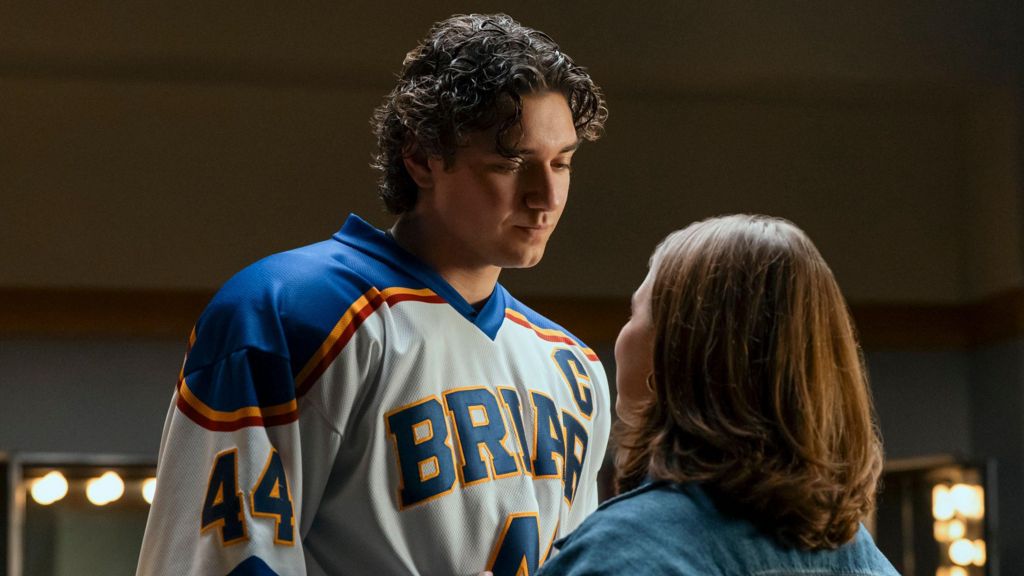
    Based on the massively popular book series by Canadian author Elle Kennedy, which has sold more than 25 million copies globally, *Off Campus* has earned widespread acclaim from fans for its thoughtful storytelling. Set on the campus of a fictional Boston university, the series tracks the romantic entanglements and personal lives of the school’s college ice hockey team, centering the core relationship between star forward Garrett Graham (played by Belmont Cameli) and student Hannah Wells (portrayed by Ella Bright of CBBC’s *Malory Towers* fame). Unlike the one-note, hyper-masculine jock stereotypes that have long dominated sports media, *Off Campus* redefines its male leads as emotionally intelligent, respectful partners who reject outdated tropes.

    Fans and content creators point to the natural synergy between ice hockey as a sport and the romance genre to explain the current boom in these stories. Meagan Carioti, a 27-year-old book content creator, notes that hockey’s reputation as an intense, high-stakes, passionate sport translates seamlessly to romantic storytelling. Sophie Bonser, a 30-year-old British ice hockey fan and social media manager, adds that for audiences outside of North America, the sport carries an inherent novelty that drives curiosity — and its typical low-scoring, tight match structure means every game carries constant tension, perfect for television drama.

    What truly sets *Off Campus* apart from many traditional romance and sports dramas, however, is its unapologetic female-centric perspective. The series doesn’t shy away from exploring topics like female sexual desire, and it has drawn particular praise from women viewers for centering women’s pleasure, comfort, and autonomy. The first season adapts Kennedy’s 2015 and 2016 novels *The Deal* and *The Score*, and handles heavy, real-world themes with nuance: Hannah’s core storyline follows her healing from sexual trauma suffered in high school, with Garrett depicted as a sensitive, patient partner who prioritizes her boundaries and trauma. The show also addresses other serious issues including domestic violence, addiction, and economic insecurity, weaving these narratives into its central romantic arcs rather than sidelining them.

    The series even pushes back against harmful stereotypes, addressing the derogatory term “puck bunny” — used to dismiss female fans as only interested in players, not the sport — while emphasizing its male characters’ commitment to respecting women and upholding consent. For Carioti, the focus on the female gaze, and well-written male characters crafted by a female creator, is unmatched. “I love men written by women, the yearning is just unmatched and it’s the female gaze — what women want — I think is different to what men think women want,” she explains. She also highlights the thoughtful juxtaposition of hockey’s public bravado with the hidden vulnerability of the team’s players, as well as the warm depiction of found family through the teammates’ close bond.

    Even viewers outside the show’s core demographic have been won over. 25-year-old content creator Oliver Zane, whose reaction videos to *Off Campus* have racked up hundreds of thousands of views on TikTok, says he is “not the primary audience” but still a huge fan. He praises female writers for their nuanced character development that makes characters feel more grounded and realistic, and notes that the show’s focus on prioritizing women gave him new insight into women’s lived experiences. Zane adds that the emotionally aware, accountable portrayal of male leads is especially refreshing at a moment when toxic hypermasculinity is increasingly promoted to young men.

    Despite its critical and commercial success, the hockey romance genre is often unfairly dismissed as trivial, “girly,” or overly explicit, dismissed with the derogatory label “hockey smut.” But fans like Carioti and Zane are pushing back against that characterization, pointing out that *Off Campus* weaves important themes of female empowerment and survivor healing into its engaging romantic and sports story. For viewers craving fresh, thoughtful storytelling that balances high-stakes sports action with heartfelt, modern romance, *Off Campus* has already cemented its place as the must-watch streaming hit of the season.

  • Multiple artists drop out of US Freedom 250 concert

    Multiple artists drop out of US Freedom 250 concert

    A growing wave of high-profile musical artists have pulled out of the Great American State Fair, a 16-day national celebration planned for Washington D.C.’s National Mall to mark the United States’ 250th birthday, after multiple performers claimed event organizers misled them about the festival’s conservative political origins. The event, scheduled to run from June 25 to July 10, is being organized by Freedom 250, a non-profit group that formally launched last year under the oversight of the former Trump administration, with its chief executive Keith Krach directly appointed by ex-President Donald Trump.

    When Freedom 250 publicly unveiled its full performer lineup Wednesday, artists quickly began severing ties with the event over allegations that they had signed on under false pretenses of a non-partisan national celebration. 1980s hip-hop star Young MC, best known for his chart-topping hit *Bust a Move*, was among the first artists to announce his withdrawal. In a social media post, he explained that performers were never informed of the event’s political connections, adding that he would only perform in the nation’s capital for an event that is not overly politically charged.

    He was soon joined by fellow R&B legend Morris Day, who shared a clear statement on Instagram writing, “Contrary To Rumor, Morris Day & The Time Will Not Be Performing At The ‘GREAT AMERICAN STATE FAIR’” with the simple caption, “It’s A No For Me.” By the following day, more big names had followed suit. Iconic funk group The Commodores announced their exit in a social media post, noting that their music has always stood above partisan politics, and they choose not to formally align with any single political party, adding that their core commitment remains to advancing the well-being of all Americans.

    Country star Martina McBride echoed those concerns, writing on X that she had been offered a spot at what was described as a non-partisan gathering, only to learn that framing was misleading. Rock vocalist Bret Michaels, frontman of 1980s hair metal band Poison, also pulled out, releasing a lengthy statement explaining that what was initially presented as a unifying celebration of the nation had shifted into something far more divisive than what he agreed to join. Michaels also cited unaddressed safety concerns as an additional factor in his decision to withdraw.

    Despite the mass exodus, a handful of artists still plan to take the stage as originally scheduled. Rapper Vanilla Ice, famous for his breakout hit *Ice Ice Baby*, defended his decision to perform in an Instagram video caption, arguing that the event is not a political platform and exists solely to celebrate America’s anniversary. Fab Morvan, one of the original public faces of 1980s pop group Milli Vanilli, will also keep his performance slot – though the act’s original vocalists quickly clarified that they would not appear, noting that any performance under the Milli Vanilli name without them would qualify as a tribute act, a reference to the infamous 1990s lip-synching scandal that brought down the original group. 1990s dance collective C+C Music Factory member Freedom Williams also confirmed he will still perform, even as he made clear he does not support Donald Trump.

    Event organizers Freedom 250 have pushed back on claims of partisan alignment, insisting the non-profit is exclusively dedicated to uniting Americans around the 250th anniversary of the nation’s founding. In a formal statement, the group said it respects the decisions of artists who choose to withdraw, and reaffirmed that it remains strictly non-partisan. As of press time, the organization has not yet announced any updates or changes to the public lineup. Spokeswoman Rachel Reisner said in a statement that the U.S. has too much history and progress worth celebrating to allow political noise and division to overshadow the milestone event, adding that the group is still looking forward to welcoming millions of visitors from across the country to a festival that belongs to all Americans.

    The Great American State Fair is one of several high-profile 250th anniversary events backed by the current White House to mark the 250th anniversary of the signing of the Declaration of Independence this July. Other planned events include a professional UFC fight hosted on the White House South Lawn, a Grand Prix motor race set to take place in Washington D.C. this coming August, and the release of a limited-edition series of commemorative U.S. passports that feature a formal portrait of Donald Trump on the cover.

  • When Sue Tilley met Lucian Freud, it changed her life. Now a painting of her could fetch $47 million

    When Sue Tilley met Lucian Freud, it changed her life. Now a painting of her could fetch $47 million

    In a quiet unemployment office in 1990s London, a chance encounter between civil servant Sue Tilley and legendary portrait painter Lucian Freud reshaped the course of both art history and Tilley’s life. This June, one of the most celebrated works born from that collaboration is set to hit the auction block, carrying a staggering pre-sale valuation that could cement its place among the most valuable modern art pieces ever sold.

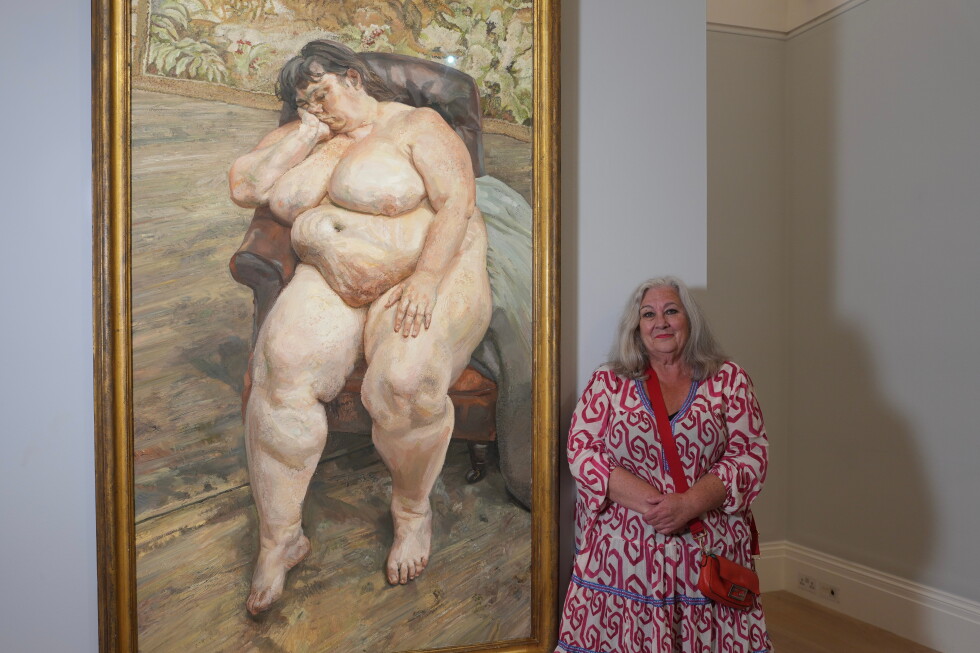
    Titled *Sleeping by the Lion Carpet*, the 1996 work is the final of four large-scale reclining portraits Freud painted of Tilley. Sotheby’s will offer the 2.3-meter-tall nude piece at auction on June 24, with experts projecting it will sell for between £25 million and £35 million (equal to $33 million to $47 million). For 69-year-old Tilley, who never profited from the multi-million-dollar auction sales of the other portraits Freud made of her, the moment is not about regret—it is about the quiet thrill of earning an unplanned place in art history.

    Grandson of pioneering psychoanalyst Sigmund Freud, Lucian Freud built his legacy as the 20th century’s most acclaimed British portrait painter, celebrated for his thick, textured application of oil paint that captured unflinching, yet warm, depictions of his subjects’ textured skin tones. Over a decades-long career, he painted everyone from Queen Elizabeth II to close friends, family, and fellow creatives, favoring intimate, revealing portraits of people in his personal circle. His reputation has only grown in the years following his 2011 death at age 88, with his works consistently breaking auction records. In 2008, an earlier Freud portrait of Tilley, *Benefits Supervisor Sleeping*, sold for $33.6 million—a then-record price for a work by a living artist. A second Tilley portrait, *Benefits Supervisor Resting*, fetched $56.2 million at auction in 2015, and another of Freud’s works sold for $86 million in 2022.

    Tilley first crossed paths with Freud through her friend, the late Australian performance artist Leigh Bowery, who already modeled regularly for the painter. She recalled the casual rhythm of the sitting process in Freud’s cluttered London studio: long sessions stretched over months, punctuated by endless cups of tea, lively chitchat about the artist’s wild bohemian youth, and leisurely midday lunches. Even Freud’s unorthodox habit of stirring drinks with a used paintbrush, which left flecks of oil on Tilley’s clothes and skin, became a beloved part of the experience.

    Of the four portraits, *Sleeping by the Lion Carpet* holds a special place for Tilley: unlike the other works that required her to lie flat for hours (a position that grew increasingly painful over time), this piece saw her seated upright in a chair, making for a far more comfortable sitting experience. The unapologetically raw depiction of her body has never troubled her, either. “I’m not really vain,” Tilley shared during an interview at Sotheby’s showroom, standing before the towering canvas. “Sometimes I get out of bed in the morning, and I look at my legs and go, ‘Oh, they look just like that painting.’”

    Today, the portrait is part of the collection of British billionaire Joe Lewis, majority owner of Premier League club Tottenham Hotspur, and it is one of dozens of high-value works in Lewis’ collection going up for sale. The entire auction of Lewis’ collection, which also includes iconic pieces by Henri Matisse, Gustav Klimt, and Egon Schiele, is valued at more than £150 million ($201 million). Oliver Barker, chairman of Sotheby’s Europe, calls *Sleeping by the Lion Carpet* Freud’s magnum opus, noting the artist himself viewed the work as the peak of his creative achievement. “The market knows, and it’s very savvy, it wants to go for the best of the best — and this is it,” Barker said.

    While Tilley never received a share of the millions these portraits have generated at auction, and Freud only gifted her a small set of etchings (which she sold to fund a holiday), she holds no resentment. Now retired and living on England’s south coast, she says the greatest reward is the permanent place she has earned in art history. As a young woman, she spent hours poring over art books, fascinated by the interconnected bohemian circles of pre-Raphaelites and Impressionists. Only recently has she realized she now belongs to that same world. “That’s thrilling for me that I’ve achieved my ambition without really knowing it,” she said.