分类: business

  • What now for Asia after Trump’s tariffs struck down?

    What now for Asia after Trump’s tariffs struck down?

    A landmark Supreme Court decision has triggered significant upheaval in international trade relations, declaring numerous tariffs implemented by President Donald Trump in 2025 unlawful. The Friday ruling compelled U.S. Customs to suspend collection of these contested duties on Monday, creating widespread uncertainty among America’s key Asian trading partners.

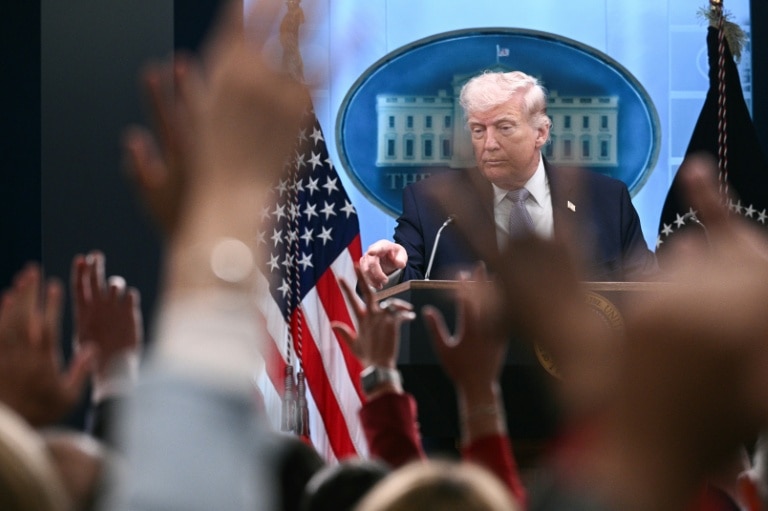
    In response to the judicial setback, President Trump announced immediate implementation of a universal 15% levy on all goods entering the United States. This sweeping measure represents both a tactical retreat from previous higher rates and a continued commitment to protectionist trade policies that have defined his administration’s economic approach.

    The development deals a substantial blow to nations including India, Indonesia, and Taiwan, which had invested months negotiating bilateral trade agreements with Washington. Many had committed billions in U.S. investments in exchange for preferential tariff treatment. While the flat 15% rate appears favorable compared to previous higher assessments, analysts note it introduces new uncertainties regarding existing arrangements.

    Adam Samdin of Oxford Economics observed: ‘Even if countries pursue negotiations, the current administration remains determined to enforce elevated tariff levels despite judicial interventions. Recent trade agreements lack the binding legal frameworks of traditional pacts, creating vulnerability to further policy shifts.’

    Asian governments are conducting urgent assessments of the ruling’s implications. China’s Commerce Ministry stated it is ‘conducting a comprehensive assessment of content and impact,’ reiterating Beijing’s opposition to ‘unilateral tariff increases’ and warning that ‘protectionism leads nowhere.’ This evaluation comes as China prepares to host President Trump in early April.

    U.S. Trade Representative Jamieson Greer sought to minimize concerns, asserting the changes wouldn’t affect upcoming talks with Chinese leadership. ‘The purpose of meeting President Xi is not to fight about trade but to maintain stability and ensure Chinese compliance with existing purchase commitments,’ Greer told ABC News.

    Regional allies expressed particular concern. Japanese officials promised to ‘carefully examine the ruling and administration response,’ while South Korea’s Industry Minister acknowledged uncertainty regarding potential refunds for duties already paid. Taiwan and Singapore both indicated they would maintain close communication with U.S. officials while monitoring developments.

    The new 15% tariff, implemented under Section 122 of the Trade Act, serves as a temporary measure that can remain effective for approximately five months before requiring congressional approval. This universal application creates particular challenges for nations like the UK and Australia that previously secured 10% rate agreements, and will likely increase costs for American consumers across imported goods categories.

  • Court ruling on Trump tariff powers weighs heavily on Australian sharemarket

    Court ruling on Trump tariff powers weighs heavily on Australian sharemarket

    Australian financial markets experienced significant volatility following a U.S. judicial decision that challenged former President Donald Trump’s tariff authority, creating widespread uncertainty about future trade relations between the two nations.

    The S&P/ASX 200 index declined by 55.4 points (0.6%) to settle at 9026, while the broader All Ordinaries index dropped 51.70 points (0.6%) to 9251.50. Market performance showed pronounced sector divergence, with eight of eleven industry sectors closing in negative territory. Only materials, industrials, and consumer staples managed to advance despite the overall bearish sentiment.

    The market turbulence originated from a recent Supreme Court ruling that invalidated President Trump’s previous tariff strategy. In response, the administration announced implementation of a temporary 15% levy on all imports, generating concerns among international trading partners and investors alike.

    Gold-related equities emerged as notable outperformers, benefiting from safe-haven demand. Ramelius Resources surged 8.2%, Greatland Resources advanced 6.38%, Newmont climbed 4.92%, and Evolution Mining gained 3.52%. The Australian dollar stabilized at 70.7 US cents amid the market fluctuations.

    Marc Jocum, Senior Product and Investment Strategist at Global X ETFs, observed that tariff concerns and geopolitical volatility represent continuing themes from previous years that now appear likely to extend into 2026. “Institutional investors’ positioning currently reflects the most conservative stance in approximately two years based on total net long positions,” Jocum noted. “Despite this, gold prices continue their upward trajectory, suggesting that geopolitical tensions and macroeconomic uncertainty—particularly regarding U.S. conflicts with Iran and trade policies—are primary drivers rather than mere capital flows.”

    Technology stocks faced substantial pressure amid artificial intelligence impact concerns. WiseTech Global declined 5.24%, TechnologyOne decreased 5.17%, and NextDC dropped 4.09%. The banking sector also retreated, with ANZ falling 2.29%, Westpac declining 1.18%, Commonwealth Bank dipping 0.63%, and National Australia Bank slipping 0.93%.

    Energy companies mirrored the downward trend as Brent crude prices fell below $71 per barrel amid heightened Middle Eastern tensions. Woodside Energy decreased 1.2%, Santos declined 2.31%, and Ampol dropped 2.14%. Conversely, BHP reached a new peak of $54.75 before settling at $54.02, representing a 1.29% gain.

    Individual corporate performances varied significantly. Mining services group Perenti plummeted 13.83% following disappointing first-half results, while Nuix soared 15.07% after exceeding December expectations. Austal declined 10.95% on poor financial results, and Lendlease slipped 7.21% after reporting a $200 million operating net loss.

    Separately, retailer Harvey Norman announced its intention to vigorously defend against a class action lawsuit regarding promotional activities for Latitude Finance products between January 2020 and August 2021. The company’s shares declined 1.26% following the announcement.

  • From bakeries to beauty shops, Russian businesses are feeling the pain from a new wartime tax policy

    From bakeries to beauty shops, Russian businesses are feeling the pain from a new wartime tax policy

    As Russia’s full-scale invasion of Ukraine enters its fourth year, mounting economic pressures are forcing the Kremlin to shift financial burdens onto consumers and small enterprises. Recent tax reforms have significantly increased the fiscal strain on Russia’s small business sector, triggering widespread concern and closures across the country.

    The situation gained national attention when Denis Maksimov, owner of Mashenka bakery in suburban Moscow, appealed directly to President Vladimir Putin during his annual call-in show last December. Standing before his bakery named after his eldest daughter, Maksimov articulated the struggles facing small businesses under new tax regulations that have drastically lowered revenue thresholds for value-added tax (VAT) requirements.

    While acknowledging the country’s difficult circumstances, Maksimov expressed grave concerns about the sustainability of many enterprises. The reforms have reduced the VAT payment threshold from 60 million rubles ($783,000) in annual revenue to 20 million rubles ($261,000) this year, with plans to further decrease it to 10 million rubles ($130,500) by 2028. Businesses previously using the patent taxation system—which involved fixed annual payments—now face at least a 6% tax on revenues plus 5% VAT if they exceed the new thresholds.

    Although Maksimov’s televised plea brought temporary increased sales and presidential attention to his bakery, it failed to reverse the policy. While Putin raised the case at a government meeting and Economy Minister Maxim Reshetnikov proposed temporary relief measures, concrete implementation remains uncertain.

    The economic fallout extends far beyond Moscow. Social media videos show vacant commercial spaces along St. Petersburg’s main Nevsky Prospekt, where numerous shops have ceased operations. Darya Demchenko, who owns a chain of beauty salons in Russia’s second-largest city, describes unprecedented anxiety among business owners. She has already closed one salon and sold another to remain operational amid soaring costs and declining demand.

    An online campaign dubbed “We Are Mashenka,” initiated by the Association of Beauty Industry Enterprises, has highlighted similar cases nationwide. Unlike Maksimov, most entrepreneurs lack access to high-level intervention. Industry reports indicate approximately 10% of beauty businesses in St. Petersburg closed in December and January alone, with predictions of further collapses after April tax deadlines.

    According to Chris Weafer, CEO of Macro-Advisory Ltd., this represents a deliberate strategy by the Finance Ministry to create stable revenue sources as oil revenues dwindle and military spending levels off. While small and medium enterprises constitute just over 20% of Russia’s economy, expanding VAT application to these businesses will generate significant budget funds.

    The cumulative pressure—including restrictions on social media platforms that eliminated cheap advertising avenues, supplier price hikes exceeding the 2% VAT increase, and requirement for specialized accounting staff—has created perfect storm conditions for small businesses. Many entrepreneurs who survived previous challenges, including COVID-19 pandemic and sanctions following the annexation of Crimea, now face what they describe as an existential threat without government support.

    As more businesses become subject to increased taxes in 2027 and 2028 under the progressive implementation schedule, the sector most crucial for economic expansion and innovation continues to suffer, potentially hampering Russia’s post-war recovery prospects.

  • US futures fall while Asian markets are mostly higher after the Supreme Court nixes Trump’s tariffs

    US futures fall while Asian markets are mostly higher after the Supreme Court nixes Trump’s tariffs

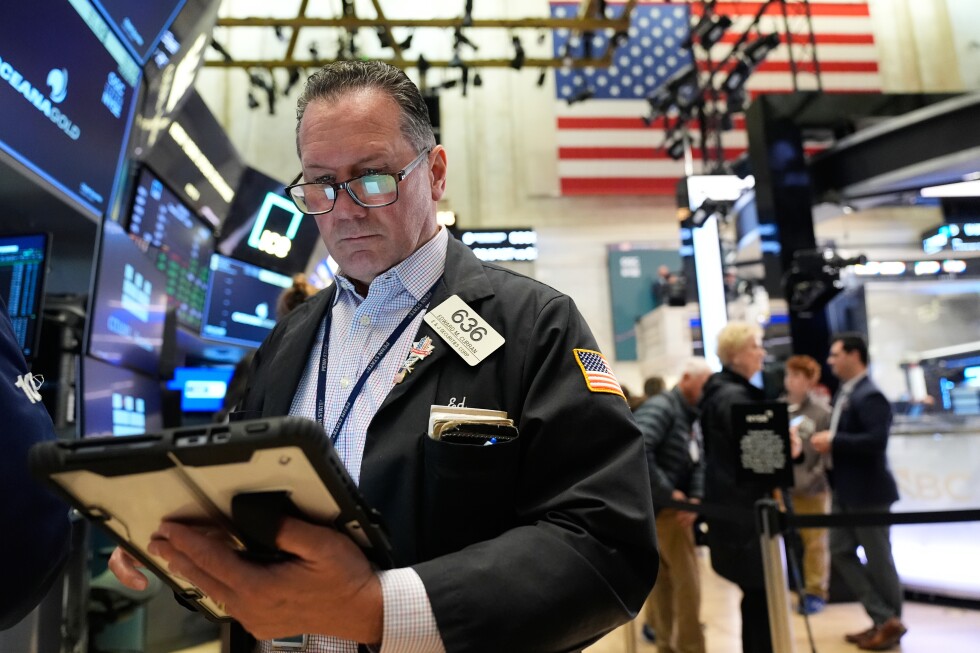
    Financial markets across Asia and the United States exhibited divergent reactions Monday following a landmark Supreme Court decision that struck down the majority of former President Donald Trump’s sweeping tariff policies. The ruling, which dismantled a key component of Trump’s trade architecture, triggered a complex recalibration of market positions globally.

    Asian markets largely celebrated the judicial intervention, with Hong Kong’s Hang Seng Index leading regional gains by surging 2.2% to 27,003.47. South Korea’s Kospi advanced 1.1% to 5,873.07 while Taiwan’s Taiex jumped 1.4%. Conversely, China’s Shanghai Composite bucked the regional trend by declining 1.3% to 4,082.07, and Australia’s S&P/ASX 200 shed 0.4% to 9,041.00. Tokyo markets remained closed for a national holiday.

    The contrasting performances illustrated what Rabobank strategist Benjamin Picton described as “the winners-and-losers effect of shifts in tariff policy,” noting that the decision “delivered a boost to countries who previously had a comparatively bad deal.”

    U.S. futures signaled caution ahead of the Wall Street opening, with S&P 500 futures dropping 0.7%, Dow Jones Industrial Average futures falling 0.6%, and Nasdaq composite futures declining 0.8%. This contrasted with Friday’s relatively calm reaction on Wall Street itself, where the S&P 500 had actually risen 0.7% to 6,909.51 following the ruling.

    Despite the court’s decision, trade policy uncertainty persists as Trump announced alternative measures to maintain import taxes, including a potential 15% global tariff through executive action. “We have tariffs, we just have them in a different way,” Trump told reporters, indicating he would pursue tariffs through other legal avenues requiring Commerce Department investigations.

    Individual stocks reflected the ongoing market adjustments, with Akamai Technologies plummeting 14.1% despite strong earnings, as its profit forecast disappointed investors. The company plans increased spending on equipment investments, potentially reflecting broader economic impacts from AI-driven memory shortages.

    Meanwhile, economic indicators continued to present a complex picture with reports showing slowing U.S. economic growth alongside accelerating inflation. Traders maintained expectations of at least two Federal Reserve rate cuts this year, though Fed officials emphasized the need for further inflation reduction before supporting additional rate reductions.

    In commodity markets, U.S. benchmark crude declined 53 cents to $65.95 per barrel while Brent crude dropped 51 cents to $70.79. Precious metals rallied sharply with gold rising 1.9% and silver surging 5.5%, as currency markets saw the U.S. dollar soften against the yen and euro.

  • How budget fast fashion is taking small-town India by storm

    How budget fast fashion is taking small-town India by storm

    In the heart of Sangli, a western Indian town, a gleaming three-story Reliance Trends outlet symbolizes a profound shift in the nation’s retail landscape. Here, consumers like Alka, a geriatric care worker in her late 50s, experience a new paradigm of shopping. No longer confined to bargaining in street-side bazaars for unbranded apparel, she now browses vibrant collections of ethnic-wear kurtas in air-conditioned comfort, aided by attendants and trial rooms—a luxury previously unimaginable for most Indians.

    This transformation is spearheaded by budget fashion brands like Reliance Trends (led by Isha Ambani, heiress to the Reliance Industries empire) and Tata’s Zudio, which offer merchandise priced between $4 and $15—comparable to traditional bazaars—but with a vastly superior shopping experience. These brands are capturing the aspirations of value-conscious consumers, particularly in smaller towns, driving extraordinary growth in India’s organized fast-fashion sector.

    Zudio’s trajectory exemplifies this boom. From a mere seven stores and $12 million revenue in 2018, it has exploded to 765 stores with revenues surpassing $1 billion by mid-2025, dramatically outpacing global giants like Zara and H&M. Analysts attribute this success to a ‘bottom-of-the-pyramid’ strategy, where pricing remains critical even as brands offer contemporary designs.

    The growth, however, represents a ‘wallet-shift’ rather than a market expansion. With weak job markets and stagnant wages, consumers are redirecting spending from local mom-and-pop stores to branded outlets. Budget brands have aggressively penetrated tier-2 and tier-3 towns, applying global fast-fashion playbooks—Zudio, for instance, achieves a lightning-fast 15-day inventory turnaround, rivaling Zara’s efficiency.

    Yet this expansion comes with challenges. E-commerce platforms like Meesho, growing at 35-40% annually, intensify competition. Moreover, India’s apparel market remains underpenetrated, with per-capita spending lagging behind China, the US, and even Indonesia. While the sector should ideally grow at 12-15%, it has stagnated below 10% in recent years.

    Environmental concerns also loom large. The textile industry is India’s third-largest contributor to dry municipal solid waste, with only a quarter being recycled. Despite some sustainability efforts, less than 1% of used clothing globally is recycled into new garments. For now, however, style and affordability outweigh ecological worries as small-town Indians embrace the fast-fashion revolution.

  • Bunnings to be made available on Uber Eats delivery app

    Bunnings to be made available on Uber Eats delivery app

    In a transformative move for retail convenience, Australian hardware leader Bunnings Warehouse has announced a groundbreaking partnership with Uber Eats, marking its inaugural entry into rapid delivery services. The collaboration will enable customers across Australia and New Zealand to access over 30,000 hardware, garden, and household products through the popular delivery platform, with promised delivery times under 60 minutes.

    The strategic rollout commences with 15 Australian locations following a successful pilot program conducted in Melbourne earlier this year. This expansion represents a significant diversification for Uber Eats, which has progressively broadened its offerings beyond food delivery to include retail commodities from established brands such as Officeworks and Pet Barn.

    Consumers can expect identical in-store pricing for all items available through the delivery service. The extensive product range encompasses everything from emergency DIY tools and garden equipment to power washers, outdoor furniture, cleaning supplies, pet necessities, and even larger items like lawnmowers.

    Ryan Baker, Chief Operating Officer at Bunnings, acknowledged the enduring appeal of the traditional warehouse shopping experience while emphasizing the growing consumer demand for convenience. ‘We recognize there are instances where speed and accessibility take precedence over the conventional browsing experience,’ Baker stated.

    Lucas Groeneveld, Uber Eats’ APAC Regional General Manager, highlighted the partnership’s value proposition: ‘This collaboration delivers an extensive selection of essential items directly to customers’ doors, facilitating everything from urgent home repairs and garden projects to barbecue preparations and workplace continuity.’

    The service will incorporate standard delivery fees, though Uber One membership benefits include waived delivery charges for qualifying orders exceeding specific value thresholds. This initiative builds upon the same-day parcel delivery service already established between Bunnings and Uber in select metropolitan and regional areas throughout 2024. Further expansion of the Uber Eats integration to additional Bunnings locations is anticipated commencing in 2026.

  • Air India cancels New York, Newark flights due to severe winter storm

    Air India cancels New York, Newark flights due to severe winter storm

    A major winter storm poised to batter the US Northeast has triggered widespread flight cancellations across international carriers, with Air India taking preemptive action by scrapping all services to New York and Newark scheduled for February 23rd. The airline confirmed the operational halt stems from severe weather forecasts predicting blizzard conditions along the densely populated I-95 corridor.

    Meteorologists from the National Weather Service have issued urgent blizzard warnings for New York and six adjacent states, anticipating accumulation of 1-2 feet (30-60 cm) of heavy, wet snow accompanied by gale-force winds reaching 60 mph (96 km/h). The rapid-onset storm threatens to create near-impossible travel conditions and potential widespread power outages across the region.

    Air India’s cancellation decision prioritizes passenger and crew safety, with dedicated teams providing rebooking assistance through 24/7 call centers and online channels. The carrier emphasized that affected travelers should contact support services for alternative arrangements.

    The aviation disruption extends beyond Indian carriers, with UAE-based Emirates and Etihad Airways implementing significant schedule changes. Emirates advised passengers to coordinate with booking agents, while Etihad cancelled four specific flights and warned of potential additional delays as weather conditions evolve.

    This severe weather event compounds existing travel challenges along the East Coast, which had only recently recovered from previous winter storms. The coordinated response from international airlines highlights the growing emphasis on proactive safety measures in extreme weather situations, though it creates substantial logistical complications for transatlantic travel during this period.

  • The uncertainties facing businesses and consumers after Trump’s tariff changes

    The uncertainties facing businesses and consumers after Trump’s tariff changes

    In a dramatic policy shift following a Supreme Court rebuke, former President Donald Trump has triggered widespread uncertainty across global trade networks by implementing a new 15% tariff regime. The move comes after the Supreme Court ruled on Friday that Trump’s previous use of the International Emergency Economic Powers Act to impose global tariffs was unlawful.

    Within hours of the ruling, Trump invoked Section 122 of the 1974 Trade Act to establish a temporary 10% tariff on imports from all trading partners, only to announce via social media on Saturday that the rate would increase to 15%. This abrupt policy reversal has created particular complications for nations like the UK and Australia that had previously negotiated bilateral agreements locking in 10% rates.

    Trade experts note that Section 122 requires non-discriminatory application of tariffs, potentially nullifying previously negotiated bilateral agreements. Paul Ashworth of Capital Economics emphasized that major trading partners including the EU and Japan now find themselves in the same position as before their individual deals were struck.

    The British Chambers of Commerce estimates the increased tariff rate will add £2-3 billion in additional costs for UK exporters, affecting approximately 40,000 businesses. Industries ranging from food and beverages to textiles, industrial goods, and electrical products face overnight increases in export expenses that will inevitably be passed along supply chains.

    Meanwhile, the Supreme Court’s ruling opens the possibility for companies to reclaim approximately $130 billion in tariffs paid since last April, though the refund process remains undefined and potentially protracted. Hundreds of firms have already initiated legal proceedings to secure refunds, creating additional contractual uncertainties throughout global supply networks.

    Economists note that US consumers ultimately bear the majority of tariff costs, with research from Yale University and the New York Federal Reserve indicating between 31-90% of additional expenses are passed through to American households via higher prices. The ongoing uncertainty is already prompting businesses to diversify trade relationships toward European and Indo-Pacific markets, potentially creating lasting shifts in global trade patterns beyond the immediate financial impacts.

  • Emirates, Etihad cancel flights to New York, Newark as severe snowstorm hits US

    Emirates, Etihad cancel flights to New York, Newark as severe snowstorm hits US

    Major UAE carriers Emirates and Etihad Airways have implemented widespread flight cancellations and schedule adjustments in response to a severe winter storm currently impacting the northeastern United States. The decision comes as meteorological authorities issue blizzard warnings for New York, Newark, and multiple states along the densely populated Interstate 95 corridor.

    The rapidly intensifying storm system is forecast to deliver substantial snowfall accumulation accompanied by gale-force winds, creating potentially hazardous travel conditions across major metropolitan areas including Philadelphia, Boston, and Washington D.C. The National Weather Service headquarters warned of snowfall rates exceeding one inch per hour along parts of the East Coast, predicting these conditions would result in ‘near-impossible travel circumstances’ and possible widespread power outages.

    Emirates Airlines cancelled four specific flight routes connecting Dubai with New York’s JFK Airport and Newark Liberty International Airport via Athens. The affected flights include EK203/204 and EK209/210 scheduled for February 22-23. Additionally, the carrier has rescheduled several other flights, adjusting departure and arrival times to accommodate evolving weather patterns. Passengers with connecting flights through Dubai will be automatically rebooked to their final destinations.

    Simultaneously, Etihad Airways from Abu Dhabi cancelled four transatlantic services, including routes to New York-JFK and Boston. The airline adjusted departure times for other flights, bringing forward EY4’s departure by four hours and delaying EY3 by approximately five hours. Both airlines have committed to closely monitoring meteorological developments and have indicated that additional schedule modifications may become necessary.

    Affected passengers are being offered rebooking options on alternative flights or full refunds upon request. Airlines strongly recommend that travelers verify their contact information through carrier websites to receive real-time updates via SMS or email notifications.

    This weather event marks New York City’s first significant blizzard since 2016, with authorities and residents preparing for potentially historic snowfall conditions. The current storm system follows a late January mega-storm that resulted in over 100 fatalities nationwide and caused extensive transportation disruptions across the eastern United States.

  • Dubai property boom hits record Dh916 billion amid population growth

    Dubai property boom hits record Dh916 billion amid population growth

    Dubai’s property market has achieved an unprecedented milestone, reaching a staggering Dh916 billion (approximately $250 billion) in total transactions, propelled by a powerful convergence of record population growth and improving economic conditions. This historic performance underscores the emirate’s transformation into a premier global destination for business relocation and wealth migration.

    The catalyst for this boom is demographic: Dubai’s population has officially surpassed the four-million mark, adding approximately 18,000 new residents in a single month by August 2025. This sustained influx of professionals, entrepreneurs, and high-net-worth individuals is generating robust, genuine demand across all housing segments—from mid-market apartments to ultra-luxury waterfront properties.

    According to official Dubai Land Department data, the market closed 2025 with over Dh680 billion in property sales from more than 200,000 transactions—both record annual figures. When including mortgages and ancillary deals, the total real estate activity reached the Dh916 billion benchmark. The market’s momentum intensified throughout the year, with Q4 2025 alone recording an unprecedented Dh187 billion in sales, marking three consecutive months of record performance.

    Industry analysts from Savills Middle East confirm that this growth is structurally driven by authentic relocation demand rather than speculation. ‘When Dubai adds close to 18,000 residents in a single month, the impact on housing demand is immediate and tangible across enquiry levels and transaction speeds,’ noted Alec James Smith, Head of Residential Sales and Leasing at Savills.

    The prime segment demonstrated particular strength, with nearly 6,000 transactions exceeding Dh10 million completed in 2025. Limited supply in established luxury communities combined with continuous wealth inflows has positioned Dubai among the world’s top-performing prime residential markets.

    Supporting this growth, the UAE Central Bank’s policy moves have begun easing borrowing costs, gradually improving mortgage affordability after previous high-rate cycles. This financial easing is expected to further bolster end-user demand in coming quarters.

    Looking forward, market stability will depend on disciplined supply management and infrastructure development aligned with Dubai’s 2040 Urban Master Plan, which anticipates a population approaching six million within the next decade and a half. With fundamental drivers firmly in place, Dubai’s property market appears positioned for sustained, structurally-driven growth anchored by demographic expansion and global capital confidence.