分类: business

  • Trump’s new tariff comes into effect at lower than expected rate

    Trump’s new tariff comes into effect at lower than expected rate

    The Trump administration has implemented new global import tariffs at a 10% rate, significantly lower than the president’s previously announced 15% target. This development follows a landmark Supreme Court decision that blocked substantial portions of his earlier sweeping tariff measures.

    Official documentation confirms the 10% rate took effect Tuesday without any directive for an immediate increase, despite President Trump’s weekend announcement of a higher 15% levy. The White House has not provided clarification regarding this discrepancy.

    Financial analysts express growing concern over the rapidly shifting trade policy landscape. Carsten Brzeski, an economist with investment bank ING, characterized the situation as chaotic, noting that businesses now face renewed uncertainty reminiscent of last year’s trade tensions. He warned of increased retaliation risks from trading partners and a heightened probability of a full-scale trade war escalation.

    The administration justifies these temporary tariffs under Section 122 of the 1974 Trade Act, which permits presidential imposition of import duties for 150 days without congressional approval. An executive order signed Friday stated the measures aim to address “fundamental international payments problems” and rebalance trade relationships to benefit American workers, farmers, and manufacturers.

    Paradoxically, the latest trade data reveals America’s trade deficit reached approximately $1.2 trillion (£890bn) last week, widening by 2.1% compared to 2024 figures. This occurs alongside revelations that the US has already collected at least $130 billion in tariffs using the 1977 International Emergency Economic Powers Act.

    International reaction has been swift and concerned. The United Kingdom indicated reciprocal actions remain “off the table” if the US fails to honor existing tariff agreements, while simultaneously emphasizing that “no one wants a trade war.” The European Union has suspended ratification of a recently negotiated trade deal, with European Parliament official Brando Benifei calling for collective action among nations dissatisfied with US trade treatment. India has deferred scheduled talks to finalize a recent agreement, further illustrating the global unease surrounding US trade policy unpredictability.

  • India cuts dividend tax for large French investors

    India cuts dividend tax for large French investors

    India and France have modernized their bilateral tax agreement, implementing significant changes that will reshape investment dynamics between the two nations. The revised treaty, which updates terms established three decades ago, reduces dividend taxation for substantial French investors while simultaneously expanding India’s authority to tax certain financial transactions.

    Under the new framework, French corporations holding at least 10% stakes in Indian companies will benefit from a reduced dividend tax rate of 5%, a substantial decrease from the previous 10%. Conversely, portfolio investors with smaller holdings (below 10%) will face an increased tax rate of 15% on dividends, up from the former 10% levy.

    The agreement represents a strategic recalibration of fiscal relations, particularly through the elimination of the most-favored-nation (MFN) clause that previously permitted French entities to claim lower tax rates if India granted more favorable terms to other OECD members. This modification aligns with a 2023 Supreme Court of India ruling that such benefits cannot be automatically applied without formal notification procedures.

    The treaty revision, announced by India’s finance ministry days after President Emmanuel Macron’s diplomatic visit to Delhi, forms part of broader bilateral enhancements. During the meetings, both nations elevated their relationship to a ‘Special Global Strategic Partnership’ and expanded cooperation in defense and space technology sectors.

    Prominent French corporations including Sanofi, Renault, and L’Oreal stand to benefit from these changes, having significantly expanded their Indian investments in recent years. The updated agreement aims to stabilize economic activities for businesses from both countries while encouraging increased investment flows and collaborative ventures.

    According to financial data, France-based portfolio investors held approximately $21 billion in Indian company shares as of January 2026, with bilateral trade between the nations reaching $15 billion in the previous year. The revised treaty awaits final formalities and legal approvals in both countries before implementation.

  • ASX shakes off negative session on Wall Street to end Tuesday flat

    ASX shakes off negative session on Wall Street to end Tuesday flat

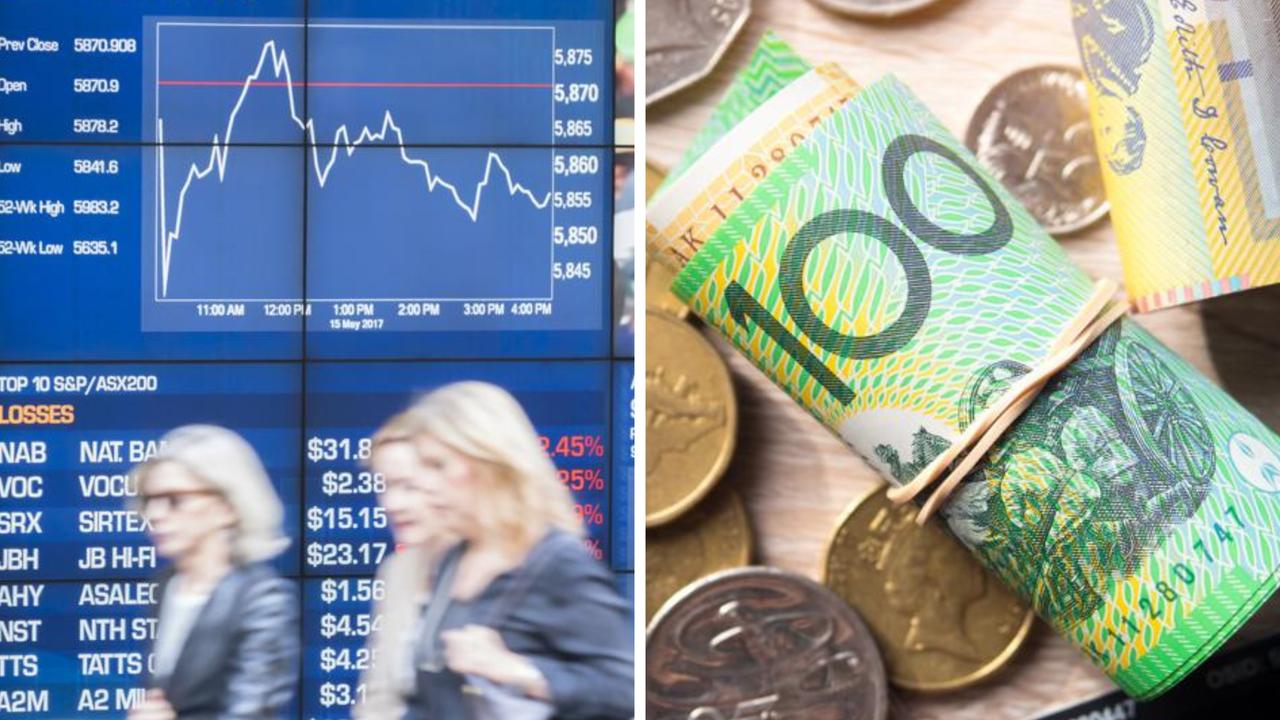
    Australia’s benchmark ASX 200 demonstrated remarkable resilience on Tuesday, closing essentially flat at 9022.30 despite significant pressure from technology sector declines. The index’s stability emerged from a fascinating sectoral divergence where robust commodity performances neutralized substantial tech sell-offs driven by artificial intelligence concerns.

    Market dynamics revealed a tale of two sectors: technology stocks experienced pronounced declines with WiseTech Global falling 3.67%, Xero dropping 4.57%, and TechnologyOne decreasing 3.75%. Conversely, energy companies surged as crude oil prices climbed above $72 per barrel, reaching their highest levels since August. Woodside Energy advanced 2.4%, while Santos and Ampol posted gains of 0.44% and 1.06% respectively. Mining giant BHP added 1.35% to the positive momentum.

    Lithium miners emerged as standout performers, fueled by supply constraints and stronger-than-anticipated demand from electric vehicles and energy storage systems. Core Lithium skyrocketed 9.52%, Liontown Resources jumped 8.68%, and Iluka Resources gained 7.92%.

    Market analyst Tony Sycamore noted the Australian market’s ability to withstand negative influences from Wall Street’s session, describing the phenomenon as investors playing ‘Whack-a-Mole’ with potential AI disruption casualties. He highlighted significant implications from the US Supreme Court’s decision to strike down previous tariffs, replaced with a standardized 15% global tariff structure.

    ‘The tariff restructuring reduces average tariff levels, presenting a positive development for global growth,’ Sycamore explained. ‘China, as Australia’s largest trading partner, stands to benefit substantially with an estimated five to eight percentage point reduction in tariffs, potentially creating upside risks for both Chinese and global economies.’

    Financial institutions presented a mixed picture, with ANZ declining 0.7% following resolved legal proceedings with former CEO Shayne Elliott. Westpac and NAB posted gains of 1.45% and 1.04% respectively, while CBA remained virtually unchanged.

    Corporate performances varied significantly: Engineering firm Monadelphous rallied 5.91% after reporting record half-year revenue of $1.53 billion, exceeding expectations. Conversely, ARB Corporation plummeted 13.06% following a 17.2% profit decline, while online retailer Adore Beauty crashed 27.91% amid profit compression from aggressive Black Friday discounting.

    Market participants now await January inflation data scheduled for Wednesday release, alongside earnings reports from Woolworths, Flight Centre, Bapcor, and Domino’s Pizza.

  • World shares are mixed after heavy selling of potential AI losers hits Wall Street

    World shares are mixed after heavy selling of potential AI losers hits Wall Street

    Global financial markets exhibited a fragmented performance on Tuesday, reflecting investor unease over the dual pressures of artificial intelligence disruption and renewed trade policy uncertainties emanating from the United States.

    The trading session revealed a stark geographical divide. Asian markets generally posted gains, with Japan’s Nikkei 225 climbing 0.9% to 57,321.09 and South Korea’s Kospi surging 2.1% to a record 5,969.64, propelled by substantial advances in semiconductor manufacturers. Conversely, European benchmarks including Germany’s DAX and Britain’s FTSE 100 experienced modest declines, while U.S. futures indicated tentative stabilization following Monday’s significant sell-off.

    Market sentiment has been notably influenced by a comprehensive analysis from Citrini Research, which presented a concerning outlook regarding AI’s transformative impact. The report cautioned that the rapid expansion of artificial intelligence threatens to precipitate a ‘human-centric consumer economy’ decline, potentially triggering substantial employment displacement and a deflationary economic spiral due to inadequate policy preparedness.

    This technological apprehension manifested in pronounced losses within specific sectors. Cybersecurity firms including CrowdStrike witnessed extended declines, dropping 9.8% amid competitive pressures from AI-powered security solutions. Software companies like AppLovin faced similar pressures, with year-to-date losses exceeding 43% as investors reassessed business models vulnerable to AI disruption.

    Simultaneously, trade policy uncertainties resurfaced following President Trump’s announcement of new 15% tariffs after the Supreme Court invalidated his broader reciprocal tariff initiative. This development reinforced concerns about prolonged global trade instability, with investors anticipating extended legal contests before establishing clear trade frameworks.

    Market participants now await critical earnings reports from AI-chip leader Nvidia, amid growing apprehensions that massive investments in AI infrastructure by technology giants might not yield anticipated productivity returns. Commodity markets reflected geopolitical tensions, with crude oil prices advancing on concerns about potential U.S. military action against Iran, while Bitcoin experienced a 4.3% correction to $63,180.

  • Trump Organization unveils plan for ‘Australia’s tallest building’

    Trump Organization unveils plan for ‘Australia’s tallest building’

    The Trump Organization has unveiled ambitious plans to construct what it claims will become Australia’s tallest building—a 335-meter (1,100-foot) luxury skyscraper on Queensland’s Gold Coast. The $1 billion project, announced by Executive Vice President Eric Trump, represents the company’s first official venture in Australia and will bear the name Trump International Hotel & Tower Gold Coast.

    Scheduled to commence construction in August through developer Altus Property Group, the 91-story tower will feature 285 hotel rooms and 272 luxury residential apartments. The development will also incorporate premium retail spaces, fine dining establishments, and an exclusive beach club along the world-famous shoreline. Eric Trump emphasized that the project would bring “the prestige and allure of a world-class luxury brand” to Australia.

    However, the development already faces potential competition for the title of Australia’s tallest building. A proposed twin-tower project on the same beachfront, One Park Lane, promises to surpass Trump’s tower by 50 meters with its 101-story design, with construction also expected to begin later this year.

    The announcement has reignited concerns about potential conflicts of interest regarding President Donald Trump’s business dealings during his second term. Despite his pledge to avoid involvement with company management while in office, critics argue the organization continues to benefit from his presidential influence. These concerns follow a 2021 congressional committee investigation that accused Trump of “grossly exaggerating” profits at his Washington DC hotel and concealing potential conflicts of interest.

    The Trump Organization, which licenses its brand to developers worldwide across more than 20 locations, maintains its focus on high-end property development and luxury hospitality. According to Forbes, President Trump’s net worth has nearly doubled since 2023, even as his company continues to navigate the complex intersection of business and presidential responsibilities.

  • FedEx sues for Trump tariff refund

    FedEx sues for Trump tariff refund

    In a significant legal challenge with far-reaching implications for international trade, global logistics giant FedEx has launched litigation demanding complete reimbursement of emergency tariffs levied during the Trump administration. The lawsuit emerges following a pivotal Supreme Court decision that invalidated the legal foundation of these import taxes.

    The judicial controversy centers on the International Emergency Economic Powers Act (IEEPA), which former President Donald Trump invoked in April of last year to impose elevated tariffs on imports from numerous countries. Last week’s Supreme Court ruling determined that this 1977 emergency statute does not grant presidential authority to implement such import taxes, thereby creating legal grounds for affected companies to reclaim payments.

    FedEx’s filing with the U.S. Court of International Trade names multiple defendants: U.S. Customs and Border Protection (CBP), its commissioner Rodney Scott, and the United States government itself. The transportation corporation asserts its position as ‘importer of record’ responsible for tariff payments and now seeks redress through judicial channels.

    The company stated: ‘Plaintiffs seek for themselves a full refund from Defendants of all IEEPA duties Plaintiffs have paid to the United States.’ While FedEx’s court documents did not specify the exact monetary value sought, industry analysts estimate the Trump administration collected approximately $130 billion through these contested tariffs.

    This legal action forms part of a broader corporate response to the Supreme Court’s determination. Hundreds of other major enterprises—including retail conglomerate Costco, aluminum producer Alcoa, and food importers like Bumble Bee tuna—have similarly filed claims in recent weeks to secure their eligibility for potential refunds.

    Both former President Trump and Treasury Secretary Scott Bessent have acknowledged that resolution of these refund claims will likely involve protracted legal battles spanning several years. The outcome could establish significant precedents regarding presidential trade authority and corporate recourse mechanisms in international economic policy.

  • India’s HAL denies reports of latest Tejas aircraft crash, says was ‘minor incident’

    India’s HAL denies reports of latest Tejas aircraft crash, says was ‘minor incident’

    India’s state-owned aerospace manufacturer Hindustan Aeronautics Ltd (HAL) has formally refuted circulating media reports characterizing a recent incident involving its Tejas Light Combat Aircraft as a crash. The company issued an official statement clarifying that the event constituted merely “a minor technical incident on the ground” rather than an aerial mishap.

    Addressing speculation that emerged on Monday, February 23, 2026, HAL utilized social media platform X to provide factual corrections regarding the aircraft’s condition. Contrary to earlier reports suggesting substantial airframe damage from suspected brake failure, the aerospace firm emphasized the Tejas platform’s exceptional safety credentials, noting it maintains “one of the world’s best safety records among contemporary fighter aircraft.”

    The manufacturer revealed that following standard operational protocols, a comprehensive analysis of the technical issue is underway. HAL confirmed it is collaborating closely with the Indian Air Force (IAF) to implement resolutions promptly. This cooperative investigation aims to determine the root cause of the ground incident while ensuring continued operational reliability.

    Initial media accounts had described a scenario where the combat aircraft reportedly experienced system malfunctions during return to base following a training sortie, allegedly necessitating pilot ejection. These reports suggested the incident represented the latest in a series of technical challenges for the platform, with some outlets indicating the IAF had temporarily grounded the fleet—a claim not addressed in HAL’s current statement.

    The clarification comes amid heightened scrutiny of India’s domestic defense manufacturing capabilities and follows recent aviation safety discussions within the region regarding various aircraft platforms.

  • Beijing urges US to rescind tariff measures

    Beijing urges US to rescind tariff measures

    In the wake of a landmark U.S. Supreme Court decision, China has formally called upon the United States to revoke all unilateral tariff measures imposed on its trading partners. The Chinese Ministry of Commerce announced on Monday that it is conducting a comprehensive evaluation of the ruling’s implications and will vigilantly monitor any subsequent ‘alternative measures’ Washington might deploy to sustain high import duties.

    The judicial upheaval occurred on February 20th, 2026, when the Supreme Court struck down a broad swath of tariffs instituted by former President Donald Trump, deeming them an overreach of executive authority. This decision nullified specific tariffs, including those related to fentanyl and so-called ‘reciprocal’ levies on China. Consequently, the composite tariff rate on Chinese goods was poised to drop from 37% to approximately 21.9%, according to analyses by Guosheng Securities.

    However, the trade landscape was swiftly scrambled once more when President Trump responded by invoking Section 122 of the Trade Act of 1974, proclaiming a new 15% ‘global tariff.’ This maneuver effectively pushes the aggregate duty rate on Chinese imports back up to an estimated 28.6%.

    A spokesperson for China’s Commerce Ministry condemned the U.S.’s unilateral actions, stating they breach both international trade norms and U.S. domestic law, ultimately serving no nation’s interests. While reaffirming China’s commitment to cooperative and stable global economic relations, the official underscored Beijing’s readiness to enact firm countermeasures should its legitimate interests be infringed.

    Economic analysts highlight that the core leverage in the protracted Sino-U.S. trade negotiations hinges on each nation’s economic resilience and technological prowess. Luo Zhiheng, Chief Economist at Yuekai Securities, emphasized that fortifying China’s economic fundamentals and bolstering its capacity for independent innovation are paramount to navigating external uncertainties and securing long-term strategic initiative.

    Furthermore, experts like Xiong Yuan from Guosheng Securities point to statutory limitations, noting that Section 122 imposes a strict 150-day time limit, making it an unlikely long-term solution and suggesting a future pivot back to more enduring legal mechanisms like Sections 301 and 232.
    Amid these developments, voices from the business community, such as Sean Stein of the U.S.-China Business Council, advocate for a shift in dialogue beyond tariffs and toward fostering effective economic cooperation, enabling companies from both powerhouse economies to thrive in each other’s markets.

  • Saudi Aramco sells first Jafurah condensate cargoes to US firms, India, sources say

    Saudi Aramco sells first Jafurah condensate cargoes to US firms, India, sources say

    In a landmark development for global energy markets, Saudi Aramco has finalized its first international sales of ultra-light crude from the colossal Jafurah gas field. According to industry sources, the state energy giant has allocated initial cargoes to prominent U.S. firms Chevron and ExxonMobil, alongside India’s leading refiner, Indian Oil Corporation (IOC).

    The transactions, structured at premiums of $2 to $3 per barrel above Dubai benchmarks on a free-on-board basis, signify the commercial launch of one of the world’s most ambitious energy ventures. Chevron has secured two shipments for loading in late February and March, with supply chains indicating destinations at its South Korean joint-venture GS Caltex and Thailand’s Star Petroleum Refining facility.

    This export initiative stems from Aramco’s $100 billion Jafurah development, which holds estimated reserves of 229 trillion cubic feet of raw gas and 75 billion barrels of condensate. The project represents a strategic pivot toward gas production expansion and diversification of the kingdom’s light crude offerings.

    Positioned as the largest shale gas undertaking outside the United States, Jafurah is projected to achieve sustainable production capacity of 2 billion cubic feet daily by 2030. Monthly export volumes are anticipated to reach 4-6 cargoes of 500,000 barrels each from Yanbu port on Saudi Arabia’s eastern coast.

    The condensate grade boasts exceptional quality characteristics with 49.7° API gravity and minimal sulfur content (0.17%). Preliminary assays indicate approximately 40% of yield converts to petrochemical feedstock naphtha, predominantly heavier grades, with remaining output comprising gasoil and kerosene.

    Aramco officials confirmed coordination with the Ministry of Energy for production ramp-up aligned with development plans and market requirements, while maintaining corporate policy of not commenting on specific commercial arrangements. Major purchasers have declined or not responded to requests for commentary regarding the transactions.

  • Bank of England’s Taylor says high US tariffs appear to be here to stay

    Bank of England’s Taylor says high US tariffs appear to be here to stay

    Bank of England Monetary Policy Committee member Alan Taylor has declared that elevated U.S. import tariffs represent a permanent structural shift in global trade with consequences that will unfold over ‘many years.’ Speaking at a Deutsche Bank event on Monday, Taylor responded to recent developments including President Donald Trump’s imposition of a 15% global import levy following Supreme Court rulings that voided most of his previous tariff increases.

    Taylor emphasized the profound nature of this trade policy transformation, stating, ‘The fundamental thing to realize is those tariffs are here to stay at some kind of number that is an order of magnitude bigger than it was two years ago.’ He cautioned that the full impact of this ‘meaningful change’ would require extensive time to fully materialize within the global economic system.

    The policymaker, who was among four MPC members advocating for an interest rate reduction to 3.5% this month, identified emerging patterns in trade diversion. He noted preliminary evidence suggesting China is redirecting exports toward East Asian markets and the European Union, potentially creating deflationary pressures across global markets. However, Taylor acknowledged the difficulty in precisely quantifying the ultimate significance of these shifting trade patterns.

    Regarding domestic monetary policy, Taylor maintained that the Bank of England likely has ‘two or three more quarter-point rate cuts’ before requiring a pause, assuming no additional economic shocks emerge. He expressed particular concern about the evolving risk balance in the BoE’s forecasts, which he believes is shifting toward lower inflation expectations and greater economic damage from rising unemployment.

    While noting he wouldn’t be alarmed by January’s isolated services price growth data alone, Taylor indicated he would grow concerned if underlying inflation pressures consistently exceeded expectations ‘over and over again.’ His advocacy for recent rate cuts stemmed partly from concerns that inflation might persistently undershoot the Bank’s 2% target in the coming period.