分类: business

  • Top-tier international schools drive 35% surge in Dubai villa prices

    Top-tier international schools drive 35% surge in Dubai villa prices

    Dubai’s residential real estate sector is experiencing a fundamental transformation as premium international schools emerge as the dominant factor driving capital appreciation in the villa market. According to comprehensive data from property advisory firm BlackBrick, established communities with superior educational access are significantly outperforming broader market trends.

    The Property Monitor Dynamic Price Index reveals that mature villa neighborhoods near top-tier international institutions are witnessing unprecedented price growth. Areas including Victory Heights, The Meadows, Jumeirah Islands, The Lakes, and The Greens have demonstrated the strongest appreciation metrics over the past twelve months, with some properties achieving remarkable 35% valuation increases.

    This trend reflects a structural shift in buyer behavior, with long-term resident families now dominating the villa segment and placing educational accessibility at the core of their property decisions. Industry analysts note that families are prioritizing convenience and lifestyle planning over short-term investment considerations, creating a more stable market foundation.

    Matthew Bate, Founder and CEO of BlackBrick, emphasized: ‘Dubai’s villa market is being driven by families planning five to ten years ahead, with education becoming a primary decision-making filter rather than a secondary consideration. School proximity is now materially influencing price performance as parents make property choices centered around the school run.’

    Victory Heights has emerged as a standout performer in this education-driven cycle, with non-renovated villas posting 25-35% annual appreciation. Even renovated properties have achieved 15-20% growth, while townhouses have seen more modest gains due to mortgage restrictions above the Dh5 million threshold.

    Arabian Ranches demonstrates similar resilience, supported by proximity to the prestigious Jumeirah English Speaking School (JESS). Despite slightly lower growth rates due to larger housing inventory, non-renovated villas have delivered solid 20-25% annual returns.

    The phenomenon mirrors established patterns in global markets like London and Singapore, where properties near elite educational institutions consistently command premium valuations. Knight Frank reports Dubai’s prime villa market maintained double-digit growth throughout 2025, driven primarily by end-user demand from expatriate families seeking long-term residency.

    Faisal Durrani, Partner and Head of Middle East Research at Knight Frank, observed: ‘The shift toward end-user driven buying is making the market more stable and sustainable. Communities offering lifestyle infrastructure including schools, parks, and retail are experiencing the strongest and most resilient price growth.’

    CBRE data corroborates this narrative, indicating Dubai’s average villa prices surged over 20% in 2025, substantially outpacing apartment growth. Taimur Khan, Head of Research for Middle East and Africa at CBRE, noted: ‘Villa communities with strong schooling options and established infrastructure continue to outperform, supported by limited supply and a growing base of long-term residents.’

    The education-driven dynamic is reinforcing market stability, with buyers committing to extended ownership horizons of five to ten years. This transition from speculative investment to genuine occupier demand reduces volatility and supports sustained capital appreciation, positioning Dubai’s established villa communities for continued price momentum through 2026 and beyond.

  • UAE non-oil GDP grows 6.1% in first nine months of 2025

    UAE non-oil GDP grows 6.1% in first nine months of 2025

    The United Arab Emirates has demonstrated remarkable economic resilience with its non-oil sector expanding by 6.1% during the first nine months of 2025, according to official data released by the Federal Competitiveness and Statistics Centre (FCSC). This robust performance contributed significantly to the nation’s overall GDP growth of 5.1% year-on-year, bringing total economic output to approximately Dh1.4 trillion.

    Minister of Economy and Tourism Abdulla bin Touq Al Marri announced on Friday that the non-oil sector’s value exceeded Dh1 trillion, highlighting the success of the country’s strategic diversification efforts. The minister credited this economic achievement to the UAE’s ongoing transition toward a knowledge-based economy supported by competitive legislative frameworks and business-friendly policies aligned with the ‘We the UAE 2031’ vision.

    Sectoral analysis reveals financial and insurance activities led the expansion with 9% growth, followed closely by construction at 8.7%, real estate at 7.9%, and manufacturing at 6.9%. In terms of overall contribution to non-oil GDP, wholesale and retail trade maintained the largest share at 16.1%, with manufacturing accounting for 13.9%, financial services 13.5%, and construction 11.9%.

    Hanan Ahli, Managing Director of the FCSC, emphasized that these results demonstrate the resilience of the UAE’s economic model amid global economic shifts. She noted that the integration of advanced technologies and artificial intelligence into national statistical systems has significantly enhanced policy efficiency and development planning capabilities. The sustained growth positions the UAE favorably to achieve its ambitious goal of doubling the national GDP to Dh3 trillion within the next decade.

  • Wadan Developments introduces Tresora, marking another successful launch

    Wadan Developments introduces Tresora, marking another successful launch

    Dubai’s real estate landscape welcomes another innovative development as Wadan Developments launches Tresora, its fourth major project, signaling continued expansion in the UAE property market. This 23-story integrated tower in Jumeirah Village Circle represents a sophisticated approach to urban living by combining residential, commercial, and office spaces within a single connected ecosystem.

    The strategically positioned development capitalizes on JVC’s status as one of Dubai’s most dynamic and centrally located communities. With upcoming metro infrastructure enhancing accessibility, Tresora promises unprecedented connectivity to key urban centers while maintaining the appeal of a established residential neighborhood. This transit-oriented development strategy positions Tresora for long-term valuation growth and sustained market relevance.

    Architecturally, Tresora employs a vertically layered design philosophy with retail and commercial establishments at the foundation levels, contemporary office spaces in the middle tiers, and residential apartments occupying the upper floors. This intentional spatial organization creates a self-contained microenvironment where professional, commercial, and domestic activities seamlessly intersect.

    Residential units feature intelligent space optimization with premium finishes and minimalist aesthetics, emphasizing functional elegance over mere ornamentation. The development incorporates advanced smart-home technology through the proprietary Wadan App, enabling residents to control environmental systems and access building services via mobile devices.

    Amenities include comprehensive wellness facilities with a fully-equipped fitness center, swimming pool, and dedicated relaxation areas. Community spaces have been carefully curated to foster social interaction, featuring children’s play zones and collaborative work environments. Additional premium services include secured parking, elegantly appointed lobbies, and professionally managed common areas.

    The project launch event at Wadan’s sales gallery demonstrated strong investor confidence and industry support, highlighting Tresora’s strategic positioning and investment potential. This successful unveiling marks Wadan’s fourth consecutive project launch, underscoring the developer’s operational capacity and market understanding.

    Tresora embodies Wadan’s brand philosophy of ‘A Vision Beyond Luxury,’ focusing on practical sophistication, locational advantage, and genuine quality of life enhancements rather than superficial extravagance. The development represents the evolving paradigm in urban property development where integrated living solutions take precedence over isolated residential concepts.

  • Abu Dhabi’s Aldar issues $1 billion hybrid notes to Apollo

    Abu Dhabi’s Aldar issues $1 billion hybrid notes to Apollo

    In a landmark financial maneuver, Abu Dhabi’s premier real estate developer, Aldar Properties, has successfully executed a $1 billion private placement of subordinated hybrid notes with global asset management titan Apollo Global Management. This strategic transaction, finalized on February 20, 2026, now stands as the single largest corporate hybrid private placement ever recorded within the region.

    The sophisticated capital restructuring initiative involves the issuance of notes at the parent company level. The net proceeds are subsequently being channeled as an equity infusion into Aldar Investment Properties (AIP), the entity responsible for managing Aldar’s portfolio of income-generating real estate assets. A significant component of this arrangement includes the full repayment of $500 million in perpetual subordinated notes previously held by Apollo in AIP, which originated from the asset manager’s initial $1.4 billion investment into Aldar back in 2022.

    This latest financial injection elevates the total capital commitment from Apollo-managed affiliates, funds, and clients to approximately $2.9 billion over a four-year period, significantly deepening the strategic partnership between the two firms. The transaction is meticulously designed to fortify the capital structures of both Aldar and AIP, providing enhanced balance sheet resilience and bolstering the company’s capacity to pursue its ambitious growth agenda. Consequently, Aldar’s ownership stake in its lucrative AIP subsidiary has increased to a commanding 90%, with Apollo retaining a 10% share.

    Faisal Falaknaz, Group Chief Financial and Sustainability Officer at Aldar, emphasized the strategic value of the deal, stating it provides ‘long-term, flexible capital’ that empowers the company to capitalize on compelling market opportunities. He further highlighted that the move amplifies Aldar’s share of stable, recurring income derived from AIP’s high-quality and diversified portfolio, which is poised for further expansion through acquisitions and a substantial develop-to-hold pipeline valued at nearly $5 billion.

    Echoing the sentiment, Jamshid Ehsani, a Partner at Apollo, commended the transaction as a testament to Apollo’s expertise in structuring adaptable capital solutions that align with the objectives of corporate clients and investors alike. He praised Aldar’s ‘robust performance and portfolio expansion’ under experienced management and reaffirmed Apollo’s sustained commitment to the Abu Dhabi market and the broader Middle East region. The hybrid notes feature a long-term structure with an extended non-call period of 10.25 years, mirroring the terms of a recent public issuance by Aldar.

  • Canada looks to trade talks after US Supreme Court tosses Trump’s tariffs

    Canada looks to trade talks after US Supreme Court tosses Trump’s tariffs

    Canada’s restrained celebration following the US Supreme Court’s invalidation of Donald Trump’s global tariffs underscores the complex trade challenges that persist between the two nations. While the court’s ruling nullified the controversial “fentanyl” tariffs imposed on Canada, China, and Mexico, Canadian Trade Minister Dominic LeBlanc acknowledged that significant hurdles remain in bilateral trade relations.

    The Supreme Court’s decision, striking down tariffs implemented under the International Emergency Economic Powers Act (IEEPA), provided limited practical relief for Canadian exporters. Approximately 85% of trade previously subject to these tariffs already enjoyed exemption status under the USMCA framework. The White House has confirmed that these exemptions will continue under Trump’s new 10% global tariff structure set to take effect imminently.

    Attention now shifts to the forthcoming USMCA review, a critical juncture for North American trade encompassing a market of over 500 million people. All three signatory nations must decide by July 1st whether to extend the agreement originally negotiated during Trump’s first presidential term. The Trump administration has demonstrated lukewarm enthusiasm for trilateral renewal, with officials suggesting preference for separate bilateral agreements with Canada and Mexico.

    Trade tensions continue to simmer as US Trade Representative Jamieson Greer characterized negotiations with Canada as “more challenging” than with Mexico, citing persistent trade barriers including restrictions on American wine and spirits sales. Additional friction points include Canadian dairy import regulations and the Online Streaming Act, which mandates American media companies to financially support Canadian content.

    Amid this uncertainty, Canadian business leaders emphasize the necessity of predictable, rules-based trade. Dennis Darby of Canadian Manufacturers & Exporters stressed the importance of a successful USMCA renewal that would eliminate recurring trade disruptions. Concurrently, Canada continues its strategic diversification efforts, seeking to expand non-US export markets with an ambitious goal of doubling such exports by 2035.

  • US Supreme court rules against Trump tariffs; what does it mean for businesses?

    US Supreme court rules against Trump tariffs; what does it mean for businesses?

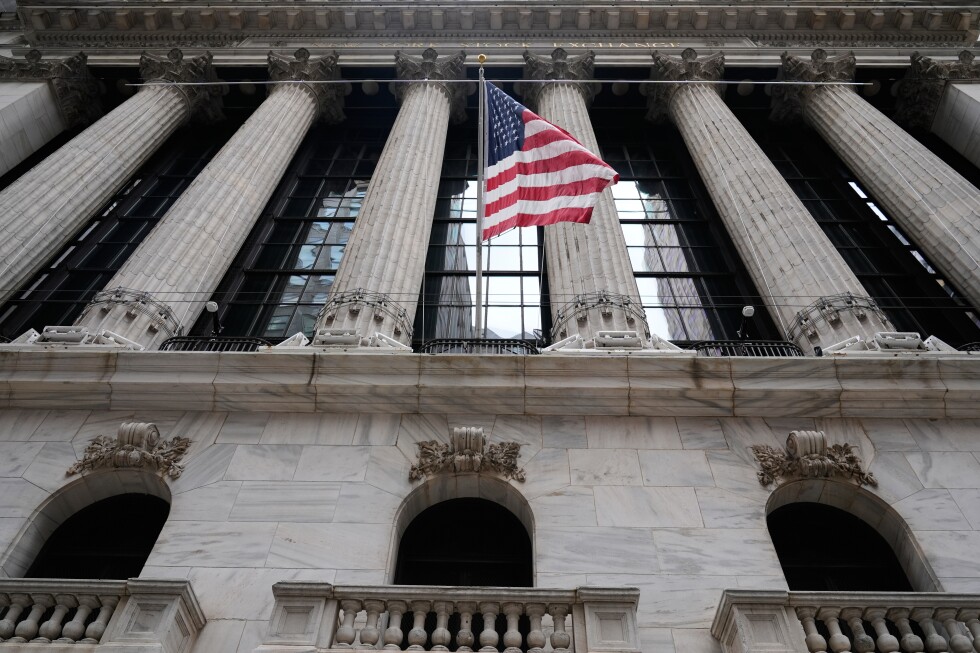
    In a landmark decision with profound implications for global commerce, the U.S. Supreme Court has invalidated the Trump administration’s use of emergency powers to impose sweeping import tariffs. The ruling determined that the 1977 International Emergency Economic Powers Act did not provide legal authority for the broad tariff regime implemented by the former president.

    This judicial reversal triggers a complex refund mechanism that could return more than $175 billion to thousands of American businesses that paid tariffs under the contested program. According to economists from the Penn-Wharton Budget Model, companies across consumer goods, automotive, manufacturing, and apparel sectors—particularly those reliant on global supply chains—now face strategic decisions regarding pursuit of reimbursement claims.

    The immediate market response saw stock markets in both the United States and Europe rally, with luxury brands and import-dependent companies experiencing significant gains. Shares of LVMH, Hermès, and Moncler all climbed following the announcement.

    Legal experts caution that the refund process will be administratively complex and time-consuming. More than 1,800 tariff-related lawsuits have already been filed with the U.S. Court of International Trade since April—a dramatic increase from fewer than two dozen cases throughout 2024. Prominent plaintiffs include subsidiaries of Toyota, Costco, Goodyear Tire & Rubber, Alcoa, Kawasaki Motors, and EssilorLuxottica.

    Despite this victory for free trade advocates, uncertainty persists within the business community. Trump administration officials have indicated they will pursue alternative legal authorities to implement tariffs, including statutes addressing unfair trade practices and national security concerns. Fitch Ratings’ head of U.S. economics, Olu Sonola, noted that “the odds that tariffs reappear in a revised form remain meaningful,” creating ongoing operational and legal challenges.

    The ruling highlights how approximately 90% of tariff costs were ultimately borne by American consumers and companies, according to Federal Reserve Bank of New York research, contradicting administration claims that foreign entities absorbed the financial impact.

    Many businesses, anticipating a protracted refund process, have already begun selling their rights to future refunds to external investors at discounted rates. Meanwhile, companies like German logistics firm DHL are developing technological solutions to streamline potential reimbursement procedures for their clients.

  • Turkey, Saudi sign solar plants deal, capable of powering over 2 million homes

    Turkey, Saudi sign solar plants deal, capable of powering over 2 million homes

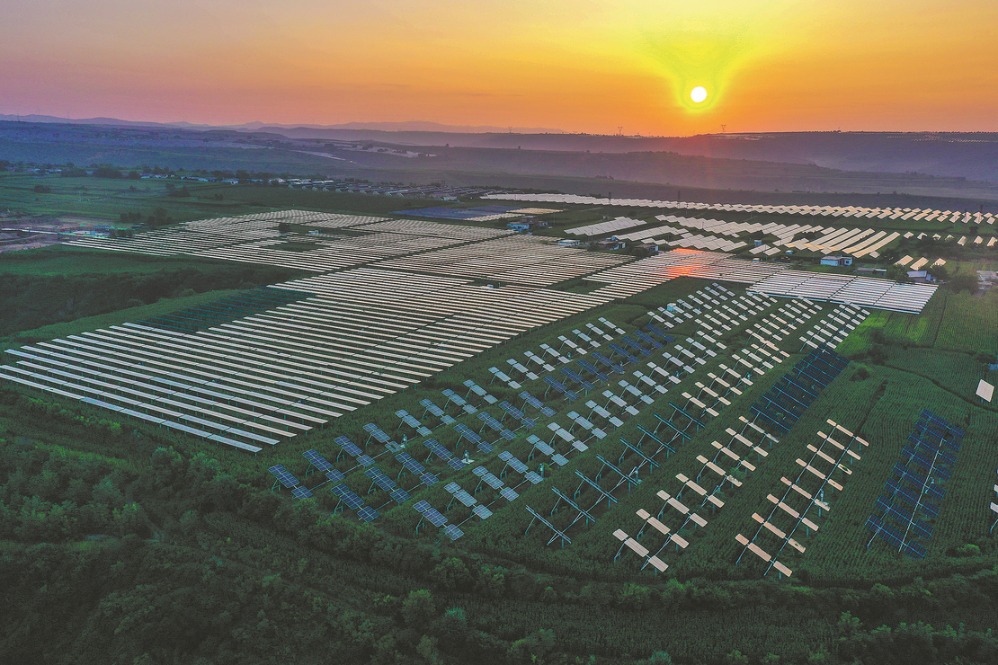
    In a landmark move for regional energy cooperation, Saudi Arabia and Turkey have formalized a major solar power agreement that will significantly advance Turkey’s renewable energy infrastructure. The deal, signed on February 20, 2026, at an Ottoman-era palace overlooking Istanbul’s Bosphorus Strait, involves Saudi energy developer ACWA constructing two massive solar plants in central Turkey’s Sivas and Karaman provinces.

    The project represents one of the most substantial energy investments in Turkish history, with the combined facilities boasting a generation capacity of 2,000 megawatts—sufficient to power approximately 2.1 million households. This initiative builds upon a $2 billion intergovernmental energy agreement established during Turkish President Recep Tayyip Erdogan’s pivotal visit to Riyadh earlier this month.

    Turkish Energy Minister Alparslan Bayraktar celebrated the partnership as transformative for Turkey’s energy landscape, noting that it will deliver electricity at historically competitive rates while advancing the nation’s renewable objectives. Bayraktar emphasized Turkey’s ongoing ‘energy revolution,’ revealing that renewable sources already constitute 62% of the country’s installed electricity capacity, with solar and wind generation having expanded from negligible levels to over 40,000 megawatts today.

    The timing of this agreement carries additional significance as Turkey prepares to host the United Nations COP31 climate summit later this year. Despite these renewable advances, official data indicates coal still accounted for 33.6% of Turkey’s electricity generation last year. Minister Bayraktar addressed this dependency, outlining a transitional strategy where coal would initially be replaced by natural gas, with nuclear energy providing a long-term solution alongside expanded renewable infrastructure.

    Turkey has established ambitious climate targets, including achieving net zero emissions by 2053 and expanding its solar and wind capacity to 120,000 megawatts by 2035. This Saudi-Turkish collaboration marks a substantial step toward these goals while strengthening economic ties between two pivotal regional powers.

  • ‘Hard to keep lights on’ – Business owners cautiously welcome tariff ruling

    ‘Hard to keep lights on’ – Business owners cautiously welcome tariff ruling

    In a landmark decision with profound implications for global trade, the US Supreme Court has invalidated former President Donald Trump’s authority to impose sweeping global tariffs under the International Emergency Economic Powers Act (IEEPA). The ruling has ignited a complex mixture of relief and apprehension within the American business community, particularly among import-dependent industries that have borne the brunt of these trade policies.

    Jenelle Peterson, co-founder of Canadian toy manufacturer Wild Life Outdoor Adventures, exemplifies this cautious optimism. Her company, which produces goods in China, suffered a 25% profit reduction last year due to Trump’s tariffs. While contemplating increased imports and new product designs previously put on hold, Peterson remains wary about potential administrative workarounds. “I have a bit of reservation in too much celebration,” she acknowledged. “But for us, every percentage point matters.”

    The court’s decision specifically targets tariffs implemented under the 1977 IEEPA statute, but leaves untouched other tariff authorities that the Trump administration could leverage. Within hours of the ruling, Trump announced plans to sign an executive order imposing a 10% global tariff under a separate statute allowing temporary import taxes of up to 15% for 150 days. “We have other ways – numerous other ways,” Trump declared at a White House briefing, anticipating prolonged legal battles.

    Business reactions reflected this uncertainty. Rick Woldenberg, CEO of educational toy maker Learning Resources (which challenged the tariff policy), called the ruling a “major victory” while expressing skepticism about proposed alternatives: “If the government is bound and determined to try to harm us through excessive taxes, I’m sure they’ll find a way.”

    Despite the judicial setback, protectionist measures remain substantial. Yale University’s Budget Lab calculates that even without IEEPA tariffs, consumers and businesses face an average effective tariff rate of 9.1%—the highest since 1946 excluding 2025. John Arensmeyer of Small Business Majority noted that while ending most tariffs “will undoubtedly benefit Main Street,” they have already caused “significant and irreparable harm to many small businesses.”

    Financial markets responded favorably but moderately to the news. The S&P 500 rose 0.7% and the Nasdaq gained 0.9%, though analysts cautioned against expecting sustained reactions. Lauren Goodwin of New York Life Investments observed that “sector winners and losers from this news depend on whether and how rebates are processed, as well as the use of non-IEEPA tariffs from here.”

    The ruling’s practical impact extends to consumer pricing. Peterson maintained stable prices for six months after Trump’s return to office before ultimately raising a knot-tying game from $14.99 to $19.99. She hopes the decision might eventually allow price reductions, praising the Court for sending “a really good message that we can’t have these insane fluctuations in tariff rates and economic policy, because it’s so damaging to small businesses.”

    Trade associations representing larger companies welcomed the clarity while emphasizing the importance of seamless refund processes. David French of the National Retail Federation stated the decision “provides much-needed certainty for US businesses and manufacturers, enabling global supply chains to operate without ambiguity.”

    Economic analyses consistently demonstrate that US consumers and businesses primarily absorb tariff costs rather than foreign exporters. Michael Pearce of Oxford Economics warned that even if the administration replicates overall tariff levels through alternative means, “the by-sector and by-country implications could end up looking quite different, which will create another bout of trade policy uncertainty for businesses, investors, and households.”

  • Keolis appoints Youenn Dupuis as CEO for Middle East & Eastern Asia

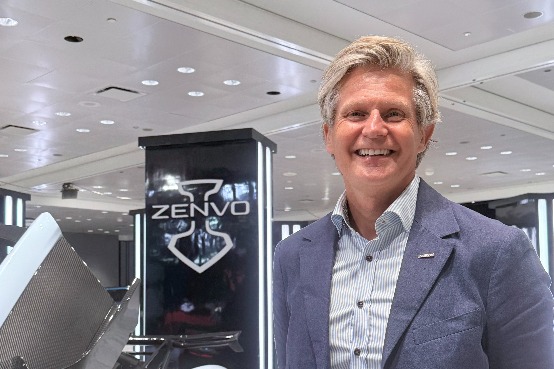
    Keolis appoints Youenn Dupuis as CEO for Middle East & Eastern Asia

    Global public transport operator Keolis Group has appointed transportation industry veteran Youenn Dupuis as Chief Executive Officer for its Middle East and Eastern Asia operations. The strategic appointment, announced on February 20, 2026, positions Dupuis to spearhead the company’s expansion across some of the world’s most dynamic mobility markets.

    Dupuis brings to the role a distinguished track record in managing complex transportation networks, including his acclaimed leadership during the Paris Olympic Games where he delivered world-class service operations. His expertise will be crucial in advancing Keolis’ portfolio of automated metro systems, tramway networks, and passenger rail services throughout the region.

    Laurence Broseta, CEO International of Keolis Group, emphasized the strategic importance of these markets: “The Middle East and Eastern Asia represent the vanguard of global mobility transformation, driving innovation in smart, automated, and sustainable transportation solutions. Youenn’s proven ability to manage large-scale operations and his exceptional performance during high-stakes events like the Olympics make him uniquely qualified to advance our ambitions in these critical regions.”

    Dupuis will focus on strengthening existing operations in key markets including Dubai, Doha, and China while overseeing the launch of new rail partnerships in the United Arab Emirates. He emphasized his commitment to blending Keolis’ global expertise with local market knowledge to establish new international benchmarks for safety, reliability, and passenger experience.

    “I am honored to lead our operations in regions distinguished by their visionary infrastructure development and unwavering commitment to technological innovation,” Dupuis stated. “Our strategy involves building upon established successes while pioneering new standards of excellence in public transportation across these rapidly evolving markets.”

  • IMF rebukes China’s model with its own credibility in tatters

    IMF rebukes China’s model with its own credibility in tatters

    The International Monetary Fund confronts a deepening legitimacy crisis as its traditional neoliberal prescriptions face irrelevance in the Trump era and prove inadequate for addressing China’s unique economic challenges. This crisis emerges as the IMF urges Beijing to abandon its state-driven industrial model while navigating a global landscape transformed by geopolitical adventurism and economic nationalism.

    The Fund’s latest assessment identifies China’s export-heavy growth strategy as fundamentally distorting global trade patterns. IMF executives specifically highlight Beijing’s allocation of approximately 4% of GDP to corporate subsidies in critical sectors, creating worldwide economic imbalances. They emphasize that transitioning to consumption-led growth represents China’s ‘overarching priority,’ noting that the nation’s substantial current-account surplus generates ‘adverse spillovers to trading partners.’

    China’s economic dilemmas extend beyond trade imbalances. IMF Asia Pacific Deputy Director Thomas Helbling identifies the property sector crisis as the ‘elephant in the room,’ with unfinished properties severely undermining investor confidence. The institution advocates for comprehensive structural reforms including central government financing to address presold unfinished housing and strengthened social protection systems to reduce precautionary savings.

    BNP Paribas strategist Chi Lo observes China’s economy remains stuck in a liquidity trap, requiring fiscal policy to ‘do the heavy lifting’ in reviving public confidence. Despite recognizing the need for rebalancing since before Xi Jinping’s 2013 rise to power, progress toward demand-led domestic growth remains sluggish.

    The core challenge involves convincing 1.4 billion citizens to reduce savings and increase spending—a transformation requiring robust social safety nets that have thus far been underdeveloped. With approximately 70% of household wealth tied to real estate, property sector stabilization becomes crucial for maintaining 5% growth targets.

    IMF China economist Sonali Jain-Chandra notes China’s remarkable development has ‘relied too much on investment as opposed to consumption,’ identifying the service sector as an ‘underexploited driver of growth.’ However, credit expansion remains subdued, with November 2025 marking the first consecutive monthly household loan contraction since records began in 2005.

    The People’s Bank of China faces political constraints in addressing these challenges, including concerns that yuan depreciation could exacerbate trade tensions with Washington. Meanwhile, Trump administration policies—including tariffs and economic coercion—further complicate China’s transition while rendering traditional economic theories increasingly inadequate for contemporary global dynamics.