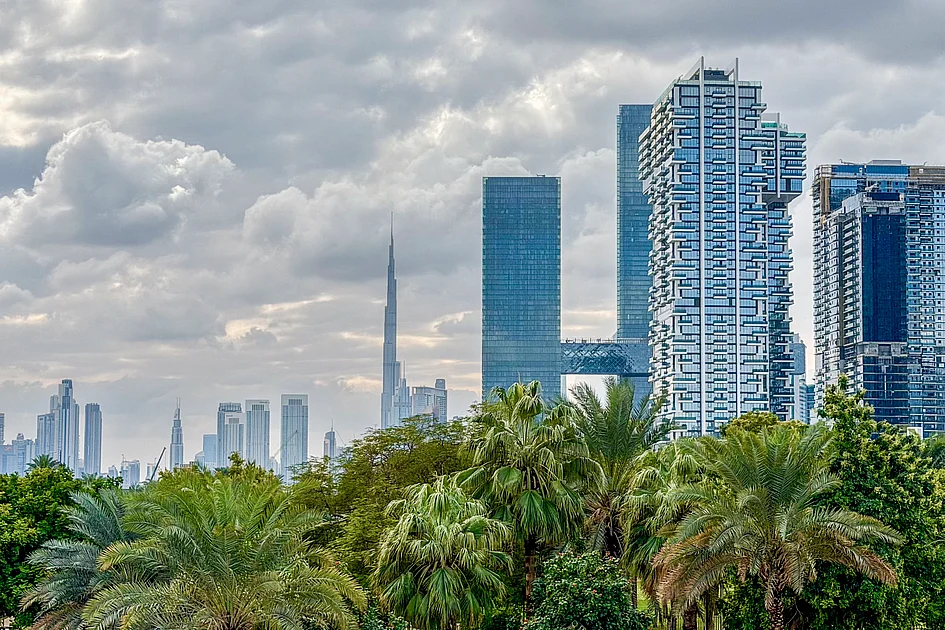
Dubai’s property market has achieved an unprecedented milestone, reaching a staggering Dh916 billion (approximately $250 billion) in total transactions, propelled by a powerful convergence of record population growth and improving economic conditions. This historic performance underscores the emirate’s transformation into a premier global destination for business relocation and wealth migration.
The catalyst for this boom is demographic: Dubai’s population has officially surpassed the four-million mark, adding approximately 18,000 new residents in a single month by August 2025. This sustained influx of professionals, entrepreneurs, and high-net-worth individuals is generating robust, genuine demand across all housing segments—from mid-market apartments to ultra-luxury waterfront properties.
According to official Dubai Land Department data, the market closed 2025 with over Dh680 billion in property sales from more than 200,000 transactions—both record annual figures. When including mortgages and ancillary deals, the total real estate activity reached the Dh916 billion benchmark. The market’s momentum intensified throughout the year, with Q4 2025 alone recording an unprecedented Dh187 billion in sales, marking three consecutive months of record performance.
Industry analysts from Savills Middle East confirm that this growth is structurally driven by authentic relocation demand rather than speculation. ‘When Dubai adds close to 18,000 residents in a single month, the impact on housing demand is immediate and tangible across enquiry levels and transaction speeds,’ noted Alec James Smith, Head of Residential Sales and Leasing at Savills.
The prime segment demonstrated particular strength, with nearly 6,000 transactions exceeding Dh10 million completed in 2025. Limited supply in established luxury communities combined with continuous wealth inflows has positioned Dubai among the world’s top-performing prime residential markets.
Supporting this growth, the UAE Central Bank’s policy moves have begun easing borrowing costs, gradually improving mortgage affordability after previous high-rate cycles. This financial easing is expected to further bolster end-user demand in coming quarters.
Looking forward, market stability will depend on disciplined supply management and infrastructure development aligned with Dubai’s 2040 Urban Master Plan, which anticipates a population approaching six million within the next decade and a half. With fundamental drivers firmly in place, Dubai’s property market appears positioned for sustained, structurally-driven growth anchored by demographic expansion and global capital confidence.